Bought a boat, fixed a boat, sailed to Australia, sold the boat.
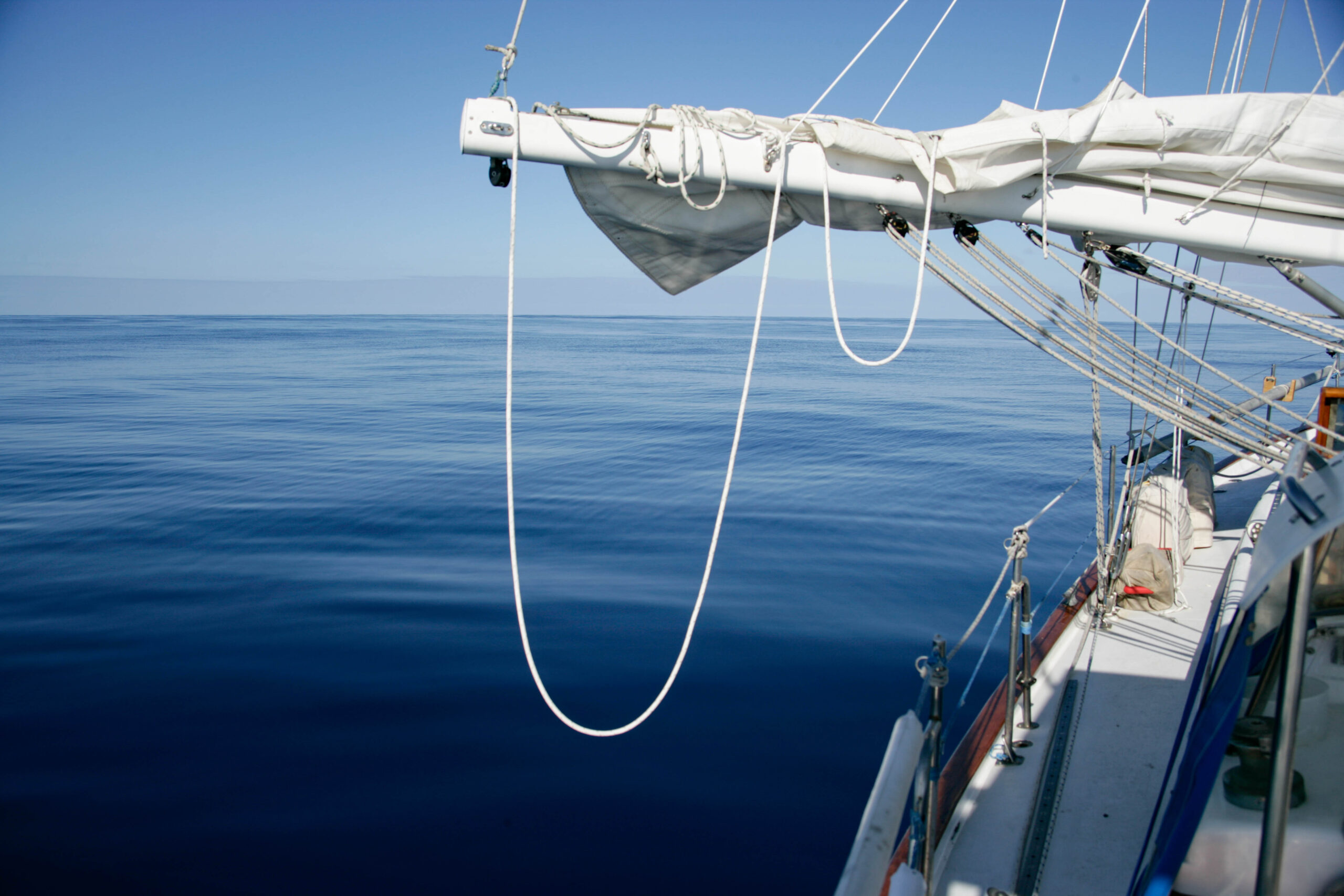
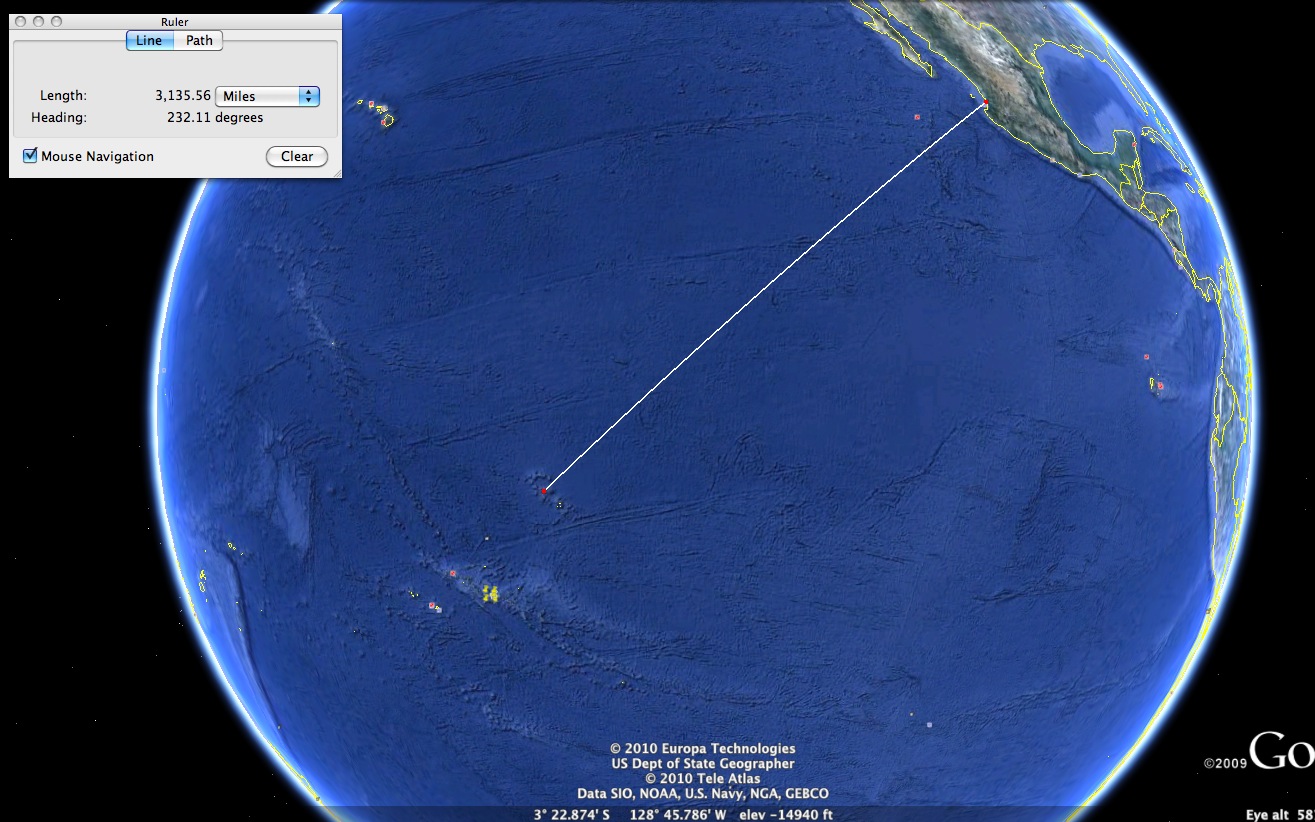
Well, people, hold on to your pants because we are about to cross the pacific ocean. This will probably be the craziest thing I have ever done, or ever will do. The passage from here to the Marquesas–the closest island chain in the south pacific–is the longest straight open ocean passage in the world; we will be in the ocean out of sight of all land for between three and five weeks.
We intend to leave the day after tomorrow–there are many last minute details, paperwork, and logistics to be worked out, as you might imagine. The boat is ready (more or less). We are ready. We are beyond ready, actually. Most of our fellow cruisers departed a few weeks ago. Check out Io, Totem, Capaz, Mulan, and Trim, to see what the experiences have been so far. These folks have been posting to their blogs from the middle of the ocean, via a modem connected to the ssb radio coupled with sailmail software. We elected not to spring an extra $1000 for the modem, so you won’t be hearing anything from us until after we reach the marquesas and find some internet again. Our SPOT tracking device will post our location until we get out a couple hundred miles, then we’ll disappear off the map.
Despite the straight line on the image below, the actual path we take will be more of an S-curve: we go more directly west to begin with, then when we encounter the doldrums we turn south and go perpendicularly through them (minimizing our time in this squally no-wind area). When we exit the doldrums we turn west again, directly for our destination.
This is the sort of adventure we signed up for, so we’re all gung ho to get going with it. See you on the other side!
Today it is Matt’s birthday and also, in no small conincidence, it is Karen’s birthday as well. They are also gearing up to be heading across the vast Pacific in about a week or so. Good luck guys, and Happy Birthday!!!
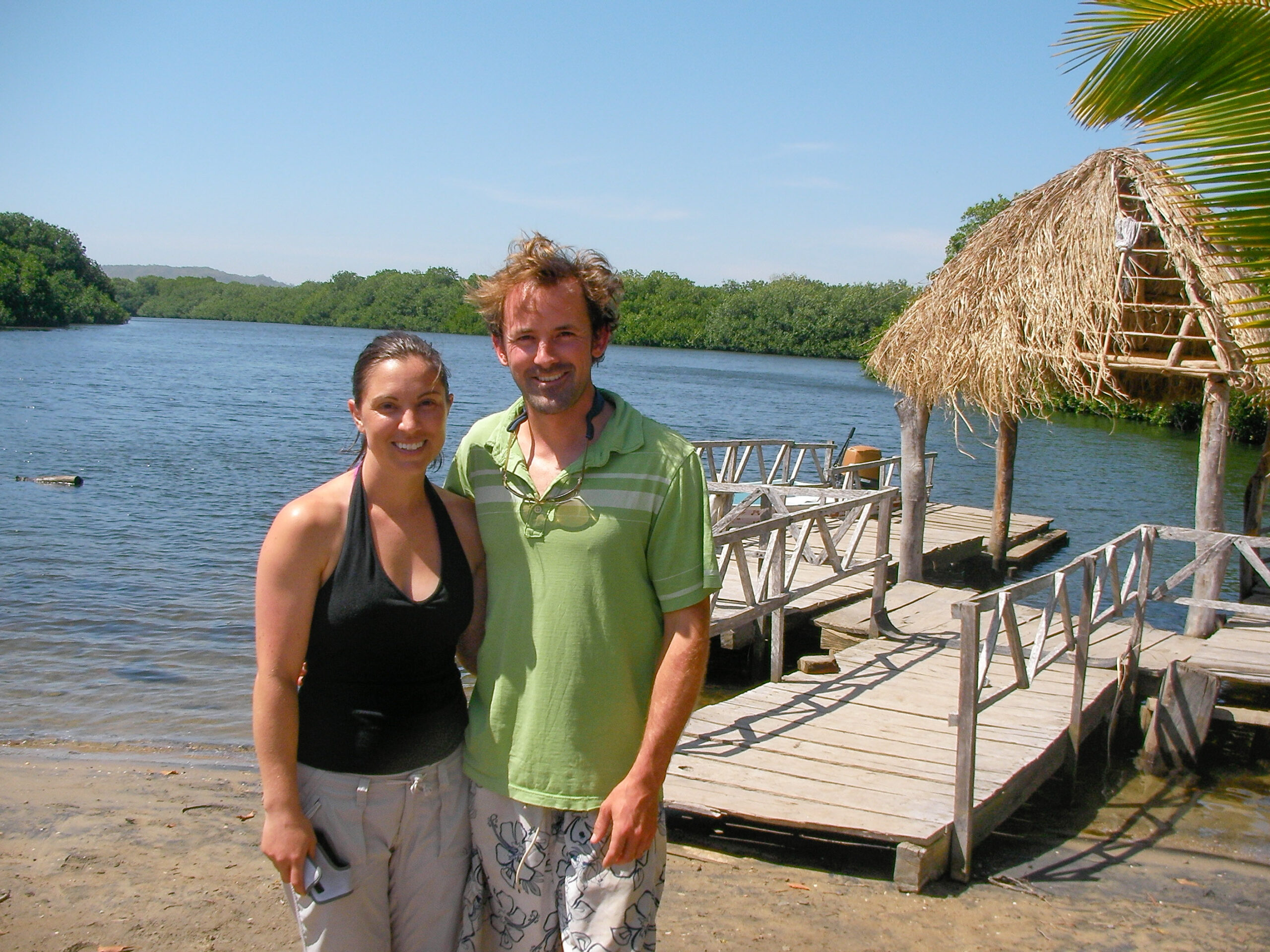
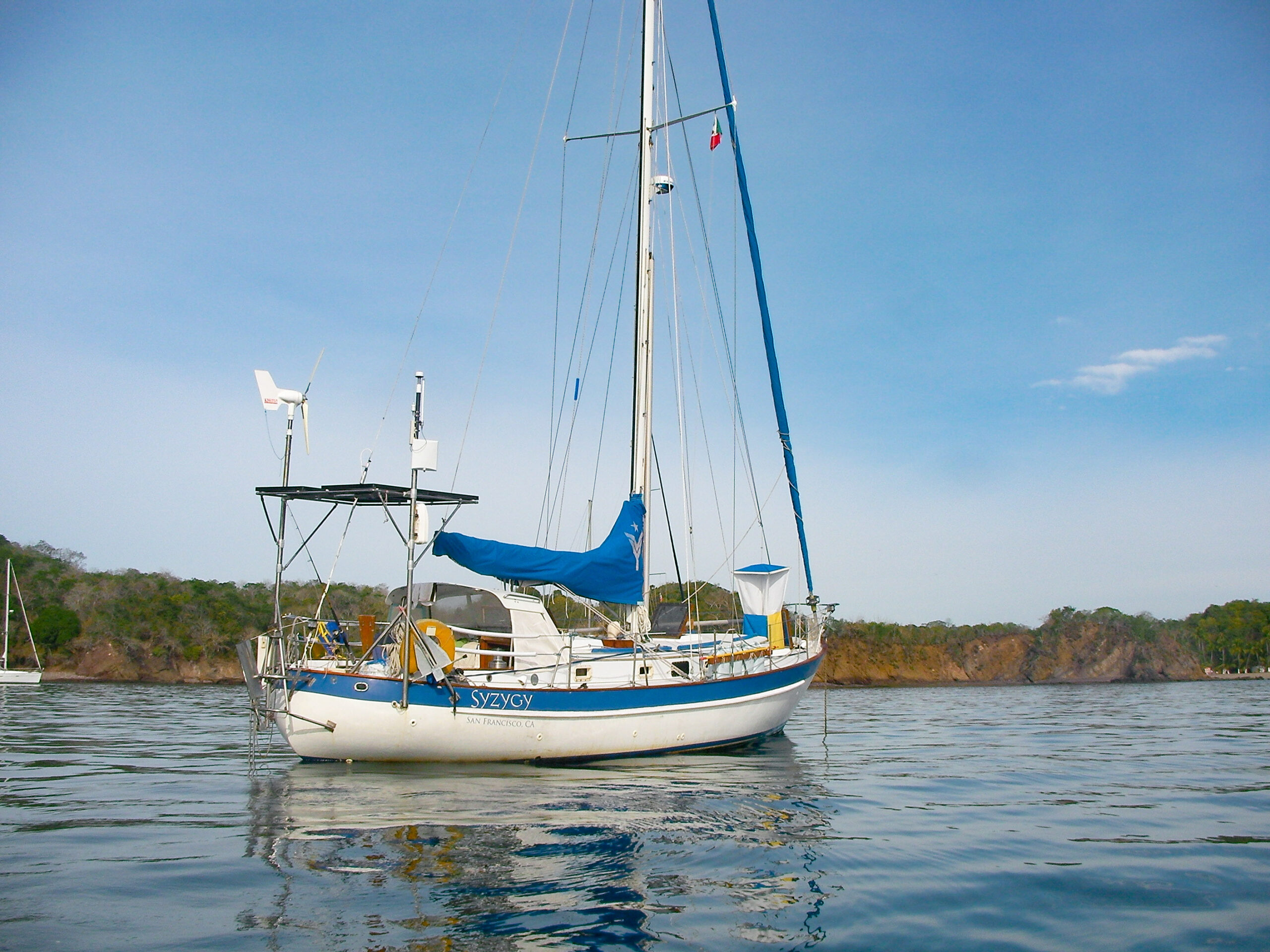
We left La Cruz on March 31st to sail south to Tenacatita, a little over a hundred miles down the coast, for a brief respite from the bustle of La Cruz. Jon had flown out for his spring break vacation from teaching, and was looking for a legitimate cruising experience, and Karen had read about a “jungle river adventure” to be found at Tenacatita, so that sealed the deal.
The wind was very light during the entire passage; the sail south was slow. I recollect sailing half the time, motoring half the time. We try to sail whenever there is sufficient wind to fill the sails, which puts us at a boat speed of about 2 knots. 2 knots is a fairly leisurely walking pace, so you can imagine how long it can take. We were in no rush, though–so 2 knots it was.
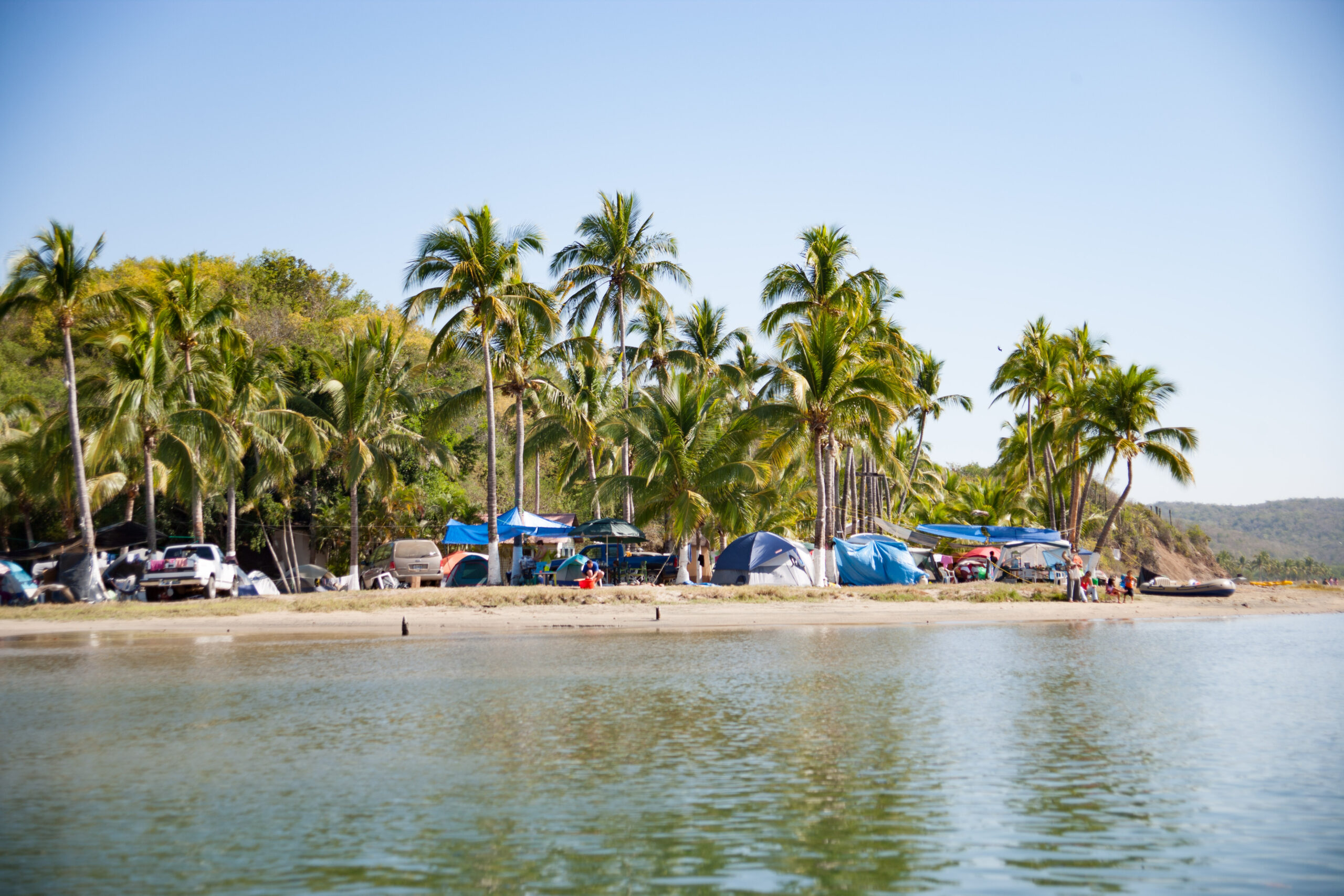
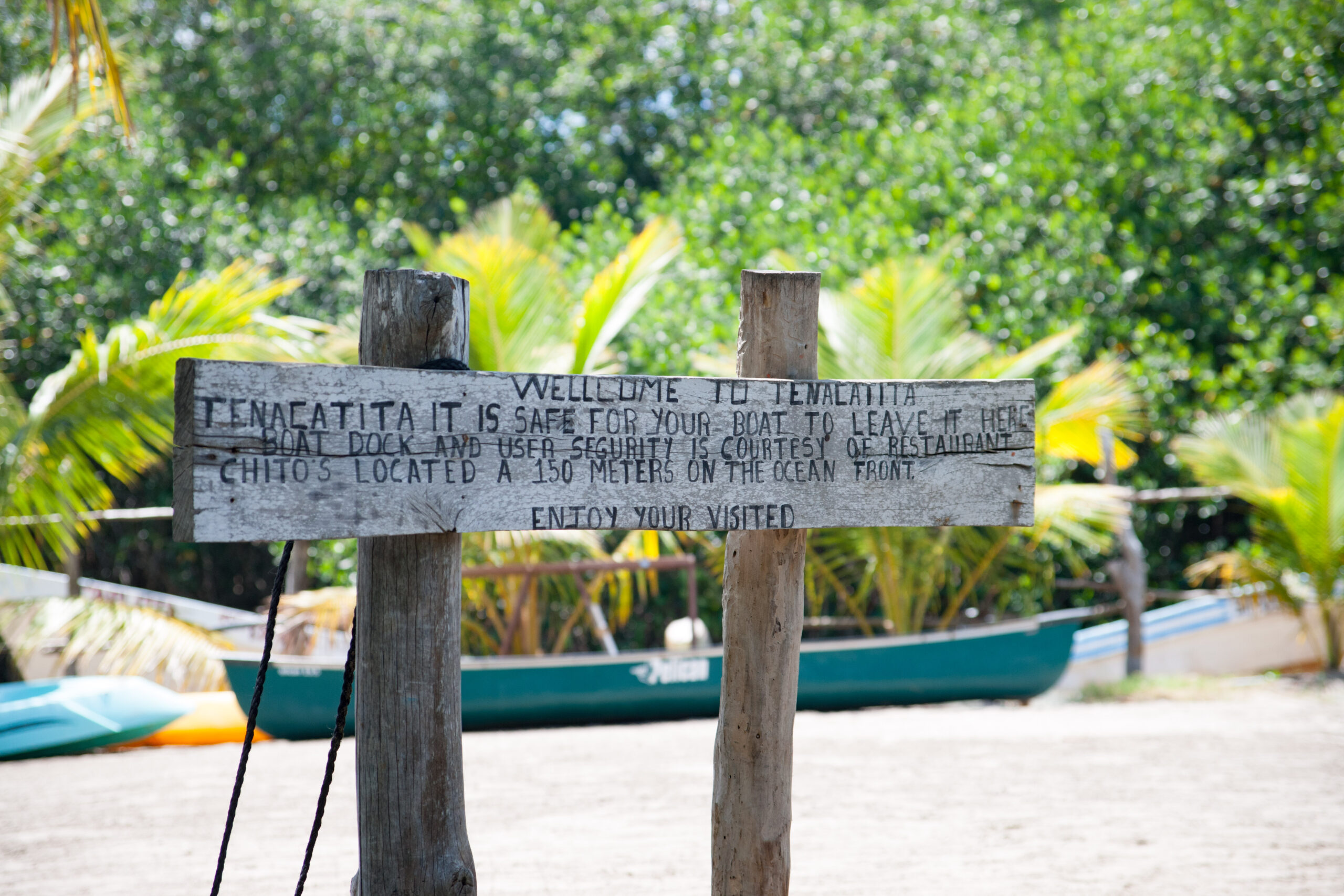
The anchorage at Tenacatita was tranquil and relaxing. There was a dolphin that lived in the anchorage, affectionately named “nacho” for a notch missing in his dorsal fin. Nacho was most interested in the boat 300 feet away from us, I think because it had a little dog that would run around the deck following the dolphin. Karen wanted to swim with Nacho–she has a lifelong dream to swim with dolphins–so she jumped in the water and started making various sounds intended to attract the attention (and affections) of Nacho over to our boat. The sounds succeeded . . . in making us laugh! I think Nacho sensed her need, because he stayed just far enough away–sometimes coming within 15 feet but no closer–during our entire stay in the anchorage.
At night, the phosphorescence was spectacular. One night we swam in it. Swimming through liquid light, making light by moving, little dots of light dripping off your hands and arms. Your whole body illuminated like some sort of superhero, like your body itself is radiating the light. It struck me as extra-terrestrial–not something that I knew existed on this earth.
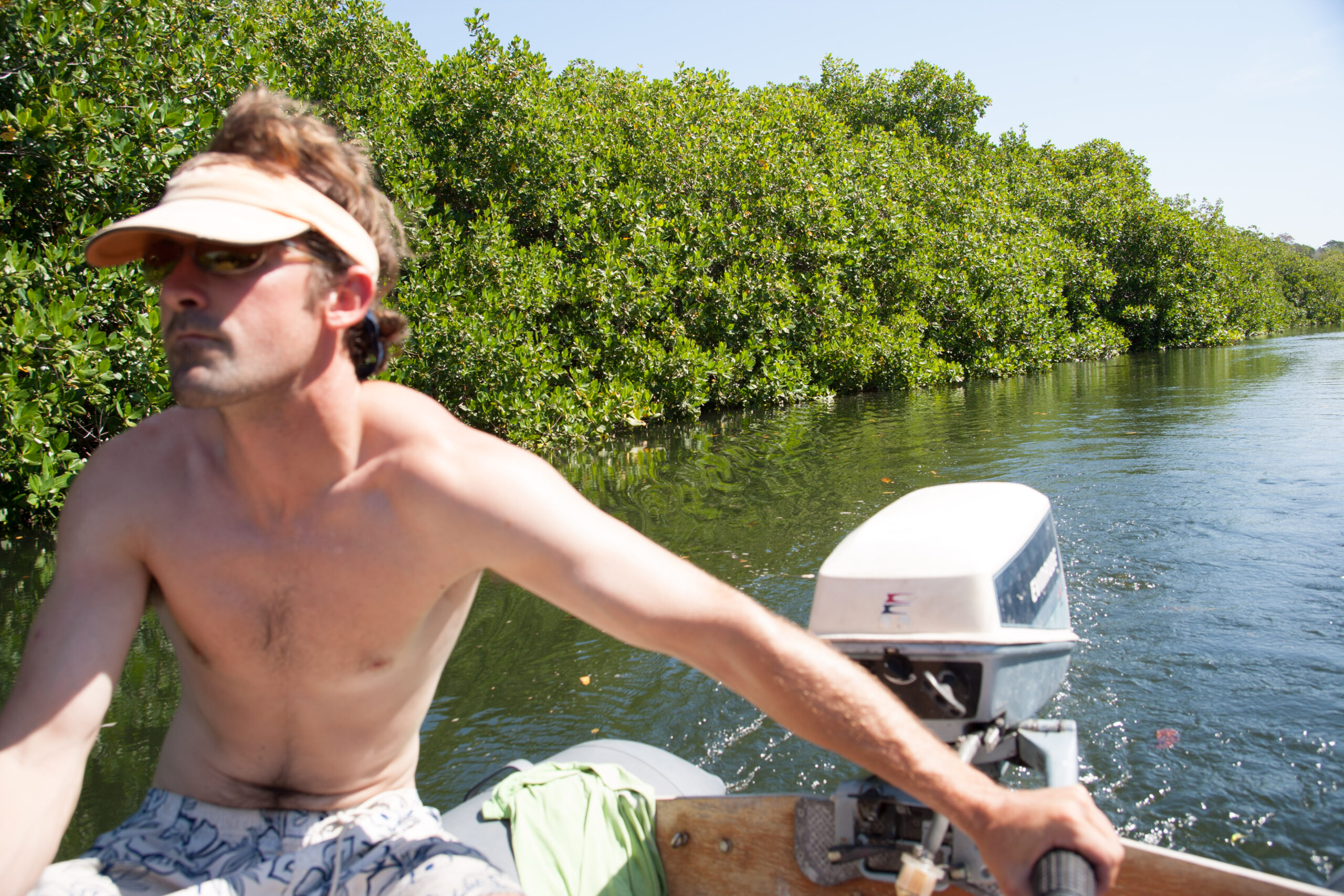
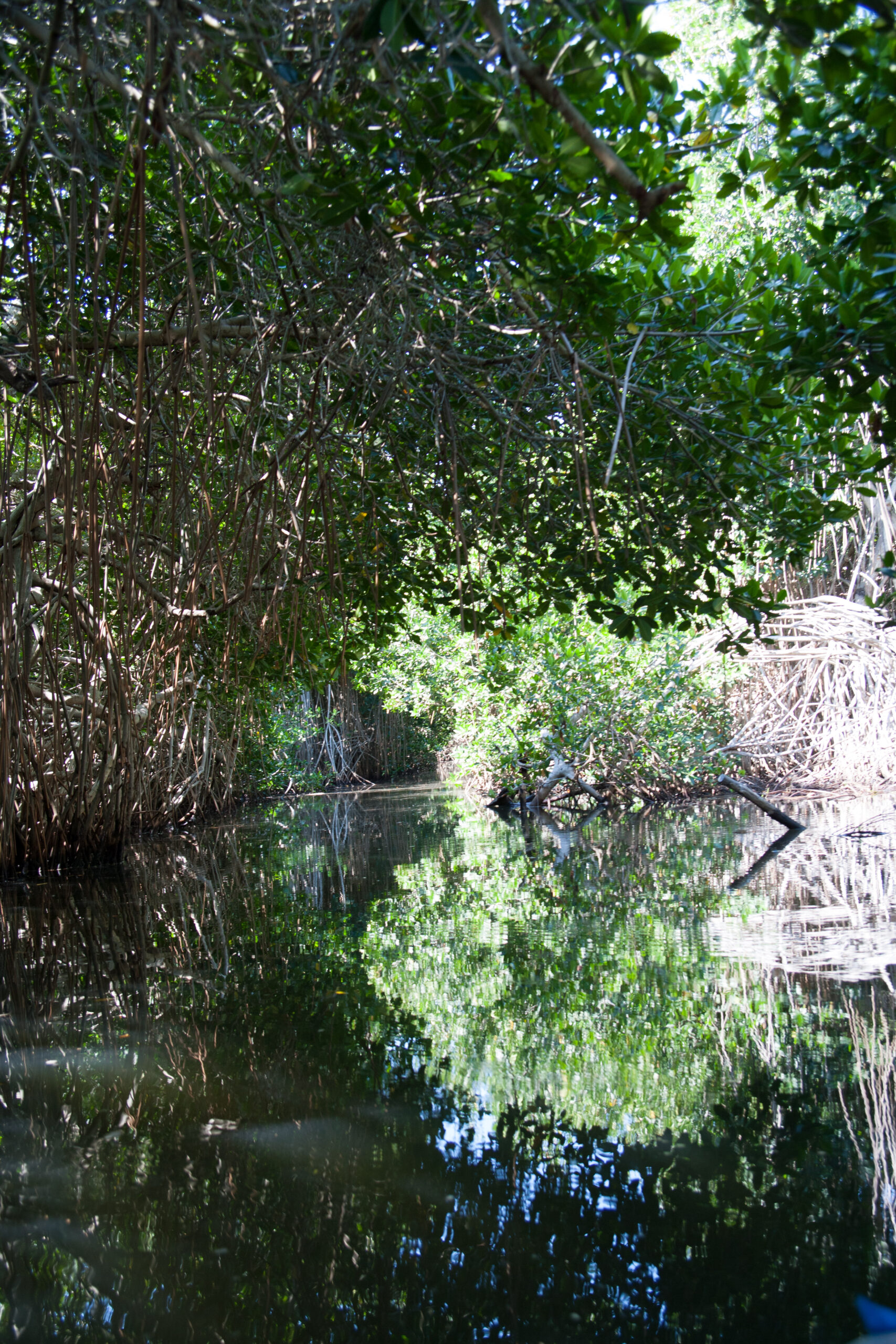
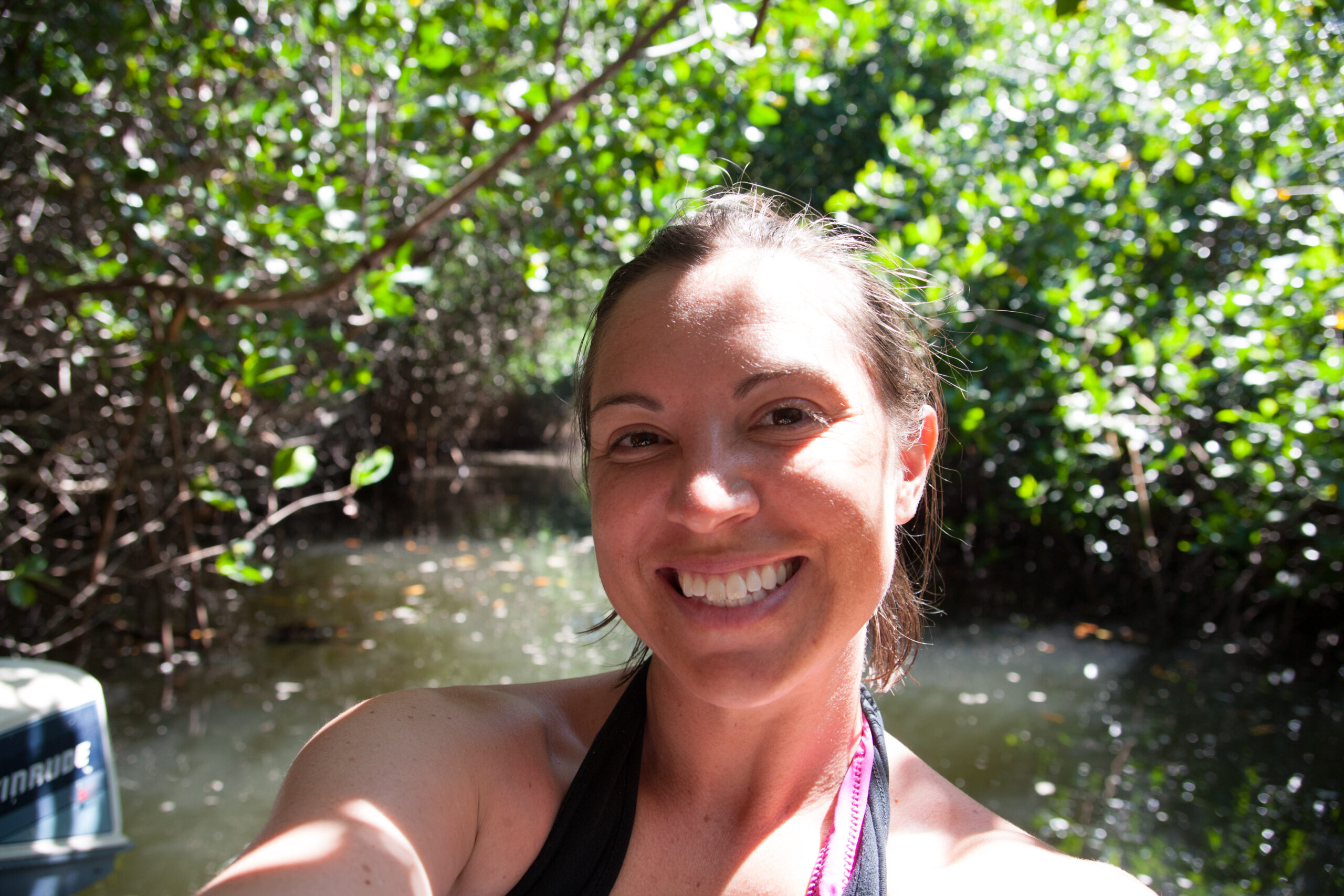
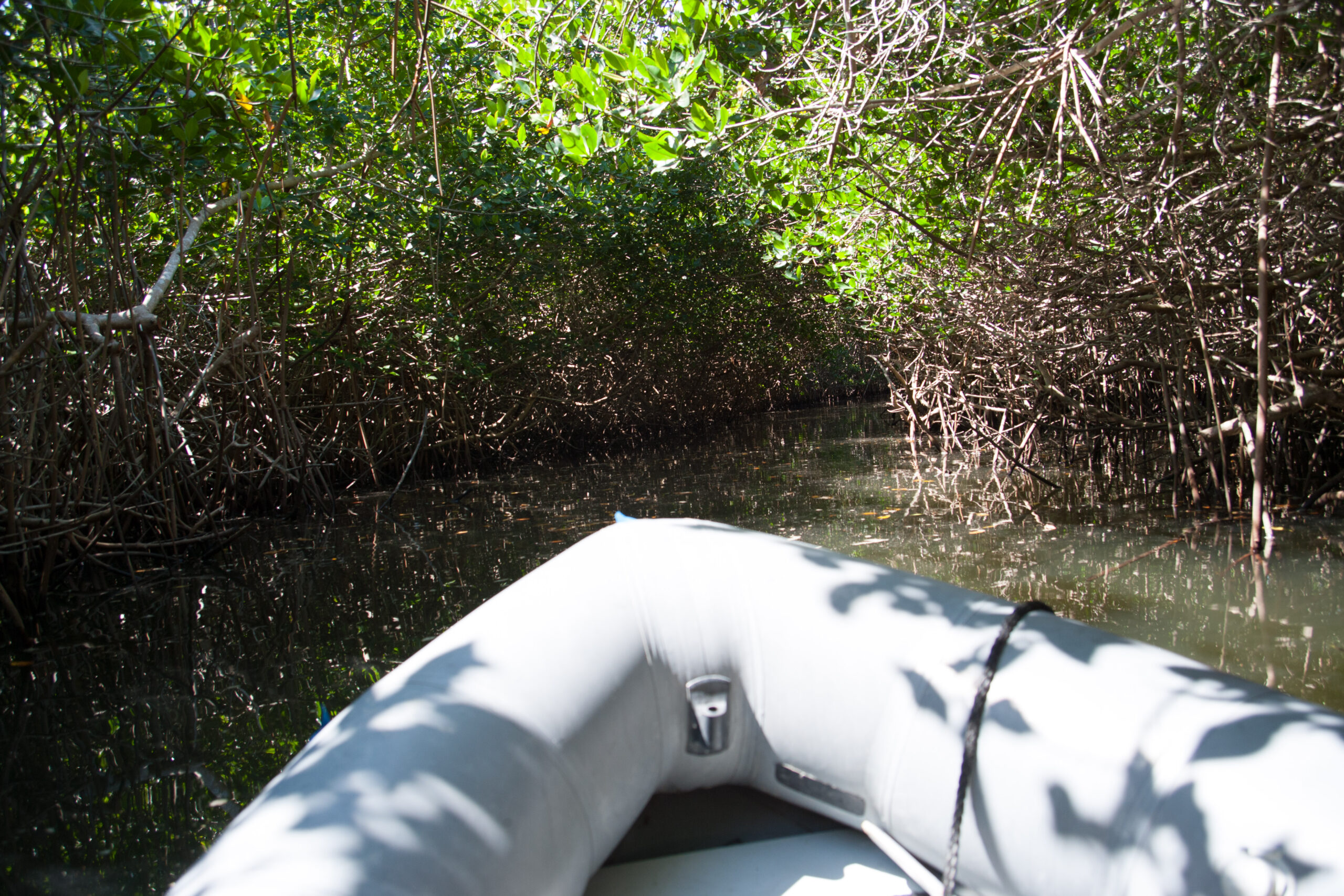
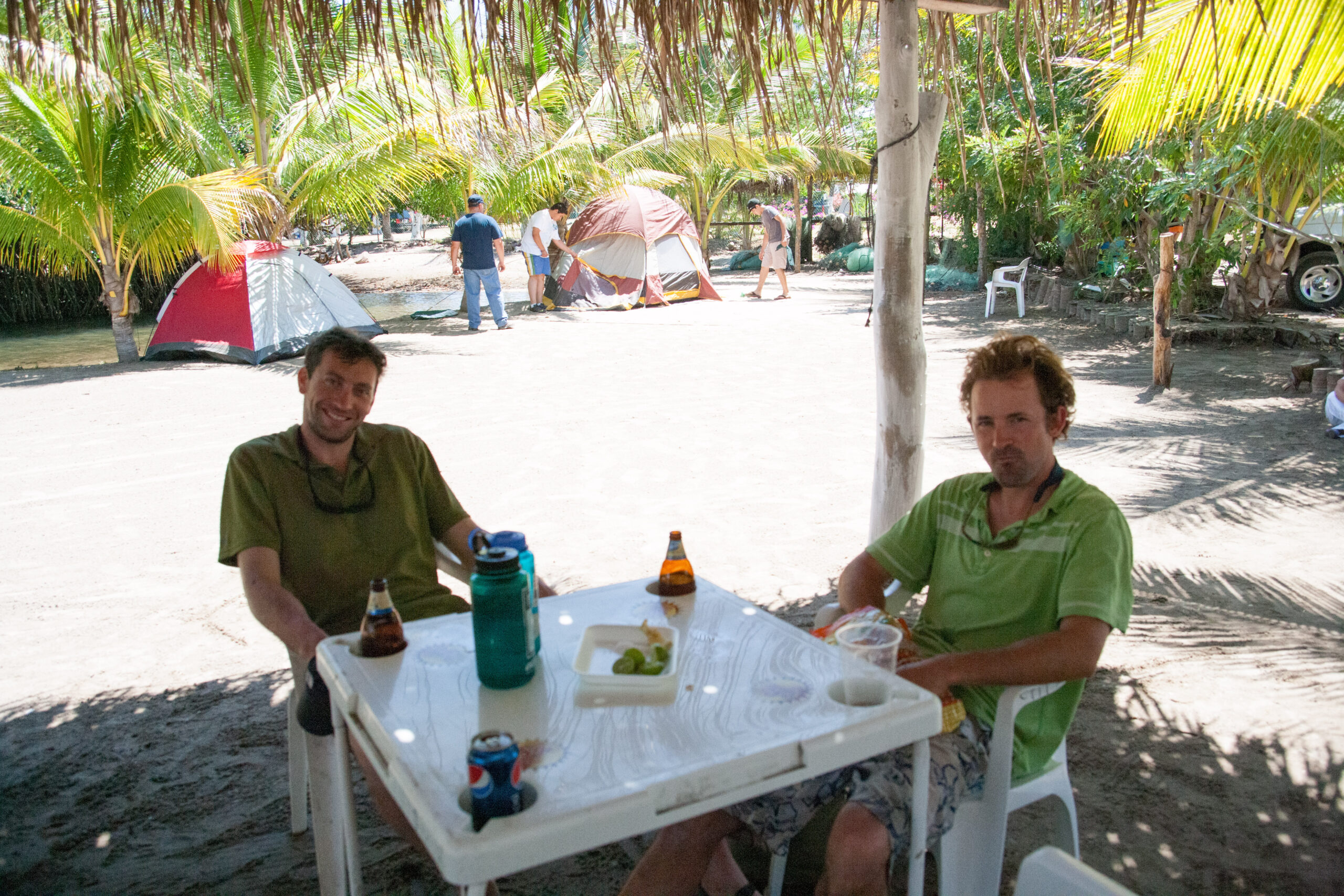
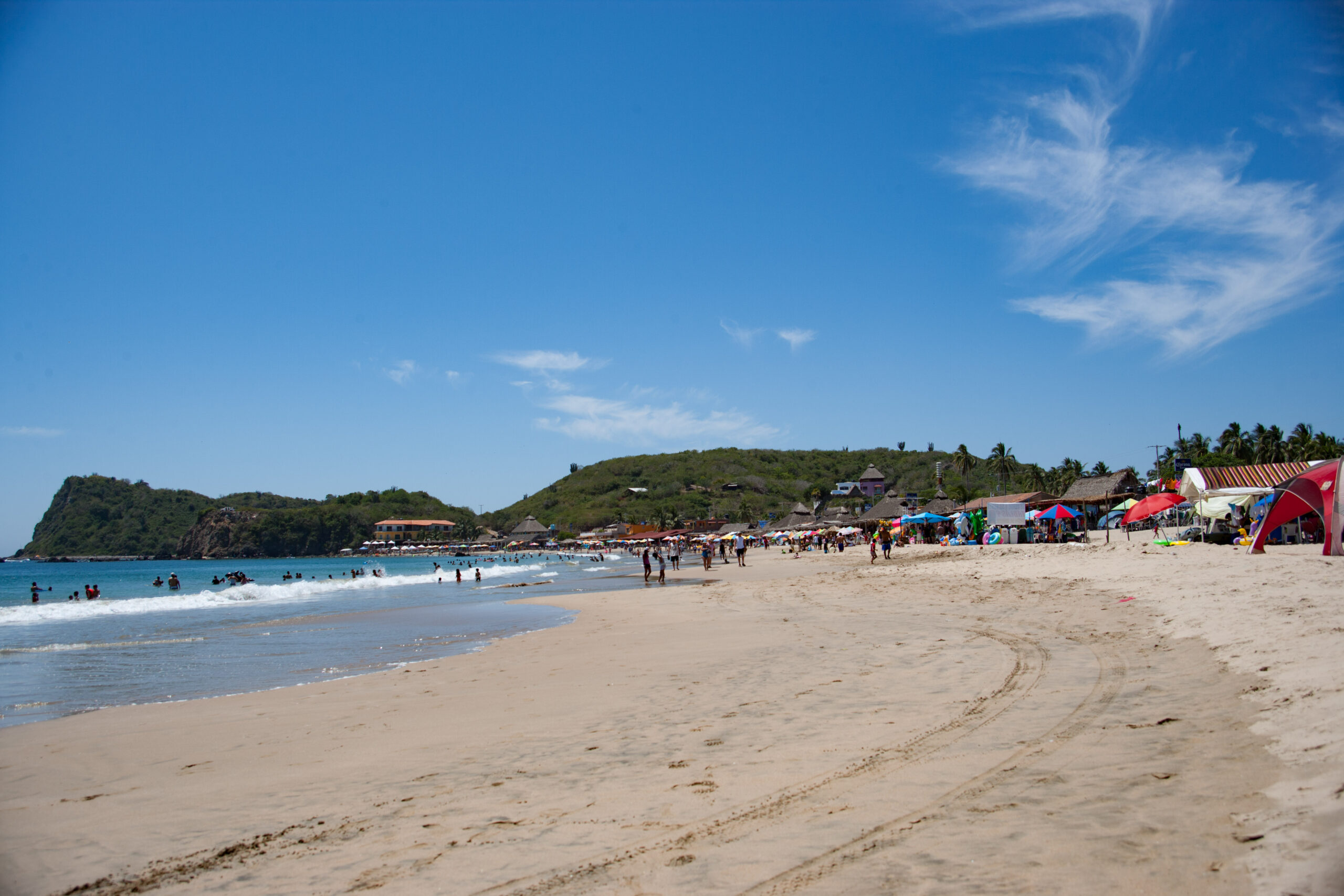
The day after we arrived we serviced the outboard for the dinghy (finally), then packed up the dinghy for a day of travelling up some river through the jungle. It was a cool scene. Not, I must admit, a very impressive jungle–I think that experience is still to come–but it was fun travelling through this dark, narrow corridor of a river, barely wide enough for the dinghy in places, with a ceiling of vines and leaves overhead. At the end of the river we found a lake, which happened to be next to a town on the beach, which happened to be overrun by mexican tourists for the Easter holiday. We sat at a little food place next to the lake and spent the day like that, sitting there.
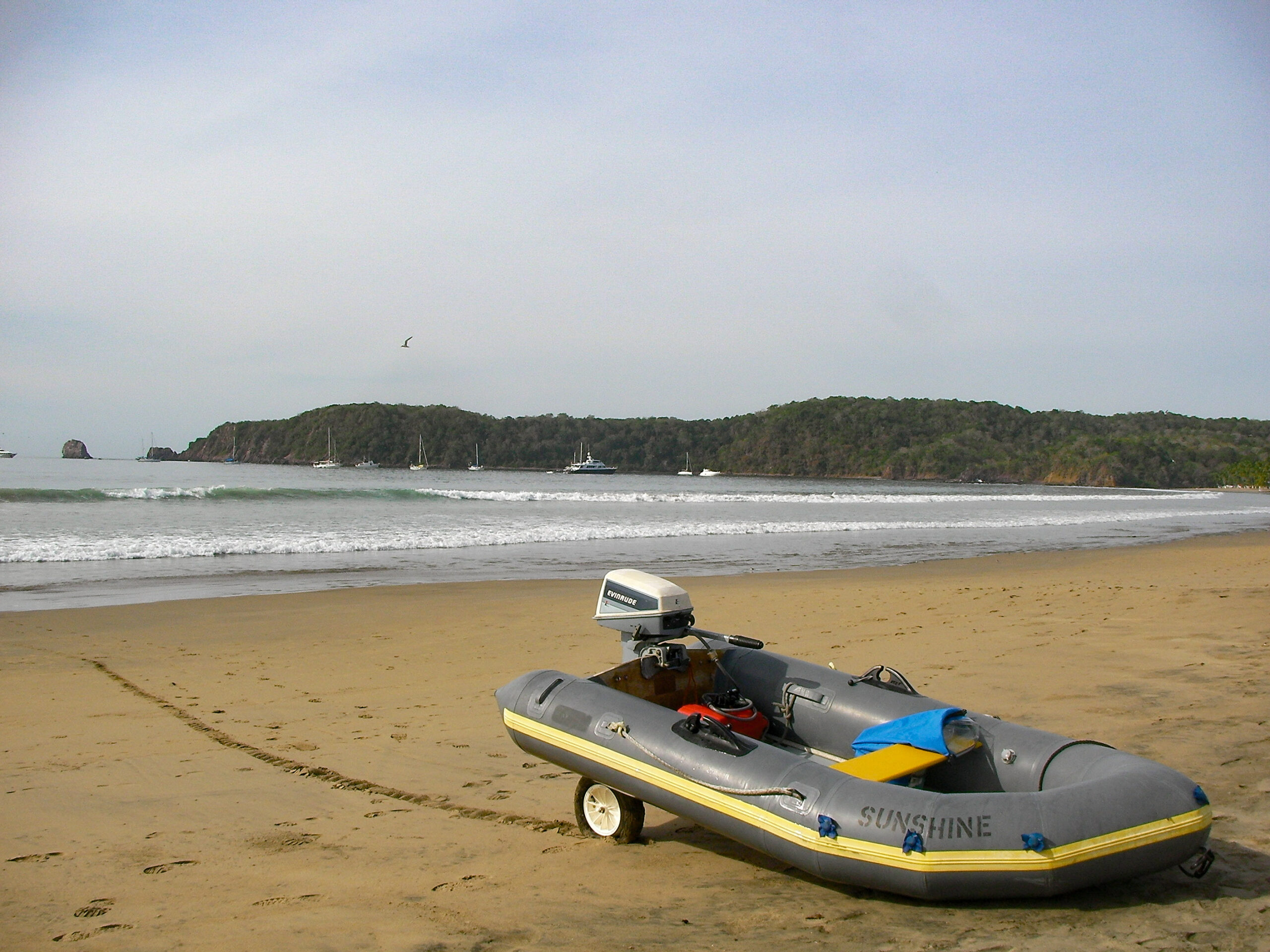
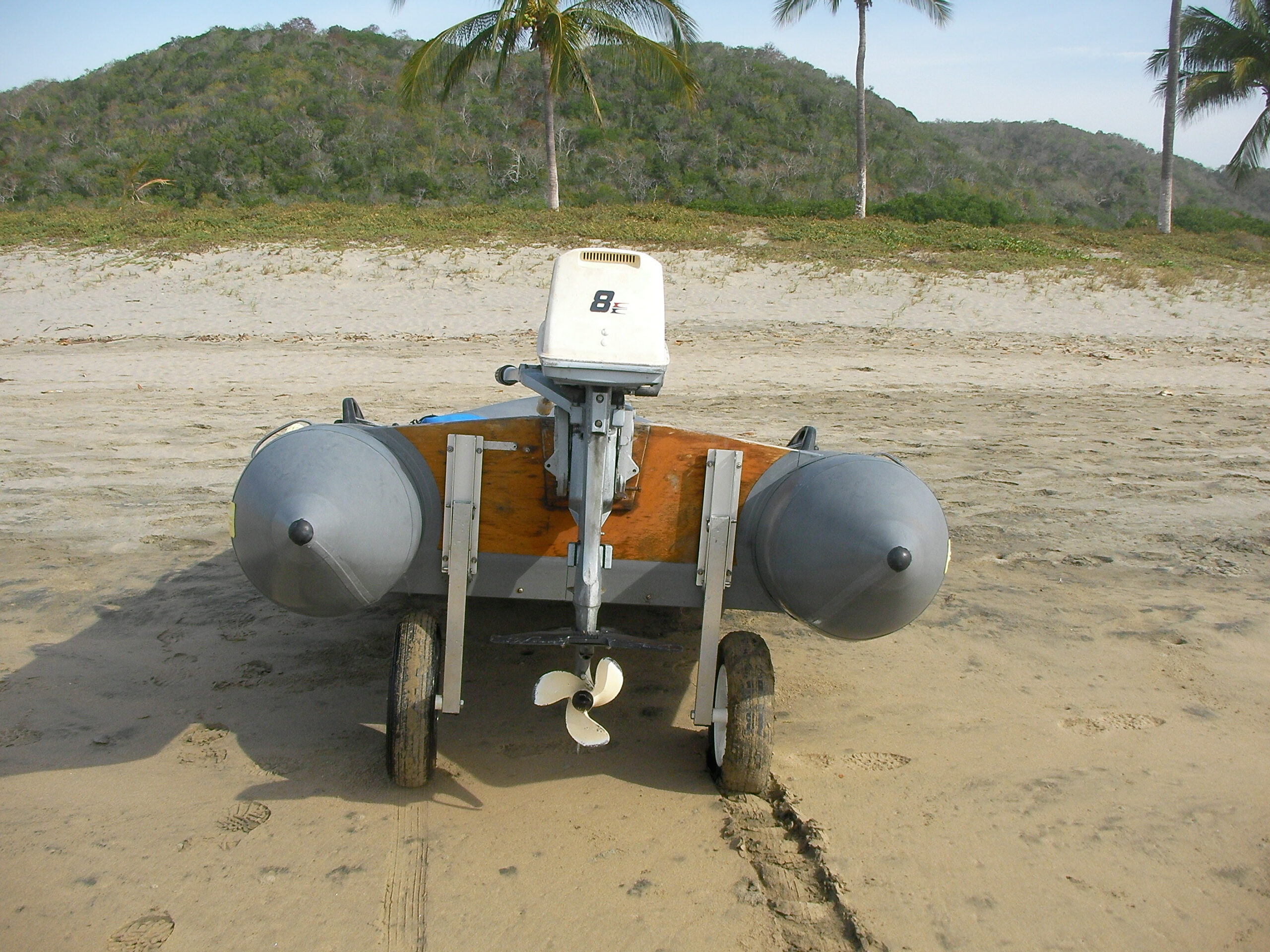
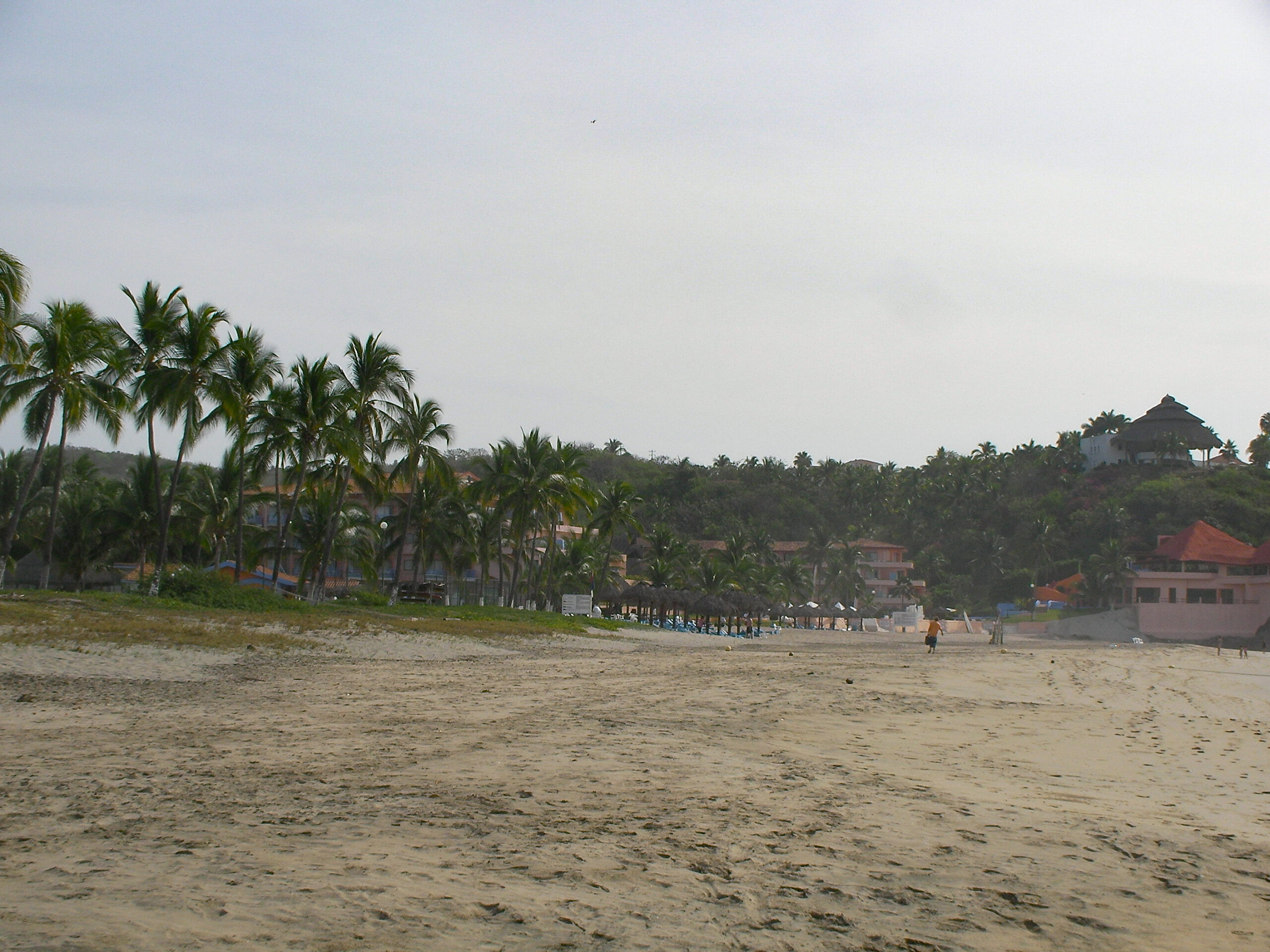
I have a good story about our first beach landing. There’s a hotel just up the beach from where we were anchored; Jon needed to arrange for some sequence of transportation back to Guadalajara to catch his flight. We took the dinghy in. There were small waves breaking on the beach, and it was fun to run in there surfing on a little wave until it got shallow then quick turn off the engine and raise it up and then jump out and drag the dinghy up on the beach. The waves seemed small and the trip into the beach was easy, so we were goaded into a sense of complacency. Trying to get back out, we were not so lucky. It’s all in the timing, I’m sure, but we did not spend much time trying to wait for a good window. Essentially, we dragged the dinghy into the water and went for it. As a result, we provided wild entertainment for a boat in the anchorage that happened to be watching this scene unfold. We got repeatedly thrashed by waves breaking on us, swamping the dinghy with seawater, and nearly flipping the dinghy end for end. I think we went weathered about 4 waves that had our number. Jon was up in the bow trying to hold it down as these waves lifted us to the vertical–on the last wave he was propelled vertically out of the bow straight into the air and crash landed back into the bottom of the dinghy. Unfortunately, the amusing part of the story would be the video and pictures that we didn’t take. On our way back to the anchorage we were hailed by the boat that watched it all unfold. They said they were sure we weren’t going to make it through the last wave, that we completely disappeared and then came launching vertically out of the white surf like a rocket. It was a hell of a fun time, that’s for sure.
Karen and I have been really excited by the number of people sending a drink our way, cheering us on, and we intend to put up pictures etc for each one under the “Drinks” page. We’ve been busy taking care of logistics still, so we have a lot of catching up to do, in the way of drinking, but I want to say thank you to everyone out there who has sent a drink our way, and eventually we’ll get to all of them!
I think it’s appropriate to kick off the drink links section with a donation of Belgian beer from Jon (Haradon, one of the other owners of Syzygy), and the toast he wrote to go with it (which he asked Karen to read to me). Jon wishes he could be on the trip currently, and is planning on joining us in June, but in the meantime he sent us to a pub in San Diego with Belgian beers on tap (he emailed us with two location choices). Thank you, Jon, for the Belgian beer and the kind words as well.
The footage makes Karen and I seem ridiculous. And maybe we are. But it was a fun evening. (please stay tuned for the toasts from other drink donors, and thanks again to all of you we love you!)
written by Karen, originally posted on her blog
At 3:37AM (I know because we have a clock velcroed to the ceiling of the quarterberth) I awoke to an awful sound. A dull, heavy, rolling thudthudthudthudthud echoing through the water. “Matt!” I whispered. “Did you hear that?” and then the dread of every cruiser – “I think our anchor might be dragging.” Seconds later, I heard it again. A slow thudthudthudthud. “Matt! What IS that?” I sat up, ready to jump over Matt and go check outside. There it was again. “That is not cool.” Matt, groggy from sleep started to slowly slide his body out of bed.
Then, “Hey,” Ray shouts from the v-berth, right under the windlass and just behind the chain locker where our anchor is ultimately secured to the boat. “Matt! I think you’re letting out rode!” Rode is fancy sailor lingo for the chain or rope that is attached to the anchor.
We all throw on clothes and scramble up on deck. The cove could not be calmer, with light wind and ripply little waves. We’re slightly confused and then we hear a new noise, a crude, but gentle thumping, and we see it – our dinghy, which was secured by a short line to the stern of the boat, was unabashedly hooking up with a mooring stick while the mooring ball jealously bumped against us.
We had intentionally anchored close to a mooring field. A mooring field is basically a parking lot for boats. There are pre-set anchored floaties that you can tie your boat to (using the mooring stick) instead of throwing down an anchor yourself. Just like a parking lot, mooring fields help maximize the number of boats you can get into an area and prevent boats from taking too much swinging room. When we set our anchor the other day, we considered our tiny cove and Matt sensibly rationalized that if we dragged anchor or the wind shifted, etc., it was better to roll up on a mooring buoy than on the rocks. So, when we saw our dinghy in its amorous embrace with a mooring stick, we were appropriately surprised, but not entirely shocked.
While our dinghy lovingly caressed the slender figure, its sulky mooring ball lingered close by clinging to our hull, the petulant wingman. We yanked the dinghy alongside the boat like a naughty child and untangled ourselves from the mooring lines. Matt pulled up some of our anchor rode to put distance between us and the temptress and we all went back to sleep…
Until ten minutes later when we hear an insistent banging against the hull. Apparently the mooring ball was upset that our dinghy abandoned its friend without so much as a kiss goodnight. Matt and I go up on deck to see the ball beating the boat, the mooring stick bobbing shyly in the background. Matt hauls in some more rode, we stare down the mooring ball, and we return down below.
A half hour passes, and I hear a subtle, then not-so-subtle metal tapping. I am debating whether it’s something outside or simply our pots and pans shifting around in the cabinets when the sound goes away. I hear it again about 20 minutes later. This time, I realize that it’s the mooring stick wondering if maybe our dinghy can come back out to play, perhaps they can watch the sunrise together? I wake Matt up and we go up top again to see the unrelenting stick hiding behind our wind steering device. Seagulls perched on nearby mooring balls laugh mercilessly as we stand in the early light figuring out what to do.
We decide to set a second anchor to prevent us from drifting back into the mooring field. Winds are expected to shift mid-morning and there’s no need to disturb our nicely set primary anchor. Matt revs up the dinghy and heads out to drop the second anchor, only to realize after he’s dropped it and let out all 300+ feet of the rode, that he’s short of the boat by about 20 feet. He looks back at me from the dinghy, smiling sheepishly, holding the last bit of line in his hand. Reluctantly, he starts pulling up all that line and then resets the anchor.
Exhausted when he returns, he hands me the line and tells me to winch it in so our stern is turned into the wind, putting us bow-on to the mooring field. Almost 40 minutes later, Matt is sprawled out in the cockpit asleep, I’ve seen a lovely sunrise and my arms are aching from winding in all that rode. BUT – we are free from the mooring lines and shouldn’t have to worry about any flirtatious sticks or our anchors if this coming storm turns out to be anything interesting.
Needless to say, we learned several lessons this morning and I feel fairly lucky that this is the most excitement we’ve seen so far.
News flash from Vicki, Karen’s mom!! Vicki put up a comment on the last post, that I felt deserved it’s own special attention. Syzygy has made the local TV news in Las Vegas! Next come the broadcast networks, then a little cable documentary, all leading up to Hollywood big screen! Or maybe not. Either way, check out the blurb on Syzygy at Las Vegas Channel 13 ACTION News!
Thanks Vicki for sharing. So cool!