Syzygy Sailing

Bought a boat, fixed a boat, sailed to Australia, sold the boat.

  • What would I do differently?

    Karen and I have been tentatively considering maybe possibly one day doing another trip with the kids, if we could afford it (so, never). But it has got me thinking about sailboats and the ocean again, and I can’t help but think of what I would do differently.

    Travel with friends

    One of my biggest regrets in life—all of life not just boat life—is that I didn’t coordinate with my best friends…somehow…in order to live in the same town. The same thing goes for our last boat trip. We ran into various wonderful crews during our trip, and we exercised an ethos for always staying independent ourselves, and also not feeling like we were imposing on the independence of others. Why didn’t we do more buddy boating? Well next time, if there is a next time, we’ll find people we like and latch on to them and follow them everywhere. Not quite to the level of being boat stalkers… but maybe just shy of it. Having like-minded friends makes life worth living. This will be especially true with a family of three evolving boys. If we find kids that they enjoy spending time with, that’s gold. It’s worth abandoning preconceived itineraries to stick with friends.

    Catamaran instead of mono-hull

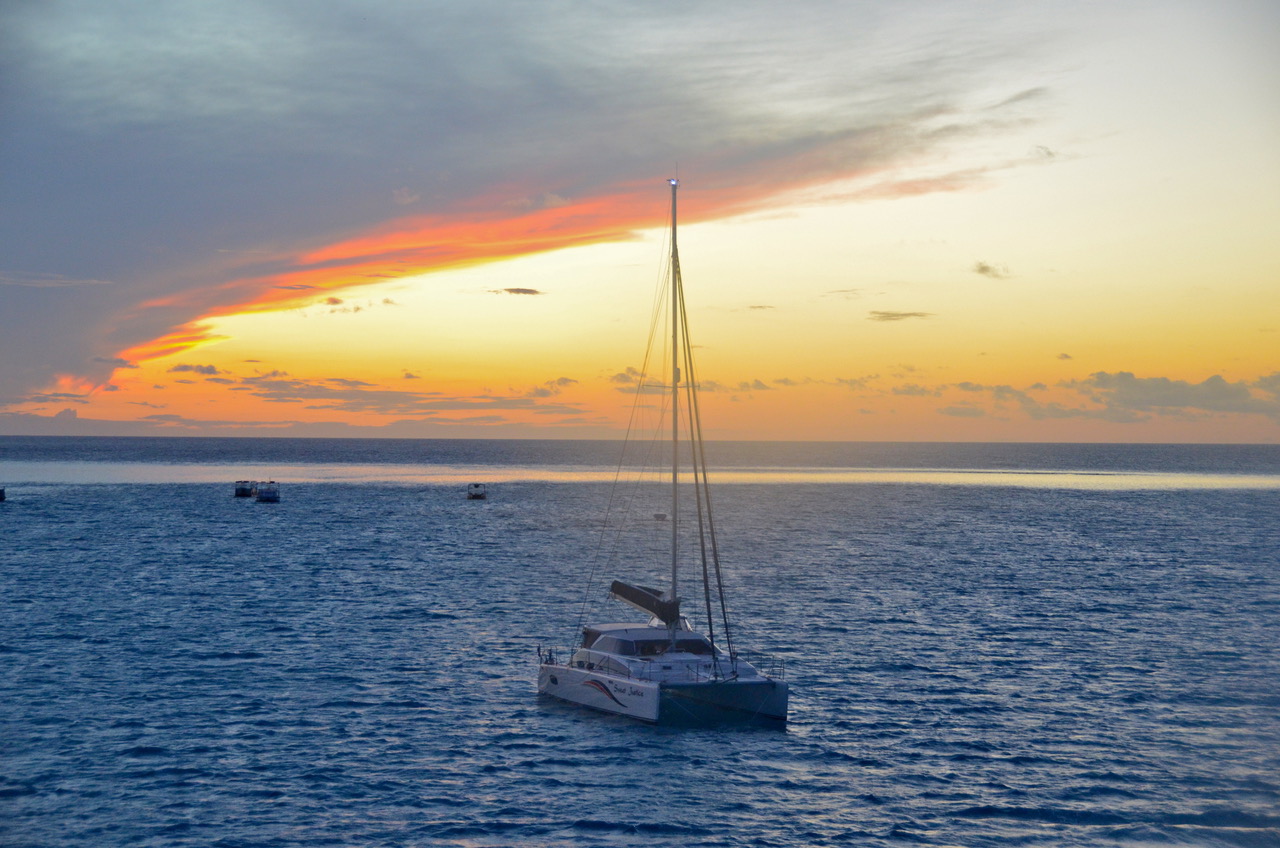
    Next time around, we would prefer a catamaran. Catamarans are not as seaworthy as the equivalent mono-hull: noted, granted, and considered. If we anticipated being in any sort of bad weather, I would want the safety of a mono-hull. However, if we stick to the tropics, as we did the first time (after getting from San Francisco to Mexico), we could avoid dangerous weather. A catamaran is much more comfortable than a mono-hull. First, no side to side rocking. The difference in comfort that this provides can’t be overstated. Rocking in anchorages makes for unpleasant sleeping. Second: no heeling. Sleeping, cooking… doing whatever, at an angle while on passages is challenging and uncomfortable. Being flat on a passage is awesome. Second: catamarans have huge real estate both in the cockpit and the cabin, where everybody spends their time, and both areas are more elevated with better light and views. In both the cabin and cockpit there can be a large tables surrounded by couches, which makes time at anchor (which is most of the time) so much more pleasant. There are more cabins as well, which means space not only for our family but also for friends to join us. Four cabins is typical, which is far superior for a family trip as opposed to a two-friends-and-a-wife crew. Also, it sails considerably faster, which means less time on passage and more time living at anchor.

    The disadvantages of a catamaran. As mentioned, it is less seaworthy. It is harder to find one that is ready for bluewater cruising, since fewer people do it. It is more expensive for the same waterline length. There are two engines to maintain. Most of the ones available for purchase have four heads. FOUR heads. One head is enough to maintain, four is plain stupid. But that’s for the chartering crowd—four cabins, four couples (or families), and no one wants to share a head. It can’t fit in standard slips, so it costs far more to keep it in a marina—if you can even find a spot.

    Plan on keeping the boat

    In retrospect, I have no idea how I managed to successfully motivate for all the boat work and upgrades that we did, when we were only planning on using the boat for a year and then selling it. Where is Syzygy now? Do the current owners appreciate all the work we did? Probably not.

    And now we’re thinking (vaguely) about doing it again. What if we had had the financial freedom (i.e. be loaded) to put Syzygy on the hard and keep it? We certainly acted, in working on the boat, as if it was going to be entirely for us forever, without regard to what any imaginary next owners might have wanted. If we had been able to put Syzygy on the hard in Australia, we would be simply planning logistics on when, rather than considering starting from scratch. We probably would have taken a trip or three already. Granted, we didn’t have the option then to keep it, financially. But it’s hard to think of buying another boat and putting sweat and tears into boat work (which is absolutely inevitable) without being able to benefit from our investment (of money and labor) for decades rather than a year or two.

    Fishing

    I’ve never been a fisherman. Fisher? Fisher-man? I was planning on learning how to do it before our last trip, but by the time I finished up with boat work I was too burned out to read any more books and learn anything new. Fishing seemed like more work to me. Consequently, we never really did much fishing, caught hardly anything. Friends were fishing off the stern while sailing and spear fishing in anchorages, and eating fresh fish all the time. We at fresh fish too, but always caught by someone else (usually locals). I spent tons of time snorkeling all over the place, but didn’t have a spear gun and had little interest.

    Next time, we would fish and we would eat plenty of seafood that we caught. I would take a nice spear fishing setup and gear for the stern, and learn how to use them, and practice, and eat fish.

    Boat equipment and work thoughts

    On construction projects, I would avoid fiberglass-covered plywood; I would use FRP (fiberglass-reinforced polyester) sheet. For example, on the backing plates for through-hulls. Why I thought that the time and effort to fiberglass over bits of plywood was a good idea, compared to simply buying the already-waterproof fiberglass plate, is beyond me. I can’t believe we made water tanks out of plywood and shit tons of fiberglass and epoxy. That was stupid. We should have hired a welder to come in and fix the existing stainless tanks. That was one of the first jobs we did and we had no idea.

    I would skip the watermaker, just carry enough to carry through. We never ended up needing it, despite spending plenty of time at sea and in remote anchorages. Too much maintenance and super expensive. Of course, that’s after ripping out all the pressurized fresh water system, using foot pumps for everything, plumbing a salt-water foot pump to the sinks, and using a bucket of freshwater for shower rinsing (no freshwater showering inside the boat). I would do the exact same over again, in that regard. With three boys? No way we would let there be pressurized fresh water access on board.

    I would insist on at least 1400 Ah of battery capacity, 400 W of solar, and a wind generator, just like we had on Syzygy, together with all of the same electrical savings we implemented, e.g. LED lighting, efficient fans, efficient refrigeration, etc. The ability to live normally without having to run a generator was crucial. I do NOT want to be that boat that’s running a generator in the anchorage.

    We would get a rock-solid reliable outboard for the dinghy (right away, rather than half-way through the trip), and also some paddleboards or a kayak for multiple easy transport options back and forth from shore. With a whole family (maybe more than one family on the same boat?), everybody needs to be able to get back and forth from shore efficiently.

    We would get one heavy, oversized anchor for daily use. The weight of the anchor made a big difference in the holding power, and a catamaran has considerably more windage than a monohull. Weight of the boat is not as relevant as the windage. Nobody cares if their anchor holds when there’s no wind—a pile of chain hanging straight down to the bottom will do it. What matters is when the wind comes up, the force with which that tries to push the boat away is the primary consideration. Then we would also have a lightweight Danforth for kedging off, and one more medium-sized anchor if we needed to do a stern anchor. No massive fish-hook storm anchor.

    Safety

    We would have man overboard tracking devices/alarms for all of us to wear on passages. The biggest emotional hurdle to another boat trip for me is the nightmare of one of the kids falling overboard and being lost in the ocean. I can’t even handle the thought of it, my mind rebels when it even comes close, and yet it is a real risk. On passages, I want a reasonably-sized device that will mount to the inflatable life vests that has a) a proximity alarm that is tripped if it gets too far away from a base station b) a radio beacon sending out coordinates to a reception system on the boat, so that we can simply turn around and go to the waypoint. This technology is not even remotely far-fetched today, so if it doesn’t exist already, or by the time we go, I will design and build something myself. I’m not talking about a personal locator beacon, which transmits to the satellite and is not helpful for the boat that is a few hundred yards away. I’m thinking something like the AIS transponder; it would have a built-in GPS and would transmit the coordinates digitally over VHF and would be picked up by the existing AIS system on the boat and the location dumped on the chart.

    I would also advocate for rigid lifelines. Or whatever you call them when they’re rigid. Spring for the cost of the stainless steel tube to get it done, and have a welder come weld them straight to all the stanchions. The flexible lifelines were annoying to deal with and were not as safe as rigid stainless tubing would have been. It seems a small price to pay for the dramatic improvements on deck.

    I would again use the identical KiwiGrip non-skid for the deck surface. It was easy to apply and provided superior stick to the textured fiberglass which is the state of the deck when it comes off the assembly line. I would mask the existing texture pattern and put down KiwiGrip on all the existing texture.

    Looking back on the modifications we made to Syzygy, I’m quite proud. We did some awesome stuff. The lavac toilet plumbing was crucial. I have a hard time imagining anything else. I really do think that I would rip out the old plumbing wholesale, and put in a new Lavac toilet and new hoses and valves etc, leaving only the existing holding tank, on any boat that we bought. I hate the smell of “boat head” and I shudder at the thought of dealing with literal shit while in some paradise. I want it easy, clean, and maintenance-free, and if I have to spend a thousand dollars and a week worth of work to get it that way, that’s a price I will gladly pay for this particular aspect of boat work. But I would only do it to one head for the whole boat. And I would rip out the other three heads on a catamaran, replacing them with whatever. An extra office area. A spare storage closet. Another set of kids bunk beds. A workshop. Just about anything is better than extra heads to have to deal with, it’s insane to me that catamarans put four heads in pretty much standard (and makes me question whether a catamaran is really for us, if that’s a priority in the boat design).
  • Life update

    This blog is ancient at this point–you’ll notice that our last post below was in 2011. Recently however I have been thinking about our trip, looking at old videos (the ones on this site in fact), and wondering if there might be another trip in the distant future…

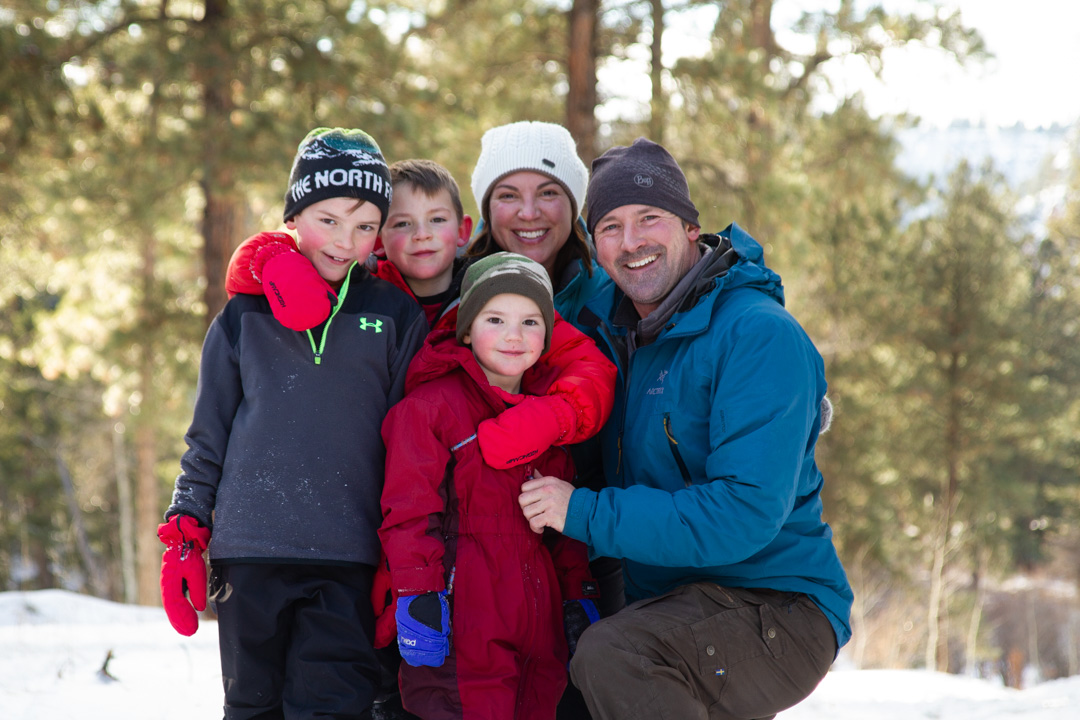
    Karen and I now have three children, aged 8,6,4, and are living in the mountains of New Mexico, doing the extremely cliched American existence. We live in a modest house with a small backyard in a typical neighborhood and I work a 9 to 5 job while Karen parents and teaches the kids at home (while trying to fit in a bit of legal work on the side). It’s quite wonderful.

    I’ll let Jon chime in with his situation up in the front range (spoiler: also very domesticated).

    To be honest, we were all more mountain folk than ocean folk (and I include Karen and Jon here, and Jonny too), and that’s evidenced in our current lifestyles and locations.

    My current fathering efforts are focused on getting my boys outside as much as possible, and we even started a blog about all that (of course we did). Skiing, climbing, biking, and lots of camping; that about covers it.

    So what about sailing? Well, Karen and I have–for a few years now–been noncommittally mentioning how nice it might be to maybe one day try to take the kids sailing around the world. In 10 years or so, before our oldest heads off into the world by himself. Really preliminary thinking. Not too seriously. I know how an idea can snowball, like a “grass is greener” cancer, and develop a life and momentum of its own that can be hard to check, so I am maintaining a particularly low key approach to this next trip notion.

    Karen is homeschooling them this year, and that may or may not continue, but our little mini fantasy is summed up thusly: we have the ability to take our kids sailing around the world together as a family–how could we not give them that experience, if it’s possible to do so?

    Much of the wavering, the maybe possibly might has to do with our knowledge of how challenging and uncomfortable the sailing can be, even with adults, even with savings prepared. How much harder would it be with kids? We concluded after the 2011 trip’s end that we weren’t very good cruiser-types, that it didn’t, in the end, feel like our “thing.” We learned much from our experience however, and rosy-retrospection has finally kicked in. It’s easy (enough) to convince ourselves that “next time it will be different”. We are also cynical enough to know how self-delusional of a sentiment that might be…

    I don’t think we would be inclined to ever do it again, if it were just the two of us. But as a family, it could be incredible (or, admittedly, a disaster). What better bonding experience could we have with our boys, in 9 years or so, before they go away forever to college and life apart from us, than to travel the world together?

    More likely, they’ll have local friends and activities and pursuits and won’t want to leave for one to two years, and it would be a miracle if Karen and I could afford it anyway, but it has become something to think about…

    Hence my recent reviewing of videos from the trip, and the motivation for this post…

  • ex-HMAS Brisbane

    This post pertains to events that happened June 9th.

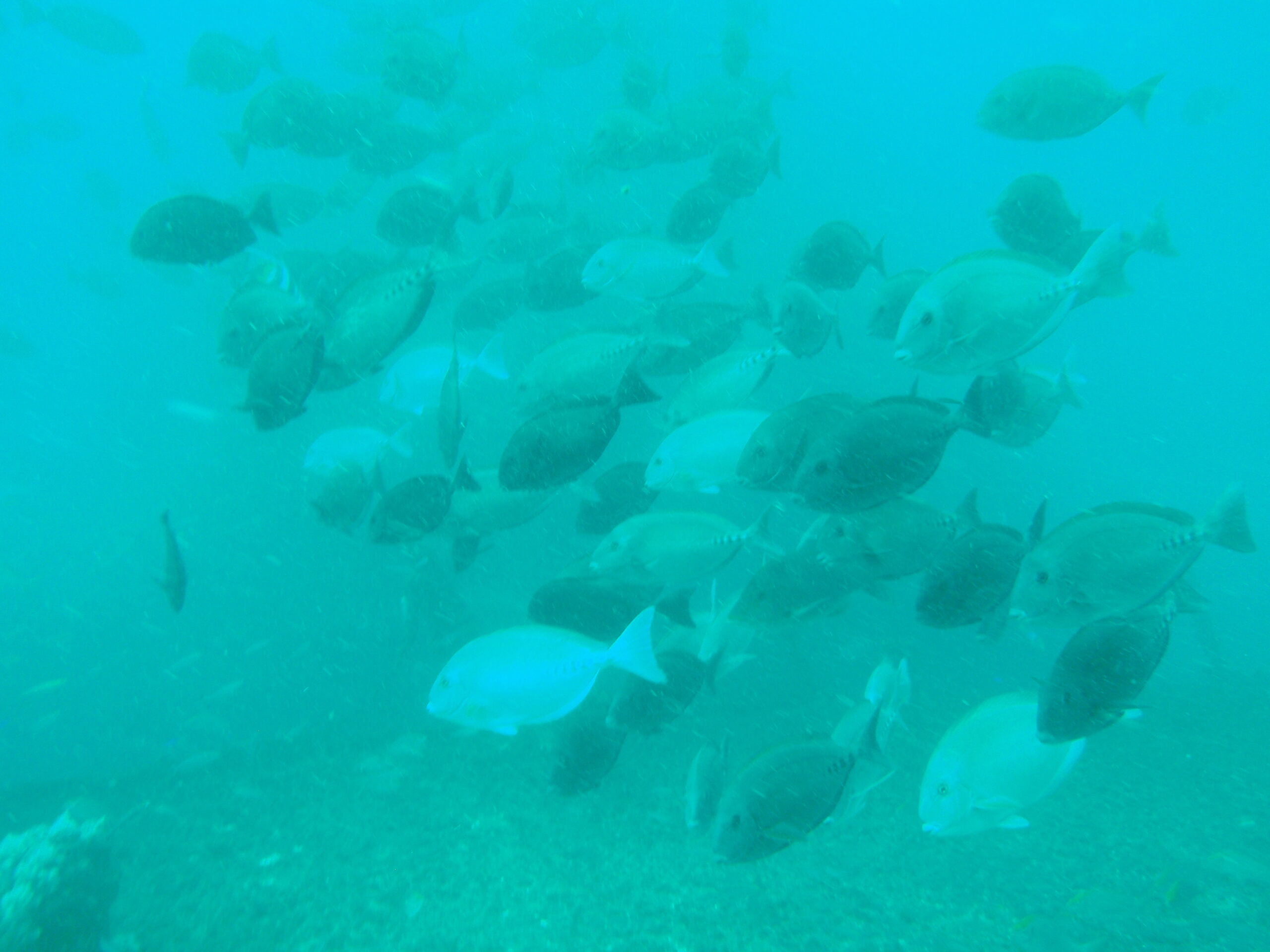
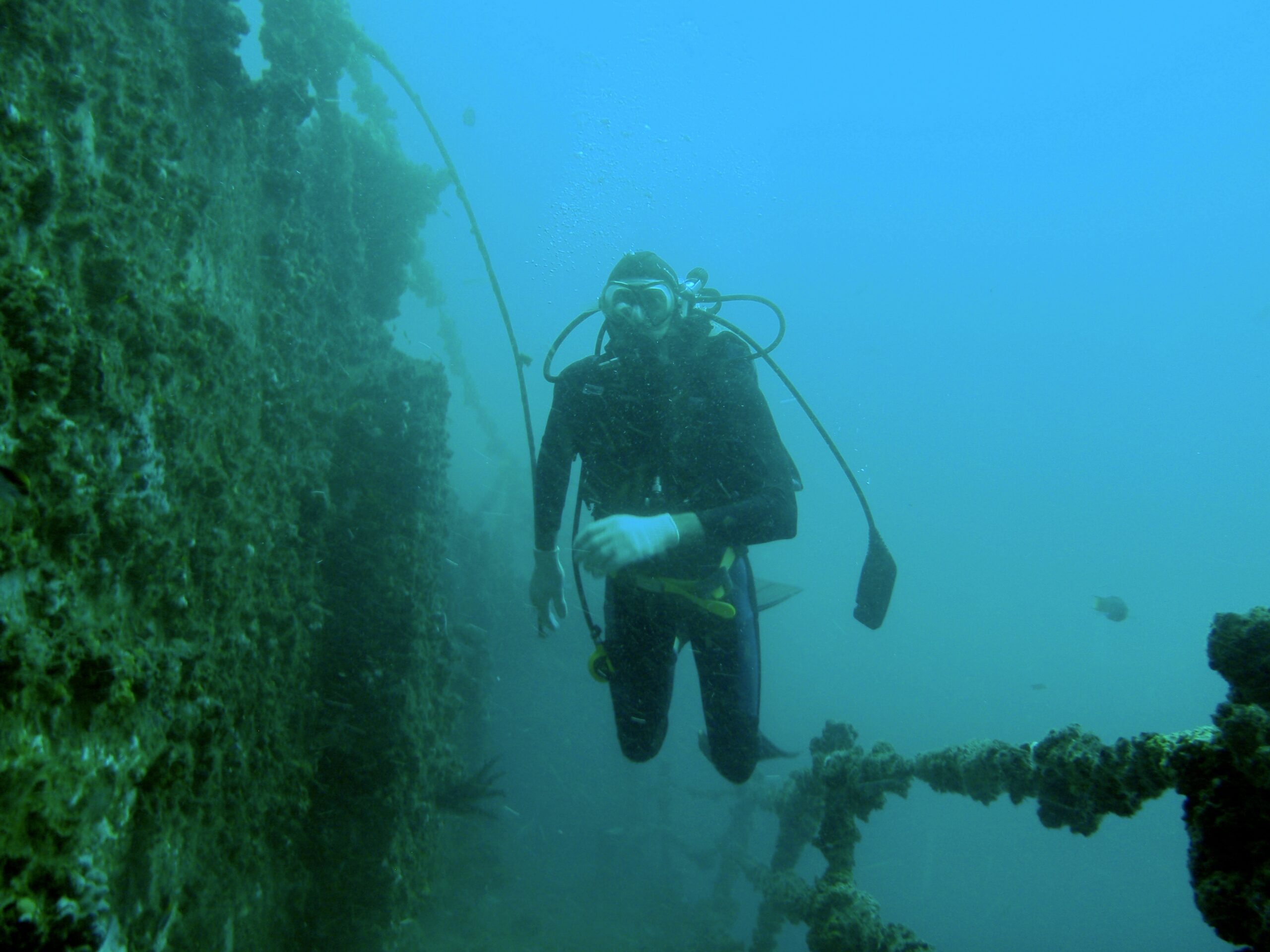
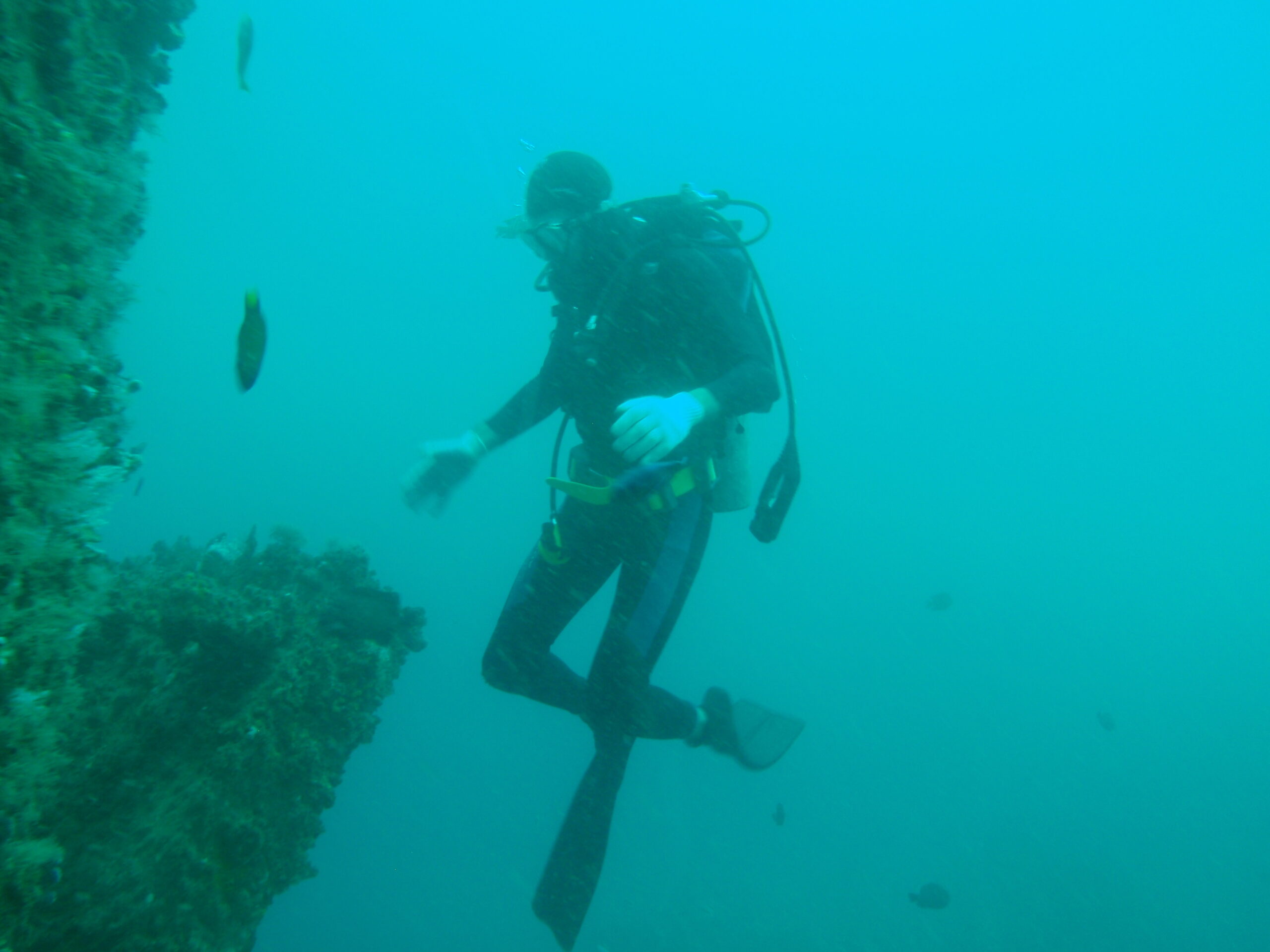
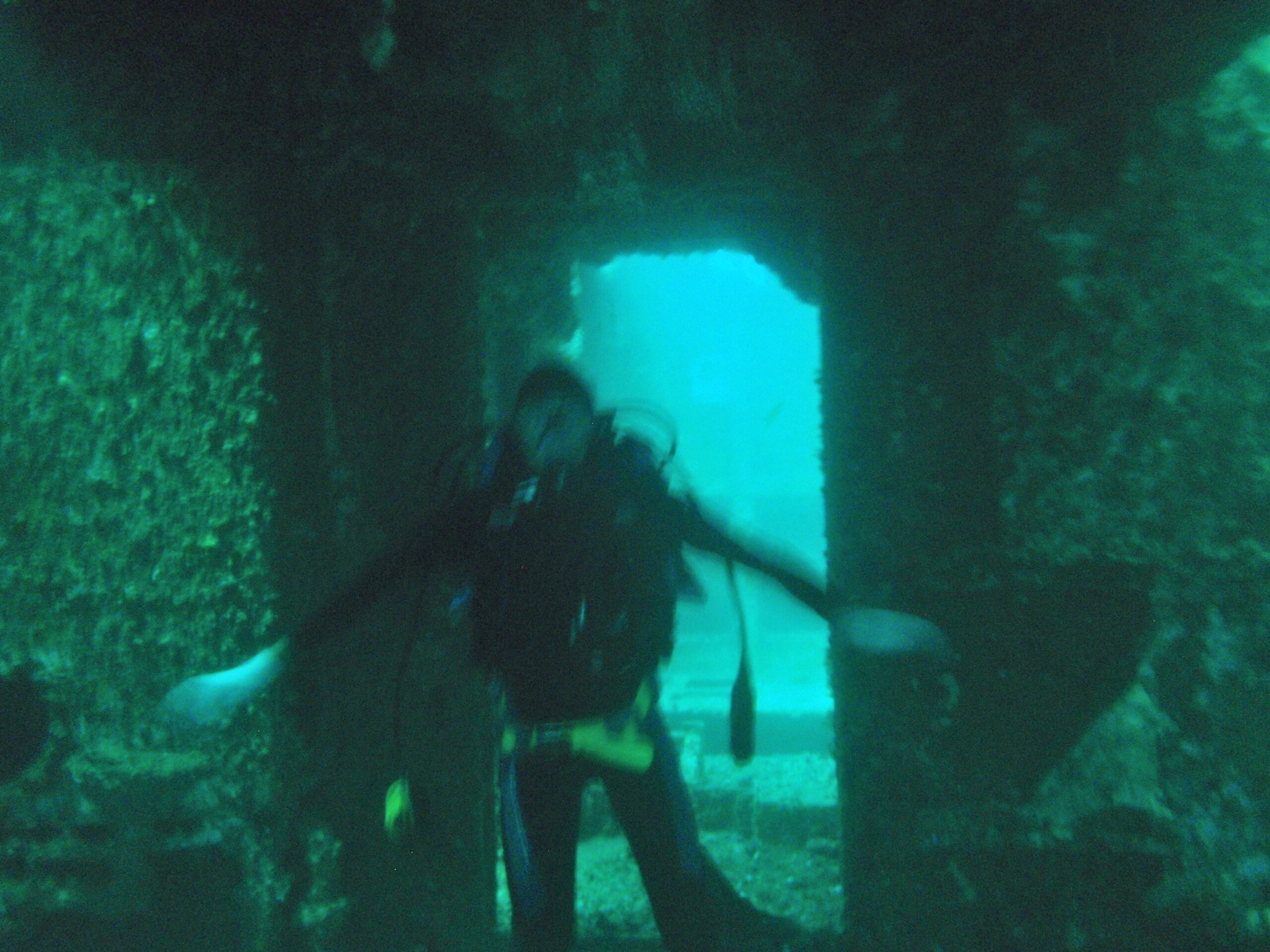
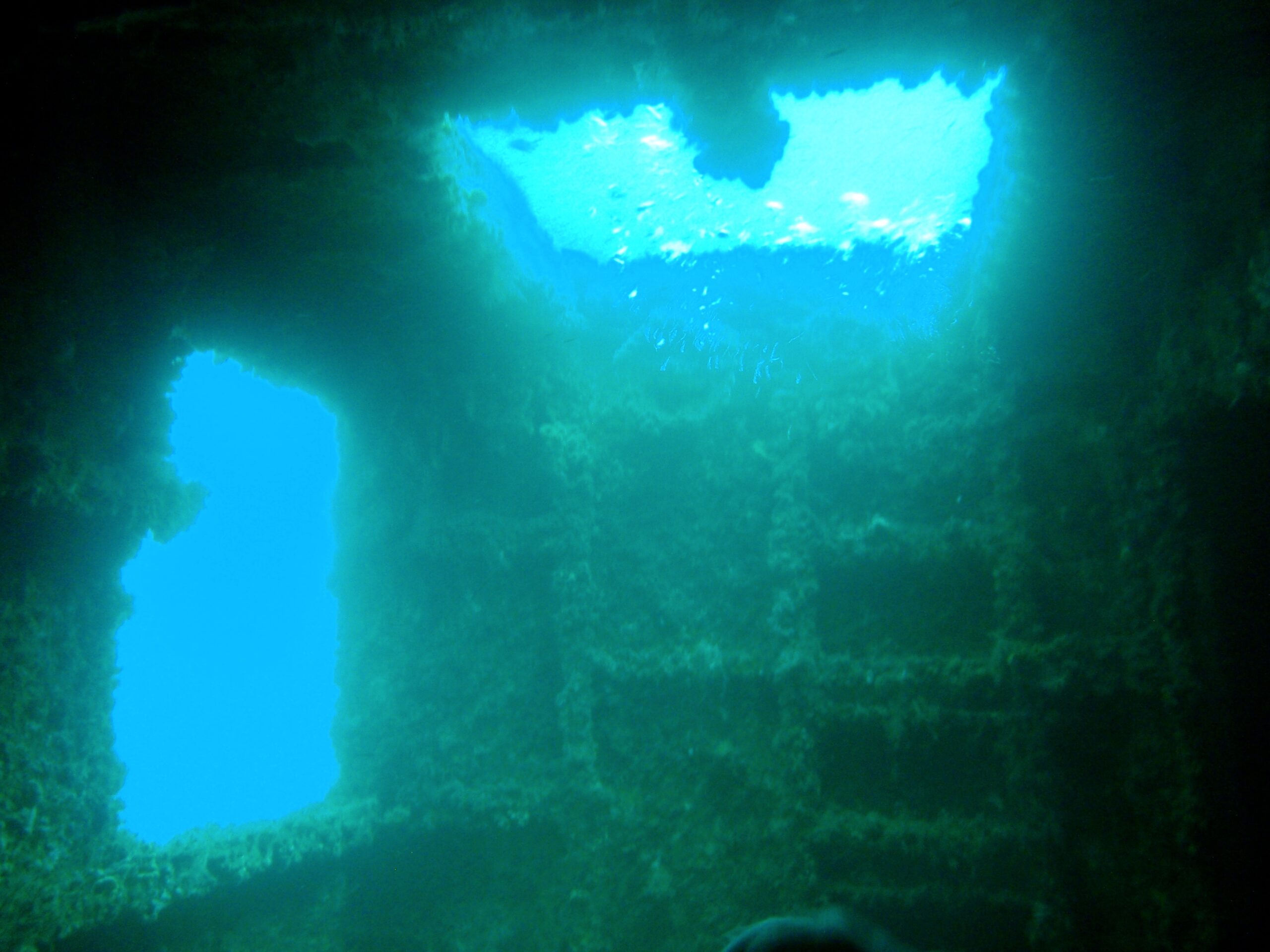
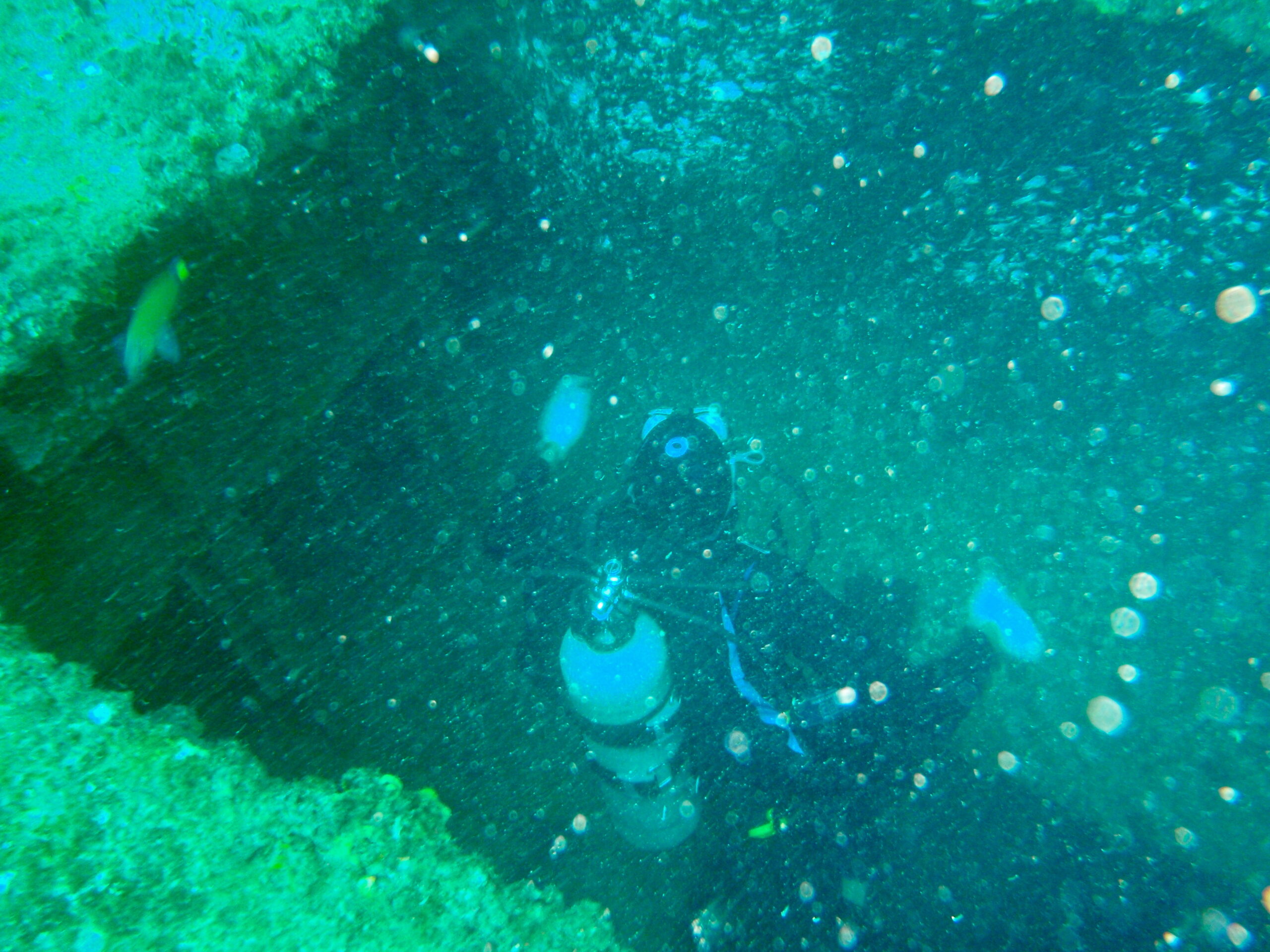
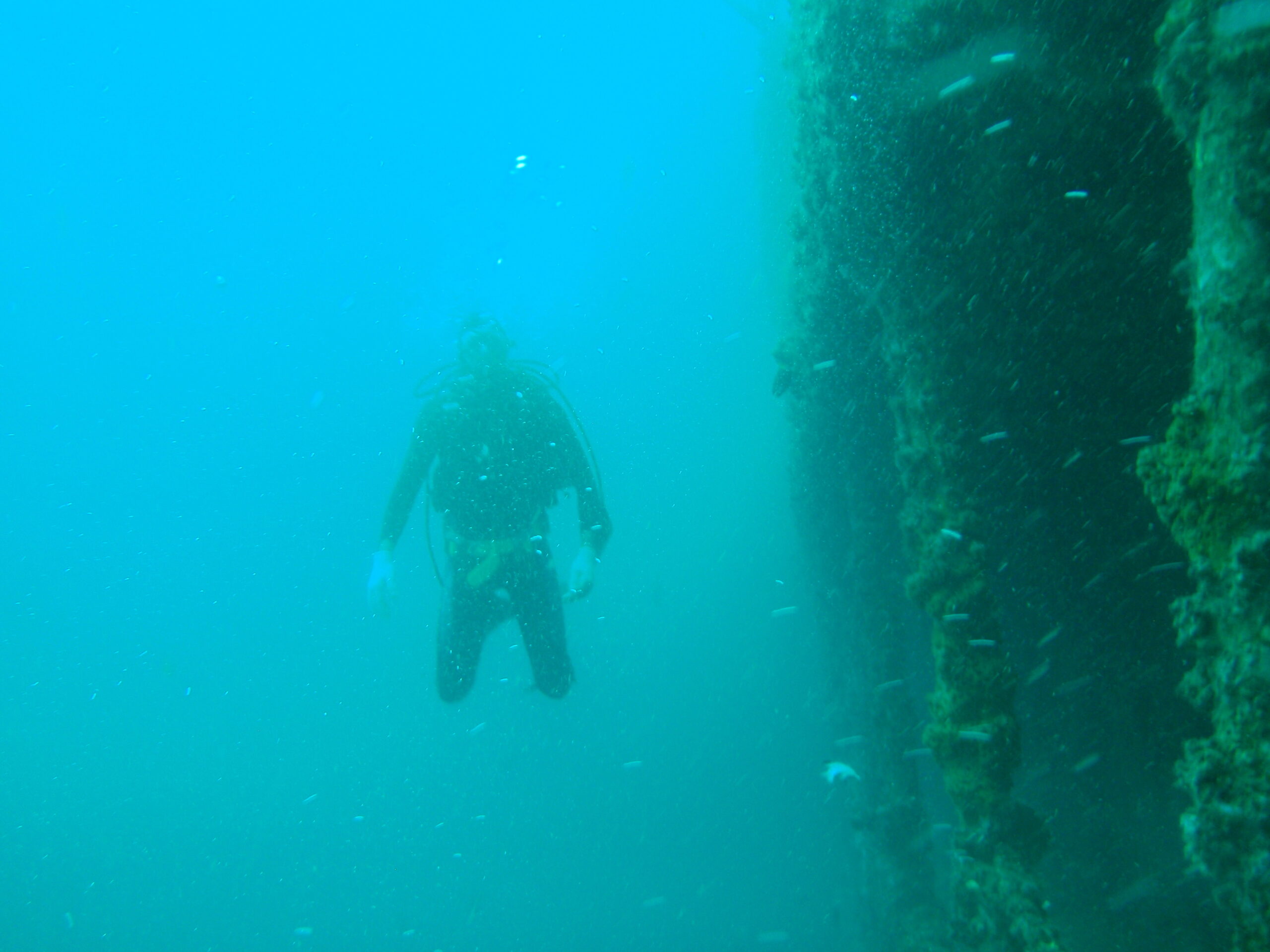
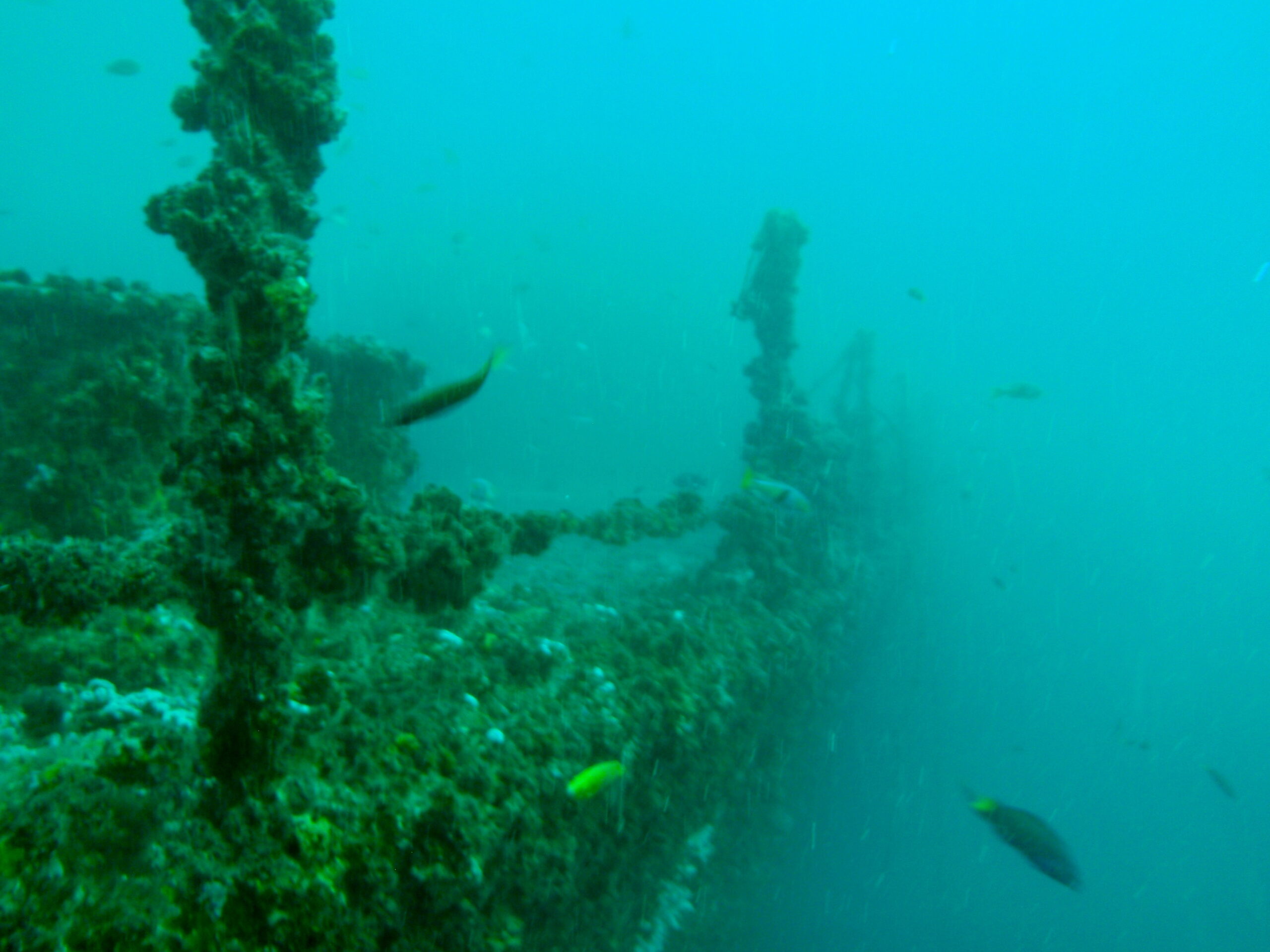
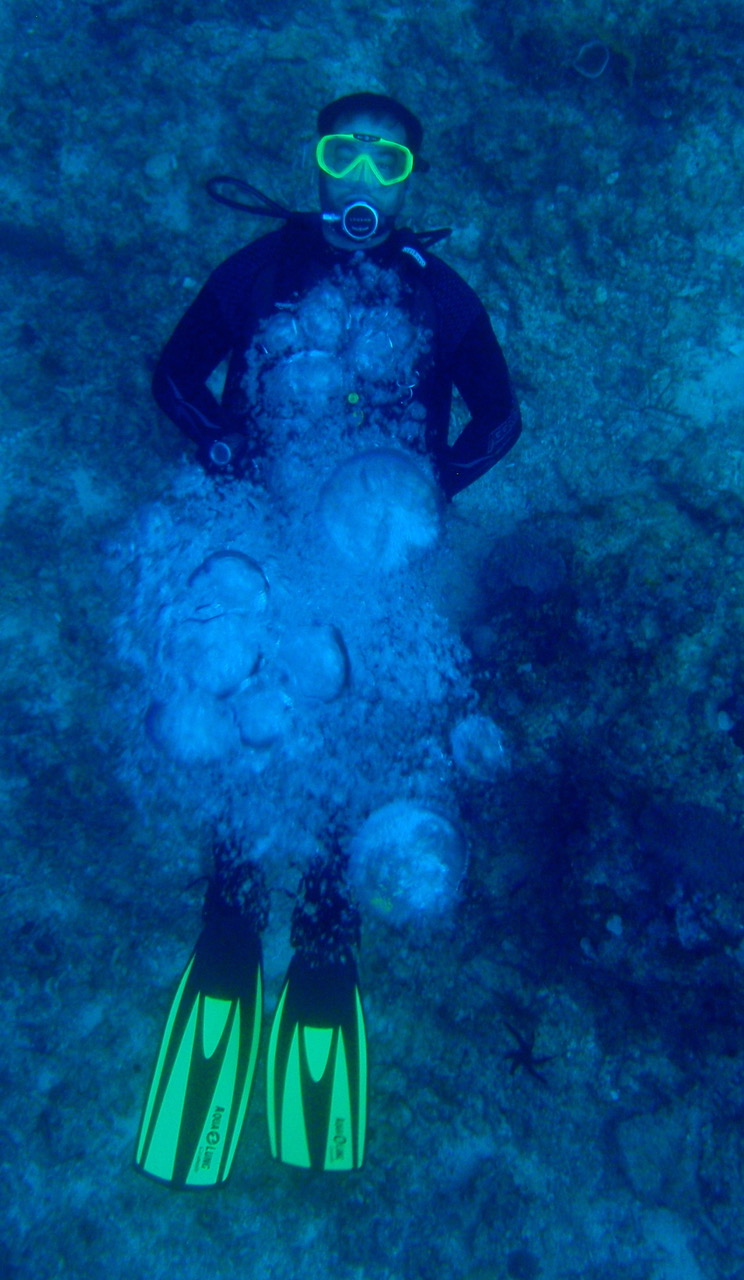
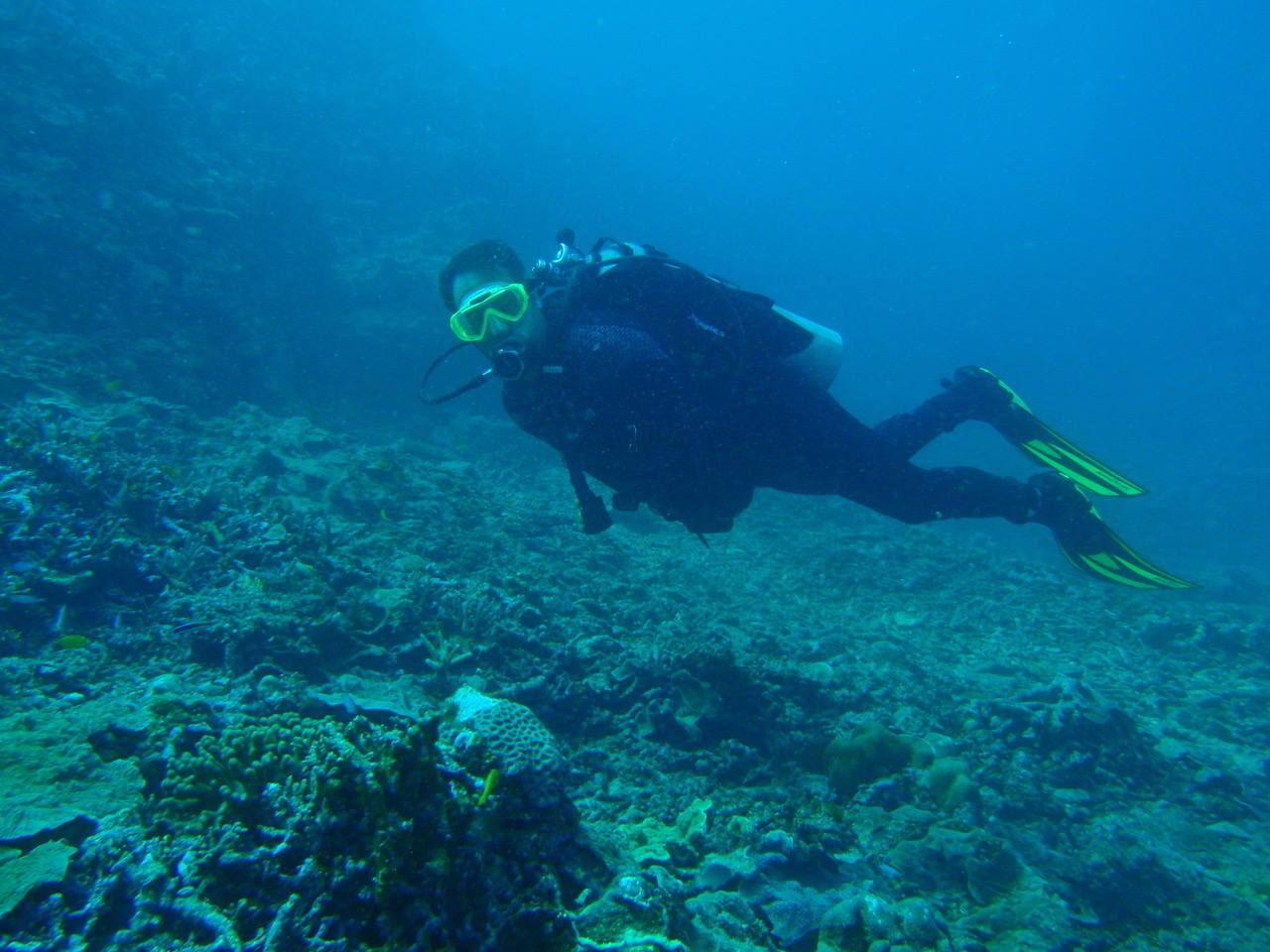
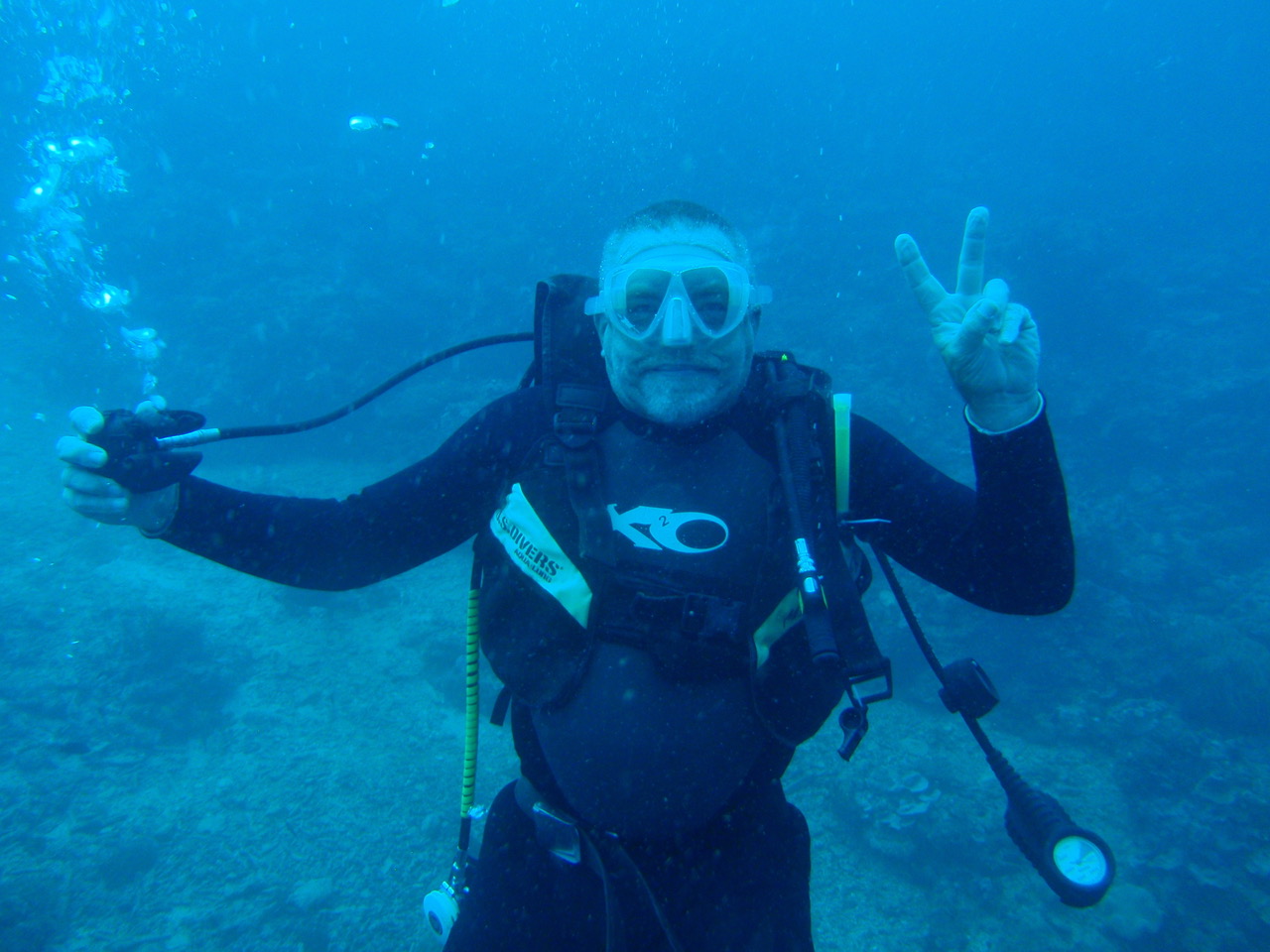
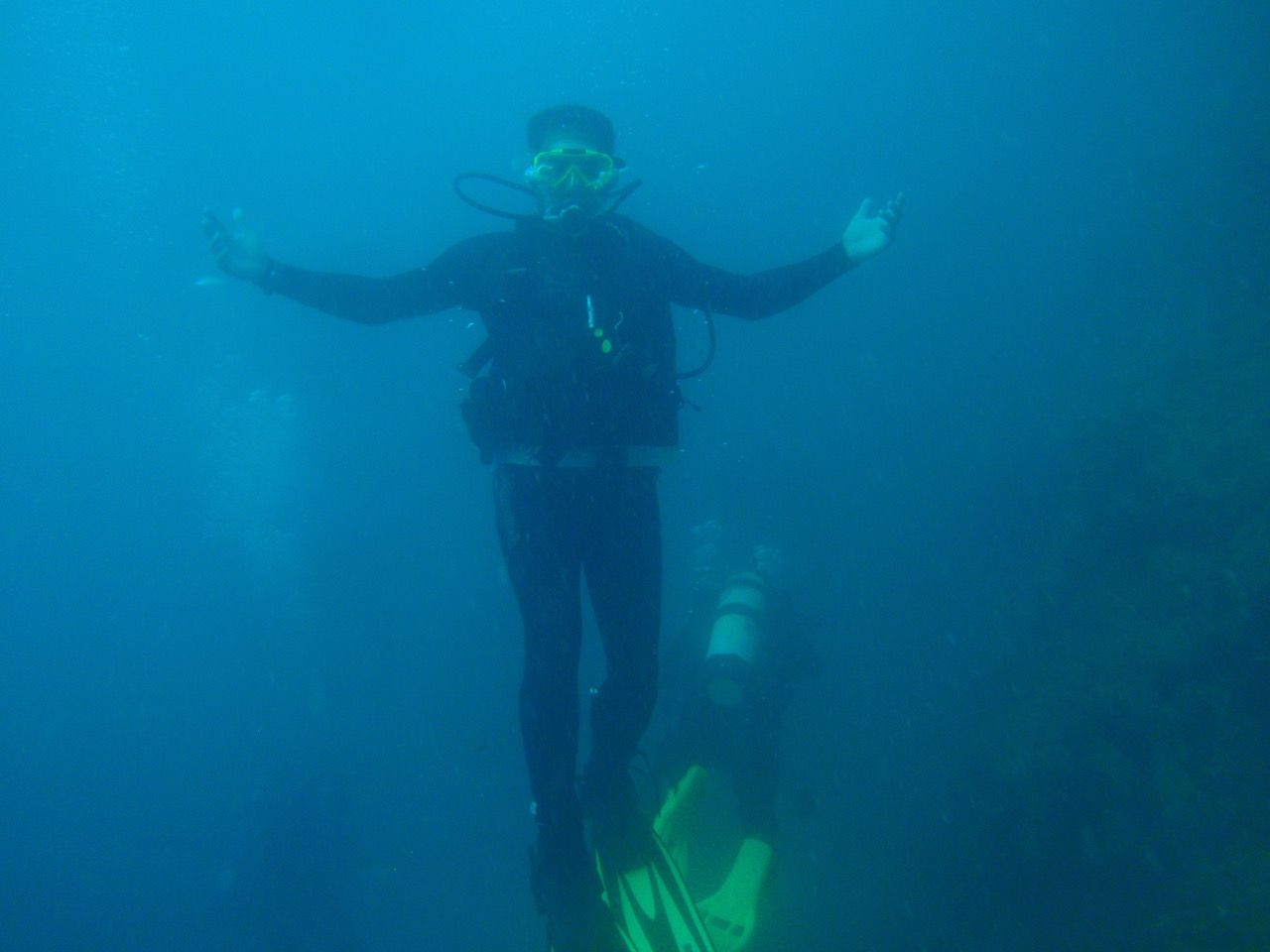
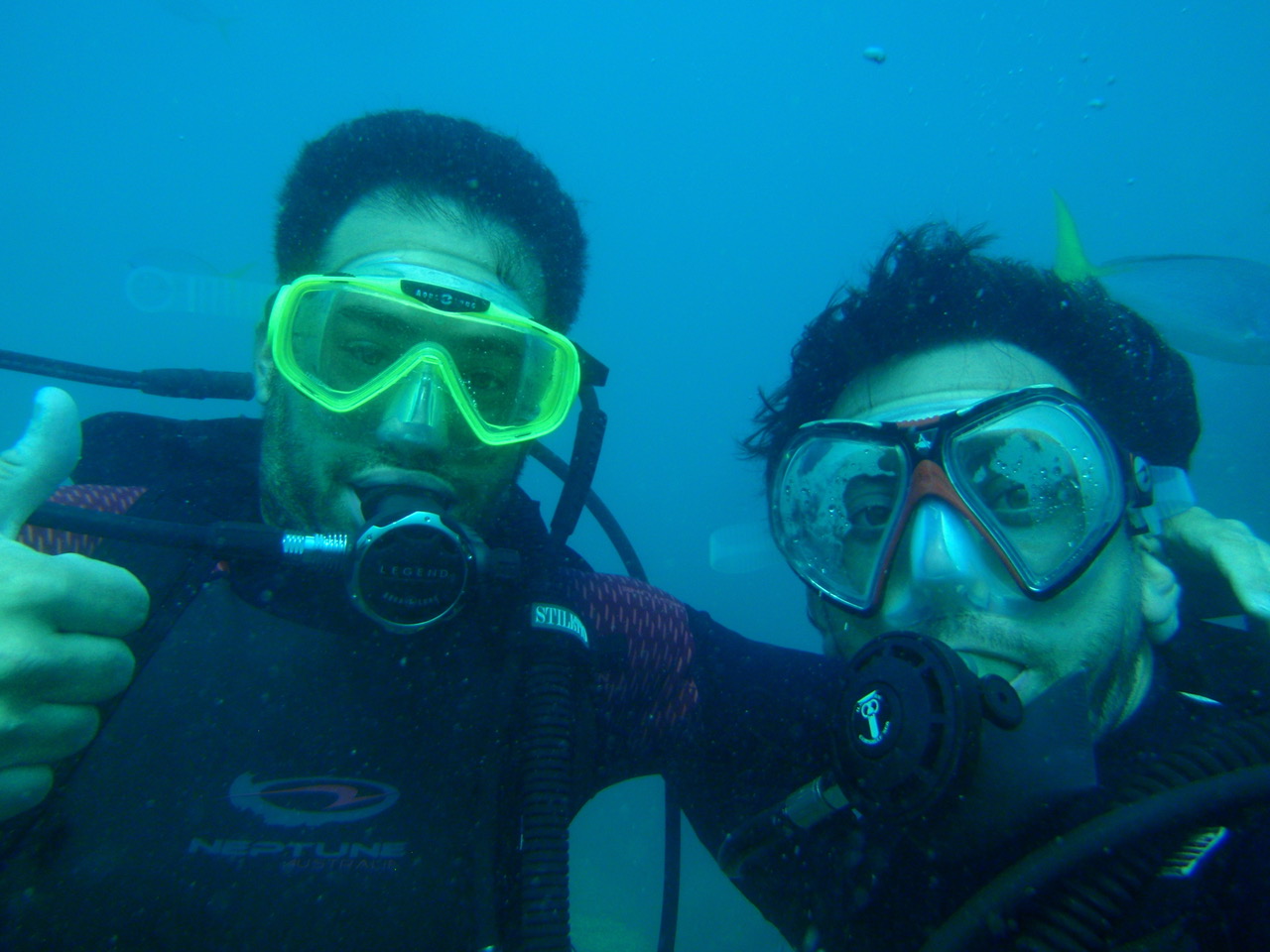
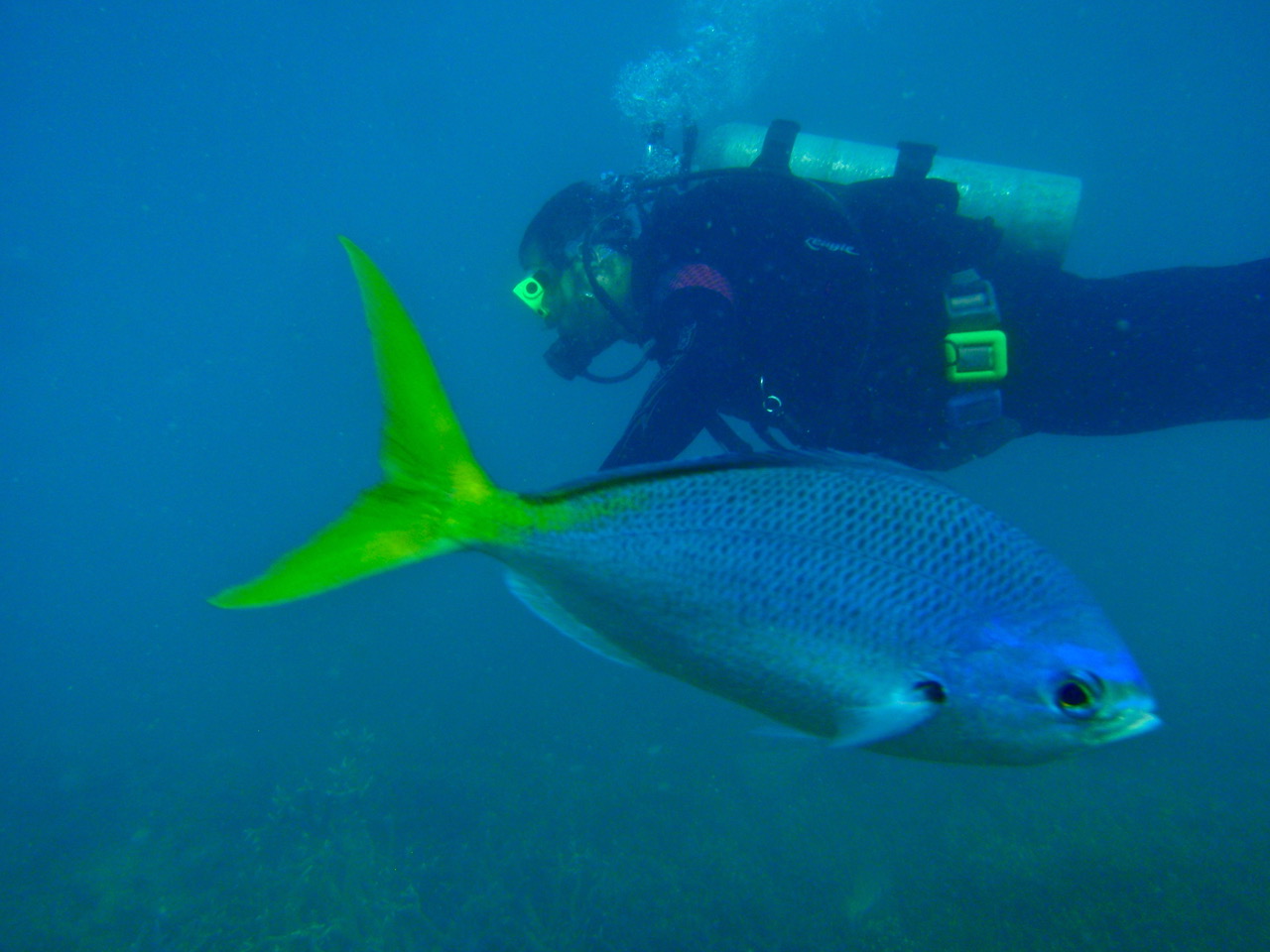
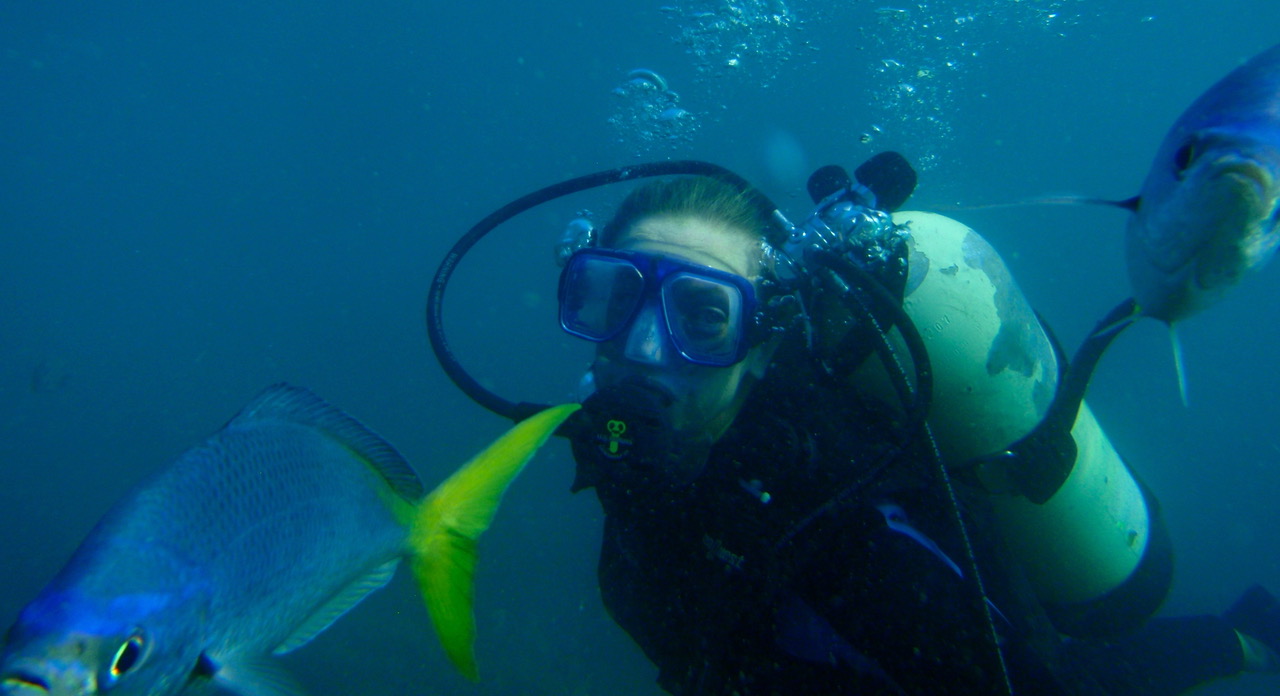
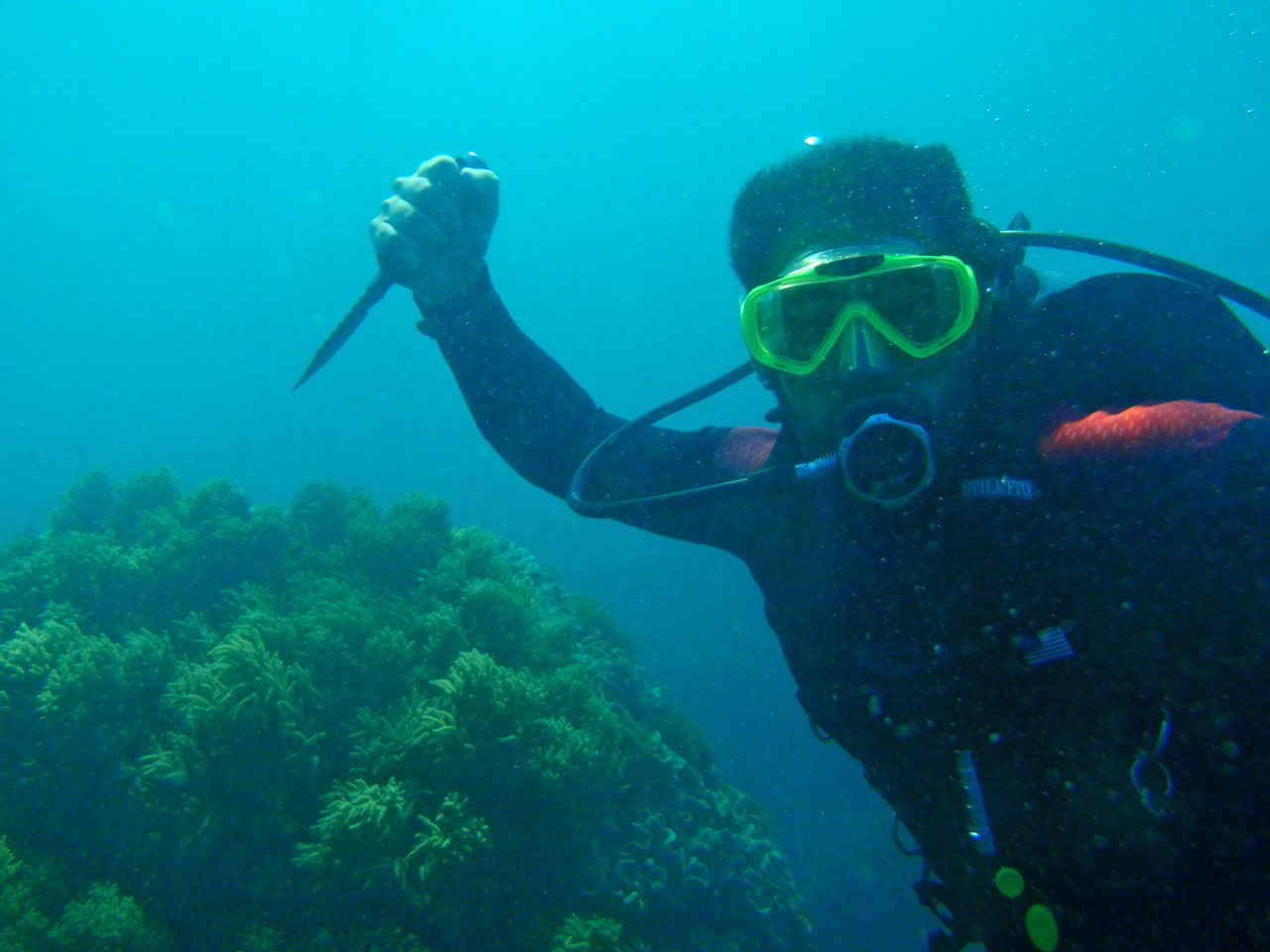
    Justin and I went diving on a wreck called the ex-HMAS Brisbane just outside of Mooloolaba. ‘Ex’ because she’s sunk. HMAS is her Her Majesty’s Australian Ship. Justin was our dive master for the trip based on his getting certified more recently, three years ago, than I, fifteen years ago. He also paid for the permit and listed himself as dive master. He also has a dive computer. I have yet to figure out how mine work.

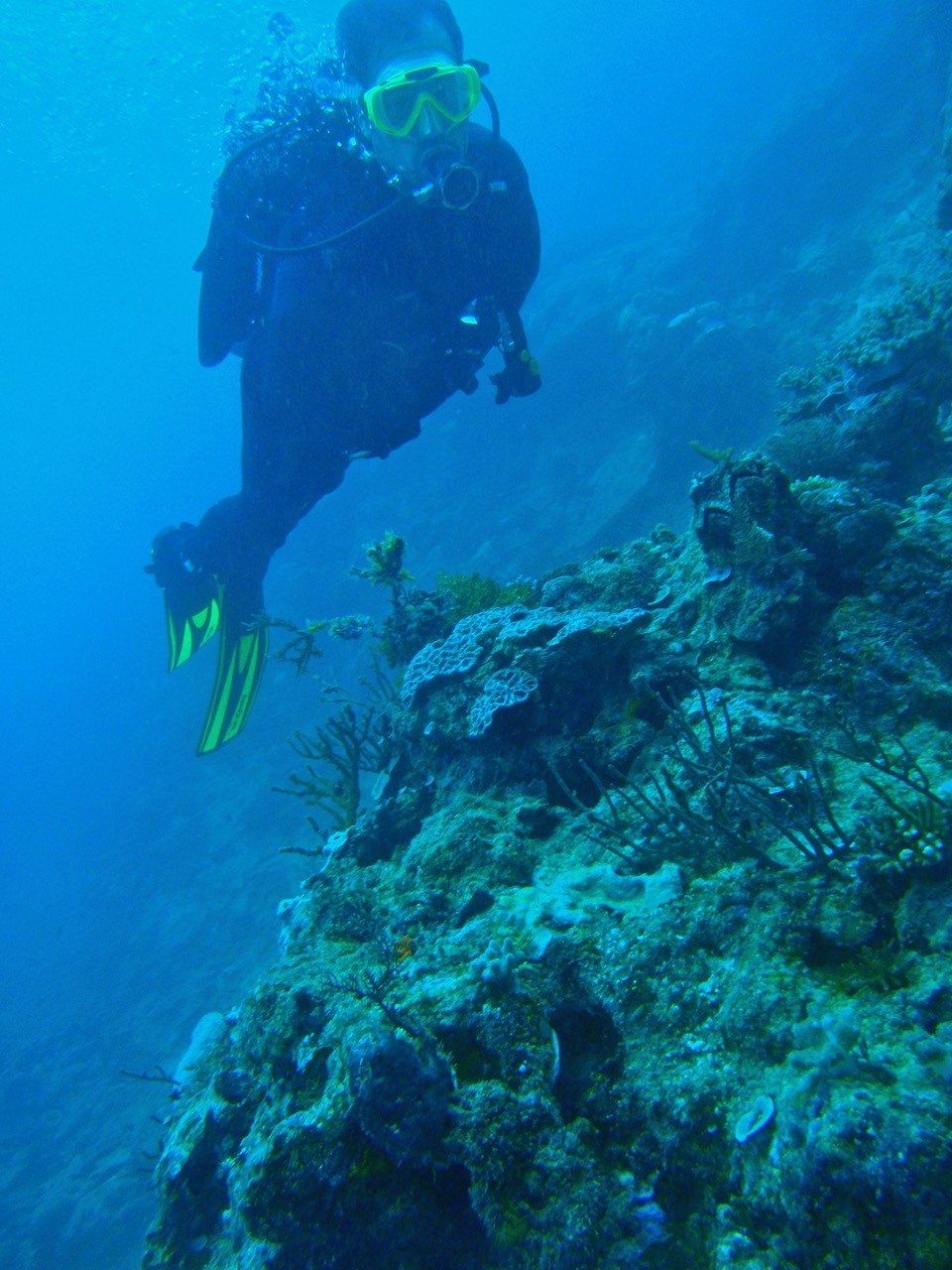
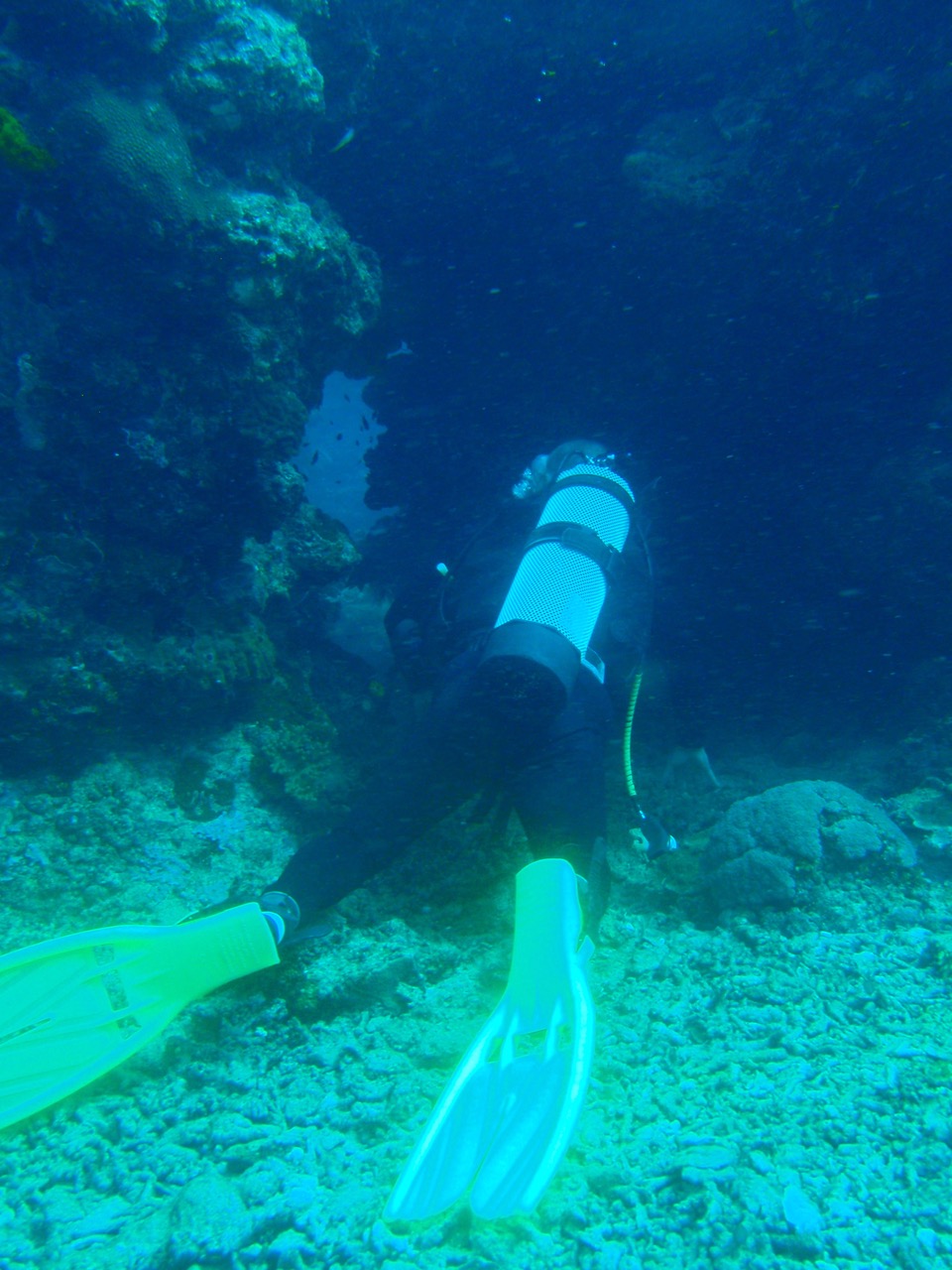
    The ex-HMAS is quite possibly the best first wreck dive you could do. It was purposely sunk to create a reef and a dive site. Large panels were cut through the sides to allow easy access all throughout the ship’s interior. Justin was hesitant before diving about going through the interior; going inside a real wreck can be a serious endeavor. Once we were down though, and right next to the eight foot wide cut-outs, I found it irresistible to not meander through and motioned that intent. What a cool experience.

    We almost were unable to do the dive, rough seas gave us fits as Justin tried to motor up to the mooring while I tried to snag the mooring with the boat hook. At one point, we had to execute a boat hook overboard, when I had snagged the mooring but was unable to hold on as the waves pushed us away. The boat hook was ripped from my hands. Justin did a few circles around the hook before finally closing in. We retrieved the hook and managed to secure up. And glad we were because it turned out to be a fantastic dive.

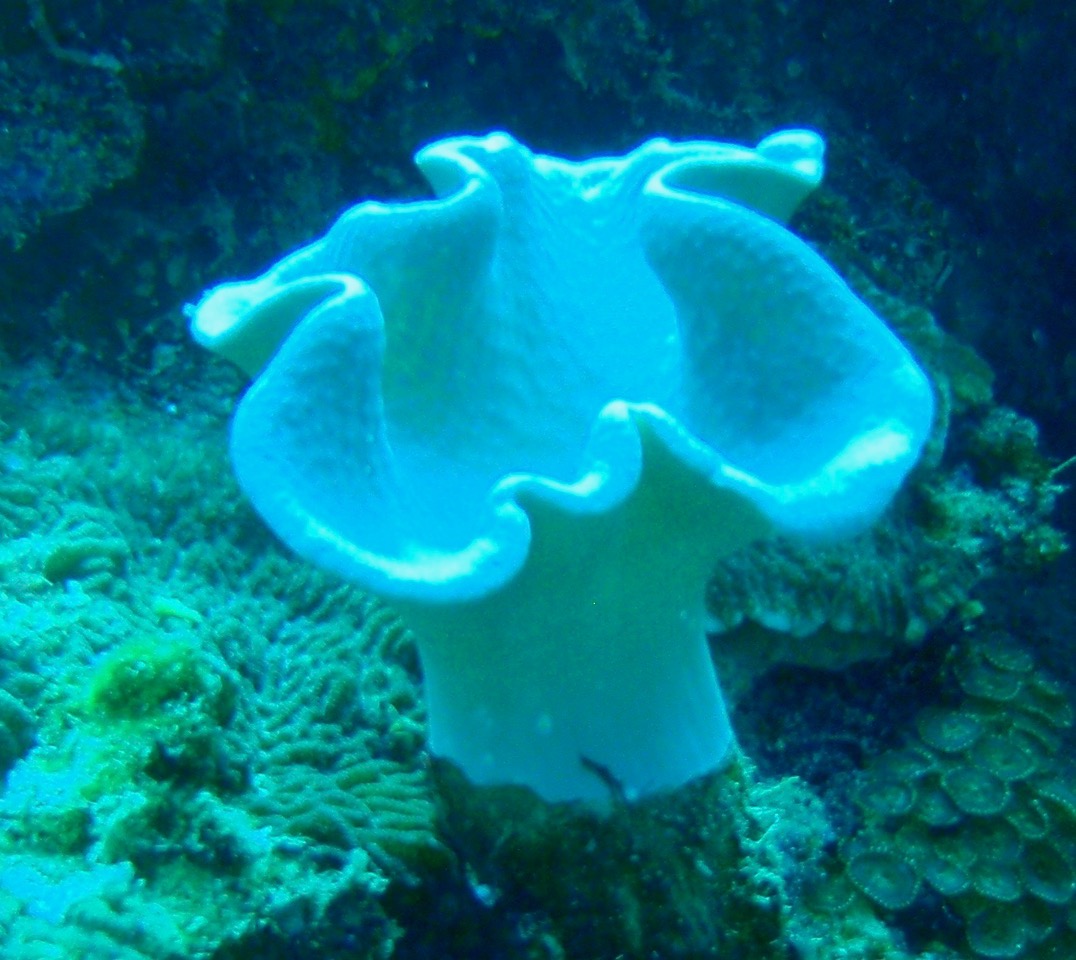
    Here are a few pictures.

  • Reflections on a Year

    Exactly six months ago Karen and Matt left Syzygy in my decidedly nervous, questionably capable hands. I was both looking forward to and filled with trepidation at the idea of being ‘the captain’ and with no other owner within 6000 miles.

    I survived a flood, one of the more hair-raising situations of my life. It was easily the longest continuous amount of time I’ve had to walk the line of near catastrophe. I did some single-handed sailing. I ran aground. Twice. I made some bad calls, and some conservatively good ones. I began to wear with more ease the badge of captain and the load of responsibility that Matt correctly predicted I would feel with him gone. He was also right in knowing that him being gone and my captainhood would add a dimension to my Syzygy experience that I will forever cherish and be proud of.

    I did more work on the boat in the four months between December and March then I had during the last three years of our ownership. And there is a sizable amount of work ahead in the next two months. For two years I mostly watched from afar in Colorado as Matt and Jonny worked on her, and then I spent another year feeling that I had somehow let down our enterprise and myself by not being able to contribute when I was slated to. Now, I feel absolved of my own torment on the issue and proud of what I’ve accomplished in upgrades and maintenance. And after a while, the neophyte actually started to know what he was doing. People were offering to pay me to work on their boat, fix this or sew that. Boomsticks!

    I have had an outstanding time sailing the Australian coast. With Justin along, I’ve seen some beautiful places. Lady Musgrave probably tops the list; Bait Reef, the Whitsundays, Magnetic Island, and the reefs off Cairns were other beautiful places. The overnight sails that Justin and I did were noteworthy for how peaceful and contemplative I felt while looking up at the stars and out at a relatively calm sea. I’ve surpassed Matt and Karen in time spent on Syzygy traveling (though not even close in miles traveled). Dolphins, turtles, spear-fishing, diving, sailing with gorgeous islands all around; I’ve had a grand time.

    And now, it’s time for my trip to end. I’ve decided after much contemplation and reflection that I’ve achieved for myself what I needed and wanted on this trip. Continuing on will not net me more of what I want. Yes, I could see more beautiful places, have amazing experiences, get into some more trouble. But in my heart, I know I’ve reached a point where there’s a next stage in my life to move on to.

    At some point, I had thought my choices would make this trip an impossibility for me. And then, in the end, I had a second chance to go. I still reflect upon the wrenching of emotions that happened in those stages. For a significant time afterwards, the emotional wresting back and forth continued to inform my emotional state and choices, and because of those choices it affected, it subsequently still dramatically affects my life. The feeling that I needed to take advantage of this time, of the possibilities of this trip, has only recently run its course and abated. Now that it has, I am ready to start the next stage of my life. I am ready and excitedly want to give other aspects of my life a try. I don’t know what is going to happen, but I want to at least give it a try. New opportunities await and new adventures are possible.

    I can point to many reasons for my reflections. I miss my family. Skyping doesn’t quite cut it and my niece is growing up. I want to see her, my sister, and my parents more often. I miss my friends and feeling as though I am part of a social network. Cruisers are great people, but it seems the social network is ephemeral and, as people sail where they will, transient. I want to be back in a tighter social fabric. I miss making money. Australia is abhorrently expensive and vacationing and cruising when trying to pinch pennies has begun to be wearisome. I miss a sense of purpose beyond hedonistic enjoyment. Which basically means I miss working. Or having something productive on my mind other than wondering how much fun or relaxation can I have. People with jobs may crucify me and perhaps I will regret thinking this 6 months after returning to the States, but I look forward to being enterprising and challenging my mind in ways the boat, even with it’s constant demand for maintenance and work that is either new to me or that I don’t quite understand, does not do. A catalytic reason, I miss my girlfriend, and have been gone too long.

    So I’ll be returning to the States soon. The plan is to leave Cairns in about one week and sail the boat back to Brisbane, where we hope to berth at East Coast Marina in Manly. I’ll be doing some final work there, cosmetic really, making the boat look as pretty as possible for the next owners. There is also laborious process to go through in order to sell a boat in Australia. My Australian visa ends August 25th, so that’s my time limit.

    For perspective buyers reading this, please see our ‘Syzygy is For Sale‘ page for detailed information on all the systems of Syzygy, equipment lists, photos pertinent to prospective buyers, and an asking price. Please don’t hesitate to contact me with any questions or to set a time to either see Syzygy or take her out on a sea-trial.

    So now I am transitioning into a new phase of my life. A whole myriad of options are possible and my excitement is palpable. I will be continuing to blog through the sale of the boat, and to our readers, I can only say thank you for your time and thinking that Syzygy’s little corner of the blogosphere was something worth paying attention to.

    The entire experience of Syzygy has been extraordinary for me. It has tested my in ways I would have never thought possible. My path over the last six years and particularly the last two has been stupefyingly unpredictable. I am a different person than I was six years ago; a better one I hope. And with that evolution in hand, in hand to depend on, in hand to reflect and smile upon, in hand to be proud of, and in hand to remember the mistakes and learn from them, I’m heading home to a new phase. And I’m excited as ever.

    Jon Haradon
  • Dolphins!

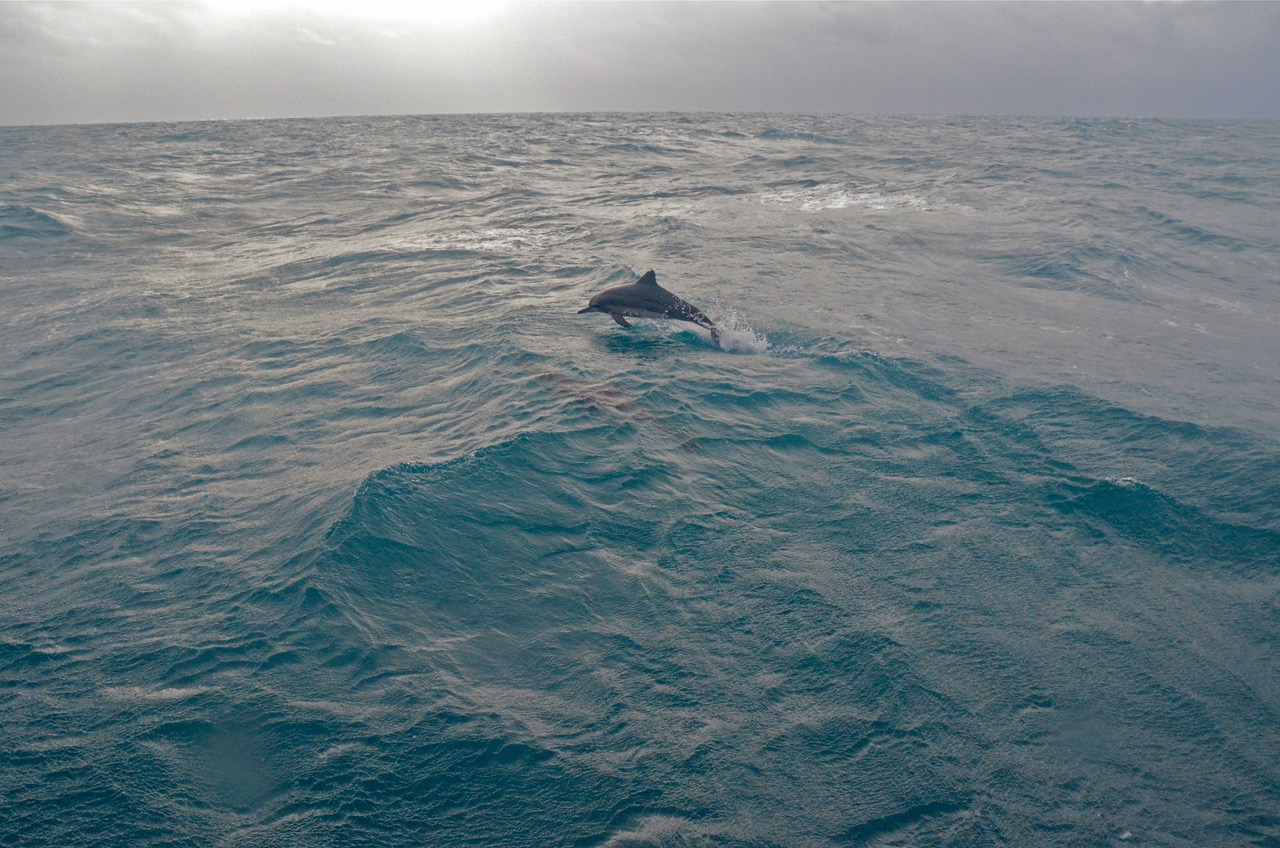
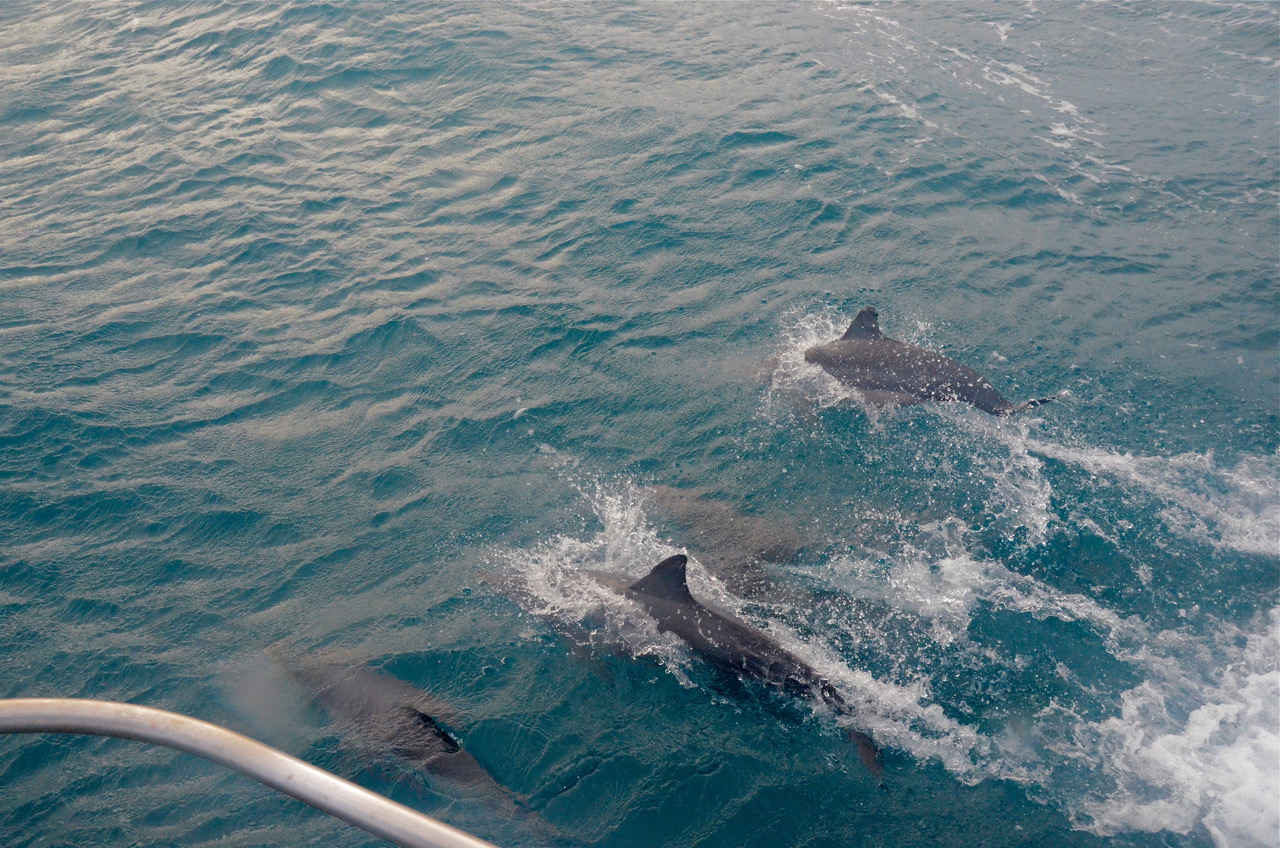
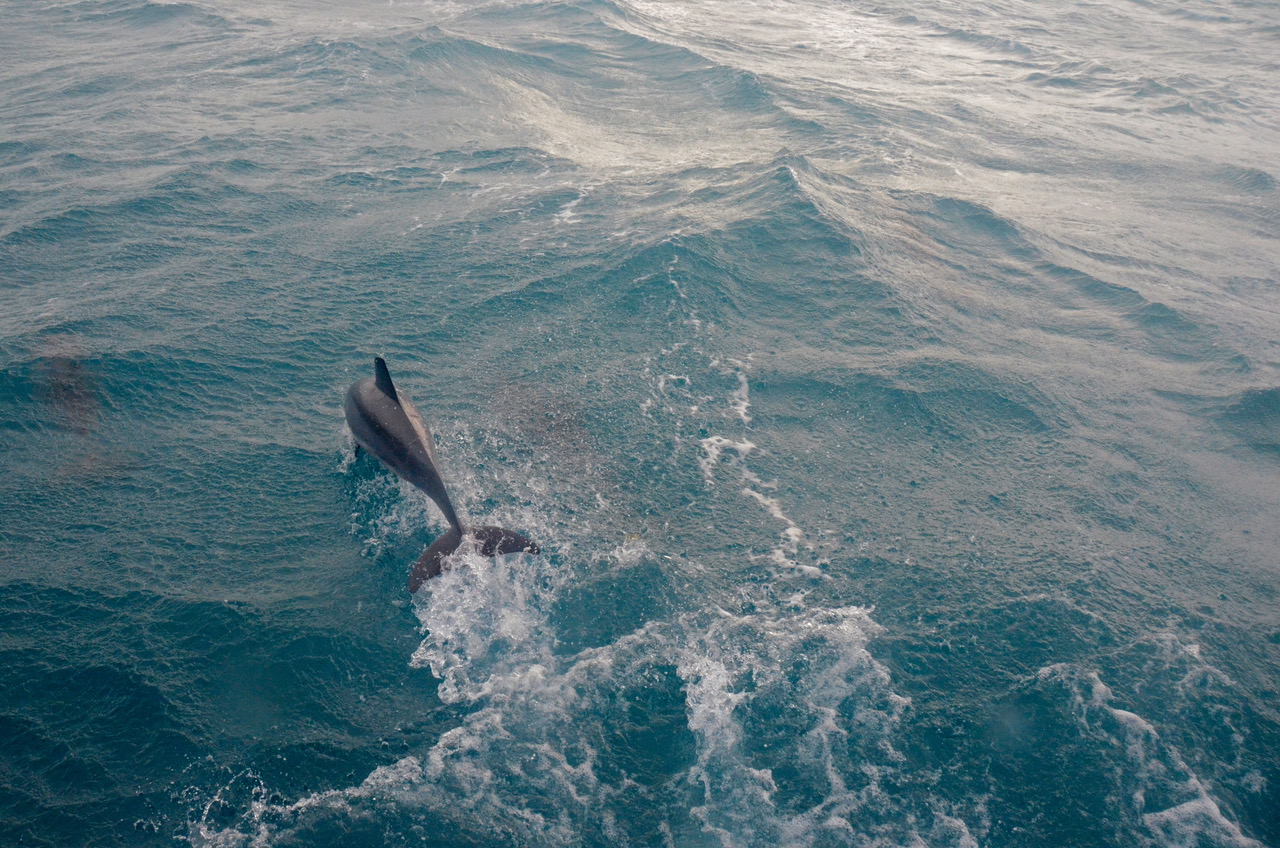
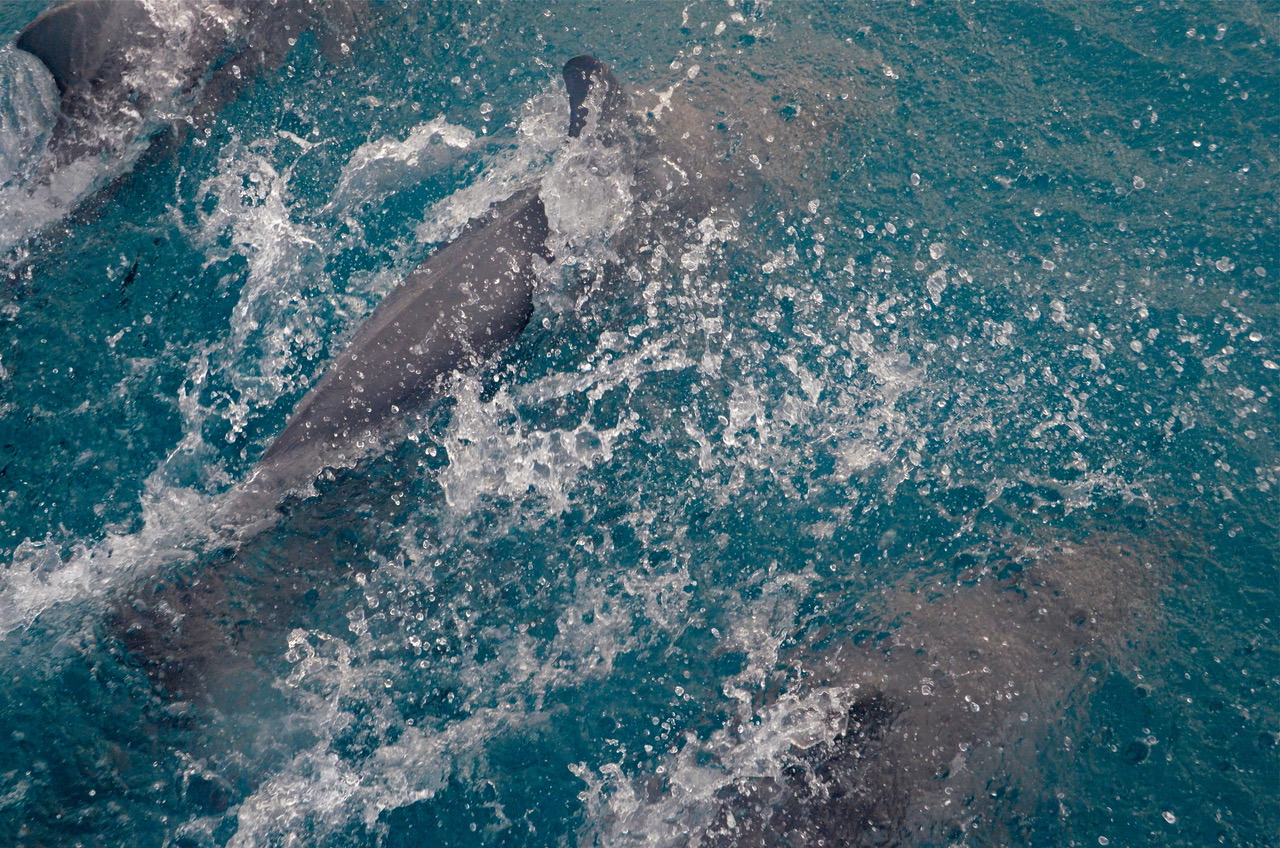
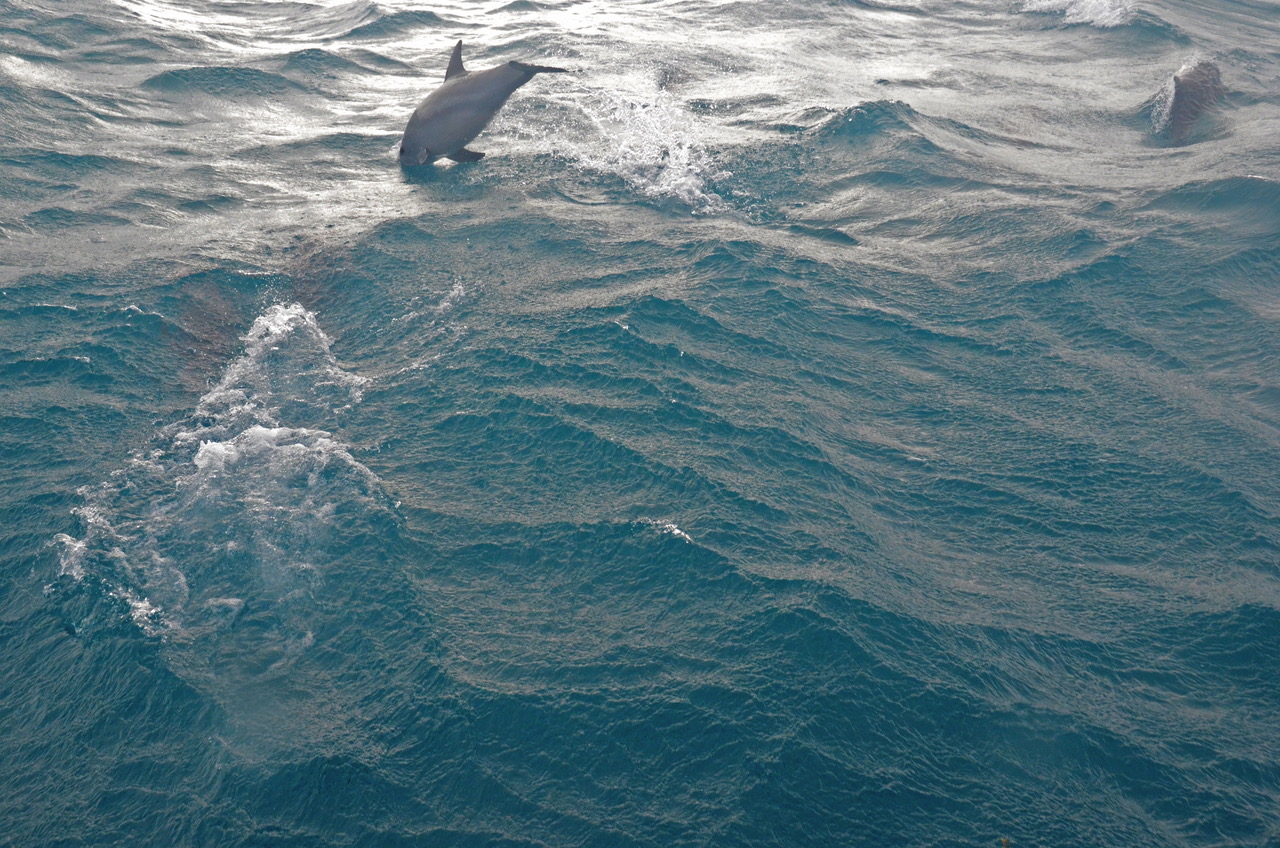
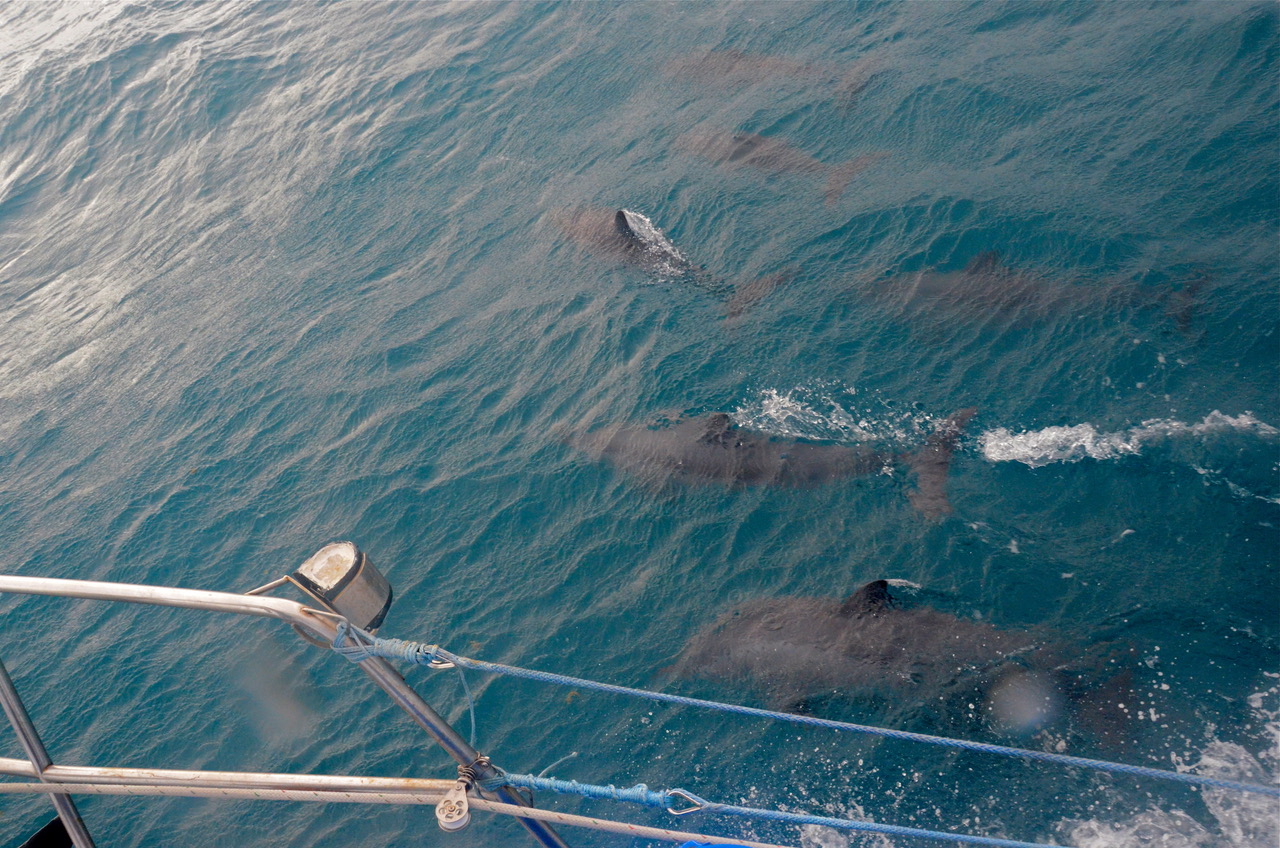
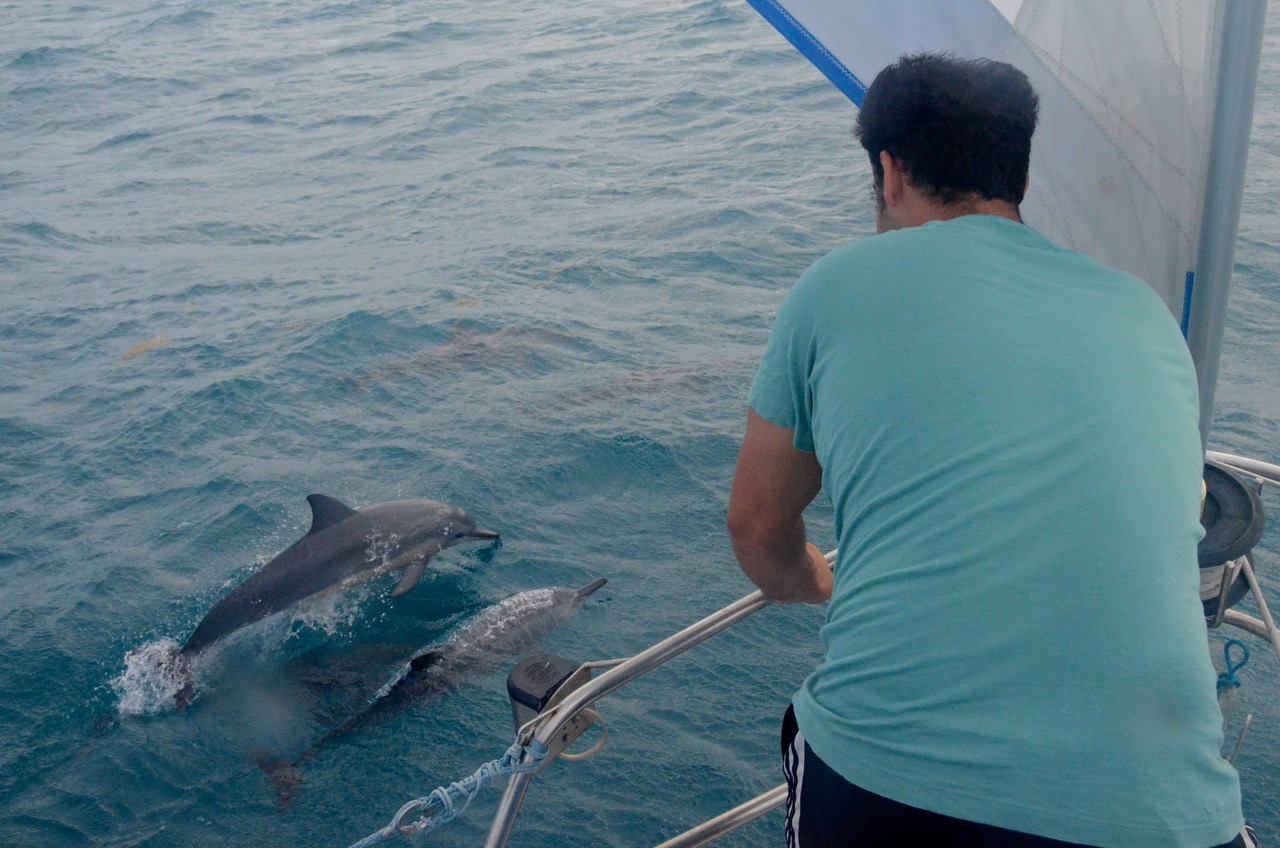
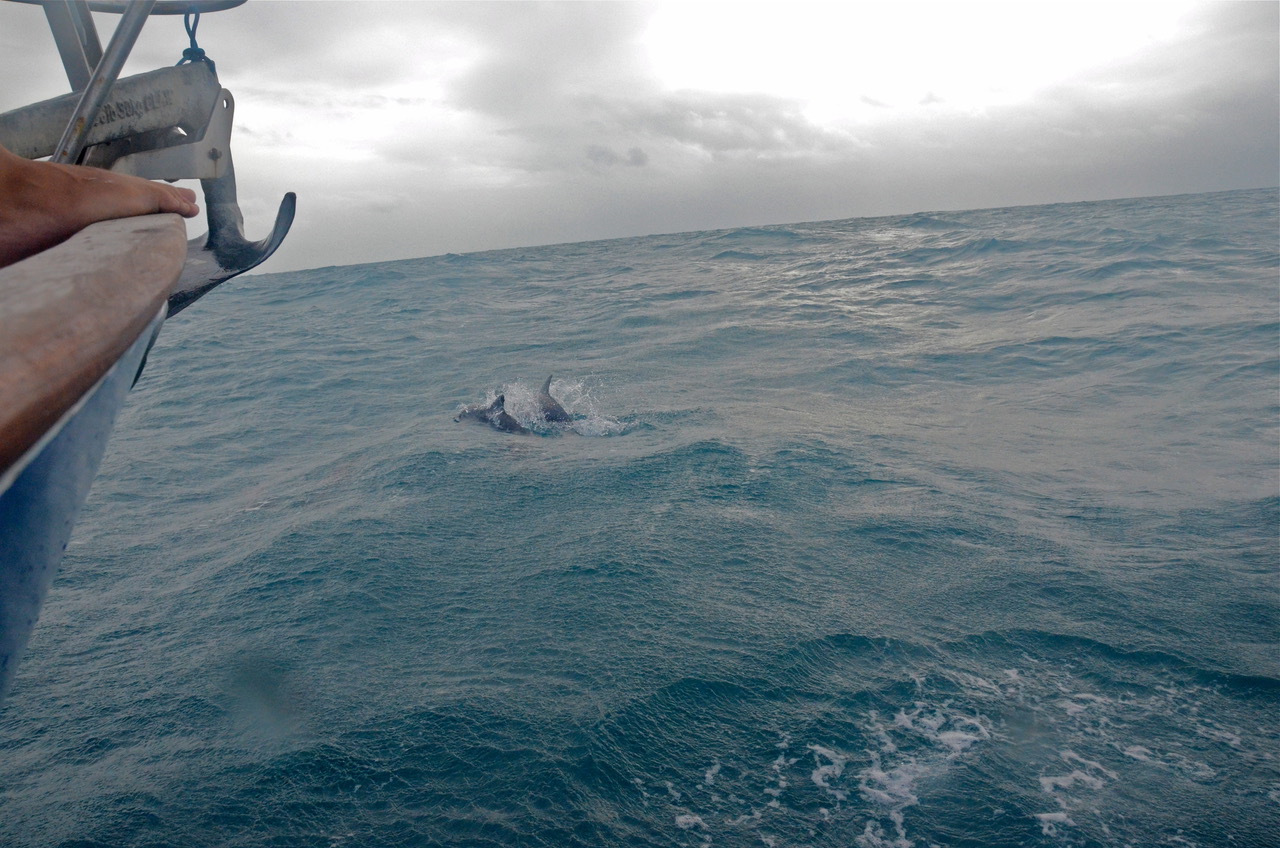
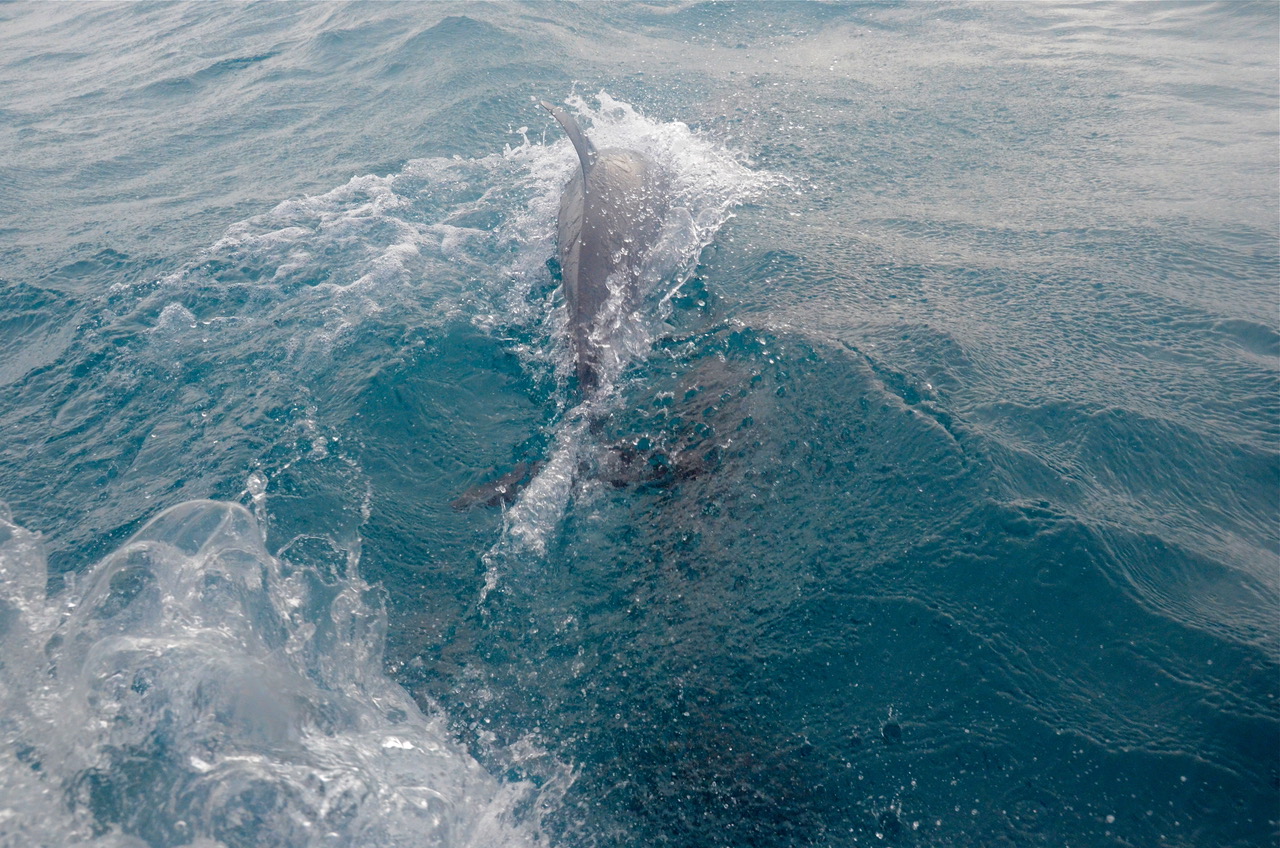
    A week or so ago while sailing from Airlie to Townsville, Justin and I saw about 20 dolphins all jumping and playing at the bow as we cruised along at 7 knots. It was a lot of fun to watch. I had never seen that many at the same time around the boat. Here are some pictures.

  • Maintenance Updating

    I’ve just put up 21 blog posts on our companion maintenance site, where we list all the upgrades and maintenance we’ve done to Syzygy. The 21 posts concern all the maintenance that I’ve done over the last five months since Matt and Karen left me to my own devices aboard Syzygy. They are mostly not particularly interesting stories, but for those of you who enjoy all things Syzygy, I thought I’d share.

  • 5 days, 7 dives

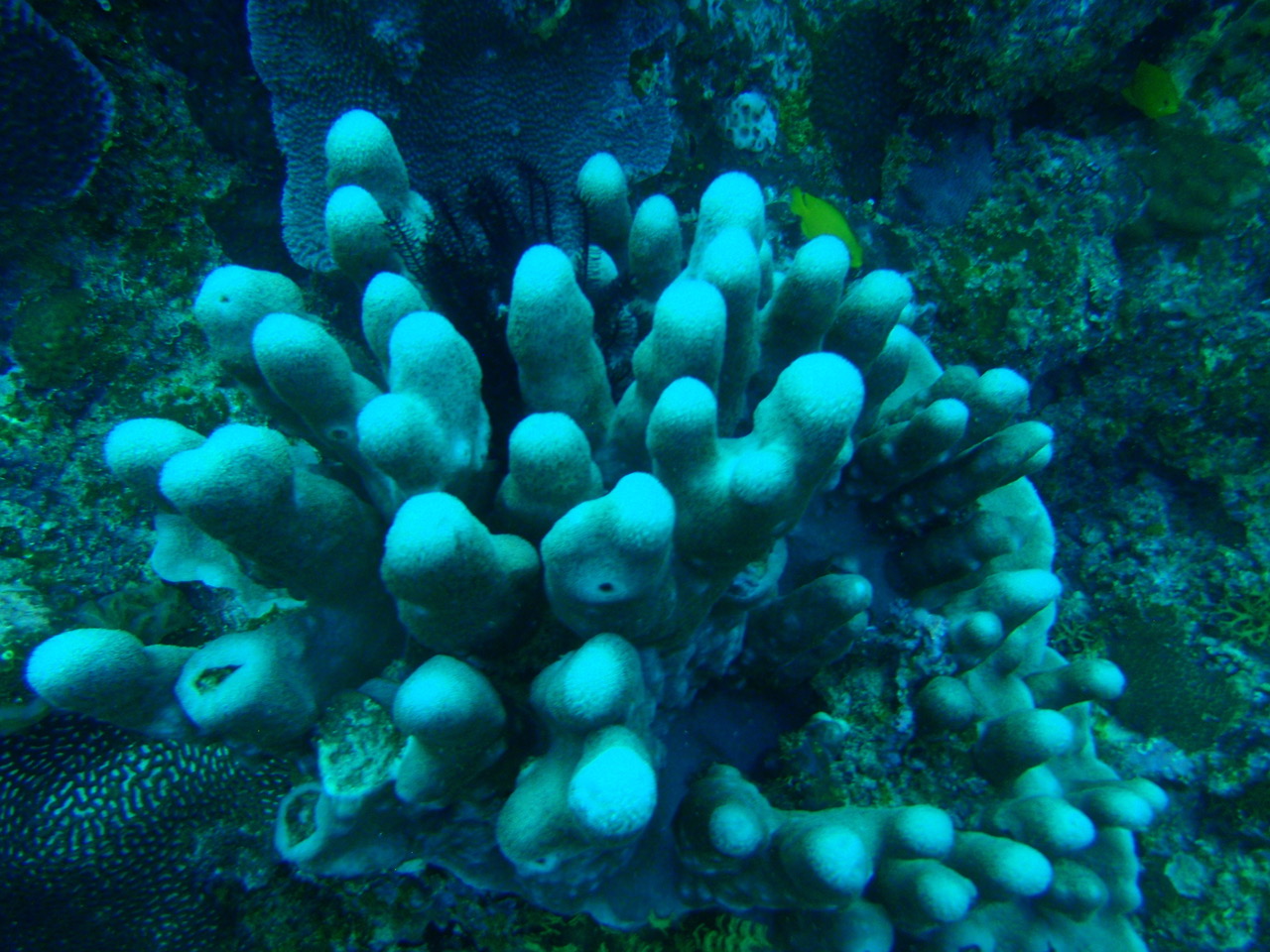
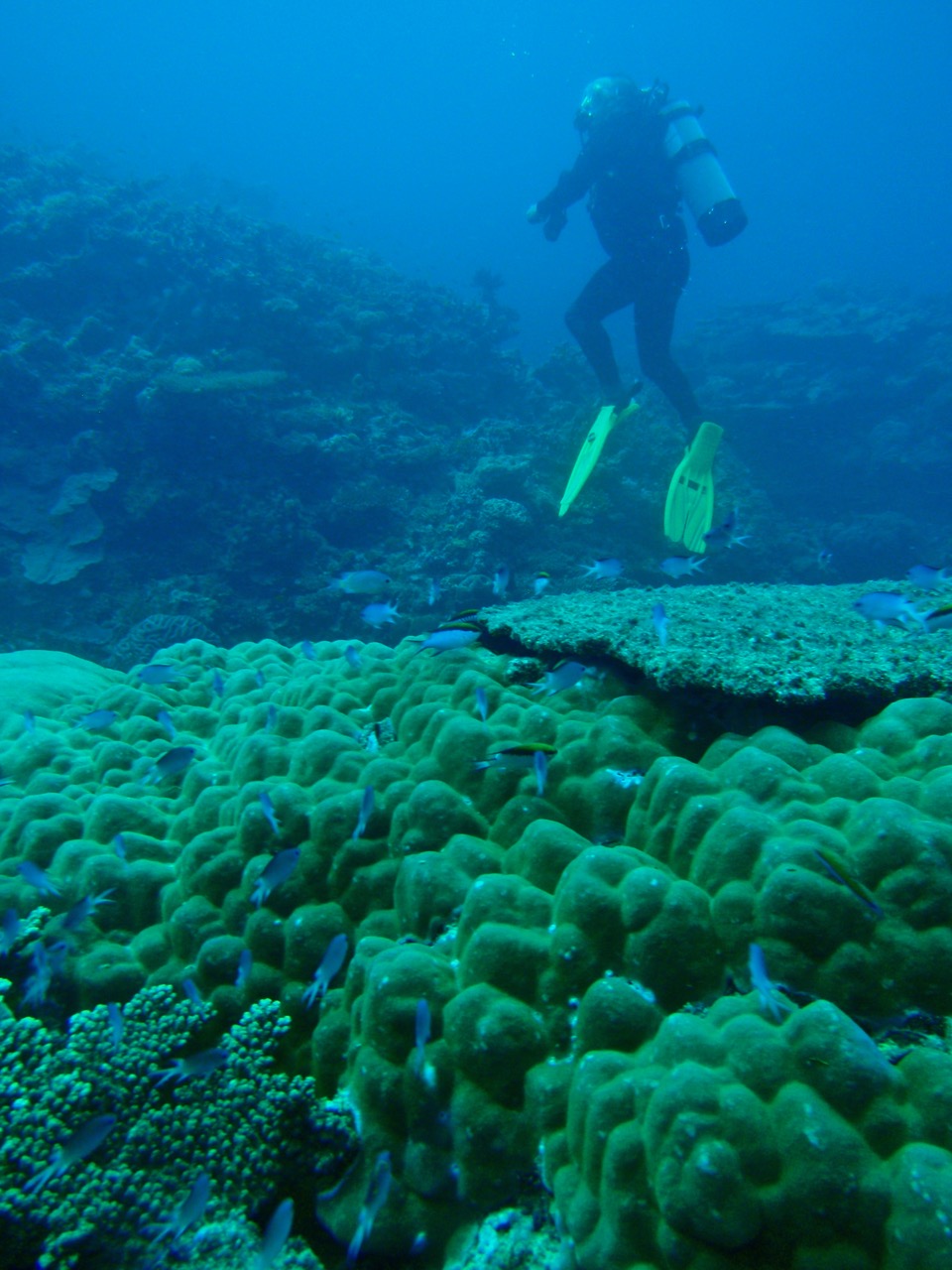
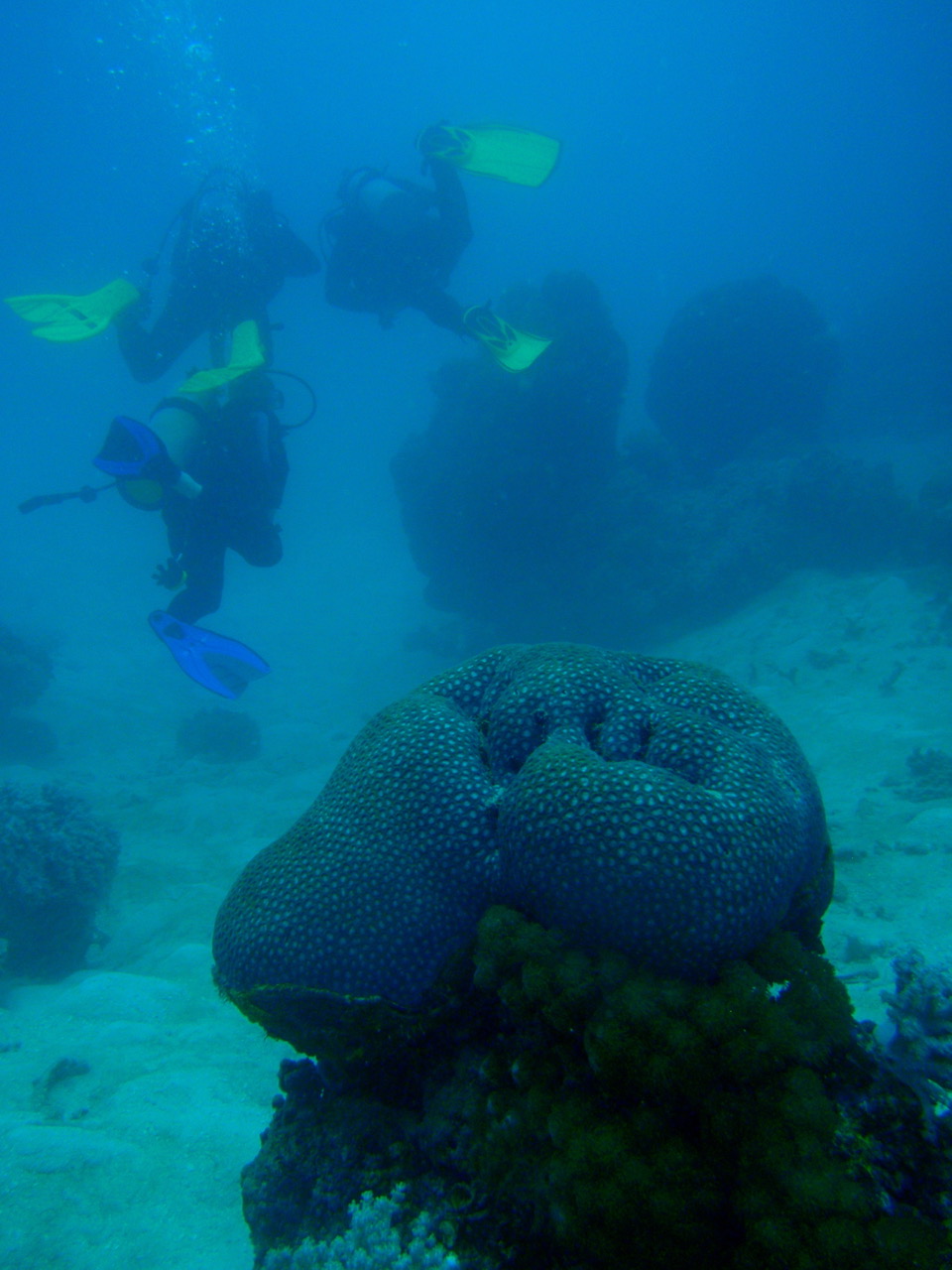
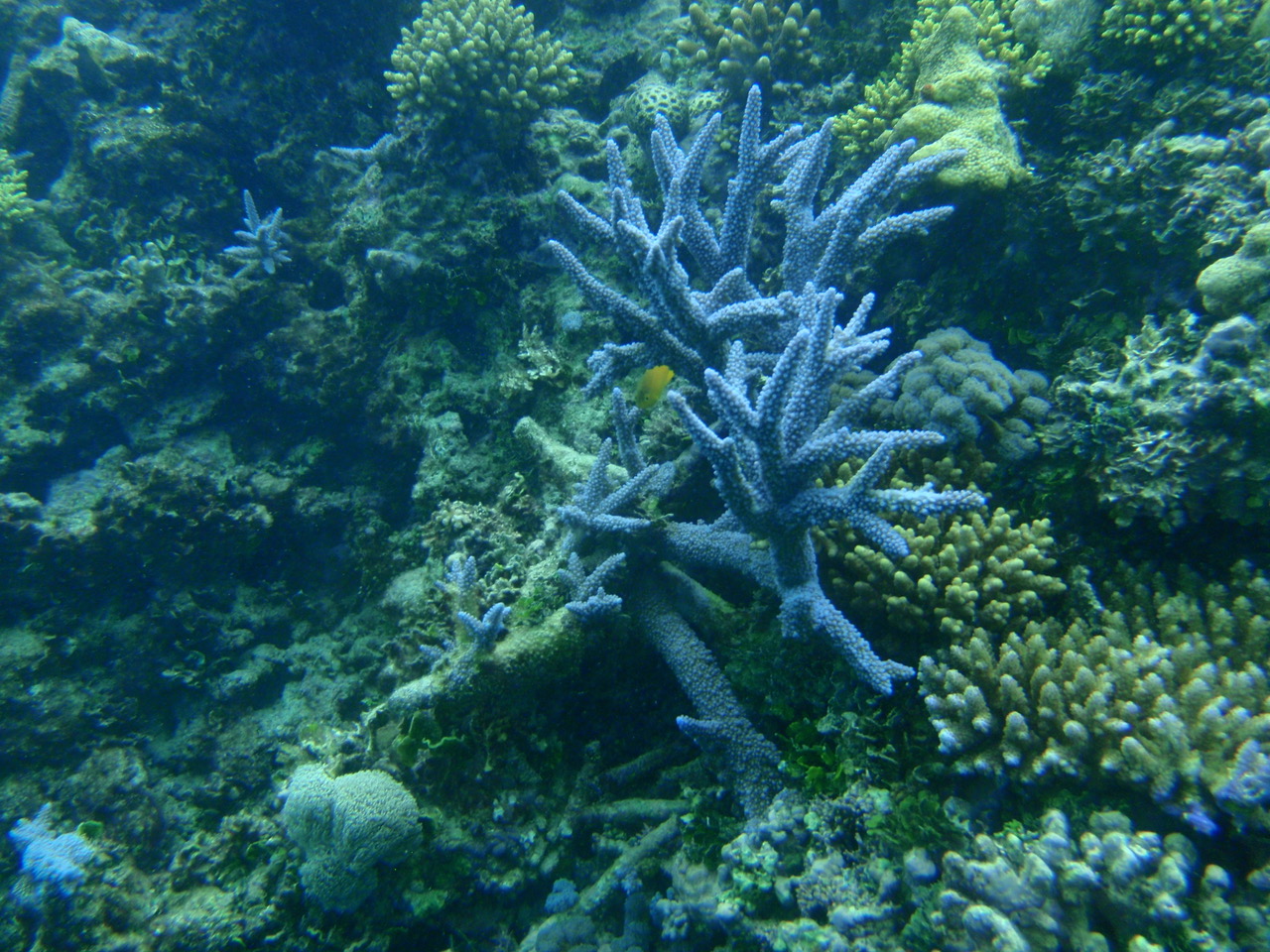
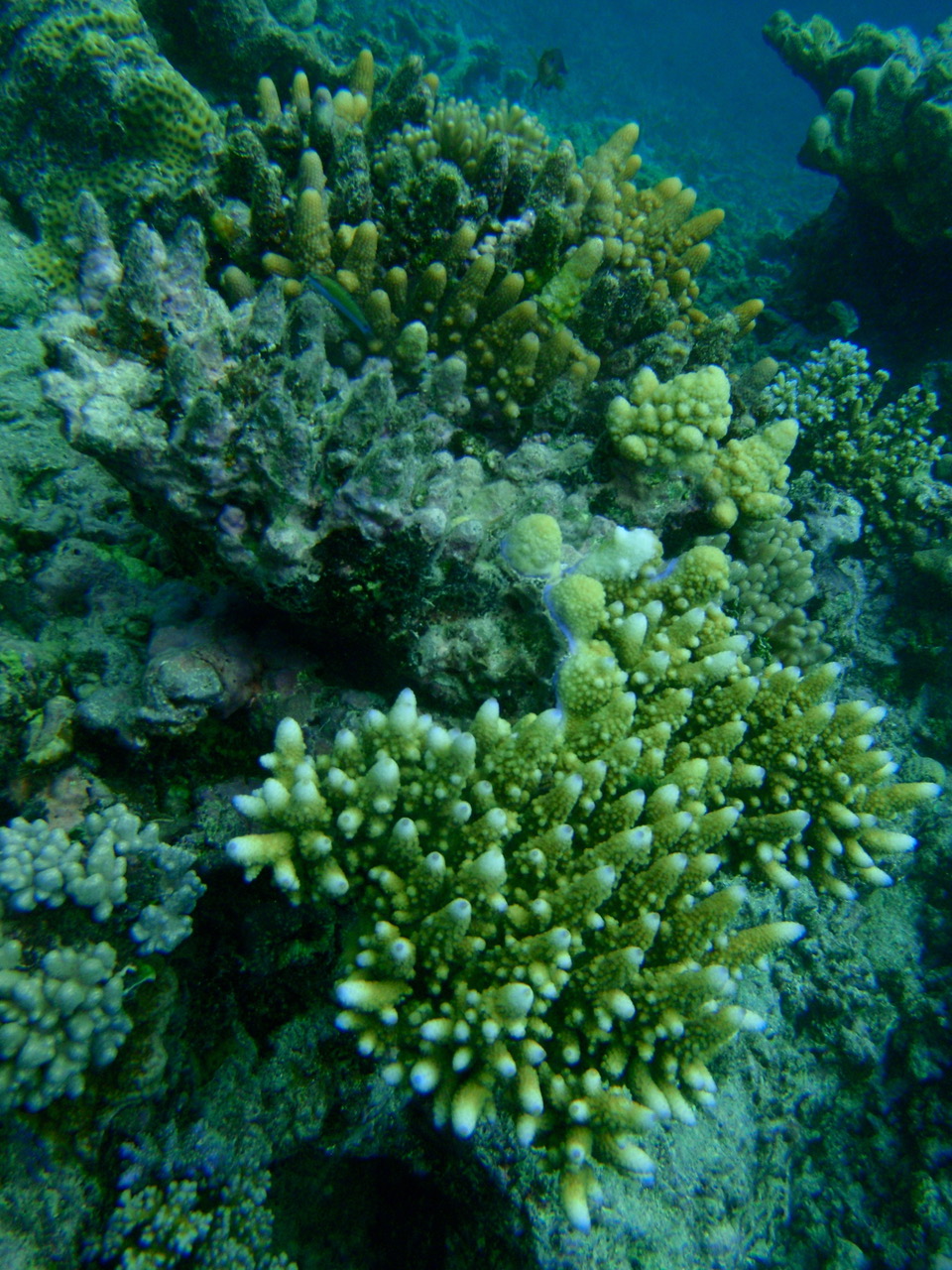
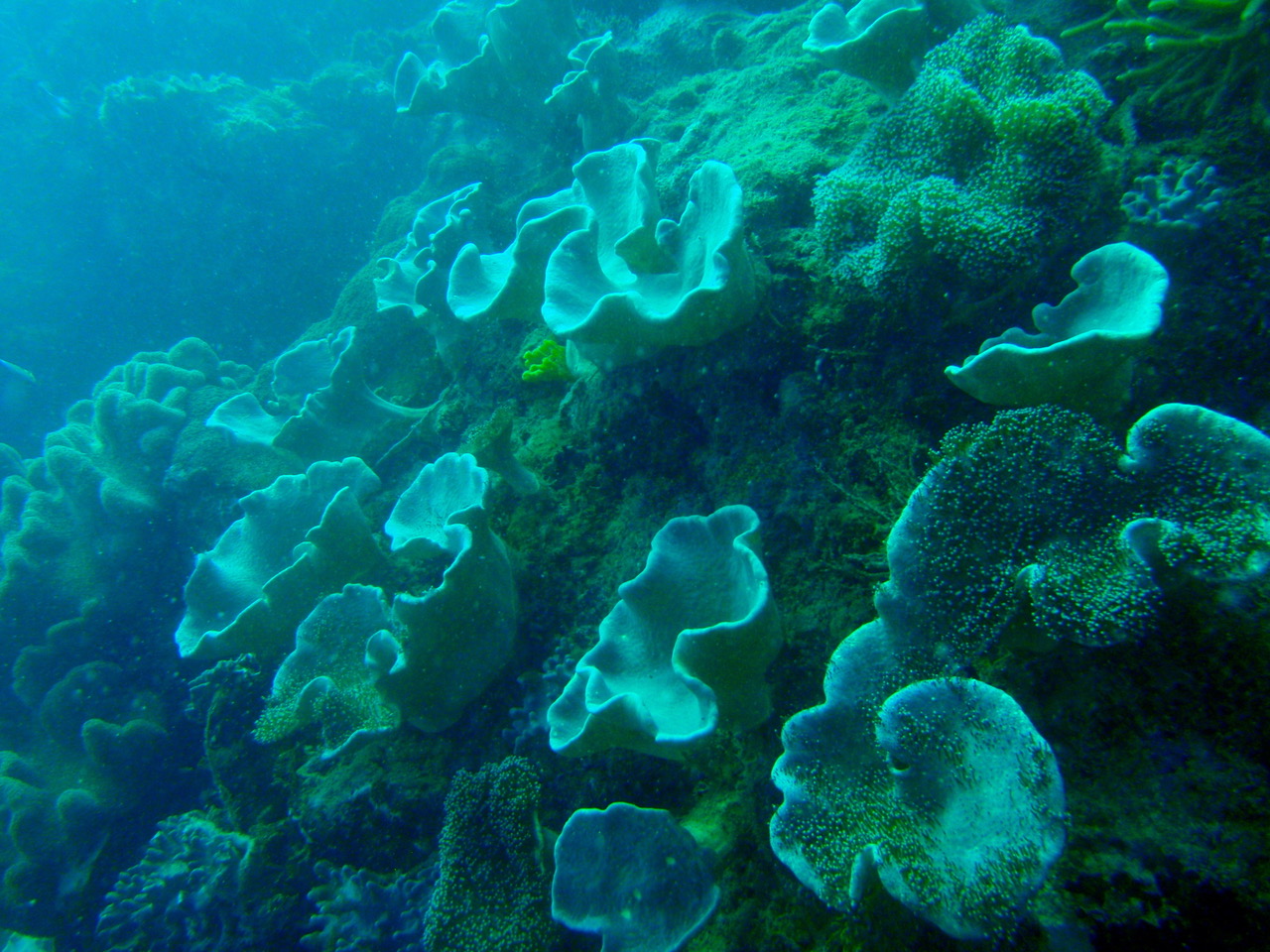
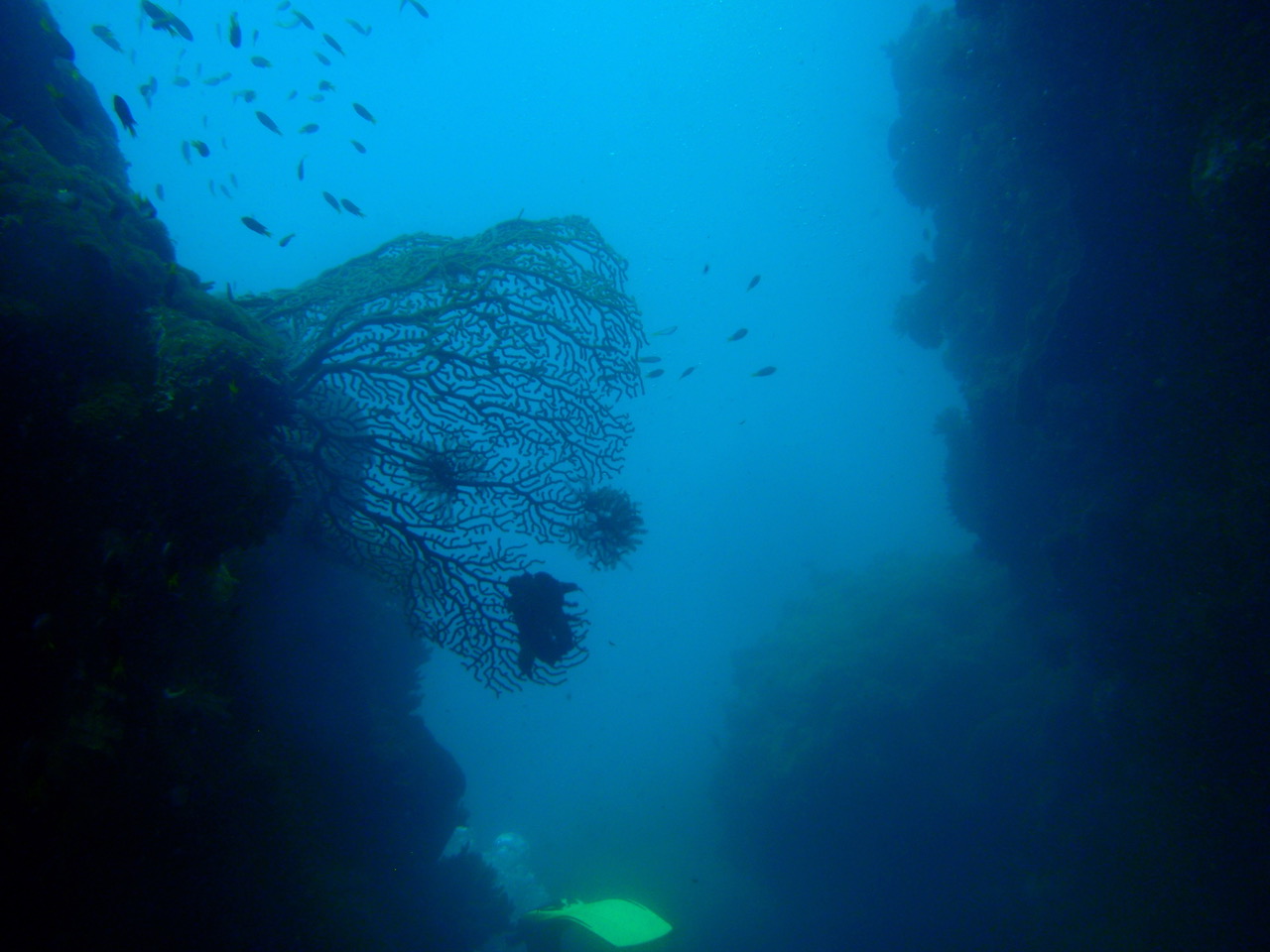
    Our first three dives were off Bait Reef, 30 miles from the Airlie Beach, on the outer section of the Great Barrier Reef. Here the water was clearer than near shore. Bait Reef stays entirely under water.

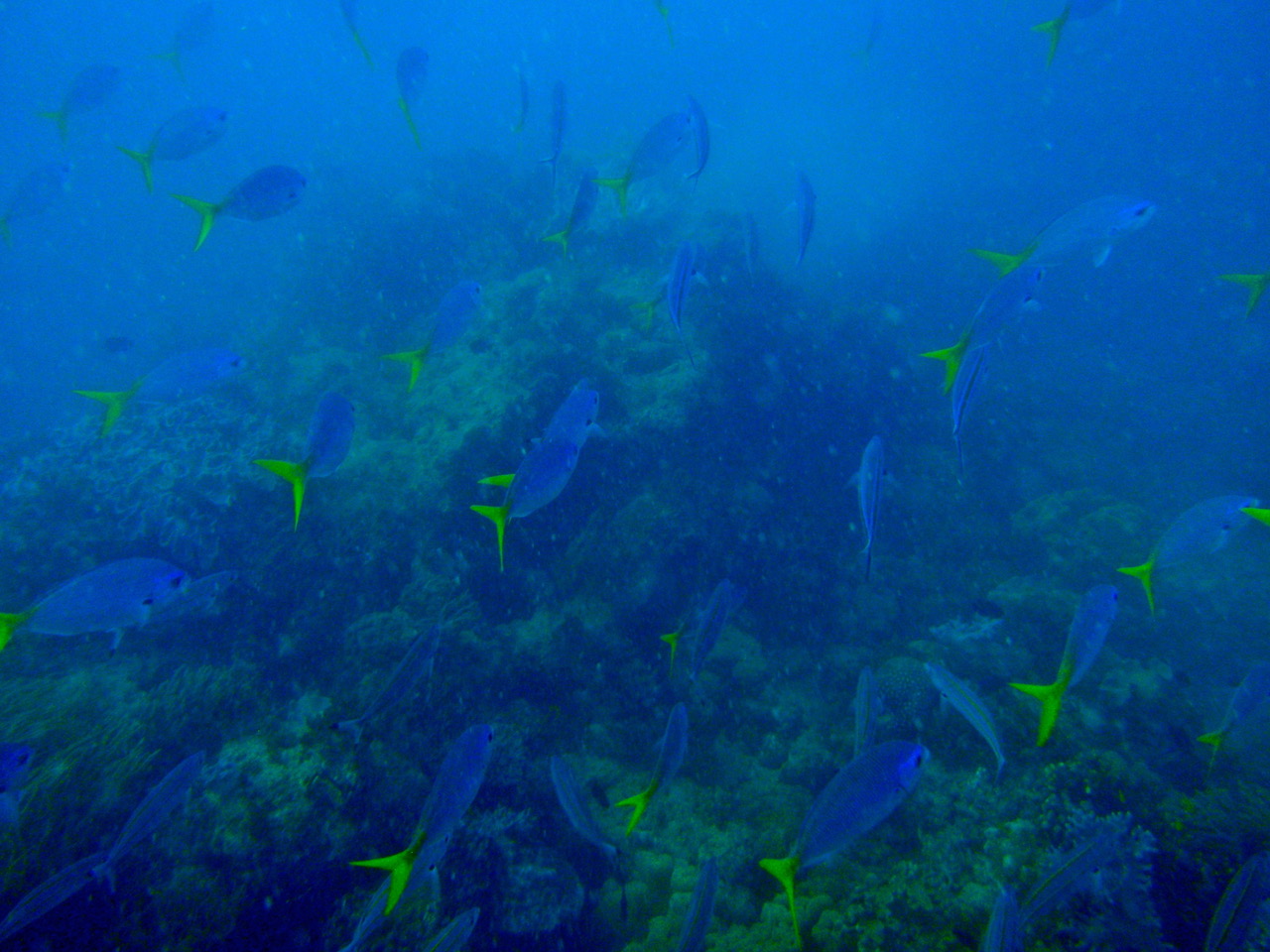
    Our first dive was at night, a disconcertingly amazing experience. Never really knowing where you are, or what is just outside the beam of your torch is eerie. We were surrounded by a school of 3 to 5 foot long tuna. They would dart into the light and just as quick burst away. They would playfully dart into the light, come right up next to you, and then quickly burst away and after five feet they would be out of the light.

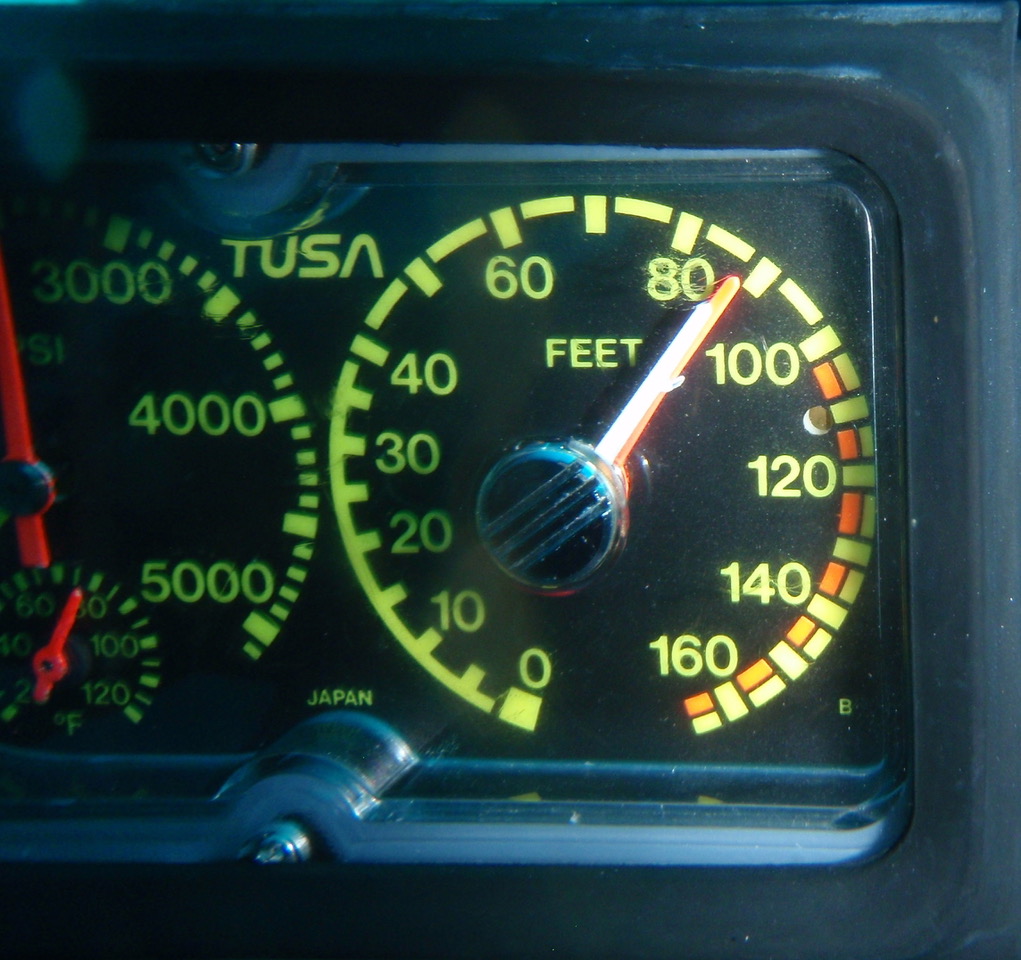
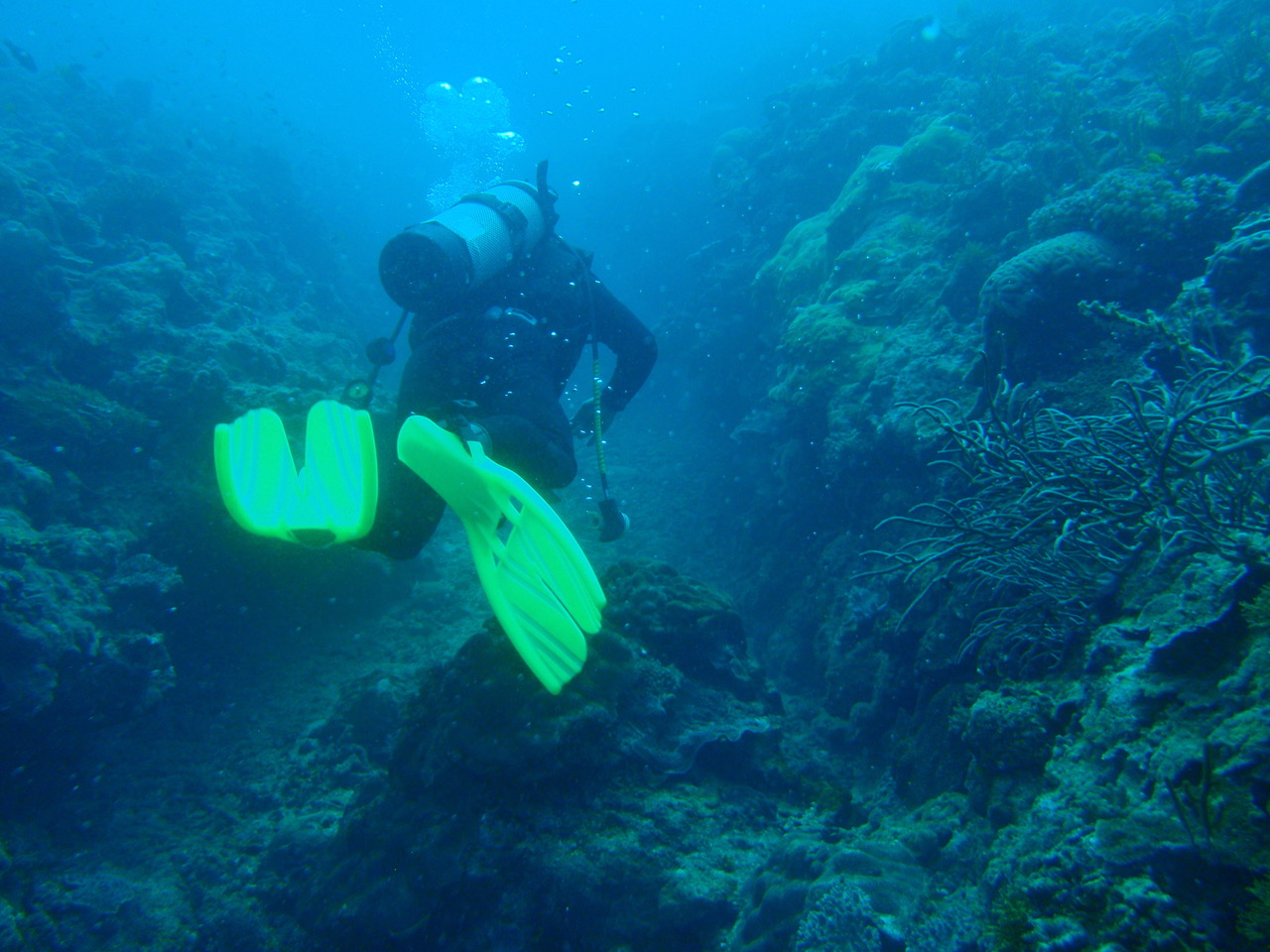
    Second up was a wall dive. A sheer vertical wall took us down to 90 feet; Justin sunk to 100. From there we meandered and drifted along the wall, slowly making our way shallower and through gullies and overhangs and swim throughs.

    Third was a shallower dive around what are called the Stepping Stones, seven pillars that vertically rise from 15 meters up to within 1 meter of the surface.

    We then had to unfortunately leave Bait Reef without visiting nearby reefs, as a front moved in bringing with it 25 -30 knot winds. The winds whipped the water across the reef and made for a terrible place to hang out. Bobbing and swaying, we labored to get the dinghy out of the water and make for calmer anchorages.

    At Hook Island, we dove the Western tip of Butterfly Bay, an enjoyable outing, where Justin spied a small shark.

    We then dove on the eastern side of Manta Ray Bay, unfortunately spying no Manta Rays. The season for them is May through September, but we haven’t been lucky enough to catch a glimpse of one yet.

    The west side of Pinnacle Bay was next, adjacent to a rock-cliff named the wood pile that begs to be the site of some cliff diving and which I spent an afternoon scrambling and doing a little climbing on. An awesome 10 foot roof crack juts out over the water; a better climber than me would love having a go at it. I just admired it and wished I was a better climber. This dive was a bit disappointing with respect to fish, coral and visibility, given it’s hype in various guidebooks. It did have, however, some fantastic coral formations, huge overhangs, deep slots to swim through and a couple of tunnels. I spied one tiny tunnel with a sliver of light coming through it. I motioned for Justin to come check it out and jokingly hand signaled for him to swim up it. To my surprise, he took me up on it and started to gingerly make his way through. Soon, his fins had kicked up a cloud of dirt as he angled up and through. I ascended along the coral watching bubbles filter up through what seemed to be an impenetrable mass of coral. Justin was nowhere in sight. I then crested over a hump of coral and there was Justin, his upper body poking out of the end of the tunnel, as he gingerly twisted and squeezed through the last, tightest spot.

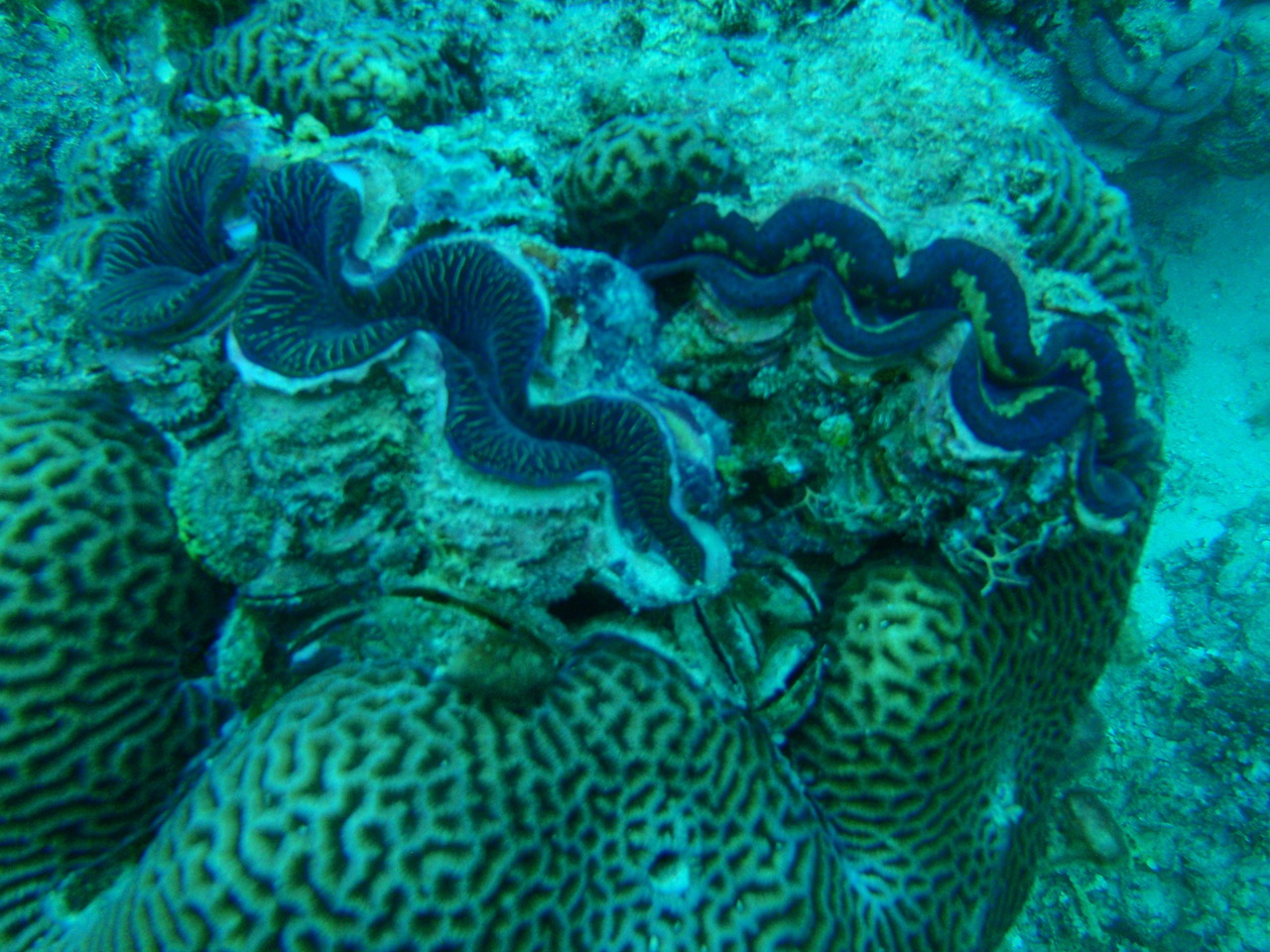
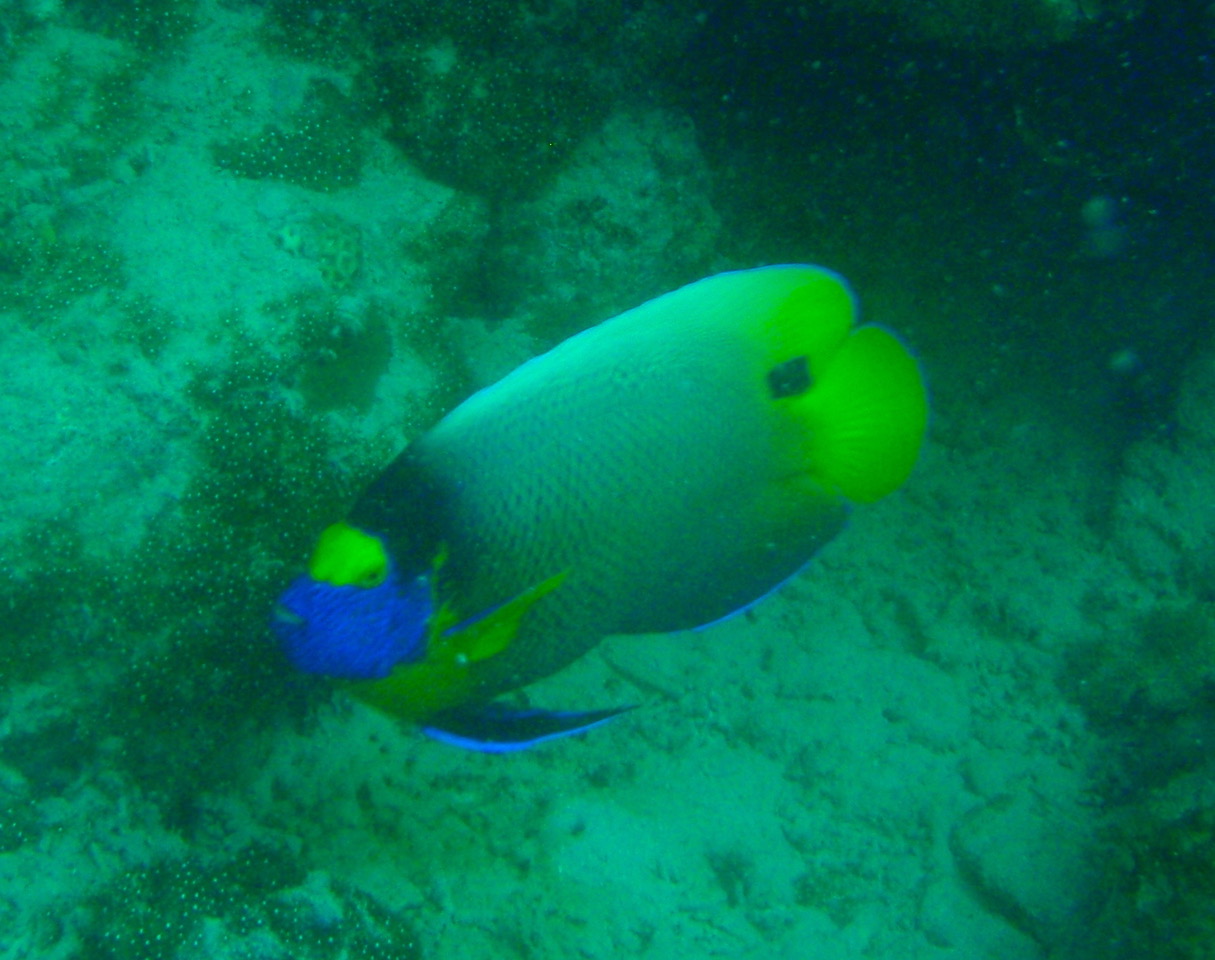
    Finally, we dove the eastern side of Pinnacle Bay, around the Pinnacles. This dive, combined with the previous one, are supposed to be the best in the main islands of the Whitsundays. On both, as in most dives in Australia, I continue to be disappointed in the visibility. Live coral was also not particularly present on this dive, but formations within the coral were. High narrow slots abounded, two in particular were reminiscent of the slot canyons of Utah, 8 feet wide, 25 feet high slices through the coral made for fun exploring. Another big highlight was seeing the 6 foot long turtle. I immediately thought of Finding Nemo as it glided along in the current. I saw a Moray Eel, a disgusting looking creature. And I nearly had to adapt a fish; an angel fish, sometimes accompanied with his three friends, swam within 10 feet behind and around me for over 20 minutes of our dive.

    Huge thanks to Brian on Furthur who has been filling our tanks for us. Diving and hanging out with him and Susan has been a great time over the last five days.

  • Justin brings the 2-step to Australia

    We are currently at Airlie Beach, a super popular backpacker stop, on the mainland across from one of the most popular sailing grounds in Australia, the Whit Sundays. Justin and I went out on a Tuesday night and didn’t make it back to the boat until 2:30 am. Fun times were had. Lots of beer, super-sized Jenga, dancing in the streets. Huge hangover on my part.

    And in homage to Greg Sutera, Justin brought the 2-step to Australia.

  • The Nanny State

    Australia is a nanny state, the state of Queensland being the worst. They have government regulations for everything. You aren’t allowed to work on your own refrigeration system and you can’t buy refrigerant you could get at any auto store in the States. You need a license and certifications to be hired to make espresso. Australia won’t let you refill American approved air scuba cylinders. Doesn’t meet their standards. To serve alcohol you have to take a mandatory four day course. Its the law that you have to get a specific scuba diving physical before you can take a scuba diving certification course. And Australians seem to love it. They seem to love following rules. And are aghast at the notion that maybe government doesn’t need to baby their citizens. Everyone drives the speed limit.

    One aspect, however, of the nanny state will please my parents, even if it is annoying to me. Boats are required to check in with the Coast Guard as they move from one Coast Guard region to the next. This happens about every 10 miles. I’ve heard boats checking in with Coast Guard just to move from one side of an three mile wide island to the other. You are required to give your origin, destination and approximate arrival time, boat registration number, number of people on board, We have dutifully checked in with the Coast Guard as we have travelled north. Other boats have told us they found us particularly humorous when we would call for a particular Coast Guard, only to have to switch to calling for “Any Coast Guard in Range!” Our VHF it seems is not particularly powerful.

    Here is Justin having some fun. Doing his best Australian voice impression and checking in with the Coast Guard.

    Romeo that.

  • What to do while sailing along at 2.5 knots

    This post backtracks and refers to events that happened on May 2nd.

    We left Middle Percy Island noon on May 2nd. Anxious to get to the Whitsunday’s, famed to be the best sailing grounds of Australia, we had spent only one night on Middle Percy, a beautiful though nearly completely deserted island. It’s one claim to fame is a hut with various sailing paraphernalia from the last 50 odd years. Every boat it seems, leaves a little artifact and quite a collection has built up.

    Anxious though we were, the wind was not so in a hurry. With both the drifter and jib up we slowly putted along on the glassiest of seas barely breaking 2 knots. We already knew we were in for an overnight sail, and so I didn’t feel like turning on the engine.

    We spent the time in various ways.

    First and foremost, Justin cracked a beer at precisely noon to celebrate our speedy passage making.

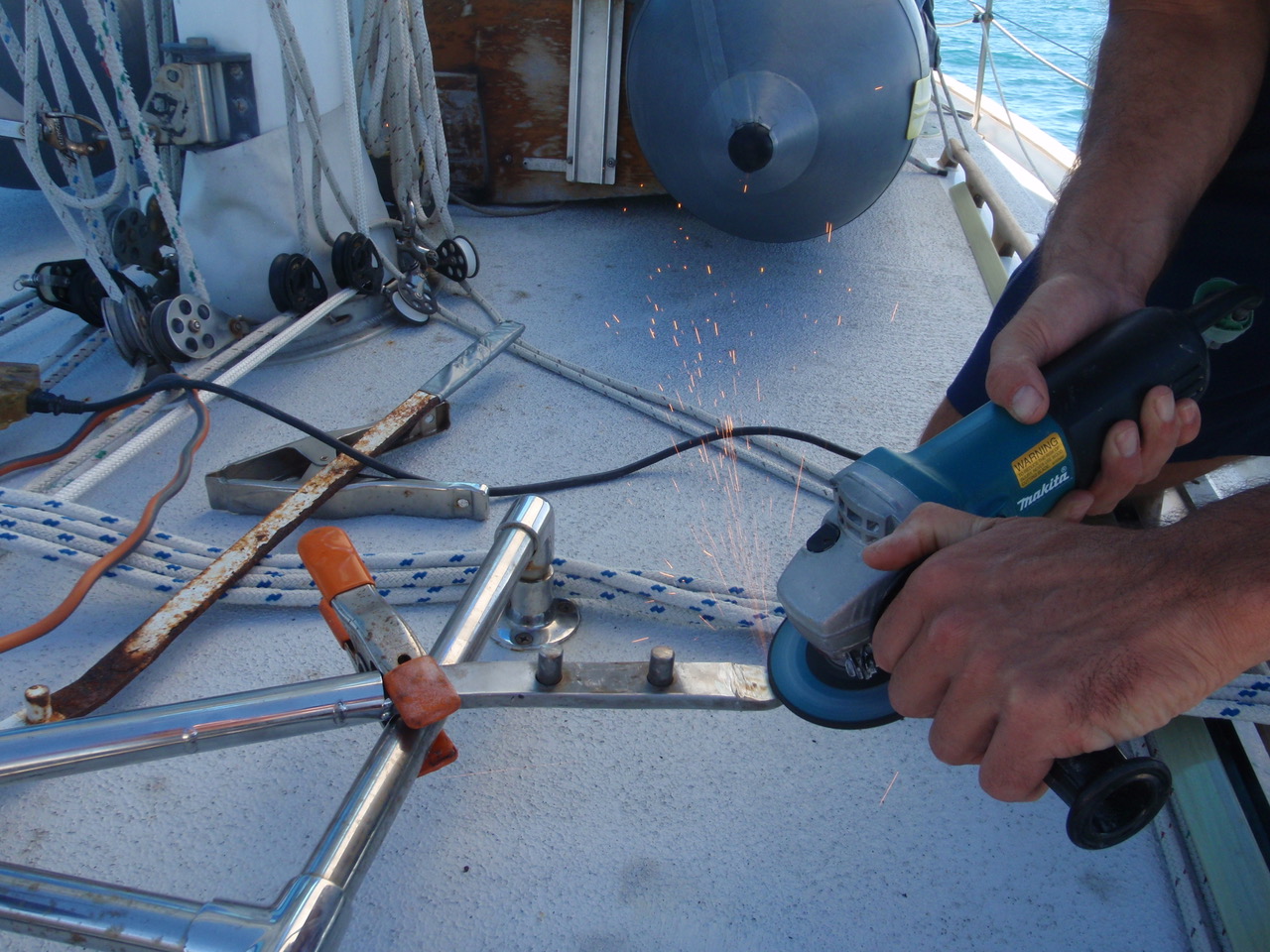
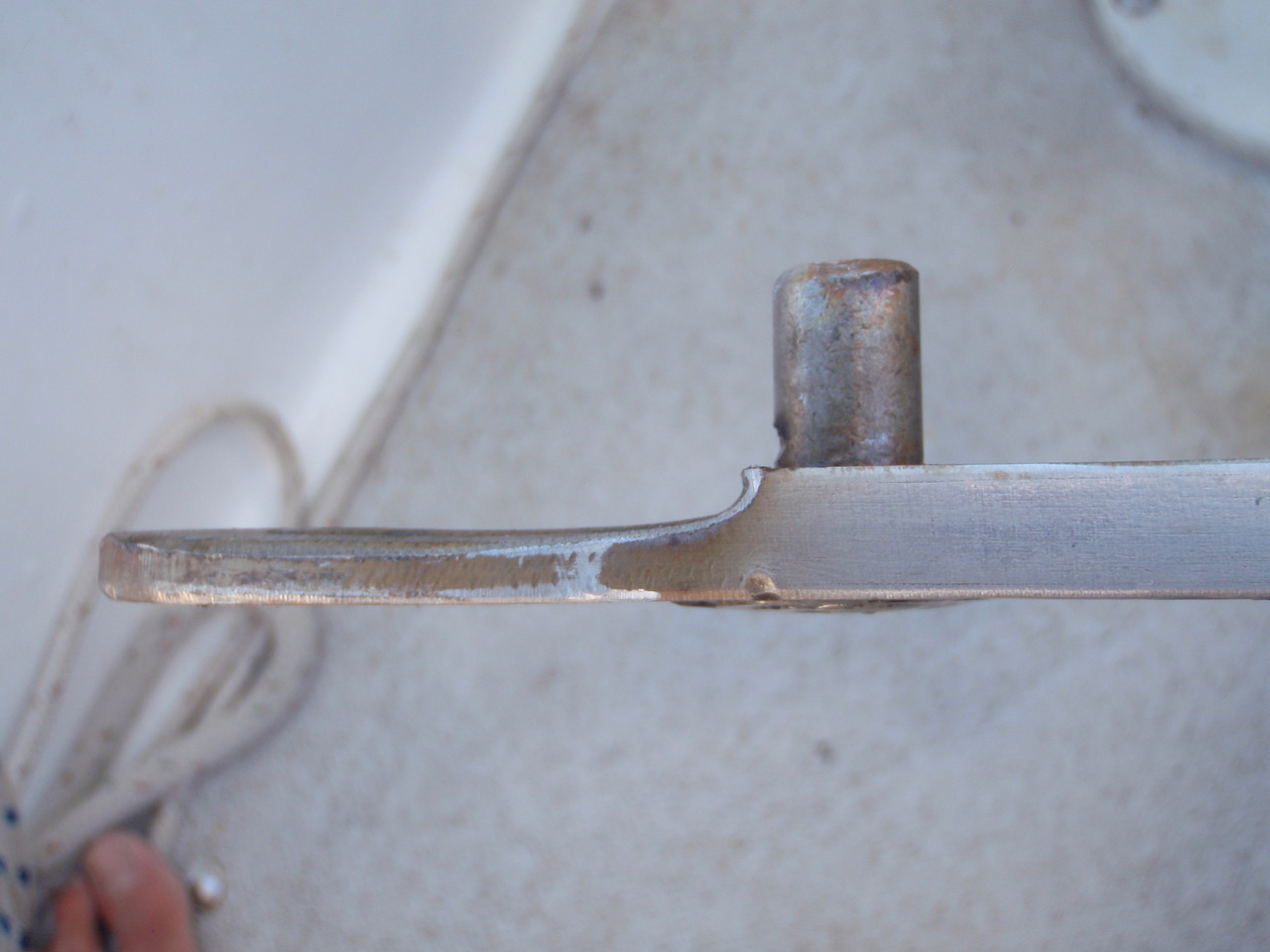
    spent some time grinding on our new (for a second time) anchor windlass handle. A welder in Bundaberg charged me an obscene amount for a new handle and then attached a piece that was 50% too thick to fit into the windlass. Alas, I discovered this 50 miles away at Lady Musgrave when we tried to anchor. To date we’e made do with our dilapidated rusting back-up until now. No more. With no rocking and no boats around, I set about to grinding.

    Justin made me lunch.

    We relaxed with more beers at two in the afternoon, a gentle breeze at our backs, enough to keep us cool, but not enough to push us any faster than 2.5 knots.

    Justin played some video games.

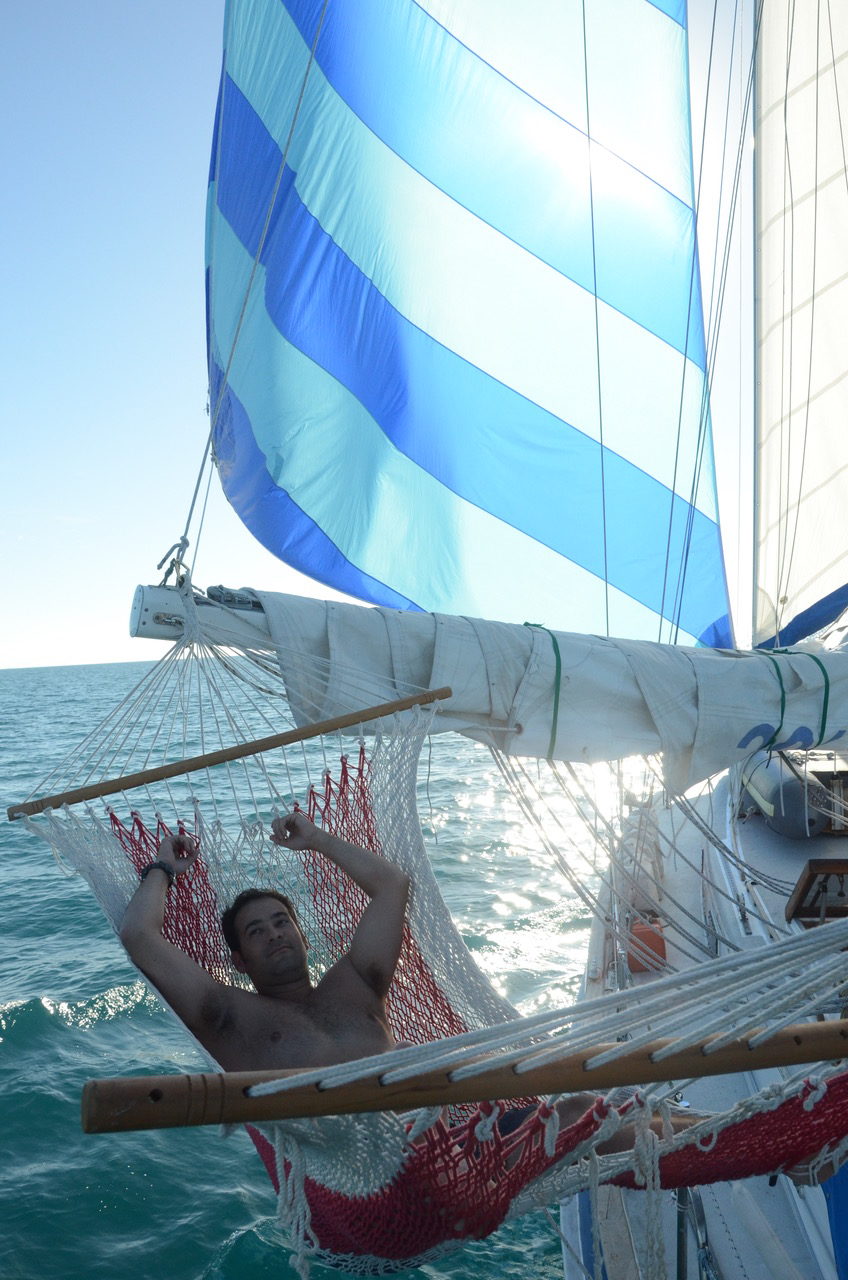
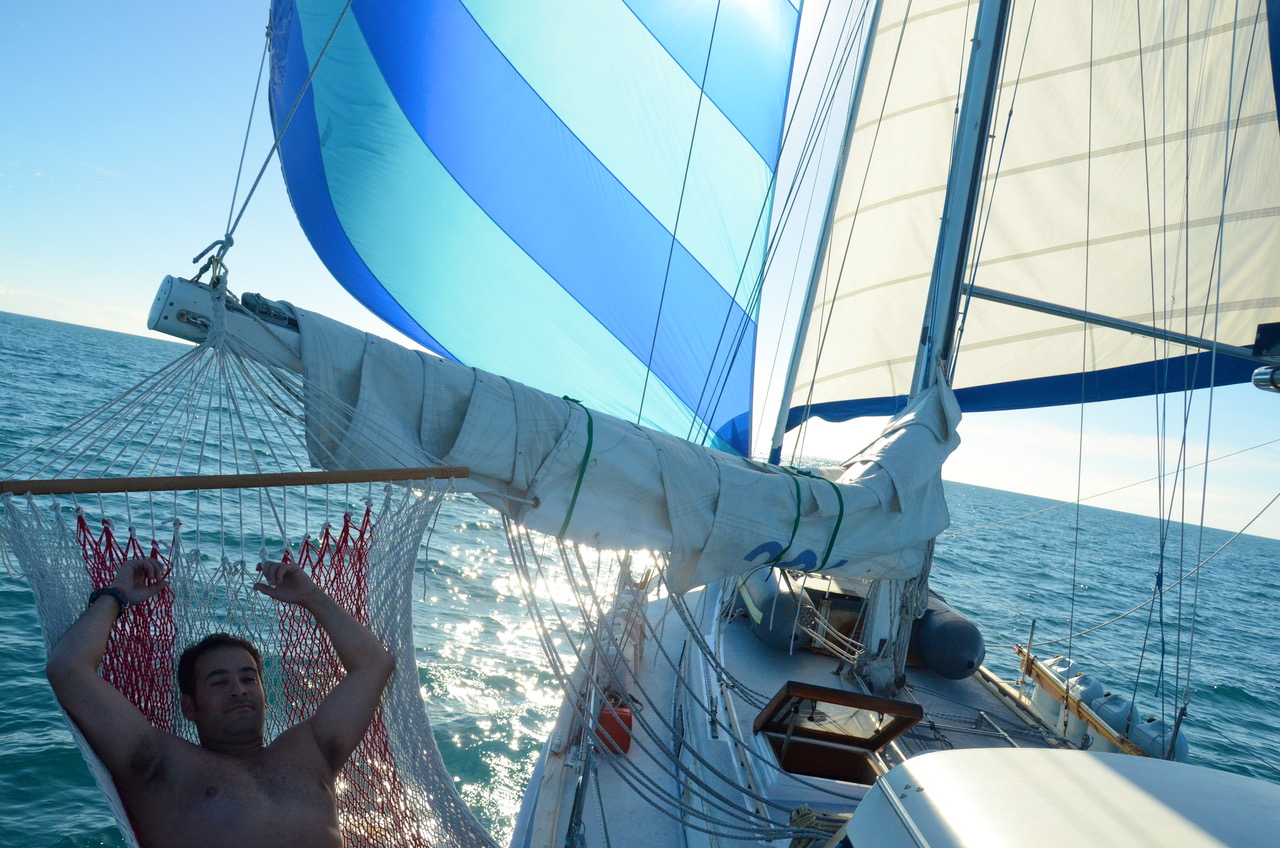
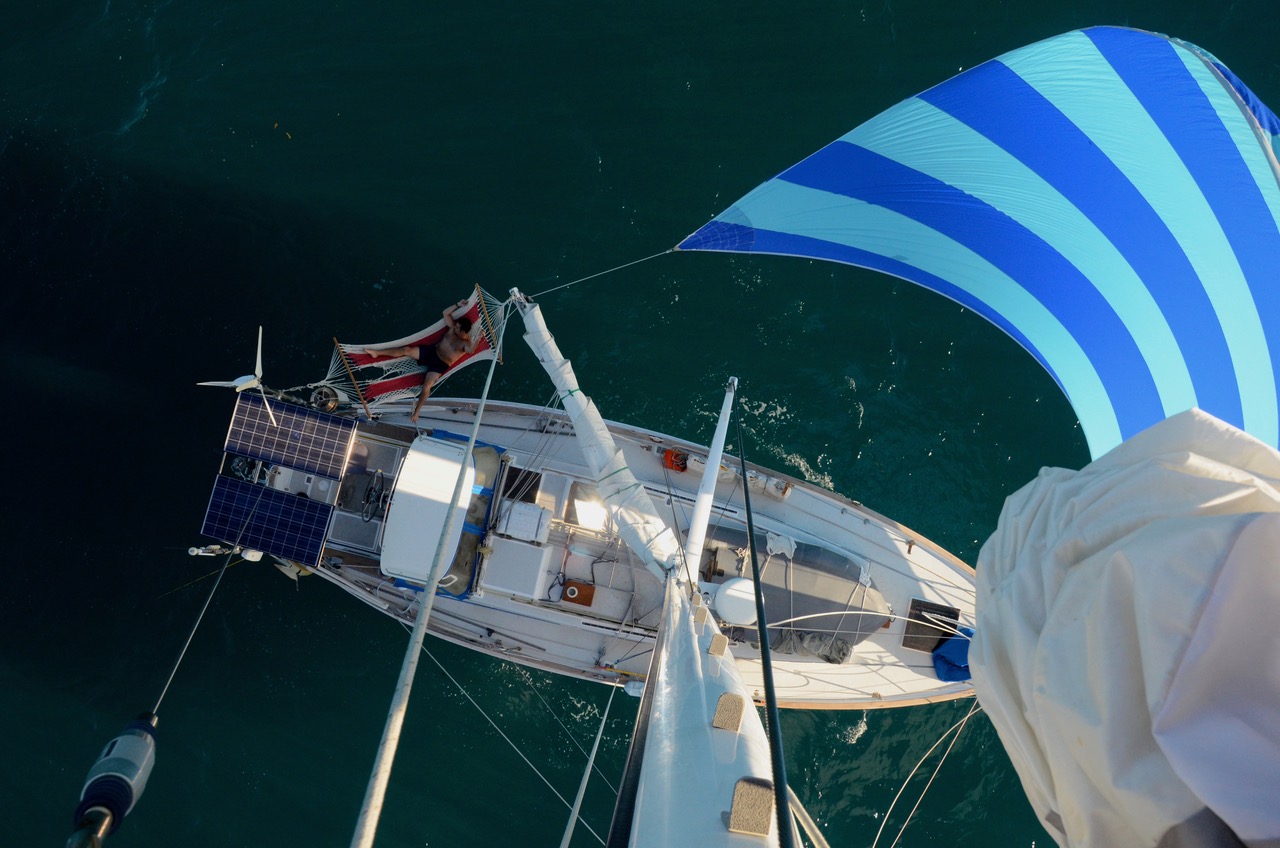
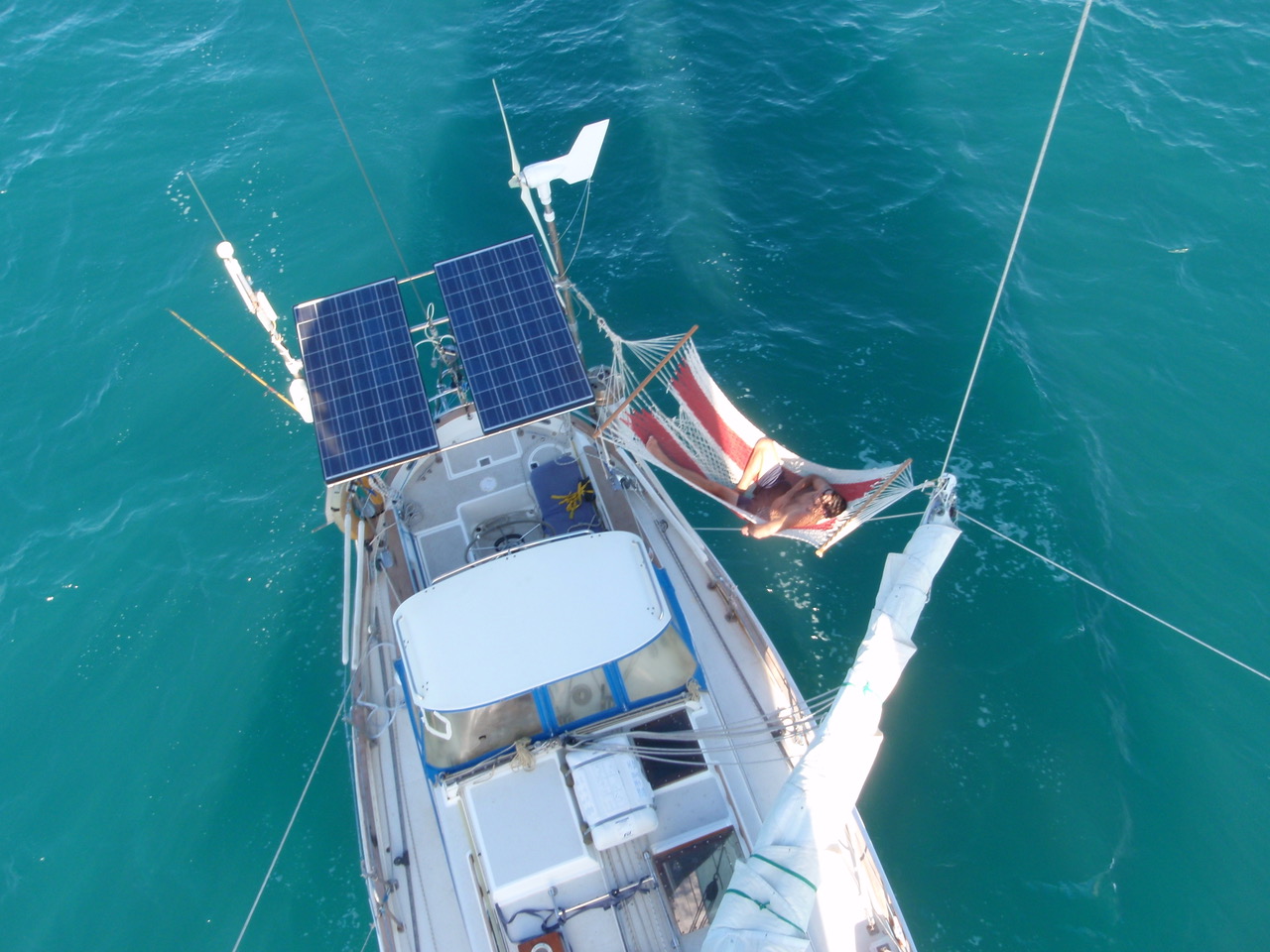
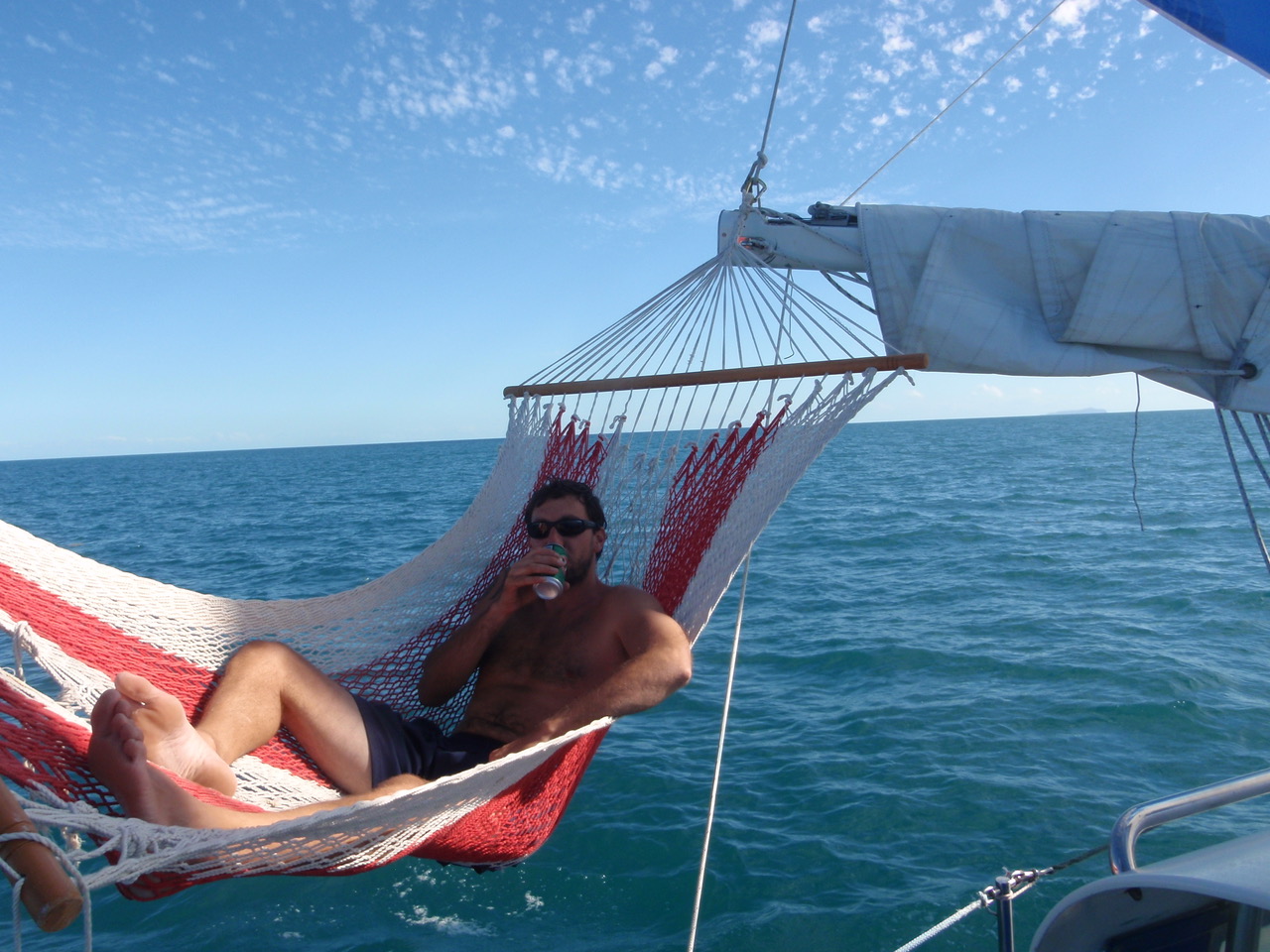
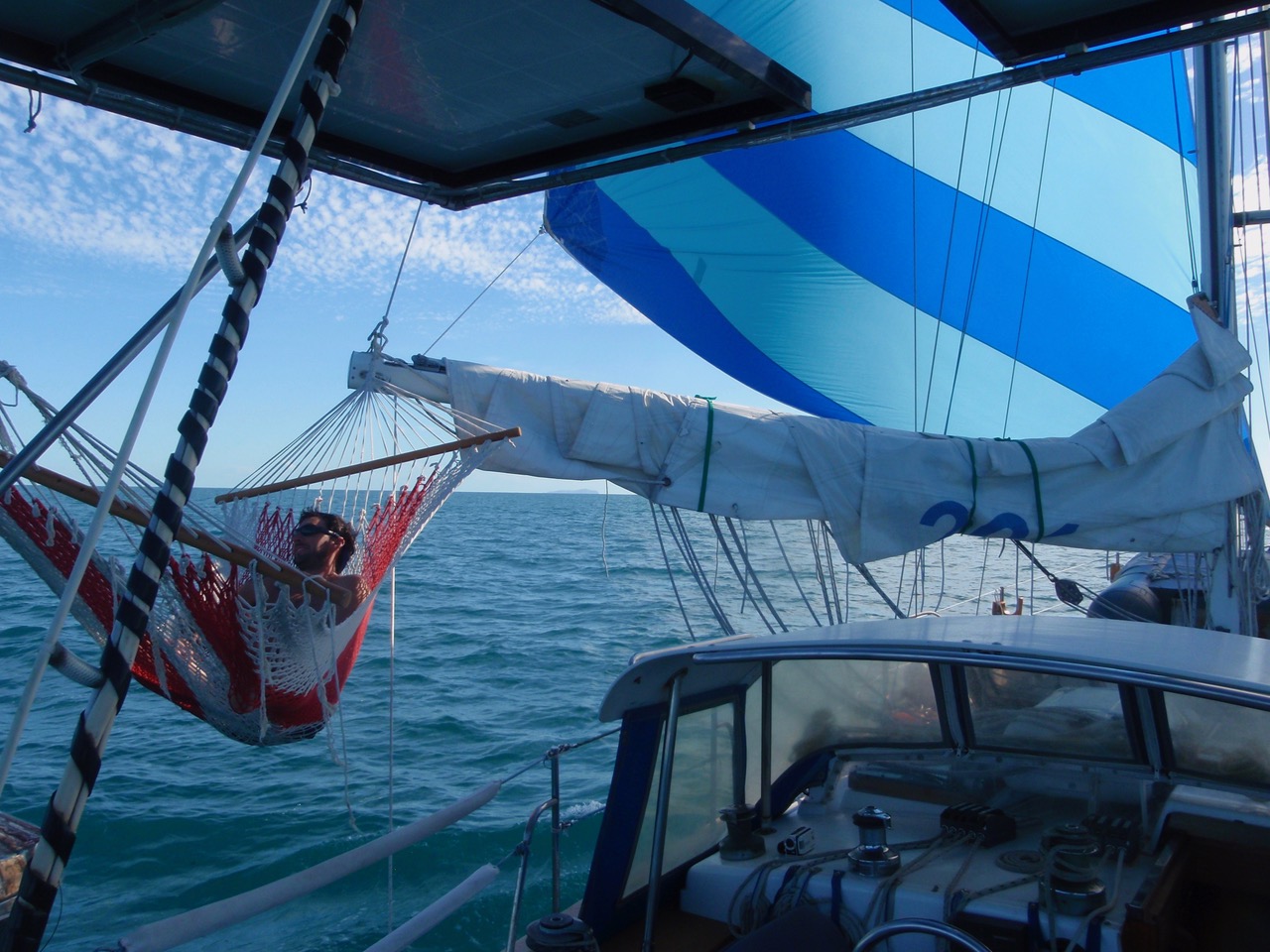
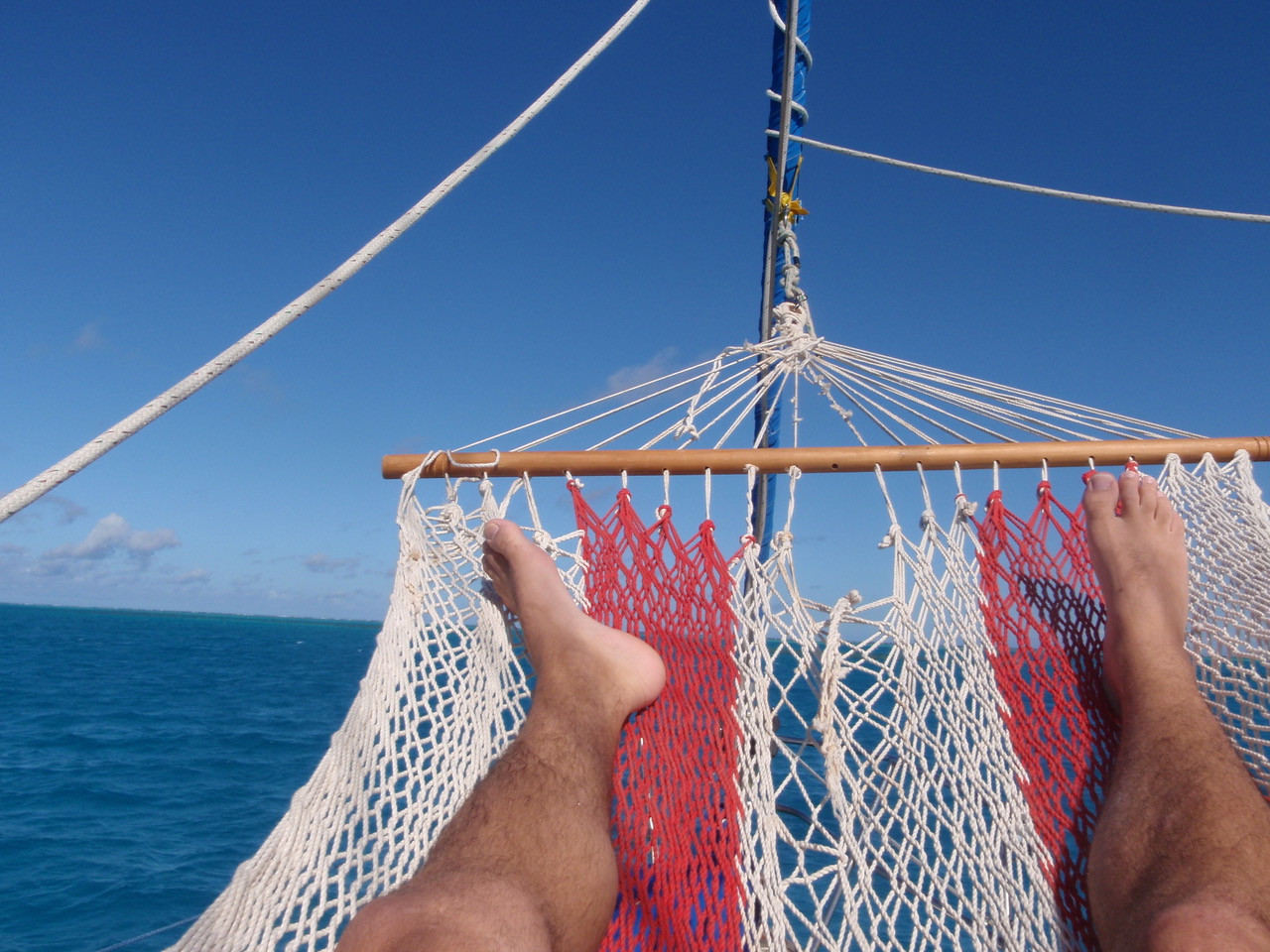
    And finally, I set about to thinking how I could rig up the hammock. I normally set it up on the forestay, (the wire holding up the mast in the front of the boat) but since the jib was rolled out, this wasn’t possible. See pictures below for my set-up. As I lazily swayed in the hammock, drinking a beer and watching the water meander underneath me, I may or may not have thought about how things couldn’t get much more relaxed.


  • position update

    matt here–they left bundaberg about a week ago and I’ve been receiving regular updates. They visited Lady Musgrave Reef (looks sweet) then Great Keppel Island. 

  • Lady Musgrave

    This post backtracks some and talks about events that happened April 21st to April 25th.

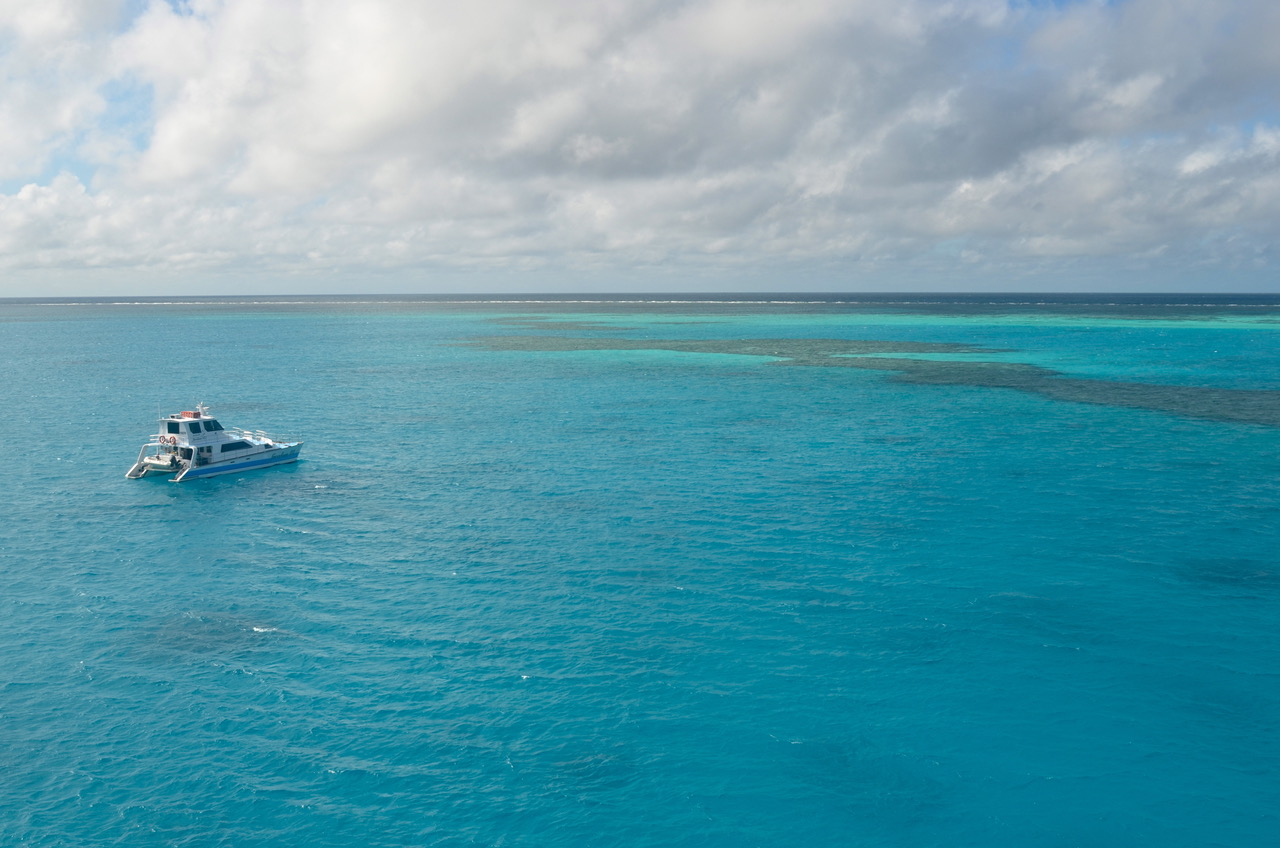
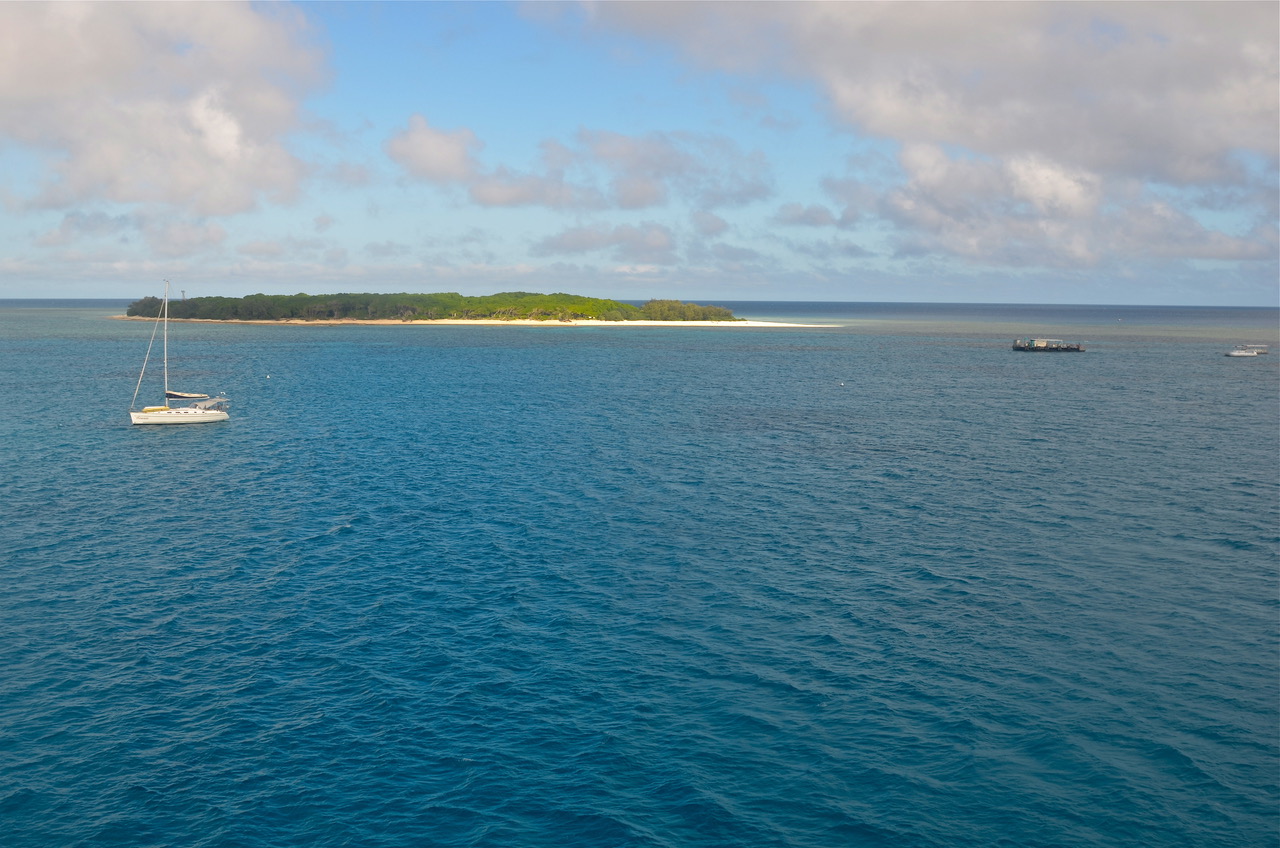
    The first truly tropical awesome place that we’ve been to since Justin arrived was Lady Musgrave Island. It is at the southern end of the Great Barrier Reef, a mere 30 miles offshore, 50 miles from where we sailed from Bundaberg. A tiny cay of sand and trees 600 yards wide juts up out of the ocean with a small two mile wide fringing reef surrounding it. The Tuomotus, where I first joined the boat were similar (though this was even smaller) and as I wish I could have spent another month there, I was in love with the place before we even got there.

    The entrance through the coral reef was rumored to be blasted out with dynamite years ago by guano harvesters. Goats were introduced on the island in case of shipwrecks. Jonny would be glad to know they have since been eradicated. I was nervous entering the coral ring, the pass felt extremely narrow, much narrower than anything in the Tuomotus or anywhere I’d been. Running aground here would be disastrous as it would mean impacting and potentially sinking on hard, sharp coral, not the soft forgiving sand I’ve hit twice now in the last month. I had left the drifter pole up after pulling the sails down and I swear it seemed like it’s 20 foot length was able to overhang the obvious shallow edge of where the pass had been blasted out. Nerve-wracking, but we made it through.

    Inside was beautiful glistening water. The Pacific Ocean crashed all around against a ring of fringing reef that, save the tiny cay, remained just two or three feet underwater. The water was brilliant turquoise and blue. We relaxed. We snorkeled. We spear-fished. We meandered around the island. We lazily swung in the hammock.

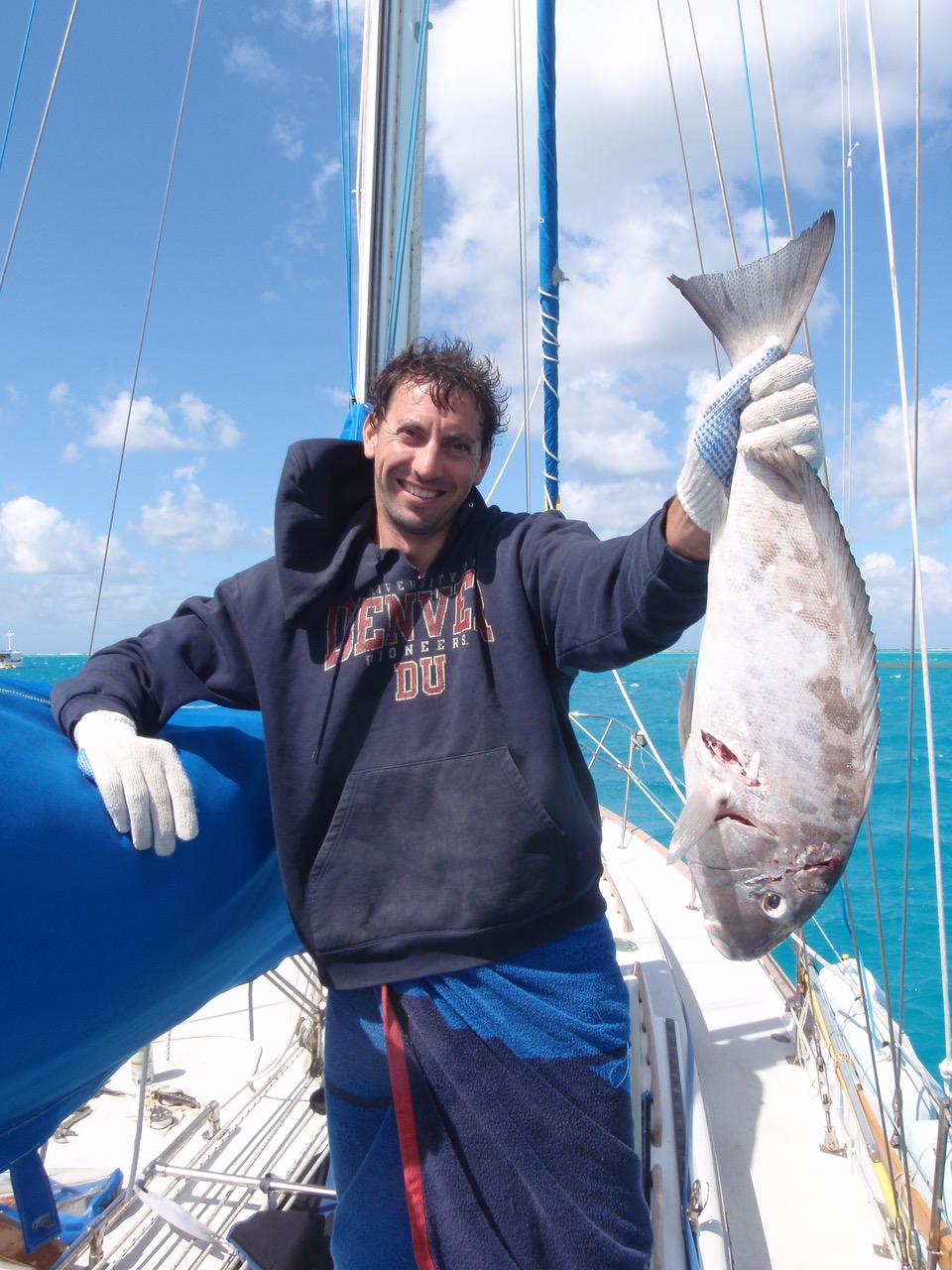
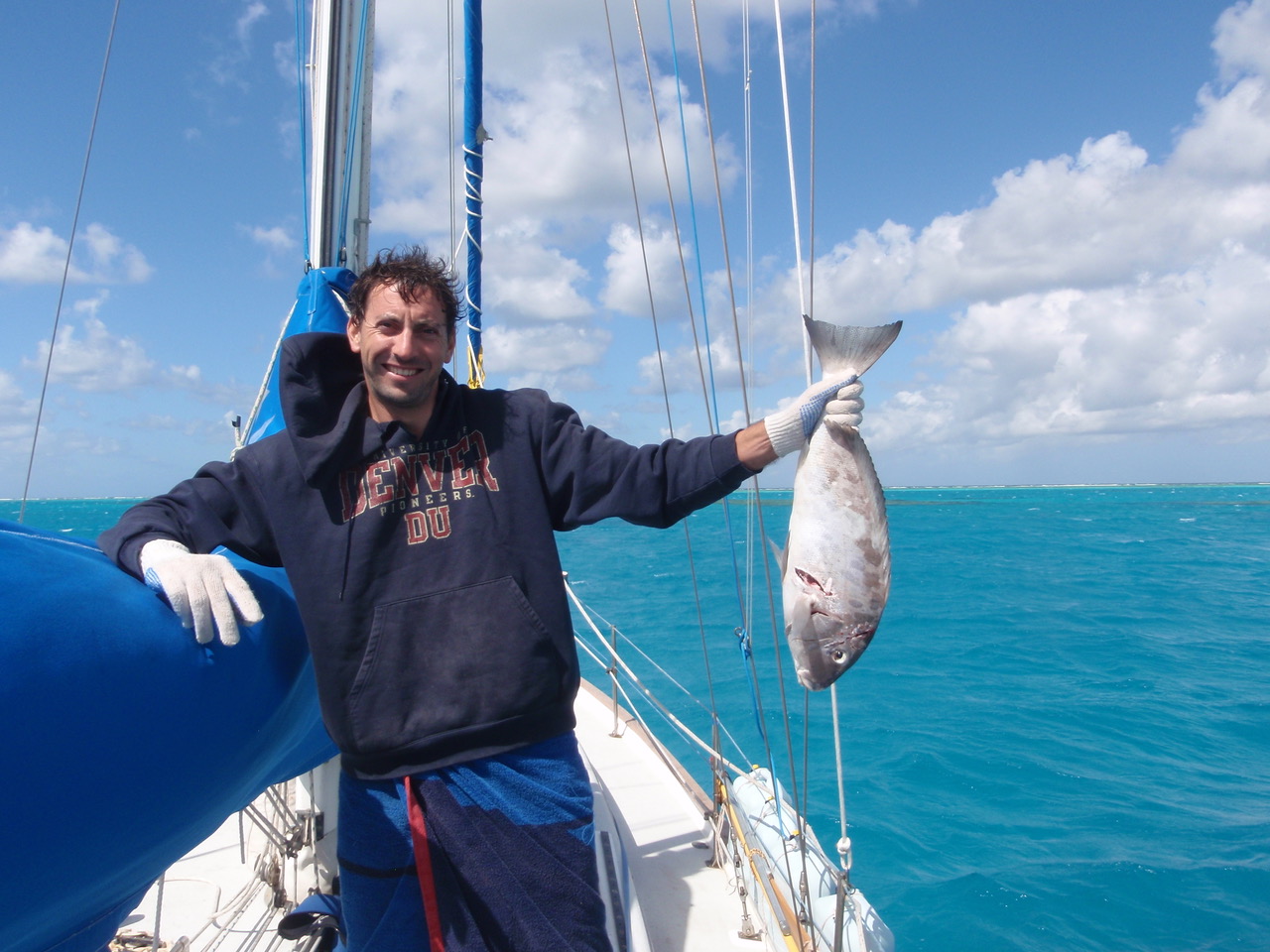
    Our spear fishing adventure was short. I bagged one smaller sized fish within a few minutes. Justin then said he had spied a bigger fish. I asked if he wanted to take a shot at it. He dove down to within three feet of it… the fish didn’t budge… and then Justin surfaced without firing. He had forgotten to undo the safety!  Back down he went, the fish hadn’t moved an inch, and with one shot from three feet away, one-shot wonder Justin bagged what is easily the biggest fish that someone on Syzygy has caught. King’s to Justin today!

    Justin, however, doesn’t really eat fish, so I spent the next two hours trying to gut and clean them. My fish only produced a small amount of meat, but Justin’s… Justin’s provided two beautiful large fillets. He gamely tried a few small bites of what I cooked up, but in the end sided with Ramon for dinner that evening. I dined on fish in a lemon butter sauce, fish in a sweet chili reduction, and fish teriyaki. Thank you Justin!

  • Justin has been Promoted

    I would like to inform everyone that Justin has been promoted. When Justin joined sv Syzygy, he was given the title of deck swabby. I had previously been through the rank of swabby and had been glad to be rid of it. Justin too labored under the unfair disdain from his fellow crew which accompanies the label.

    I would like to announce however, that Justin’s new title is deck swabby/cook.

    Despite repeatedly quoting Stephen Siegal in Under Siege, “Nah. I’m just a cook. [whispering] Just a lowly, lowly cook,” Justin has shown a high degree of enthusiasm and has taken to the role of cook with relish. In fact, since Justin joined the boat, I have only cooked one or two meals. Justin, as cook, is a god-send.

    His favorite is a stir-fry with sweet chili sauce. He also makes a mean egg and sauteed potato hash. His ramon, with cucumber and a can of chicken, is fucking incredible.

    Congratulations, Justin, you are now ‘just a lowly cook’. slash deck swabby.

    Post-note: Justin has also applied for the position of dinghy helmsman. However, the first time he took the dinghy out for a little joy ride the engine stalled repeatedly on him. He still needs some practice, but I’m confident that another promotion is in his future soon.

  • Temporarily Indefinitely

    “How long are you going to be in Bundaberg?” asked Ducan over some beers at a pub in Bundaberg. Justin replied, “temporarily, indefinitely.”

    The three days prior to arriving in Bundaberg, a city renowned for brewing an exceptional rum, we had been running our engine for five or six hours a day. There was just no wind or we were in a place so narrow that I didn’t want to be sailing. The Great Sandy Straights just south of Bundy, while serenely beautiful, were tough to navigate, so the engine was on the entire time. More posts later about fun we had there. At least we knew the engine fabulously.

    Until the day after we got to Bundaberg and tried to move away from the obscene $50 a night marina we were staying at. Then our engine decided not to start. Two hours of investigation revealed nothing and at that point Kate, our supremely gracious and generous friend here in Bundy, arrived to take us back to her place for hot showers and beds. Another $50 to the Bundaberg port marina. They would get at least another $150 dollars when all is said and done.

    The next morning Justin and I arose early and headed back to boat. Since the engine was cranking but wouldn’t fire, I suspected air in the fuel lines, something Matt confirmed in some e-mails I traded with him.

    Getting air out of the lines is supposed to be relatively straight forward. Follow a few steps and they should be cleared of air and the engine should start. Air may however, leak back in once the engine is turned off. Finding and permanently fixing an air leak is a confounding, vexing, frustrating and all-together potentially miserable experience. But I digress…. simply getting air out of the lines is supposed to be a relatively straight forward process.

    First: open the bleed screw on the primary filter currently being used (we have two of them) and use the pump on the primary filter to pump fuel though the filter. Air bubbles should come out of the bleed screw and when they stop then there is no air from the tank to the primary filter.

    First problem: fuel began leaking out of the other primary filter bleed screw.

    This was not surprising or unexpected as the bleed screw on said filter is a plastic piece of shit bolt that is basically stripped and deserves to melted down and turned into a children’s toy where it can cause joy instead of the frustration and ire it caused me. I had temporarily fixed this six months ago by wrapping it with plumbers tape and I again painstakingly cut some plumbers tape in half and wrapped it around about a dozen times all the while mumbling under my breath curses at it. Two days later I would buy a nice new metal bolt and declare victory on something Matt and I knew we should have done two years ago.

    Simultaneous first problem: fuel began leaking from above my head.

    This was surprising and unexpected. Instead of mumbling curses under my breath, this elicited an audible, “where the fuck is that coming from?” I was apparently too eager on the pumping at the primary fuel filter and was forcing fuel out via our vacuum gauge. There is a line running from the fuel system to the back of this gauge so that it can measure fuel pressure. There was no hose clamp on the line for some reason, just a tube pushed onto a nipple in the back of the gauge. I zip-tied it for now, and should hose clamp it later.

    Second step: open nut on fuel line exit at secondary fuel filter and using lift pump, pump diesel out until any air bubbles go away.

    Second problem: fuel began streaming out of the secondary fuel filter, which I had just changed. I must now mash and squeeze and contort my body over the engine so that I can better see the secondary fuel filter and put the o-ring and the filter on correctly. My head is now inches away from where two years ago I had jump started the engine via my body when I connected the alternator to the starter motor or solenoid, (I’m still not entirely sure what happened back then). Having the engine start unexpectedly, with me lying on top of it, because current had gone through either me or a tool I was holding, was not an experience I wanted to repeat. Thirty minutes later, the secondary fuel filter is finally on appropriately with a mild stream of obscenities.
    Third step: open fuel line leading to fuel injection pump and using the lift pump, pump diesel out until any air bubbles go away.

    Third problem: No fuel will come out. I can hear fuel running through the system and returning to the fuel tank, but no fuel comes out here. I give up and move on, with a pointedly loud set of damnations for the engine.

    Fourth step: open bleed screw on fuel injection pump and using the lift pump, pump diesel out until any air bubbles go away.

    Fourth problem: The bleed screw is located in another screw, lets call it the ‘stupid screw’ which goes into the pump. When I try to loosen the bleed screw, it seems to be seized to the stupid screw, and instead the stupid screw loosens. The bleed screw is specifically made so that when loosened, only a small amount of fuel comes out. The stupid screw is not. Lots of diesel now comes out as I fumble around trying to find the wrench that will appropriate tighten the stupid screw and not just tighten the bleed screw further into the stupid screw. I get it to work right with additional wrenches as I ponder what cancer I am bringing upon myself with diesel dousing my hands. I am also cognizant that neighboring boats might have head the stream of invectives I direct at the engine.

    Fifth step: Crack open each injector nut, there are four, and crank the engine with the throttle open. If bubbles appear, the engine has not been appropriately bled and the process must be repeated.

    Fifth, six, and seventh problems: The fifth and sixth problems are that two injector nuts leak air, so I have to repeat everything. The seventh problem will vex me for three more days. Instead of the injector nut opening, the injector adapter (some stupid adapter piece between the injector nut and the injector) comes loose and will not retighten. The injector nut will also not break free. Over the next two days this illicit roars of hell-fire, and I begin to scare Justin with a series of imitations of an 8 year old’s temper tantrums. I should be mildly embarrassed but the engine has gotten the better of me.

    So we are now in Bundy, the rum city of Australia temporarily, but indefinitely. At least I can drown my sorrows in rum.

    post script: The problem was finally fixed upon pulling off the fuel line, purchasing a new injector nut, reassembling, and bleeding the engine multiple times. The engine has now been running perfectly for the last month. You can read a different take on this and more about the resolution on our maintenance blog here.

  • position update

    they’re in bundaberg now, at a marina: -24.76122,152.38649

  • position update

    matt here: they’re travelling a channel between an island and the mainland, south of Bundaberg.  Location received 4/11 @ 9:38PM via satellite: -25.58649,152.94022 (beautiful satellite image)

  • position update

    This is Matt posting a satellite position update: -25.94164,153.16121

  • update on Jon & Justin

    matt here, sitting comfortably at home in New Mexico . . . maybe Jon will get a chance to put something up soon, but until then I’ll pass on some info.

    He and Justin departed Brisbane on April 1st, spent some time locally out in the bay sailing with friends and anchorage hopping, then headed north.  On the 7th I got a SPOT satellite check-in from here (location also linked to this post–see the sidebar).
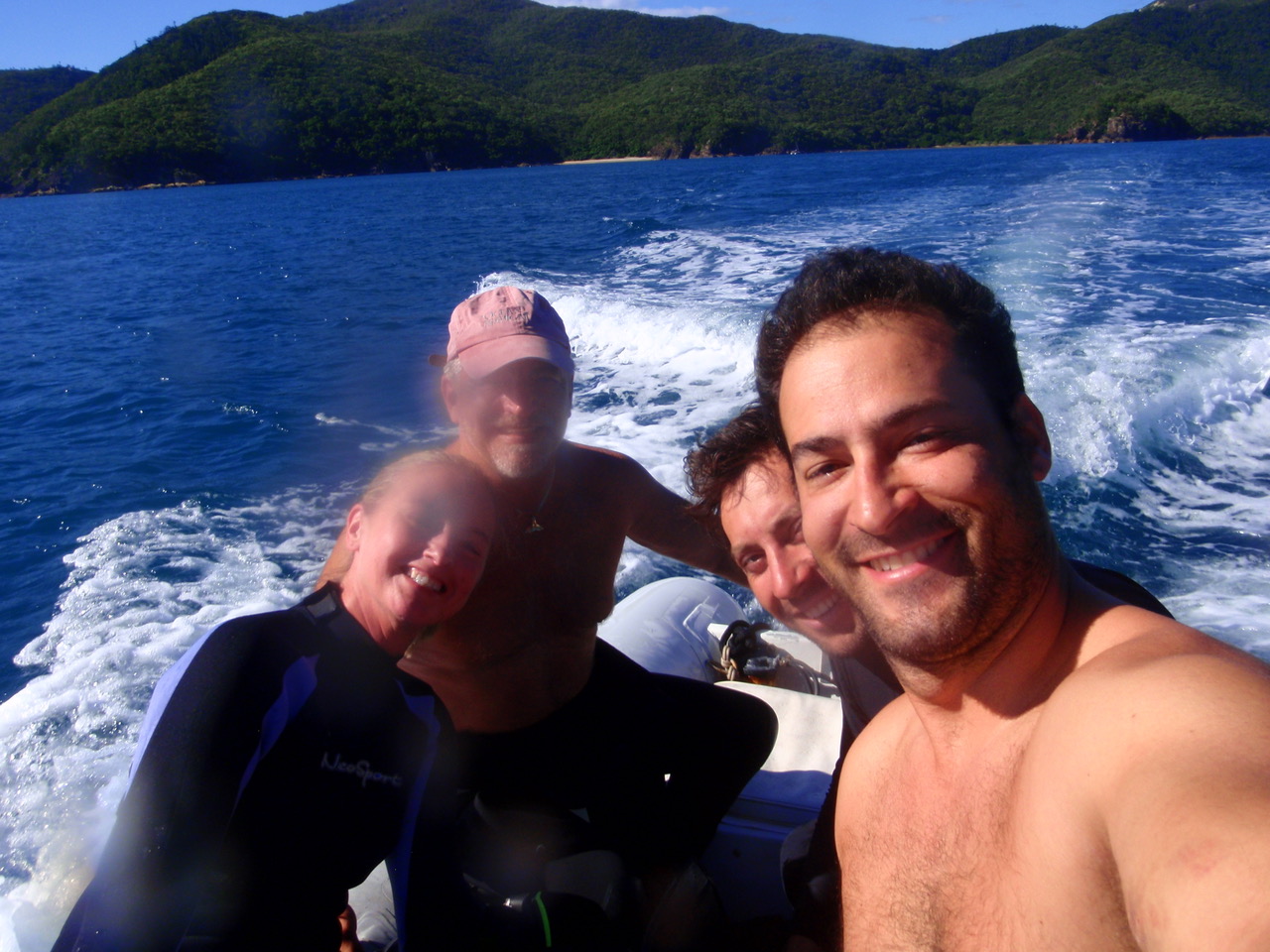
    They have some great stories already . . .  stay tuned for their update.
  • Lessons in Captainhood

    This post backtracks a bit and talks about events that happened April 4th-8th.

    It’s easy to write about fun things that happen, like in the next few posts to come about scuba diving a wreck or Justin imitating an Australian accent over the VHF to the coast guard. It’s harder, much harder for me, to write about screw-ups or flaws in my captaining. When Karen was writing about the trip, however, she was bravely honest and up front about when things weren’t going well and how she felt about it. So I’m trying to take some inspiration from her here.

    Justin was at the helm as we approached a channel that would hopefully take us to a better anchorage. Though I would occasionally give him course corrections, Justin does a fine job of it and I was watching our course on our computer charting program below decks. Our original anchoring location seemed too exposed and the weather forecast said the wind would pick up. We had already seen two squalls blow by us earlier in the day where the wind had jumped from 10-15 knots to 30-35 in a matter of seconds. The water depth was 15 feet, which for Moreton Bay is quite good as half of it seems to be a minefield of sand bars. We were 100 yards away from a buoy that marked the channel. And then we abruptly slowed to a stop. We had run aground.

    Since we had run aground in Fiji, I at least had an idea of what to do. In Fiji though, the water had been perfectly calm and it was a beautiful day. This time however, the situation was compounded by a nasty little wave chop and an impending storm on the horizon. I was desperate to get free before 30-35 knots of wind starting knocking us around and creating waves that would pound on us some more. As it was, each choppy wave would lift the boat slightly and set it down back on the sand with a small shudder. I dreaded feeling a much larger shudder if the approaching storm reached us.

    I started racing around the boat, mimicking exactly what Matt had done when we ran aground previously. Dinghy into the water, outboard on, fuel attached, kedging anchor out. Justin quickly asked what he could do, and my mind raced as I tried to balance thinking about what I was currently doing, with the effort to explain to someone anxious to help but unfamiliar with the boat, unfamiliar with where items are, and unfamiliar with what we might need.

    Just before speeding off in the dinghy to set the kedge anchor, I explained to Justin he needed to start cranking in the winch once I had dropped the anchor. Unlike in Fiji where we tried going forwards and sideways to break free, I had decided to pull us sideways and backwards. It seemed probable that it only got shallower moving forward. As he winched madly away, putting an prodigious effort into cranking the line in as fast as possible, I raced back to the boat and with snorkel mask on, dove down to try to see what was going on and pray there wasn’t any rocks around. With less than five feet of visibility, I couldn’t even see the bottom from the surface. Diving down to get closer to the keel, I thankfully saw there was only sand. I could also see the boat lifting on every wave and coming back down. It was unnerving.

    Back on the boat, Justin and I swapped out every two minutes cranking in the anchor line on the winch. It was like sprinting with your arms, and in two minutes I would be out of breath and exhausted from cranking.  As Justin kept cranking away at a now extremely taunt anchor line, I turned on the engine, hoping the water intake wouldn’t clog with sand. The low depth alarm on our depth sounder went off, freaking me out; I had never heard it sound before. I revved the engine in reverse, nothing happened. Justin and I swapped out; cranking the winch could only happen in the low gear now, straining will all one’s effort. Back at the helm I put the engine in reverse again; we slowly started inching backwards. We were free.

    For a denouement, we struggled for 30 minutes to retrieve the kedge anchor, so stuck in the sand it had apparently become. it also started raining and the wind picked up. I was glad to be away from being grounded. Once free, Justin justifiably was ready to smile, laugh, and enjoy the fact that we and the boat had emerged unscathed. For myself, with adrenaline still coursing, I could hardly talk and wanted only to get to the anchorage we had previously passed on. An hour later, at anchor I slumped into the nav table with a beer. Mentally exhausted.

    Justin kept saying afterwards, we gotta blog about it. And while I agreed, I knew part of me didn’t want to. I didn’t want to admit to a deficiency on my part. I didn’t want Matt to be worried about losing confidence in my ability to captain Syzygy.

    A couple of days later we punched a hole through one of the polycarbonate windows that wrap around our dodger. Another error in captain-hood on my part, I wasn’t insistent enough to Justin to pull in the boom all the way to centerline before jibbing. The boom came over harder then it should. The boom is sheeted, moved in and out, by the main sheet line. The main sheet runs through blocks which are on a traveler. The traveler can be moved from side to side by the traveler line. The shock load from the boom coming over harder than it should caused the traveler line to break one of the pulleys it was attached to. The pulley snapped off violently into the polycarbonate dodger window and punched a hole through. Fixing this will probably be expensive and a huge ordeal. I was more upset with myself at this event than at running aground. At least when we ran aground I thought our location was fine and was telling Justin to stay on course. Here, I knew better. I knew the boom should be further to center before jibbing. I knew better and just didn’t insist to Justin that he needed put more effort into winching in the boom. He was tired of winching and asked if it was enough and if he could stop. I let him. I shouldn’t have and I knew it. I berated myself as captain and my lack of leadership.

    A week later, I e-mailed Matt, almost sheepishly, intro-ing with the line, ‘well I suppose I should tell you…’  I felt like a student handing in a final exam, embarrassingly mumbling to his favorite professor that he hadn’t studied well enough and had done poorly.

    I’m hoping I can do better in the future.

  • Agh, that’s disgusting

    Justin and I managed some last minute work on the boat.  I worked.  Justin filmed.  O.K., he did some work.  Off camera of course.  Here we battle a small issue in the galley.

    Note: Of Matt, I only make fun.  It is only because of the thousands and thousands of hours that Matt labored on Syzygy that I am able to sail her here in Australia. I jest because it is so obviously hilarious to think Matt somehow did not maintain Syzygy to the highest of standards.