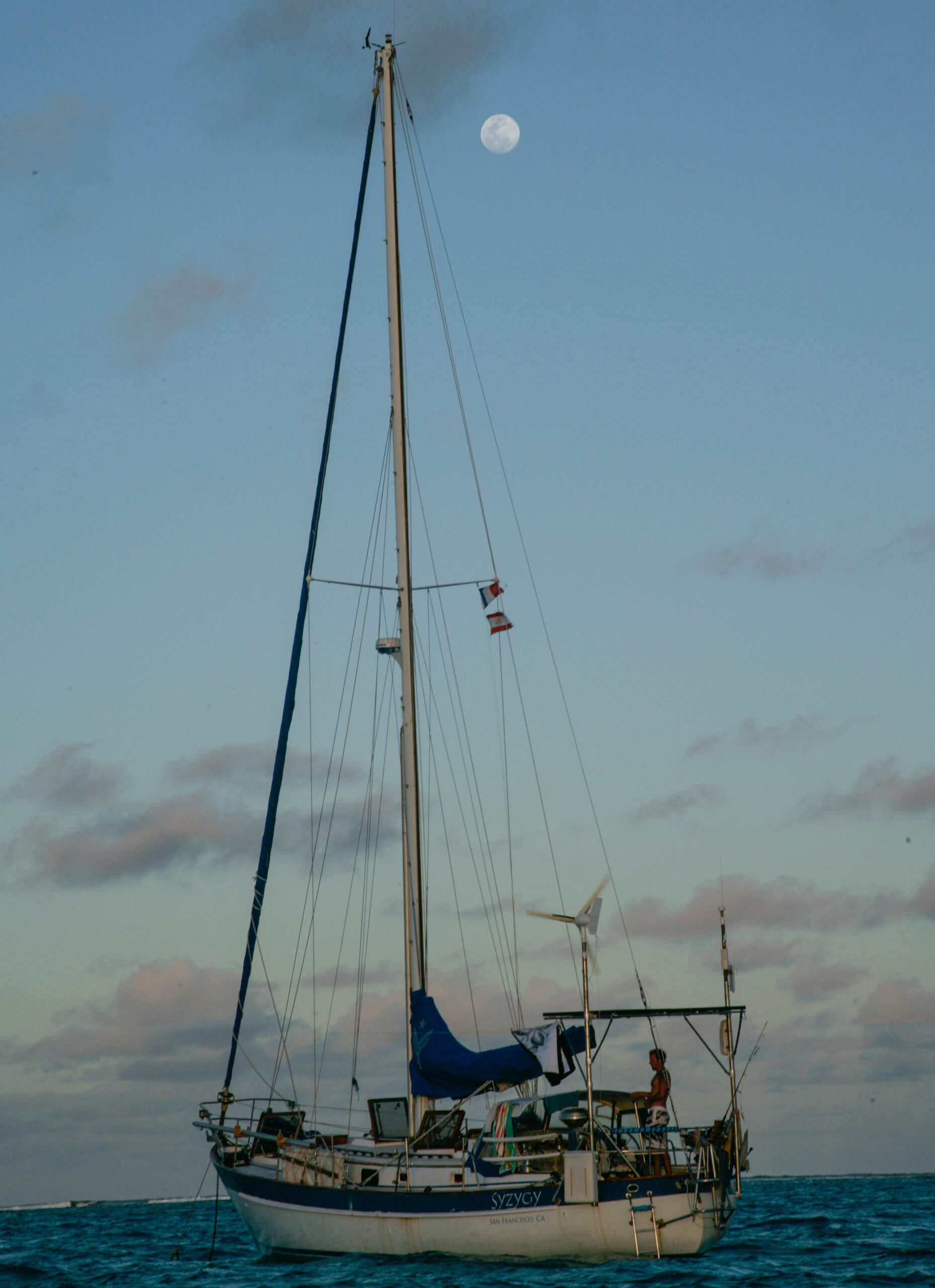
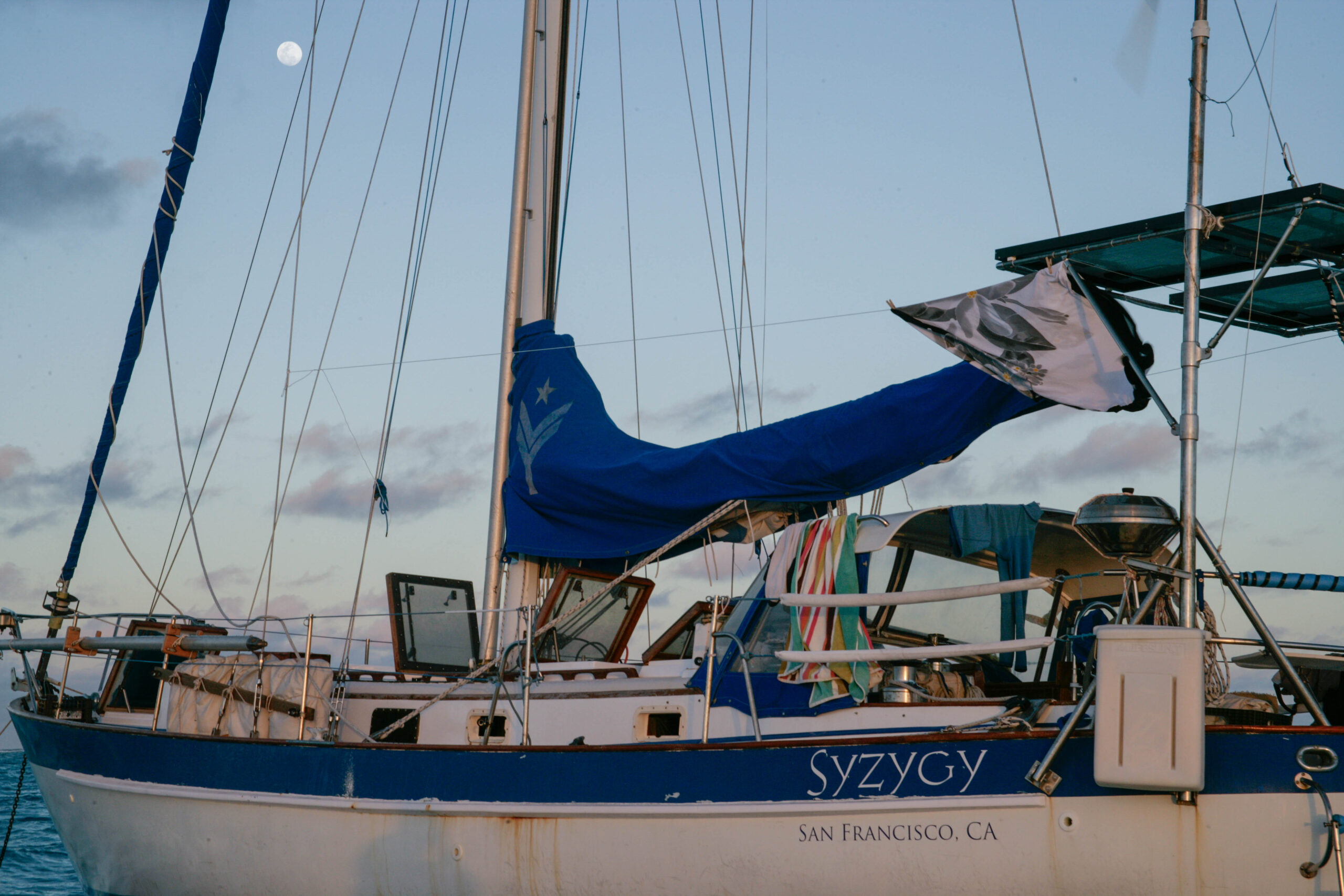
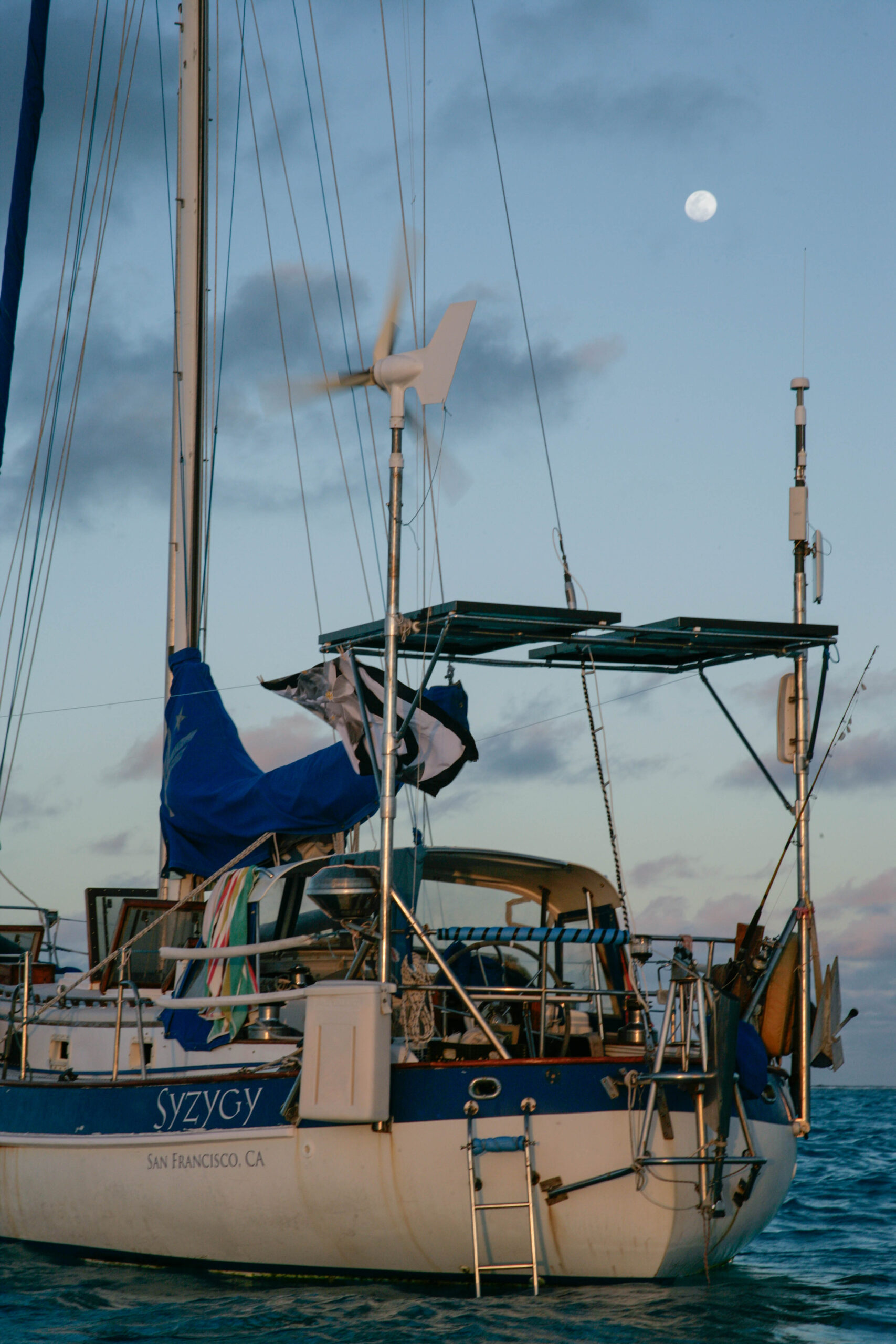
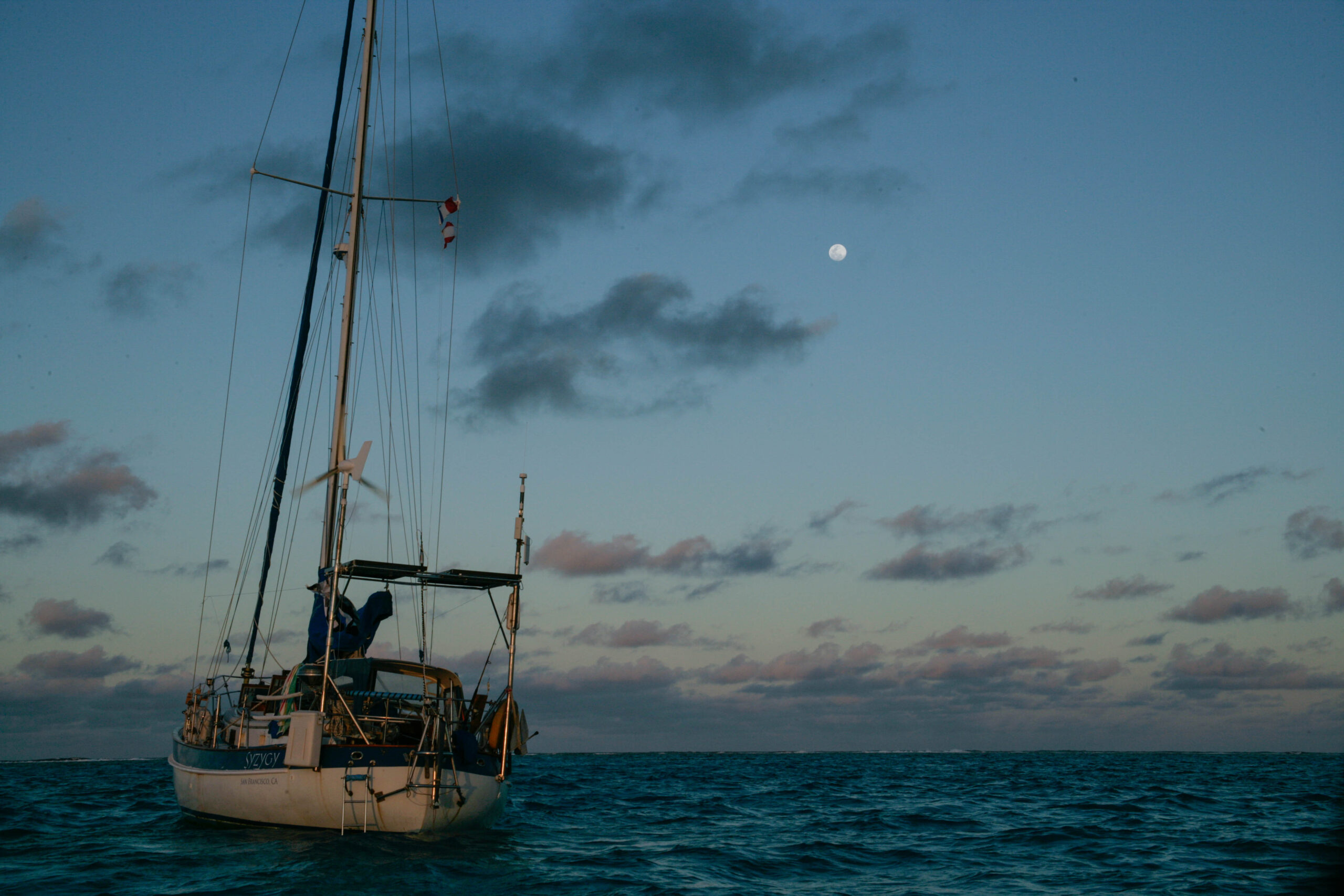
Syzygy Sailing

Bought a boat, fixed a boat, sailed to Australia, sold the boat.

  • How Embarrassing

    (this post refers to events that happened on September 14th)

    We ran aground.  It wasn’t our fault.   We were within the channel markers, so perhaps Port Denarau was to blame for faulty markers.  We were giving a little space to a high speed catamaran that impatiently steamed by us, so perhaps South Seas Sailing is to blame.  Visibility into the water was zero feet, so perhaps god was to blame.

    Anyway you slice it, we ran aground.  Thankfully, it was a slow, easy, decrease in speed to zero, dirt and mud gently easing us to a stop.  Hard coral or rock would have been more jarring and unforgiving to our boat.

    As the high speed catamaran passed, the crew were motioning to come closer to them, a motion which is not at all clear as to its intent when viewed from fifty yards away.  We had turned slightly to port to cede more room to them, their large boat and their large wake, but when I realized what they were motioning for, I quickly tried to turn to starboard and sped up a touch.  Neither helped, and we gently came to a rest.

    Matt sprung into action, quickly getting out 200 feet of line, jumping into the dinghy which we happened to be pulling behind us, and clipping out orders for Karen and I to follow.  Get the anchor off it’s mount.  Tie the line to the anchor.  Move the line to the bow roller.  Tie on another line.  And with that off he zoomed with the anchor into the middle of the channel where he dropped the anchor.  Back at the boat, with Karen at the helm, it fell to me to pull us through the mud towards the anchor.  Pulling us primarily forward would allow us to use the engine to help propel us forward, assuming the mud wasn’t all the way up to the prop.  When I had pulled as much as I possibly could, we then wrapped the line around the anchor windlass and with Karen tailing, I cranked away, pushing and pulling the lever on the anchor windlass with all my might trying to pull us closer to the anchor Matt had dropped, and hopefully not simply pulling the anchor closer to us.

    We were inching closer when we caught a break.  A mid-size troller was exiting from the marina through the channel.  We tried hailing them to warn them of our anchor in the middle of the channel but they didn’t respond.  They did however, increase speed which through up a larger wake.  The larger wake allowed our boat to rise and break free of the mud.  As we rose, I desperately cranked the line as fast as I could go to get us over deeper water.  And then we were free.

    It was over in less than ten minutes, and Matt was particularly proud of our fast reaction that led to getting freed.  But we got stuck in the mud.  How embarrassing.

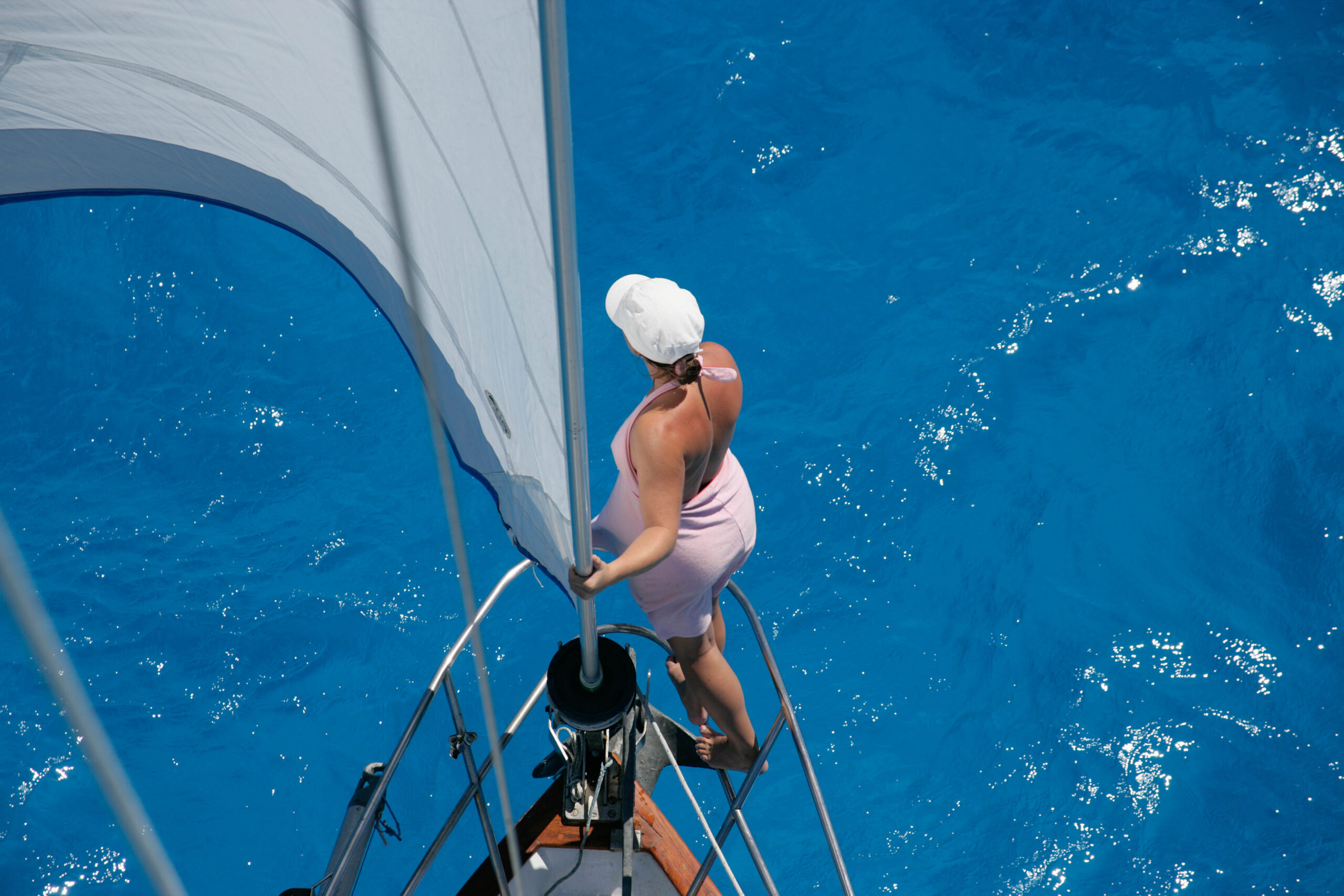
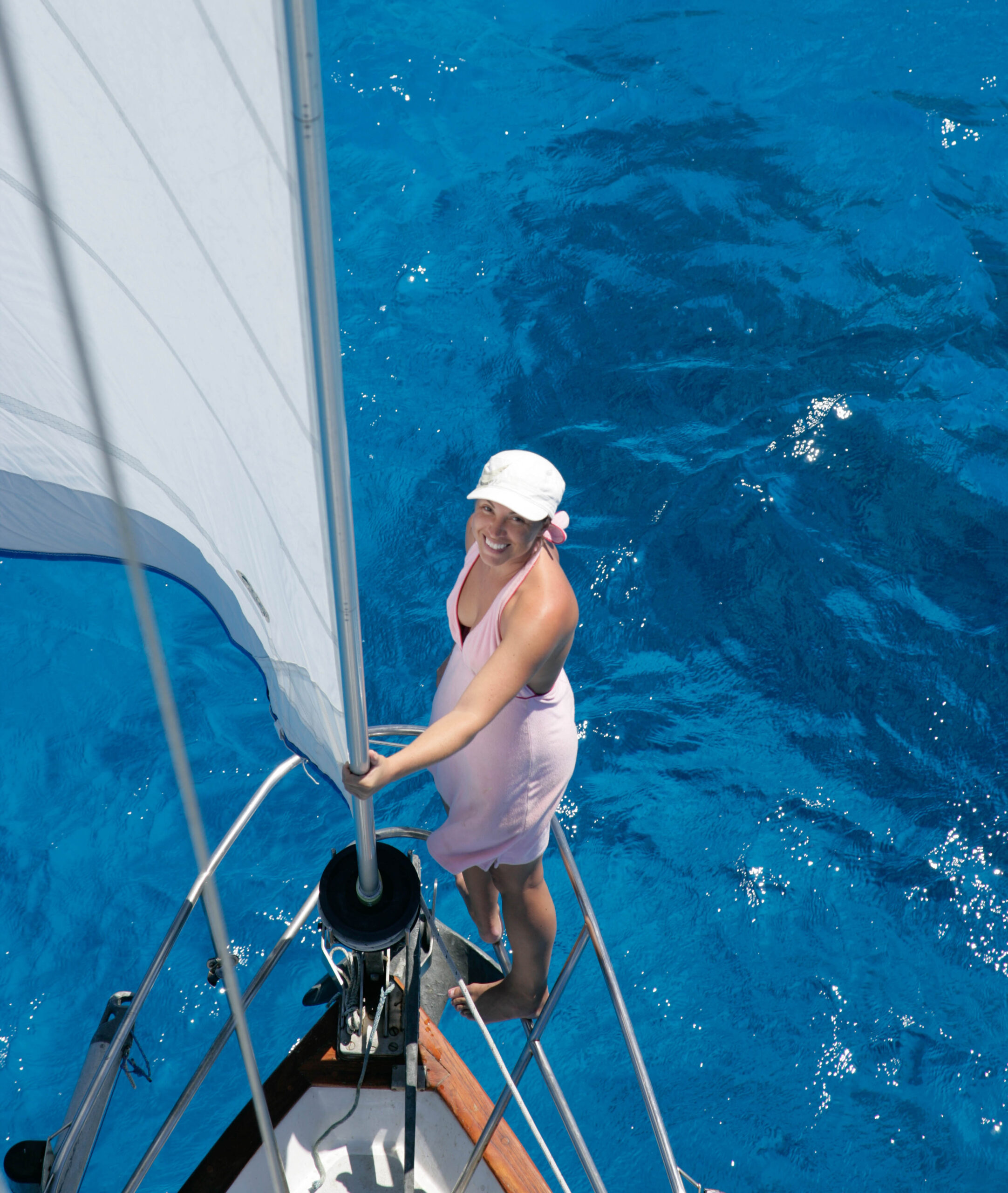
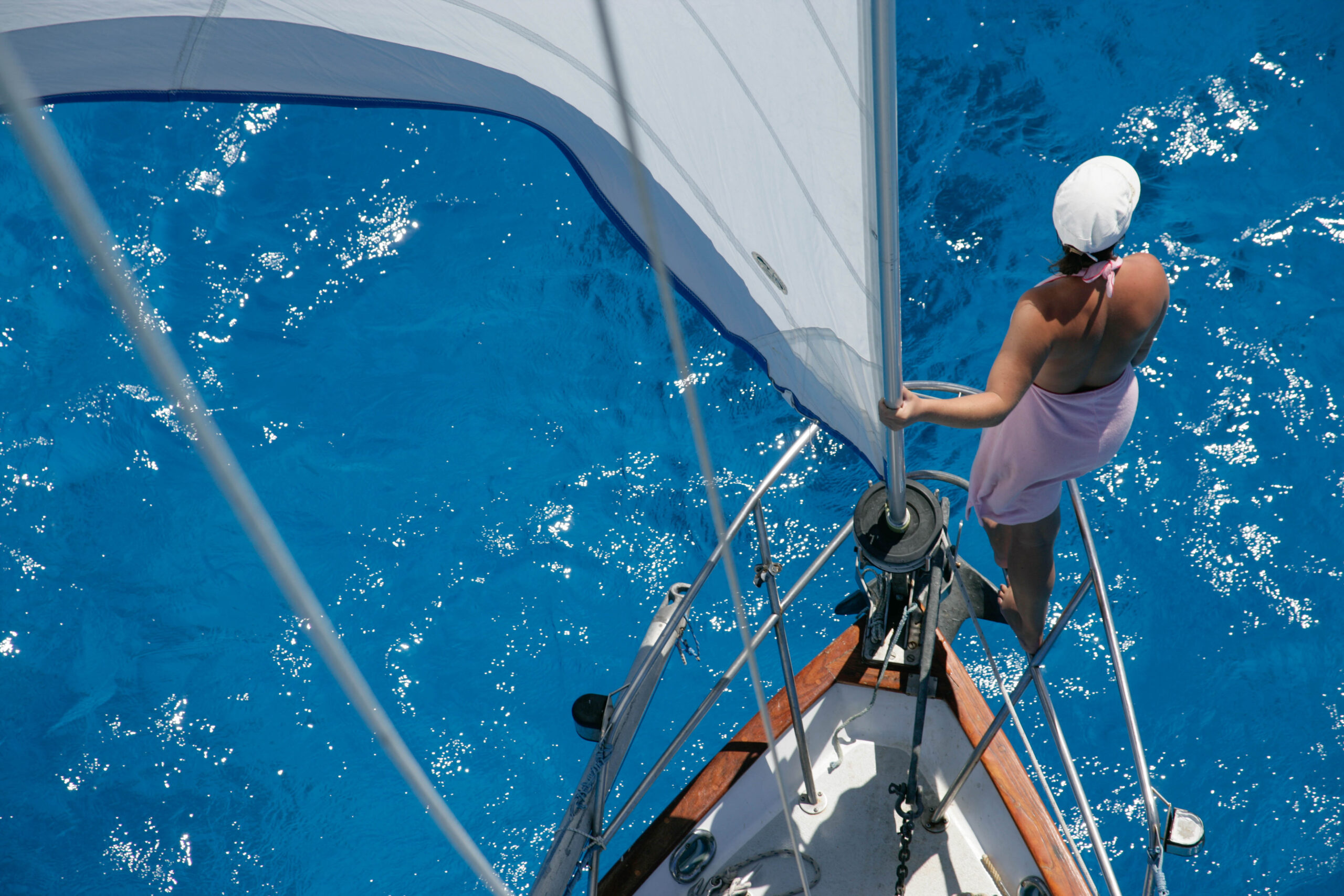
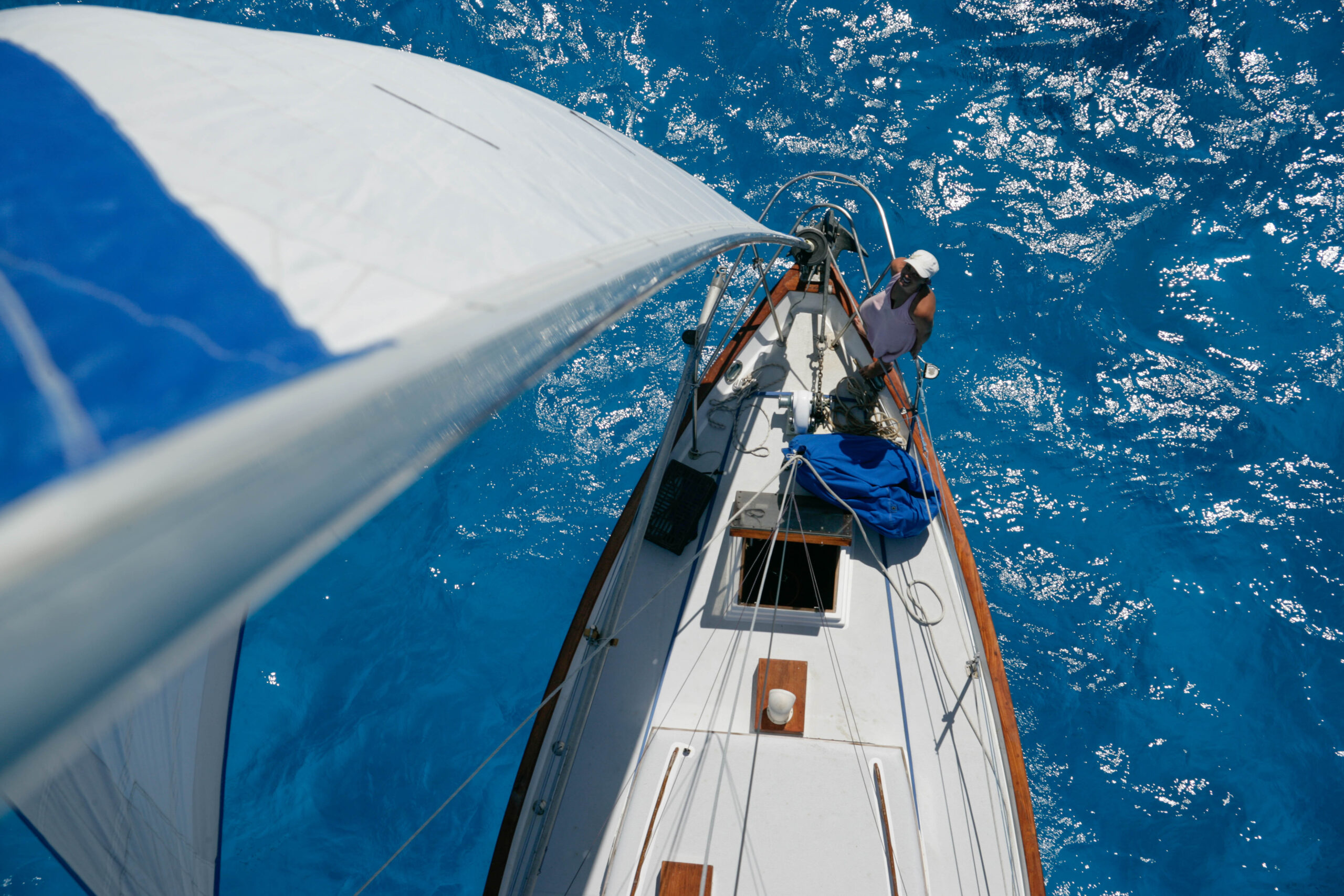
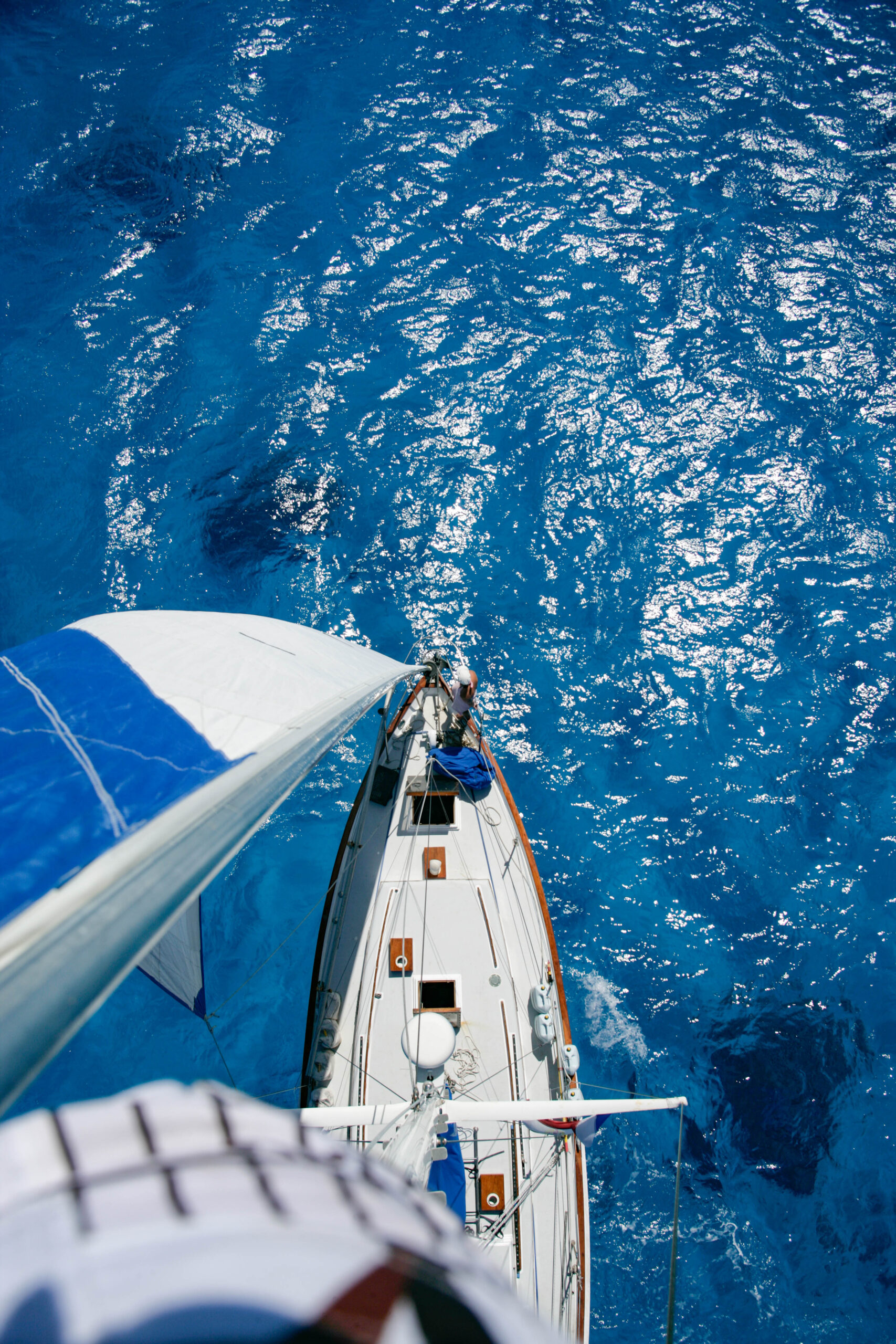
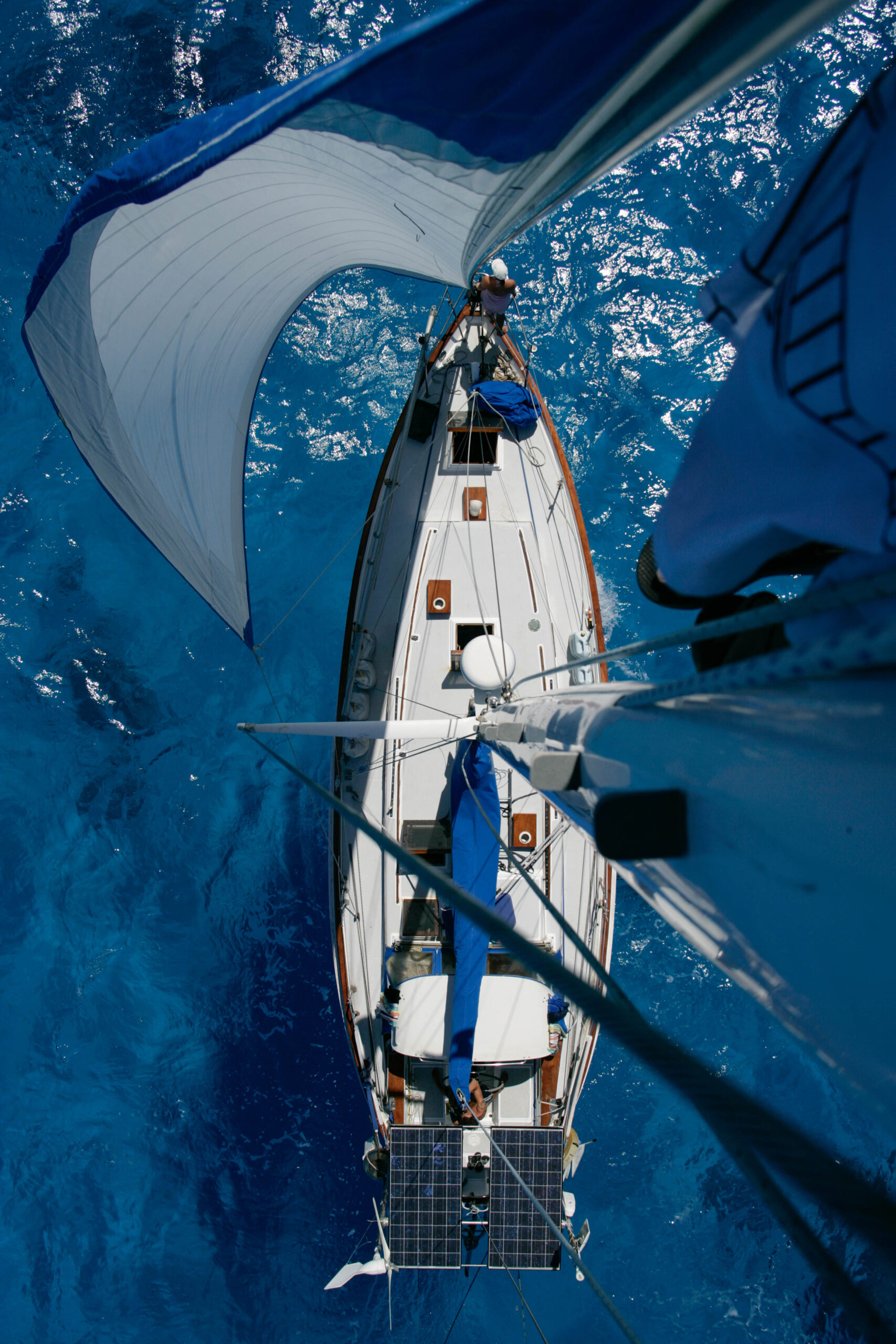
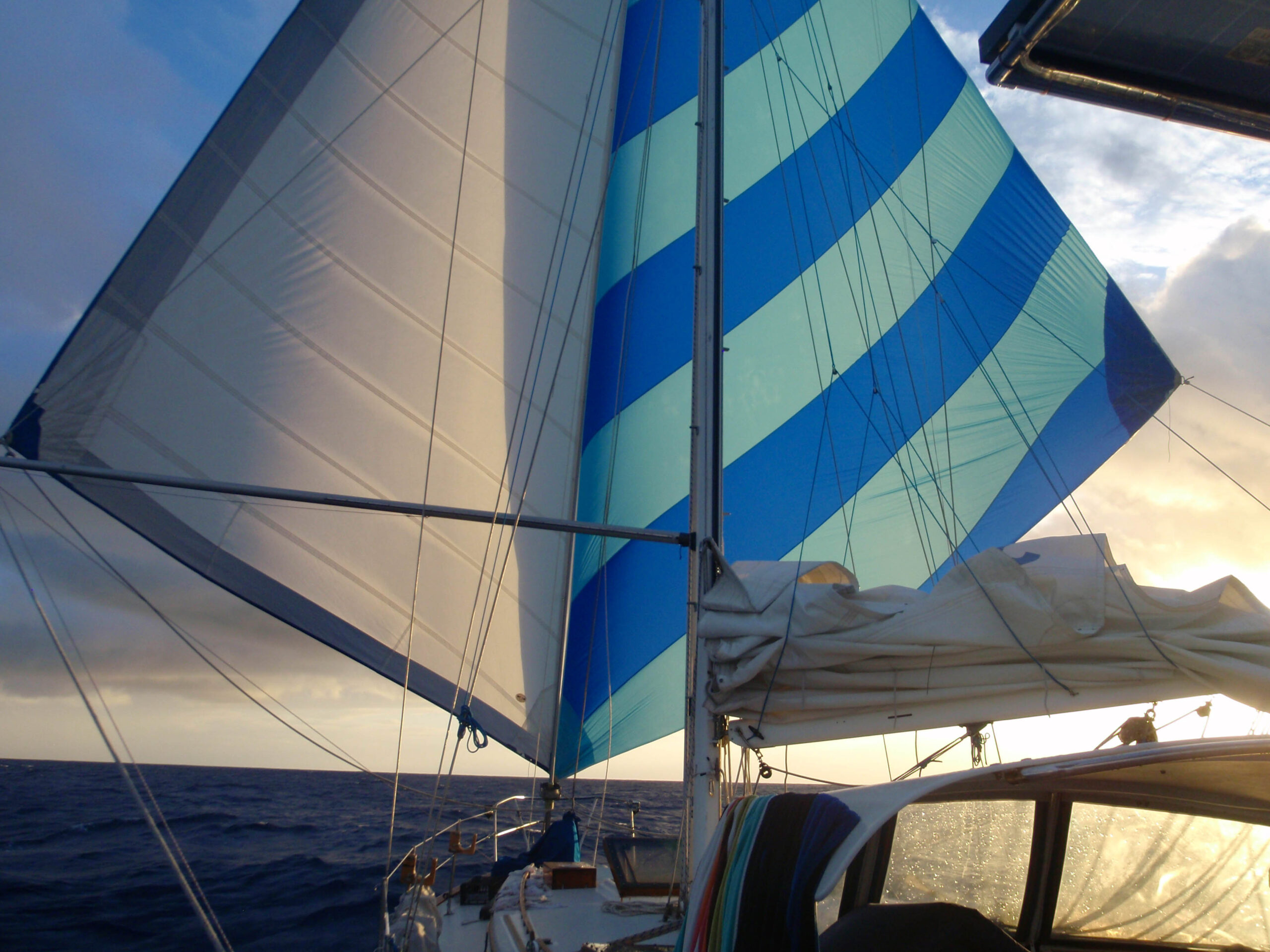
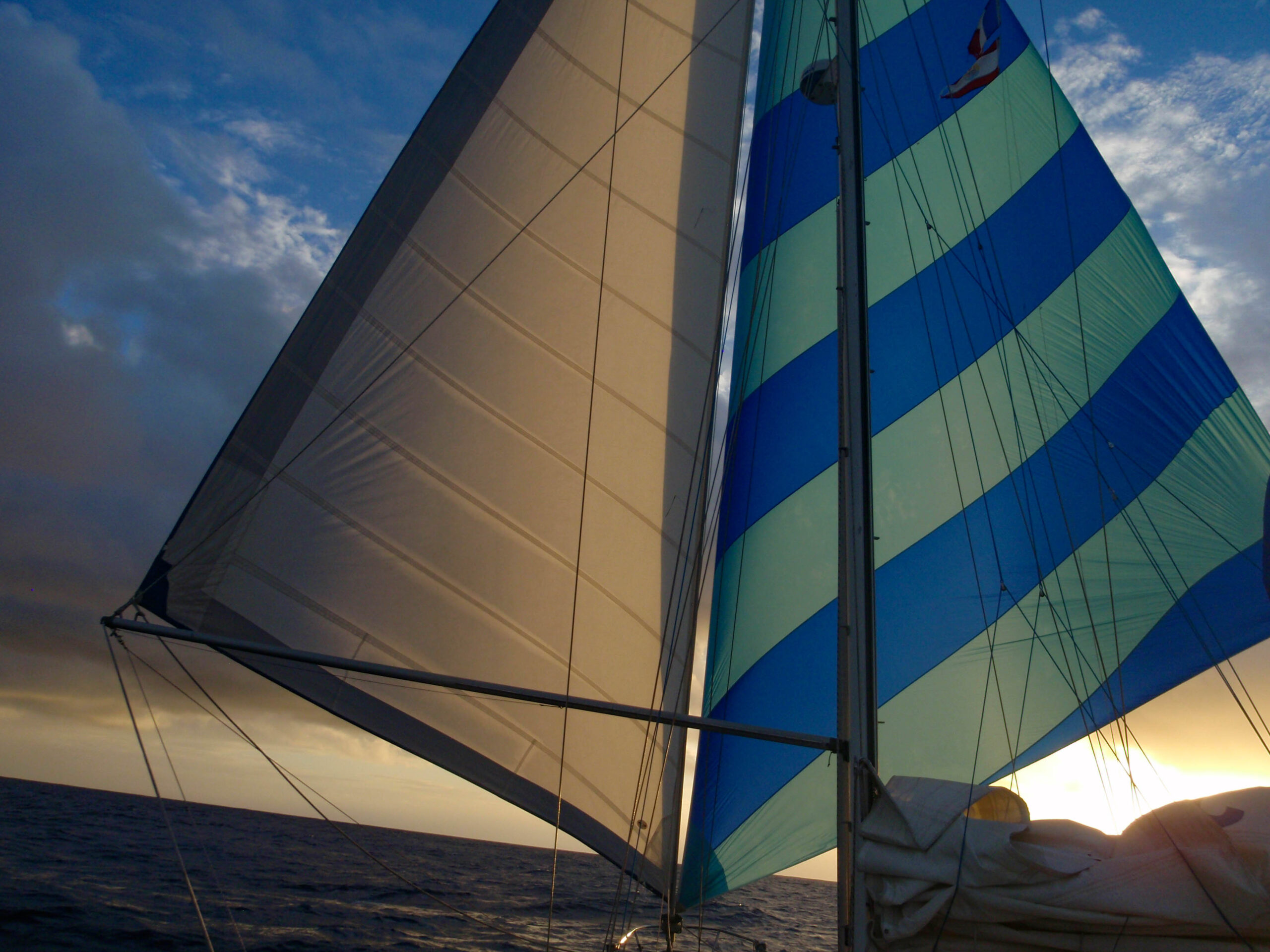
  • Rigging the drifter sail

  • Tonga

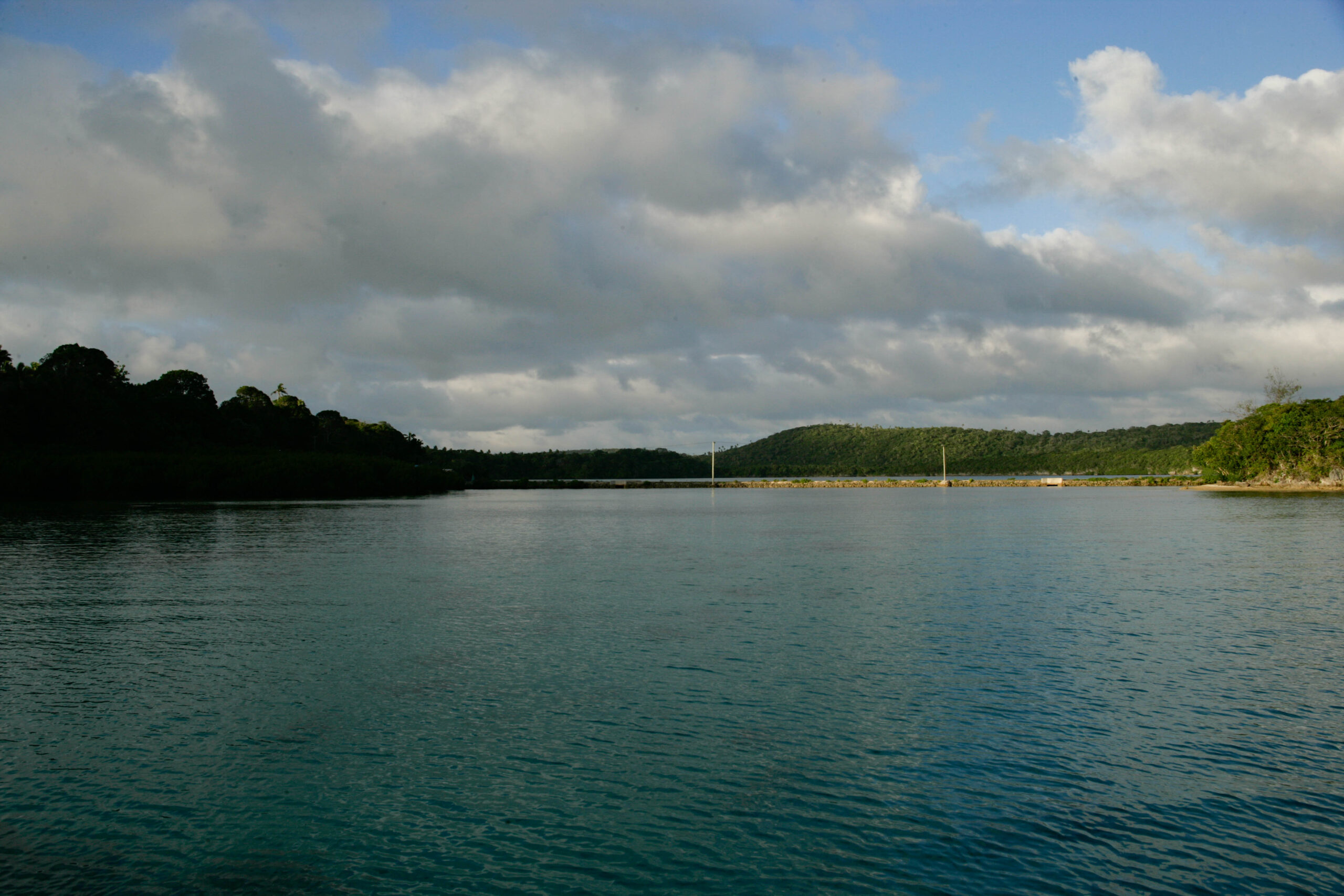
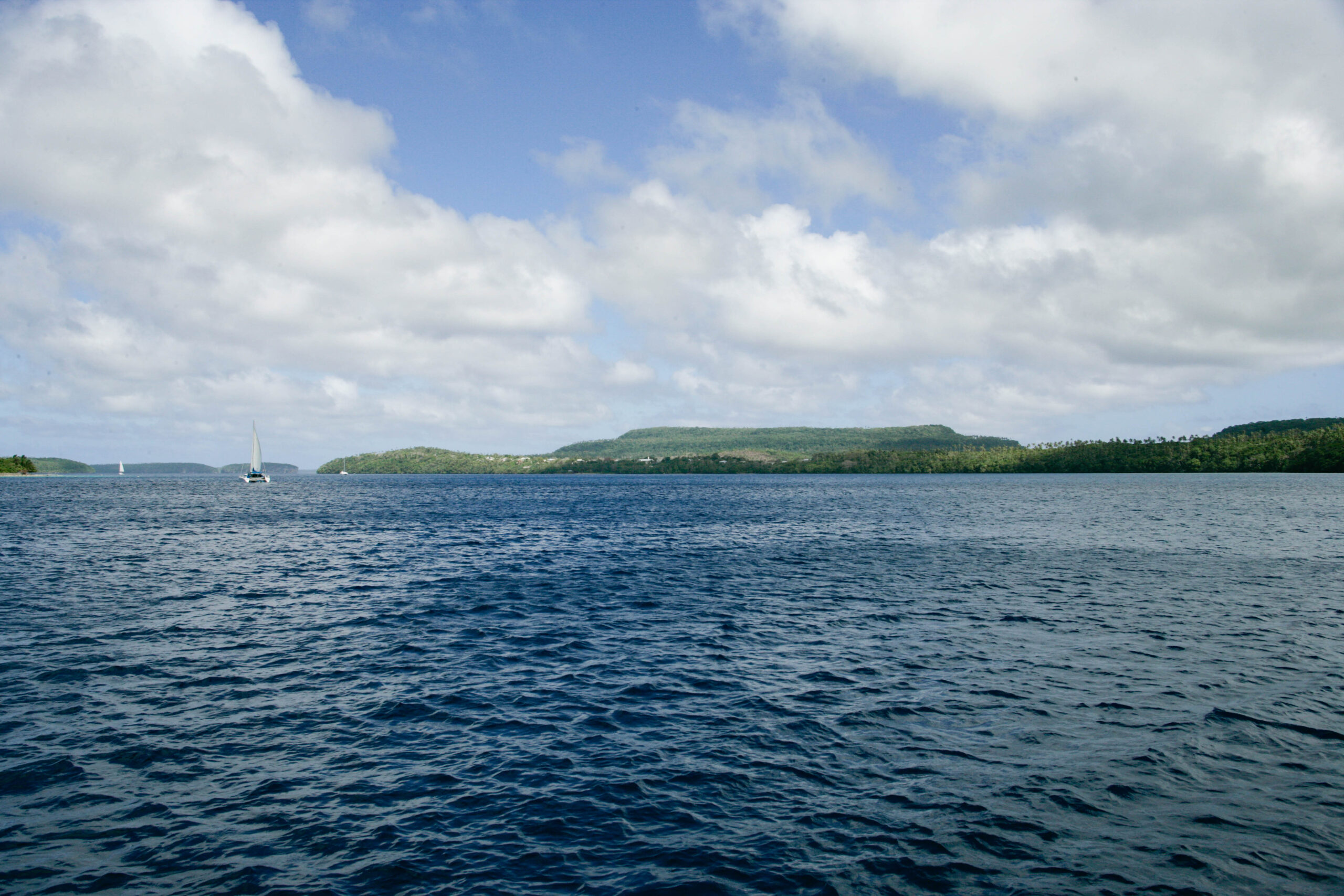
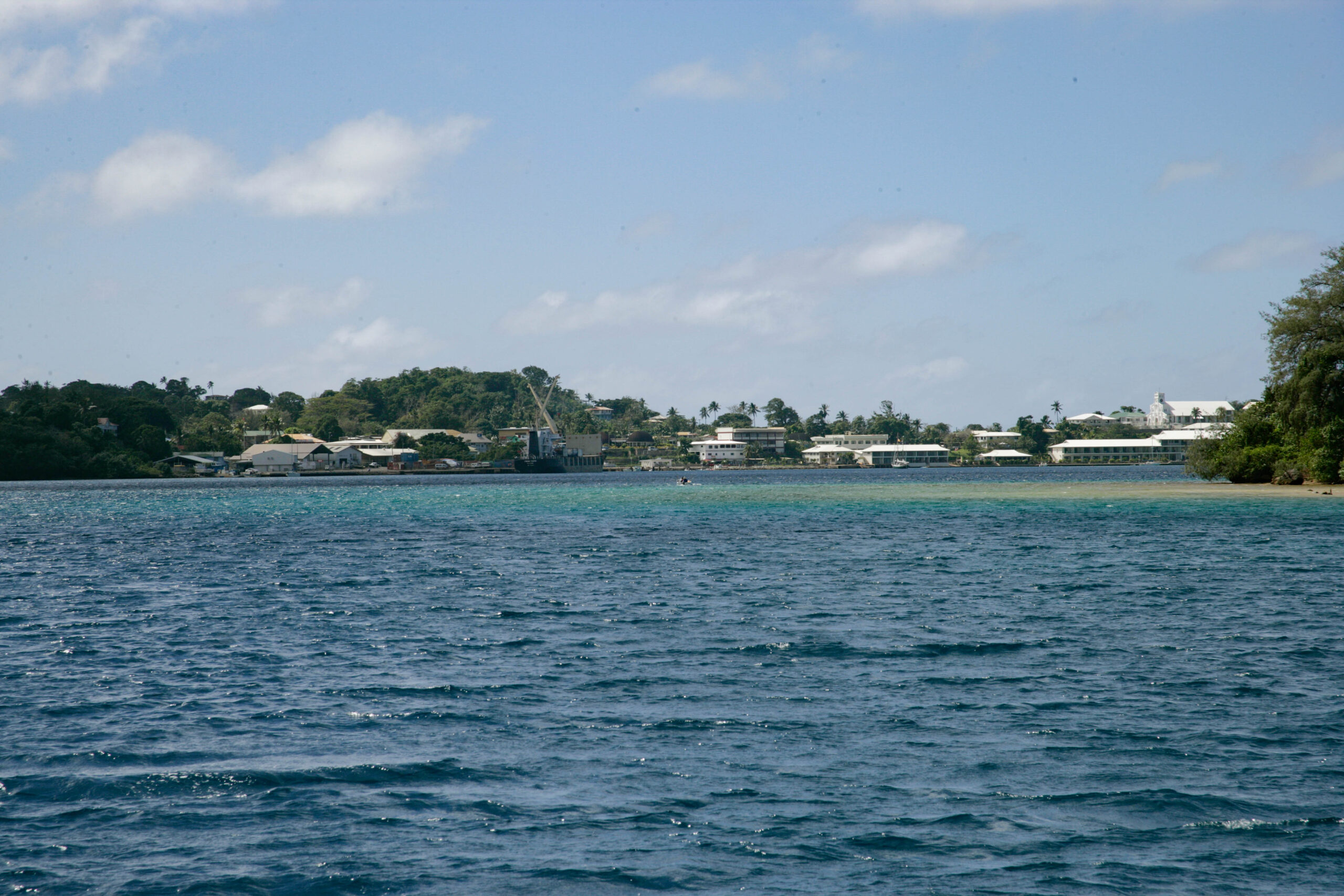
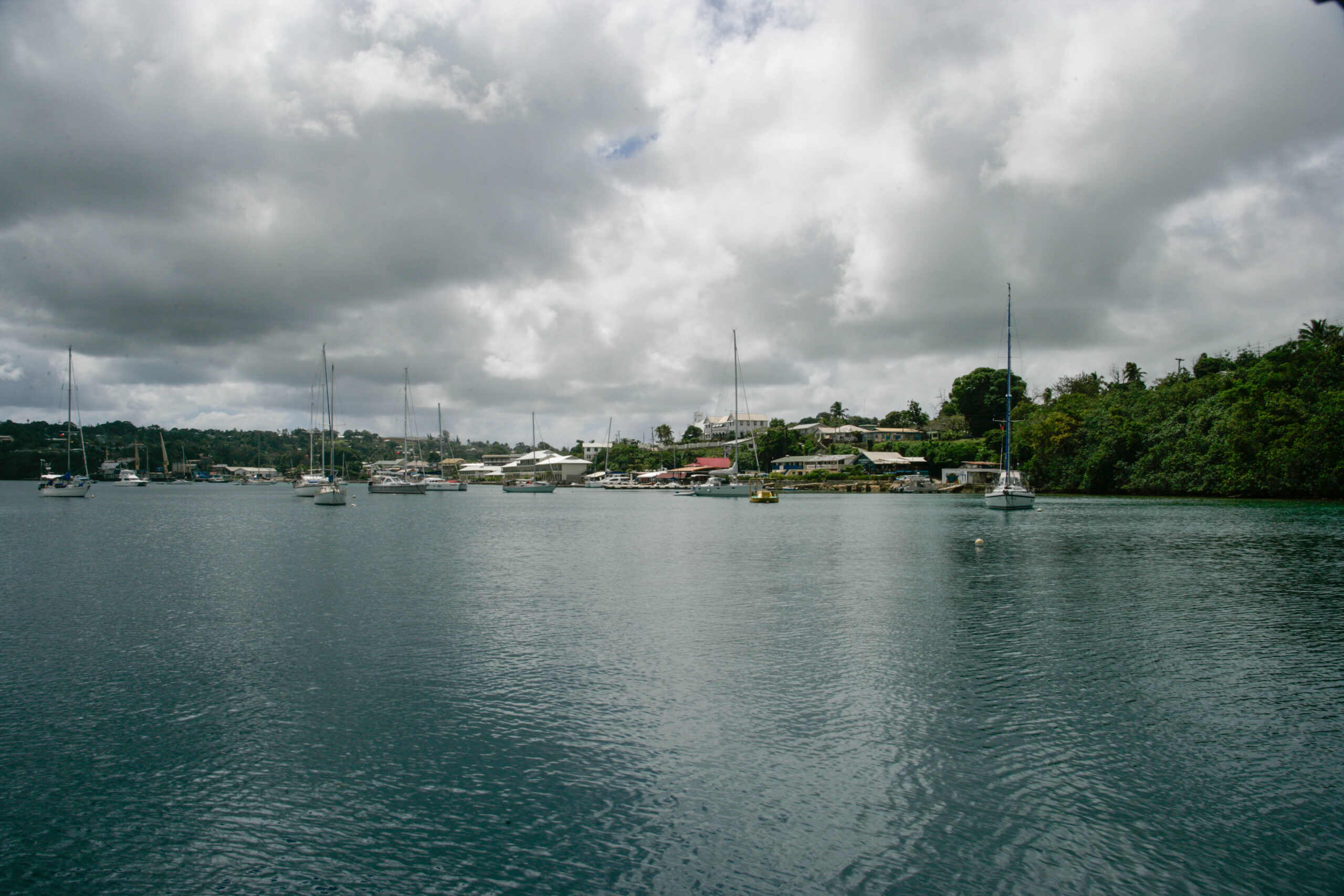
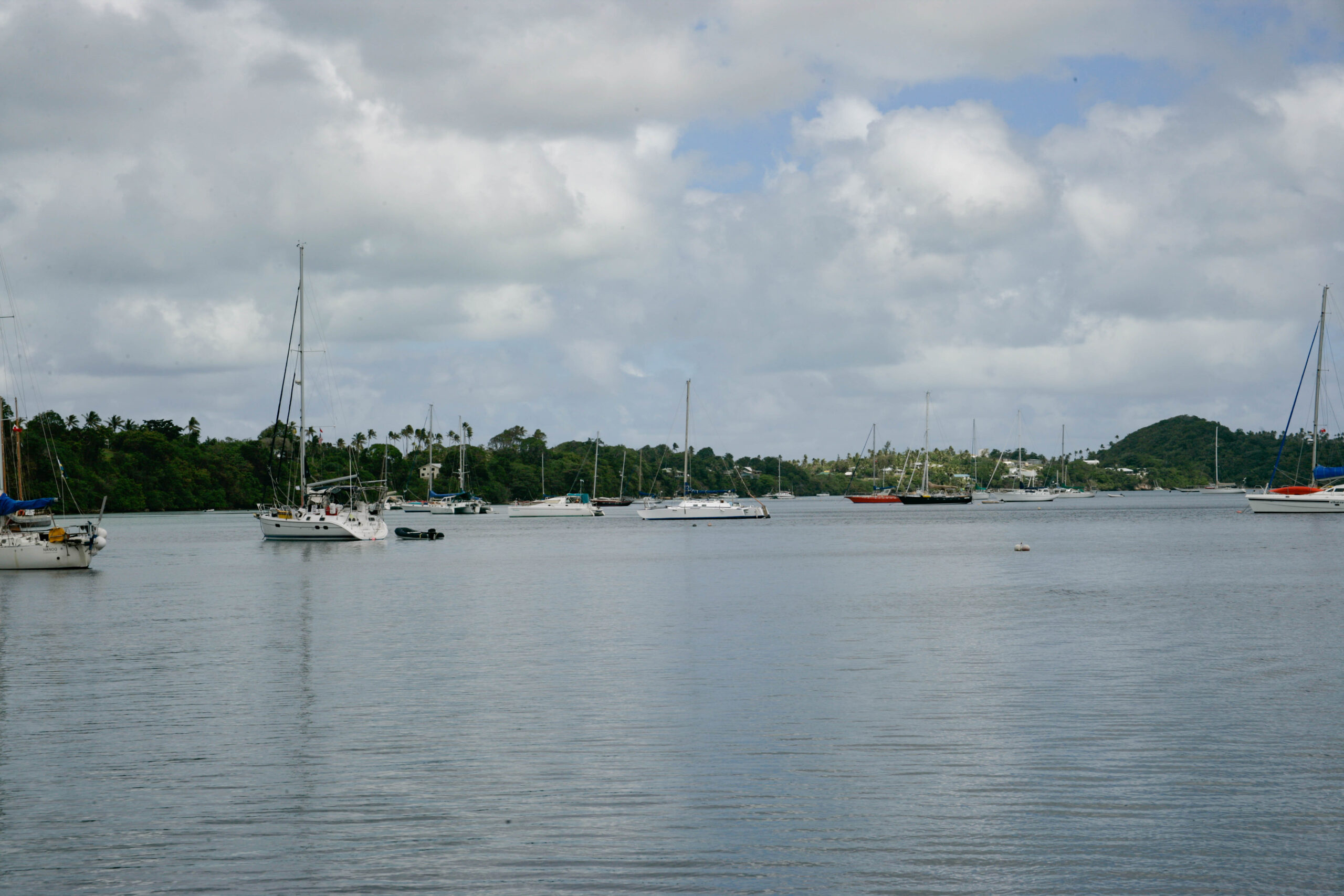
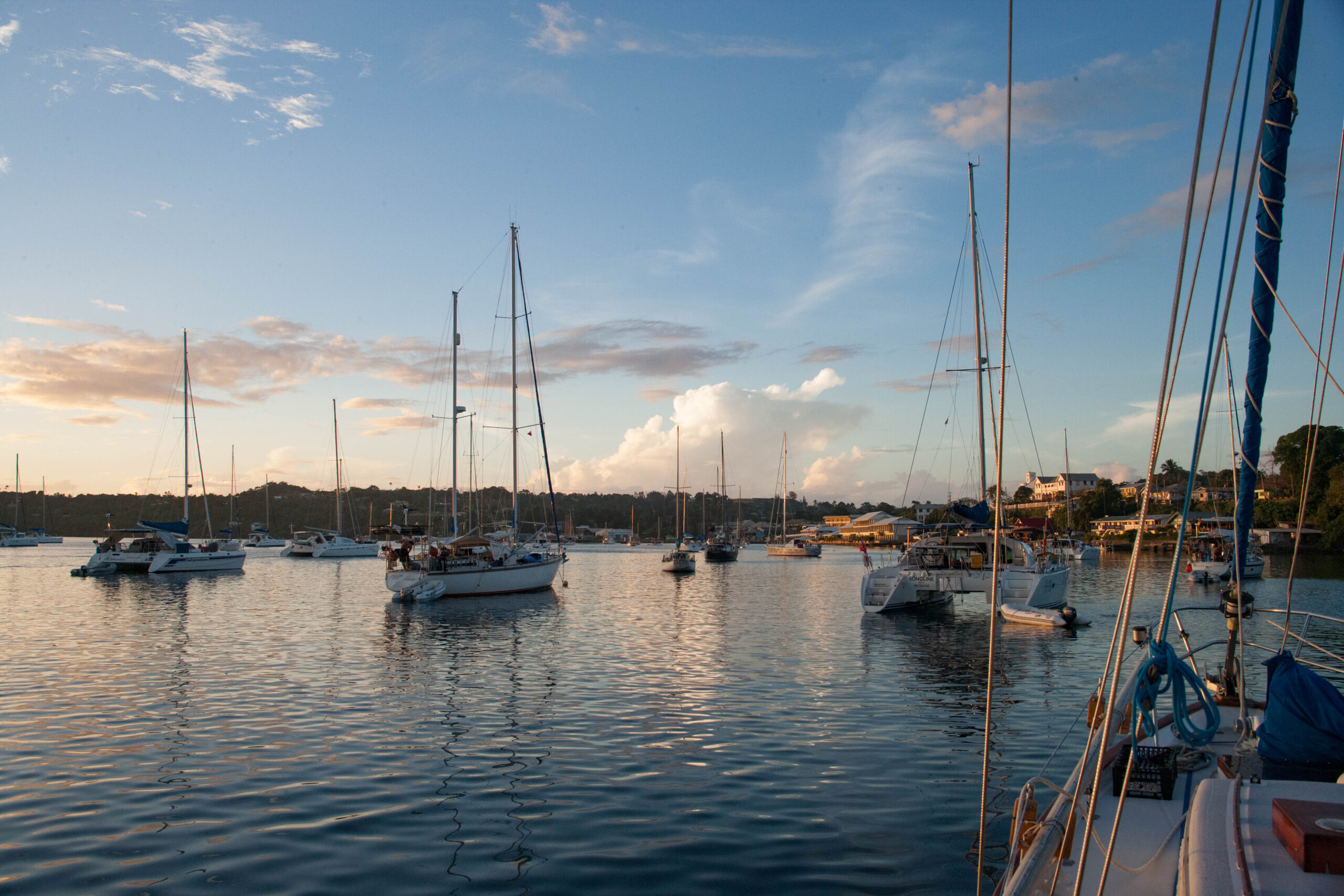
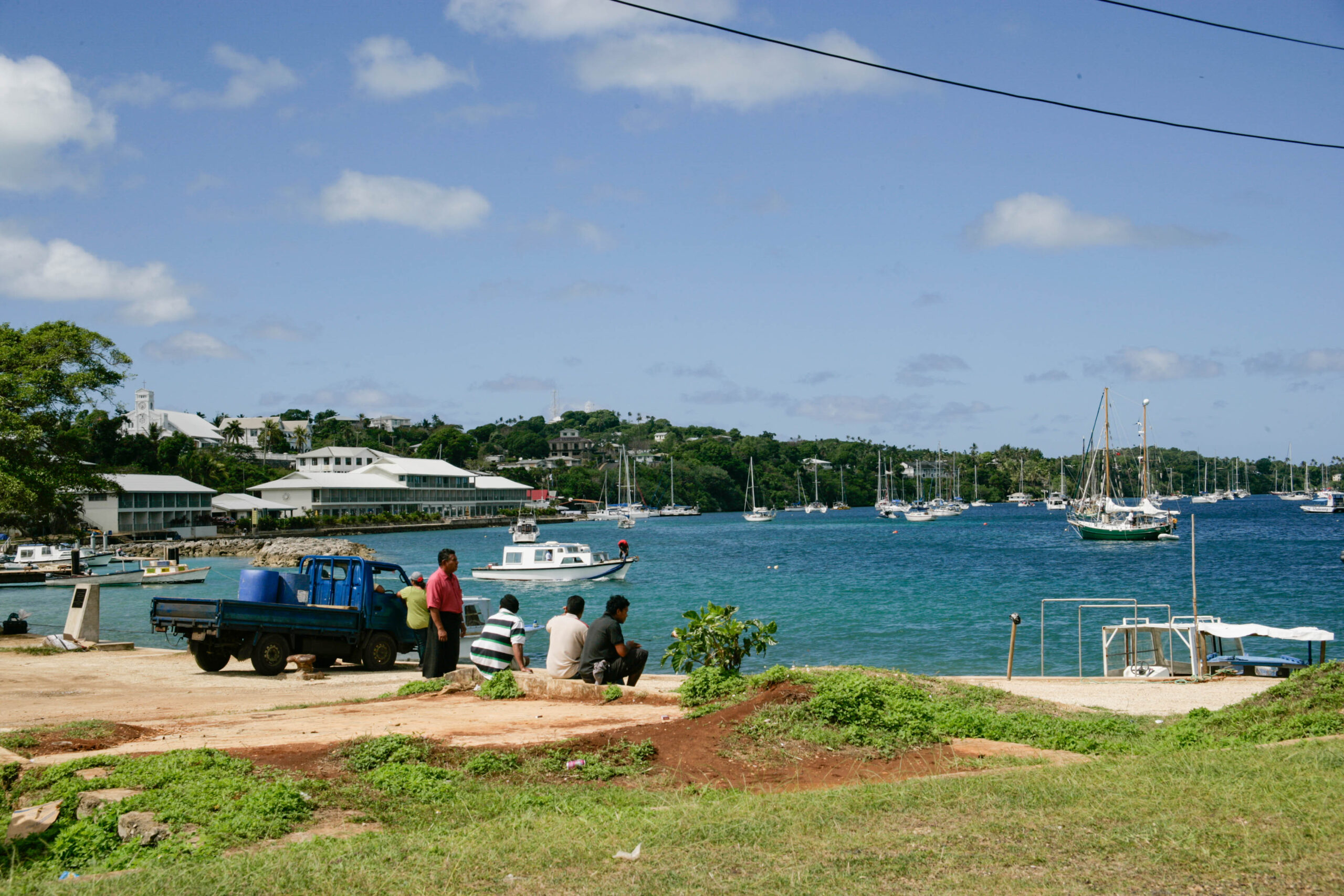
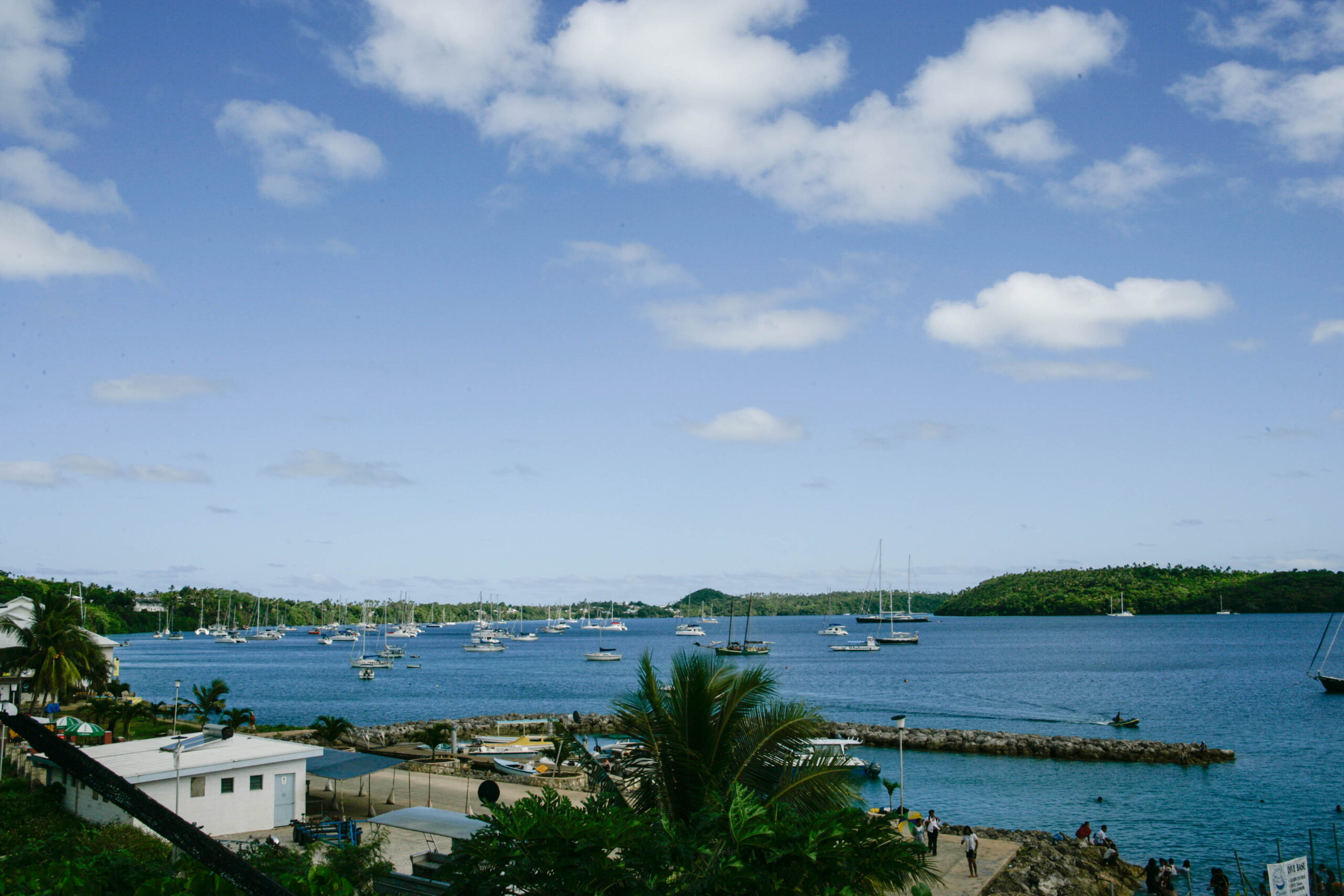
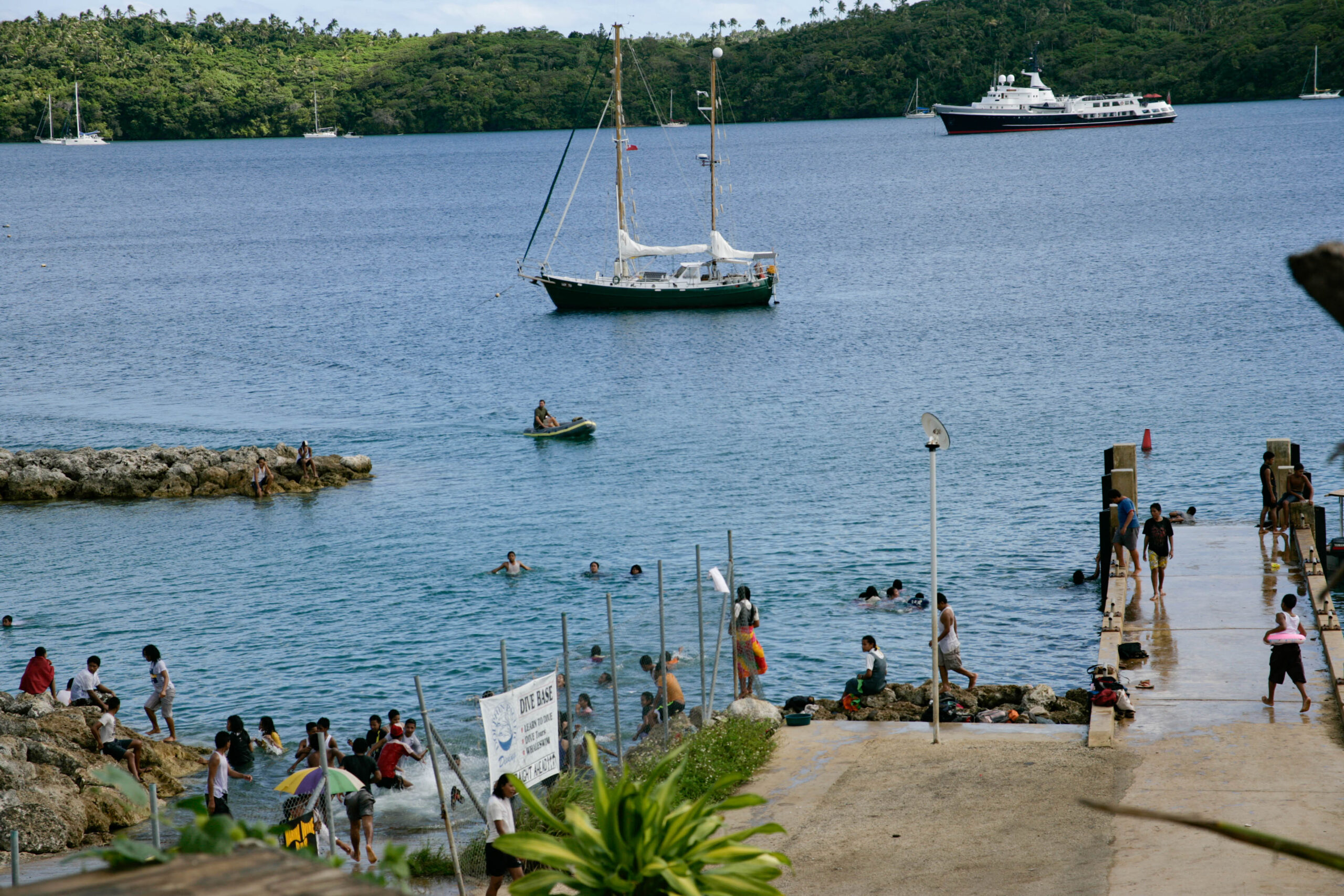
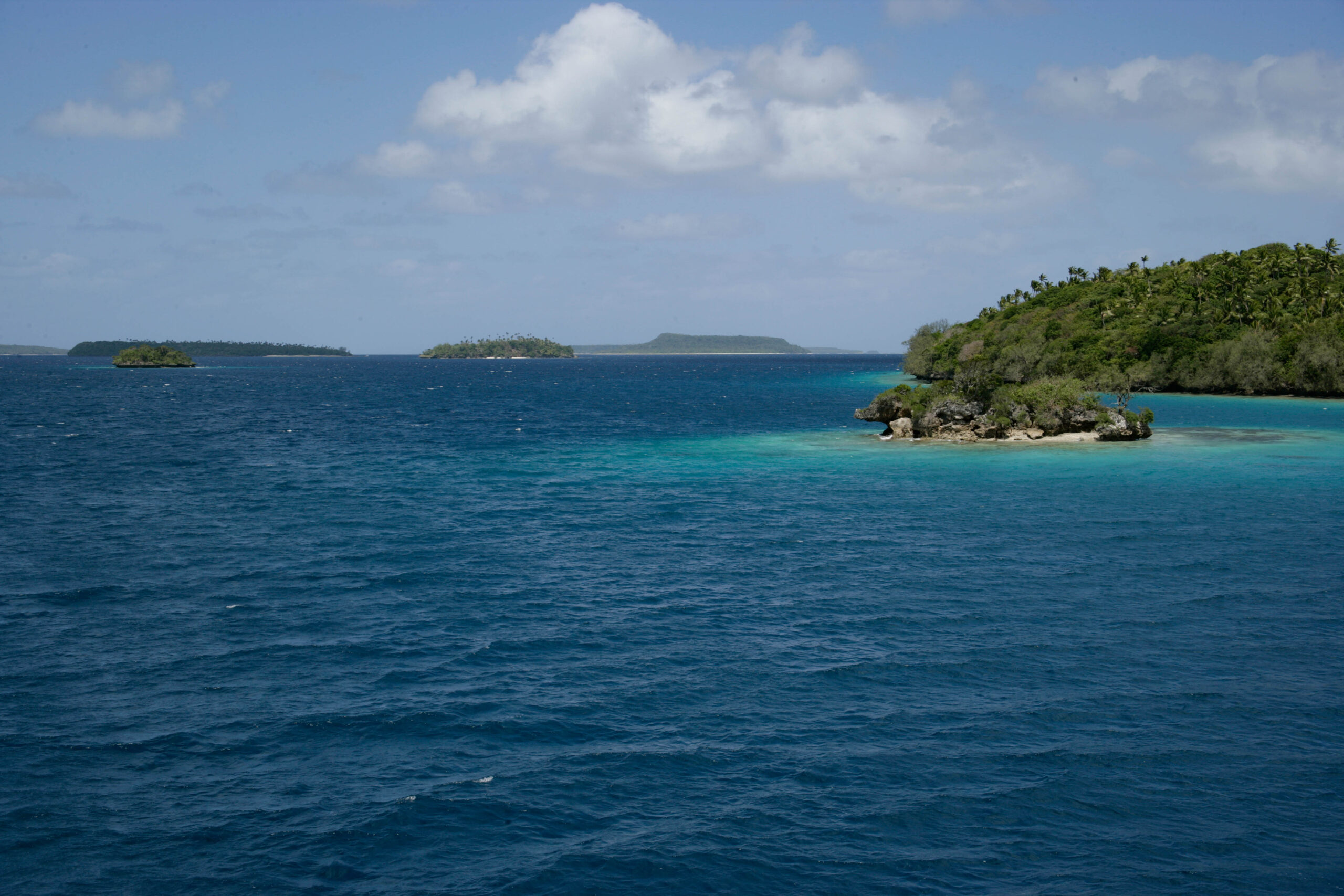
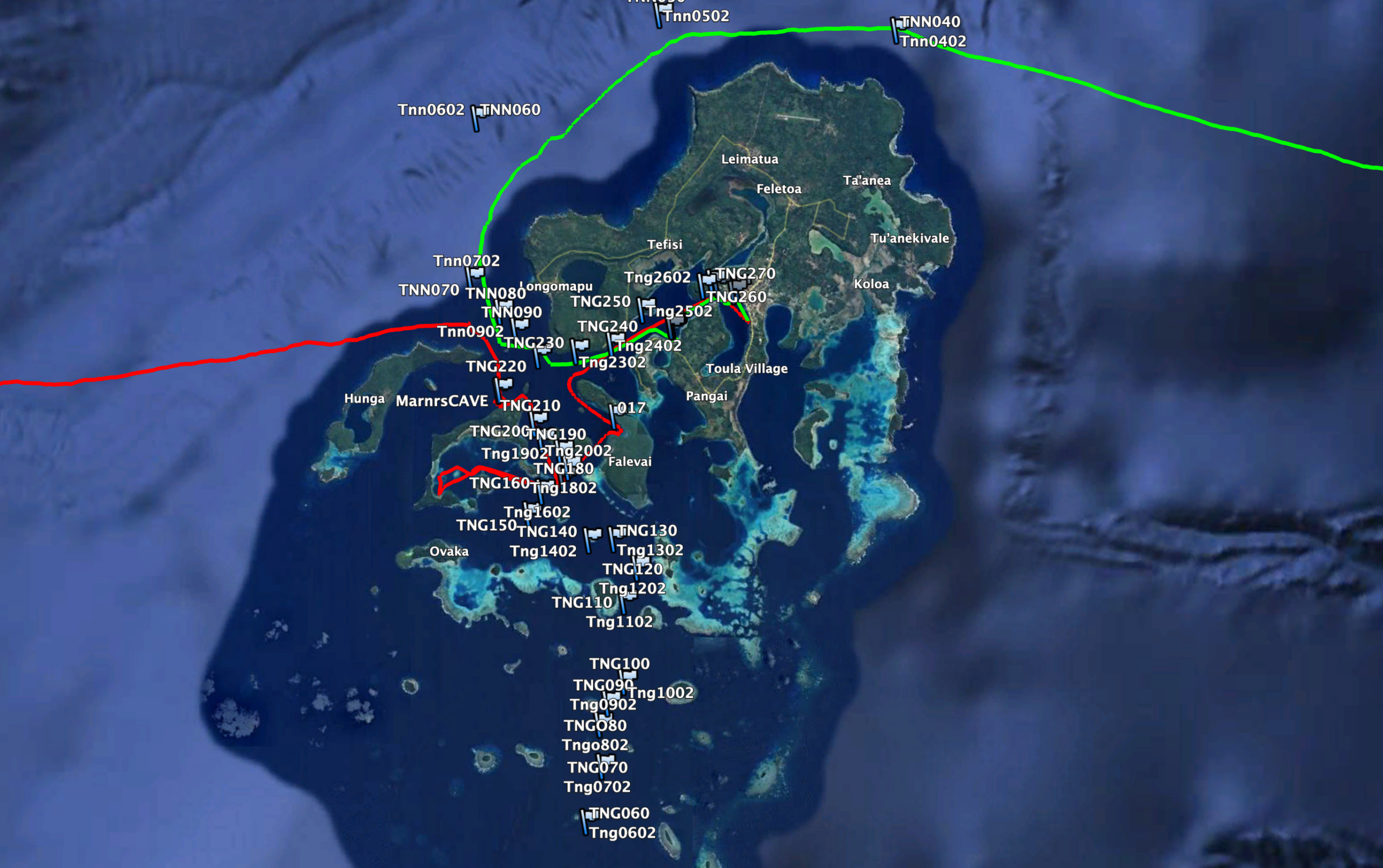
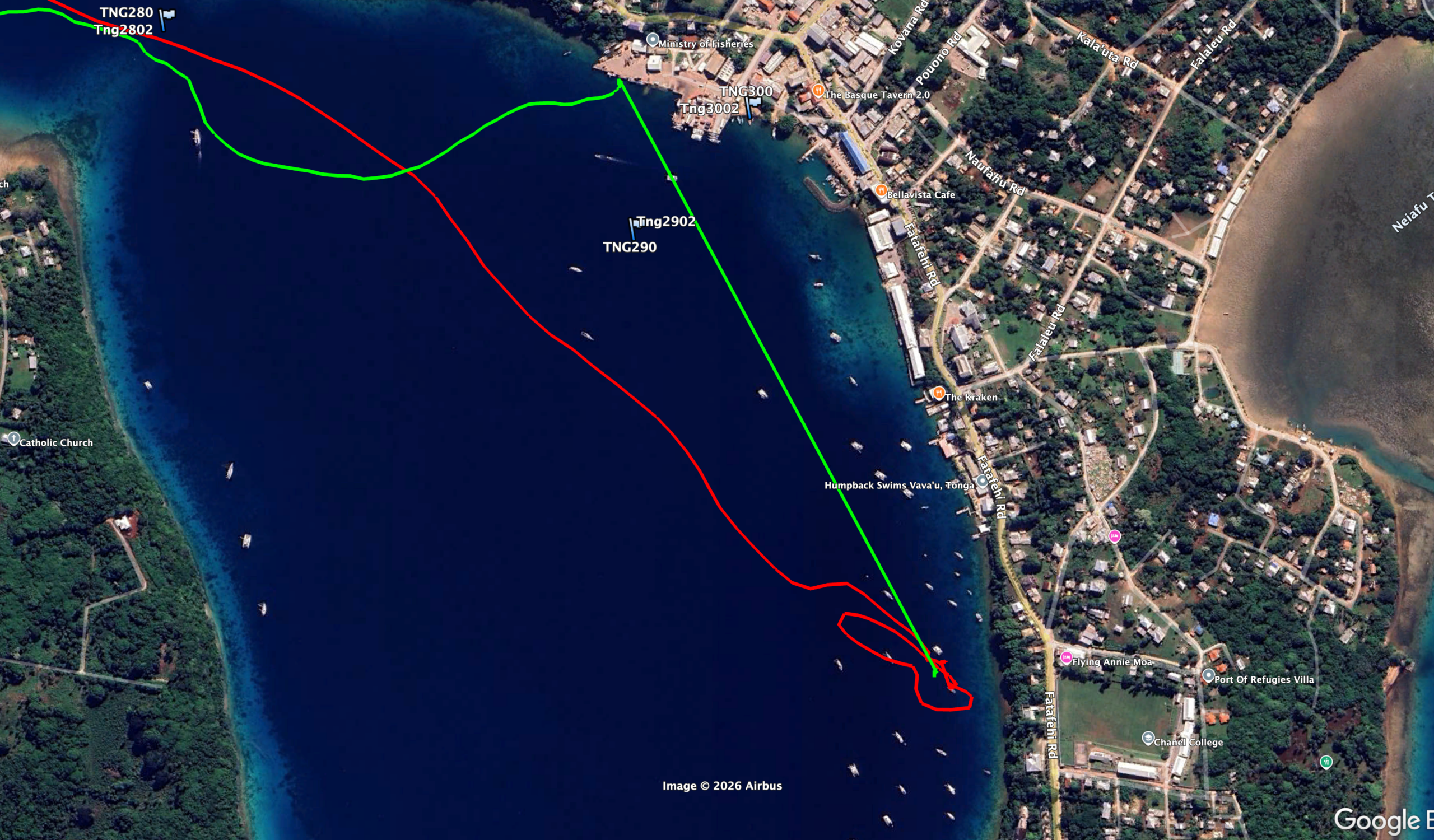
    It’s like sailing on a lake. By the time you tuck up against the main town of Neiafu, there’s no line of sight to the ocean, the open ocean rollers have no effect on the local chop, and multiple layers of land knock down the trade winds. Nothing to compare to the feel of sailing around inside these islands since leaving San Francisco bay.

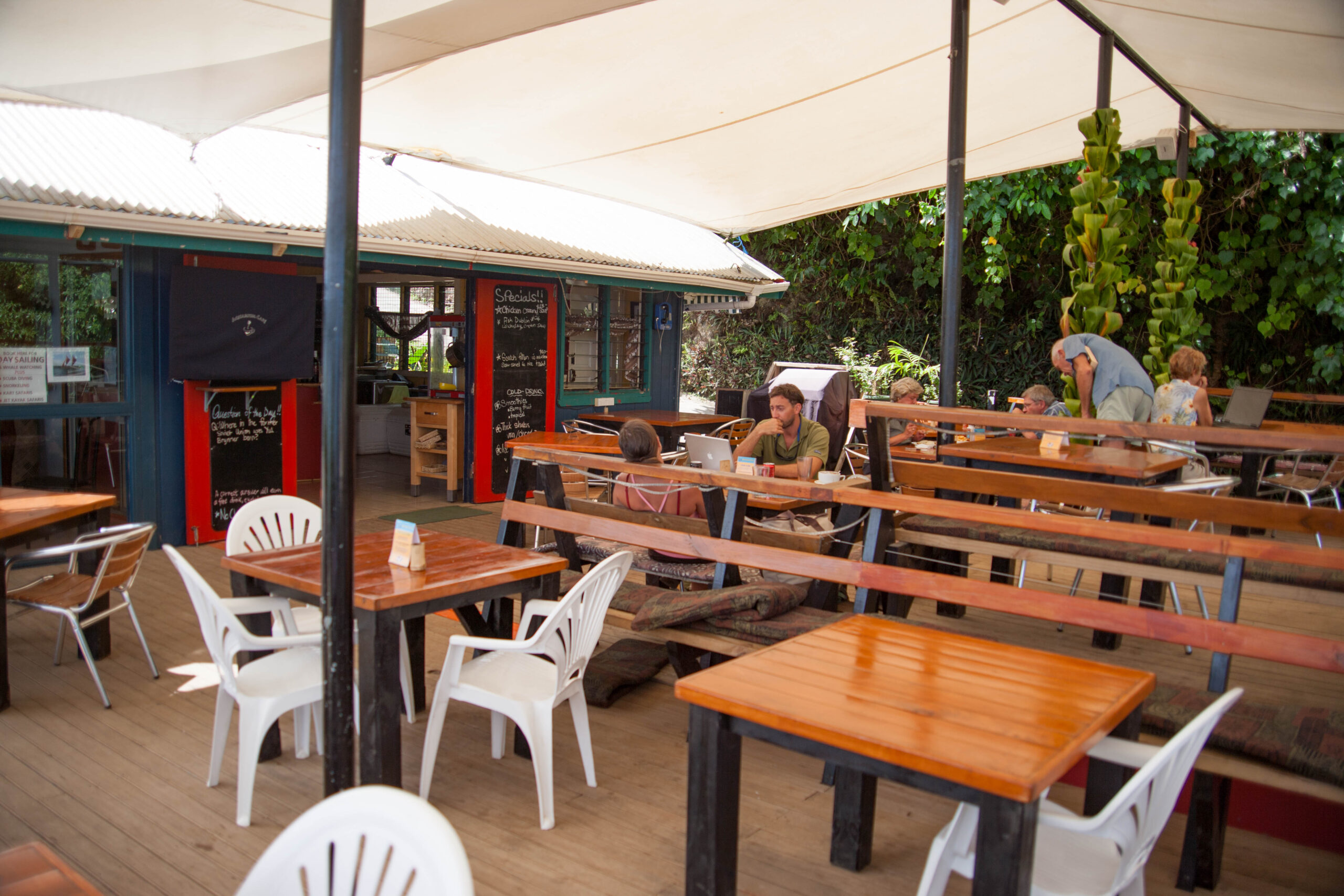
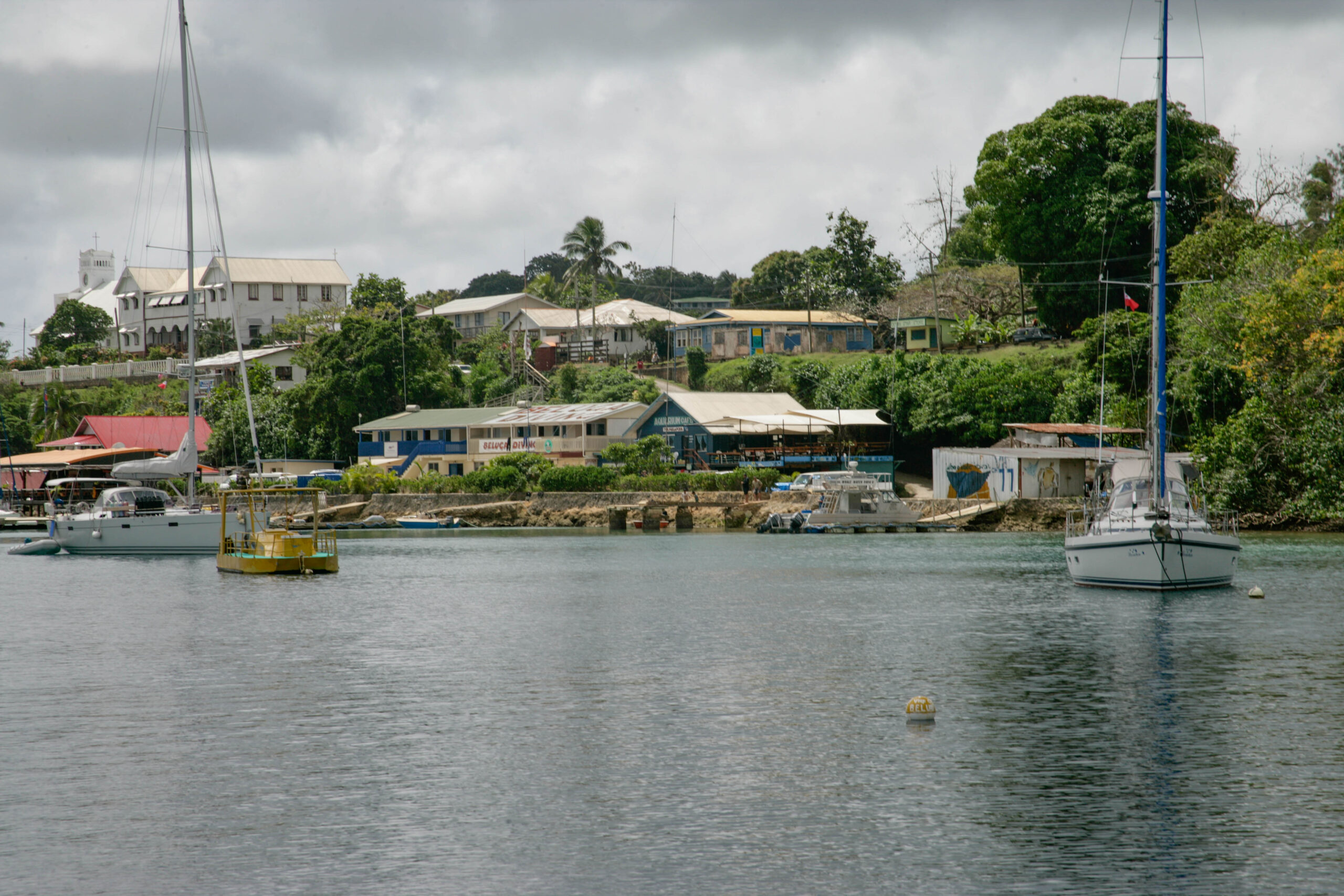
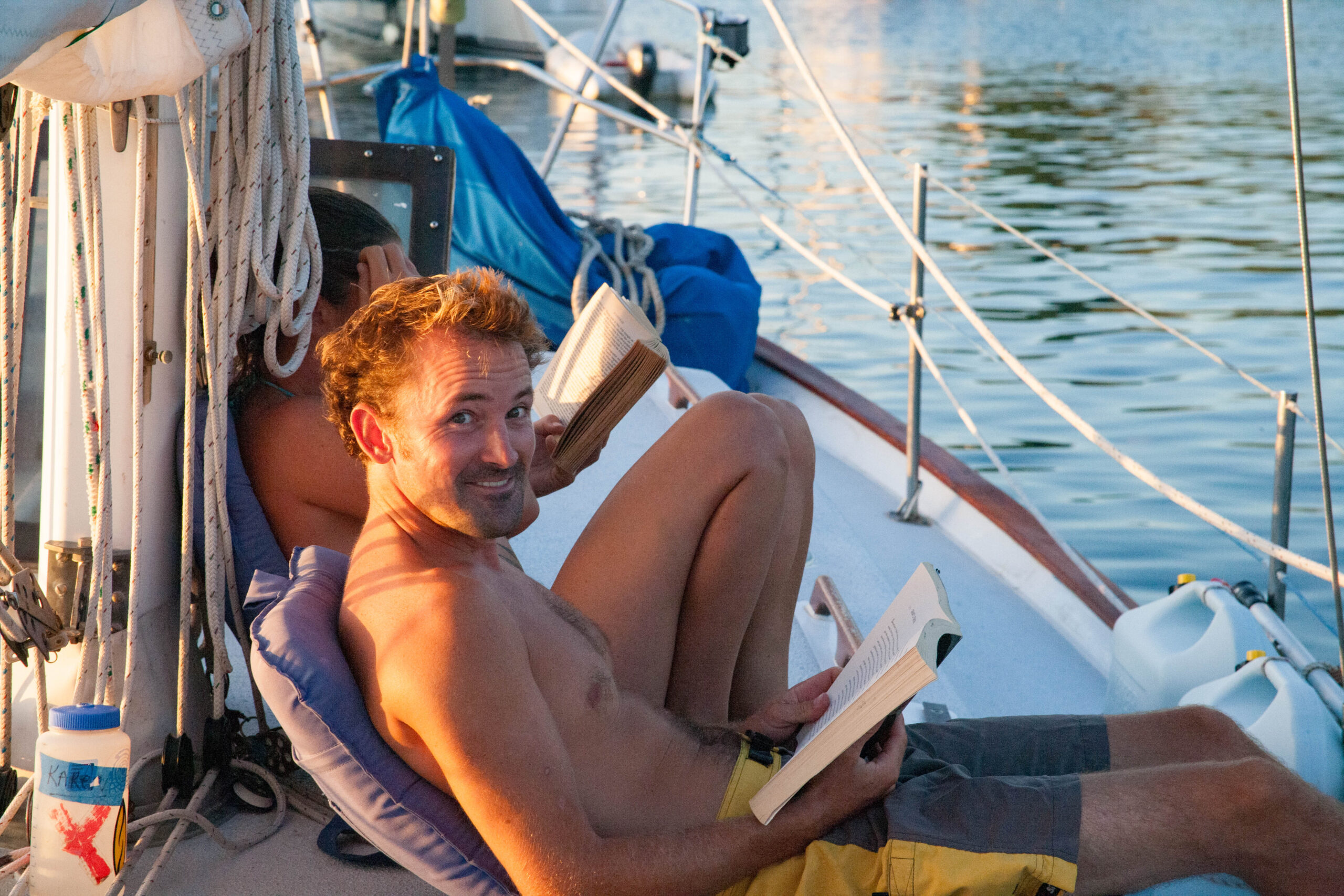
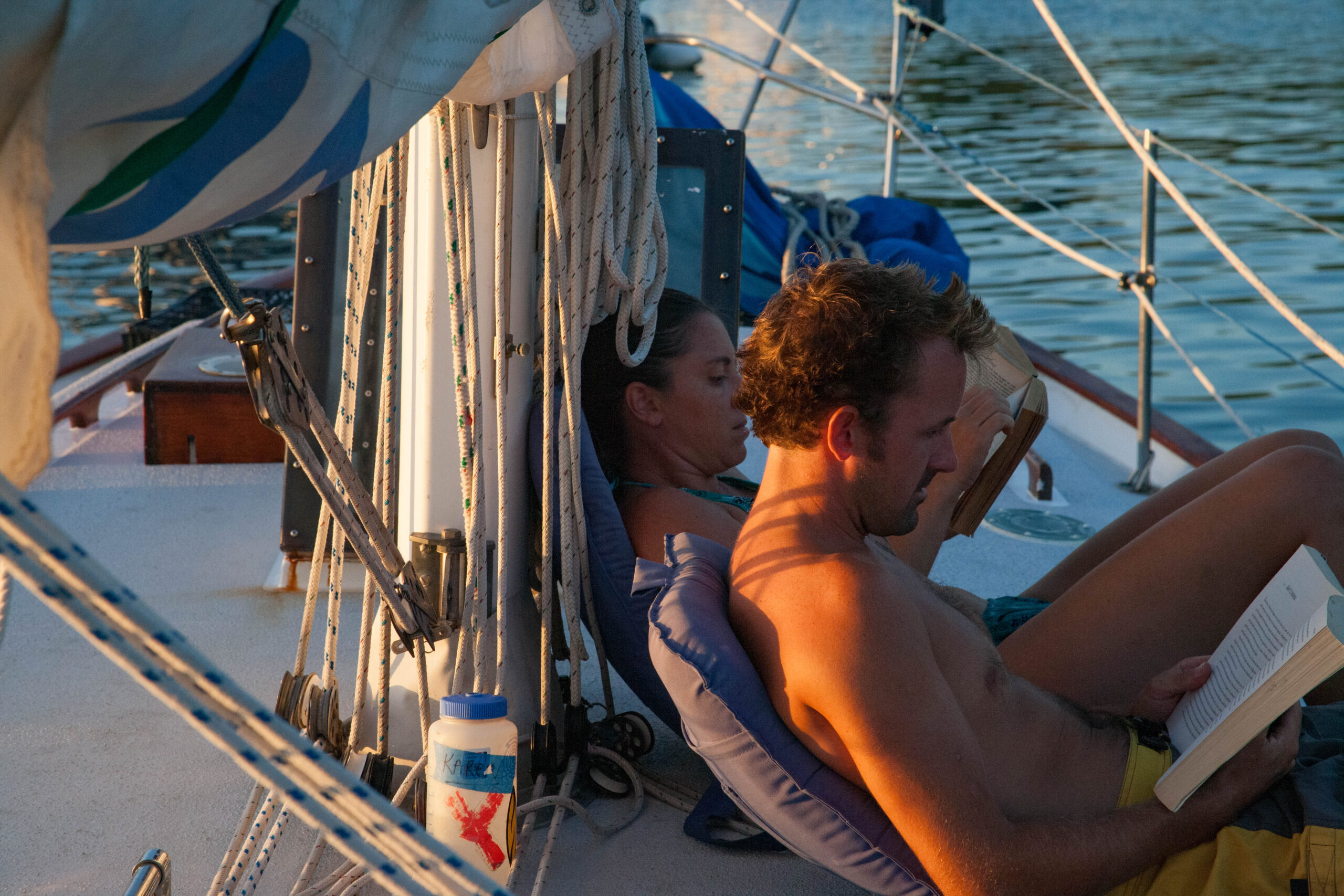
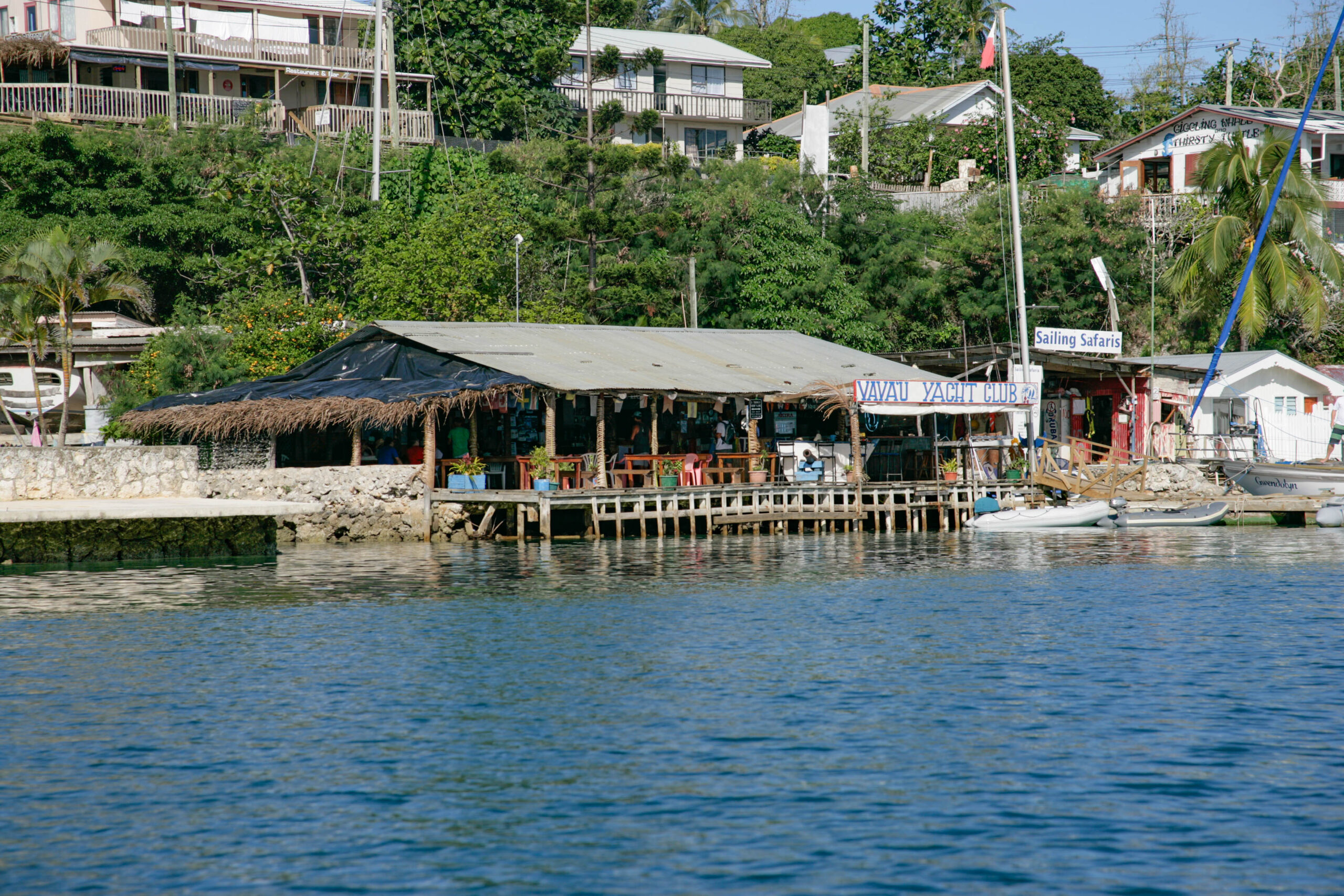
    Karen and I spent most of our Tongan time in a cafe just a short dinghy ride from the boat. Coffee, kava, and alcohol, one stop shop for all-day beverages, and endless hours of reading. Jon spent most of his time in Tonga fixing the exhaust manifold on the engine, which had broken off during our passage from Beveridge Reef, filling the boat with exhaust.

    Jon was very frustrated with spending his time on the engine repair, and I mostly left it to him to handle while Karen and I read books at the cafe. I shamefully admit that I was unable to muster significant sympathy for Jon’s frustration. My trials and tribulations—the months (years, really) of soul crushing boat repairs and projects that we did in the bay area were too fresh in my mind. Through no fault of his own (living in Denver instead of the bay area) Jon wasn’t around to suffer through that gargantuan effort, so this engine repair was his first real solo experience with the labor and frustration that it can entail.

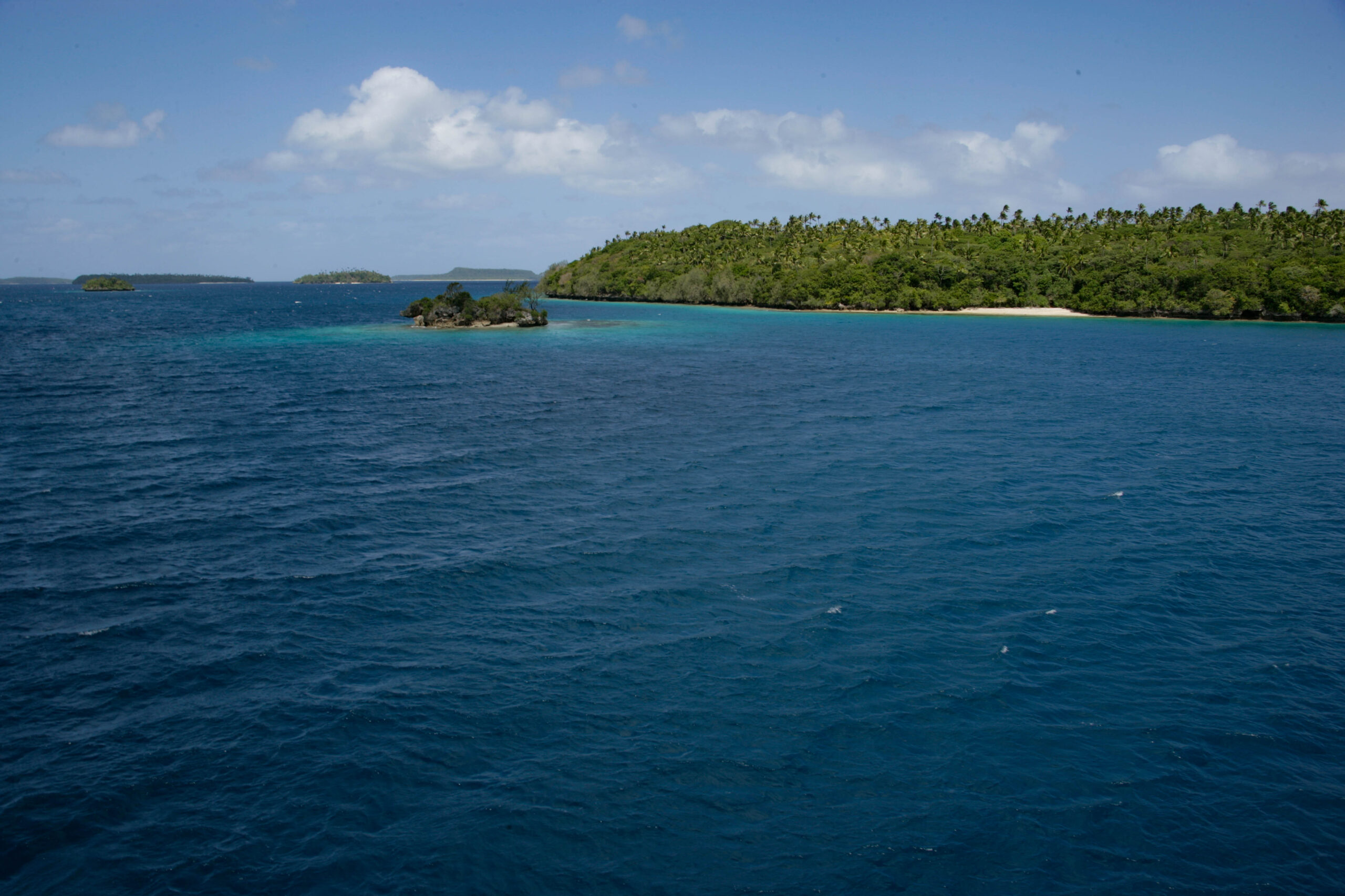
    After the extended engine repair/cafe sessions we visited a few other quiet, remote anchorages with phenomenal snorkeling, and then two different incredible underwater caves.

  • Tonga can be fun too!

    (refers to events on September 5th and 7th)

    Swallows cave and Mariners cave in Tonga were amazing.  Along with exploring these two caves, the last three days we were in Tonga we also snorkeled what is widely regarded as some of the best coral reefs in all of the Vava’u island group, and I hiked/bushwacked to a deserted beach (barefoot as it was a spontaneous decision after swimming to shore).  So our last days in Tonga were busy and packed with fun.

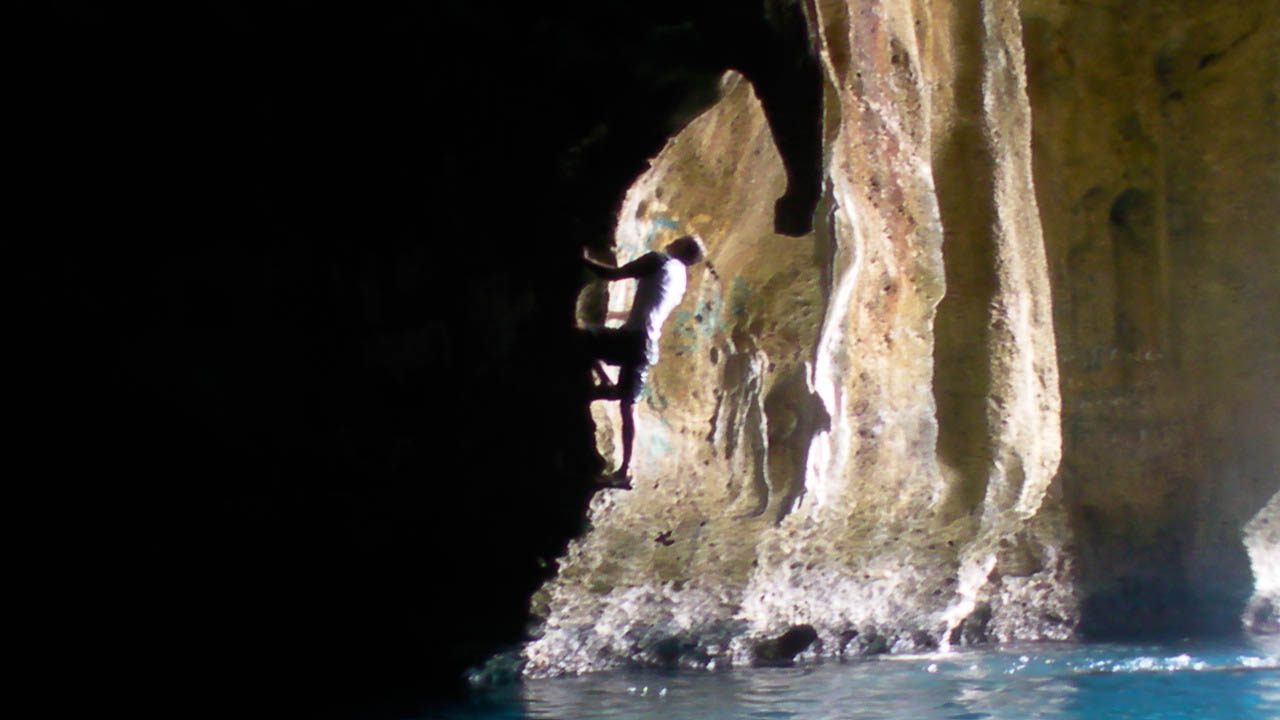
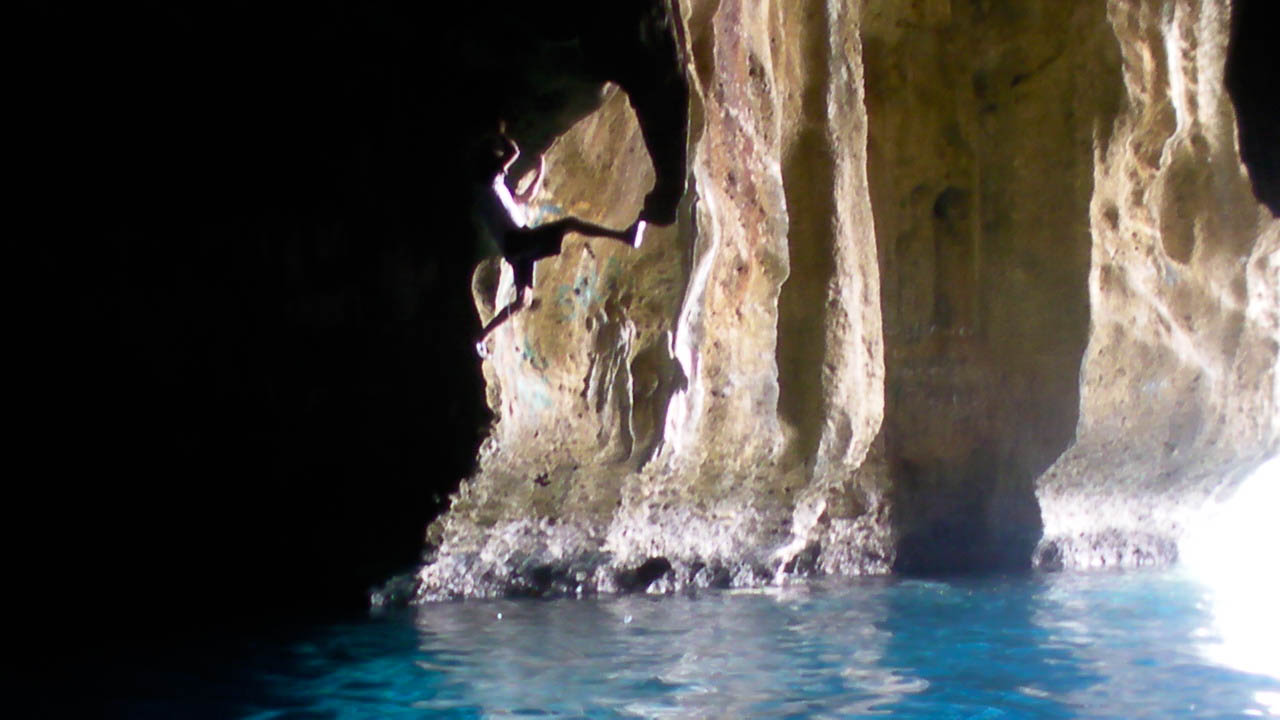
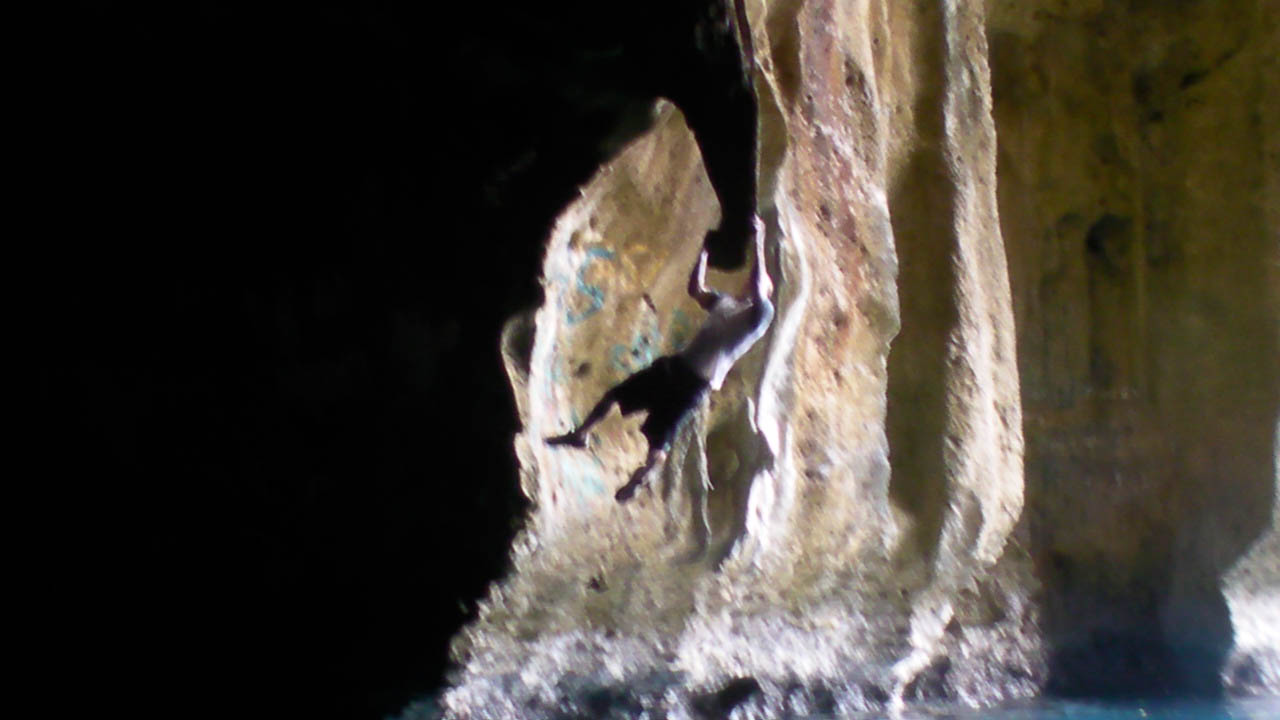
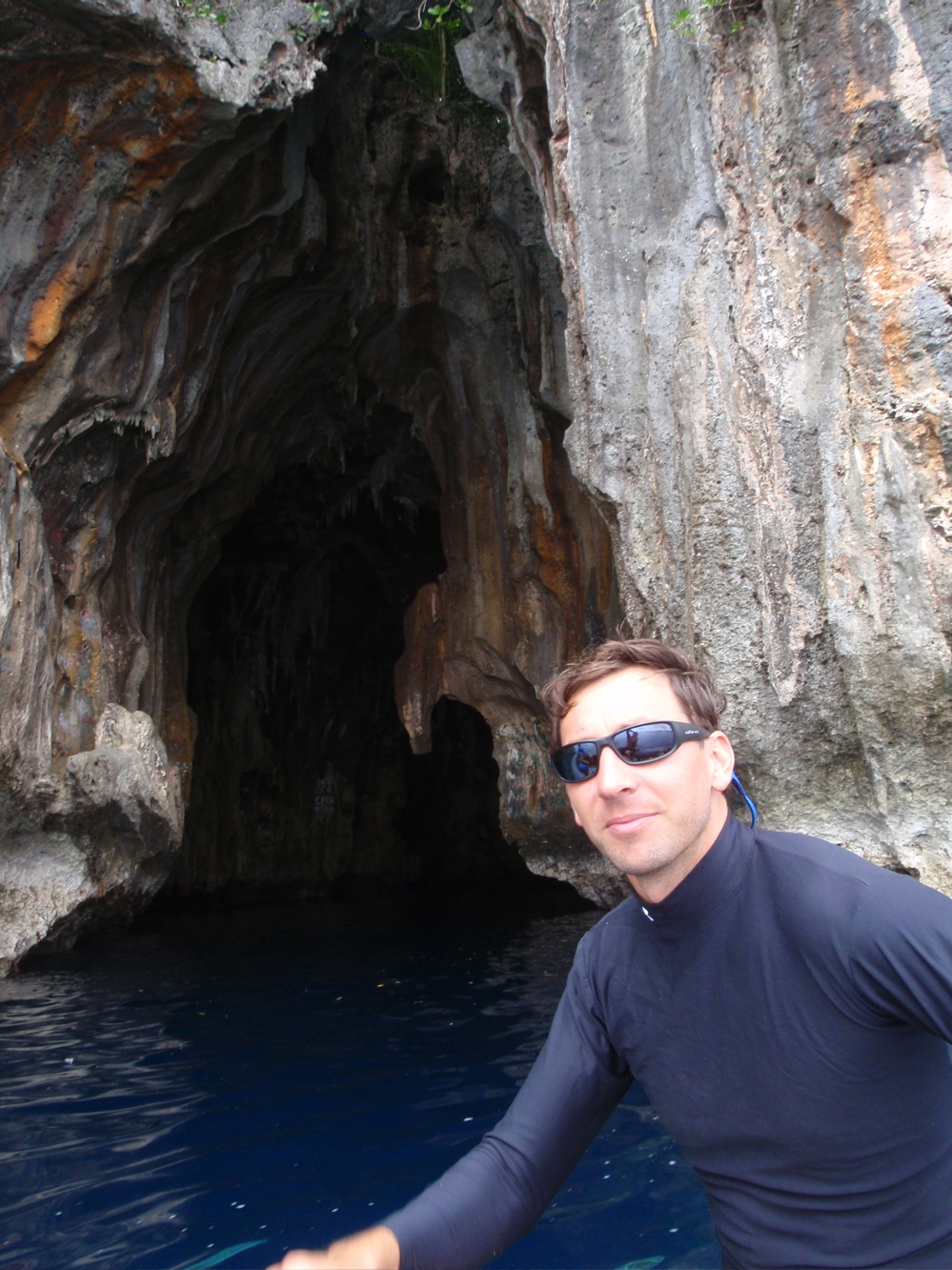
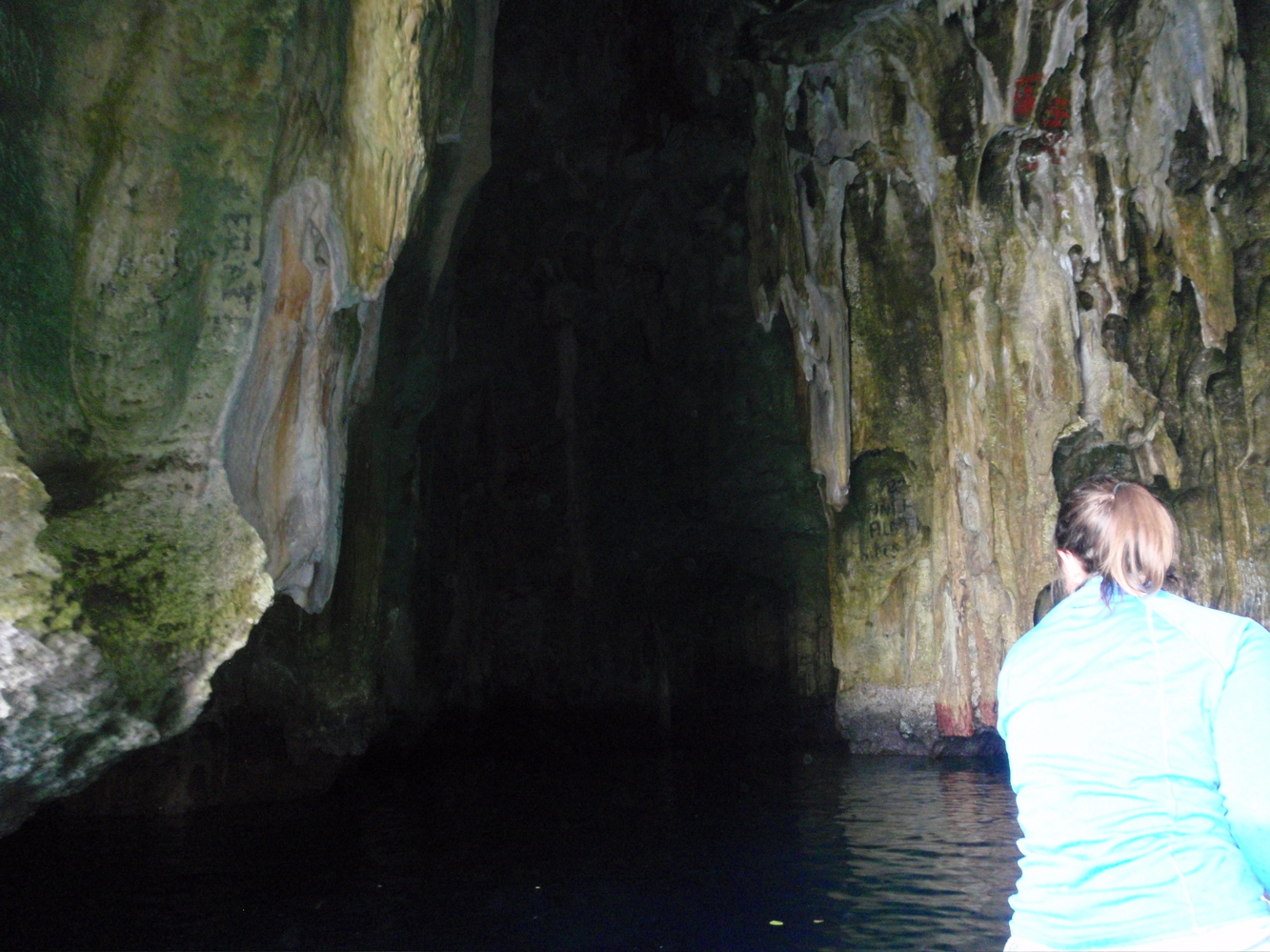
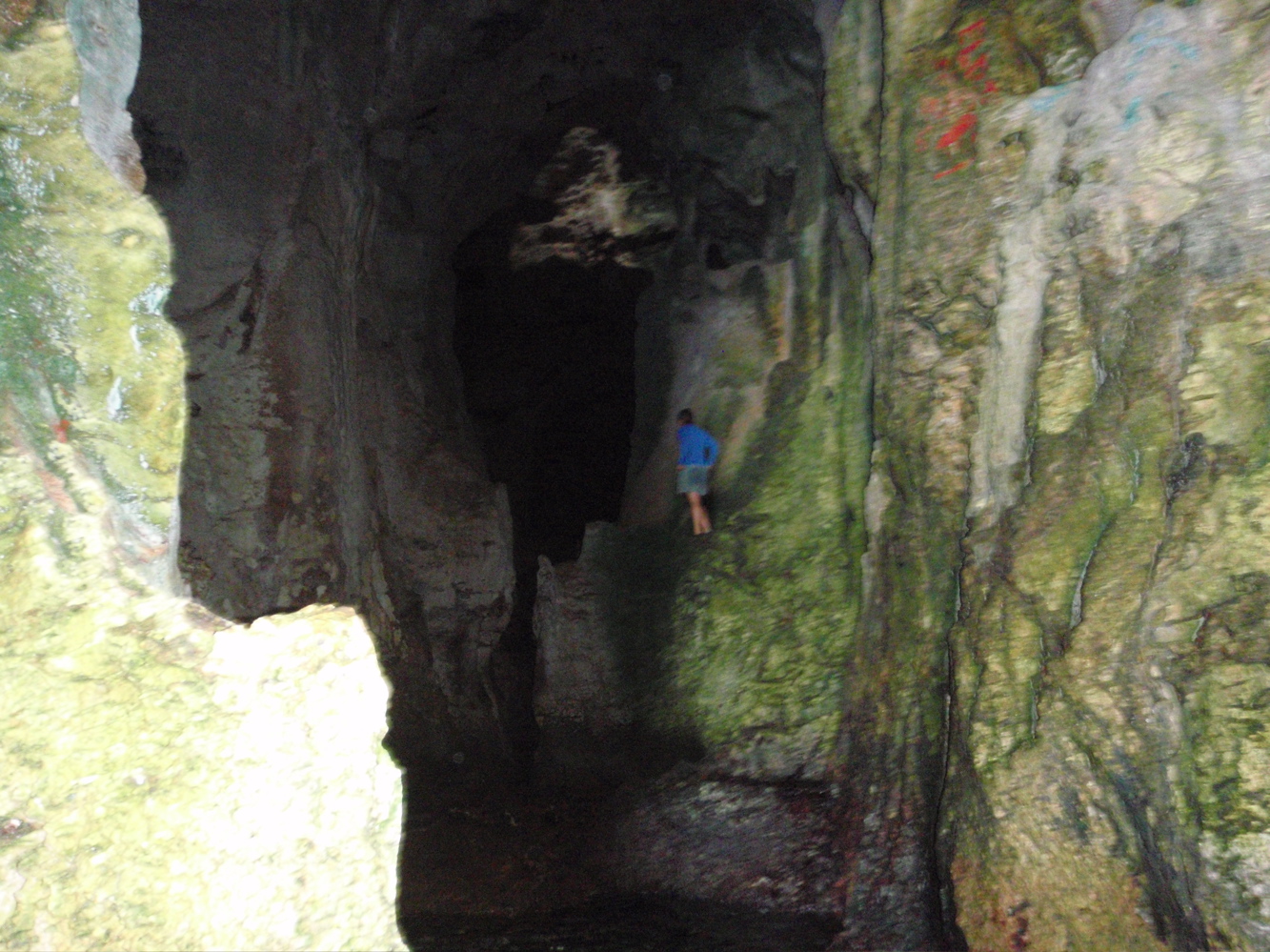
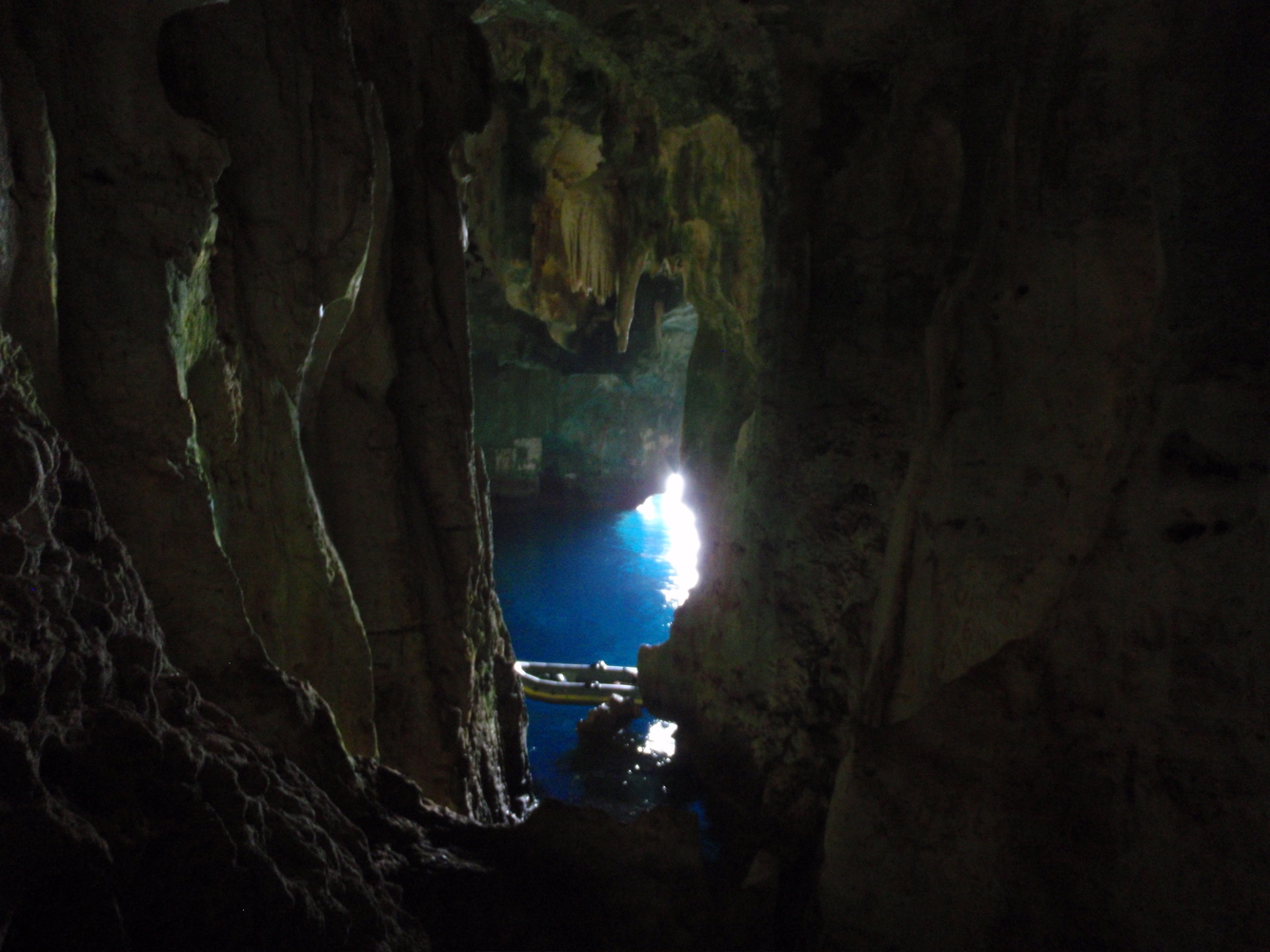
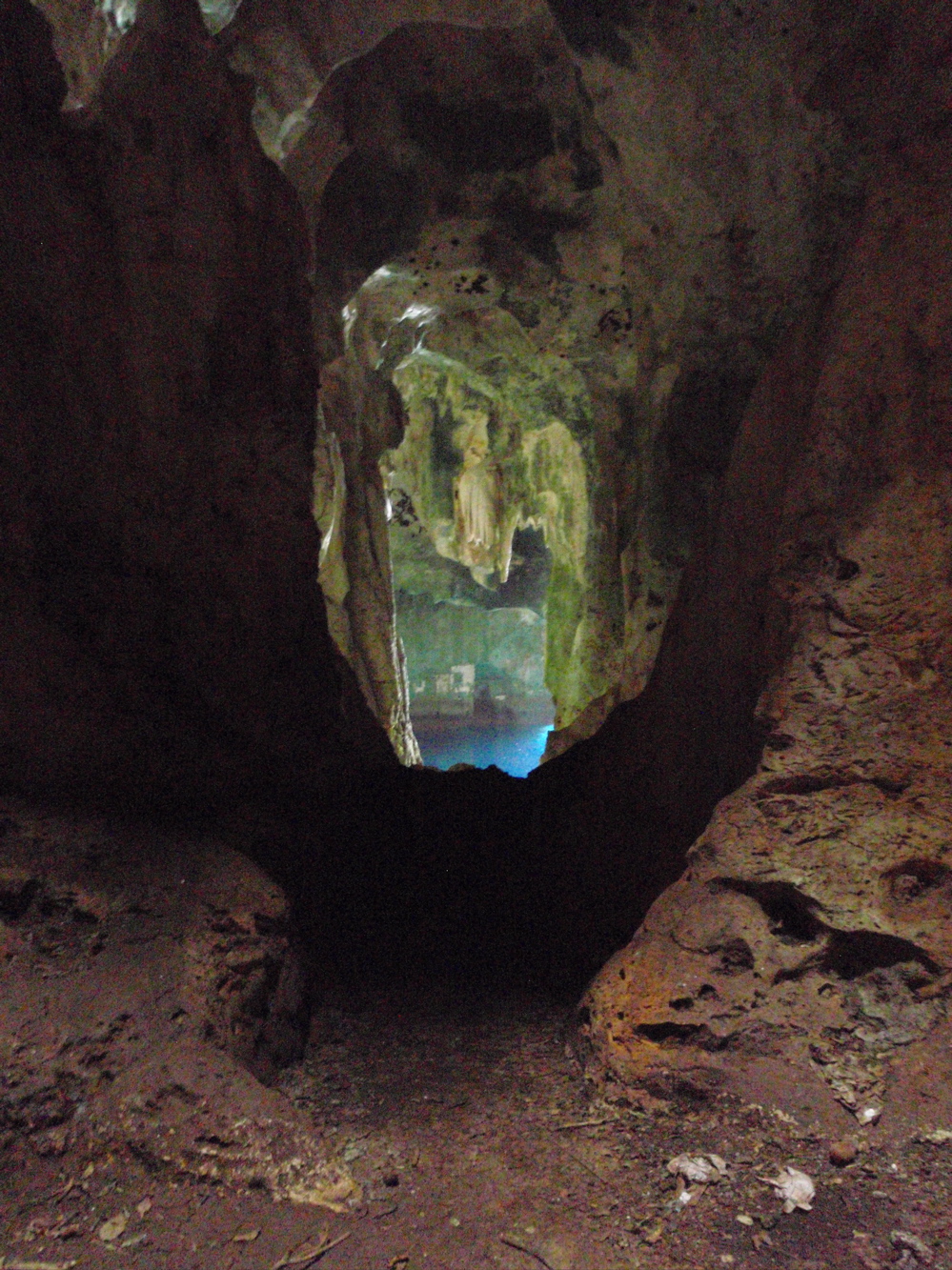
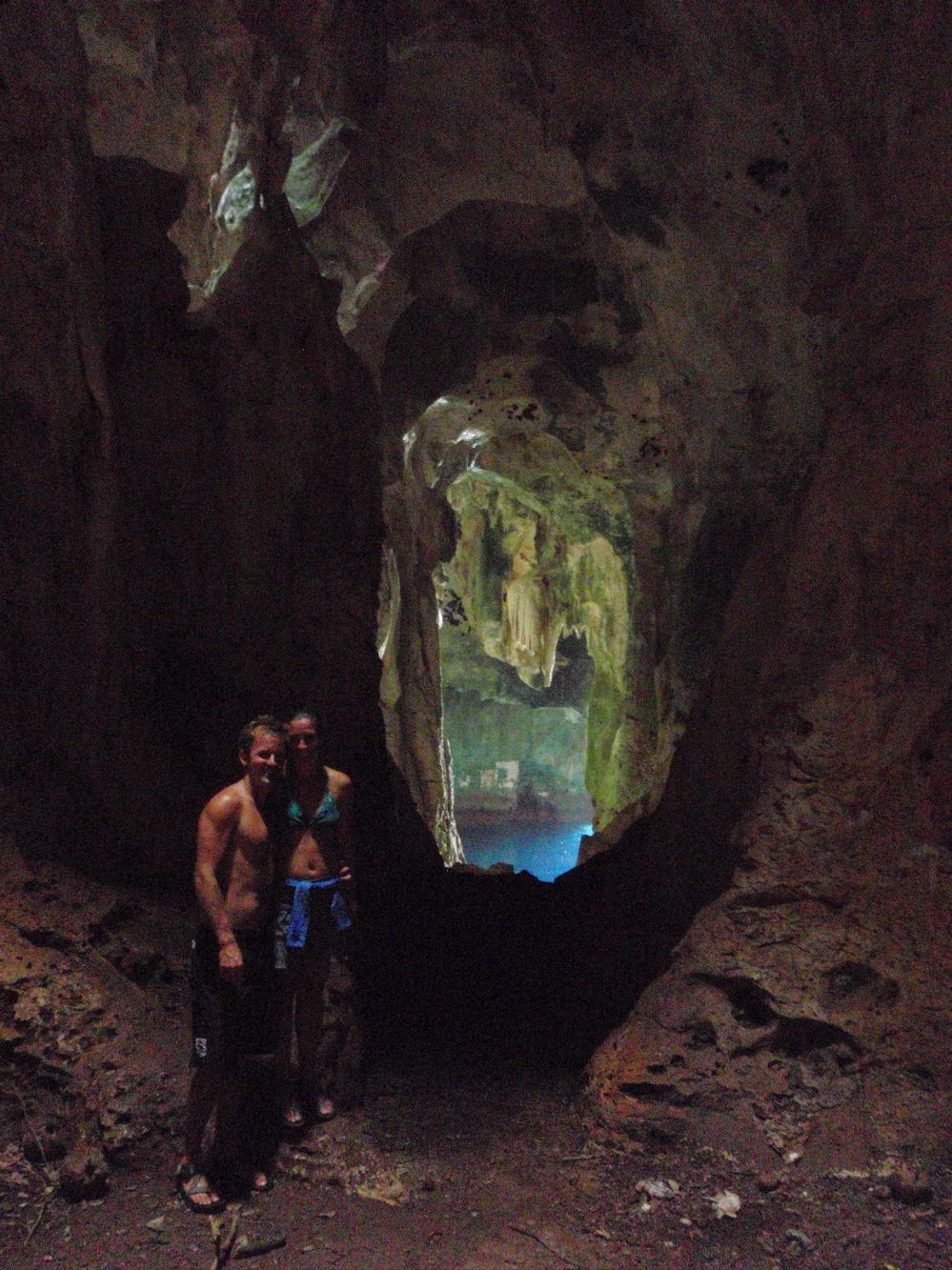
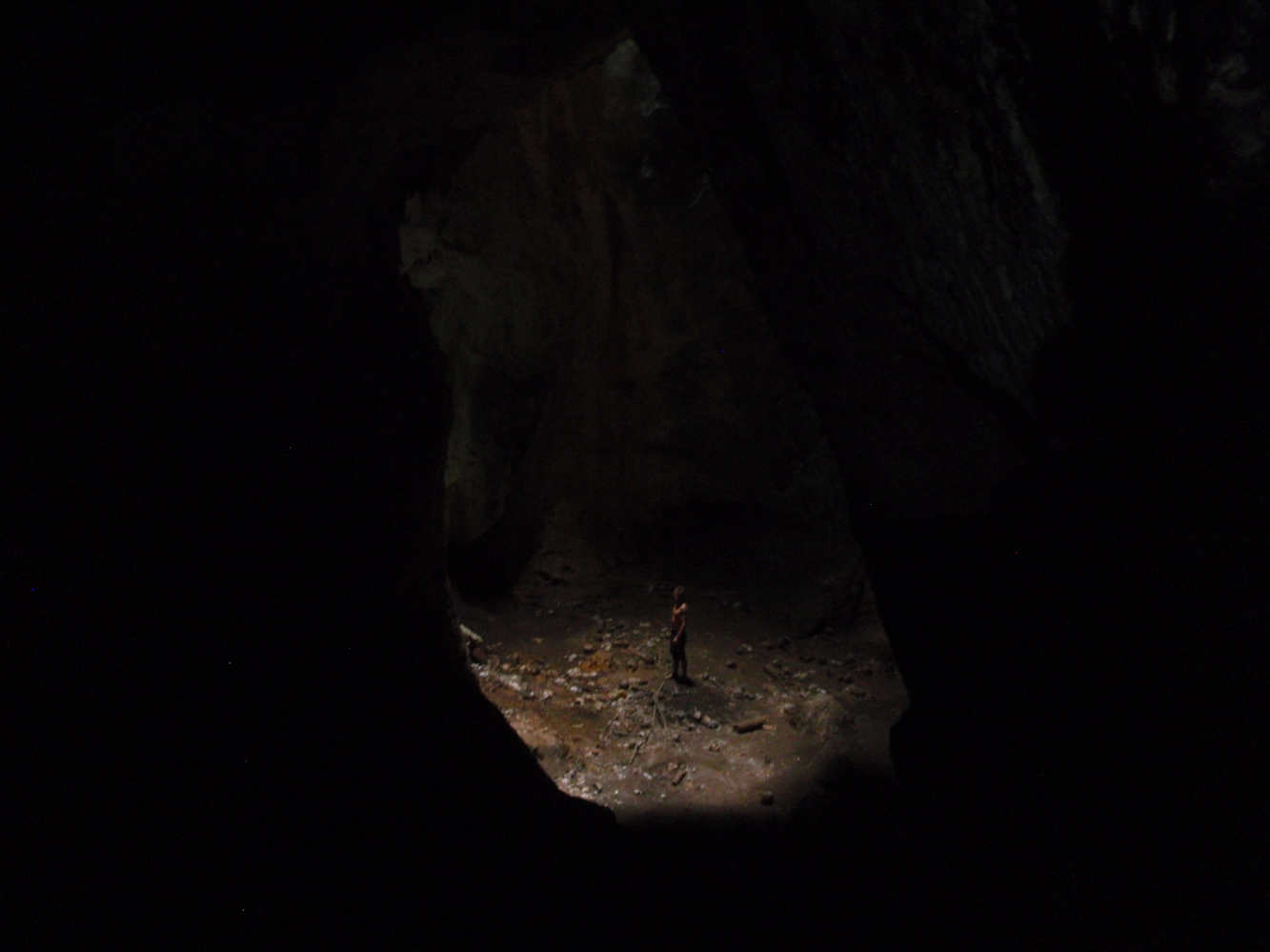
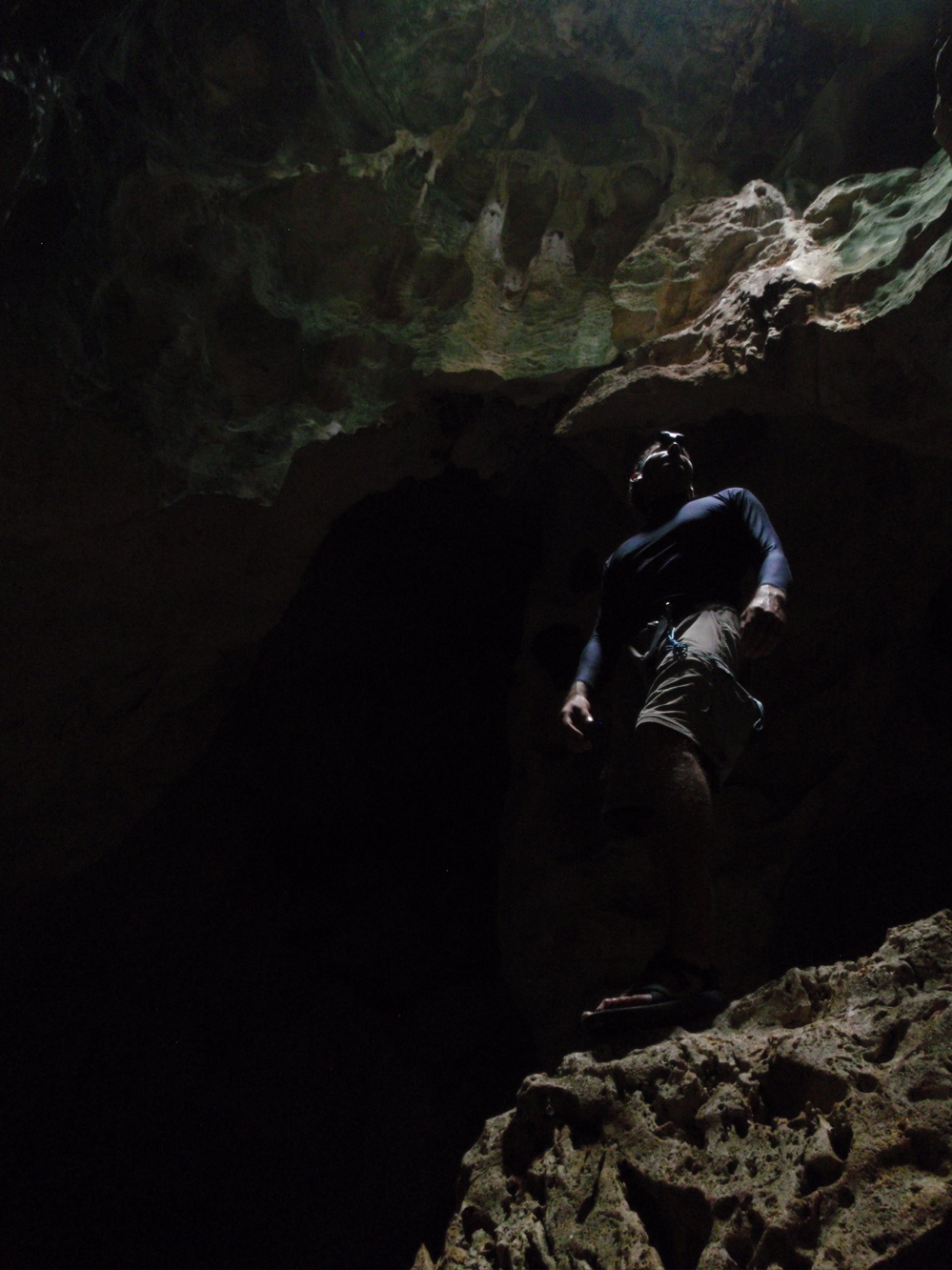
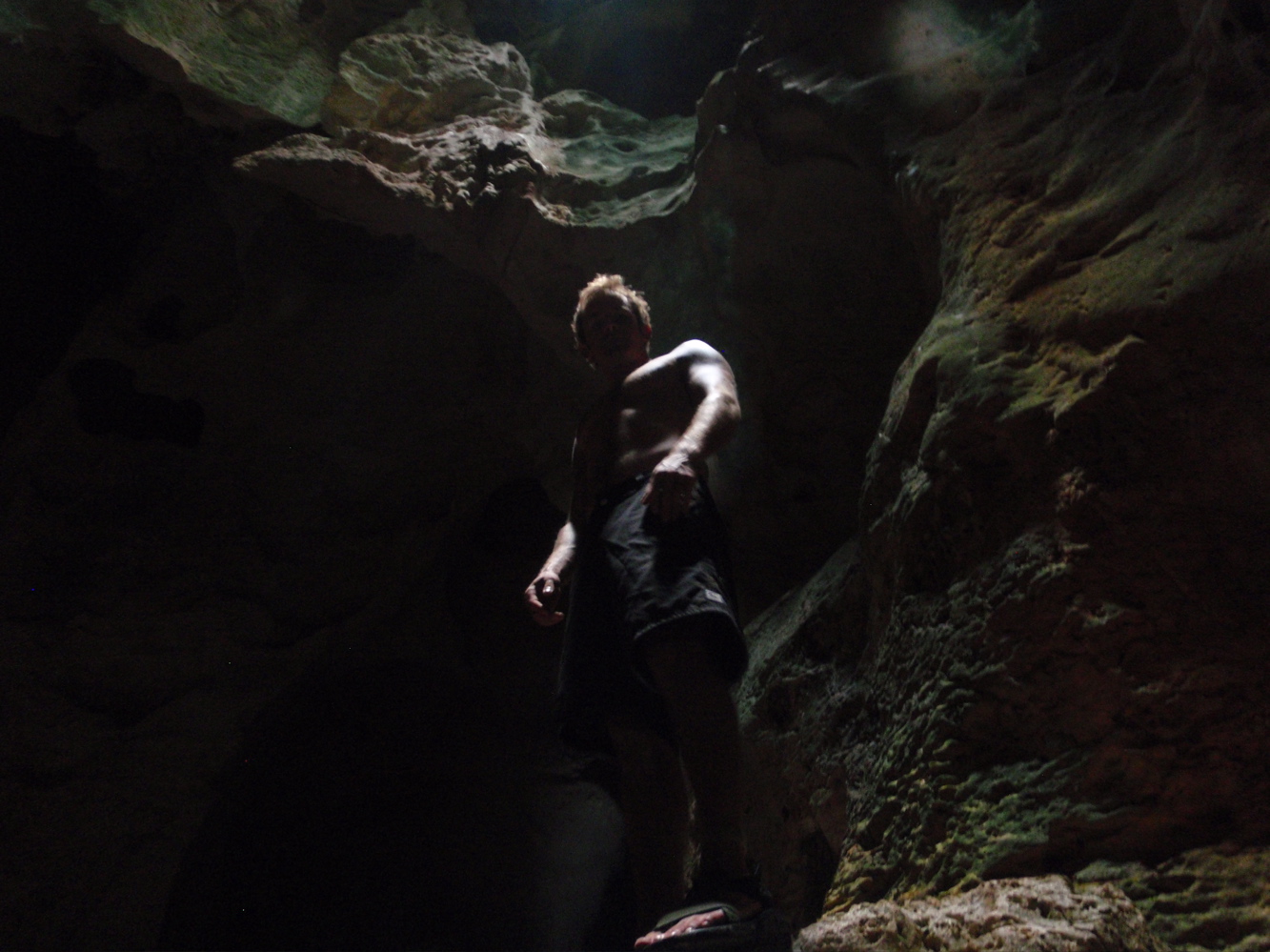
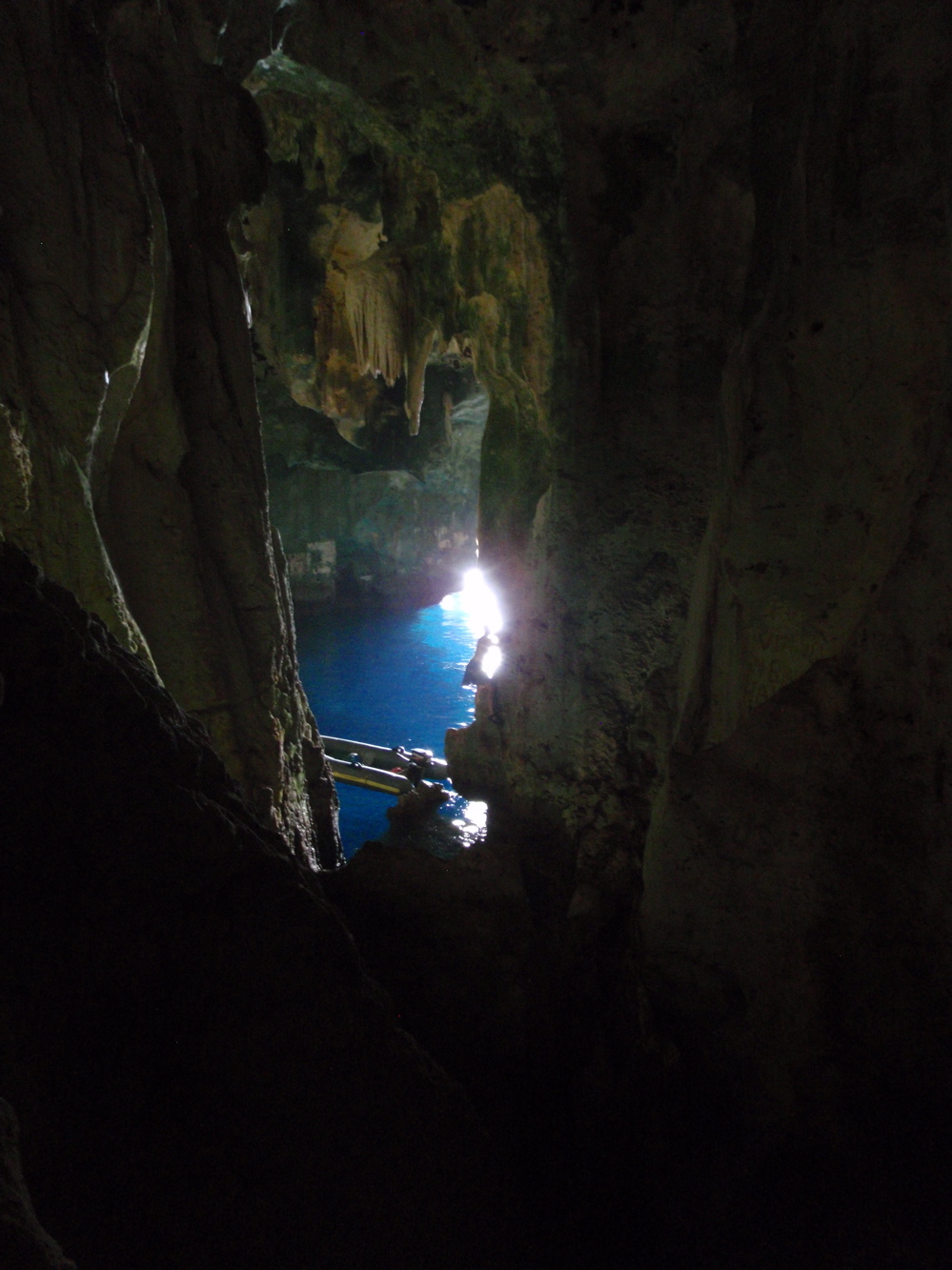
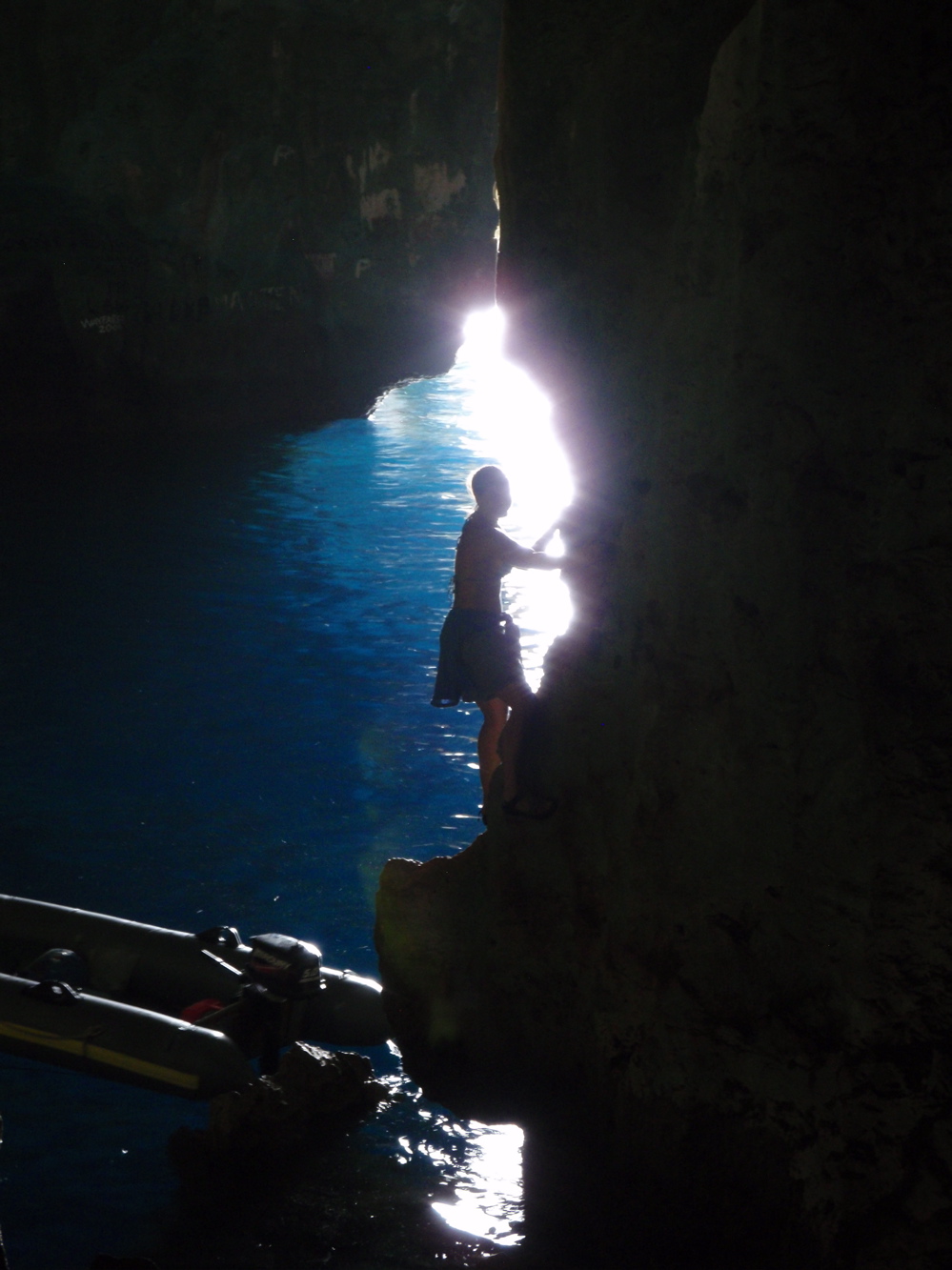
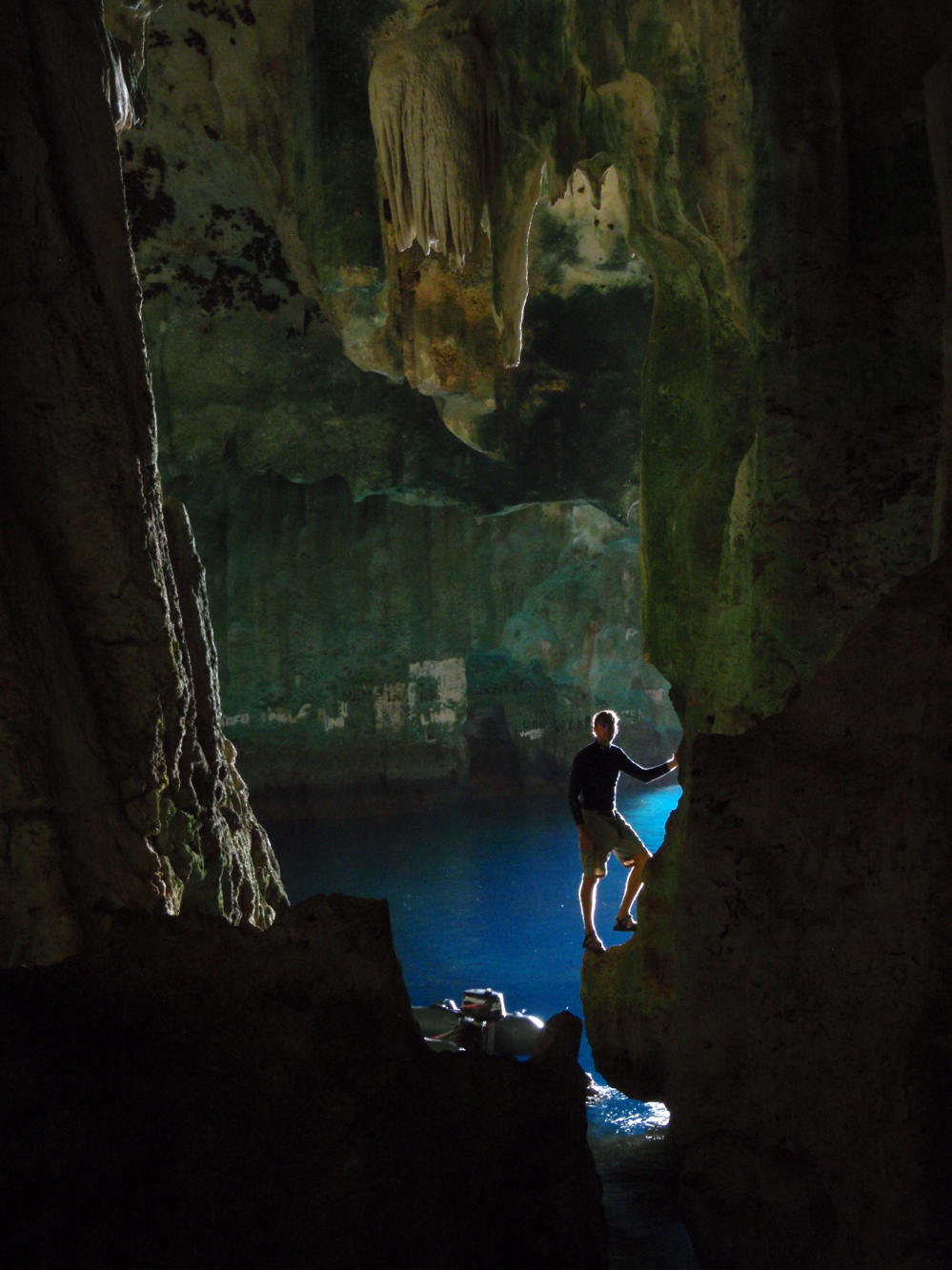
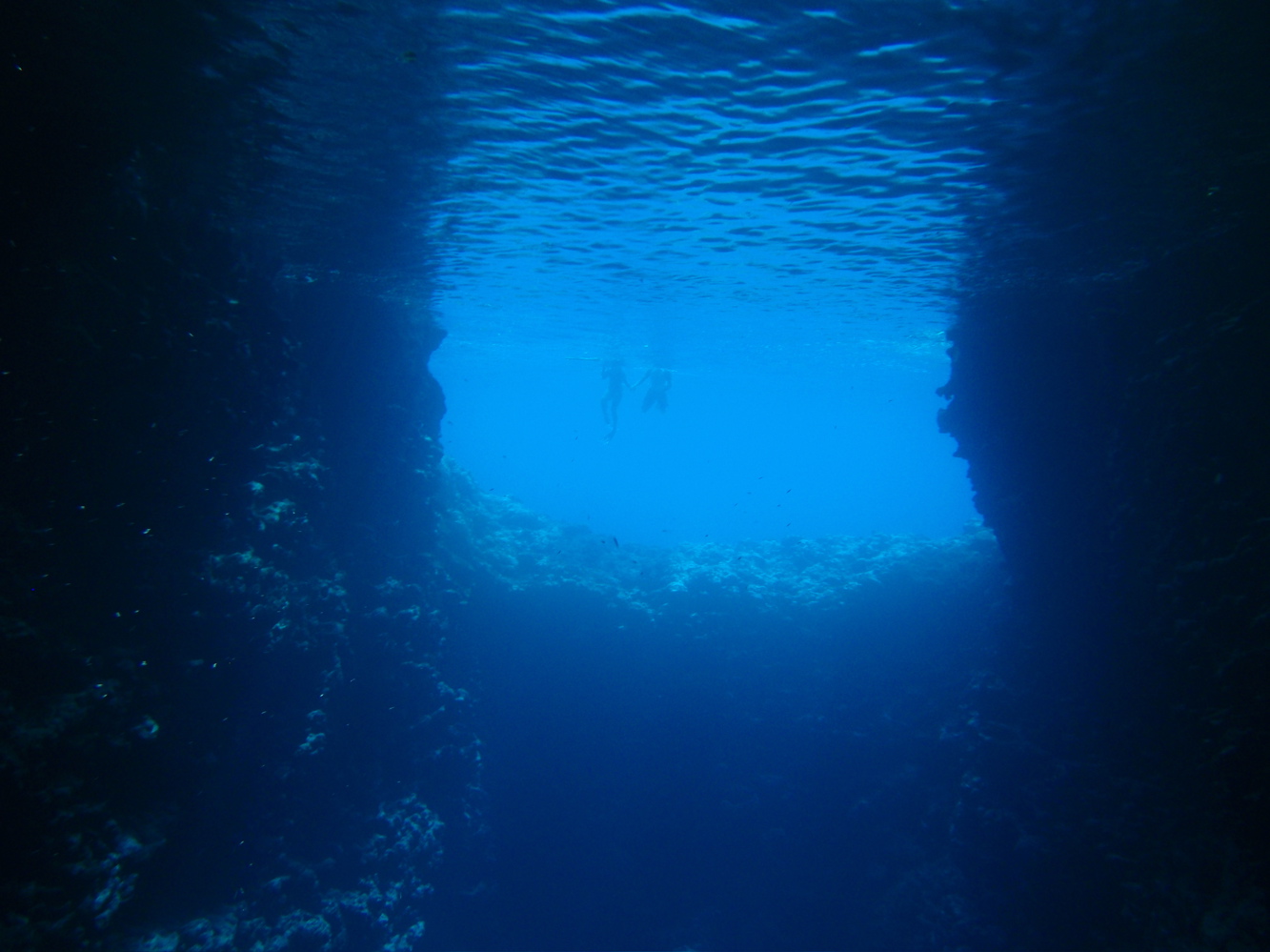
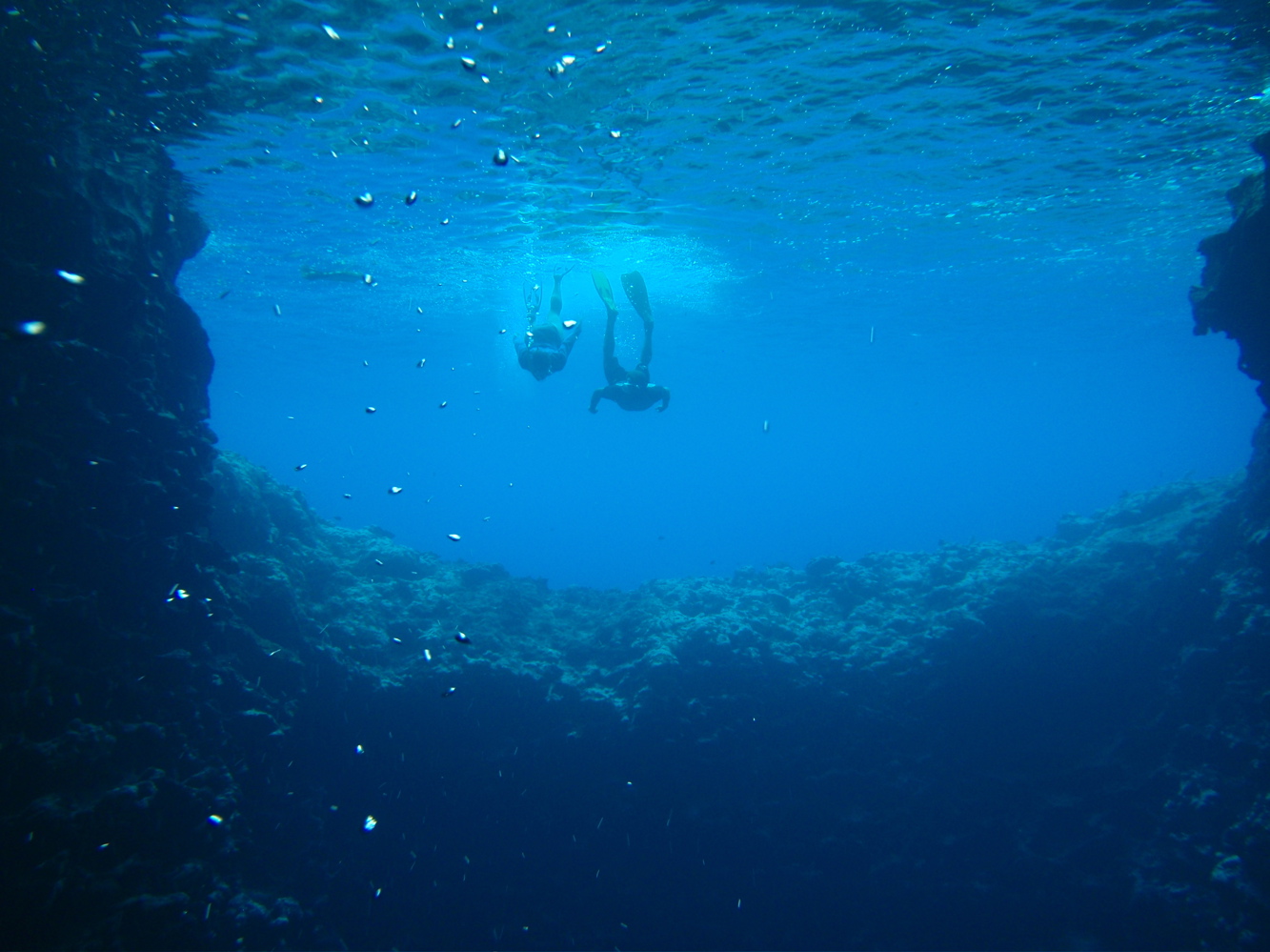
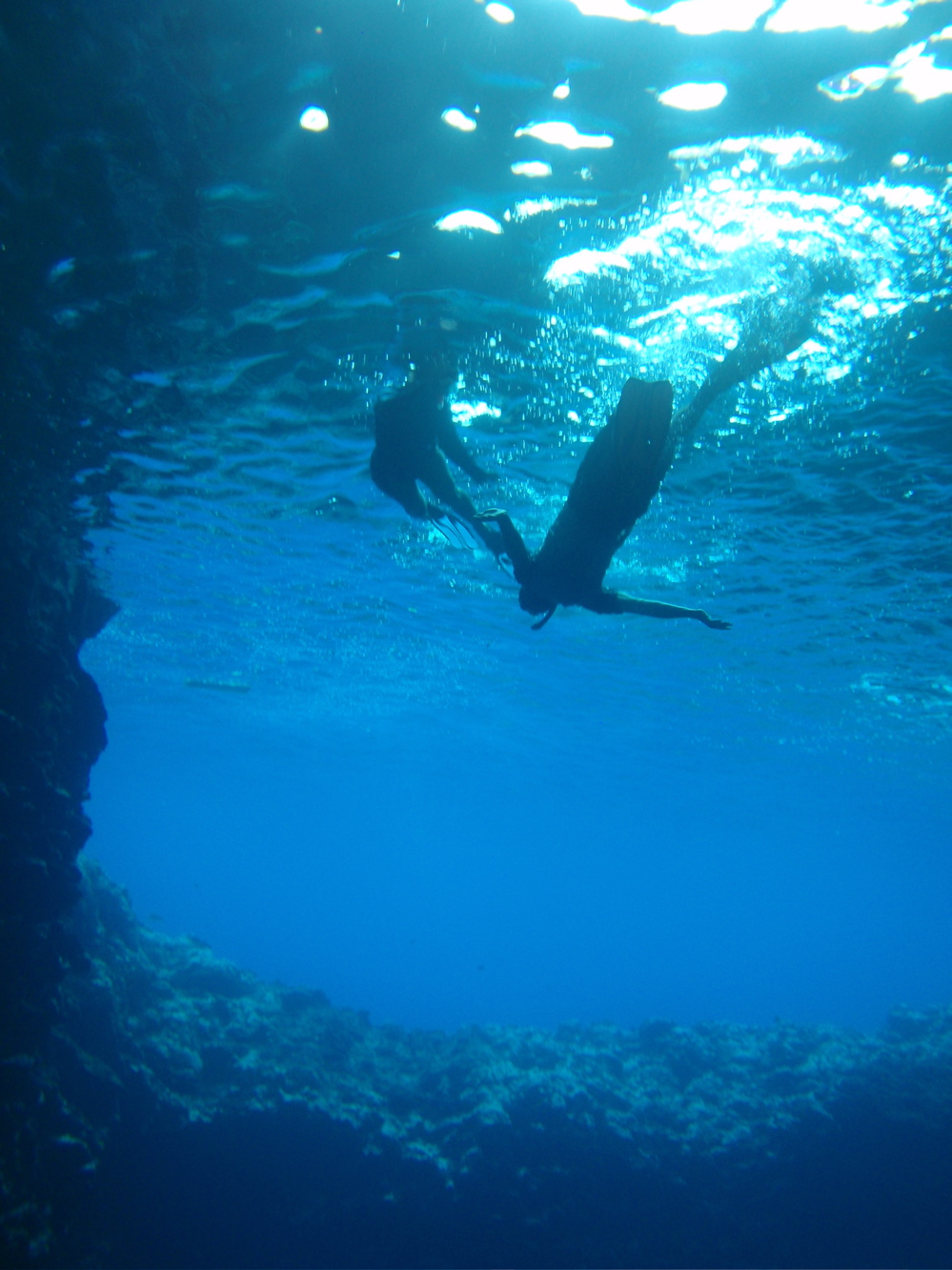
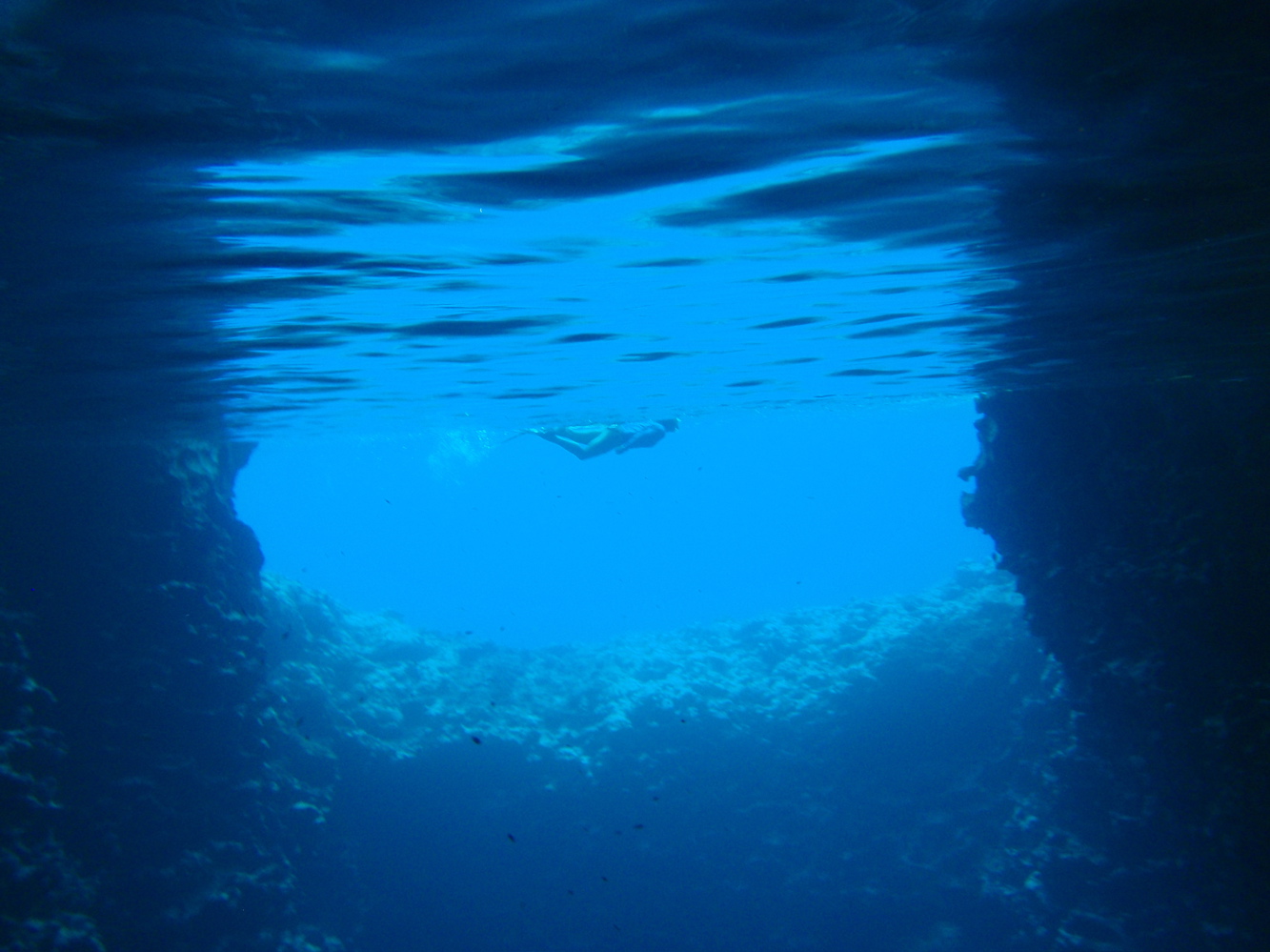
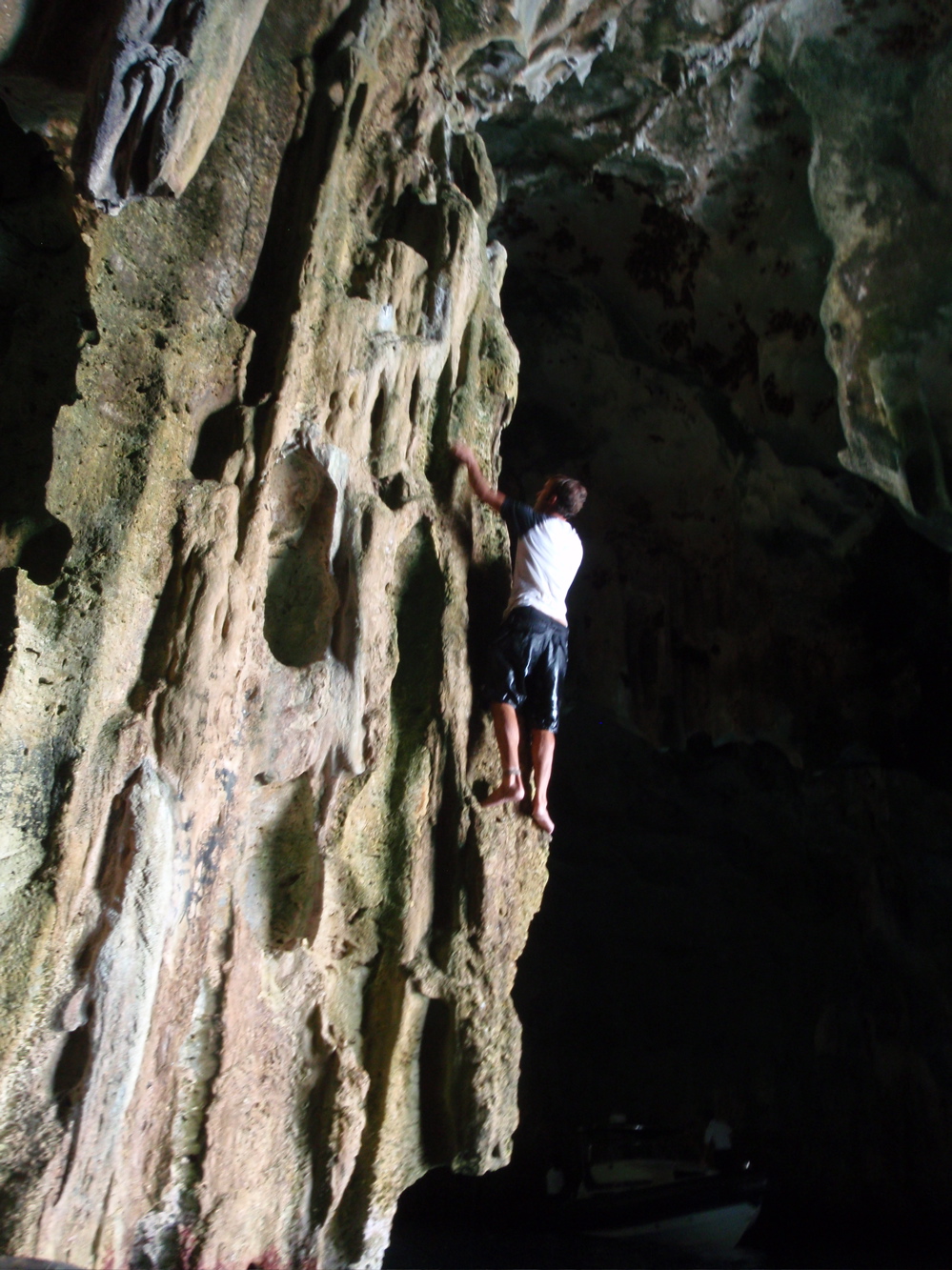
    Swallows cave is a enormous 50 foot high entrance in a limestone cliff at sea level on the northern tip of Kapa.  The dinghy fit easily and with it, we explored all the recesses of the cave we could.  The water was crystal clear and you could see the bottom with crazy limestone towers and arches, albeit completely bereft of life.  The urge to explore continued to pull and we tied up the dinghy to some limestone and continued walking back into the cave.   Scrambling/climbing skills proved useful to avoid a bit of water.  Midway through the cave it opened into an enormous cavern which had a small opening to the sky.  Long ago, important chiefs would lower down guests and food 100 feet through this small ten foot wide hole and hold feasts.

    After exploring the recesses of the cave as much as we could, we arrived back at the dinghy.  It was time to explore the water, which we did after only a tiny bit of hesitation due to the four foot long sea snake we had seen on the scramble back to the dinghy.  Sea snakes are, apparently, quite venomous, though their mouths are too small to bite you.  I’m thinking, surely they can get their mouths around a pinkie finger or something?  Wouldn’t that be awful.

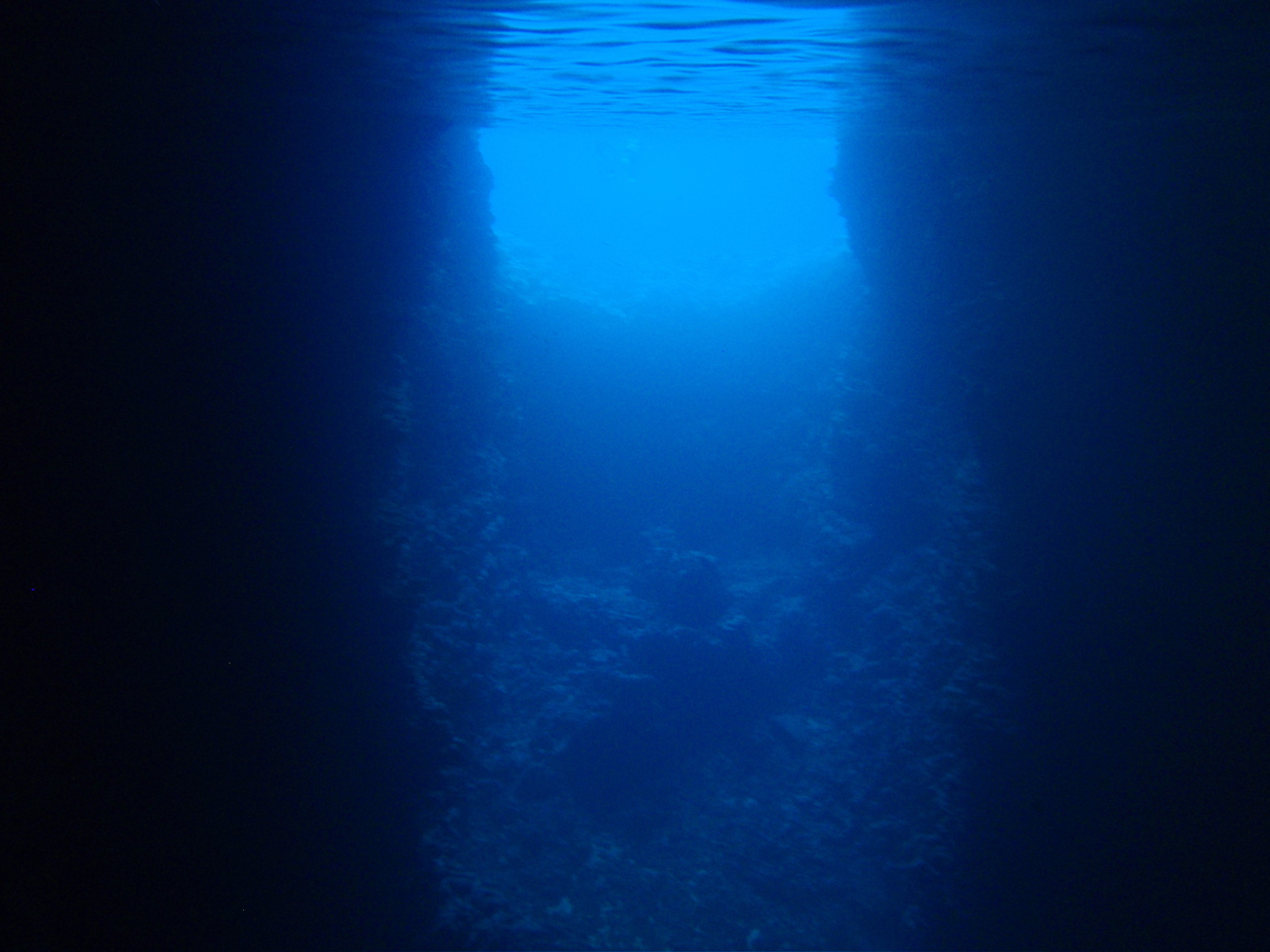
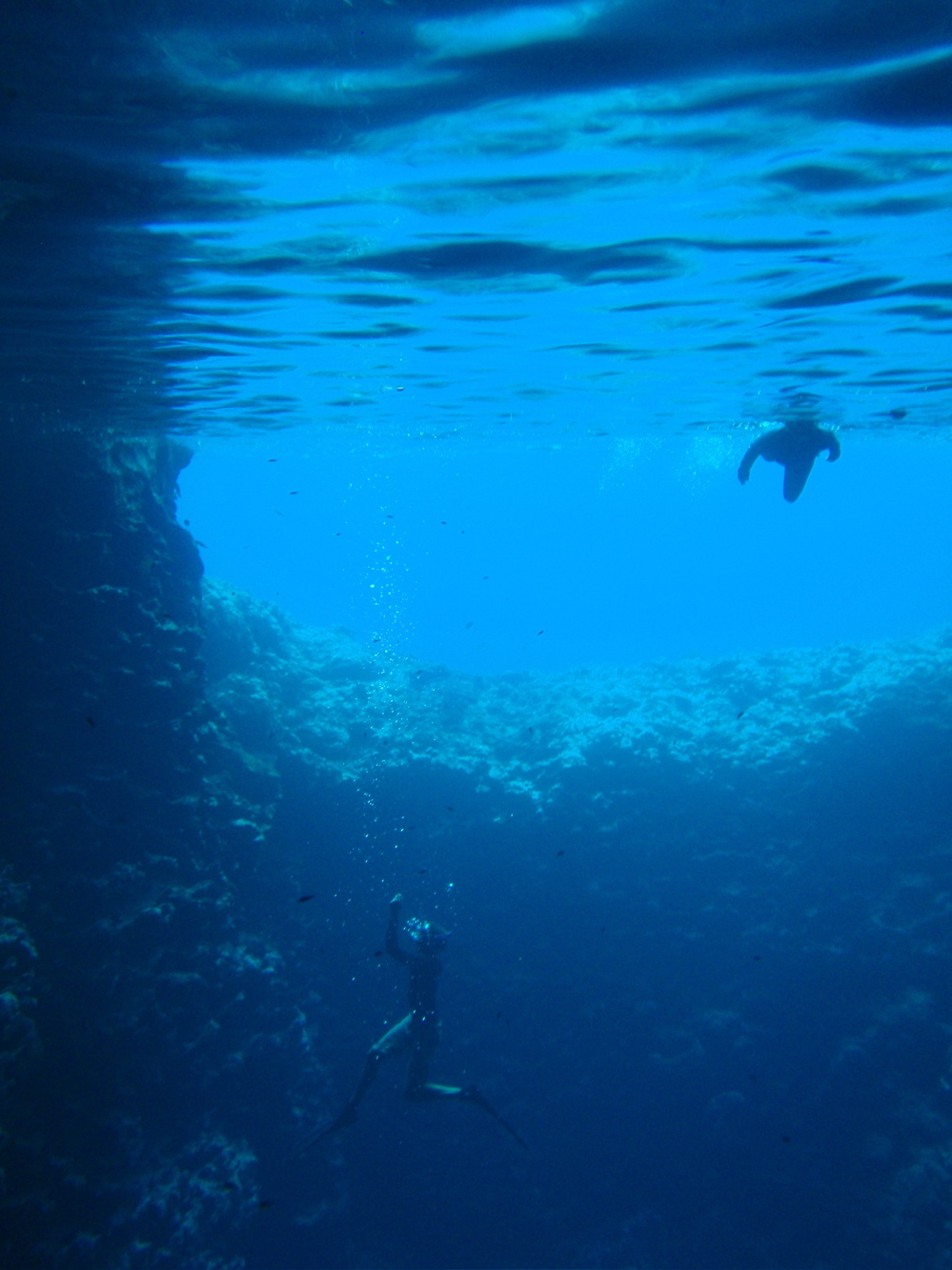
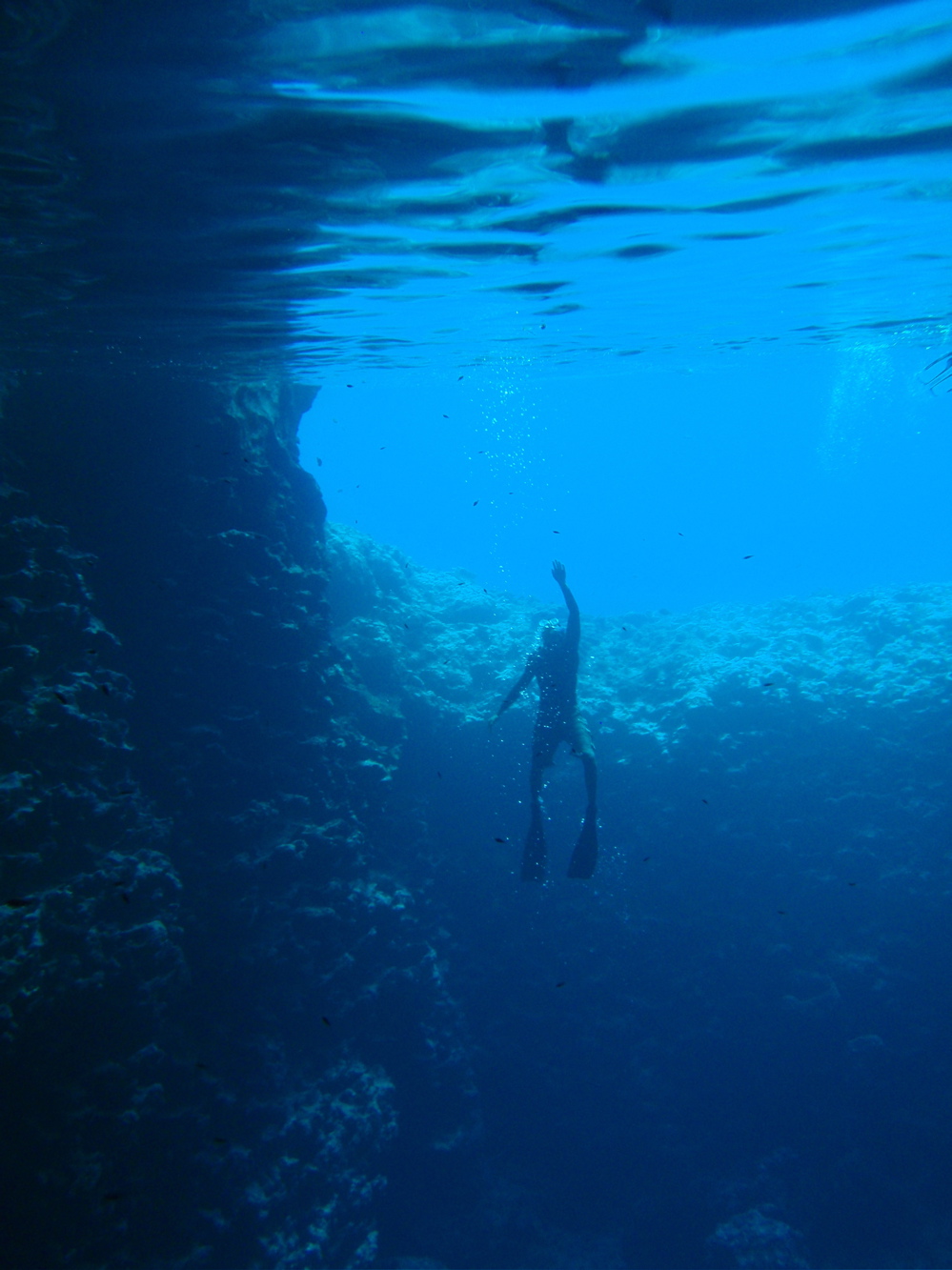
    Under water was perhaps even more beautiful, limestone pillars jutting up 30 feet from the bottom, arches and tunnels had formed underwater.  Towards the entrance was beautiful, and we took many pictures of us silhouetted against the bright sun.

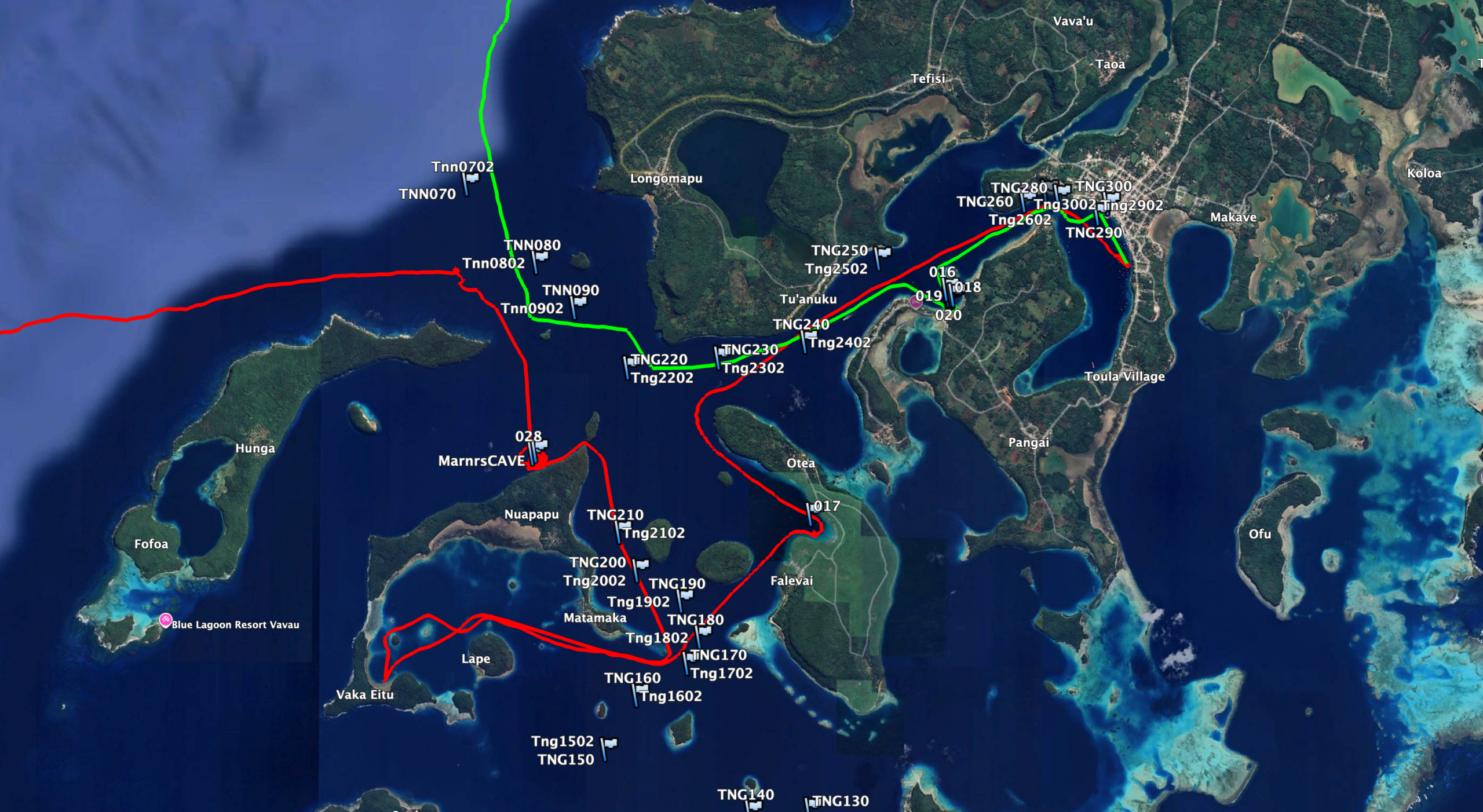
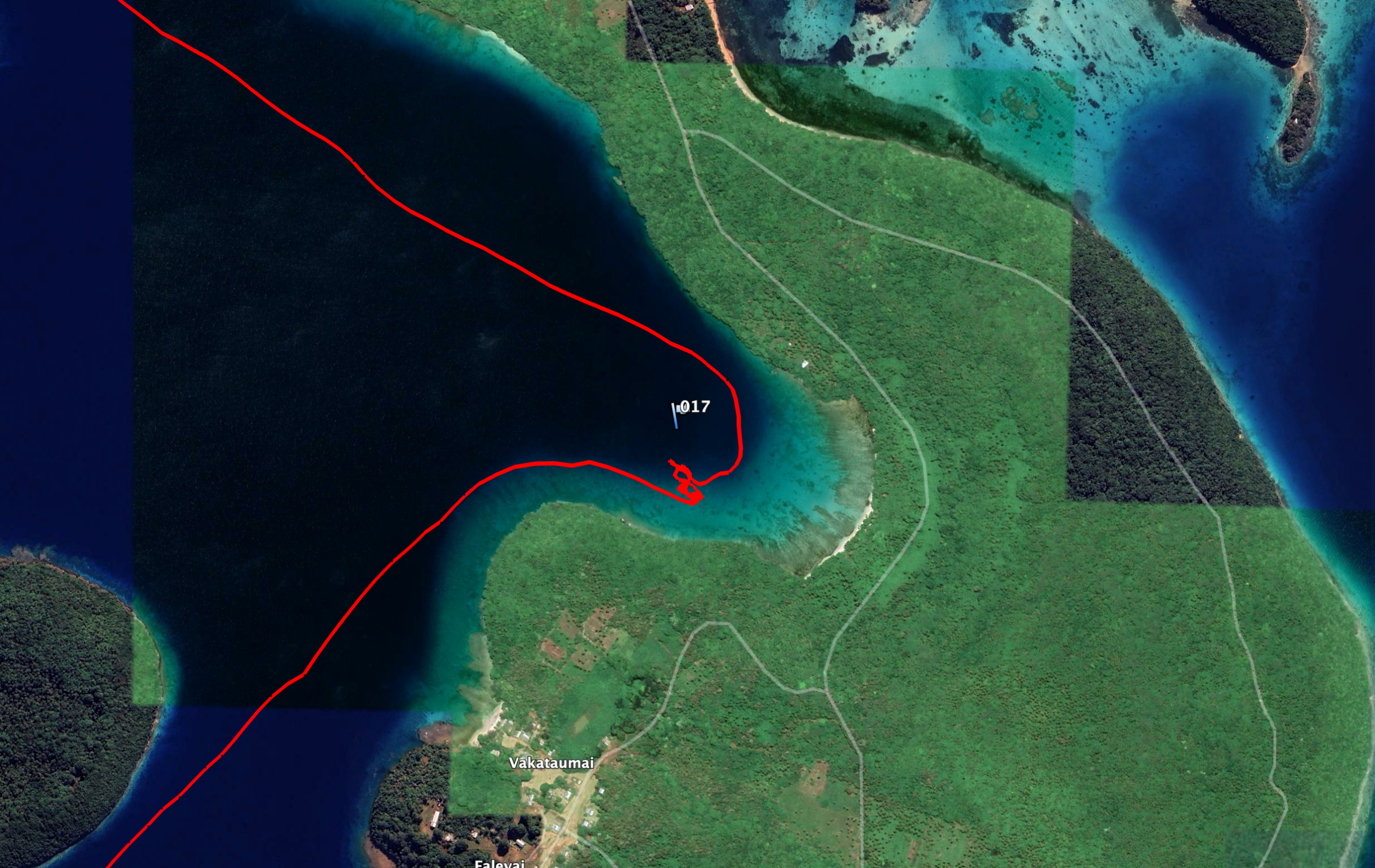
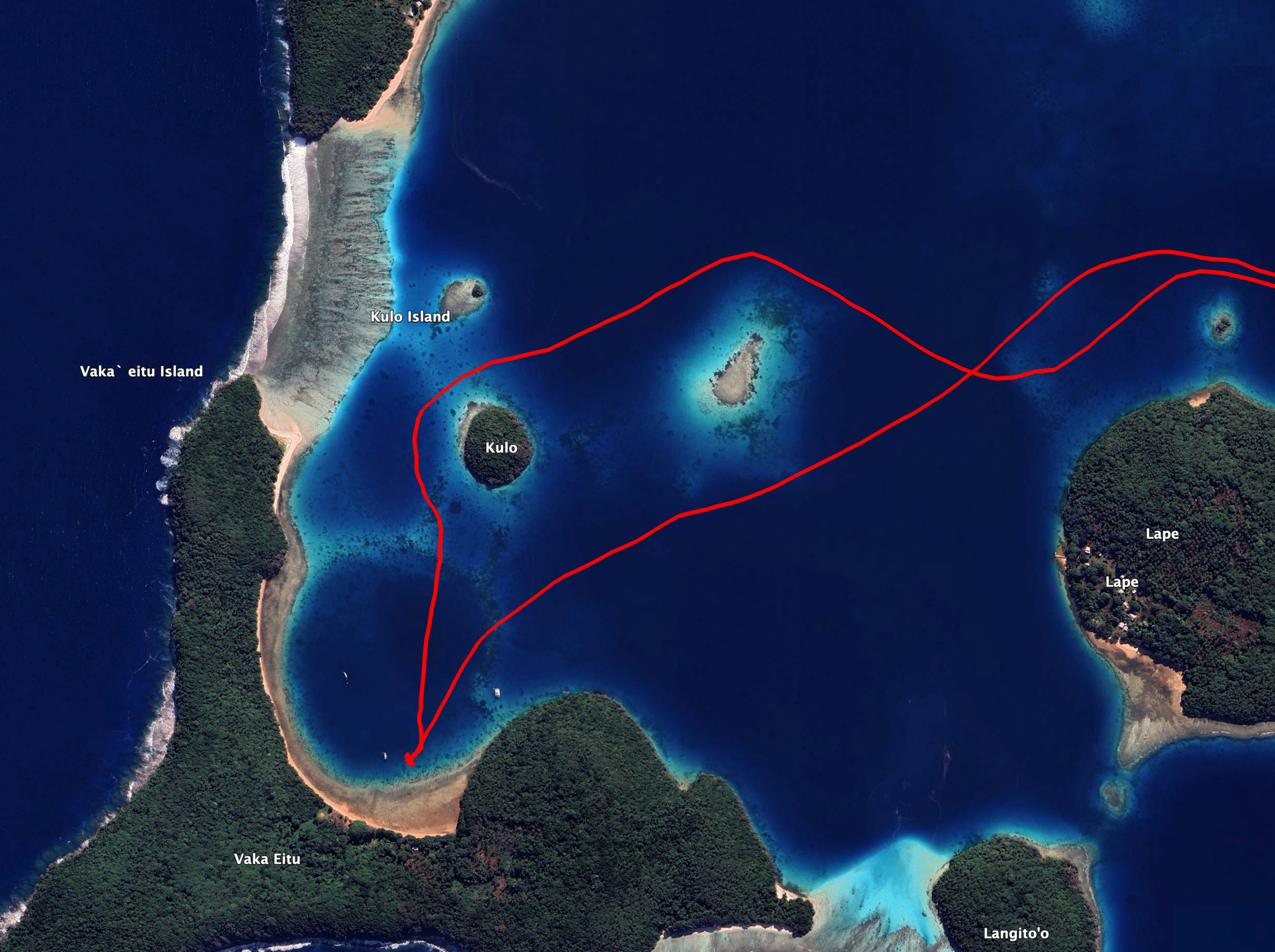
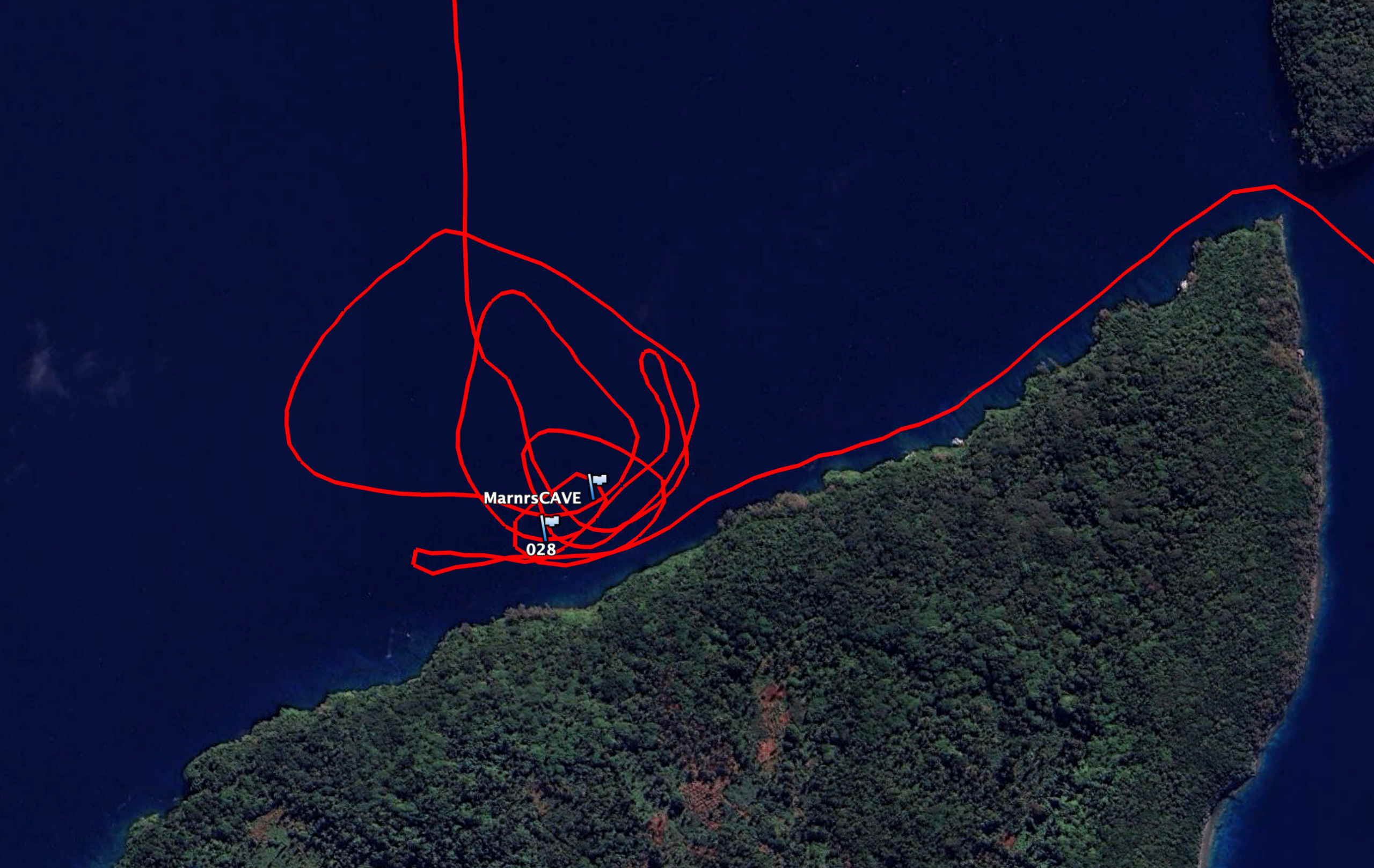
    The next day, we went out to the coral gardens west of the reef between the islands of Vakaeitu and Nua Papu, which will enjoy its own post.  The day after snorkeling, on our way out of Tonga, we stopped at Mariner’s cave on the northern point of Nua Papu, a 1/2 a mile south of the narrow pass between Kitu and Nua Papu.  For some reason, we decided to go through this narrow pass.  Our charts show it to be 97 yards wide, a football field, which might seem like plenty of space when our boat is only 4 yards wide.  97 yards felt like 97 feet as turbulent water mixed about and strong currents pushed our tiny boat around.  I can’t throw a rock 1/2 a football field, but I just knew I could easily hit the shores with even a modest try.  Yet through this narrow pass we engined our way.

    We then slowly motored the 1/2 a mile along the coast of Nua Papu, looking for the coconut tree on the ridge line and the dark orange patch on the vertical cliff face that would mark the entrance to Mariner’s cave.  Mariner’s, you see, is not visible from above the surface of the water.  You must swim under water through a tunnel in the limestone and surface again inside the island to find Mariner’s cave.  At the correct spot, the water was a dark hue of blue, and you could faintly see the outlines of the limestone entrance underwater.

    Matt and I jumped off to explore, while Karen stayed aboard and motored about.  The cliffs drop off sharply into the water and plunge straight down for over a hundred feet.  There was no anchoring to be had anywhere near by, so someone would have to stay with the boat.  We poked around the entrance diving down into the water just to look at it first.  The entrance stretched from six feet under water to fifty and was another thirty feet wide, creating an enormous underwater passageway.  And as we swam through, you could turn to face up and watch your bubbles pooling on the limestone underwater, most scurrying across the surface finding their way to the air’s edge on either side of the passageway, some becoming trapped there in tiny crevices.

    After a fifteen foot long swim, the longest fifteen feet I’ve ever swam underwater, we emerged inside Mariner’s cave.  It was much darker than Swallows, an eery blue light coming only from the passage way from where we came.  With our dive flashlight, we scanned through this much smaller cave and found little more to explore through like Swallows.

    To Matt’s glee though, clouds were spontaneously forming inside the cave.  When the surge from the ocean outside rises up, the water inside the cave rises as well.  As their is no other entrance or escape for air, the volume available to the air decreases.  This increases the air pressure and causes water vapor to condense out of the air and effectively form a cloud.  The mist would slowly build as water surged in and what was once visibility dropped from the hundred feet or so across the length of the cave to only a few feet as everything faded, hidden in the mist.  With a quick snap though, when the water turned and began to draw out, the process reversed, but instead of the slow building of mist, it quickly snapped away.  This repeated itself with every surge, though the random larger surges of the ocean created the effect more spectacularly.

    We exited, and just for fun, I swam back and forth through the passage way from oceanside into the cave and back a couple more times.  I then rejoined the boat, to allow Karen to go through the caves.  And with that, at around 2 pm, when all we really wanted was a beer, we began the five day passage to Fiji, saying goodbye to a Tongan experience that was extremely frustrating but ultimately rewarding and unforgettable.

  • Waterproof Camera, May You Rest in Peace

    (this post refers to events that happened on September 6th)

    I have a litany of electronics that I have ruined because they were not waterproof and I took them near water.  Two video cameras, one camera.  Two phones.  A jump drive.  So I was overjoyed to have purchased a waterproof camera to use on this trip, where I’m surrounded by water.

    The Olympus Stylus Epic 1030SW.  Waterproof to 10 feet.  SHOCKPROOF to 6 feet.  It was awesome!  No worries about getting it wet.  Spray from sailing was no concern.  Wet trips in the dinghy no concern.  Swimming on the surface was no concern.

    I failed however, to properly be concerned about diving down to beyond ten feet to take pictures.

    And so the last pictures my camera managed to take were of Swallows Cave.  Which was spectacular.

    And almost worth the price a new camera will cost.  Allison brought one out that was quite enticing… The Olympus u-tough 8000, only available outside America.   And Olympus has another, its newest version, the Olympus Stylus tough-8020!  Shizamm!

    Anyway, here are pictures from Swallows Cave.

  • Determined snorkeling

    (this post refers to events that happened on September 6th)

    In between going to Swallows Cave and Mariners Cave, we went out to the coral gardens west of the reef between the islands of Vakaeitu and Nua Papu.    The founder of Moorings, a world wide sailboat chartering company, was quoted as saying the following upon snorkeling here:  “Any reef I look at after this one will appear dead to me.”  Apparently it was going to be colorful.  I figure she has done a fair bit of snorkeling in her day in exotic locations, what with setting up a world wide sail-chartering company and all.  So we were determined to see it.

    And we needed to be determined, because it wasn’t easy.  As we approached, the tide was low and you could walk across drying reef from Vakaeitu and Nua Papu.  Waves were hitting the western side of the reef where we needed to enter the water.  Now, this wasn’t like walking down a gently sloping sandy beach through waves to enter the water, maybe a few obsticles around.   Water was surging back and forth across deep channels cut into the reef, creating a strong tidal motion back and forth.  Later, when in the water, the tidal surge would push you towards the reef edge sometimes upwards of 6 feet and you would zoom along with the fish who were also pulled by tidal surge, the coral below you skimming by showing your nearly uncontrollable progress, only to be tugged back away as the tidal surge drew away, and you and the fish would again go zipping along back out to where you started.

    Matt was the first to attempt to enter, walking out a peninsula of reef as far as he could.  Waves pushed water all around his feet, and balance on the slippery wet reef was precarious.  Spray from larger waves would kick up around him occasionally.  The timing needed to be just right, and when a surge came in, raising the water level within the slots between the reef, Matt stepped off the peninsula of reef and into the water.  He immediately began swimming quickly away from the reef as the surge receded to avoid being unavoidably pushed back into the reef when it surged back inland again.

    Karen and I followed repeating the process.  She and I had both worn our Chaco sandals, as opposed to Matt cavorting around in his bare feet, which I think made walking the reef slightly less painful.  Carrying the sandals while snorkeling was a small price to pay for less damage to the feet.  How his feet weren’t covered in cuts I don’t know.

    The snorkeling was worth it, not just a spot of coral here and patch there as is typical of most places.  This was a huge continuous tract of coral unbroken the entire third of a mile between Vakaeitu and Nua Papu and which looked to go on longer in both directions.  From five feet in depth, as it slowly angled down to 75 feet in depth, there was beautiful coral the entire way.  It was unfortunately partly cloudy but when the sun cut through the clouds and shown onto the coral, it burst with color, a vibrancy we had not seen anywhere in the South Pacific.  It was a stunning display.  Coral fans stretched 12 feet wide, larger than I had ever seen.

    We lazily swam the 1/3 of a mile from where we entered at the edge of Vakaeitu.  I had never enjoyed snorkeling for so long.  Then once reaching near the Nua Papu shore, we turned around and pushed back to our entrance/exit point, hoping that getting out of the water would prove easier and less scary than getting in.  It was not.

    I initially tried taking off my flippers to put on my Chaco’s, reasoning that with footwear I would more easily be able to get my feet on the reef and walk out.  Walking with flippers is best done by clowns with experience in such things, and while I may be clownish, I have little experience in such things.  But once I took the flippers off, I had no mobility and propulsion in the water, and I needed both to judge the surge as it pushed you towards the reef and then pulled you away.  So back on went the flippers.  I edged closer and closer to the reef, and on a final surge put my feet up on the edge of one of the peninsulas of reef that jutted away and grabbed on with my hands.  Water was at my waist and was in the lull between the surge in and the draw out.  I tried to move my feet up higher, but the flippers tripped me up.  And then the water turned and drew out.  Water rushed out the slot in the reef of which I was on the edge of and moved with a terrific force so that all I could do was simply hold on.  At the lull at the bottom I again tried to move and the flippers again tripped me up.  A larger surge then the one I landed with came in; the higher water pushed me off balance knocking my hands off the reef causing me to reflexively grab at anything I could hold.  I moved up the side of the reef bit, half crawling, half climbing up a couple of feet.  Another surge drew out and then came back in, sucking at my legs trying to pull me away from the reef, then pushing me off balance towards the slot in the reef the tidal surge pushed into each time.  I was desperate to be able to effectively move my legs and so took one flipper off and then another tossing them to Matt who was on higher ground.  With flippers off, I endured another larger swell knocking me off balance and then pulling me hard.  At was on top of the peninsula of reef at this point, effectively horizontal ground, but the tide was higher and water easily washed over the peninsula point and so despite being on all fours, crawling, when the tide drew out, I was holding on like I might while rock-climbing, such was the force of the water sweeping out.

    Once Karen was out as well, I assessed the damage.  A half a dozen coral cuts on my hands, a couple more on my ankles and knees.  A price to be sure for the best snorkeling we’ve done.

  • Engine Repair Part 2

    After spending three days relaxing, hanging out in cafes, recovering from sailing so much the last two weeks, we decided we were ready to move on to other anchorages in Tonga.  Our engine had other plans.

    The engine performed admirably since Matt and I patched it, motoring for ten hours or more enroute to Tonga.  But less than 60 seconds after having left the mooring we were at just off Neifu, less than 60 seconds into our foray into the fun side of Tonga and away from the cafe side of Tonga, the exhaust manifold sheered a bolt again.  And snapped the hose clamps we had added.  Back to the mooring ball.  Back to Aquarium requesting additional days on the mooring.  Back to mind-numbing cafes.

    We formulated a new plan which involved putting all efforts into getting out the sheered bolt that still had the extractor bit inside it.  Then, we would construct a bracket to brace the heavy exhaust elbow infrastructure, hopefully reducing its vibration and consequently its tendency to sheer.

    The next morning I took a taxi to the hardware stores and purchased eight new drill bits.  Getting out the extractor bit would be no easy task.  I then set upon trying.  I drilled.  1 bit broke.  And another.  And another.

    Four hours later, I was exhausted, frustrated, indignant, furious, and capable of going no further.  I opened a beer and popped in an episode of West Wing.  One episode turned in to ten as I drowned my misery and anger in escapism.

    The next day, Matt took his turn.  Similar results ensued.

    The next day, I took the drill.  Our engine block at this point had drill holes down all four sides of the bolt with the extractor bit in it.  We had broken nearly a dozen drill bits.  Dulled beyond use another dozen.  Used drill bits ranging from 3/64” up to 1/2”.  The gauge around the extractor bit was twice as big as the bolt that originally went through it.

    And then, after more multiple hours of drilling,  the extractor bit wiggled.  The smallest of movements!  This tiny victory buoyed my spirits as I drilled for another hour until it was finally freed!  Celebration ensued.  Much beer was drank.

    The next day, Matt re-tapped holes into the engine block.  They are suspect, as the holes we tapped are 5/16” coarse thread instead of the original 5/16” fine thread.  And the hole which originally had the extractor bit inside the bolt in it, well the surface of that bolt hole is gouged down so far that very few threads seem to actually contact the new fine thread bolt.

    We enlarged the bolt holes going through the exhaust manifold.  And most importantly, Matt added a beefy bracket that definitely reduced vibration in the exhaust elbow.

    Four days later, we were ready to leave again.  We turned on the engine.  We waited anxiously.  Straining our ears for odd sounds.  Squinting our eyes to look for unusual vibration.  All appeared normal.  Maybe it worked!

  • Tonga. The Cafes Are Nice.

    We have been in Tonga for eight days.  I want to gauge out my eyes with a spoon.  We have done nothing.  We have sat in cafes  We have ate in cafes.  We have surfed the internet in cafes.  We have drank in cafes.  Alot of drinking.

    Before arriving, we had sailed eight days to Beveridge Reef, and than another three days to Tonga.  Eleven days of sailing is quite a bit.  We need a couple of days of utter relaxation after that, and so we spent the first three days exactly like that, reading, relaxing, reconnecting on the internet.

    Then we decided to leave.  Then our diesel engine decided otherwise.  It decided to break.  Again.  Necessitating four more days of work.  I’ll describe this later.  And so back to the cafes we went to eat and drink.  And then we drank some more on the boat.

    Cafe Aquarium rates as the most friendly.  And has free, albeit slow, internet.
    Sunset Cafe has the best burgers.
    The Giggling Whale is the fuel hook-up, the loudest owner, and the best art on the walls.
    The best coffee can be found at Crow’s Nest.  
    The best ice-cream at
    The atmosphere at Tropicana is stiffling.
    The  Coconet Cafe also does laundry.  But it is so absurdly overpriced you would think they were laundry peddling mobsters and it’s embarrassing to admit we spent over $100 doing laundry.
    The Neiafu Yacht Club didn’t leave an impression.
    We didn’t make it to the nice pizza place.

    I’m supposed to be on the trip of a lifetime.  This is not how I imagined I’d be spending my time. All I can tell you after eight days in the Kingdom of Tonga is that the cafes are nice, Immigration officials will fleece you if you arrive on a week-end, and the water in the bay outside Neifu does not inspire swimming.

    And having a diesel engine break sucks.

  • Engine Repair Part 1

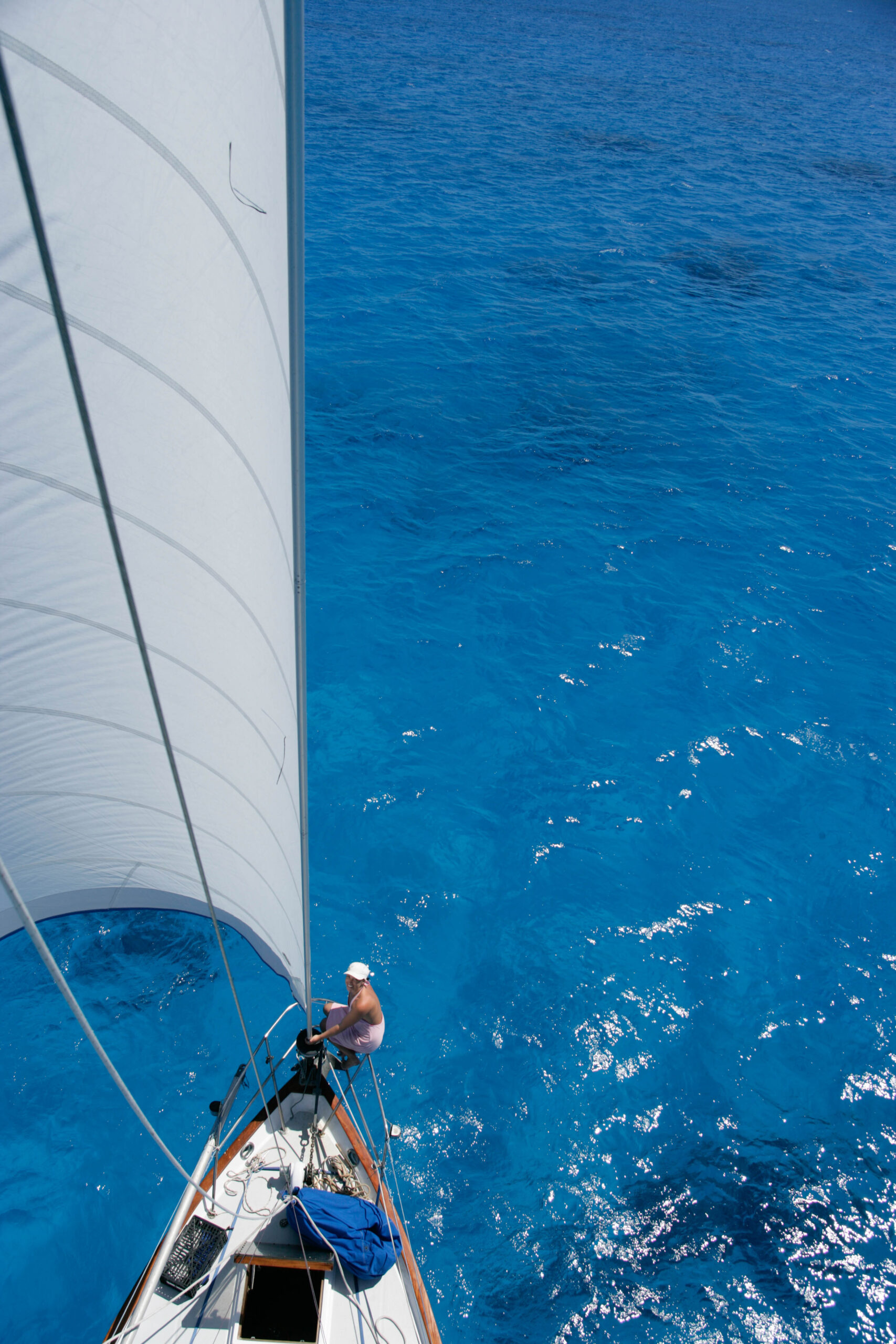
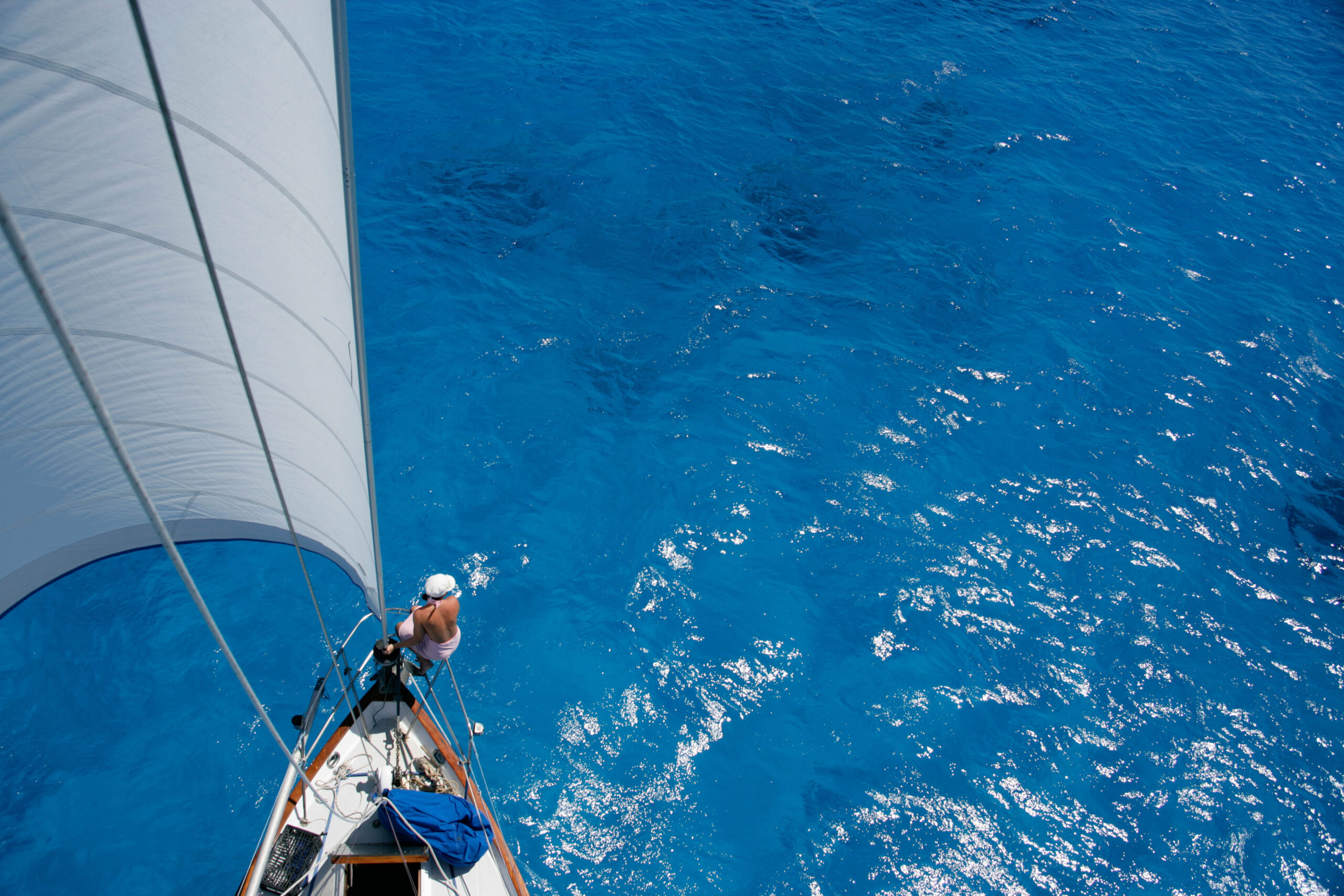
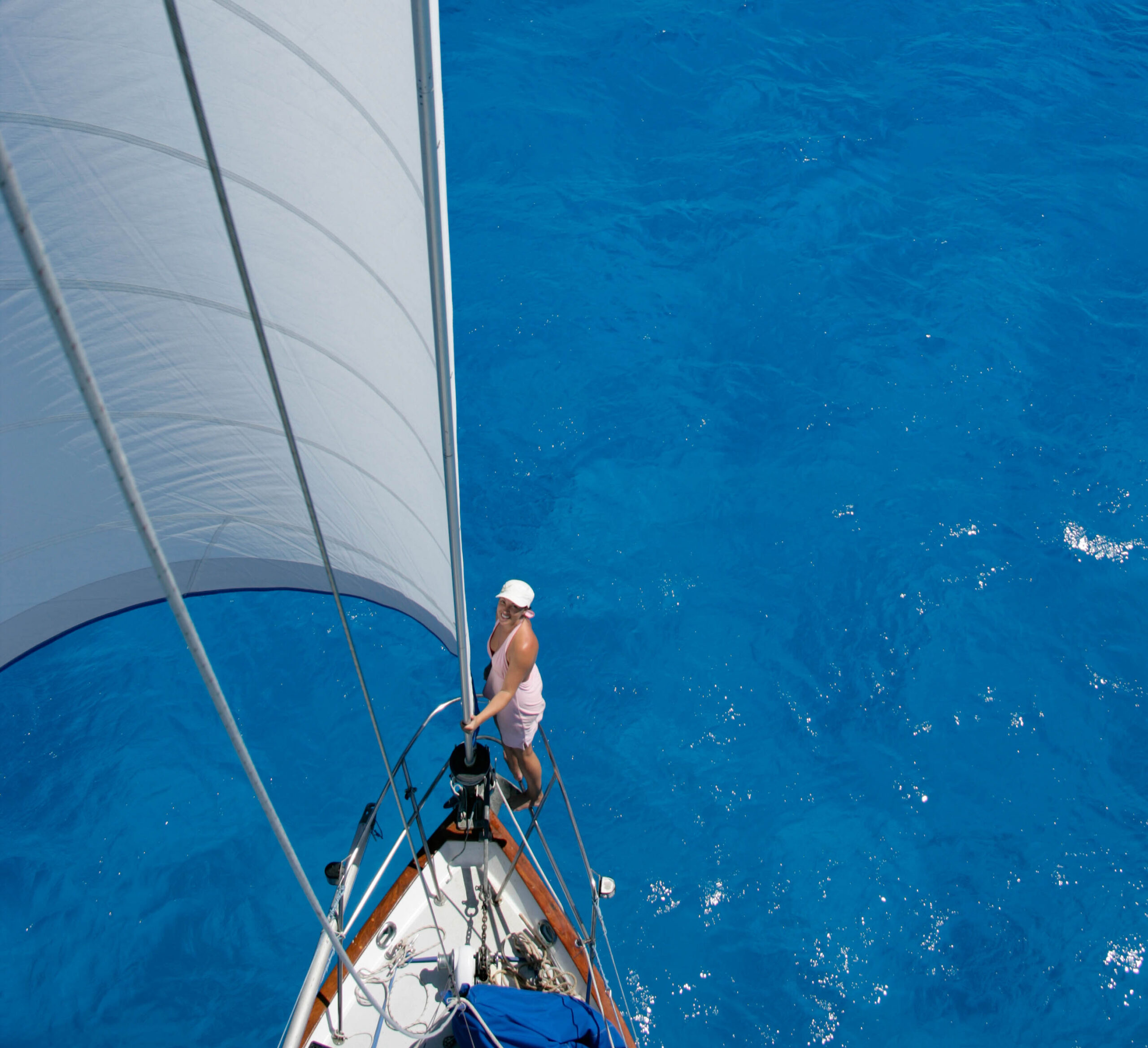
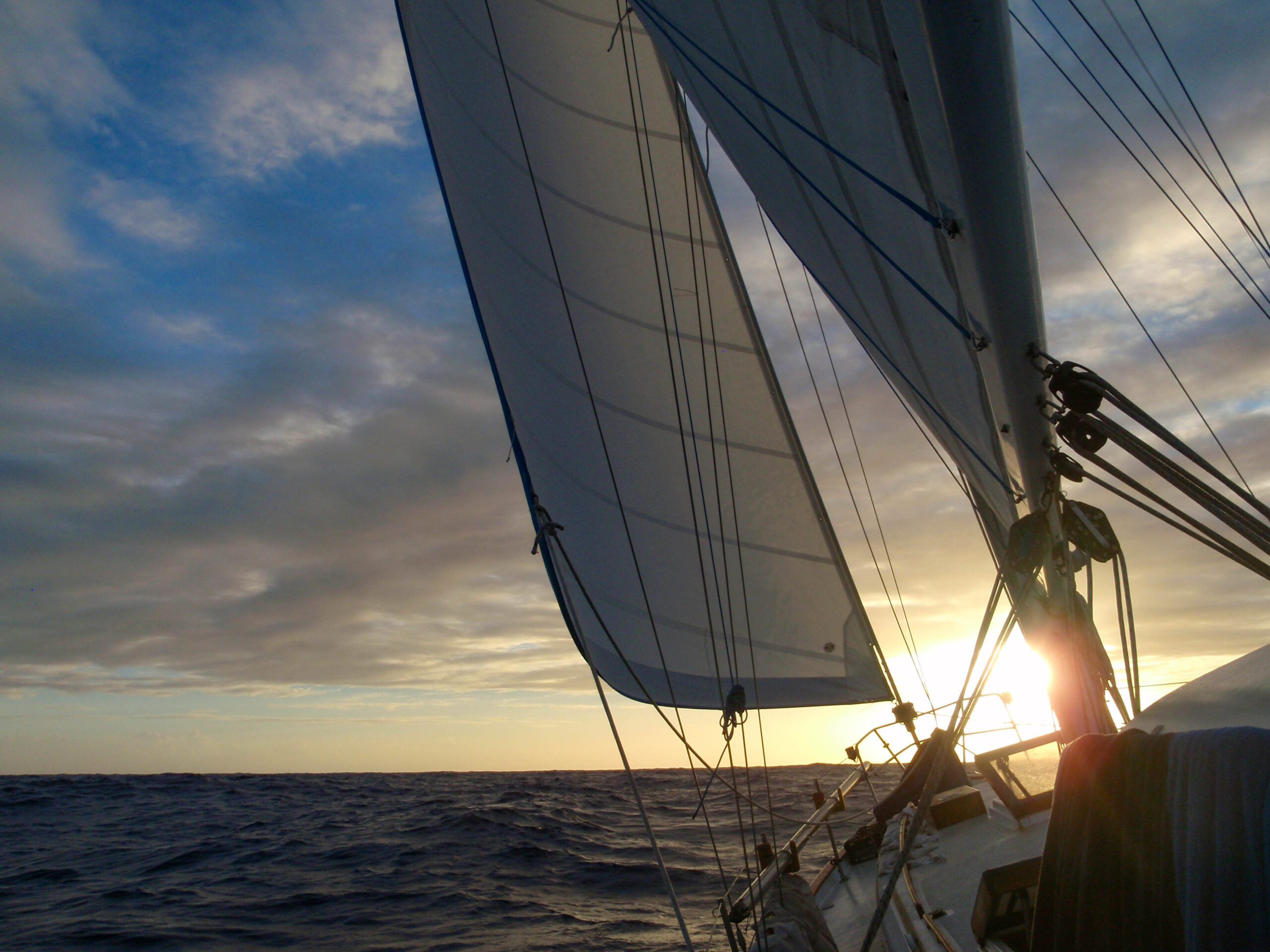
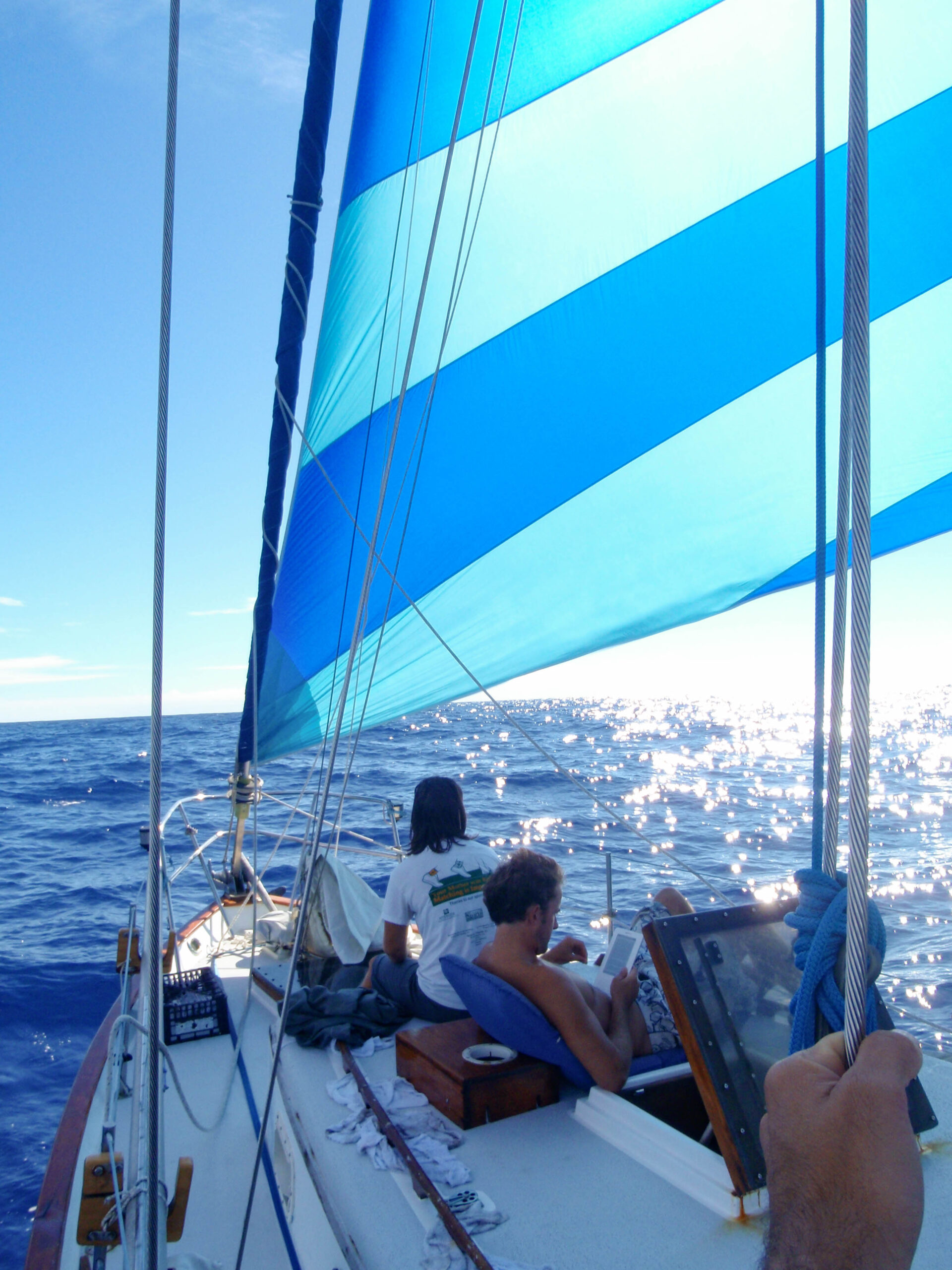
    While on watch during my midnight to 4 am shift, the wind began to die.  We had been flying just our jib sail.  However, I thought flying the drifter would be a better choice and so set about changing it.  Since we were flying only the jib, I  needed to roll it up and then set the drifter.  Since between having the jib rolled up, and letting out the drifter there are minutes, sometimes many minutes because I sometimes have problems getting the drifter set, where we have no sail up.  To keep us moving in the right direction and not just bobbing around randomly, we turn on the engine.

    So it was with the engine on that I moved onto the fore deck to finish setting up the drifter.

    And then the engine shut off.  Matt popped his head up from the companionway and motioned me back.  Smoke he said, was being emitted from the engine room.  This is bad.  Ironic though it may seem to a sailboat, severe problems with the engine are one of the worst things that could go wrong.

    The smoke was exhaust from the engine.  Normally, the exhaust goes from the combustion chambers inside the cylinders, out the engine block and into the exhaust manifold.  From the manifold, it exits to our new, heavy duty exhaust elbow, through some tubing, through the water-lift muffler, through some more tubing, and finally out the boat.

    Now, the exhaust was going into our boat.  Bad.

    Two of the four bolts that that hold the exhaust manifold to the engine block sheered off.  THEY WERE 30 years old, so you have to give the bolts some acknowledgment for lasting that long.  The new, heavy duty exhaust elbow Matt had installed a year ago probably contributed to increased vibration and force on the bolts holding the manifold.  But they were 30 years old.

    The next day we start in on the work, drilling out the part of the bolt that was left behind in the engine block.  The bolts are corroded.  They don’t want to turn.  They are steel.  Our drill bits are dull.  Did I mention that the boat is rocking back and forth while sailing towards Tonga?

    One drill bit dulls.  Another drill bit breaks.  Matt takes a breather and I give it a go. A drill bit breaks.  Another drill bit breaks.  Cursing ensues.

    Matt gets back into it.  One of the bolts comes out.  After a while, he decides he has drilled enough of a divot into the other bolt that he wants to try using an extractor bit.  These bits are conical shaped and reverse threaded on the outside.  The idea is that as you drill them into the divot, they will force the bolt to spin the other way and the bolt will follow its threads out the hole.  Nice theory.  Terrible in practice.  Extractor bits, we will later realize, are forged from the blood of the devil and hardened as if they were the devils own stone heart.  Extractor bits are pure evil.

    Matt snapped off the hardened steel extractor bit inside the bolt which is inside the engine block.  Large amounts of cursing ensues subsequently followed by large amounts of beer drinking to end the day.

    The next day, we formulated a new plan.  Leave the extractor bit in the old bolt, doing nothing to help fasten the exhaust manifold there, put in a new bolt for the one we got out, and then put on hose clamps around the exhaust manifold and part of the engine.  Along with new gaskets, we hoped the hose clamps would dampen the vibration, and help squeeze the manifold towards the engine.

    With everything put back together, it looked… suspect.  the hose clamps were fastened to a heavily corroded fitting on the exhaust manifold, bent through a 90 degree turn and over a slight bend on a different axis.  It looked janky.  We fired up the engine with our fingers crossed.

    And it worked.  Exhaust went out the boat.  Not into the boat.  Hopefully this will hold up until we get to Fiji with larger cities and bigger stores and where friends can bring us spare parts to help with a more permanent fix. Tonga is just too small.  Here’s hoping.

  • Shark Bait

    Shark bait

    As we were leaving Beveridge Reef, sailing out through the pass, it occurred to me that I should take one more look at the pass through the reef.  The snorkeling and diving we had done in the pass over the last two of days was the best we had done for shark watching, schools of large fish such as grouper and bumphead parrot fish, and large coral formations forming canyons.  One last look was worth the effort.

    So while Matt sailed out through the pass, I put on my flippers, mask and snorkel, put out a tow line, and then lowered myself down from the swim ladder.  We were slowly cruising along at about 4 knots, much faster than I could swim, but I could easily hold onto the swim ladder as the water rushed around me.

    We were in a particularly shallow area at the time, a depth of perhaps only 15 feet.  It’s a tenuous feeling watching your boat rushing by the sea floor, less than 10 feet away.  I relayed up to Matt we should steer further to port for deeper water.

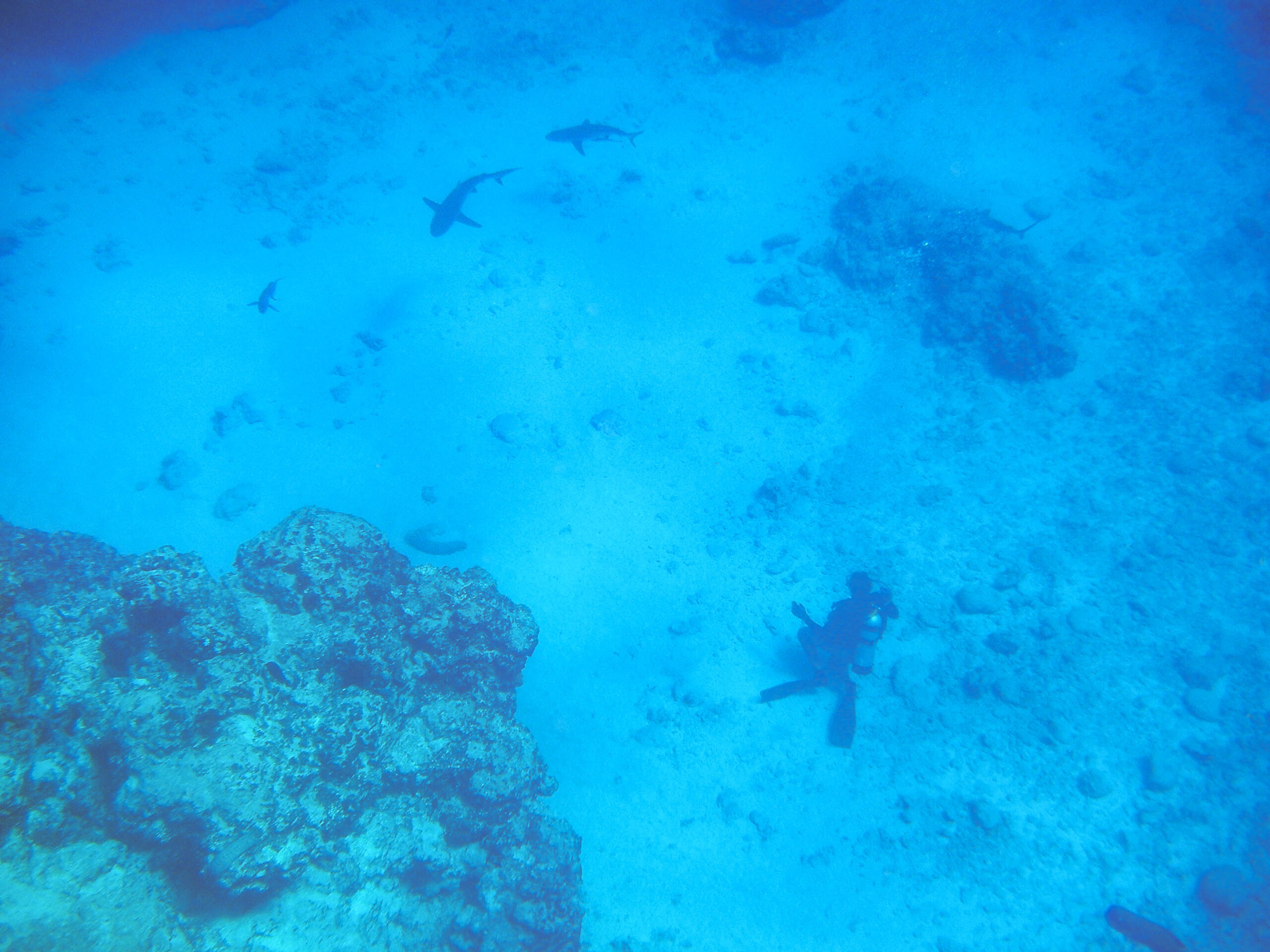
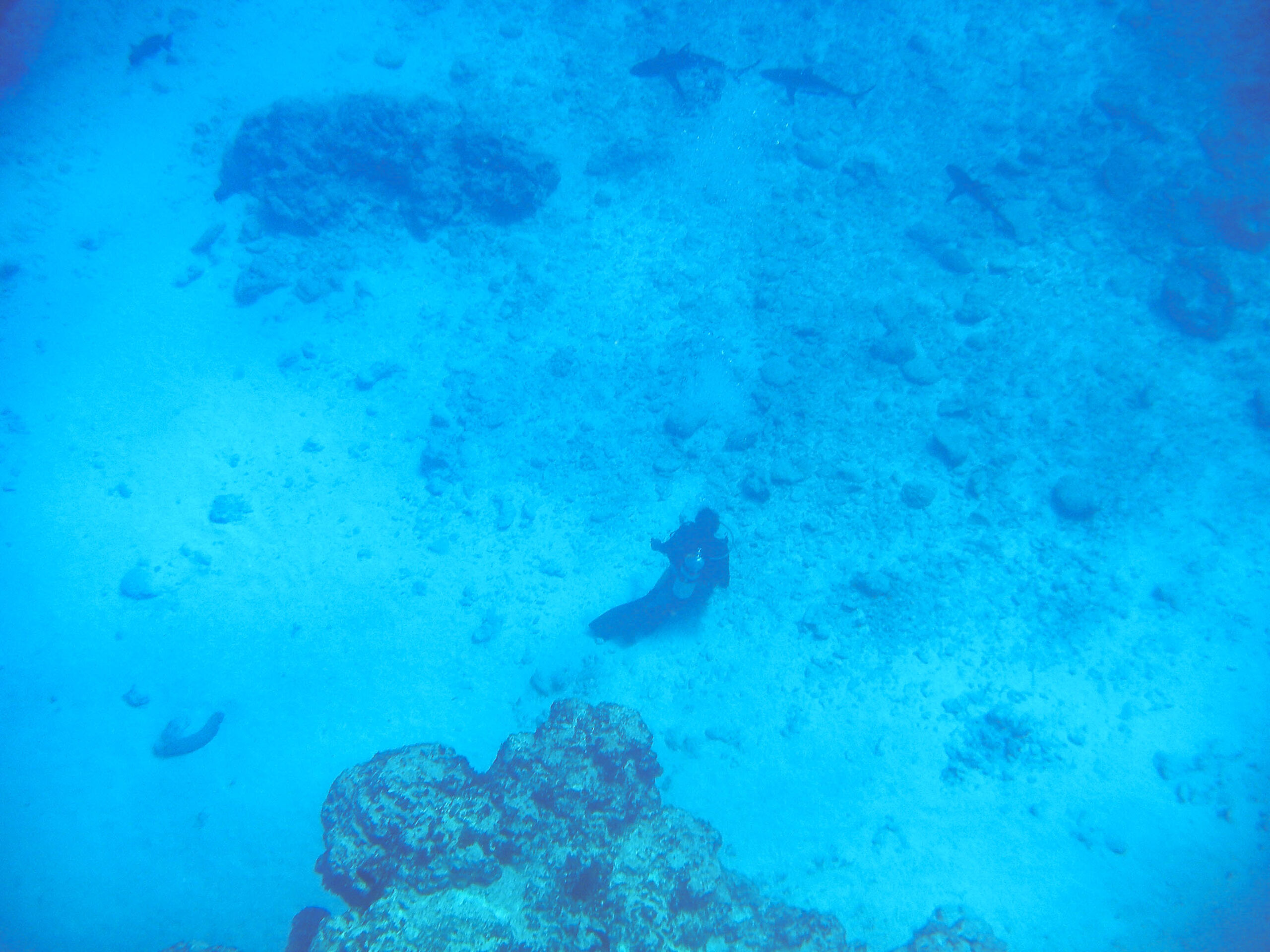
    We then sailed directly over where we had snorkeled/dove the day before, on the North side of the pass.  The schools of fish were there, I saw the interesting coral formations, including the arch I swam through.  And of course the sharks.  Dozens of sharks lazily drifted around, mostly close to the bottom of the sea floor, about 50 feet down, though some were more shallow.

    We sailed slowly by, at 4 knots moving slowly enough to look at everything again.  Quick enough that we passed by faster than my memory wanted it to.

    And then four sharks peeled off from the main group and started following us, interested in, I believe, what they thought might be some food.  Me.

    It occurred to me later that I looked quite a bit like the lines we trail behind our boat when we sailing on passage, trolling  and trying to catch fish.  Just a bit bigger.  Shark sized bait, you might say.

    I let that go on for about three more seconds before I quickly pulled myself up out of the water and onto the swim ladder.  I might have been within 10 feet of the sharks while diving, but sharks tailing me like they were looking for food… too much.

  • Scuba Diving at Beveridge Reef

    (refers to events that happened August 22nd and 23rd)

    I finally did some real scuba diving with my own gear.  Or rather the gear I’ve borrowed from the Martins.  Thanks Pat and Dave!

    In Rangiroa, I purchased a dive outing with a local dive operator, 6 Passengers, so named because they limit the number of people with one dive guide to, yes, six people.  Scuba diving through Passe Tiputa was extremely fun.  I had almost as much fun simply remembering how to scuba dive as I did watching sharks or fish or coral.  I wanted my first time to be with a dive outfit, just so I could remind myself what it was like.  I was certified 15 years ago, and then took a three hour refresher course.  So in the last 14 years, I have only been scuba diving once, four months ago, in a pool.  My point being I wanted the first time I went to be with a dive master.

    Then in Moorea, I decided to test out the dive equipment we have.  I only got through two regulators (of five), one BCD (of three) and both tanks before wanting to actually have fun.  And so with the dive gear on, I hopped into 12 feet of water where we were anchored and scrubbed the bottom of our boat.  I burned through over half of one tank doing that, but it was enjoyable nonetheless.

    But finally, in Beveridge Reef, I went scuba diving with my own gear.  Matt and Karen were snorkeling above me as we explored the pass into Beveridge Reef.  One day we were at the south side of the entrance and the other the north.

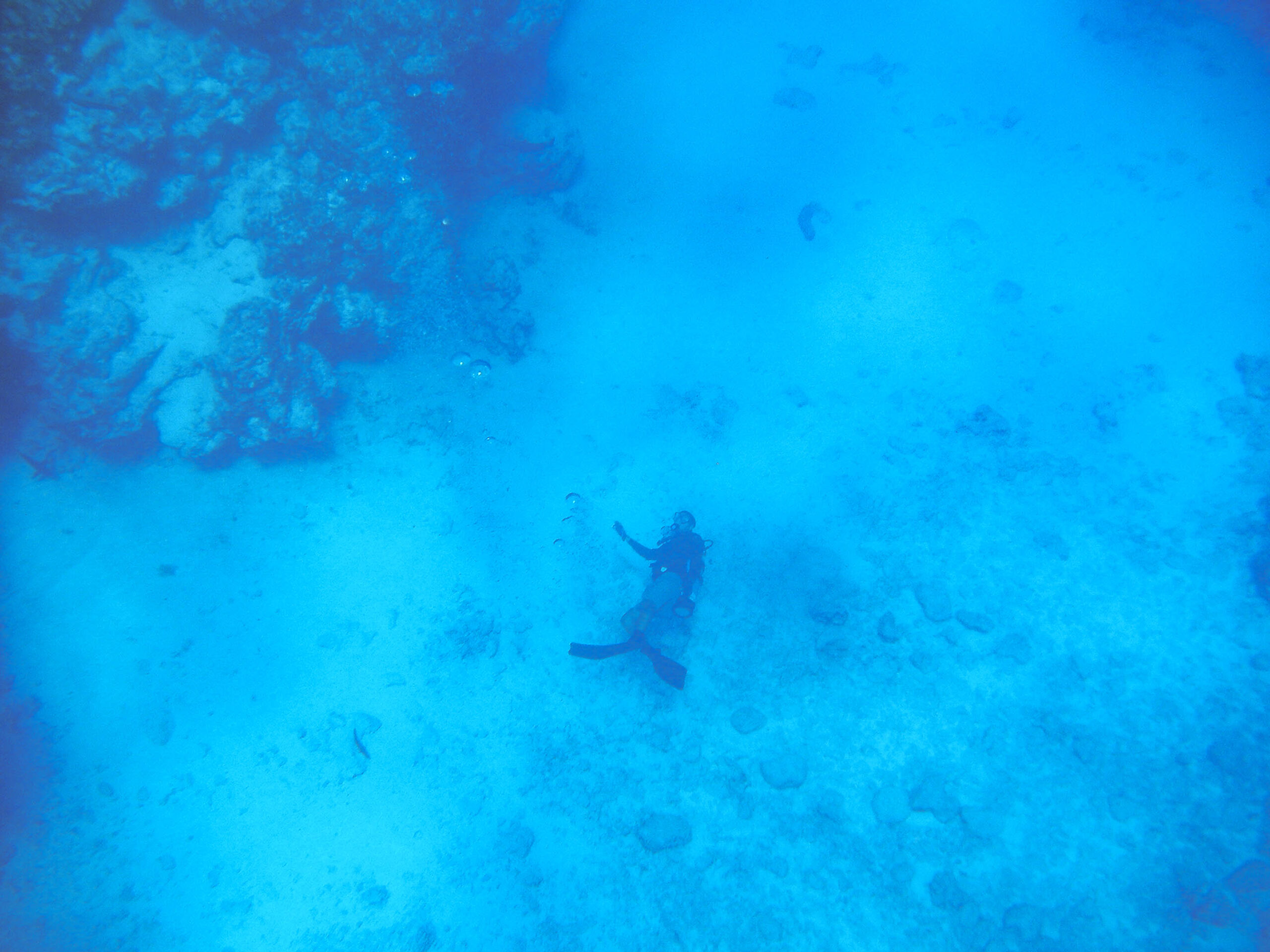
    Both were spectacular!  On the south side, I went down to the floor at about 40 feet. There was a fairly hefty current at the surface, but on the bottom it was not nearly as bad, and I could just kneel in the dirt to keep myself from moving.  The fish, though, the fish!! Three foot long bumphead parrot fish were there, at least a hundred it seemed.  Large groupers also abounded.  Both would swim up almost next to you!  I could have easily touched them if they would have stayed put.  But they darted quickly away.

    The main attraction for me was the slots in the reef.  Underwater canyons!  One in particular was about 12 wide with 20 foot high walls of coral.  Swimming along the sandy bottom in this canyon was spectacular.  Fish were everywhere.  Like canyoneering on land, there was obstacles to maneuver around, boulders in the middle of the canyon and such.  And within the canyon, within this canyon were sharks.

    The sharks, up to six feet in length lazily meandered around.  Most were smaller.  Some were hefty with girth.  Frequently the sharks would swim to within ten feet of me, as I knelt on the surface wondering what it thought of me.  Then it would angle slowly away, apparently I was rejected as something to eat.

    The north side of the Beveridge Reef pass held even more fish.  There were hardly any parrotfish, but was a school of smaller silvery fish.  There must have numbered in the thousands.  In one particular instance, they completely surrounded me and were swimming in a 360 degree circle around me.  They were everywhere I turned, spinning around me in their attempts to protect themselves and keep me, as the potential predator, in confusion.  I felt like I was in one of the Blue Planet movies, when they show the schools of fish swimming in giant spheres.

    The north side had an enormous overhang of coral, undercut by nearly 20 feet.  With a sandy bottom, I just kneeled down and watched the multitudes of ocean life cruise by.  This time, not just a few sharks but dozens.  It was fantastic to see.  I also drifted over to another coral garden 100 yards away that had grabbed my attention.  The attraction here was a ten foot high arch made of coral that I wanted to swim through.

    Thanks again to Pat and Dave Martin for the scuba gear they loaned us.  Also a thanks to Dave, from the trawler Rock and Roll her at the Emeryville Marina who also gave us some scuba gear.  Diving in Tonga awaits and in Fiji, in Fiji its supposed to be spell-binding.  Fantastic!

    SANYO DIGITAL CAMERA
    SANYO DIGITAL CAMERA
  • Underwater views

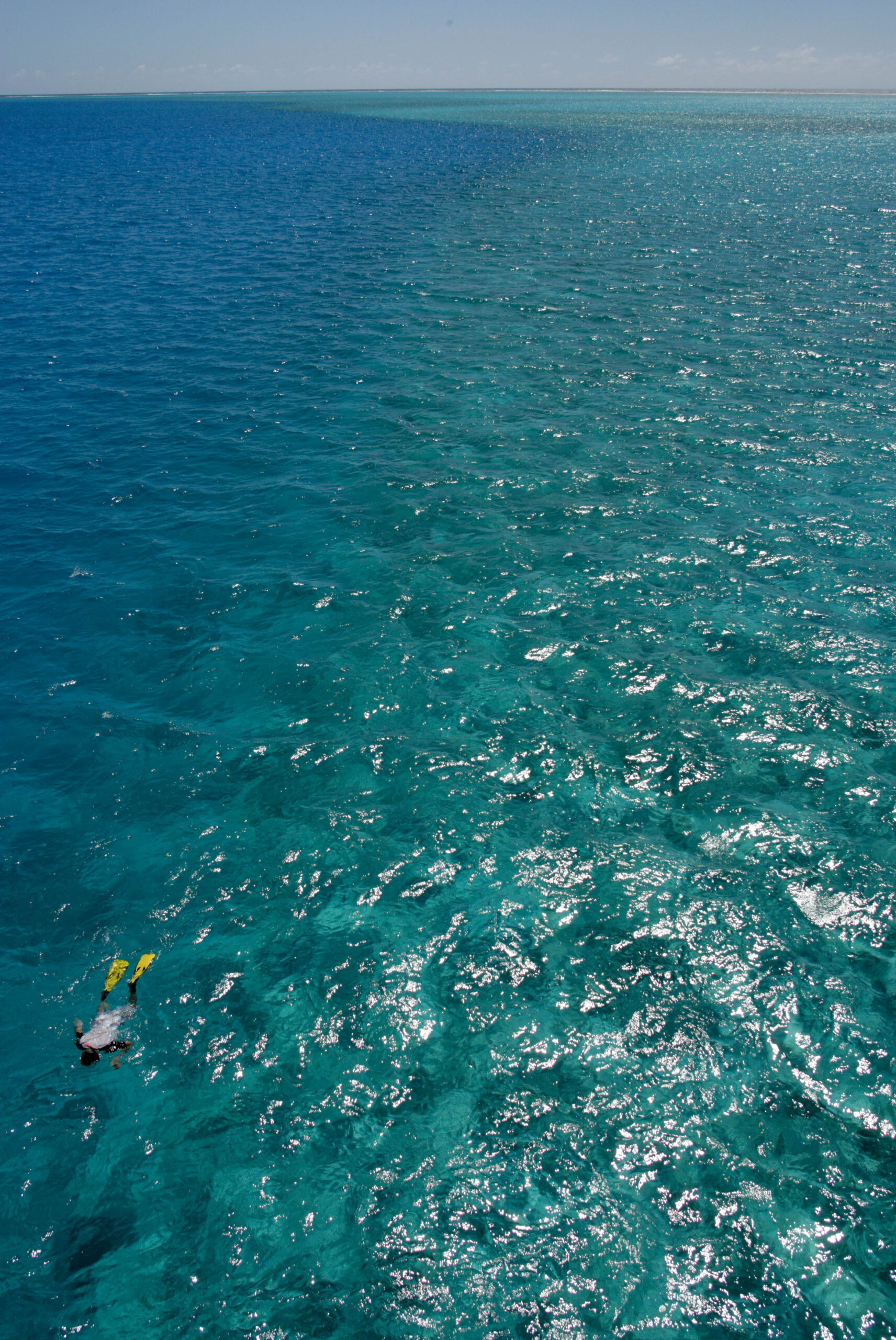
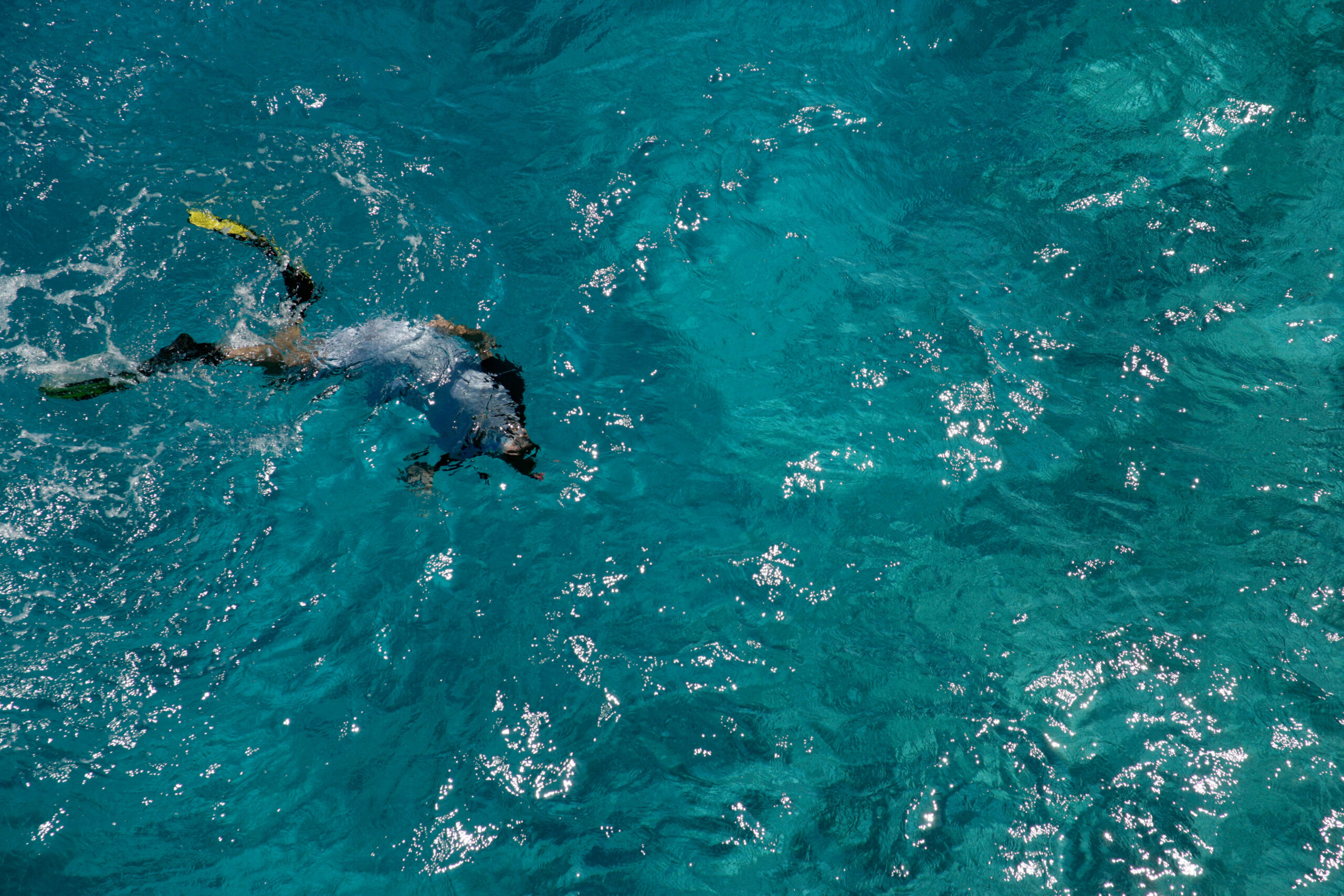
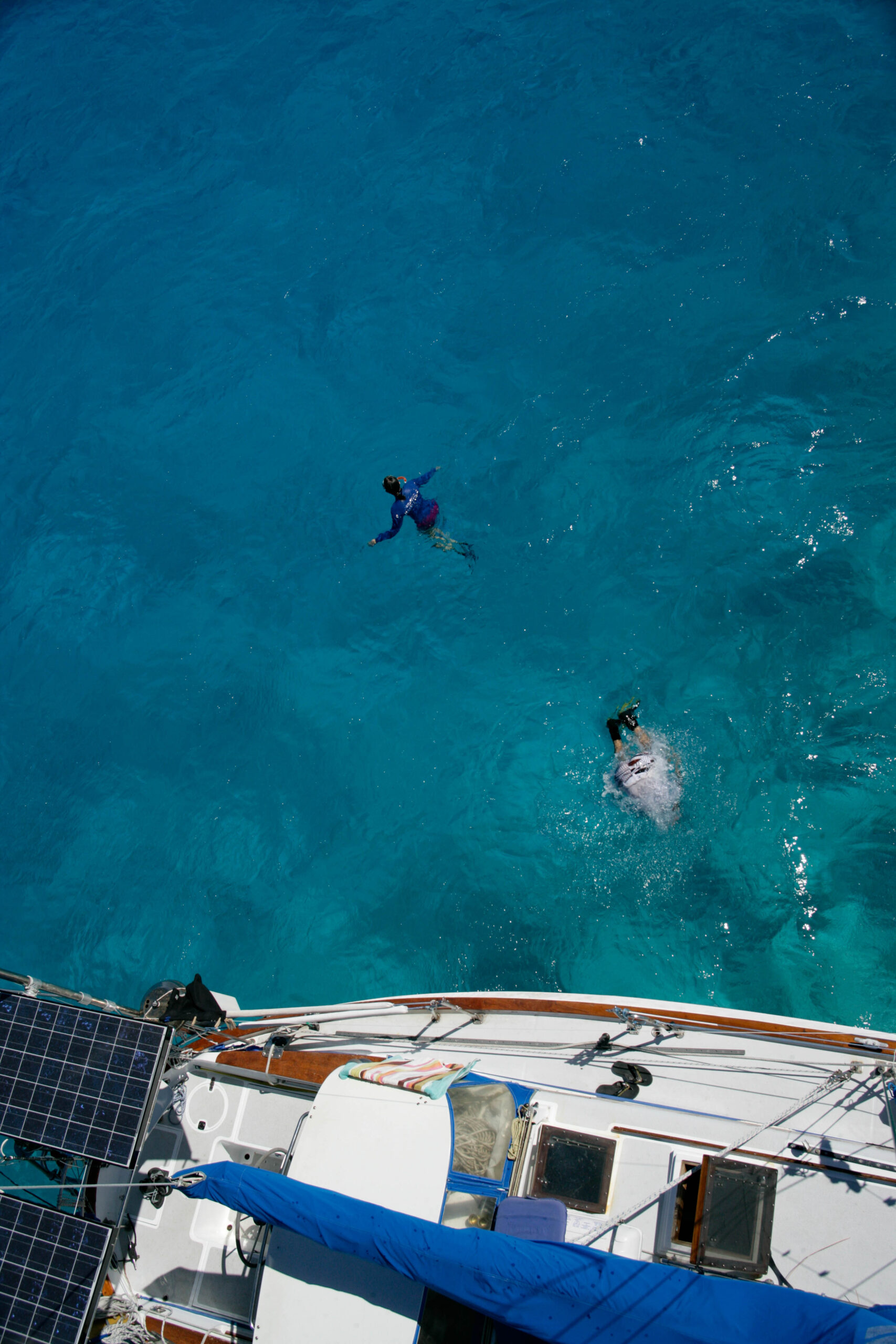
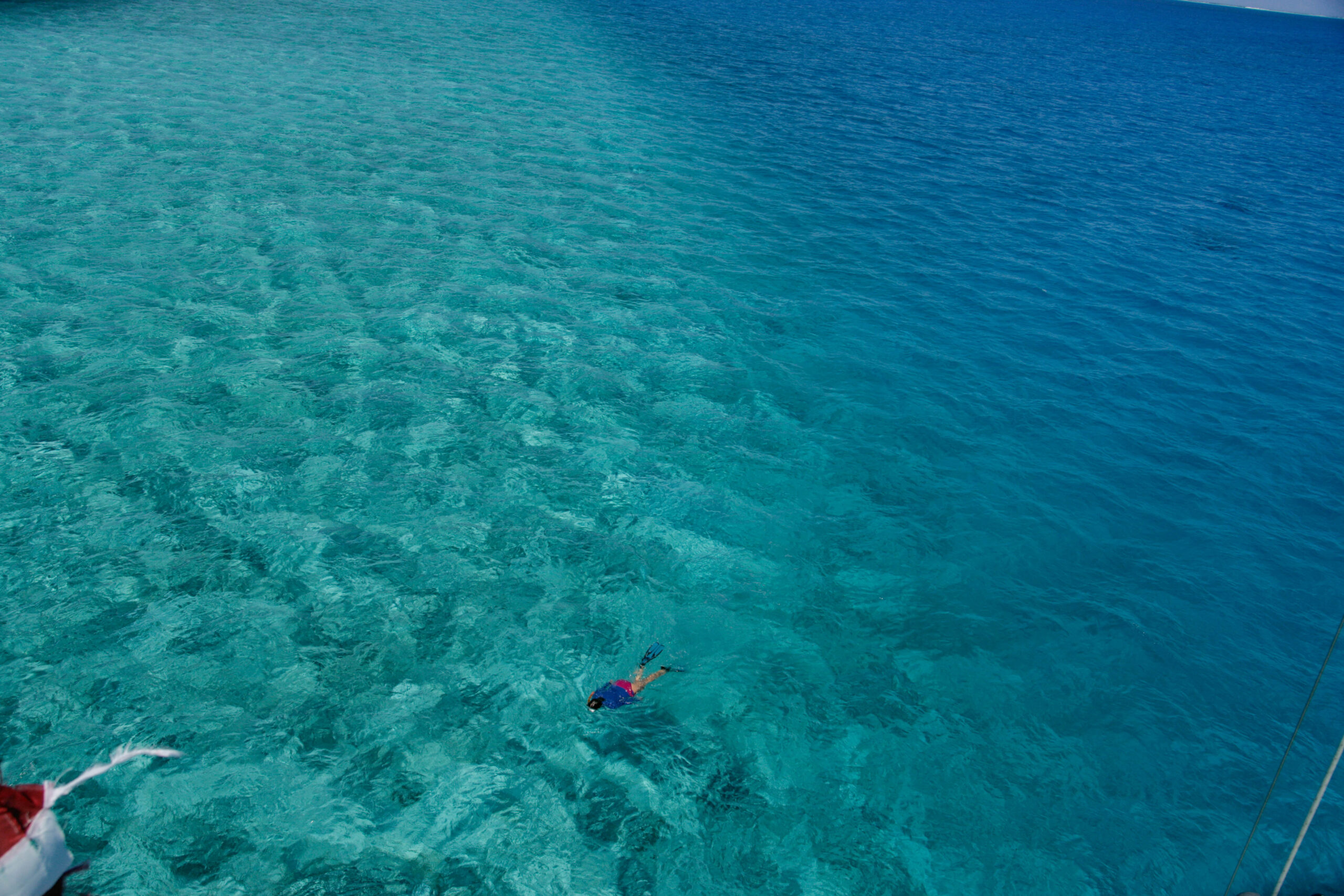
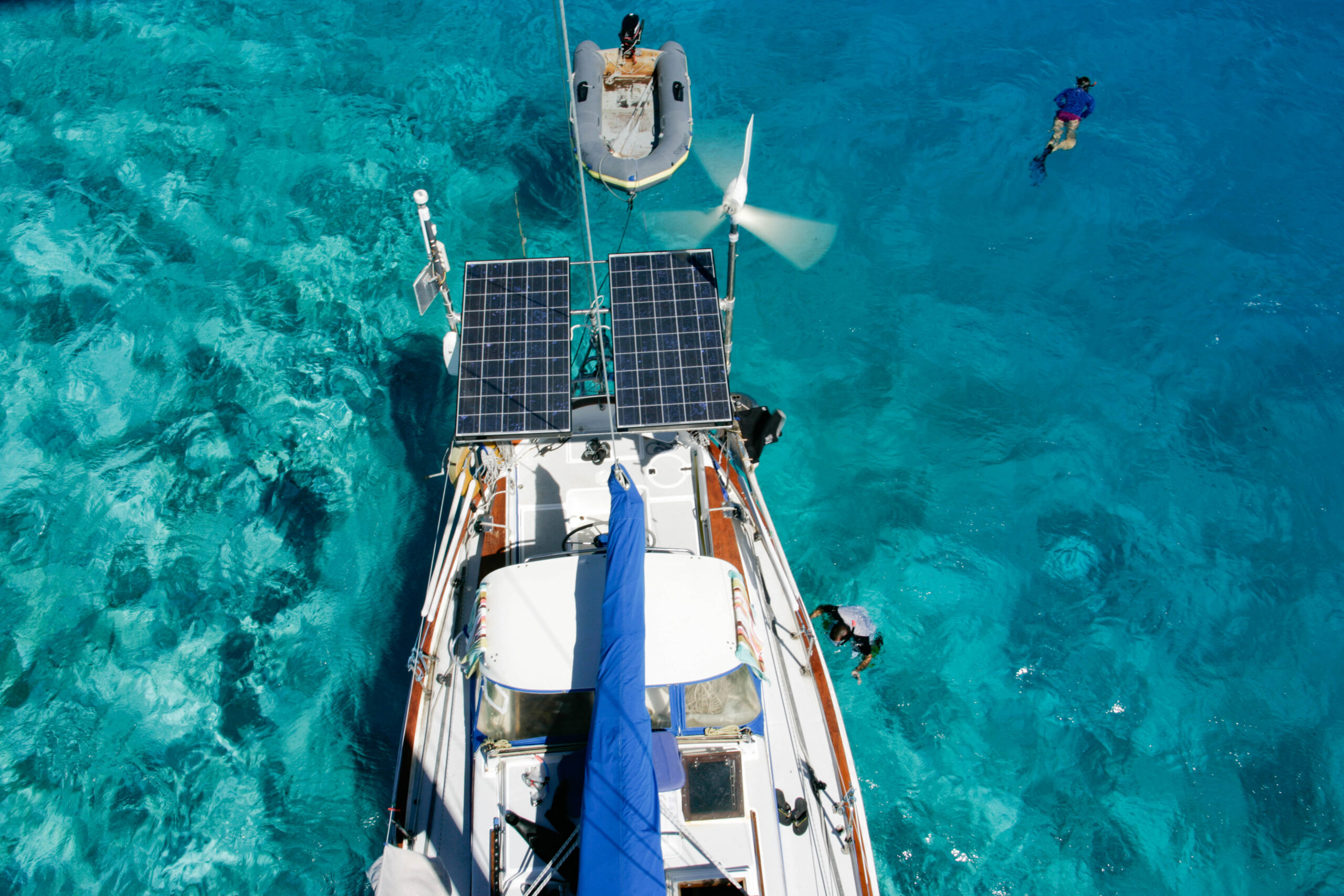
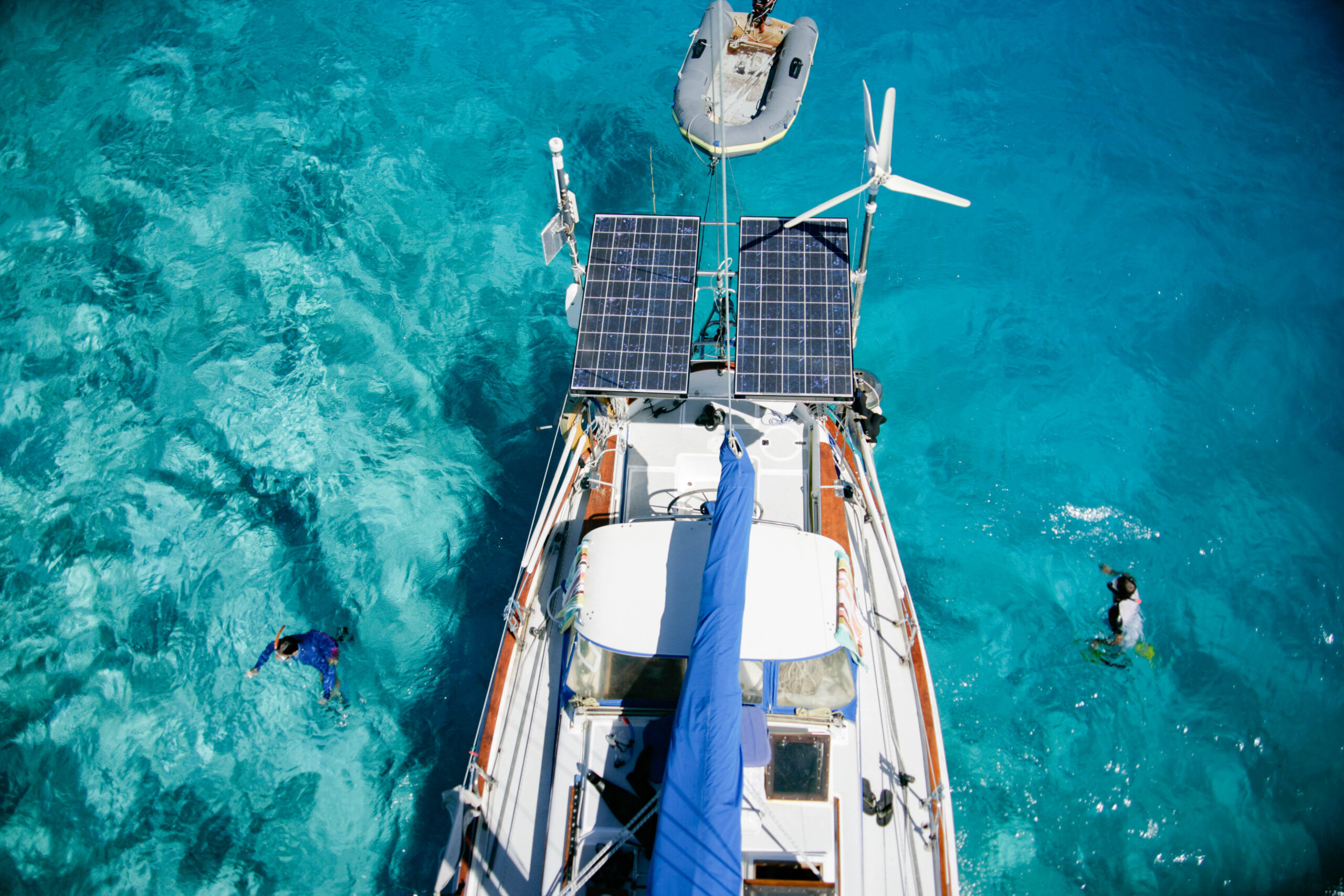
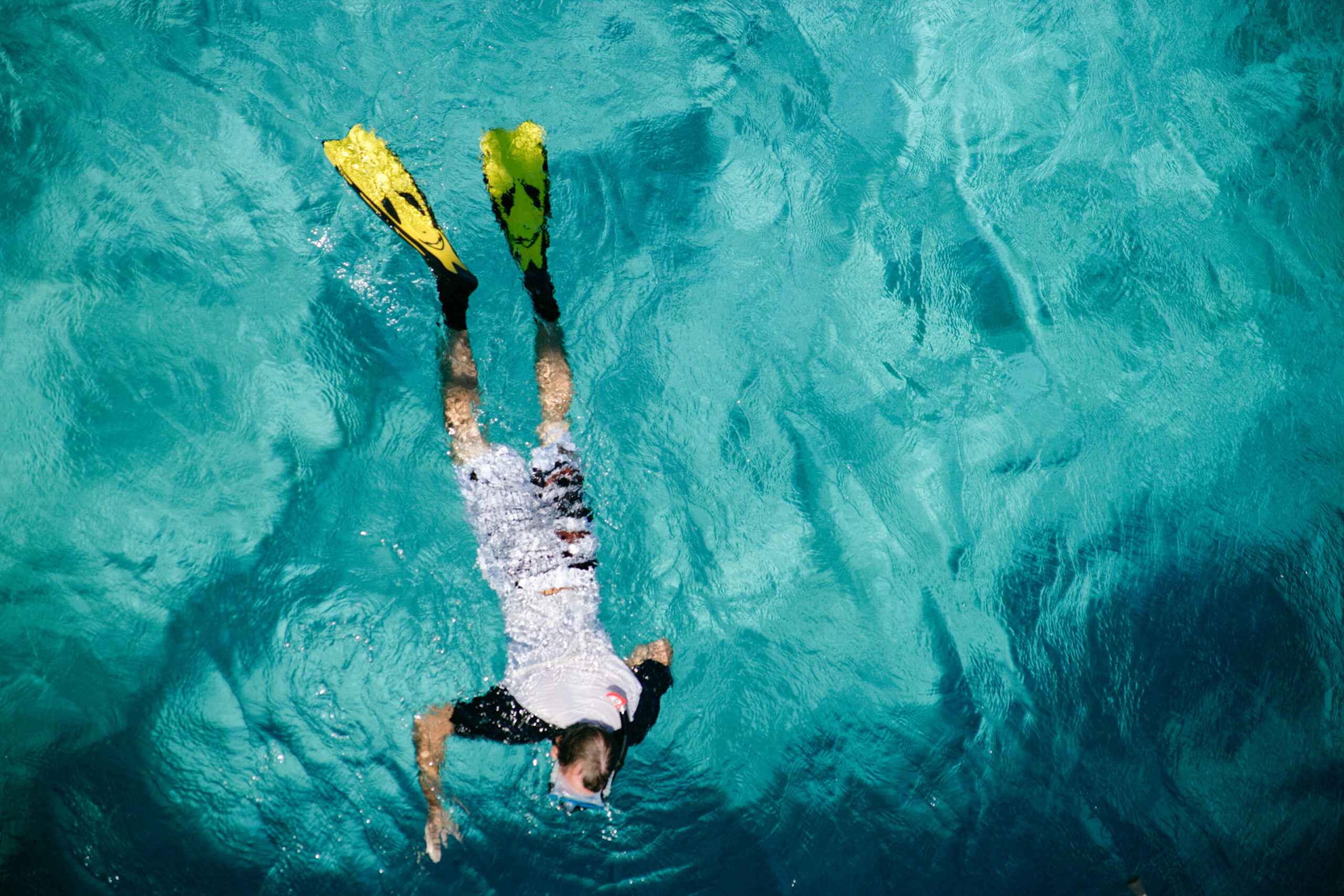
    At Beveridge Reef we took the time to anchor Jon underwater and sail past him to get some underwater video of the boat in action. We anchored and set the anchor. And we dragged jon while sailing, which made it hard for him to take steady underwater video but is still kind of neat. Once we reached the area of the passage with tons of sharks he decided to call it quits—anything dragging behind a boat becomes shark bait.

  • Snorkeling Beveridge Reef

  • Beveridge Reef

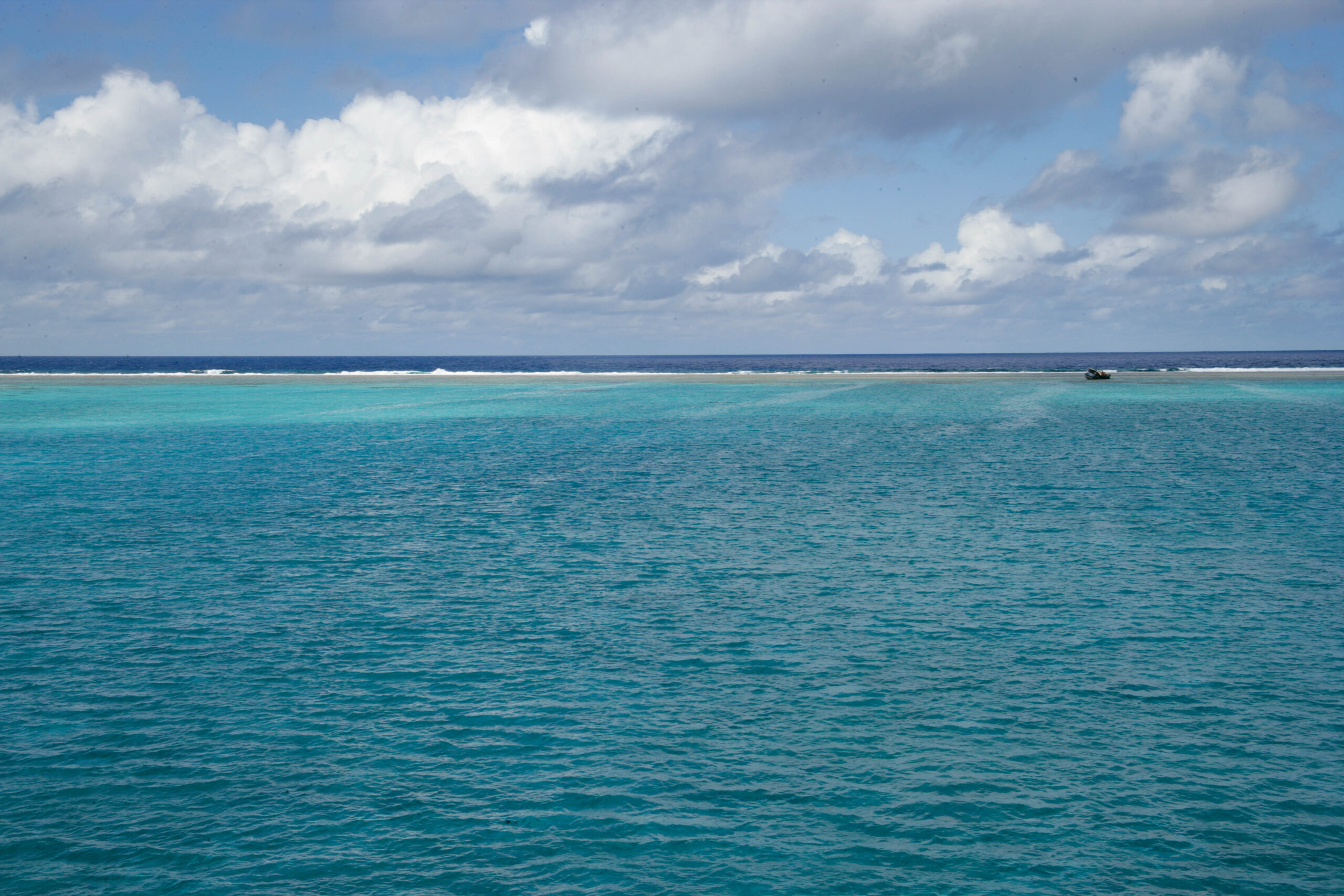
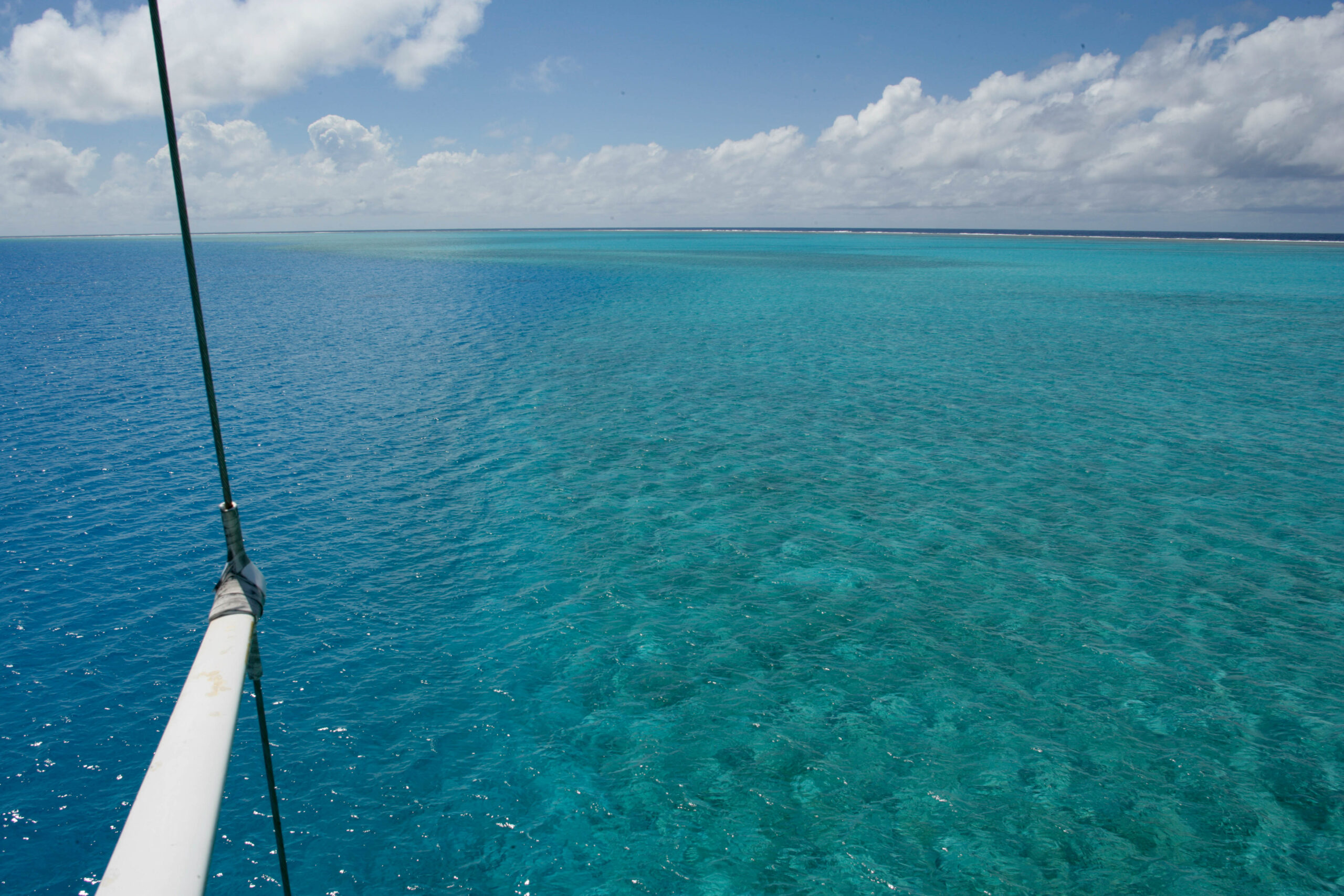
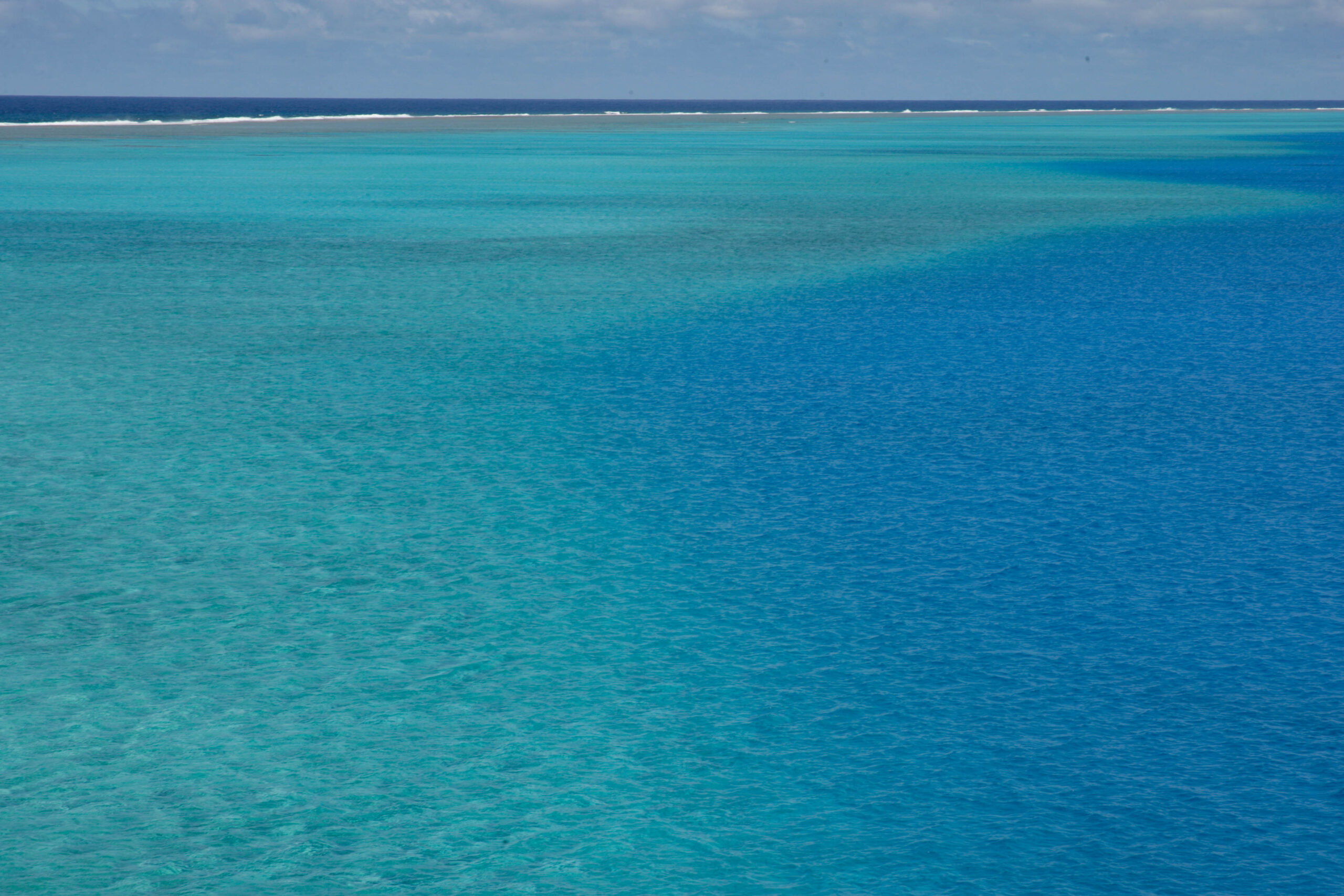
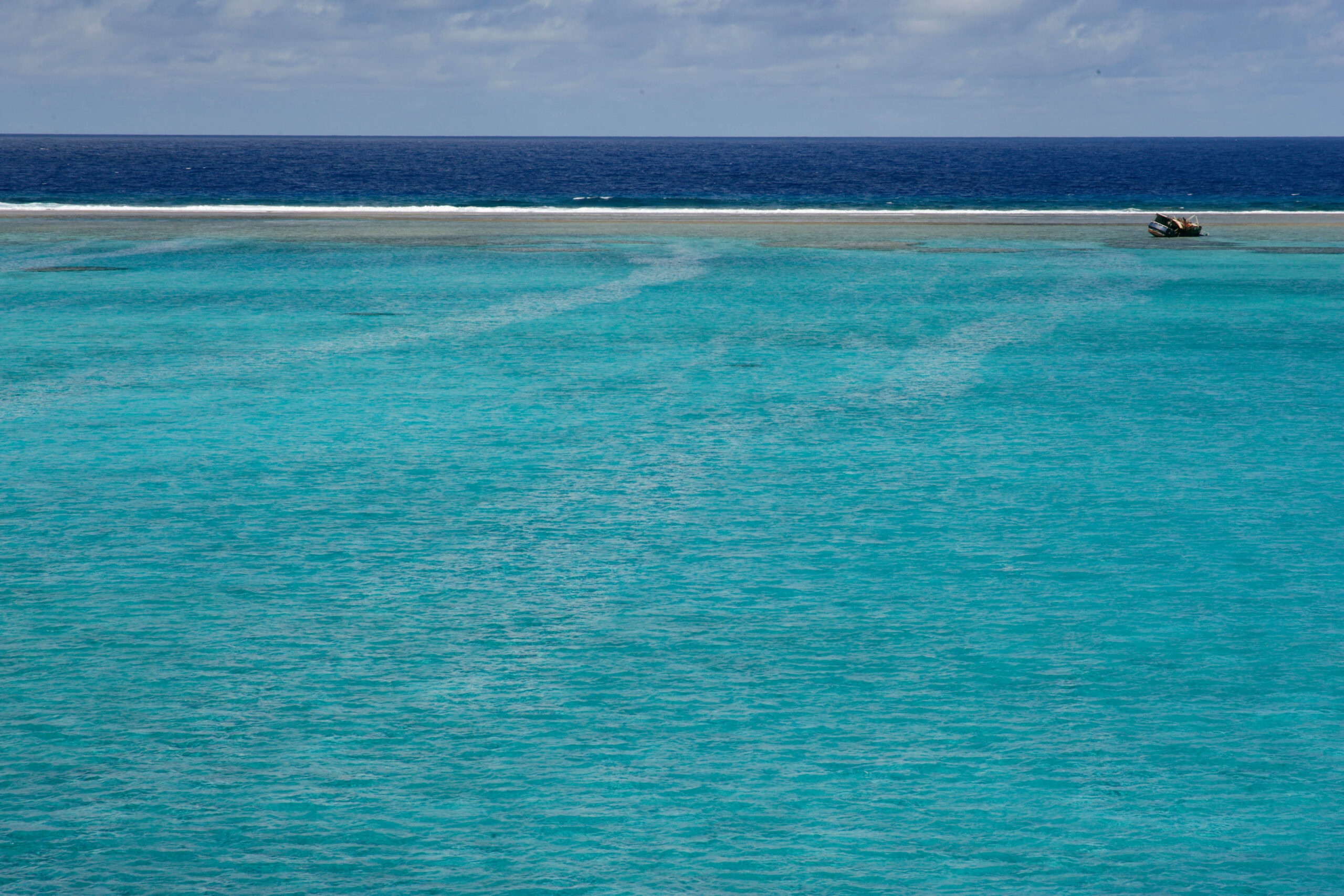
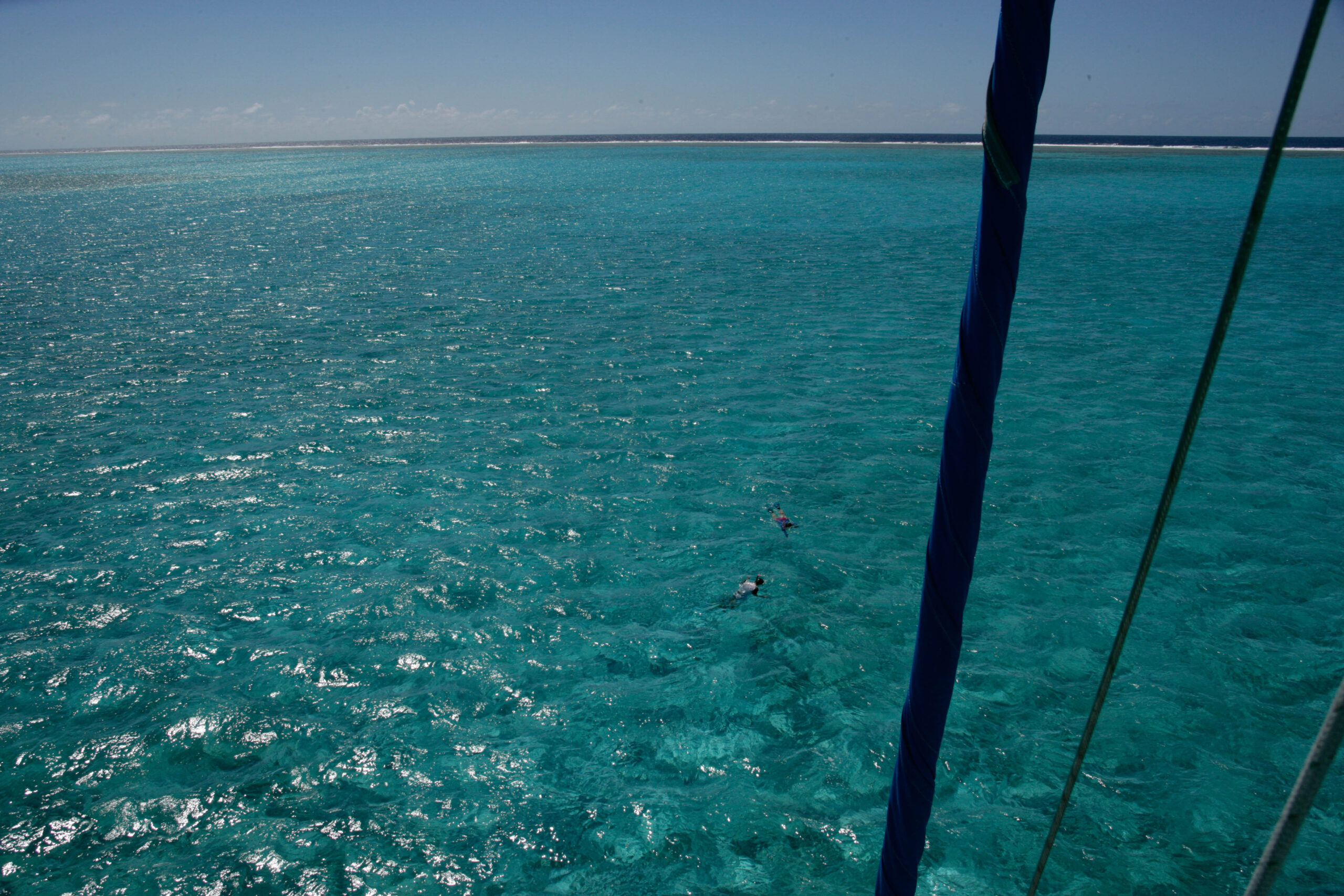
    Beveridge reef is a spot that very few people ever have the opportunity to visit. It is a large coral reef lagoon in the middle of the ocean, far from any land. At high tide, the whole thing is covered with water, so it’s as if you’re anchored in a shallow pool in the middle of the ocean. With no land, there are no buildings, no plants, no dry sand, no airstrip, no docking spot. The only people that can visit this spot are those on boats that can anchor, and with sufficiently shallow draft to enter the lagoon.

    For the first few days we were the only boat there. It was surreal, probably the most remote and isolated experience of the entire trip so far. On the last day one other vessel came in and anchored far away (the lagoon is quite large).

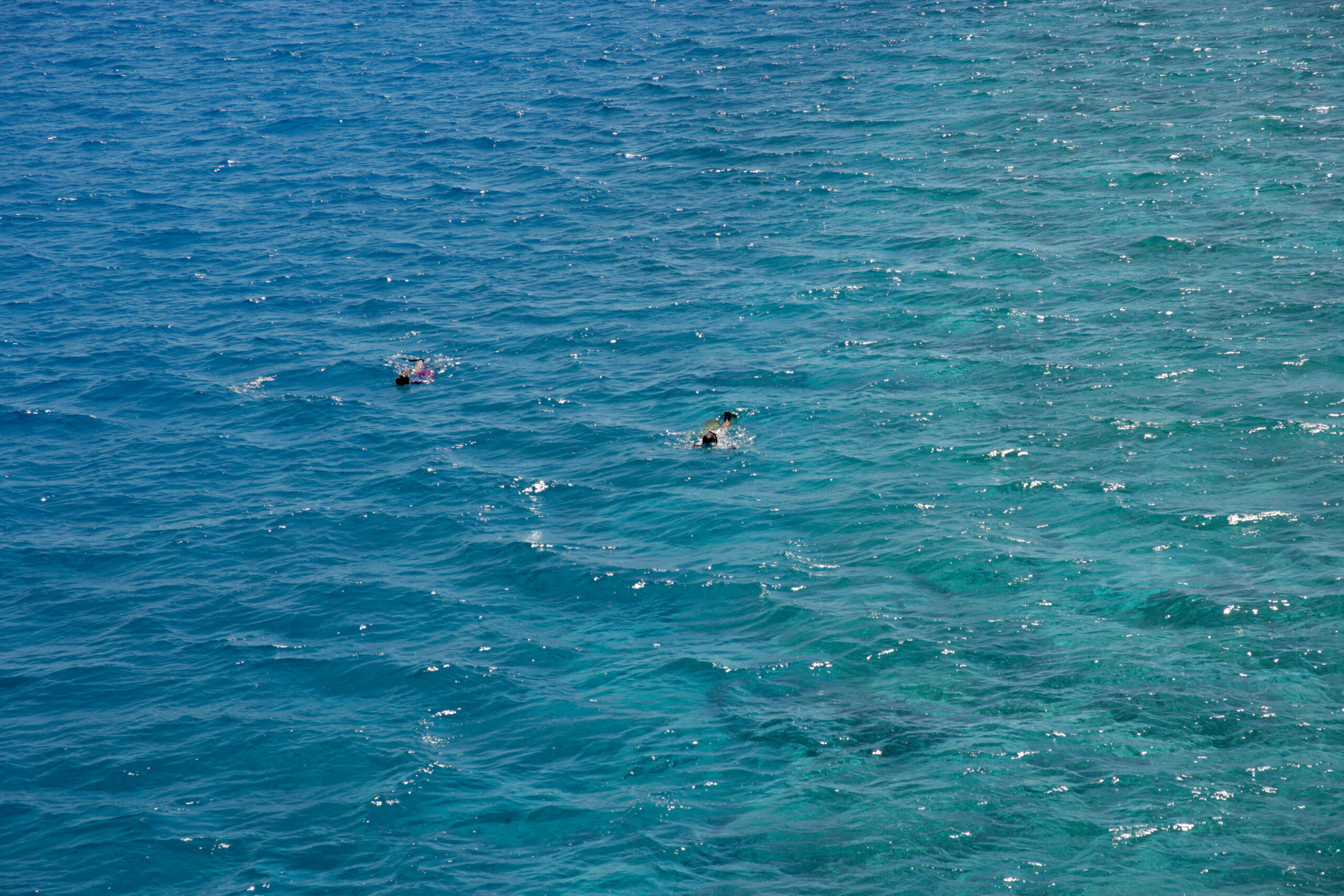
    The fish and sharks in the passage were ridiculous. Jon dove the pass while we snorkeled over him, and he was swimming with dozens (hundreds?) of sharks that didn’t stay very far away from him. Karen and I, floating above him, watched a shark approach his back to within about 6 feet, but he was turned away and didn’t see it. That was a bit unnerving. Later we heard that a month or two earlier someone was mauled by a shark in that very passage. Nowhere else have the sharks ever been an issue and this was the first story we had heard about shark troubles.

    We spent a fair bit of time snorkeling the lagoon. The keel cleared the sand by less than a foot at low tide. There was a wreck up on one side of the reef that we snorkeled to and messed about in, though it was fairly modern and just junky, rather than some sort of archaeological adventure.

    The water was as clear as anywhere we’ve been, visibility to 100 ft easily, maybe twice that.

    Karen spotted some whales out in the ocean across the reef from where we were anchored, too far to get a good look but still super cool.

  • Passage: Huahine to Beveridge Reef

  • Sleeping on passage

    (refers to events that happened August 12th – 20th)

    We are currently in the middle of an eight day passage from Huahine to Beveridge Reef.  After a three or four day stop there, we will be headed on to Tonga, requiring another three days of sailing, and then another four days of sailing to Fiji.  While on passage, we have split up the watches so that I’m on watch half the time and Matt and Karen are on watch half the time.  The reason for the seeming inequity is so that I get the experience of being on watch half the time.  So that when Matt and Karen depart, if someone else joins me, friends or crew I pick up, I have a better feel for what the passage will be like with me as captain.

    I’m on watch from 4 pm to 8 pm, midnight to 4 am, and 8 am to noon.  I’ve developed a routine for each watch, and each watch is different.  For example, on the midnight to 4 am shift, other than the required check for boats, tend to our sails, and keep us on course, about all I do is watch T.V. series on the computer.  Right now, I’m in the third season of ’24’, with Kiefer Sutherland.  Once this season is done, I’m going to start watching ‘The West Wing’, on of my all time favorite T.V. shows, which Karen’s mom brought for her.  Matt and Karen have been watching extensively and I’ve sat in on a few.  ’24’ is low brow, mindless enjoyment.  When I watch ‘The West Wing’ I actually feel like I get to have mental stimulation.

    But this post is supposed to be about sleeping.  Because when I’m not on watch, pretty much all I do is sleep.  Each off period is four hours.  I frequently cut into that period and stay on watch for thirty minutes or so.  Maybe I need to finish changing a sail, maybe I’m hanging out with Matt and Karen.  I might be finishing an episode of ’24’  So that within that four hour period, I probably get three hours of sleep.  Three hours of sleep per off-watch times three equals nine hours of sleep.  Plenty right?  It doesn’t seem that way when it only comes in those three hour chunks.  I do think though, my body has gotten more used to falling asleep when I tell it to.

    On passage, I sleep on the settees instead of my V-berth.  The V-berth, being in the very front of the boat, gets rocked up and down the most.  Matt and Karen frequently sleep on the settees as well.  They closer you are to center line on both axis of the boat the less motion you feel and so presumably more comfort.

    But are the settees particularly comfortable?

    The first issue is the width.  Each settee is two feet, six inches wide.  Do you remember the twin bed you had growing up?  This is narrower.  I like to toss and turn around a lot.   I barely have enough room when I’m by myself in a queen size bed. Two feet six inches precludes such tossing and turning.

    The next problem is the motion.  Even in a small swell of one meter, you can still feel the boat rocking around.  Imagine lying in a hammock with an evil child pushing you around.  She rocks the hammock gently back and forth, back and forth, through a larger angle than you might like, but it’s O.K.  Then sometimes the evil child will jerk in one direction or another as a particularly different wave in either size or direction hits the boat.

    The motion is insidious.

    Sometimes we have lee cloths up.  Lee clothes are a netting you can raise on one side of the settee so that you don’t roll off the settee and onto the floor.  These only serve as a reminder that the boat is pitching about even more wildly.  With the lee cloth up it looks like you are in a cocoon.

    You can move the back cushions of the settee if you’d like.  This gives an extra three to four inches of width.  But then you are simply rolling into wood cabinets from time to time.

    Then there’s the noise.  Sails popping.  Lines banging the mast.  The main snapping against the shrouds. Water rushing by.  Hanging nets holding various foodstuffs lightly swaying back and forth hitting the cabin top.  Creaks.  Groans.  Cans of food sliding and banging against each other.  Is this an insane asylum?  Or should I be put in one because I hear all the noise?  I even wear headphones, though I keep the music so low to still hear everything.  The sweet melodic sounds of Sarah McLachlan are an engram for my brain to fall asleep but she does not cover up her new accompanist: boat noise.

    To top it off, sheets feel damp/dank.  Airflow is not superb.  And if you are Matt and Karen, you have to worry about being doused with water, full buckets of water through hatches or rouge waves that break over the boat into the cockpit.  It has not yet happened to me.  I am simply, and only, lucky.  A drenching is, I’m sure, somewhere in my future.

    So I sleep between 9 and 11 hours each day.  I still feel lethargic. I am ready to get to Fiji and for passages to be over for a while.

  • Huahine

    Finally, this is a current post, written and posted in the present right here now. I wanted to bring everyone up to date with our wanderings, right before we drop off the map again for another couple of long passages. We need to be in Australia by November to avoid the cyclone (hurricane) season down here. We have been in the south pacific for three months already; we have less than three months remaining. Examine on the map how far we’ve come in three months and how far we have yet to go, and you’ll see that we really have to get our act in gear.

    From Huahine, we intend to sail in more or less a straight line to Tonga, with three possible stops on the list: Palmerston atoll, Beveridge Reef, and Niue. We may stop at all three or none of these. Palmerston is in the middle of nowhere and has only a handful of people living on it. Beveridge reef is even more remote, and unique: it doesn’t actually have any dry land whatsoever–it’s a reef that rises straight out of the ocean floor and comes within a few feet of the surface. It would be surreal to anchor on a reef in the middle of the ocean, with no land in sight for hundreds of miles (this will be possible if the weather cooperates). Niue is large enough to have some civilization there, a town and supplies and maybe even internet. But who knows, we may pass up all three and just pop back up on the map in Tonga, 1300 miles west of here. Like I said, we need to put some miles under the keel prontospeed.

    We’ve had lots of rain since we arrived here in Huahine. Refreshingly, the island is less developed (i.e. less touristy) than either Tahiti or Moorea. We picked up our last remaining provisions for the upcoming passages, and need only a jerry-can worth of gas for the outboard before we’re all set to go. We’ll probably get out of here in two or three days, weather permitting.

    Unrelatedly, my cousin Derek is getting married today, perhaps this very moment, and I feel strange (and somewhat guilty) not to be back home attending. I wish him the very best–congratulations to Derek & Lauren!

  • New floors

    (refers to events that happened August 2nd – 6th)

    After spending eight days just outside of Papeete, we were ready to move on.  The anchorage we were in had warm showers, but this was about the only up side.  The water was dark, cloudy and stank with sewage from runoff from Papeete.  You could almost see the rate at which stuff grew on the underside of our boat.

    Matt and I sailed the boat over to Moorea, a short 25 mile sail.  He then went off to meet his and Karen’s moms who were visiting for a week.  Matt and Karen would stay that night at the hotel and the subsequent three or four nights.  I had the boat to myself!! Let the party start!

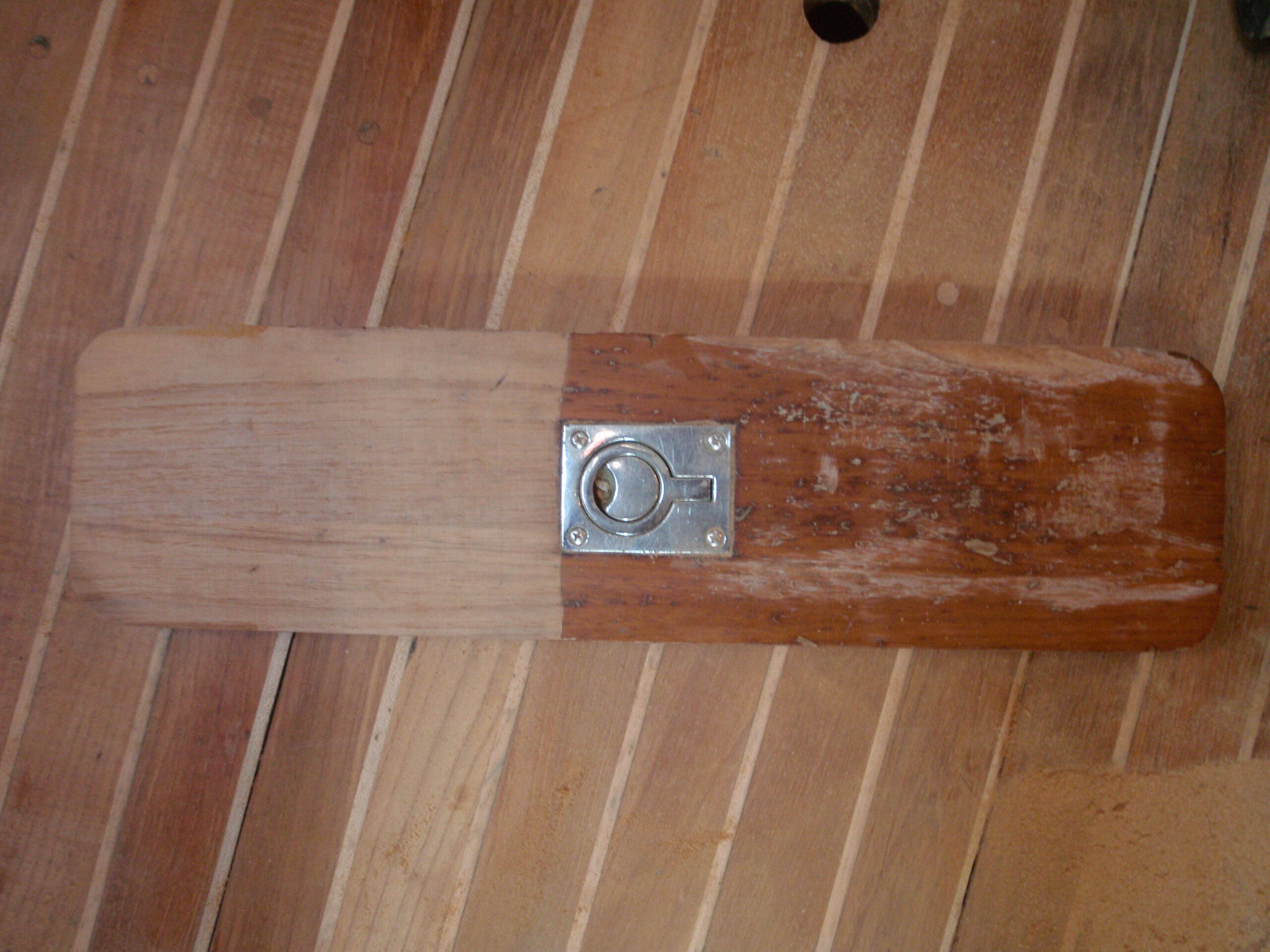
    Before the party could start though, Matt had given me a list of jobs to accomplish.  The list had one item on it.  Redo the wooden floors inside the boat.

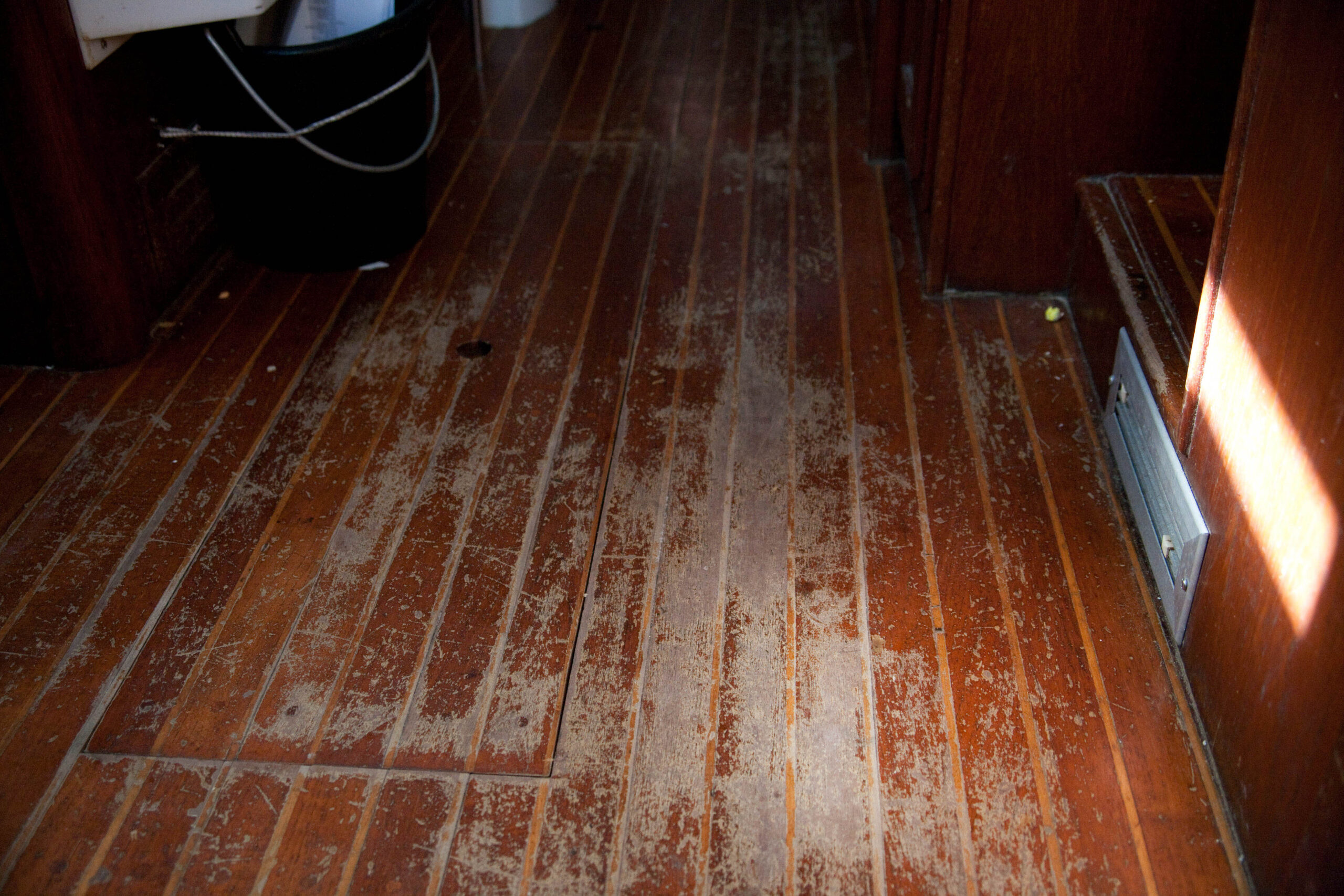
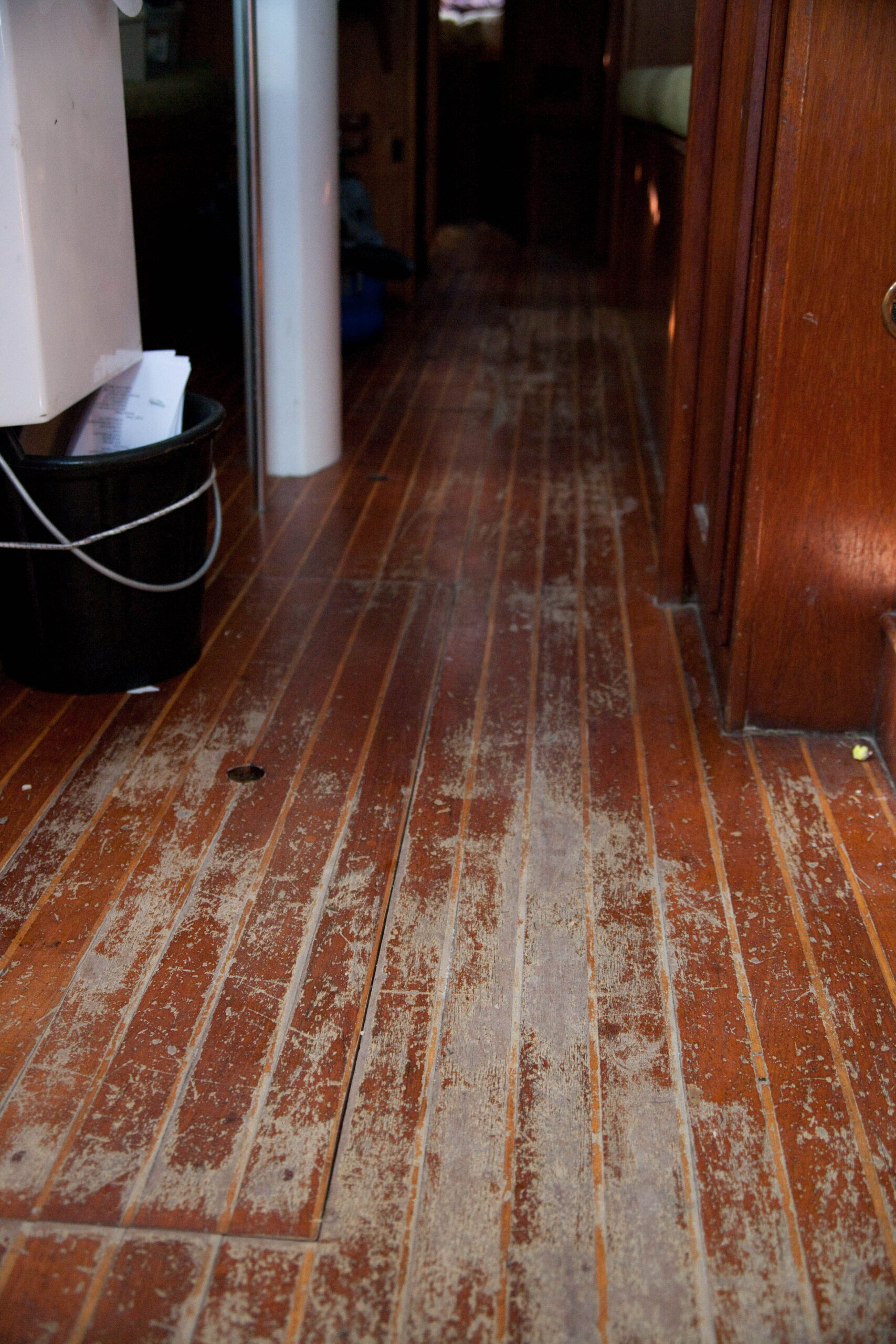
    O.K., that’s melodramatic.  Matt and I discussed and we both wanted a nice newly polyurethaned floor.  Matt felt any more wear in certain spots would cause permanent damage.  It would look great and be a huge bang for our buck in terms of enjoyment and resell value.

    Step one: Scrape.  Using a scraper take off most of the old polyurethane over the entire floor.  Time required: 6 hours.  Sweat level: high.  Battery power requirements: none.

    Step two:  Use Orbital Sander on 80 grit over half of the floor.  Time required: 12 hours.  Sweat level: moderate to high.  Battery power requirements: moderate.

    Step three:  Use Belt Sander with vacuum attached over entire floor.  Time required: 5 hours.  Sweat level: low.  Battery power requirements: enormous.

    Step three should have been step one and would have saved the time required to do step one and step two.  But Matt had initially suggested the scraper and orbital sander route.  After a couple of days of this, I met up with Matt, described the progress, and realized the belt sander was the way to go.  That it took three days of work before I made the switch is a testament to some stubbornness and my oft detailed lack of handiness experience.

    Step four: Redo entire floor with Orbital Sander on 80 grit.  Time required: 6 hours.  Sweat level: moderate. Battery power requirements: moderate.

    Step five: Use Fein tool with triangular sander tool to get into the corners and edges.  Time required: 3 hours.  Sweat level: moderate.  Battery power requirements: low.  Frustration level:  Enormous.

    The Fein tool is a beautiful instrument, but this was not its calling.  The sandpaper we had for the Fein tool gummed up quickly, in about 5 minutes, and would then need to be changed.  Extraordinarily frustrating.

    Step six:  Entire floor with Orbital Sander on 200 grit.  Time required: 4 hours.  Sweat level: moderate. Battery power requirements: moderate.

    The floor was now bare wood, light and baby bottom smooth.  It was impressive to run my hand across after I had used the belt sander and think ‘oh that’s pretty smooth.’   Then after the 80 grit orbital sander was used, I’d think, ‘wow, THAT’s smooth.’ Finally, after the 200 grit sand paper, I was thinking, ‘This is better than the sexiest pair of smooth woman’s legs I’ve ever felt.’  That’s not true, but you get the point.

    Step seven: clean.  Time required: 2 hours.  Sweat level: low. Battery power requirements: none.  Frustration level: high.

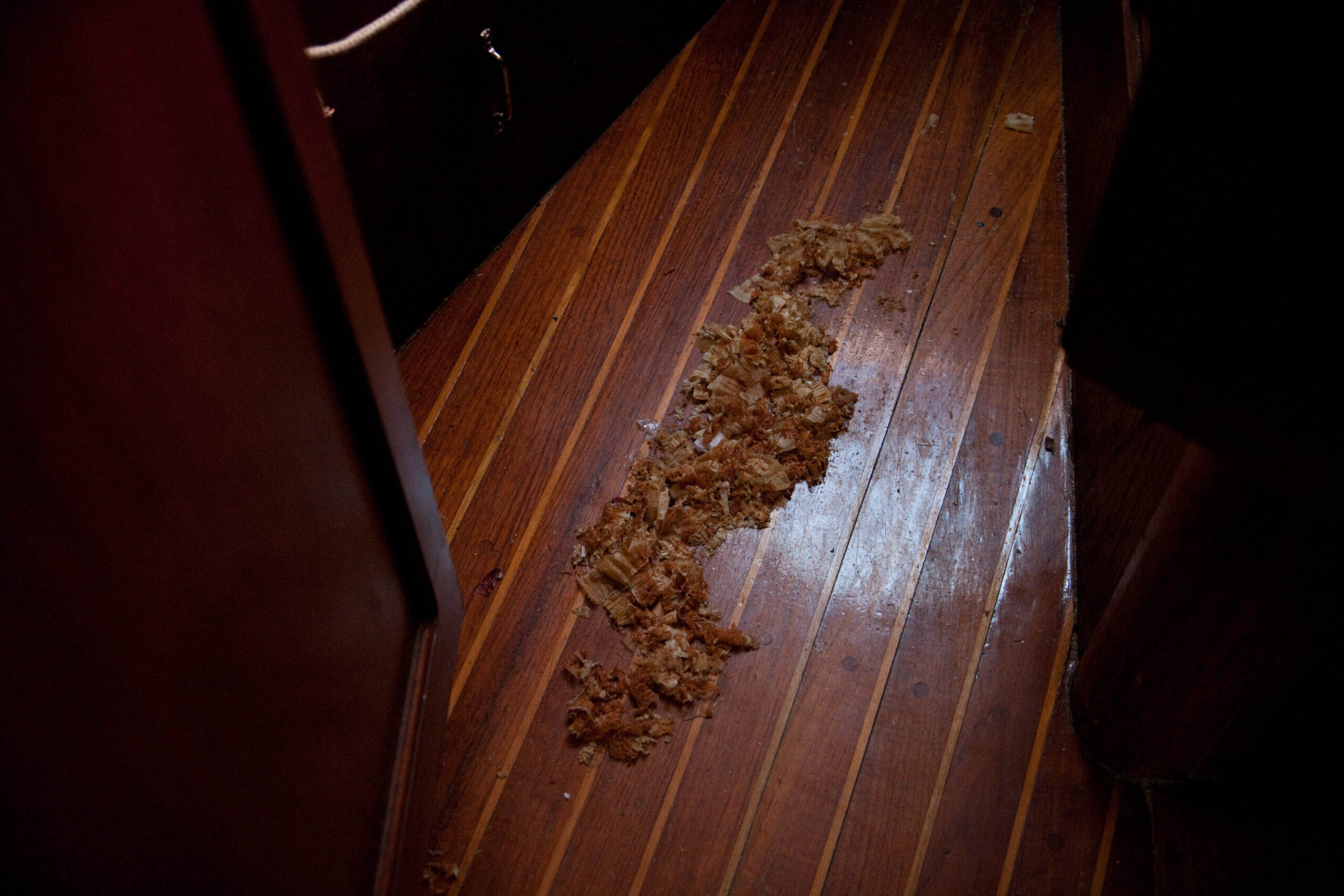
    There was now sawdust everywhere.  I had failed to use the vacuum attachment in steps two and four.  This was a colossal mistake.  Sawdust was everywhere.  I had taped off Matt and Karen’s bedroom, but everywhere else had a thin to thick layer of sawdust.  Before laying down layers of polyurethane, which if the the sawdust got airborne and settled onto, would hold it fast like fly-stick paper, the boat needed to be cleaned.  I got to probably 90% of it.  Karen, bless her heart, spent an additional few hours cleaning up my mess a week later, getting to all the more smaller nooks and crannies of the boat.  A month later there is still sawdust visible in a myriad of places.

    Step eight: wipe down floor with rubbing alcohol to clean.  Time required: 3 hours.

    Step nine: repeat.  I went through six rags coating them in sawdust that had settled on the floor.

    Step ten:  Finally the first layer of polyurethane was ready to be applied.   Time required: 2 hours. Brain cells killed:  some.  Satisfaction level: high.  I wore a respirator while applying because the polyurethane has a terrible headache inducing odor that forced me to sleep outside that night.  This step, by the way, was finished after a 16 hour work day ending at 4 am.

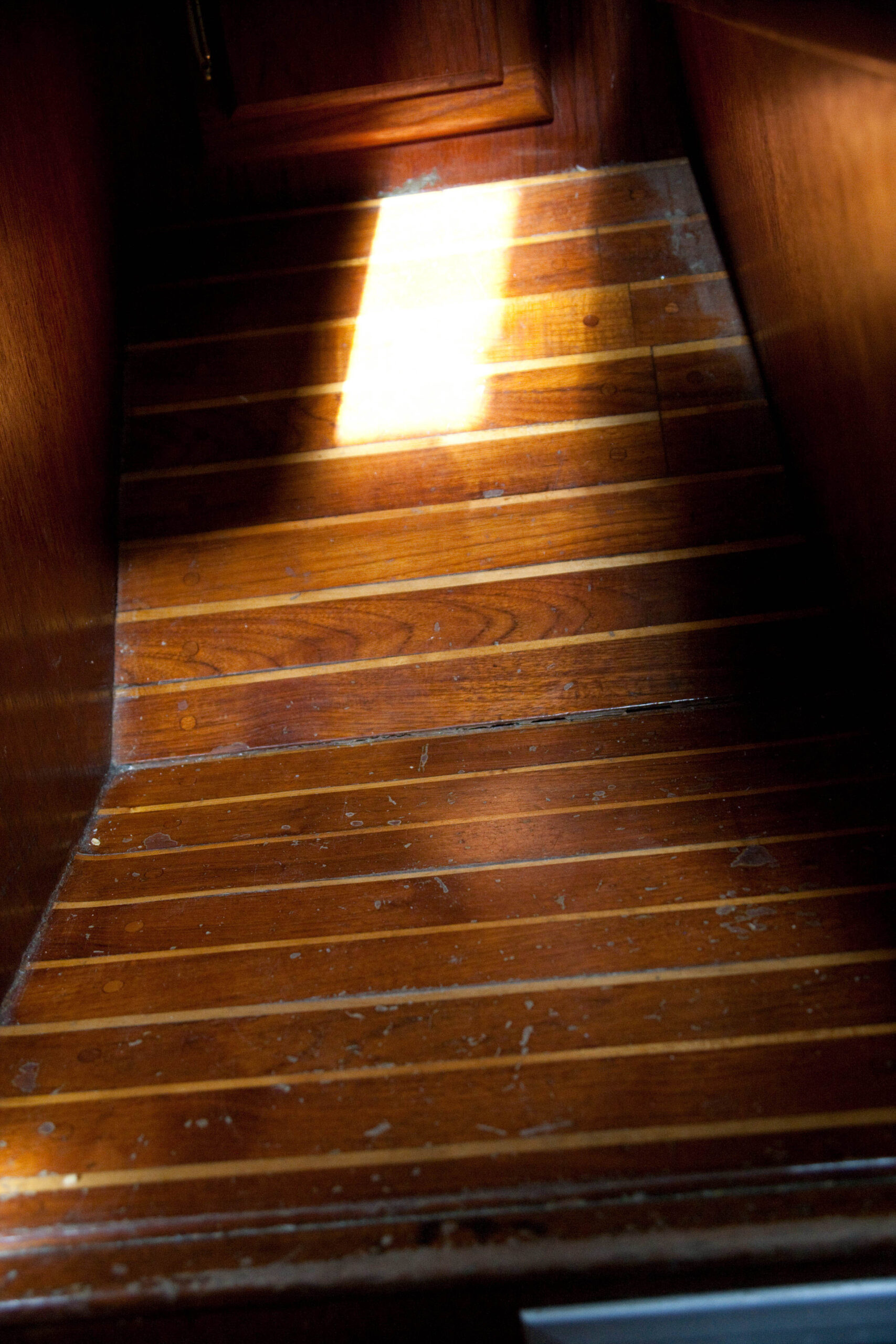
    Step eleven:  Wake up in the morning and bask in the glory of a beautiful floor.  Take pictures of your exquisite work.  Drink multiple beers in the morning toasting your success.  Then prepare for another coat of polyurethane.  The directions say to apply two coats.  Matt, in his infinite wisdom, and constant striving for anal perfection, wants four.  (In his defense, in hind sight, each layer was necessary and improved the floor markedly)

    Step twelve: Lightly sand with the orbital attached to vacuum.  Wipe down with rubbing alcohol to clean.  Time required: 2 hours.  Battery power requirements: colossal.  It will be necessary to run the engine in order to charge the batteries.  This is the first time EVER this has been necessary.

    Step thirteen:  Next layer of polyurethane.  Time required: 2 hours.  This time making sure, once an area is covered in poly, to ever so gently run the brush across the area.  Like tickling someone with a feather…

    Step fourteen through nineteen: Repeat steps eleven through thirteen twice more.

    A week worth of work later, and now we have a beautiful floor.
  • Champagne and dancing at Moorea

    Matt and Karen are back on the boat.

  • Moms visit Moorea

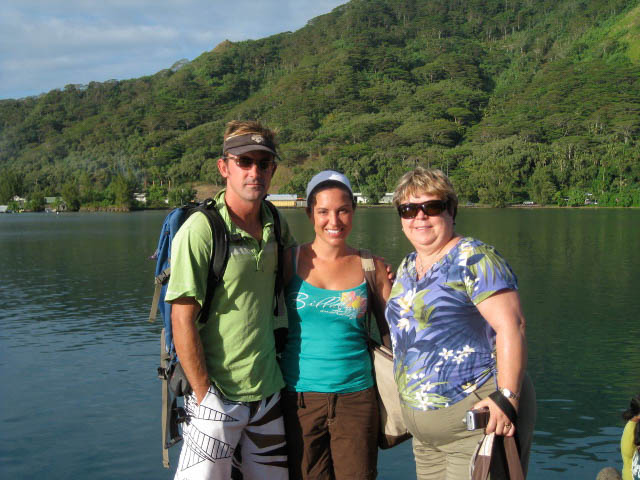
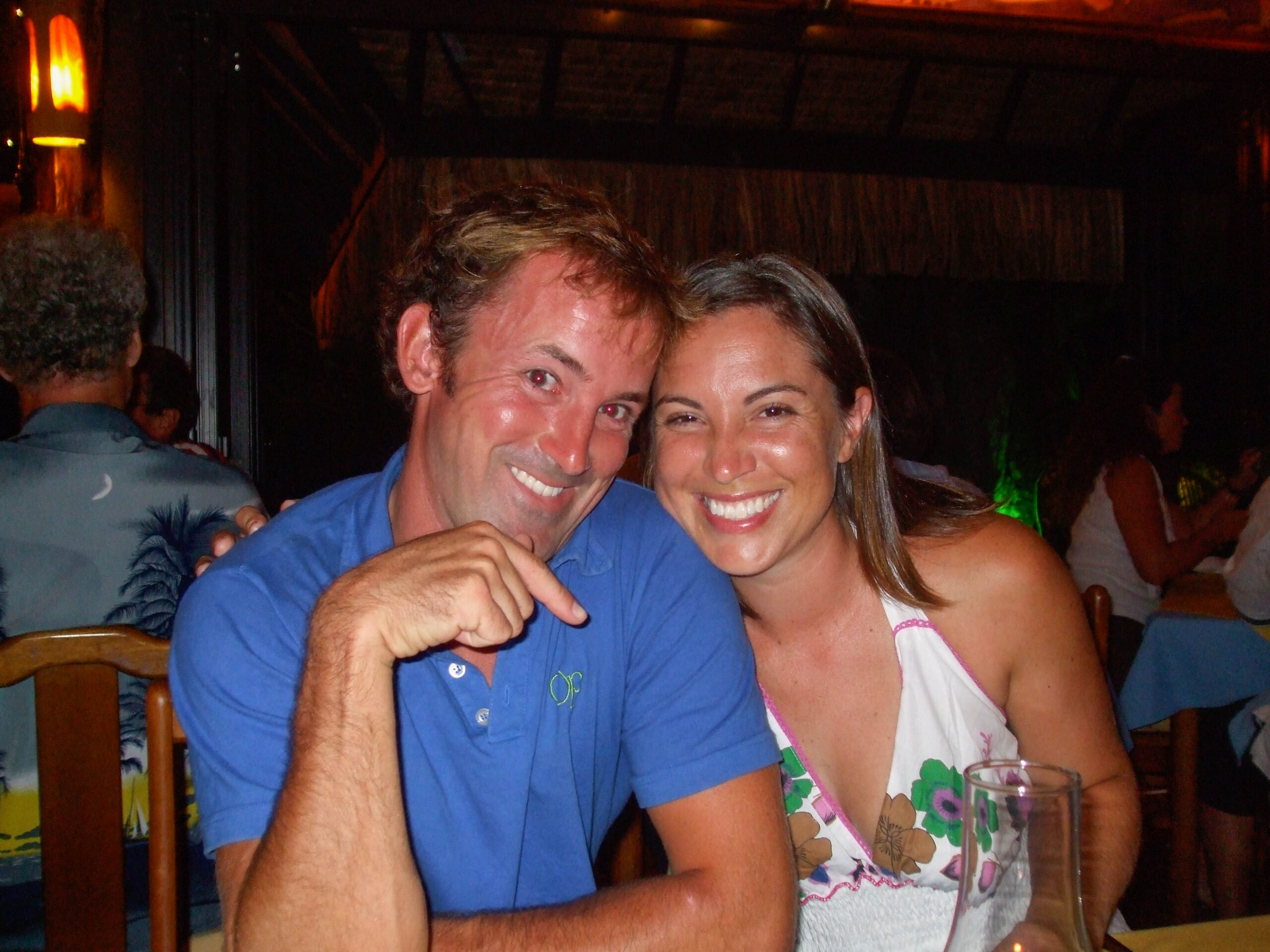
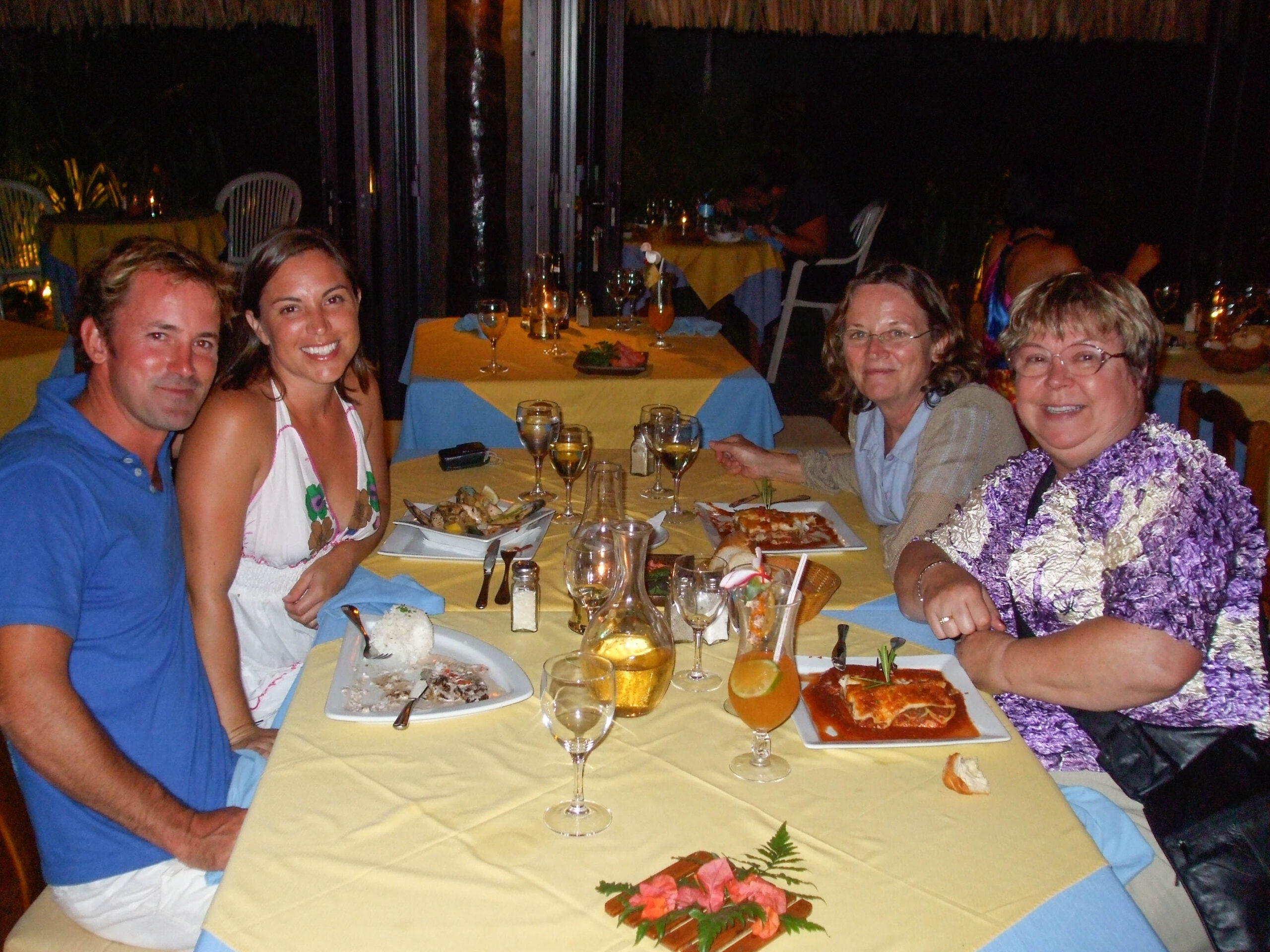
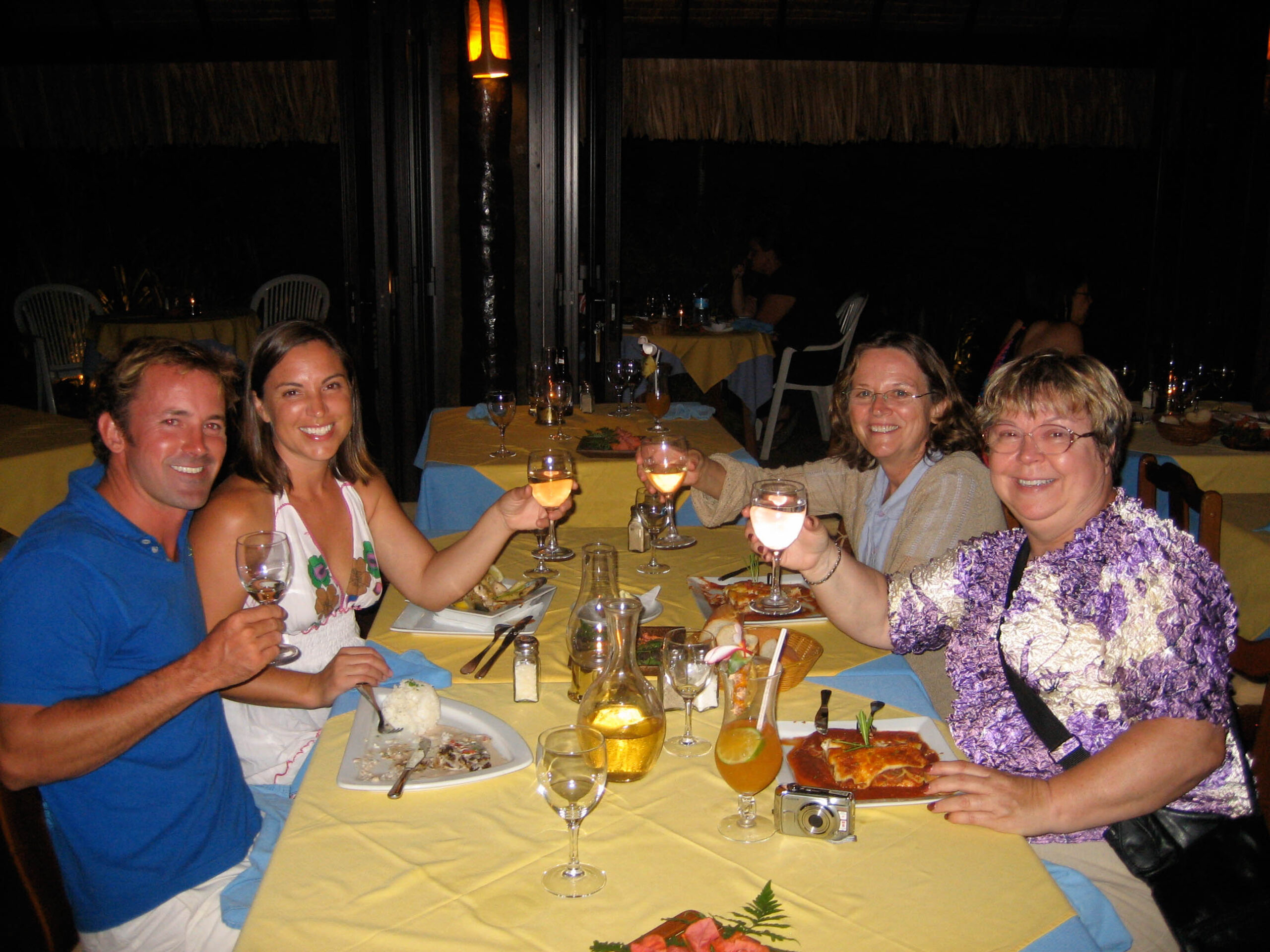
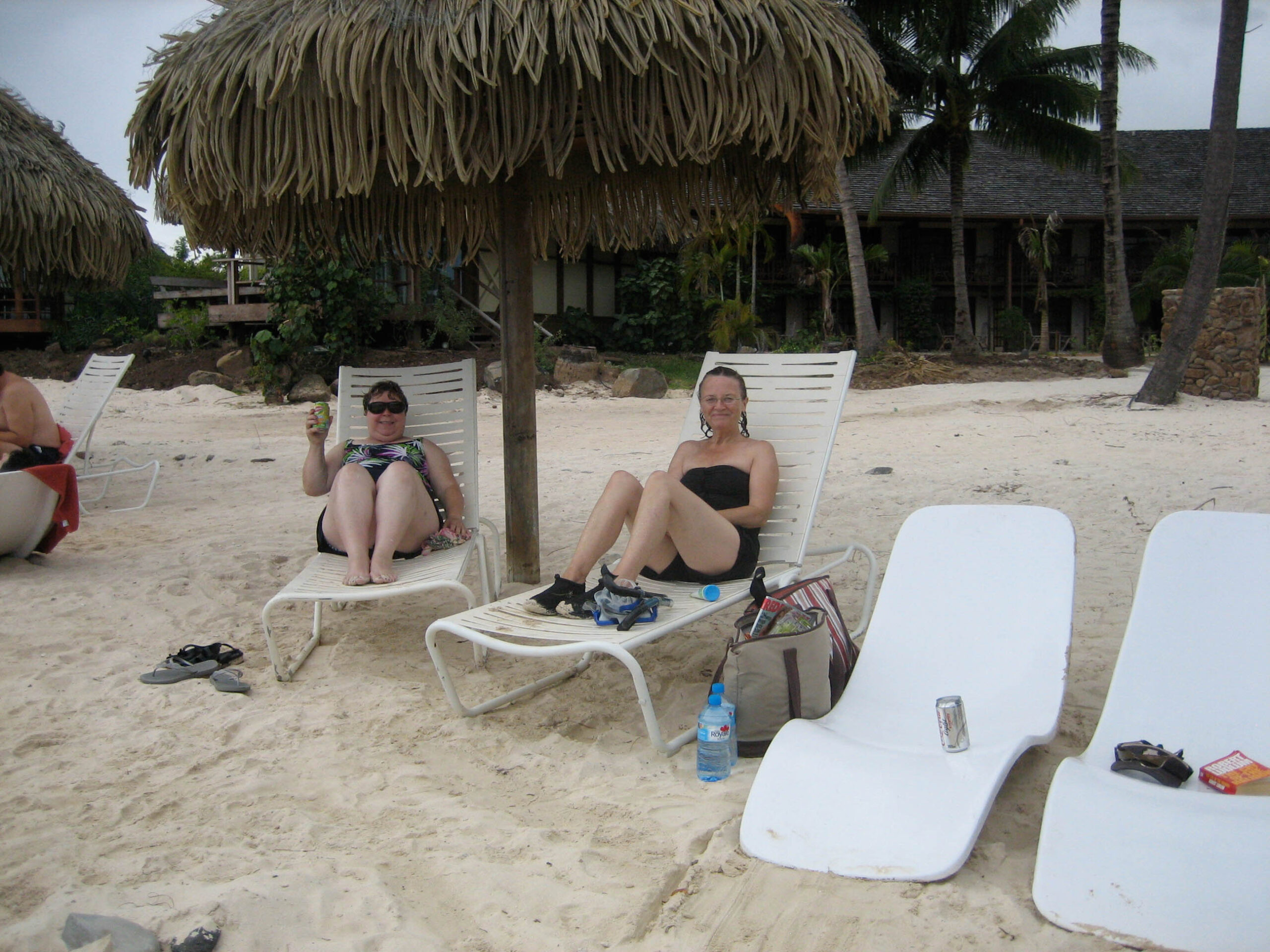
    Karen’s mom and my mom booked a vacation together to come visit us.  I love my mom and I love Karen and now I love Karen’s mom and so I’m glad they came halfway around the world to visit us. Thanks moms.

    They flew into Tahiti and spent the night outside of Papaeete; the next day Karen accompanied them across to Moorea on the ferry while Jon and I sailed the boat across.

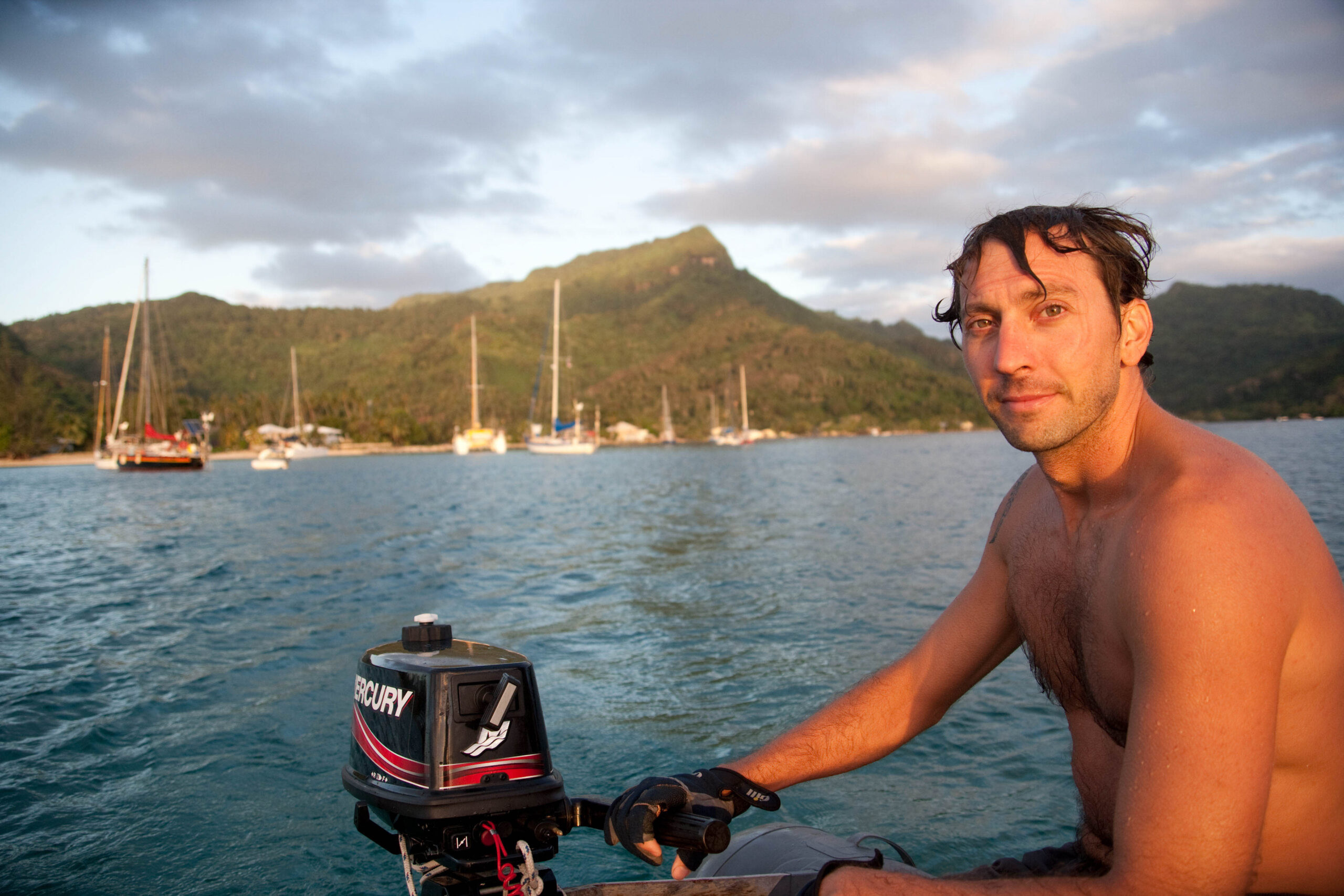
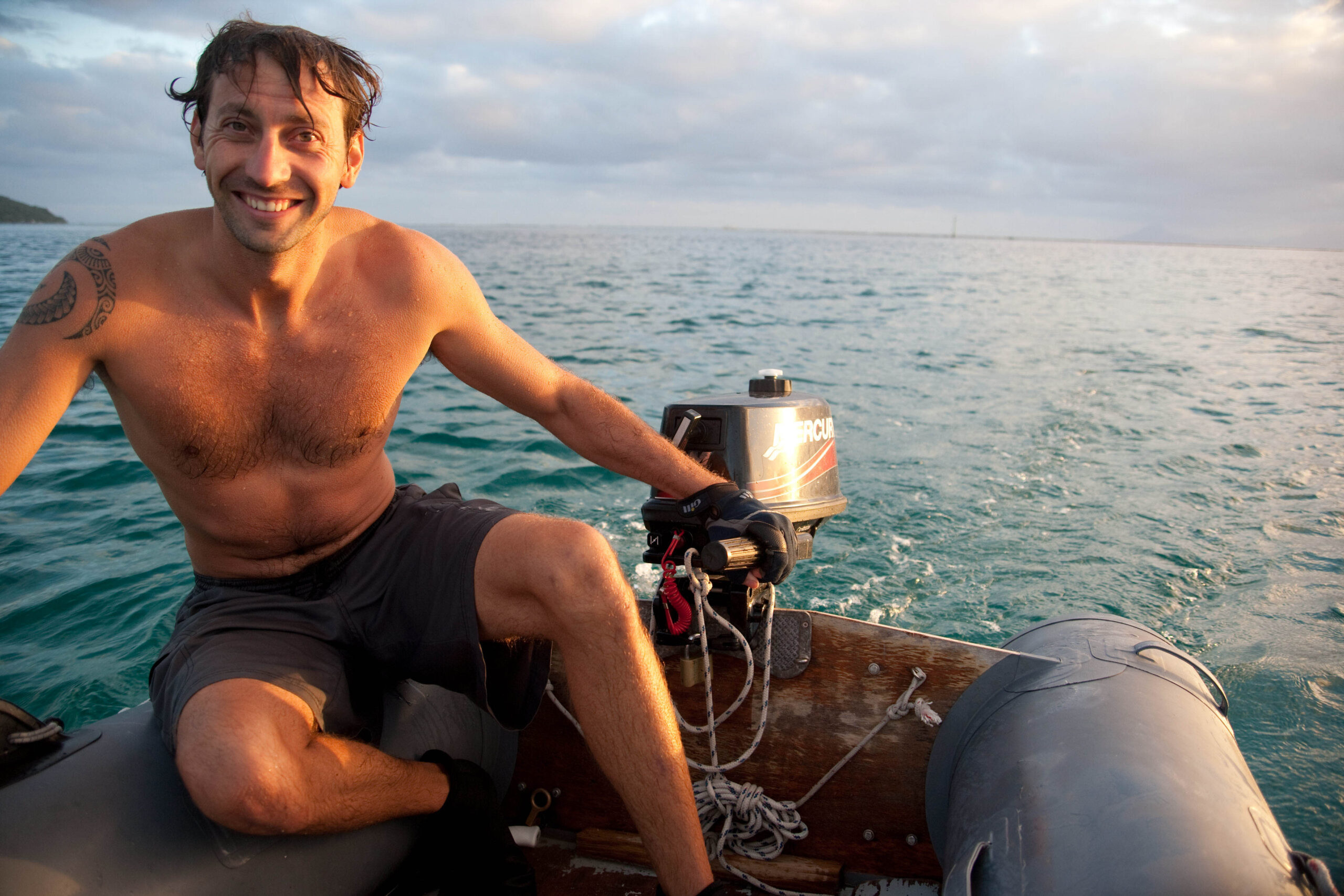
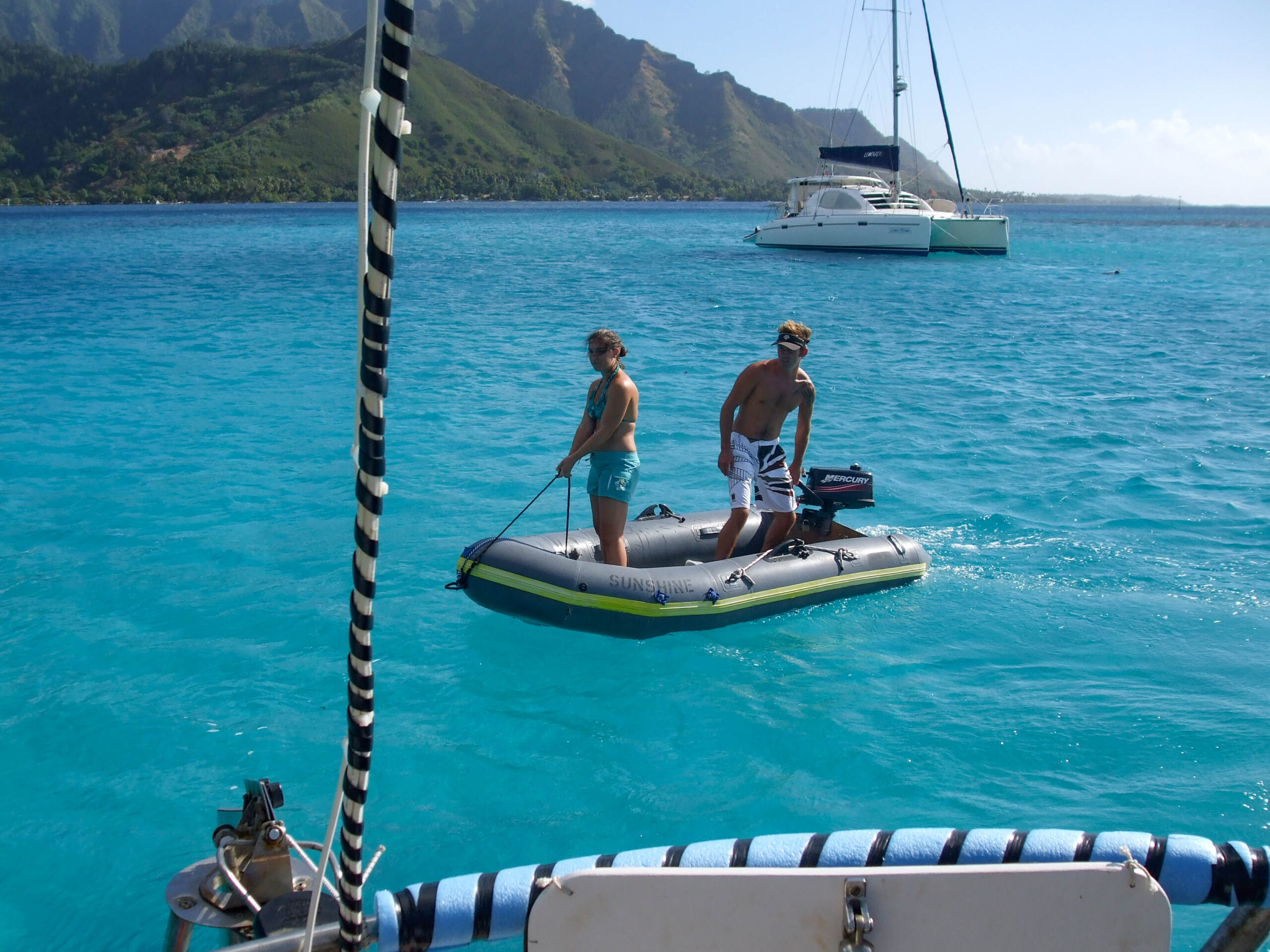
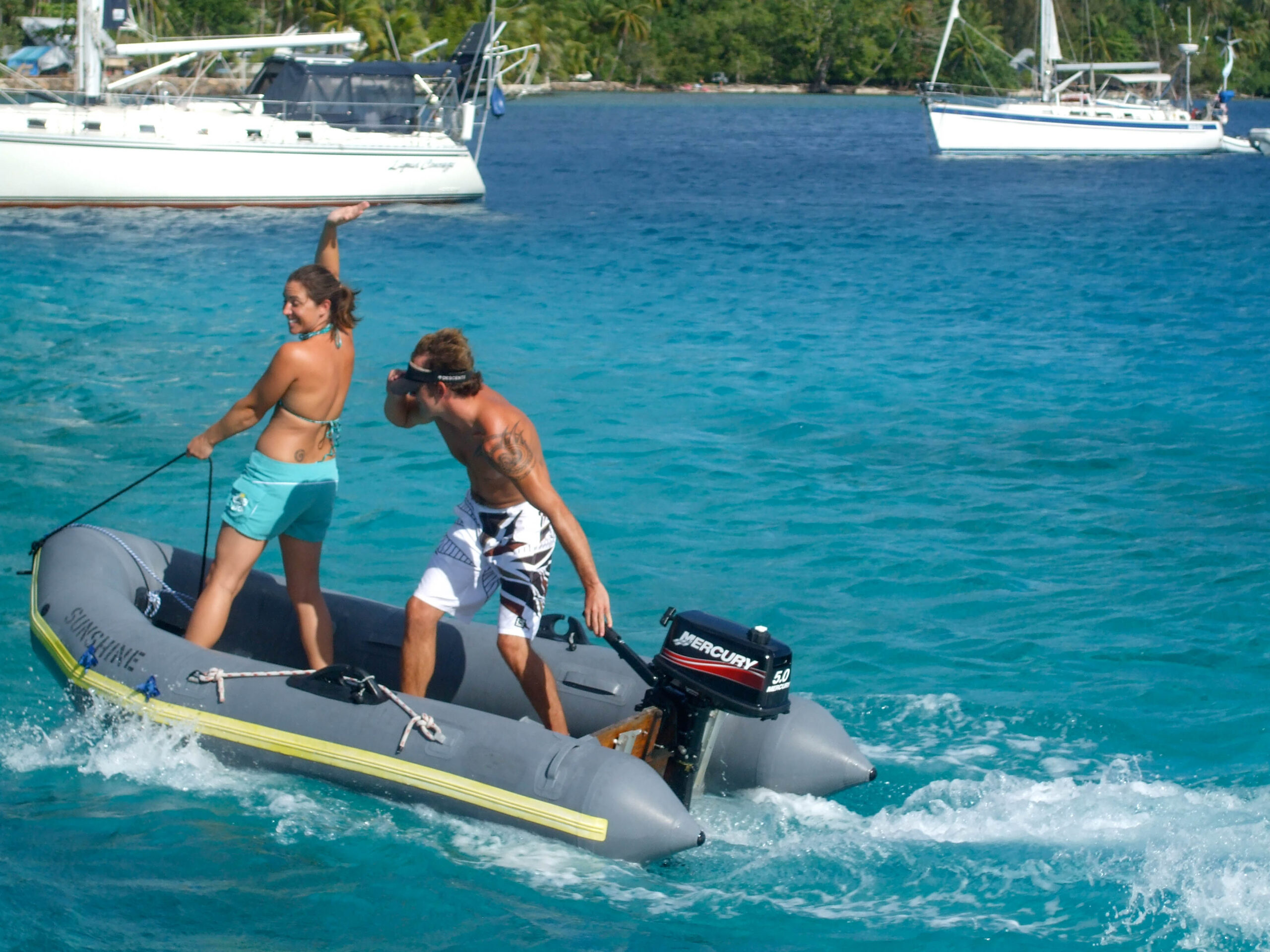
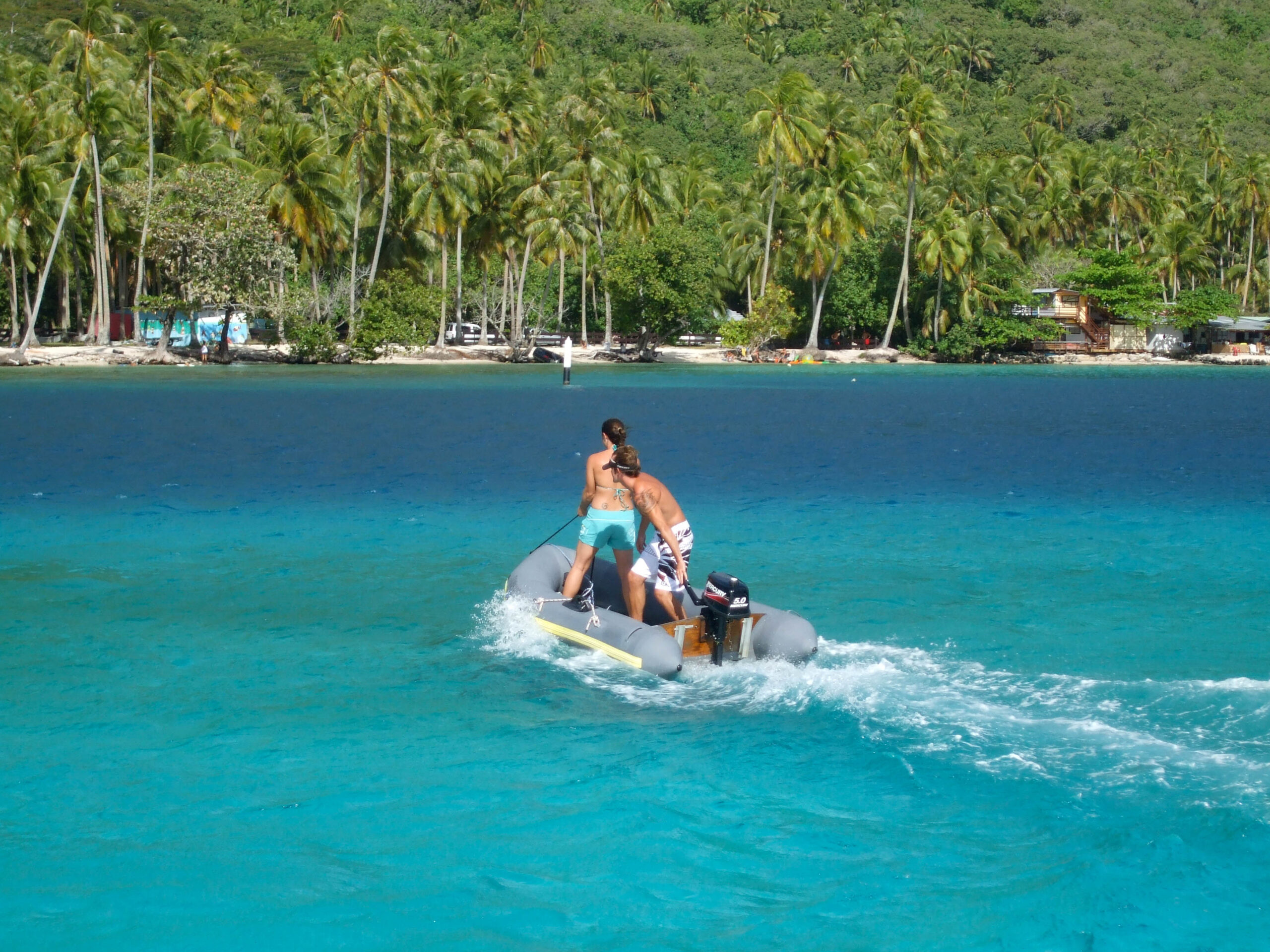
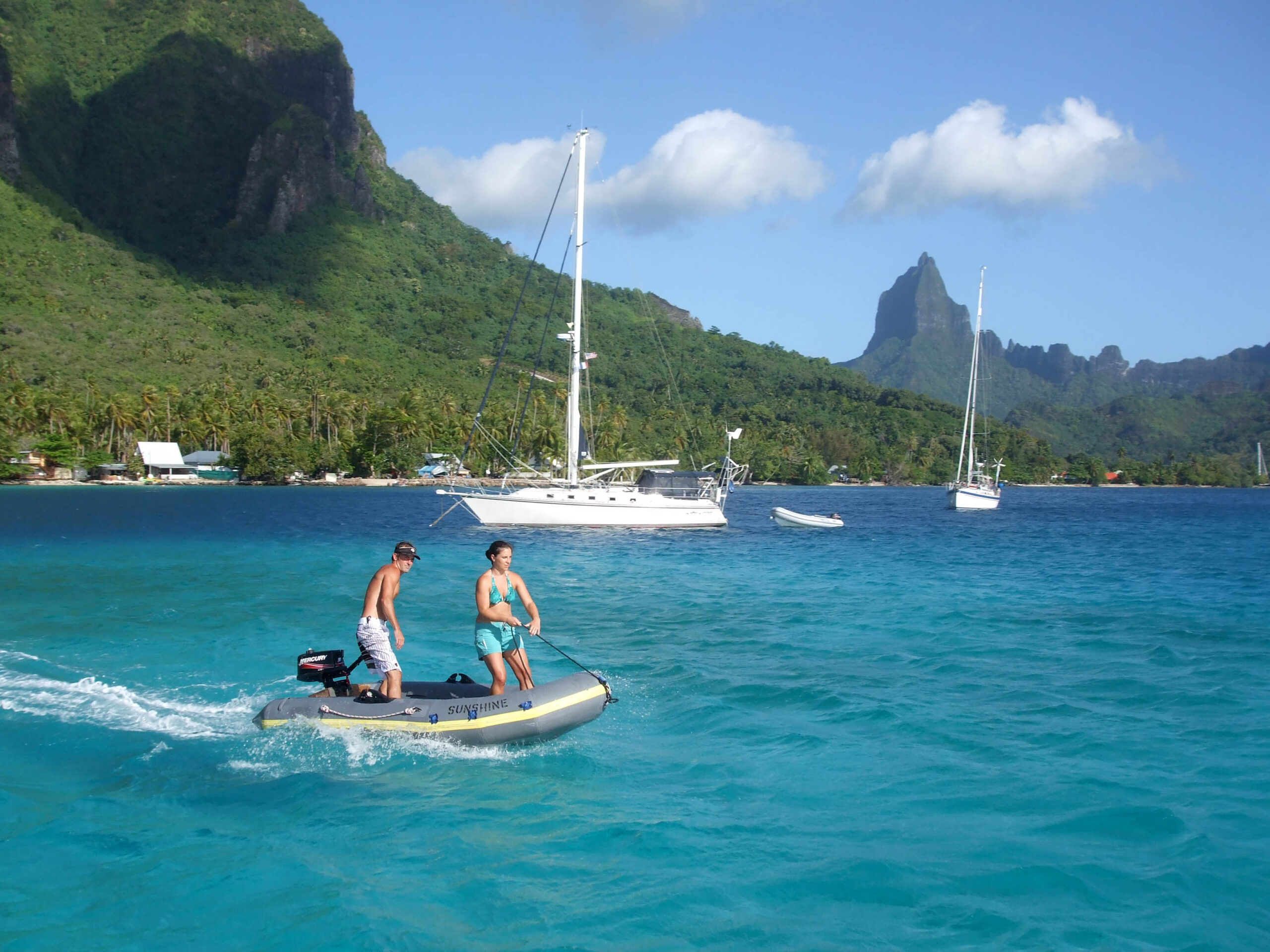
    Jon and I anchored the boat just outside of Oponohu Bay.  After tidying up the boat, I set off in the dinghy to find the hotel.  It got dark and I encountered an obstacle course of reefs.  I was paddling, and pushing off coral with my foot, cringing when the bottom of the dinghy would scrape on coral, and constantly raising and lowering and turning the outboard off and on to avoid banging it on the bottom.  It took an hour and a half, the hotel ended up being about 2 miles away.  That part sucked.

    But then the moms treated Karen and I to a few nights in the hotel with them, and that was simply fantastic.  It was wonderful to be off the boat, in a real bed, with a hot shower.  It had been over 90 days since our last hot shower in Mexico.  We ate good food and relaxed in front of the pool.  Heavenly.
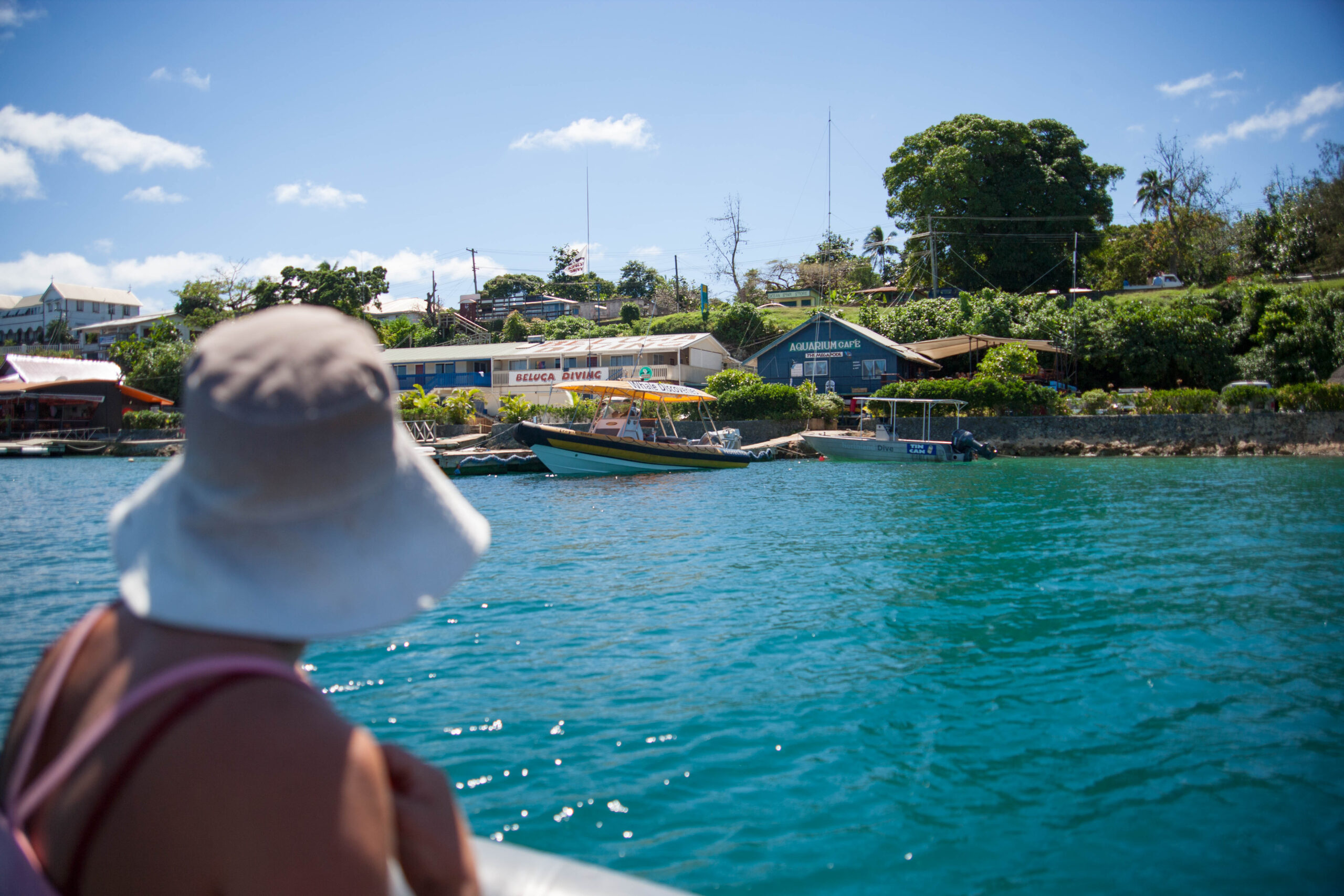
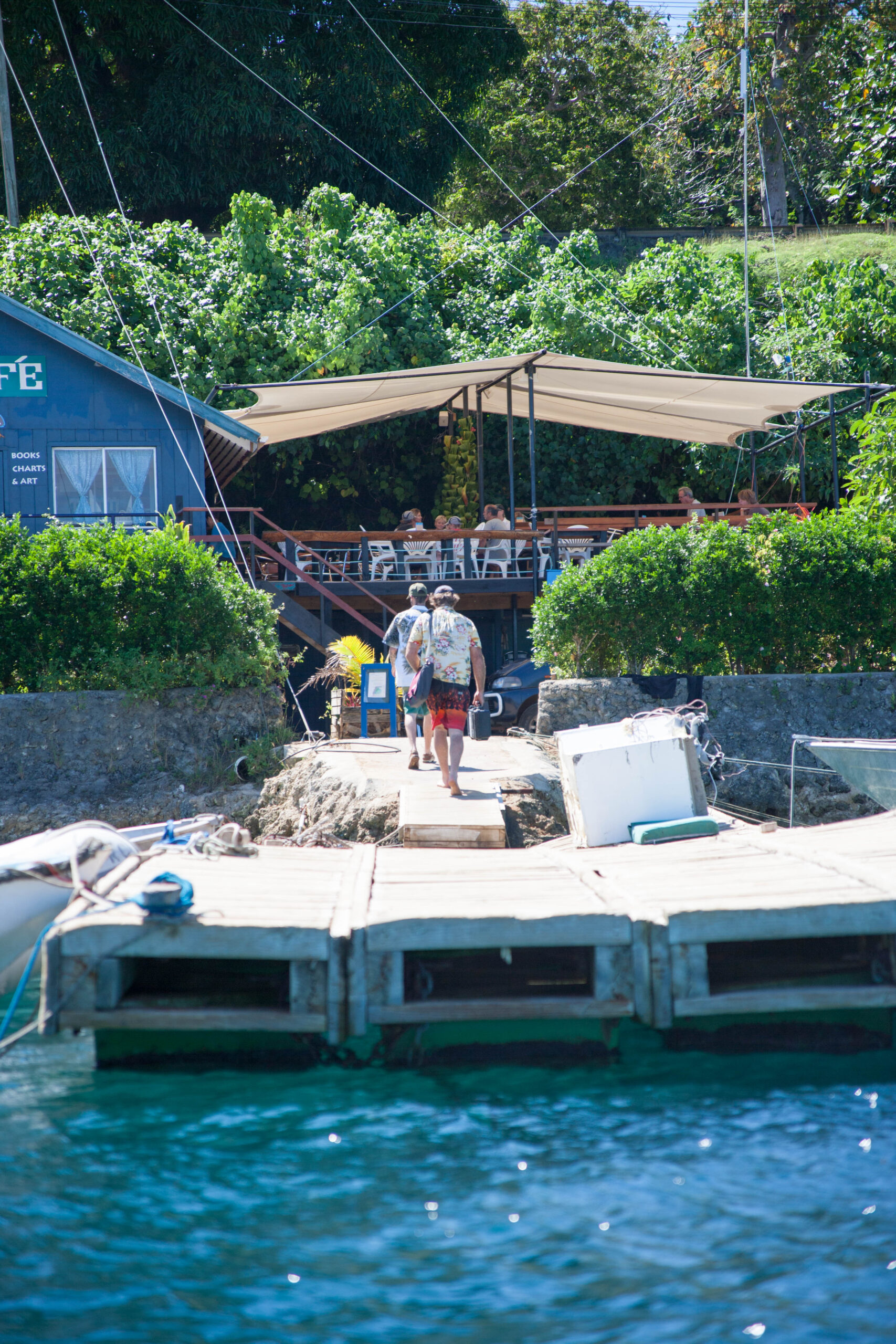
    We took the moms back to see the boat in the dinghy.  I should have learned from my trip the night before, but I have a short memory, and I’m stubborn.  It was daytime for this return trip, but it was also up into 15 knots of wind.  That dinghy isn’t too fast with four people on board.  Everyone was drenched inside of five minutes from the spray splashing over the bow, and it took an hour to make it back to the boat.  We had to bail the entire way.  It was a bit more than the moms had signed up for, I’m sure:

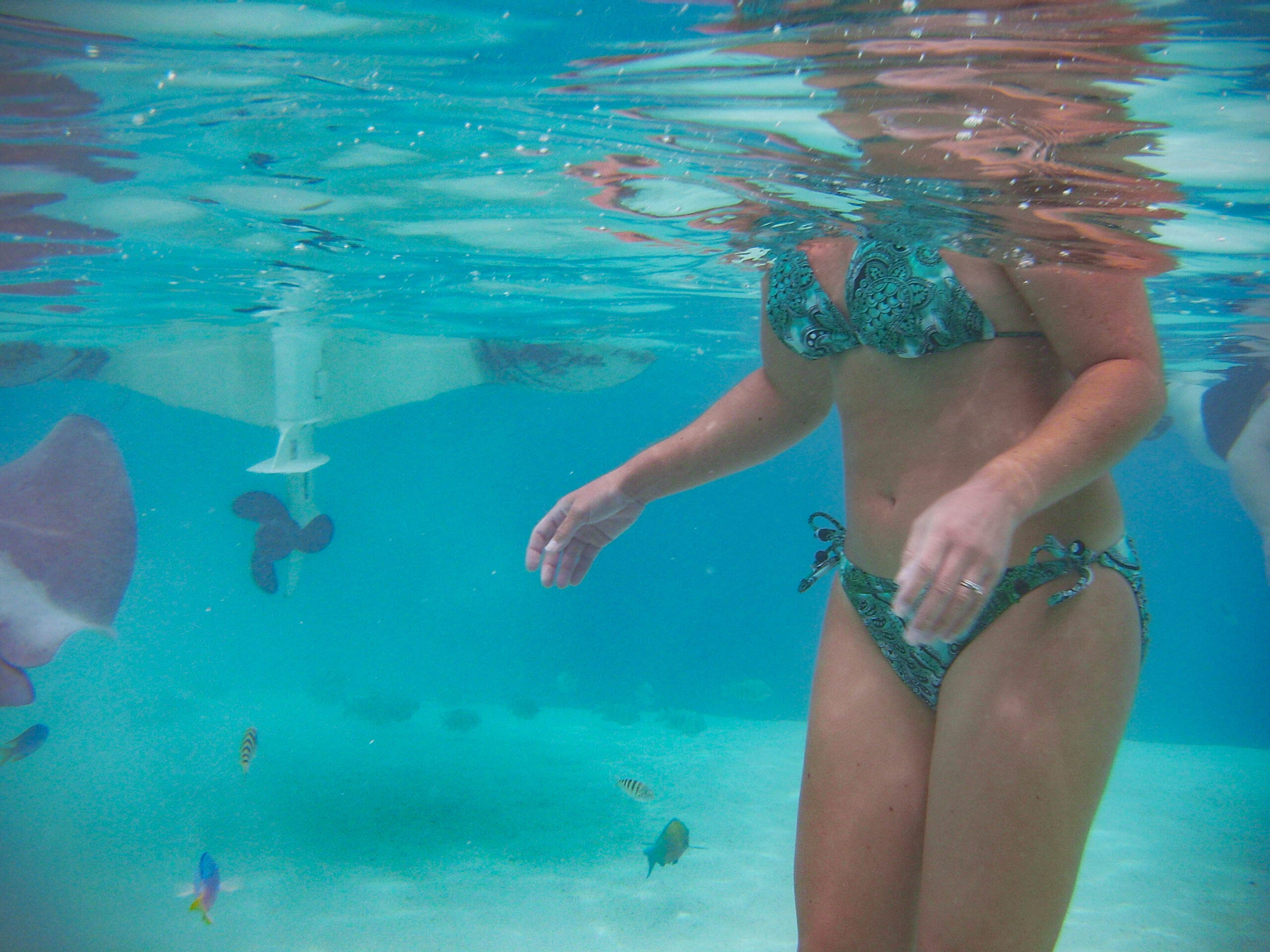
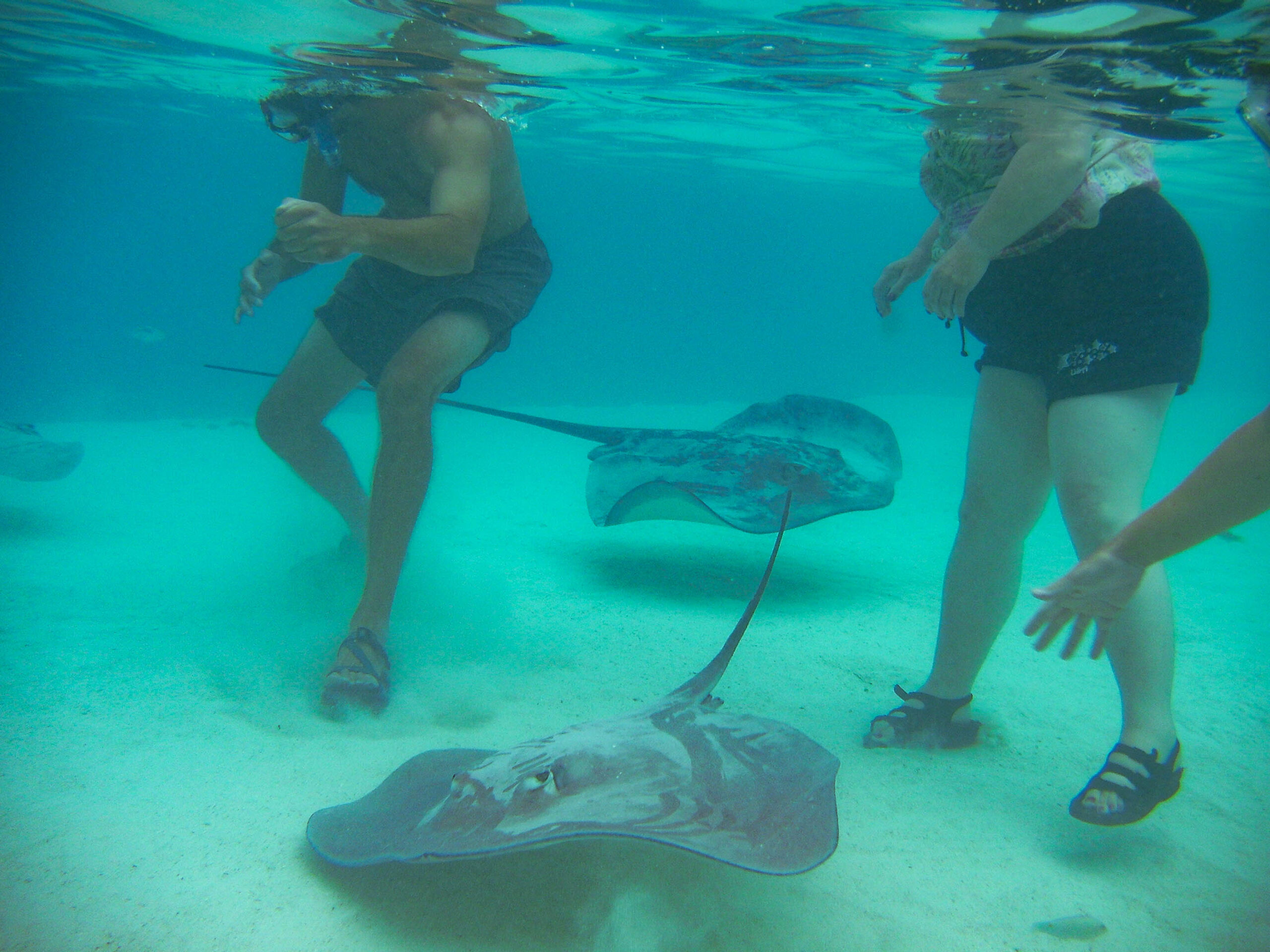
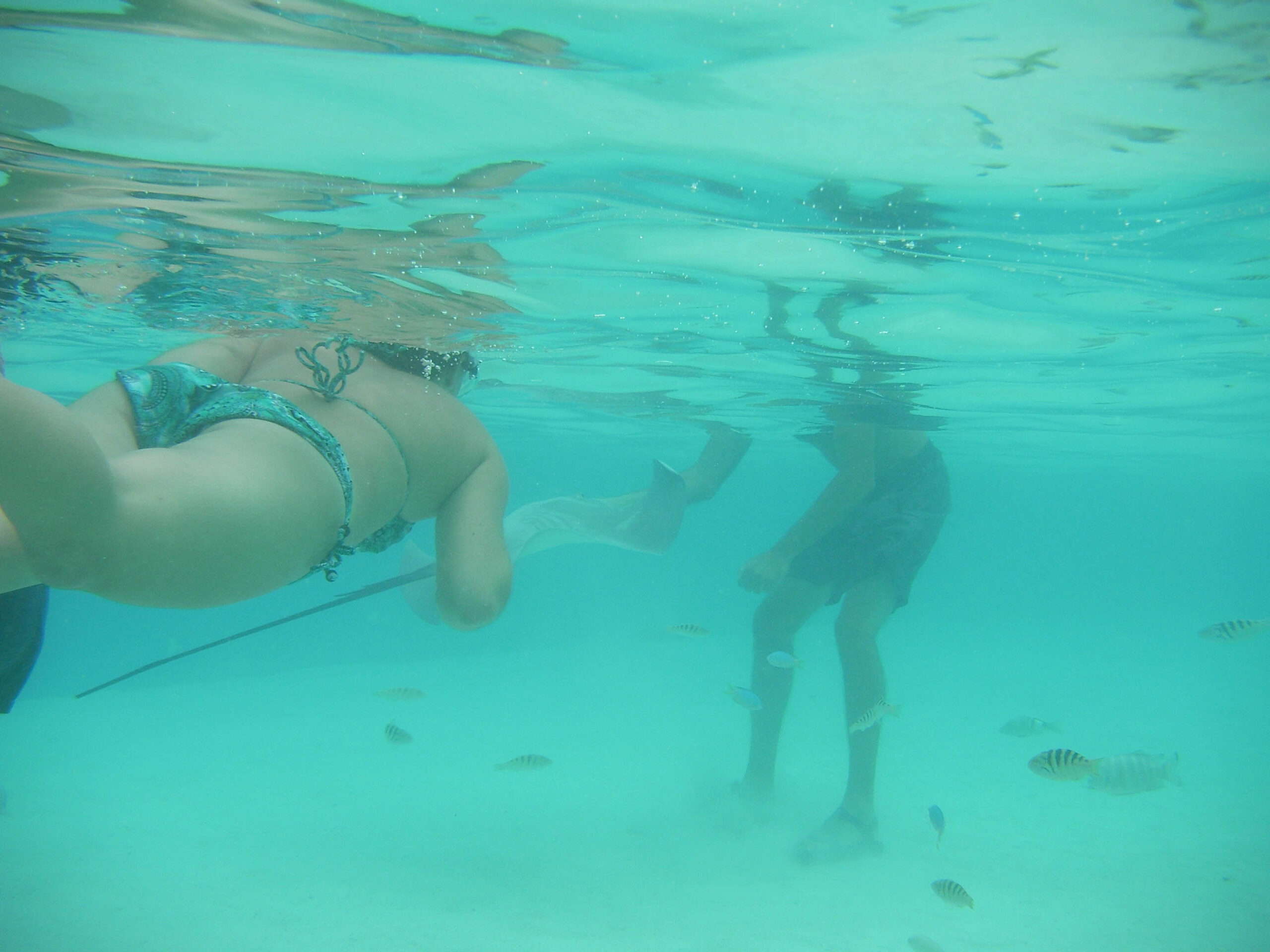
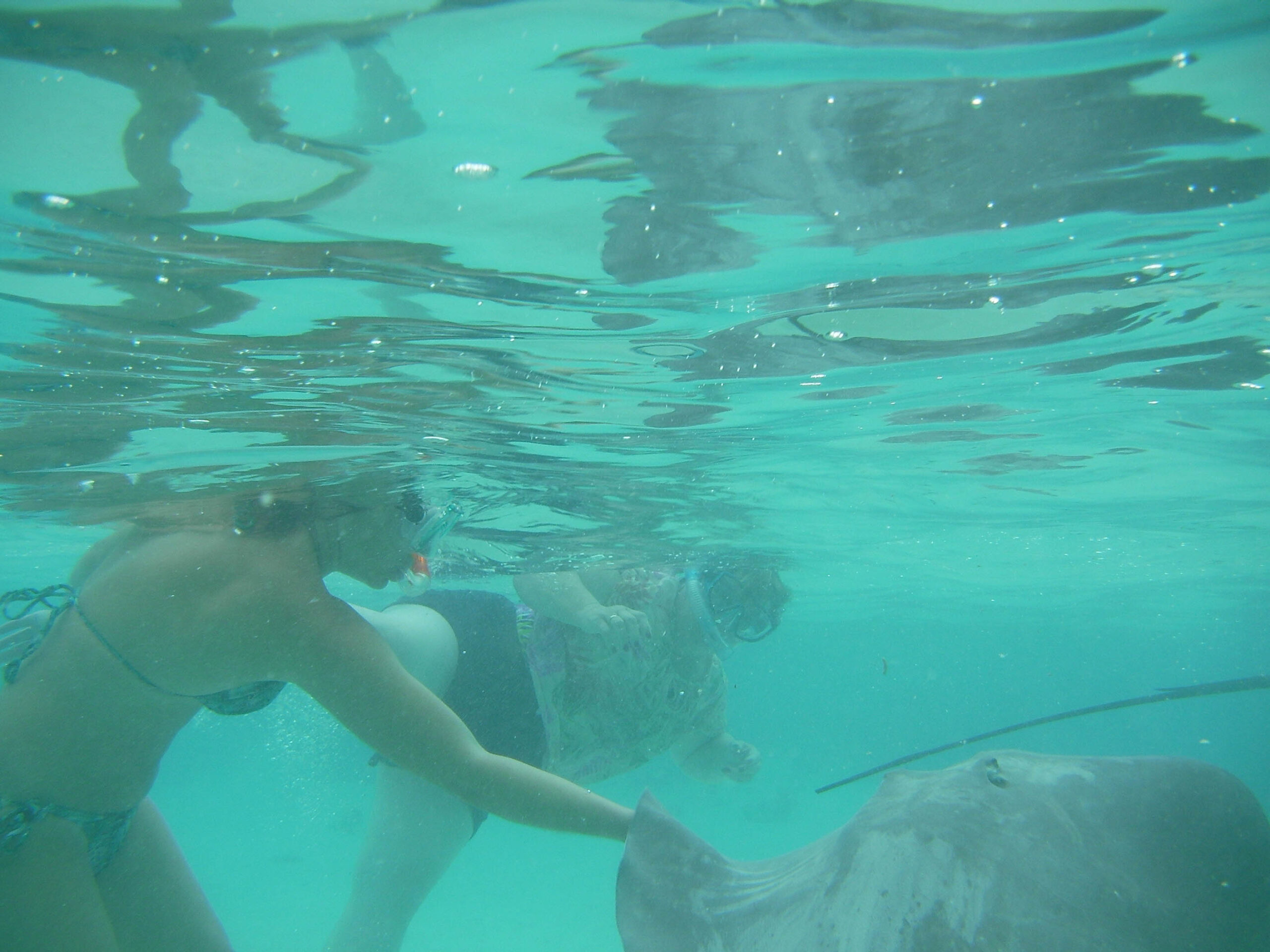
    Later in the week we took the moms out to an area full of docile stingrays (the hotels have created this situation by regularly feeding them fish).  It was really, really incredible, to have stingrays come rub up against you looking for handouts: