Syzygy Sailing

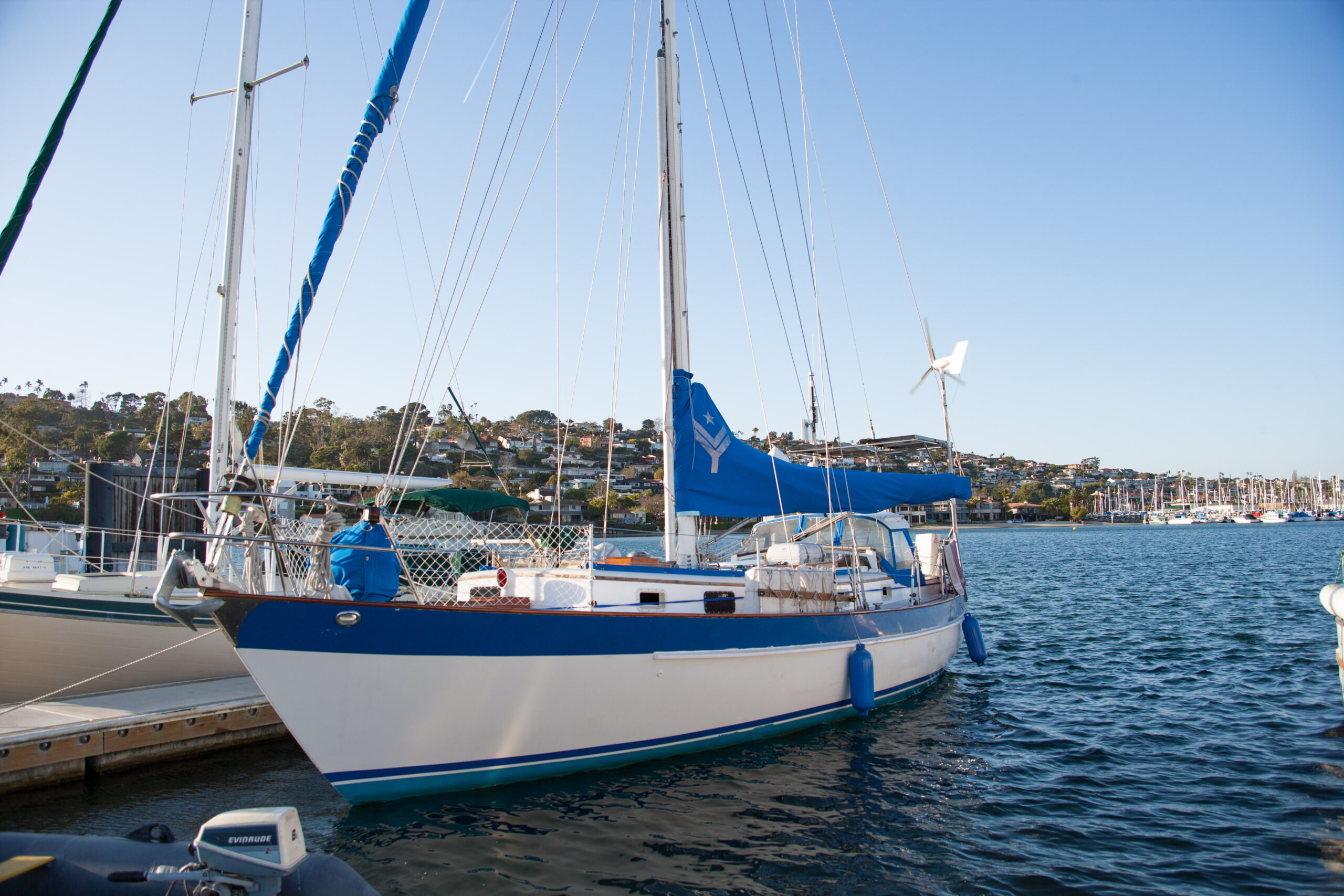
Bought a boat, fixed a boat, sailed to Australia, sold the boat.

  • First Storm

    (post dated–this post refers to events on 3/7)

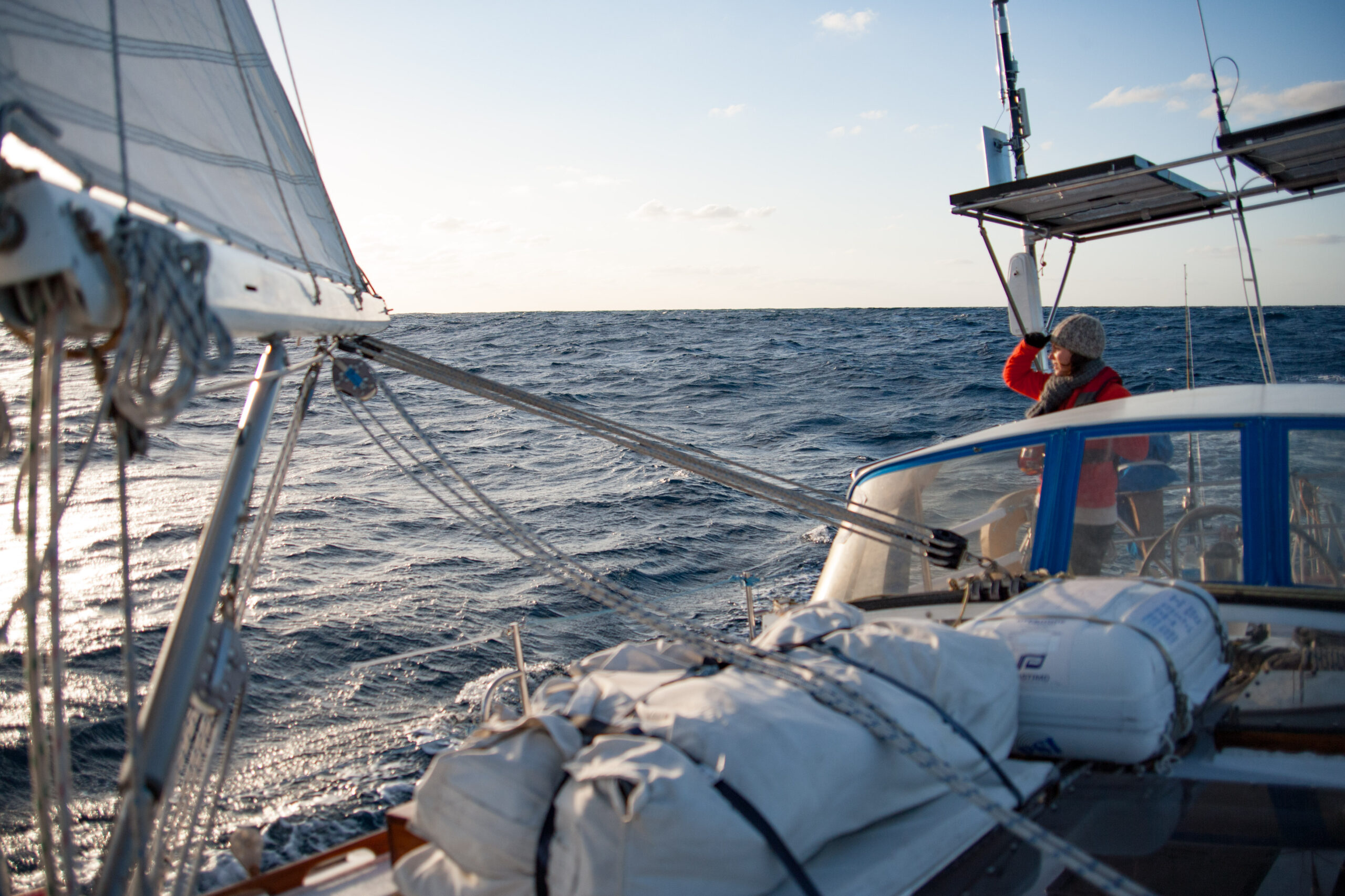
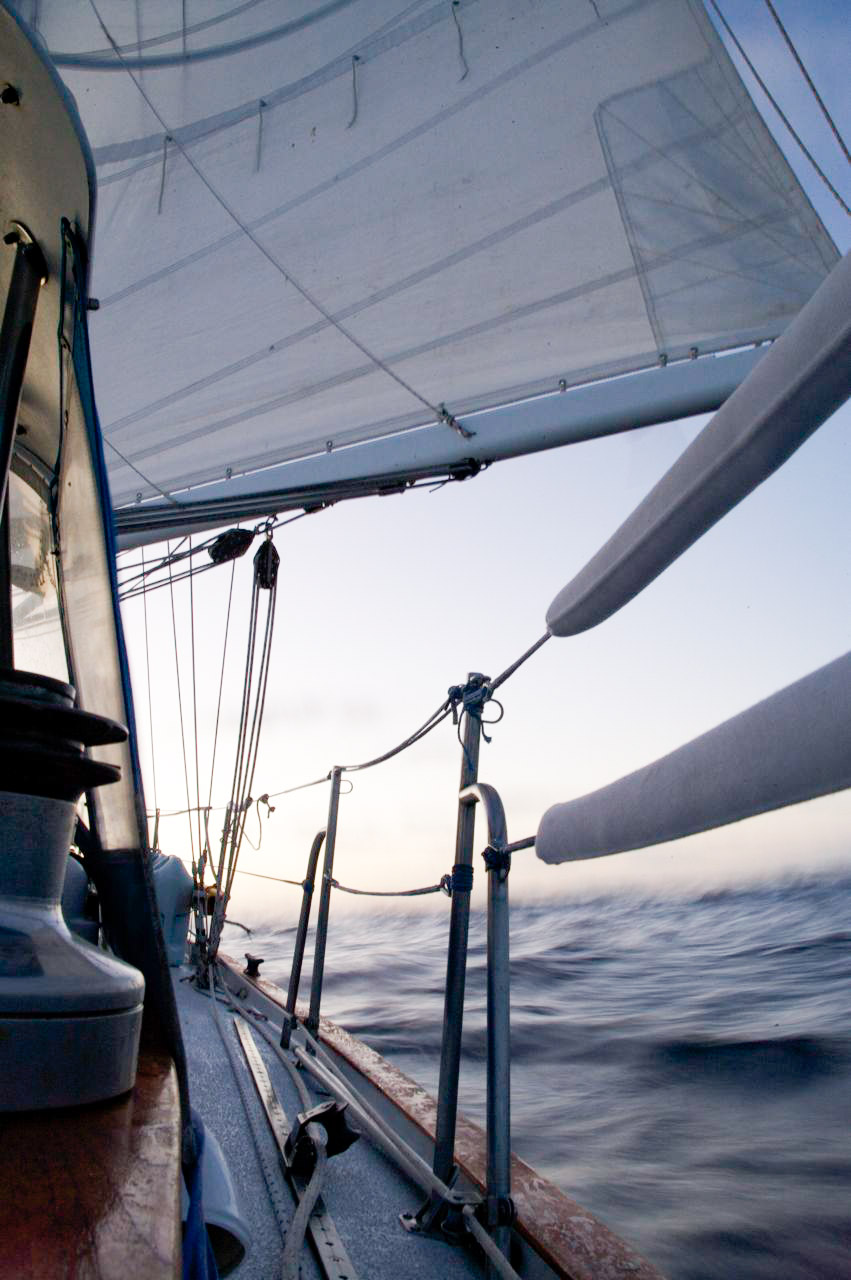
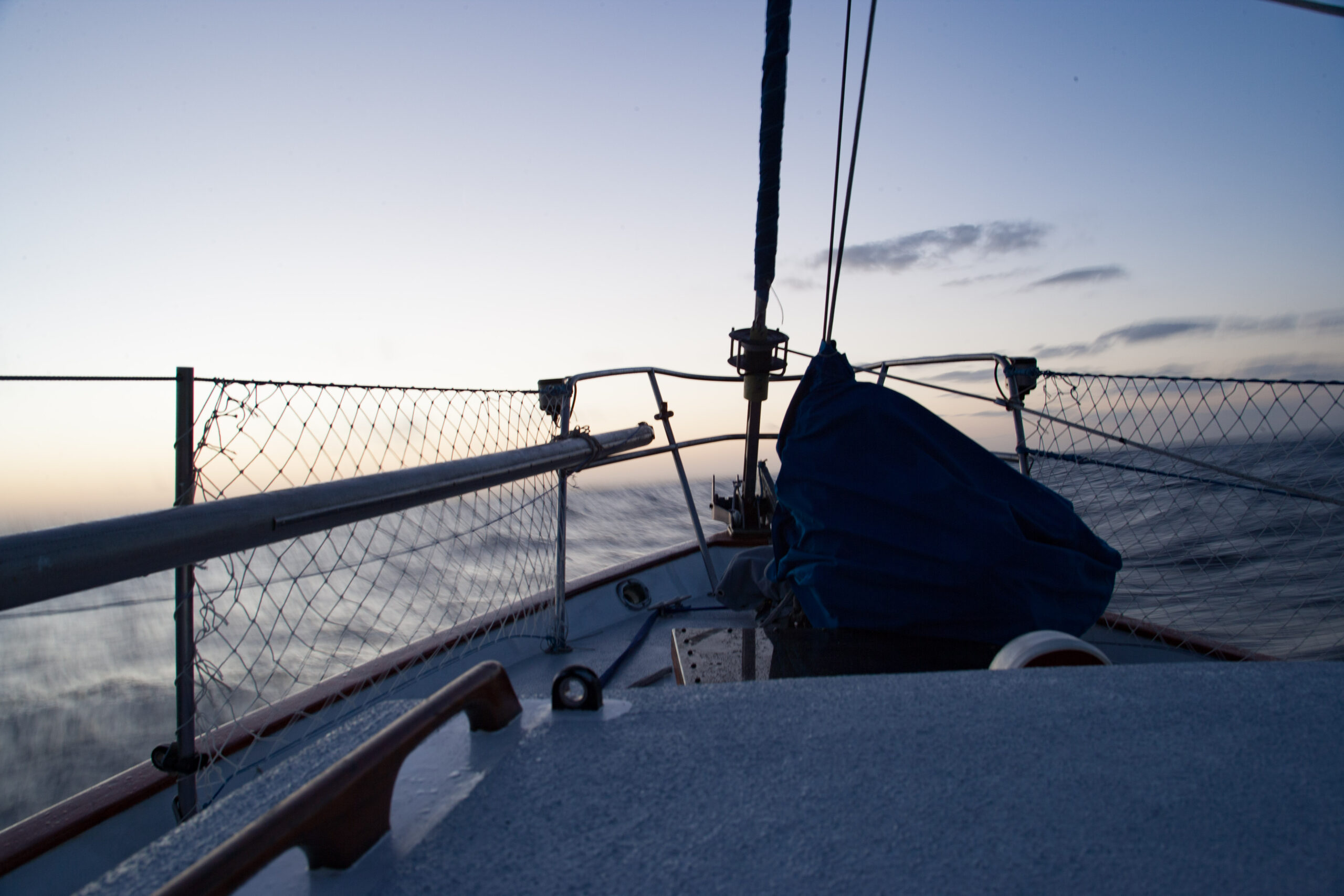
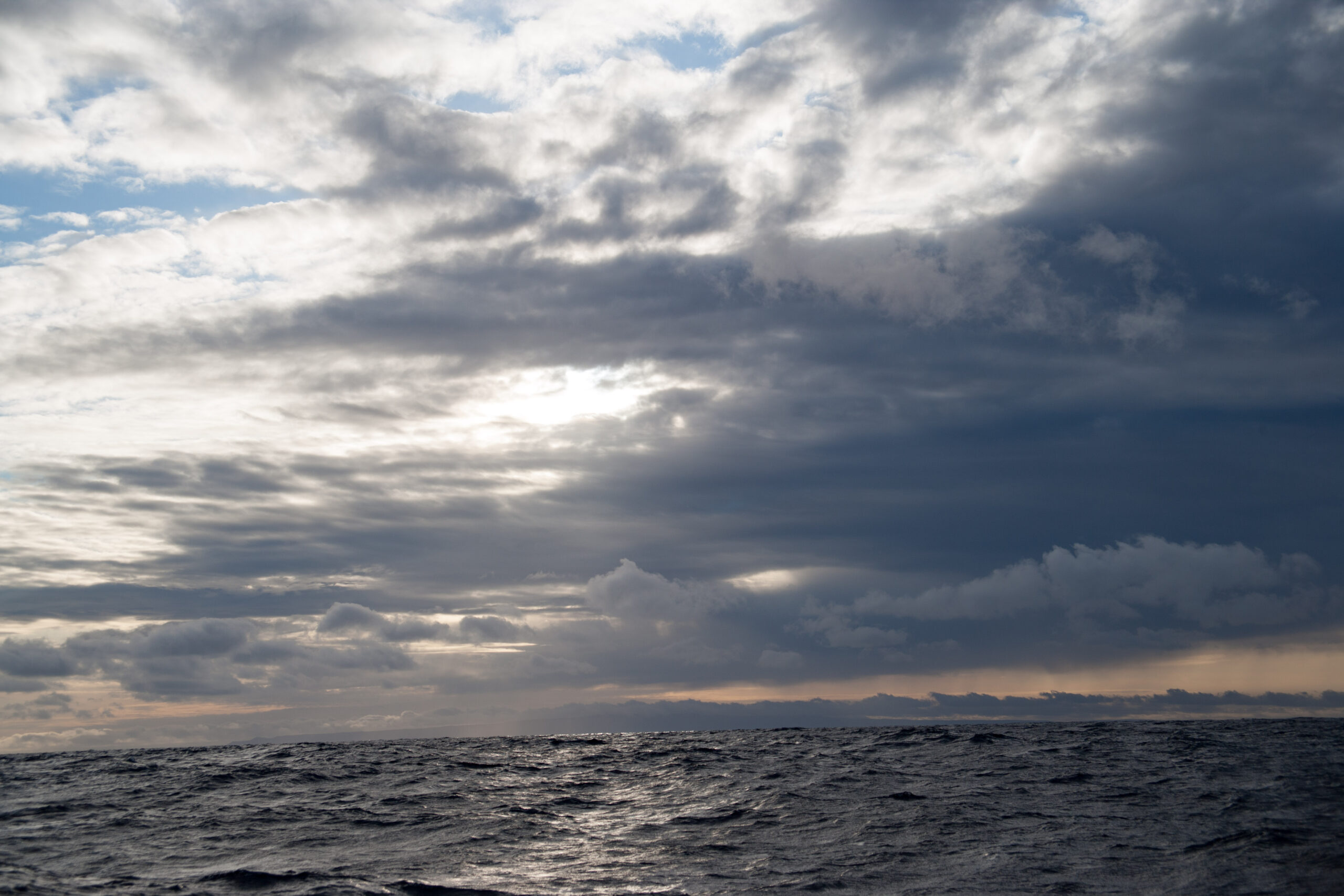
    Before leaving Ensenada I pulled in a weatherfax over the SSB (our shortwave, long distance radio) and noticed that we would be heading out into a developing low pressure system with a cold front moving over our position–i.e. a small storm.  The wind speeds were predicted at 25-35 knots and seas 12-18 feet–these sort of conditions are fairly substantial when you’re offshore in the dark, but not the sort of thing that need be dangerous if you’re prepared for it.  So Karen and I discussed the forecast and decided that we were game for it.  Personally, I was interested in testing our mettle.  Also, I thought it would be good to get our first storm experience under our belt, as a confidence-building exercise.  And really as far as storms go it was a small one, not too crazy.

    As it approached, the wind shifted around from behind us–where it is convenient for the wind to come from—to directly ahead of us–not so convenient (though expected).  Still keen on making forward progress, however, we started beating into the wind.  For the first five hours or so of windward sailing we were ecstatic to discover that it was our most comfortable point of sail so far: the wind waves had not yet built, so were were sailing smoothly into the wind with a following sea.
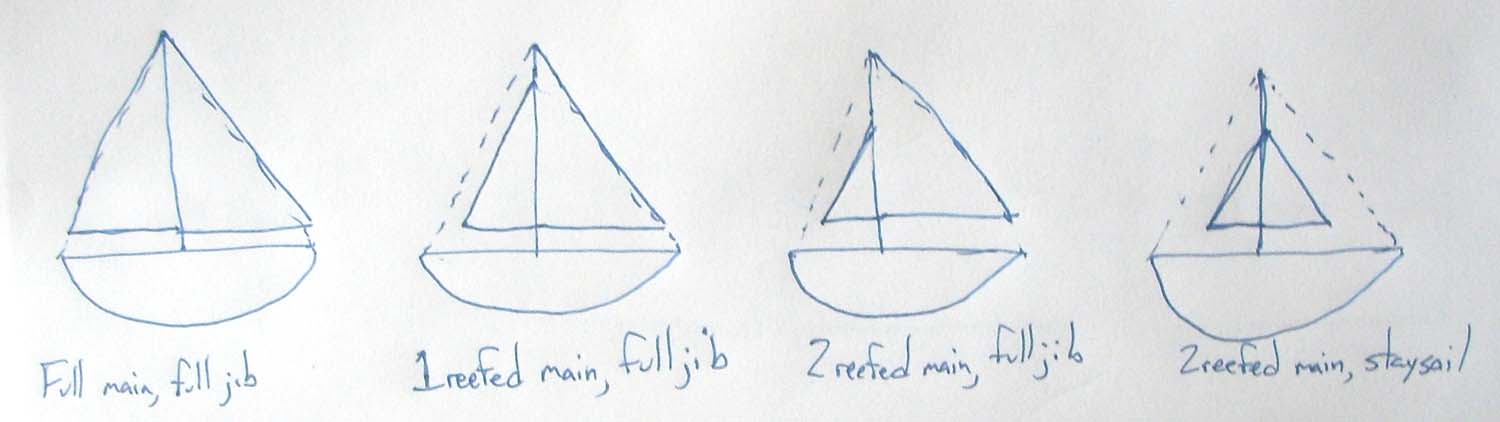
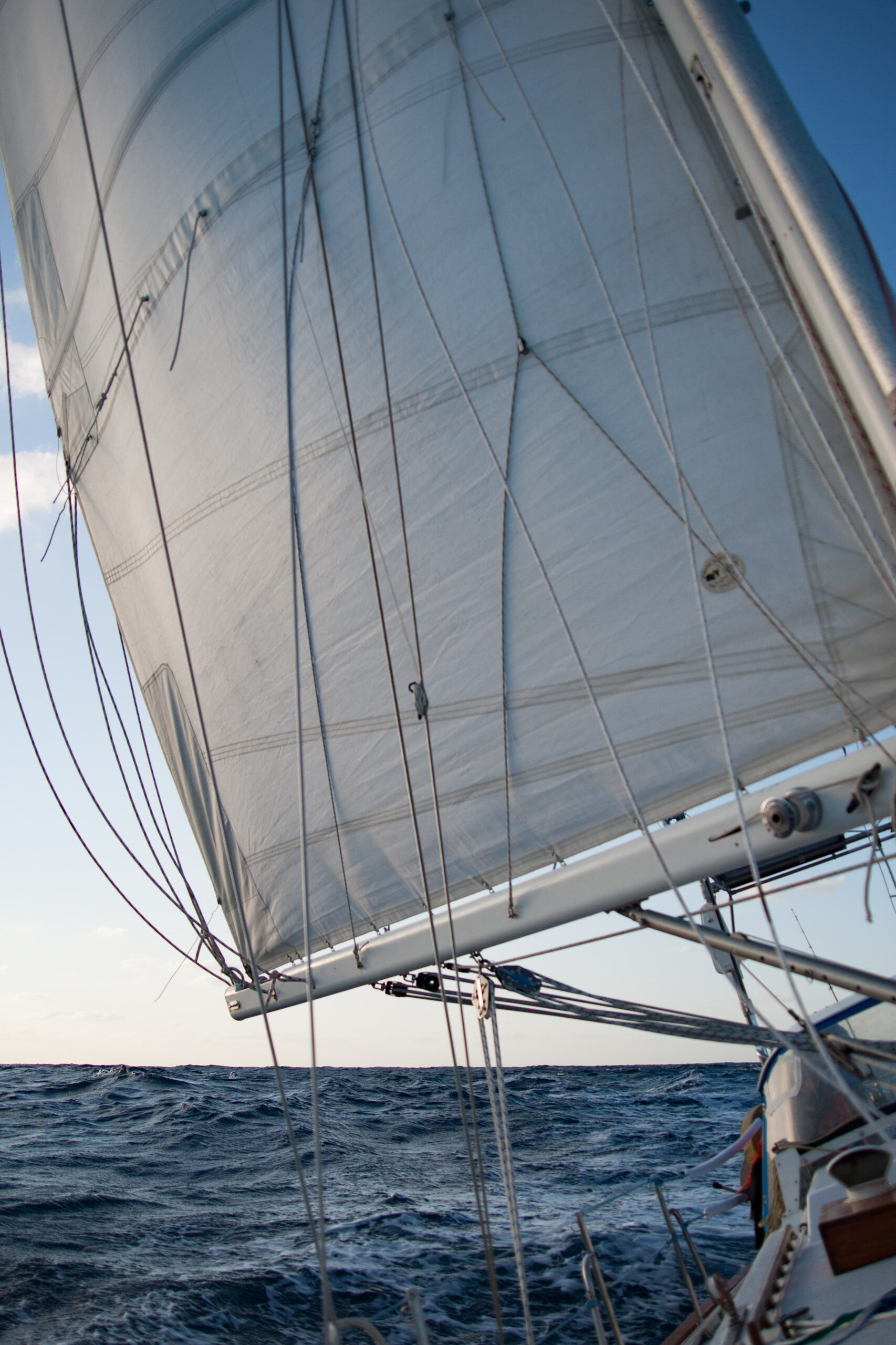
    As the winds increased, we progressively decreased sail area.  We had been sailing for hours with a full main and full jib.  First we took one reef in the main, then took two reefs in the main, then switched down from the jib to the staysail.  With the staysail and double-reefed main we beat upwind in increasingly shitty conditions for a number of hours. Here’s a really crappy little picture I just drew and took a picture of to illustrate:


    This is the position we found ourselves in–beating upwind in the darkest night with double-reefed main and staysail–when the worst of the storm came upon us.  The “worst of the storm” involved 30 knots of wind, an immense quantity of driving blinding rain, occasional ambiguously located flashes of lightning, and reasonably sized obnoxiously pounding wind waves.

    Beating upwind is not an advisable thing to do in a storm, unless you are trying to deliberately subject yourself and your boat to the strongest forces possible.  You can sit there and say that we should have changed things sooner, before we found ourselves in the situation of being over-canvassed beating upwind in a storm that is.  Three weeks ago I probably would have said the same thing–but I have learned some things since then.  One of those things is that if something is working well enough, then leave it well enough alone.  Too often I fall victim to experimenting with sail changes and modifications, only to find myself needing to change everything back–and exhausting myself in the process.  When there are only two of you, and sleep becomes a high priority, you must eschew the textbook sailing setup for one that is working well-enough to leave well-enough-alone.  So even though beating upwind in the storm was not ideal, we were still “fine”–fine in the sense that I judged neither us nor the boat to be in any immediate danger.  So, despite the increasing ridiculousness of beating upwind in those conditions, I still found myself wondering whether we should bother taking any measures to alter our situation.

    Well eventually of course conditions deteriorated to the point where we needed to modify our situation.  Ahhh now the tricky part is what to change and how to do it, in the middle of the storm, isn’t it?  Trying to get something accomplished in those conditions–i.e. two steps shy of “worst conditions imaginable”–is touch and go.  If you mess something up with the sail, it will promptly flog itself to pieces before you have a chance to save it.  If you make an honest mistake with steering, you’re liable to find yourself on your ass, which in a boat means “knocked down”, which means getting your mast to touch the water–not cool.  Basically, you don’t have many chances to get it right.  Whatever you do, you want to pull it off right the first time.

    We decided that we should heave to, and we also decided that we should get it right this time.  The last time we tried to heave to while experimenting in the dark prior to entering san diego, I was dissatisfied with our setup.  Specifically, I was annoyed that we were unable to completely stall the boat.

    This time it worked out perfectly fine for us.  We hove to under double-reefed main and staysail, the motion of the boat became relatively calm, and we slept the night away (in turns).  The boat still fore-reached at about a knot, so I still want to work on that a bit, but as it turns out the hove-to position was still stable and calm, so perhaps I was being a bit perfectionist about it before.  If we ever experience a real storm we’ll see.

    Perhaps that was an anticlimactic conclusion to our storm story, sorry about that, but we were safe and fine so that’s a good ending right?
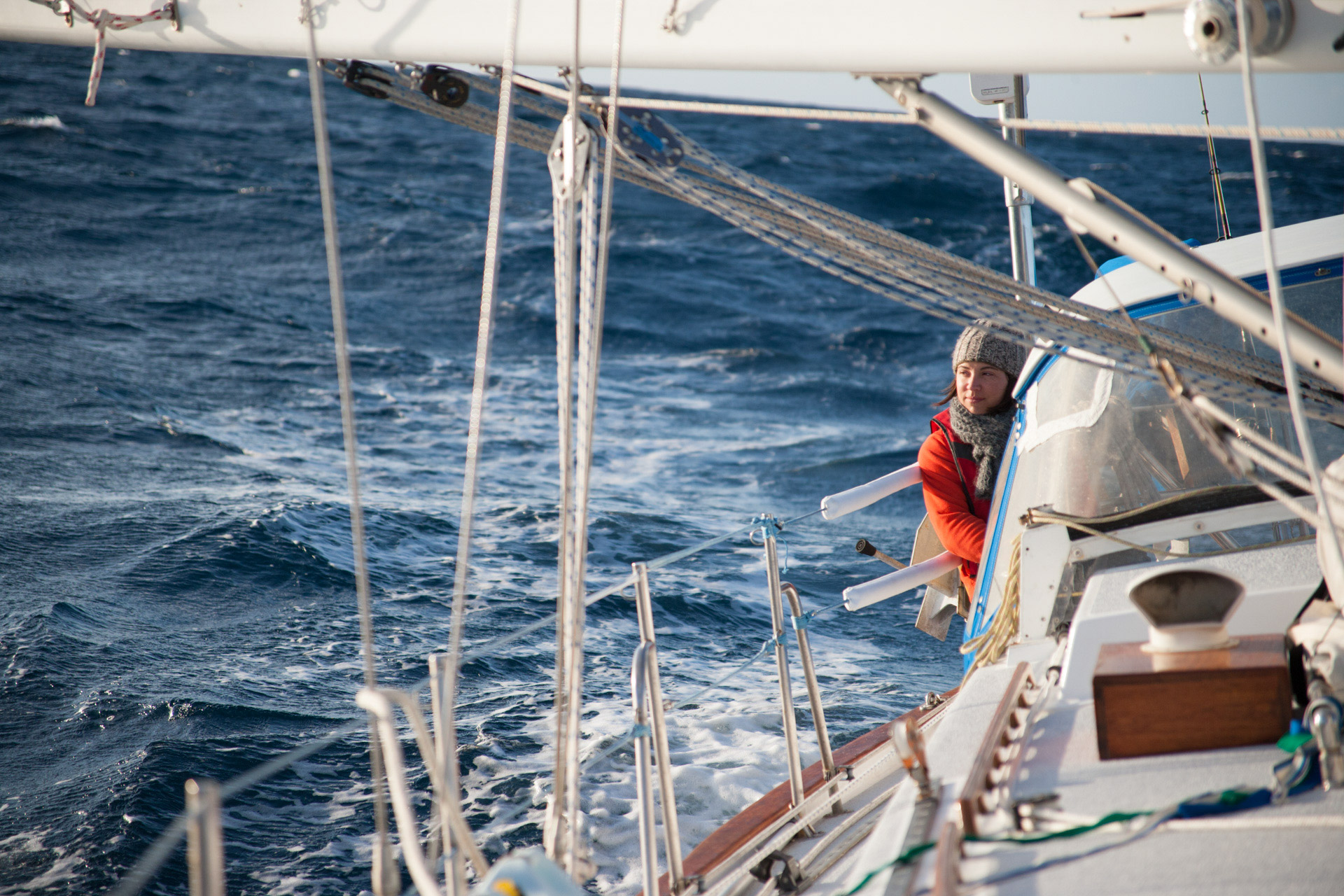
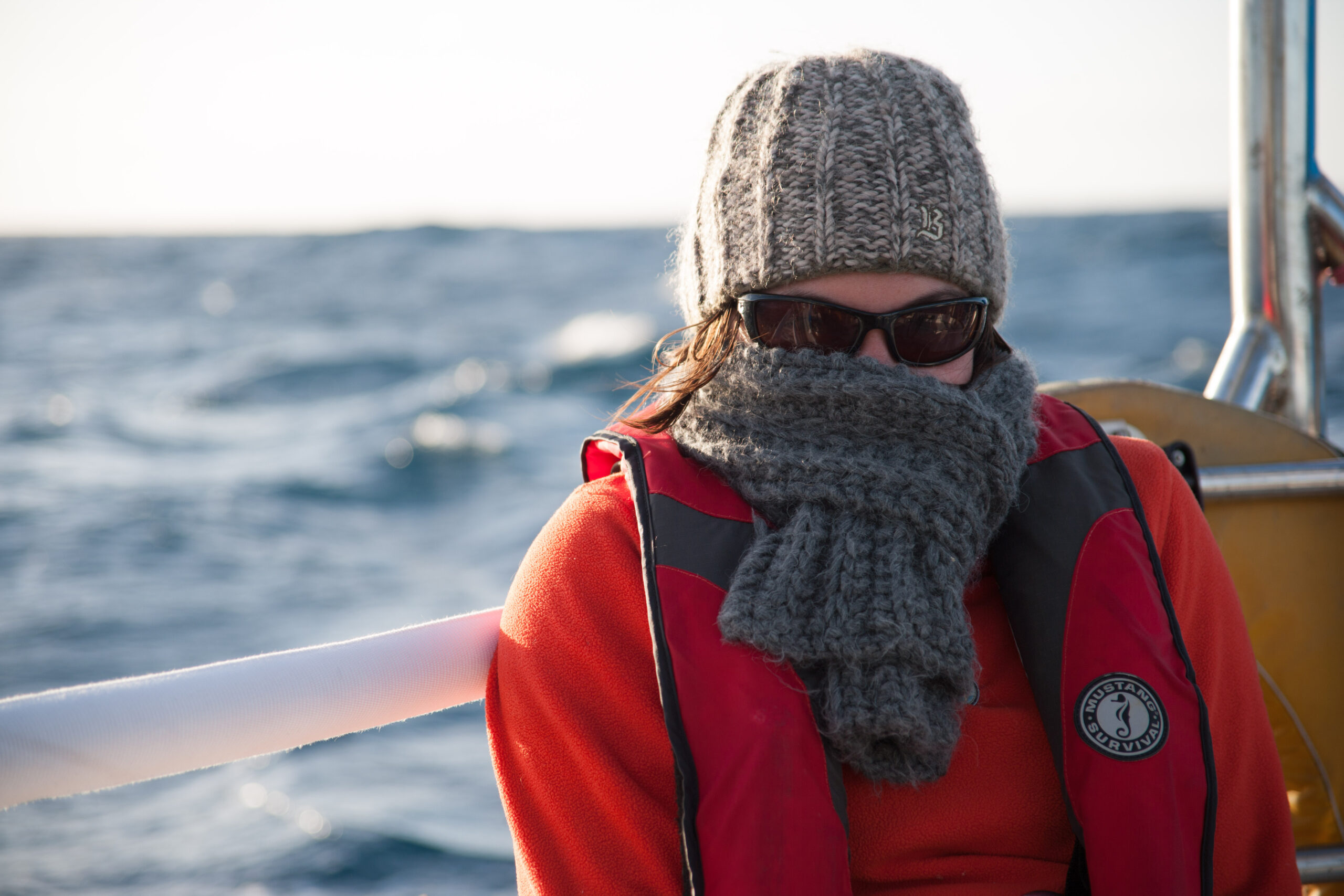
  • Our view

    some images and video between Ensenada and La Cruz


  • Ahora estamos en Mexico

    (writing this at the nav table, in a slip at Baja Naval, Ensenada, BC, MX; these are some disconnected notes and observations regarding the 1.5 day passage from San Diego to Ensenada)

    We departed San Diego mid-day yesterday, in an attempt to time our arrival at Ensenada during the following day. At first, the wind was excellent (10 knots off the beam) and we made great time–yet again we found ourselves in a position to enter the harbor sooner than expected, in the dark, so we doused the jib and sailed obliquely away from Ensenada and then back, killing time until the sun rose (of course, on the tack back towards Ensenada the wind disappeared entirely, so instead of bobbing around in the 5 foot swell we motored slowly for a few hours).

    Both of us felt a bit queasy on this passage.  The quartering sea didn’t help (in which the waves get you from the right butt cheek of the boat, if the boat had a right butt cheek that is).  I anticipate that the first day or two on passage will probably take some getting used to, each time.  However, once again the hardest thing about the passage was getting adequate sleep.  As soon as we were secured to the dock this morning we got back in bed and napped for another few hours.  I think that we will become increasingly comfortable with the abnormal schedule as we make more passages (one can hope).

    We are in a slip at a marina called Baja Naval for tonight; we head south again tomorrow morning.  The check-in procedure was straightforward, except that the port captain here requires liability insurance, and there’s only one insurance place in town that does it, and they charged $210 for a year’s worth of insurance that probably isn’t worth jack because I doubt if they would ever pay any claim (the woman would not provide me with any paperwork outlining the terms of the policy).  The insurance thing is clearly a scam to take some more money from the yatistas down here.  It makes sense to me for a marina to require insurance, but not the government.  Hell, even in the USA your aren’t required to have insurance on your boat (though most marinas do require it).  We should have taken care of it while up in the states, but I had mistakenly thought that insurance was not absolutely required.

    This baja naval marina is a trip.  Apparently the swell readily finds its way into the harbor, because all the boats and docks are in constant motion, as if all of us and all the docks were all lightly lashed together and set free, without any pylons or connection to land.  Like we’re tied into one big floating raft, with all the pieces going every which way and bouncing off each other ad infinitum.

  • drinks and a toast from Jon

    Karen and I have been really excited by the number of people sending a drink our way, cheering us on, and we intend to put up pictures etc for each one under the “Drinks” page.  We’ve been busy taking care of logistics still, so we have a lot of catching up to do, in the way of drinking, but I want to say thank you to everyone out there who has sent a drink our way, and eventually we’ll get to all of them!

    I think it’s appropriate to kick off the drink links section with a donation of Belgian beer from Jon (Haradon, one of the other owners of Syzygy), and the toast he wrote to go with it (which he asked Karen to read to me).  Jon wishes he could be on the trip currently, and is planning on joining us in June, but in the meantime he sent us to a pub in San Diego with Belgian beers on tap (he emailed us with two location choices).  Thank you, Jon, for the Belgian beer and the kind words as well.

    The footage makes Karen and I seem ridiculous.  And maybe we are.  But it was a fun evening.  (please stay tuned for the toasts from other drink donors, and thanks again to all of you we love you!)

  • Tsunami effect – Shelter Island, San Diego

  • SPOT tracking

    The AIS tracking feature has been a big hit as we’ve travelled down the coast of california, especially with concerned family.  However, once we leave the country we will be out of range of the shore-based AIS stations, and we won’t show up on the map except maybe in very popular international ports.

    At the request of family and friends, we purchased a SPOT tracking device.  It cost $50 (after mail-in rebate), plus a $100/year subscription fee.  For our purposes, each time we press the “check in/ok” button on this little jobby, it communicates our position to one of their satellites, and then it shows up as a pin on our SPOT map, which I added to the sidebar and also to our “Current Location” page (a bigger version).  We plan on pressing the button about once a day; that will be our daily position report.  Supposedly it will have coverage in MOST places, including the coast of Mexico.  However! Important note that THE SPOT WILL NOT SHOW OUR POSITION WHILE WE CROSS THE PACIFIC, SO DON’T WORRY!

    I have mixed feelings about this SPOT jobby.  The box it came in was hugely wasteful, with extra stupid pieces of cardboard, the website interface to get it working is terrible, their widget that I put up on our site messed everything up until I did some extra html coding, and even using the damn thing is extremely counter-intuitive.  It’s hard to tell when you’ve successfully turned it on, turned it off, or sent a signal, which is not so cool when you’re out in the middle of the ocean trying to figure out whether it worked to upload a checkpoint or not.  I anticipate it to be buggy, so mom please don’t worry if it malfunctions on us and you stop getting position reports.

    So, to be clear: the lack of a daily check/in is not a cause for concern.  It probably means that we’re either having too much fun and forgot to press the button, or else that the piece-of-crap thing busted on us and is no longer working.

    (fyi, the pins that you see on land in San Diego are a result of my initial testing right after we bought the SPOT, on foot and by bus; we left the boat in the marina)

  • San Diego

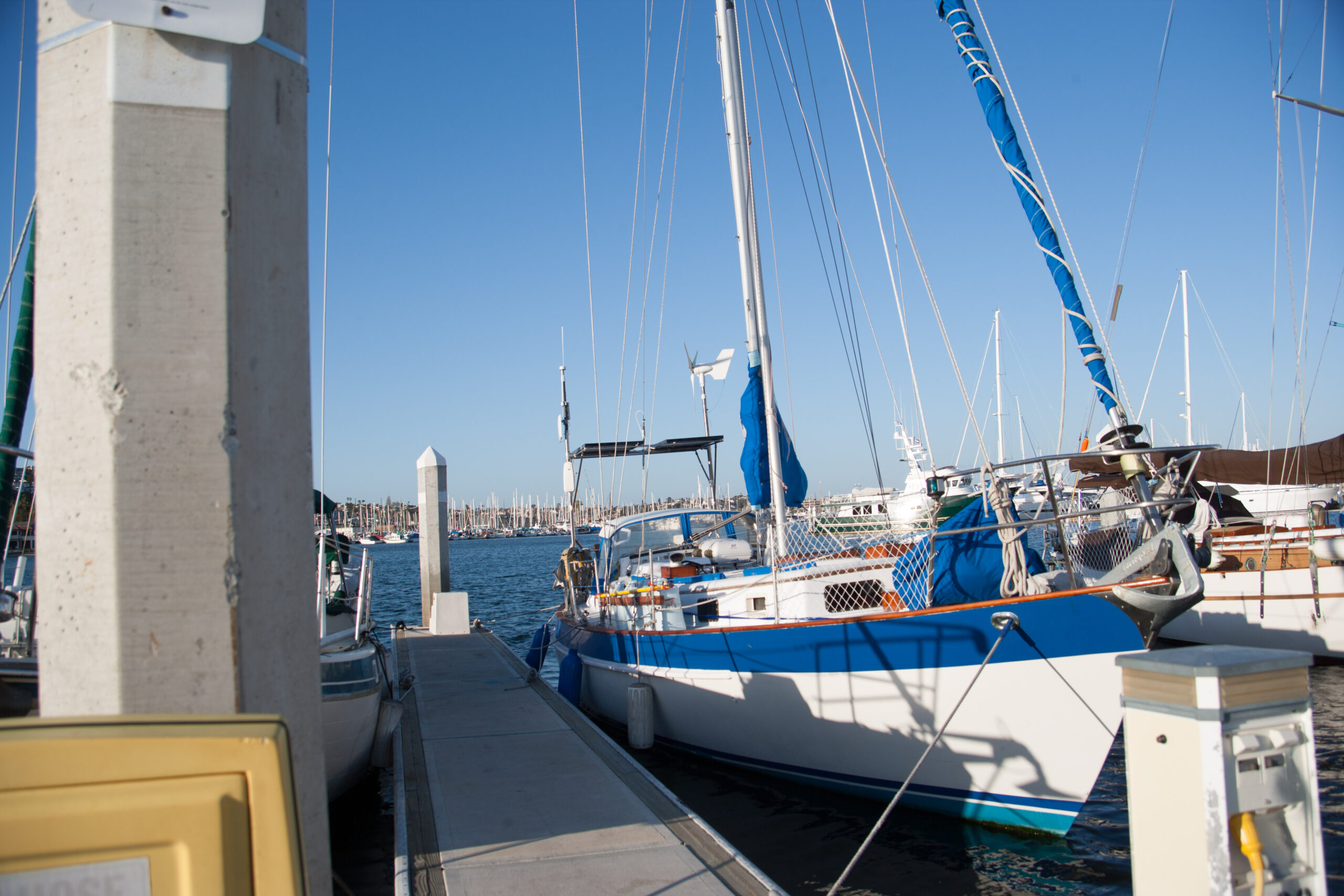
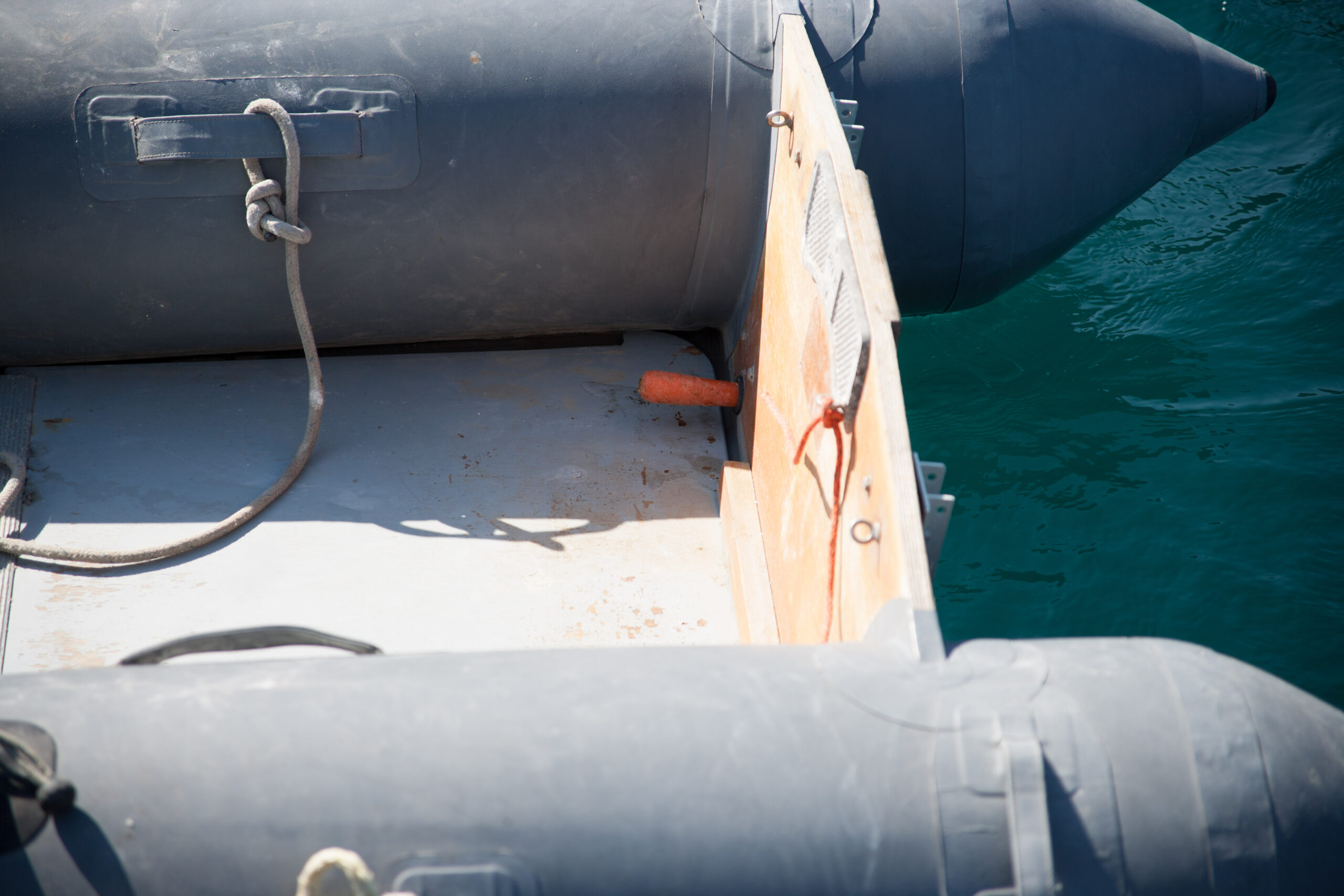
    We’ve been here four days already; we intend to depart on Tuesday. So far our San Diego m.o. is to wander around running errands and looking for parts. There’s a fair amount of logistical leftovers to deal with before we leave the country, mostly bills and taxes and online crap. Even though we’re in a slip, it’s still more convenient to take the dinghy across the harbor before we hoof it around town. The dinghy ride:

  • Video Journal 2/26/2010

  • Video Journal 2/23/2010

  • Goodbye & thanks to Pete & Ray

    Pete and Ray hopped a ferry on Catalina to catch a plane out of L.A. this past Saturday.  Karen and I are extremely grateful to them for joining us during the first leg of our journey.  Their mere presence on board to assist with watches would have been more than enough, but their assistance extended far beyond that.  Pete fixed (finally, for real) our engine overheating problem, fixed the ssb, spliced the radar wiring together, repaired the windlass after I broke it, and got our outboard running, and that’s just what I can remember off the top of my head.  Pete is better at working on boats than anyone I have either met or even heard of.  I consider myself pretty capable at this point, but I felt like a novice apprentice in the presence of Pete.  Together, Pete and Ray gave us great advice at every turn, and while we are understandably very excited to be off on our own, we will sorely miss Pete and Ray.  Thanks Pete and Ray!

    Karen and I departed Catalina on Sunday morning, bound for San Diego.  It was a joyous departure, being alone for the first time.  We experienced a consistent 20 knot winds out of the West and Northwest for the whole passage; this wind speed and direction allowed us to haul-ass the entire time.  It was a fast, enjoyable, comfortable ride.  It was wonderful to be out there alone, wonderful to be feeling good and sailing well.

    There were two notable incidents: just before sunset we were hailed by an aircraft carrier, which identified itself as being at 20,000 yards, and would we please not come closer than 5,000 yards as they were doing “night exercises”.  I thought to myself–isn’t a “yard” an inappropriate unit of distance in this case?  Later in the evening I spotted a vessel off our port bow, and after a few minutes I determined that we were converging, and not wanting to collide with them I hailed them on the radio.  During my radio call, I identified their exact position, and it took two attempts before they identified themselves as “warship 88” and thanked me as they had “only just noticed us” . . . and I thought to myself–what kind of warship doesn’t notice a sailing yacht first?  I told them not to bother altering course, as I would pass behind them.  We passed about 500 yards astern of them–close enough to see that yes, indeed, they certainly looked like a warship–and then they turned off all their lights.  WTF?  Pretty freaking unsafe to sit around with no lights on.  What kind of boat sits around out in the ocean with all its lights off, especially when it can fail to notice an approaching vessel less than 4 miles away?  Karen and I have no valid explanations.  If it was hanging out there all stealth-like to look for smugglers or illegal immigrants, then maybe they should take lessons on reading their radar effectively–we had lights on, AIS on, and were headed right for them, after all, so what kind of small unlighted illegal boats are they ever going to find?  Anyway, strange things happen out in the ocean I guess, like encountering incompetent stealth warships.
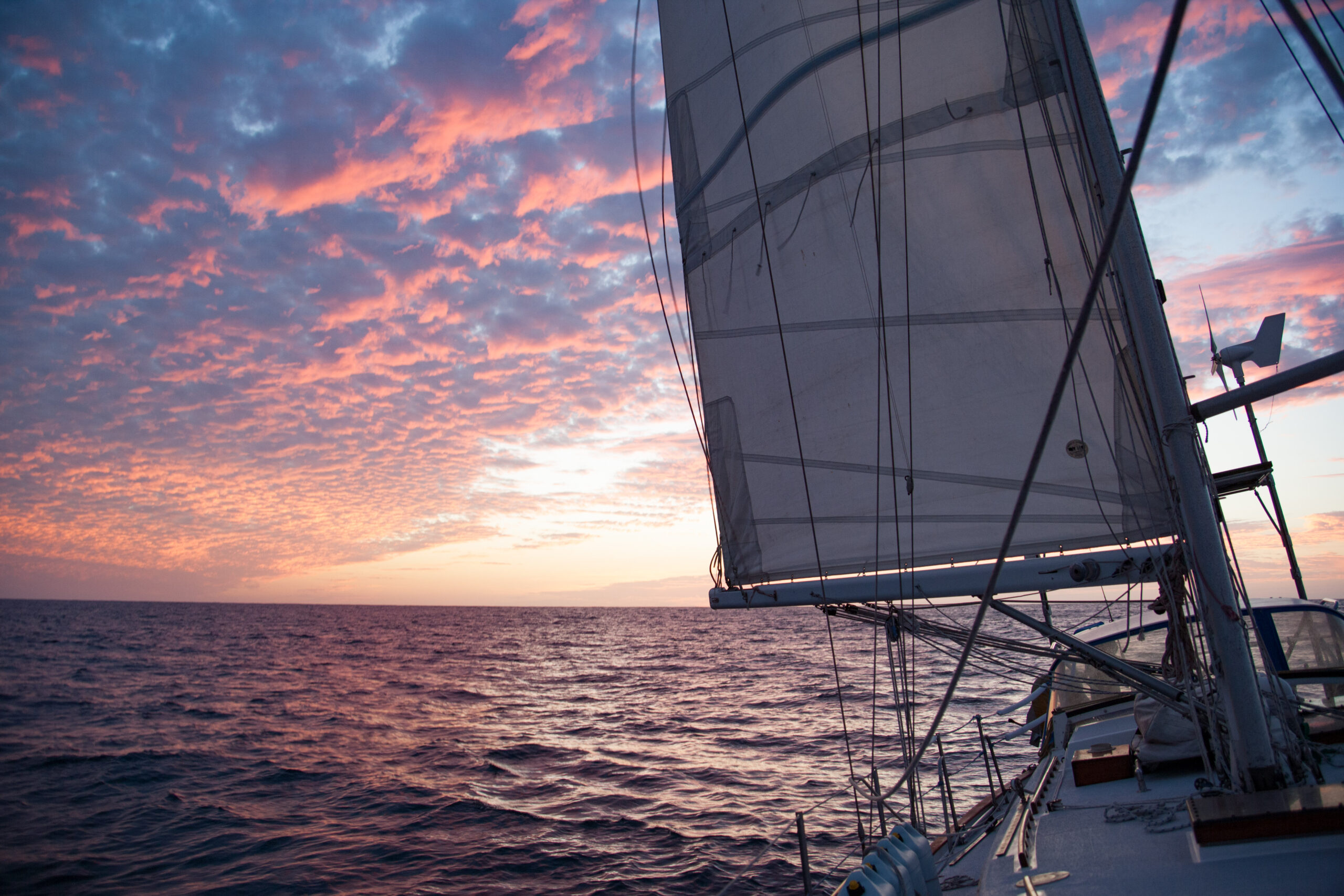
    As it turned out, we made such good time that we ended up arriving at the entrance to San Diego around midnight.  It being greatly preferred to enter during the daylight (a lesson learned during anchoring outside Santa Barbara in the dark), we decided to sail around killing time until the morning.

    We proceeded to spend the next three hours messing around with sail combinations and positions, unsuccessfully attempting to stop the boat from sailing.

    If one simply douses all the sails, attempting the sailing equivalent of “hanging out”, what happens is that the boat bobs around in the waves in a surprisingly violent way, while everything in the boat is rudely thrown from left to right and back in endless repetition until it all breaks, and furthermore sometime during that endless repetition all semblance of sanity departs from the minds of all crew on the boat.  So we don’t do that.

    Heaving to is the preferred method of “stopping” the boat.  It is a balanced state in which the force of the jib and the main sail balance each other, working against each other, holding the boat slightly into the wind, such that the boat moves neither forward nor backward, but drifts directly downwind at about 1 knot.  The basic position of the sails required to heave to is straight forward: jib sheeted to windward, main eased to leeward, rudder to leeward.  Every boat is slightly different, however, and modern boats in particular can be hard to successfully heave to (so I have been told).  I was under the impression that our boat, it being heavier, with a medium-length keel and skeg-hung rudder, would have no trouble heaving-to.  I have discovered otherwise.  None of the various methods Karen and I tried throughout the night were successful.  With greater skill no doubt I will get it right, but no matter what I did that night our boat would sail forward.  The slowest I got her to was 1.5 knots–if that was 1.5 knots drifting directly downwind I would have been satisfied, but alas it was 1.5 knots forward, and I would be satisfied with nothing less than a perfect textbook heave-to.  Perhaps that was ambitious for 3 in the morning; perhaps I was being a little insane offshore in the pitch black in a healthy 20 knots of wind, but we were trying to kill time anyway and what else better did I have to do?  Our boat would not be stopped.  Don’t get me wrong, I am glad that our boat loves to sail, but clearly it will require further practice to get her to stop.

    After four hours of putting sails up and down in the dark, within sight of all the lights of San Diego, Karen and I convinced ourselves that it would be just fine to enter the bay in the dark after all.  We motored up the channel without incident, and were directed by the harbor police to tie up to a quarantine buoy for the rest of the night.  This accomplished, we passed out for three hours, roused ourselves to motor over to the “cop dock” as they call it around here, and procured a transient slip for a few days at $10.50 a night in which to park the boat.

    In retrospect, I am not happy with our late-night change of plans decision to enter the harbor.  If we thought it was a poor choice at the start of the evening, it was certainly a worse decision after we were considerably more tired out.  It all turned out to be perfectly fine and there were no close calls or dangerous aspects of entering the harbor, but it was still the wrong choice.  With or without achieving a  perfect heave-to, we could simply have sailed back and forth for a few more hours.  Tiredness can be an unbelievably powerful force–somehow it convinced me at 4 in the morning that it would be light by the time we got into the harbor proper, which was a silly thing to believe considering it only took us 40 minutes from that point to reach the quarantine buoy.   I suspect there will be many tired situations in the future, and so we would do well to remember it and to steel ourselves against it.

    All in all, though, it was a safe and enjoyable first passage for Karen and I, and it greatly eased our minds about our ability to sail alone in a comfortable and happy fashion.

    And, to the present: I am glad to be stationary in San Diego for a few days.  We have a number of errands on our list: we need to tie up loose ends from our former life (bills, taxes, etc), purchase spares, and do a few maintenance tasks on the boat.  It will be our last convenient chance to take care of things before heading into mexico–which we hope to do in about a week.

  • Video Journal 2/21/2010

  • Sailing to San Diego, Karen & Matt alone

  • An undesirable encounter (or Balls to the Walls)

    written by Karen, originally posted on her blog

    At 3:37AM (I know because we have a clock velcroed to the ceiling of the quarterberth) I awoke to an awful sound.  A dull, heavy, rolling thudthudthudthudthud echoing through the water.  “Matt!” I whispered.  “Did you hear that?” and then the dread of every cruiser – “I think our anchor might be dragging.”  Seconds later, I heard it again.  A slow thudthudthudthud. “Matt! What IS that?” I sat up, ready to jump over Matt and go check outside.  There it was again. “That is not cool.”   Matt, groggy from sleep started to slowly slide his body out of bed.

    Then, “Hey,” Ray shouts from the v-berth, right under the windlass and just behind the chain locker where our anchor is ultimately secured to the boat.  “Matt! I think you’re letting out rode!”  Rode is fancy sailor lingo for the chain or rope that is attached to the anchor.

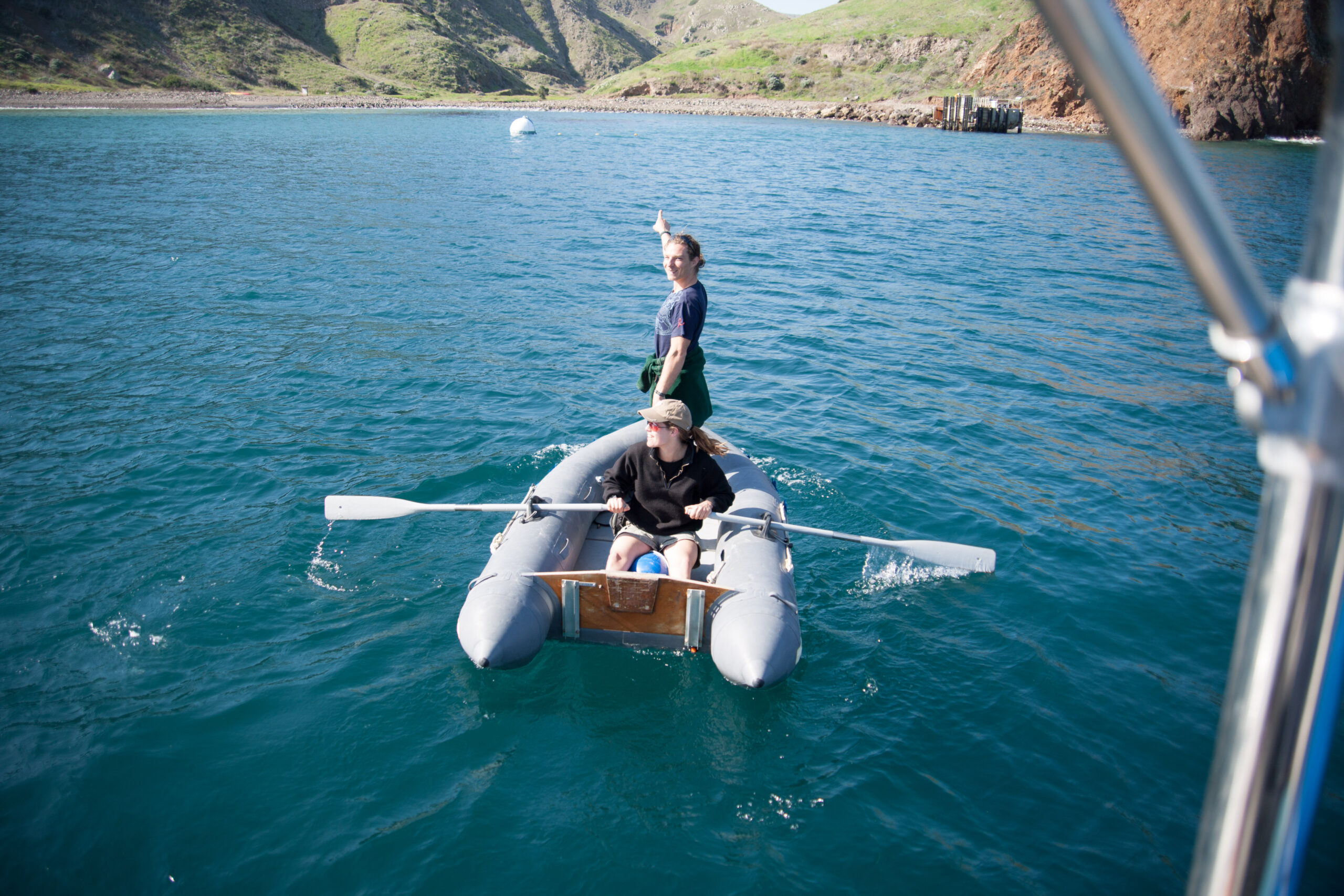
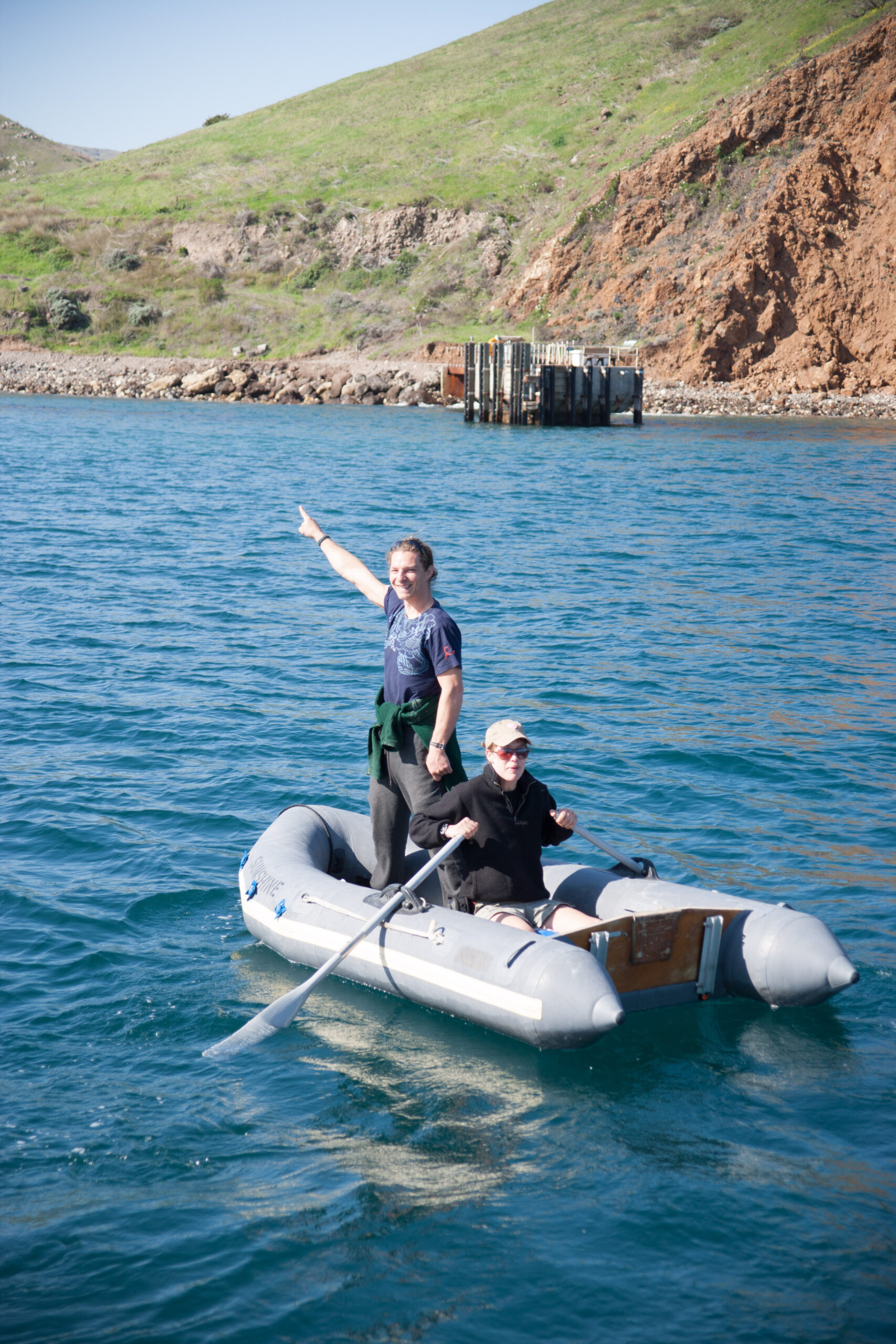
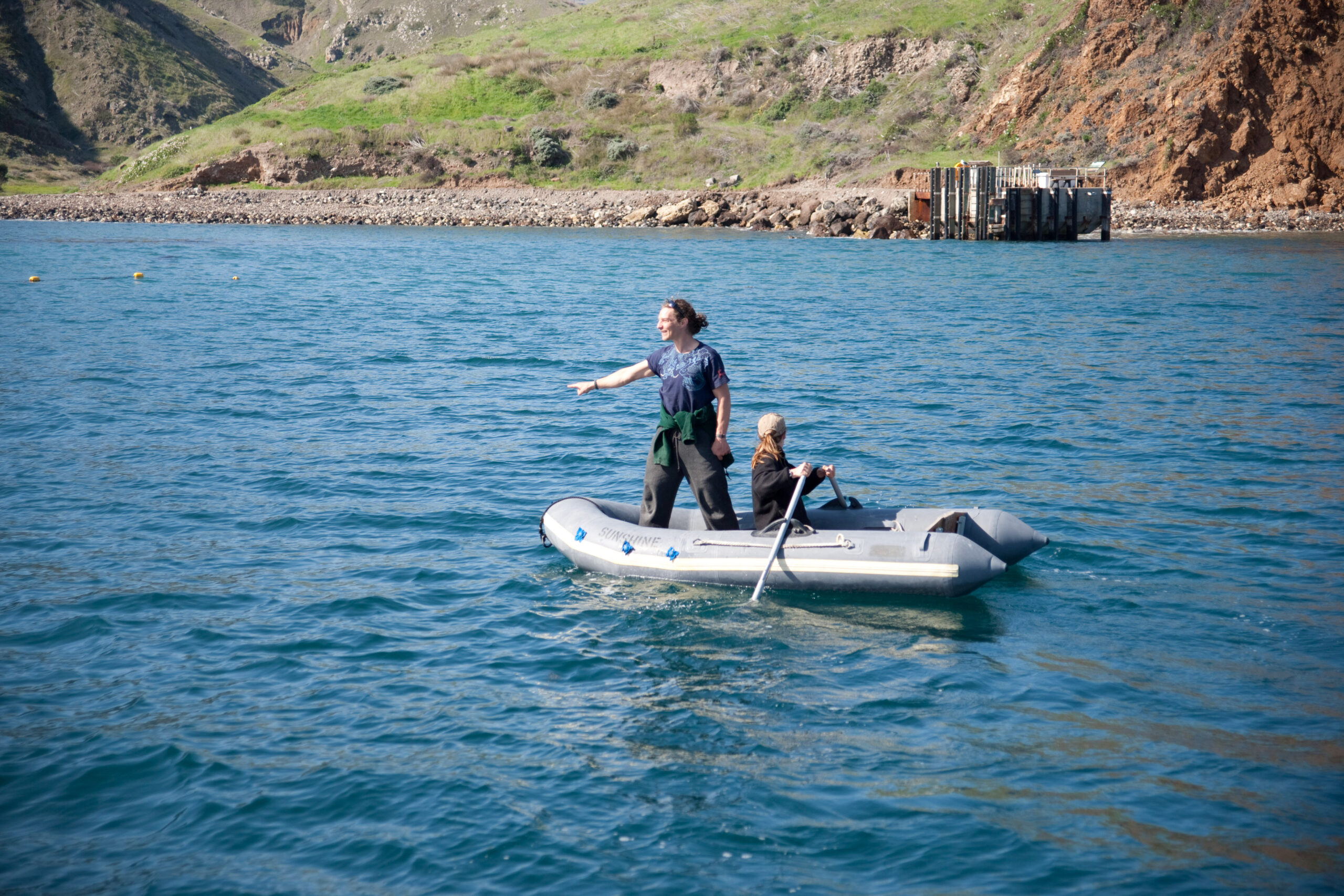
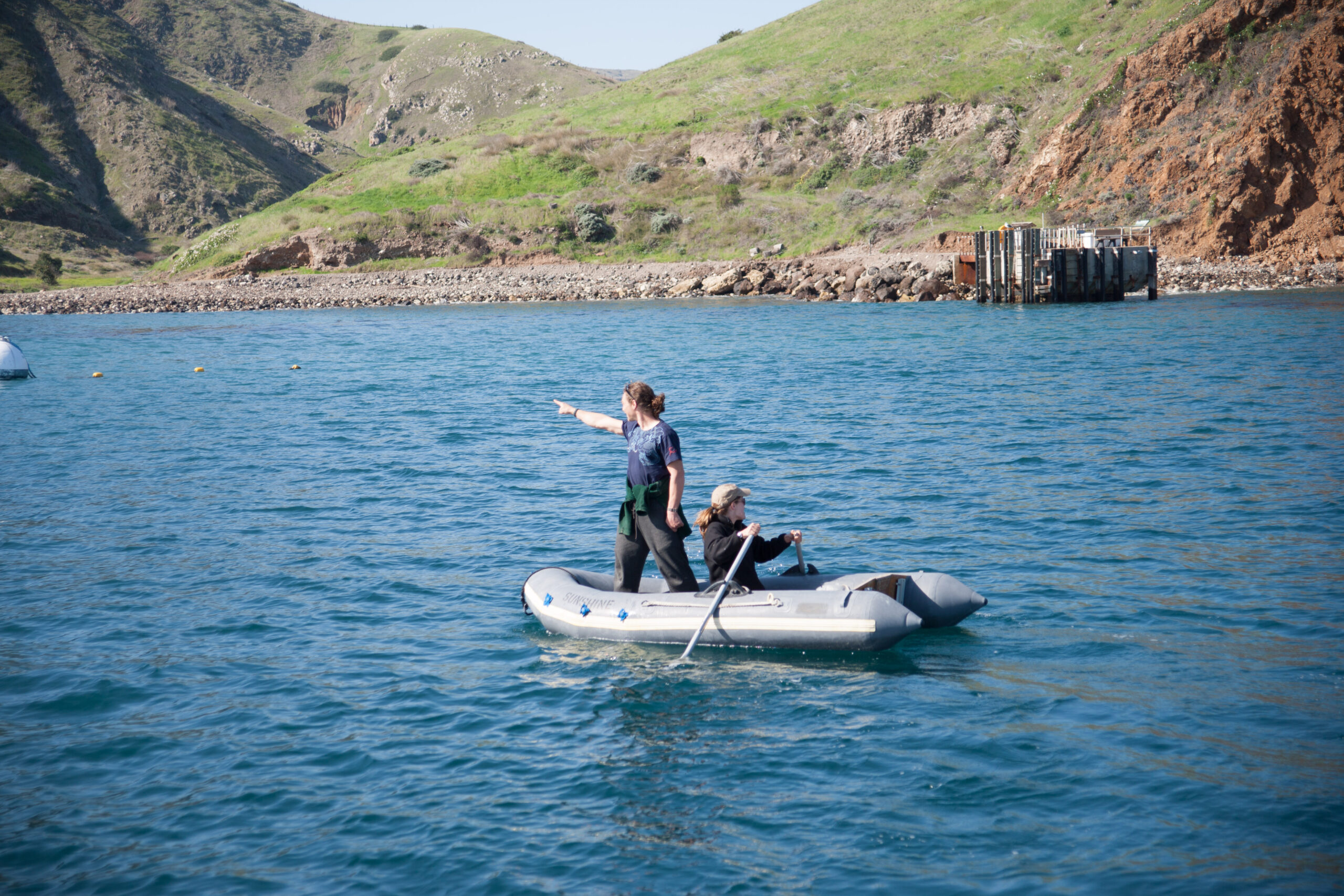
    We all throw on clothes and scramble up on deck.  The cove could not be calmer, with light wind and ripply little waves.  We’re slightly confused and then we hear a new noise, a crude, but gentle thumping, and we see it – our dinghy, which was secured by a short line to the stern of the boat, was unabashedly hooking up with a mooring stick while the mooring ball jealously bumped against us.

    We had intentionally anchored close to a mooring field.  A mooring field is basically a parking lot for boats.  There are pre-set anchored floaties that you can tie your boat to (using the mooring stick) instead of throwing down an anchor yourself.  Just like a parking lot, mooring fields help maximize the number of boats you can get into an area and prevent boats from taking too much swinging room. When we set our anchor the other day, we considered our tiny cove and Matt sensibly rationalized that if we dragged anchor or the wind shifted, etc., it was better to roll up on a mooring buoy than on the rocks.  So, when we saw our dinghy in its amorous embrace with a mooring stick, we were appropriately surprised, but not entirely shocked.

    While our dinghy lovingly caressed the slender figure, its sulky mooring ball lingered close by clinging to our hull, the petulant wingman.  We yanked the dinghy alongside the boat like a naughty child and untangled ourselves from the mooring lines.  Matt pulled up some of our anchor rode to put distance between us and the temptress and we all went back to sleep…

    Until ten minutes later when we hear an insistent banging against the hull.  Apparently the mooring ball was upset that our dinghy abandoned its friend without so much as a kiss goodnight.  Matt and I go up on deck to see the ball beating the boat, the mooring stick bobbing shyly in the background.  Matt hauls in some more rode, we stare down the mooring ball, and we return down below.

    A half hour passes, and I hear a subtle, then not-so-subtle metal tapping.  I am debating whether it’s something outside or simply our pots and pans shifting around in the cabinets when the sound goes away.  I hear it again about 20 minutes later.  This time, I realize that it’s the mooring stick wondering if maybe our dinghy can come back out to play, perhaps they can watch the sunrise together?  I wake Matt up and we go up top again to see the unrelenting stick hiding behind our wind steering device.  Seagulls perched on nearby mooring balls laugh mercilessly as we stand in the early light figuring out what to do.

    We decide to set a second anchor to prevent us from drifting back into the mooring field.  Winds are expected to shift mid-morning and there’s no need to disturb our nicely set primary anchor.  Matt revs up the dinghy and heads out to drop the second anchor, only to realize after he’s dropped it and let out all 300+ feet of the rode, that he’s short of the boat by about 20 feet. He looks back at me from the dinghy, smiling sheepishly, holding the last bit of line in his hand.  Reluctantly, he starts pulling up all that line and then resets the anchor.

    Exhausted when he returns, he hands me the line and tells me to winch it in so our stern is turned into the wind, putting us bow-on to the mooring field.  Almost 40 minutes later, Matt is sprawled out in the cockpit asleep, I’ve seen a lovely sunrise and my arms are aching from winding in all that rode.  BUT –  we are free from the mooring lines and shouldn’t have to worry about any flirtatious sticks or our anchors if this coming storm turns out to be anything interesting.

    Needless to say, we learned several lessons this morning and I feel fairly lucky that this is the most excitement we’ve seen so far.

  • Anchoring lessons in the channel islands

    We made a lazy departure from Santa Barbara mid-morning on the 17th. Our priorities for the passage were to avoid motoring if possible, and to make our next landfall (wherever it might be) during the daylight–no more anchoring during the dark if at all possible. The first half of the day was the most pleasant sailing so far, in consistent ~10knots of wind off the starboard beam, with a 3 foot 15 second swell.  Meaning: the wind was a decent breeze coming directly in over the right side of the boat, and the ocean waves lifted us up 3 ft and down 3 ft (total 6 feet peak to trough) every 15 seconds, which is a barely discernible rise and fall.  Further meaning: the motion of the boat was extremely steady, the sails stayed nicely filled, and the wind was light enough that lounging in the cockpit still felt warm and balmy.

    We had bit the bullet and purchased a cruising guide to the islands offshore from the West Marine in Santa Barbara–that turned out to be a very good decision. My charts for most of the channel islands coastlines are not very detailed, and the two anchorages we have experienced so far are small and difficult.

    The purpose of an anchorage is to 1) provide shelter from wind and waves, in that order, respectively and 2) to provide access to land.  The unfortunate trade-off of being in an anchorage is the possibility of contact with land.  It is difficult to overstate exactly how undesirable it is to make contact with land in a sailboat.  For a boat even to “bump up” against any piece of land will almost assuredly result in the boat sinking (unless of course your boat is made out of metal, as Pete never loses a chance to mention–but his metal boat is very heavy and sails very slowly though, so I forgive him for remembering the benefits of metal whenever possible :-).

    Anchoring up against the land is like bringing your hand up next to a candle flame for warmth–the warmest you will be is right before you get burned.  Anchoring is just such a gambit: you are angling for protection, but the most protected spot is right up close against the very land that will sink your boat at the slightest contact.

    We pulled into the “Scorpion” anchorage on the night of the 17th just before dark, and it was easy to see that being in that spot provided very little in the way of protection from either the wind or waves.  In this case, the word “cove” was completely misleading.  The cliffs were sharp and hard looking, and instinctively I wanted to stay away.  However, a comfortable half a mile away from land, the depth was well over a hundred feet and we may as well have just floated around the ocean, for all the protection to be gained by the spot.  A quarter of a mile away, the depth was finally shallow enough for us to anchor.   It felt very close to the rocks.  Pete assured me that we would experience anchoring situations far closer, so we dropped the “hook”.

    Part of the anchoring process is to “back down” on the anchor: one puts the motor into reverse and backs up on the anchor to better dig it into the bottom, and to test that it will hold well.  The first time I backed down on our anchor that night, it started dragging.  I let it settle (did nothing else) and backed down again and it held.  The process had taken close to an hour and we were tired and cold and the wind was blowing us away from the land, safely out towards open water, so at that moment it seemed like our anchoring job was perfectly safe and solid, well done let’s get warm and have a drink, etc.  Then of course the wind shifted just after we got into bed, blowing us diagonally towards the land, and all of a sudden those rocks looked much closer, and much much sharper than they had a few hours earlier.  The fact that the anchor had dragged the first time I had backed down on it came back to haunt me–why did it drag the first time and not the second?  I didn’t do anything differently the second time.  Was it just chance?  If I had backed down on it a third time, would it have dragged?  Given these thoughts, of course I couldn’t sleep well.

    We didn’t drag that night, and everything was fine.  I paid for this lesson with lost sleep, elevated anxiety.

    The next day we departed for Catalina.  We arrived at the twin harbors area the following afternoon, after a sleepless night on passage bobbing around in zero wind (yet another eventually fruitless attempt to avoid using the motor).  After checking out and dismissing the cherry cove anchorage (full of moorings, not a single spot to anchor) we radioed the harbor patrol to ask where, exactly, was a spot for us to anchor that wasn’t completely full of mooring balls.  We ended up in little fisherman cove.

    Yet again, “cove” was innappropriately applied.  More like little fisherman beach, or even more accurately little fisherman bit-of-sand-next-to-more-sharp-rocks.  I positioned us equidistant from rocks and mooring balls, as far away from land as seemed sensible given that we still needed some bottom under us in which to anchor, and that the whole point again is to actually have some protection.  We set the hook, backed down, and all was well.  We went ashore, did shore stuff like shower and laundry and eat french fries, we came back to the boat and ate a great meal, we slept well, the cruising life was good that night, and in this case what I mean by that is that it was actually relaxing and free of anxiety.

    Last night we woke up to the sound of our boat banging up against something–this is an unfortunate way to be awakened at 3 in the morning.  It turned out to be a mooring ball–the wind had shifted 180, and apparently our anchor rode was about thirty feet too long to come up short of the mooring ball, and forty feet too short to float past it and tangle us all up in it.  To be frank, at 3 in the morning in my underwear I could have cared less if our rode had fouled around the mooring ball, if only the damn thing wouldn’t have banged against our hull, and then I would have slept for a few more hours and the tangled mess would have at least been a post-breakfast task.

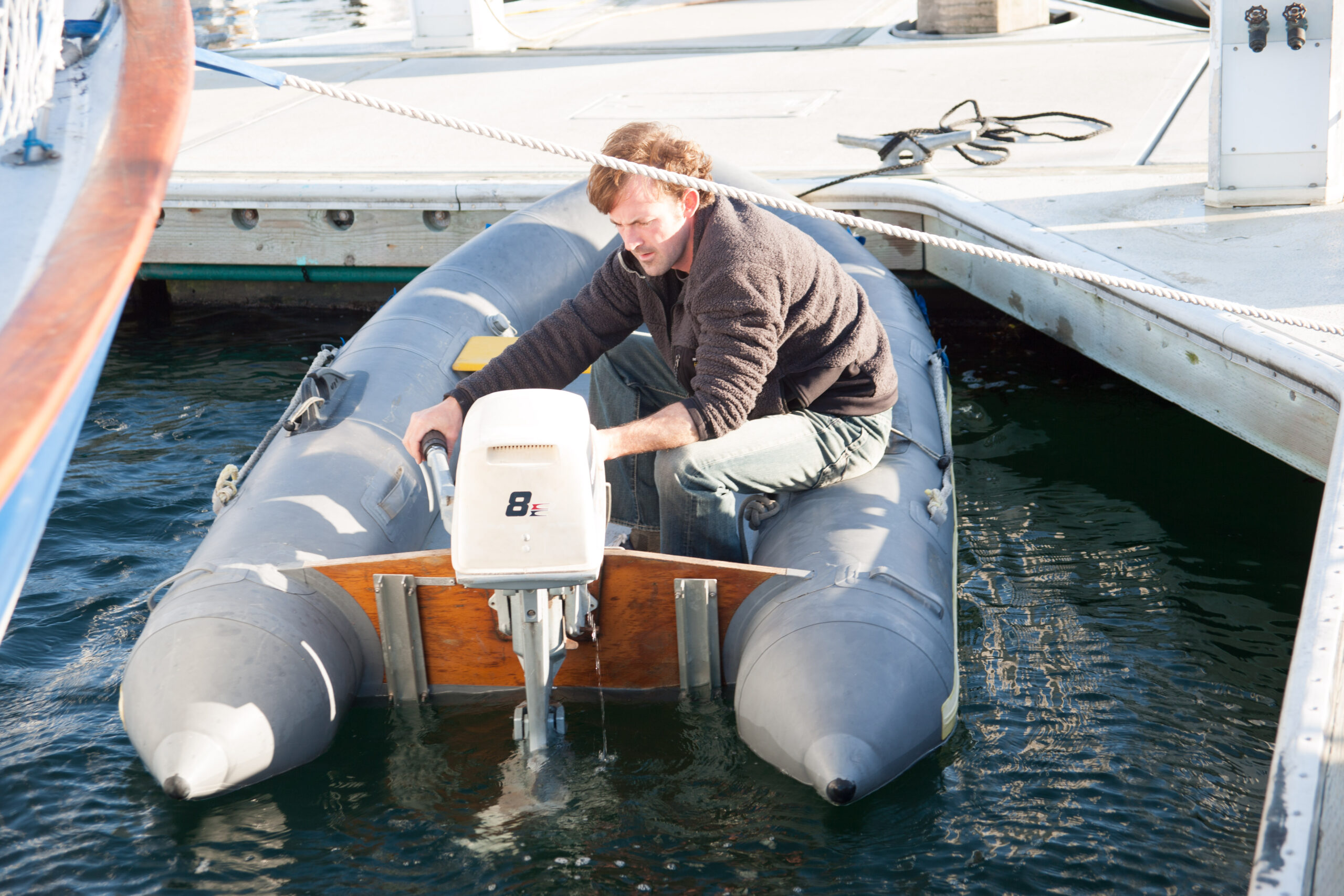
    I pulled in 25 feet of our anchor rode–leaving 105 feet of anchor rode in 35 feet of water, or a scope of 3:1.  A scope of 3:1 is the minimum that I was willing to go to, given the situation (usually 5:1 is really nice and 7:1 is overkill).  The mooring ball floated about 10 feet astern of us.  I went back to sleep.  I had just enough time to fall asleep before the damned ball started banging on the hull again.  Given that I was unwilling to shorten the rode any more, I pulled out a second anchor, emptied out the cockpit locker to find the rope rode for it, tied the 300 feet of rope rode onto the anchor, dumped it into the bottom of the dinghy, spent five minutes trying to start the outboard, motored out the second anchor in the dinghy as far as I thought my rope rode would reach, lowered it to the bottom (about 70 ft), motored back to the boat . . . and ran out of rode about 15 feet away from the boat.  Spent 20 minutes pulling the rode and anchor back in, motored 30 feet closer to the boat, lowered the anchor again, went back to the boat, reached it this time, put it onto a winch, then fell asleep laying in the cockpit as karen winched the boat in a hundred feet toward the second anchor.

    Moral: anchoring is a skill learned solely through trial and error, and each lesson comes at a high cost.  The price of the tuition is paid with sleeplessness anxiety and unwanted unexpected frantic activity in the middle-of-the-night.  The consequences of failure can be high.  Karen wrote a less serious post about it that I recommend, as an antidote to my worried writing . . .

  • Where’s the happiness?

    When picturing our departure from the bay area, I always imagined a rapid sense of relief at the work being over, followed immediately by simple happiness and enjoyment of the journey.

    It has not been that way.  I have been reluctant to admit this to everyone, because my deep fear has been that I made a colossal mistake, that I won’t end up liking this way of life, and I could barely entertain the consequences of that realization in my own brain, let alone tell the world that I have spent the past few years and all my money pursuing an activity that I don’t like . . .

    However, the past few days I have felt my emotions coming around, and I have spent some time thinking about why, exactly, I haven’t seemed to be enjoying myself.  Before leaving the bay, I was spending every waking hour working on the boat getting it ready, and simultaneously spending tons of our savings.  This grew increasingly unpleasant, and I looked towards our departure for a change.  I assumed that upon leaving, all would be well.  But in retrospect it is clear that we experienced no break or relaxation once we left the bay.  It was difficult to sleep well while sailing down the coast, difficult to trust that the motor wouldn’t break, difficult to sleep again after breaking the windlass, difficult to unwind after discovering crucial bits of the rigging that needed tightening, difficult to relax while spending $35 a day in a santa barbara slip, and difficult to sleep again while anchored next to sharp rocks (see next post).

    Also, anxiety about the proper functioning of the boat started out high, and is only now just barely starting to ease.  There are still a dozen jobs on the boat that seem to fall under the category of “immediate attention required”–but I don’t have enough attention to go around . . .  More importantly, Karen and I still have a ridiculous amount to learn, all to be acquired through direct experience (i.e. trial and error), and all of which is important for us to know right now.

    With a clearer perspective, I can see that these sources of anxiety were normal, and to be expected, and I can cut myself a break for not finding immediate joy in the start of the trip.  Time is resolving these sources of stress, and in the past few days I have felt a definite lightening of the load.  As we start to trust the boat and trust ourselves, my anxieties decrease.  Each night that we spend on the boat while safely anchored increases my ability to sleep soundly.  And there is less and less that requires immediate attention, so the moments of relaxation are increasing.  Admittedly, I have been somewhat out of practice–of relaxing, that is.  Now I am having moments where I feel good, and happy, and excited about what is coming, free of undue worry.  It took longer than expected to feel this way; I cannot tell you what a relief it is to finally be truly enjoying myself and this wild adventure we’re on!

  • Passage: Santa Cruz to Catalina

  • AIS–worth every penny

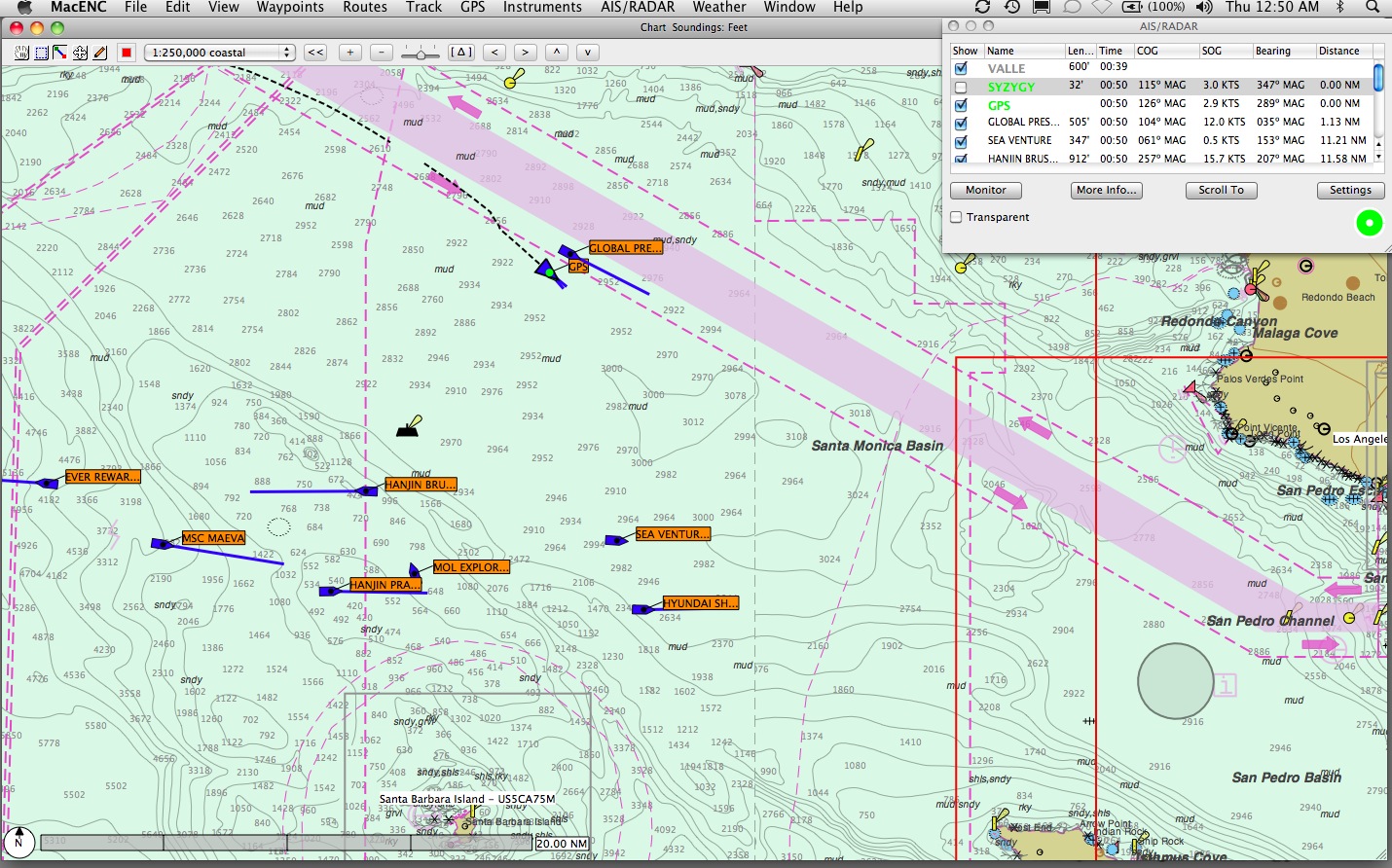
    an example of why the AIS has been awesome.

    In the middle of Karen and my night watch between Santa Cruz and Catalina, while we were still on the edge of the shipping lane, we were enveloped in dense fog.  I aimed us out of the shipping lane and turned on the radar, but the AIS was the true hero.

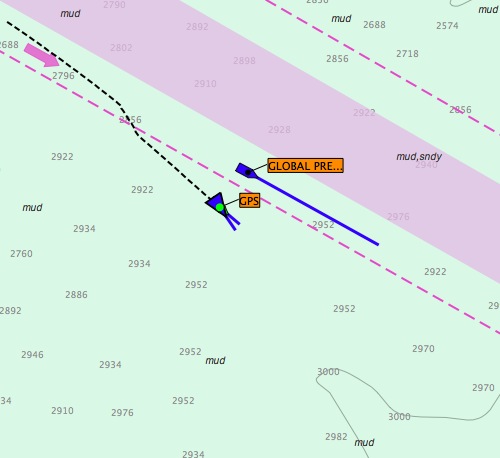
    We had a 505′ container ship come up behind us doing 20 knots, and because I had the AIS and I could see where they were and where they were headed the whole time, I didn’t even have a need to hail them on the VHF, and never had any reason to worry about them.  They ended up passing less than a half mile to port of us–we never saw or heard them.  During all of this, the radar was most unhelpful.  When the ship was a mile away I could see her as a small blob on the radar (largely because I knew where to look from the AIS, and as she passed us at a half mile, the radar showed her as an amorphous blob extending for over 125 degrees worth of our horizon–as if an entire island was headed our way.

    I took two screenshots from the AIS while it was happening, to show off here.  The first one shows the container ship passing us, the second one shows how we could see all sorts of other traffic headed out of LA, through which we passed uneventfully later that night.

  • Passage: Santa Barbara to Santa Cruz

  • First Leg

    I’m writing this post from a cafe in Santa Barbara.  We left the slip in the Emeryville Marina on the morning of Wednesday the 10th, filled our diesel tank with fuel, then motored straight out of the bay.

    For the first 24 hours after pulling out of that slip, I was constantly waiting for something to break, or someone to make us go back, or perhaps even for someone to wake me up from a dream.  After everything that goes into this project and after so many setbacks problems letdowns and asskickers, the scalded and scarred side of me made it impossible to believe in the moment when that moment came.  Only in retrospect can I say with confidence that 2/10/10 was the day we left.  For good.

    The weather was kind to us.  A third of the time we had enough wind for decent sailing, a third of the time the wind was super light and the only sail we could keep full was Jon’s drifter; here’s some footage of Jon’s sail doing her thing:

    Big props Jon for that sail–nothing else would have worked and that sail is the BOMB.

    A third of the time there wasn’t enough wind to fill any sail.  As mentioned in an earlier post, the weather off the west coast this time of year can be rough, so we elected to keep moving forward, even if we had to turn on the engine to do so.  You may recall that earlier in the week our departure was thwarted by an overheating engine; after 25 hours worth of motoring in which the engine temp never went above 167, it’s safe to say that the overheating problem has been fixed.

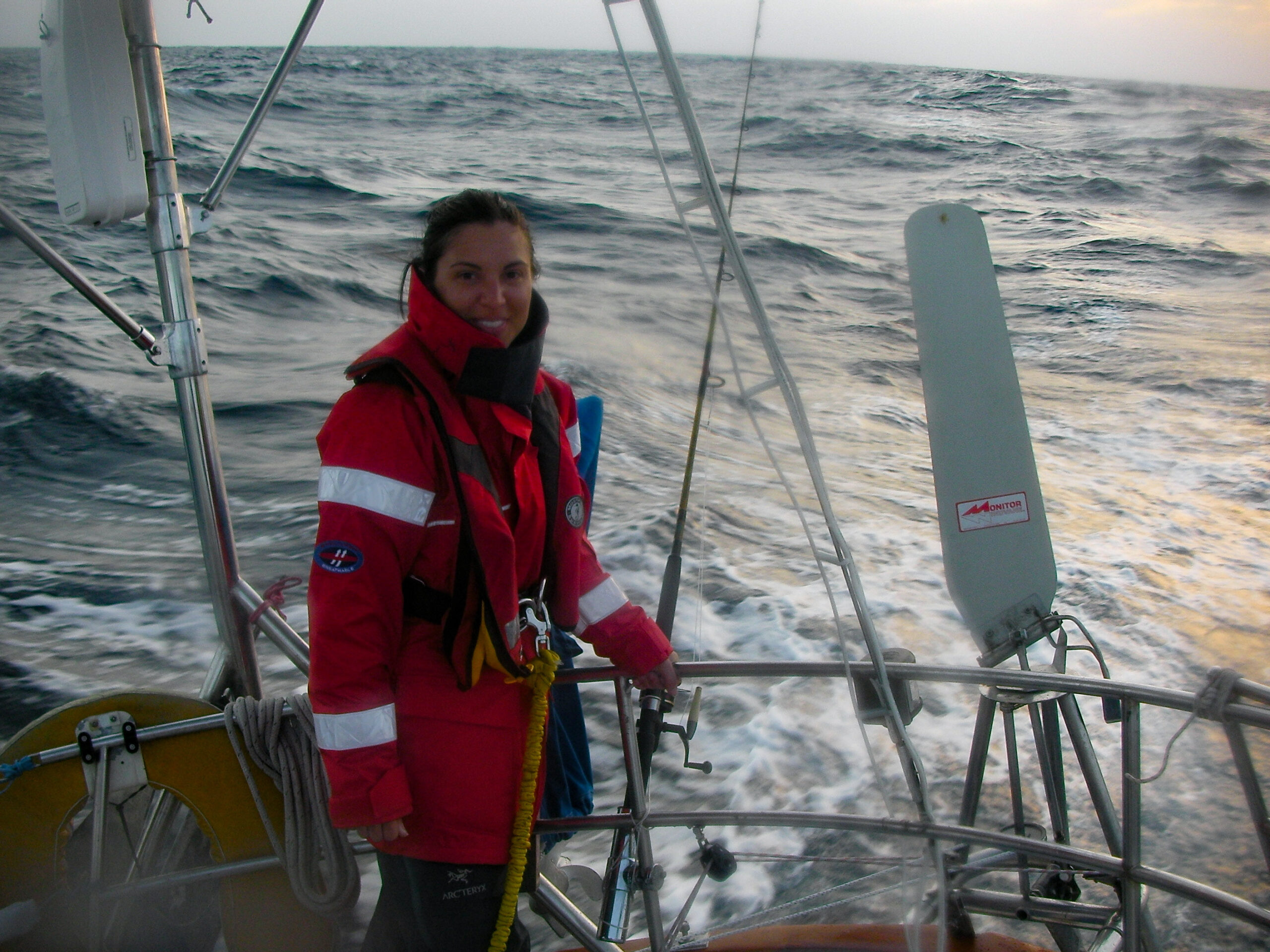
    We rounded Point Conception in the middle of the day yesterday–Point Conception is the spot on the California coast where the land takes a sharp turn to the east.  After Point Conception, the wind drops, the temperatures rise, and the winter storms in the pacific become less of a worry.  I had been warned to be cautious with the rounding–it sticks right out there in the pacific, so the wind and seas are frequently big and dangerous.  After days of light wind, I must grudgingly admit that I was rather hoping for something dramatic.  We approached the point with barely enough wind to fill the drifter by itself; less than an hour later we were speeding along at 8 knots, surfing to 10, under a full genoa and double reefed main.  8 knots on land isn’t very impressive–8 knots in my boat feels like the boat is trying to lift off and fly right out of the ocean.  It was a glorious day.  And the boat was glorious.  She sailed herself (with the Monitor windvane at the helm), and we kicked back and had a beer while the boat surfed the waves and, to be blunt, hauled ass.  It was something else, watching the boat sail herself in conditions that would have had a human skipper working hard at the wheel.  It was something great, is what it was.

    It was a dark night full of stars last night, and we were still sailing fast when Pete and Ray called Karen and I away from making dinner in the galley, to join them on the bow.  The stars were bright, the bow and the ocean were inky black, and the school of dolphins was enveloped in a glowing phosphorence as they played with our bow, swimming along with us, zipping back and forth and over and under each other, racing Syzygy in the ocean.  As they swam the the phosphorescence formed a cocoon of light around their bodies which trailed off behind them, like a comet’s tail.  Their motions made a whishing sort of sound, like a dozen torpedoes through the water, much louder than I could have expected.  That sound testified to the speed and power of their swimming.  They were fast.  So fast . . . When picturing how such an experience would appear, I never thought about the sound, and I never realized how ridiculously strong a water creature would have to be to move so fast and agilely through the water.  Dolphins are powerful, the experience was powerful.

    We reached Santa Barbara at 3am last night.  Driving straight towards thousands of lights on shore in the middle of the night is tricky–you’re used to miles and miles of empty space all around and all of a sudden you are so close you could damn near throw a rock onto dry land.  There’s nothing worse for a boat than dry land–except maybe a container ship–and it is oh so hard to see anything in the ocean at night until you can almost reach out and touch it.  Anyway, it may have seemed like I was warming you the reader up to some climax in which I ran our boat hard aground after the very first passage, but fortunately not.  I learned two important lessons though:
    1) don’t make landfall at night unless you absolutely have to.
    2) don’t break your windlass.  While setting the anchor in the dark and in my tiredness, I made the mistake of backing down on our anchor at nearly full speed.  That’s 23 thousand pounds of boat coming to a rapid stop, and the windlass took the brunt of that force.  When the chain came violently taut it totally mangled our windlass–the same windlass that we painstakingly dismantled and serviced with loving care last month.  I think that we can fix it back to some working state, but it hurts my heart to have messed it up right at the end of an otherwise beautiful passage.  However.  If that was our payment for the rest of the otherwise safe and successful passage, I pay it gladly.

    So for tonight we are at a slip in the marina here, as we bent various bits of the windlass back into place (I say we but actually I think Pete may finish the job in the time it takes me to finish this post).  It’s warm and sunny, and life feels really really good to me right now.

  • Video Journal from 2/12/10