Syzygy Sailing

Bought a boat, fixed a boat, sailed to Australia, sold the boat.

  • Free advice

    The other day, as I was using a grinder up on deck (I’d earlier drilled 18 holes, cored them, and filled them with epoxy in preparation for installing two rails to fasten the dinghy onto), a fella walked by and offered the best kind of advice there is: free advice.

    He was wearing a gray t-shirt from which his stomach protruded, and he had a beer in hand. It was maybe noon. I liked him already.

    “So when are you leaving?” he asked.

    I pulled my ear plugs out and turned off the grinder, and he repeated his question.

    “Not for more than a year,” I said.

    “Well, remember, after you’re all stocked up on food, then buy your electronics.”

    “Sounds like good advice,” I said.

    “Yeah, well, I’ve wrecked all my fuckin’ electronics.”

    He went on… he said he’d spent his whole life sailing in Maine — in fog so thick you couldn’t see your hand, and in which GPS didn’t work worth a damn — and that he’d only run aground once, “and that’s cause I was piss drunk.”

    Here’s thanks for his advice, and envy for his stories.

  • a devastating reminder

    A fire destroyed a nearby boat two days ago, and I’ve heard speculation that the fire could have been caused by: a) a cell phone charger or battery or b) a way-too-small shore-power cable or c) some other electrical short circuit created by a leak.

    I am, of course, relieved that Syzygy is safe, that we installed GFCI (Ground Fault Cicuit Interrupter) outlets, that we have removed so much old/janky/dangerous wiring and properly fused all circuits — but I am nonetheless, hyper aware of how many things could start a fire. I am, you could say, frazzled. Most people around here are.

    Here’s the account I wrote Monday, a couple of hours after running over to help put out the fire.

    —-

    I’m on my boat, sopping wet and shivering and trying to stop my heart from racing.

    Here’s what happened.

    A few hours ago I hobbled off to go take a shit. (I was literally hobbling because i ran a half marathon yesterday, and I’m sore as hell). I had on a hat and a hoodie with the hood up and a jacket with a hood, and with the driving wind/rain I put my head down and limped there. I wonder, now, if I hadn’t had so many hoods on if I’d have noticed anything sooner.

    On the way out of the restroom (which is about 50 yards from the docks), I saw a guy in a red jacket throw something in the trash, and then I looked toward the boats, where I saw a bright orange flame. It was so incongruous in the heavy rain, so not-supposed-to-be-there, that without thinking I sprinted towards the marina. As I ran i pulled out my cell phone and called 911, and then I realized the flames were coming from somewhere very close to our boat. Oh shit. I hoped not. How could… Oh shit. Oh shit. My heart pounded. (I only now just realized that I was able to run, and how fast I ran. adrenaline is an amazing thing.)

    The boat that was burning was two boats to the north of mine, owned by the nicest guy in the world, named (_deleted_). He always stopped by to chat, and regularly shared ice cream with me. Apparently he had left his boat about 45 minutes earlier.

    I did not know this as I ran to the boat. All I knew was that I needed to grab a hose and start putting out the fire. The fire was so scary that I don’t think I felt any relief that my own boat wasn’t burning. It’s like there was no room to think of that. There were four or five of us, everyone dressed up in full rain gear, in the pouring rain, spraying water into, onto, and through every bit of the burning boat. Half the windows had shattered from the fire, and smoke was slinking out of every hole. I heard that the canvas on the boat to the south — the one between the burning boat and this one – was steaming from the heat of the fire.

    One doessn’t usually associate spraying a hose with adrenaline, but so be it. I worried that maybe the gas tank would catch fire/explode… but there was so much water getting spayed in that it seemed unlikely. One guy was standing on the foredeck, spraying water into the cabin. He didn’t seem worried.

    I heard fire engines in the distance, and within minutes a crew of firemen arrived. I ran over to my boat and grabbed my video camera, then followed them towards the charred boat. There may be no sadder picture in the world than a fireman with an axe chopping through charred remains on a boat floating in the water. It is devastating. I saw as the firemen poked through stacks of magazines, credit card bills, clothes, and mostly unidentifiable black remains.

    Worse, the boat owner’s elderly dog was aboard, and died in the fire. She had arthritis and a bad hip, and couldn’t jump up onto or down from the boat, The owner always used to do this very funny/patient routine in which he acted as a little dog elevator at the front of the deck. I saw the dog’s body in the stern of the boat, one short, impossible jump from safety. To die in a fire is a god-awful thing.

    There is, actually, a sadder picture in the world than a burnt boat, and that’s watching the owner of the boat arrive on the scene to discover that his house, possessions, and beloved dog are all gone. He came running up the dock in jeans and a flannel shirt. Nobody made eye contact. I turned off my video camera. By now there were only a few of standing around, because after I’d said “I don’t think i want to be here to see the owner arrive,” most of the others, out of a dozen, retreated humbly to their own boats. This was a smart, if not courageous, move. I stood there in the rain, and saw him break down in despair after he peaked in and saw his dog’s body. Someone gave him a towel to keep dry, and someone else held an umbrella over him, and someone else put an arm around him, while it continued to pour. He sobbed, put his hands to his head, asked someone to please cover his dog, fell to his knees… while the police inspector tried, as professionally as possible, to inquire about the circumstances of the fire. At the same time, one of the firefighters asked us if we knew anything about power boats, because he was searching for the batteries on the boat to no avail (i think most everything burnt).

    I heard the owner say that he had left nothing on, no power, no stove, no flames or anything – so I wonder if the cause of the fire will be determined, of if the boat is too much of a wreck to make any sense of.

    My heart is still pumping. My pants and hat are soaked and I’m shivering. I imagine the dozen or so people who ran to help out are in the same condition; terrified yet grateful, and in no need of thanks because they know that’s just what you do: you help out.

    I’m sitting in the cabin of my boat, listening to the firefighters gather their stuff and walk by, and to the rain falling on the deck, and the wind blowing outside, and noting the few leaks we have (we discovered them a few days ago, when it started raining for the first time in 8 months) and thinking now how inconsequential they are.
  • Two Steps Forward, One Step Back

    It started raining yesterday; it was the first rain we’ve had in eight months.

    Then the boat started leaking. I had thought that we had already tested her thoroughly, by putting enough water over her bow in the course of our sailing to leave no dry spot. Knowing how boat things go, though, I should have known that we wouldn’t get off that easy.

    It leaks around at least three of our hatches. There’s a leak around the companionway that drains into our engine room–directly over my brand new electrical installations. I stopped looking after that. There must be dozens of leaks: behind cabinets, under boards, inside lockers, etc. I can’t think about it right now, it’s too discouraging.

  • Where did the time go?

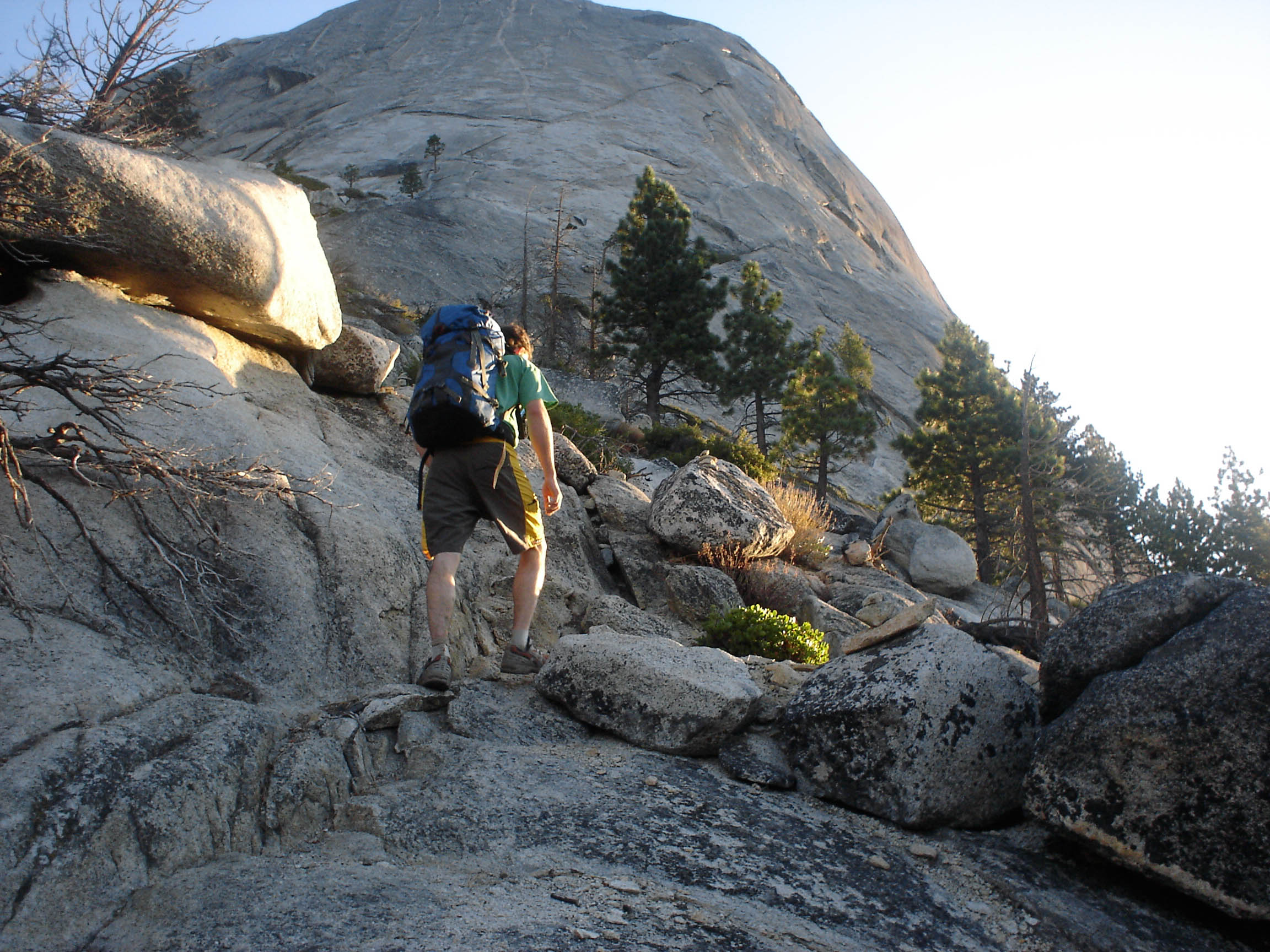
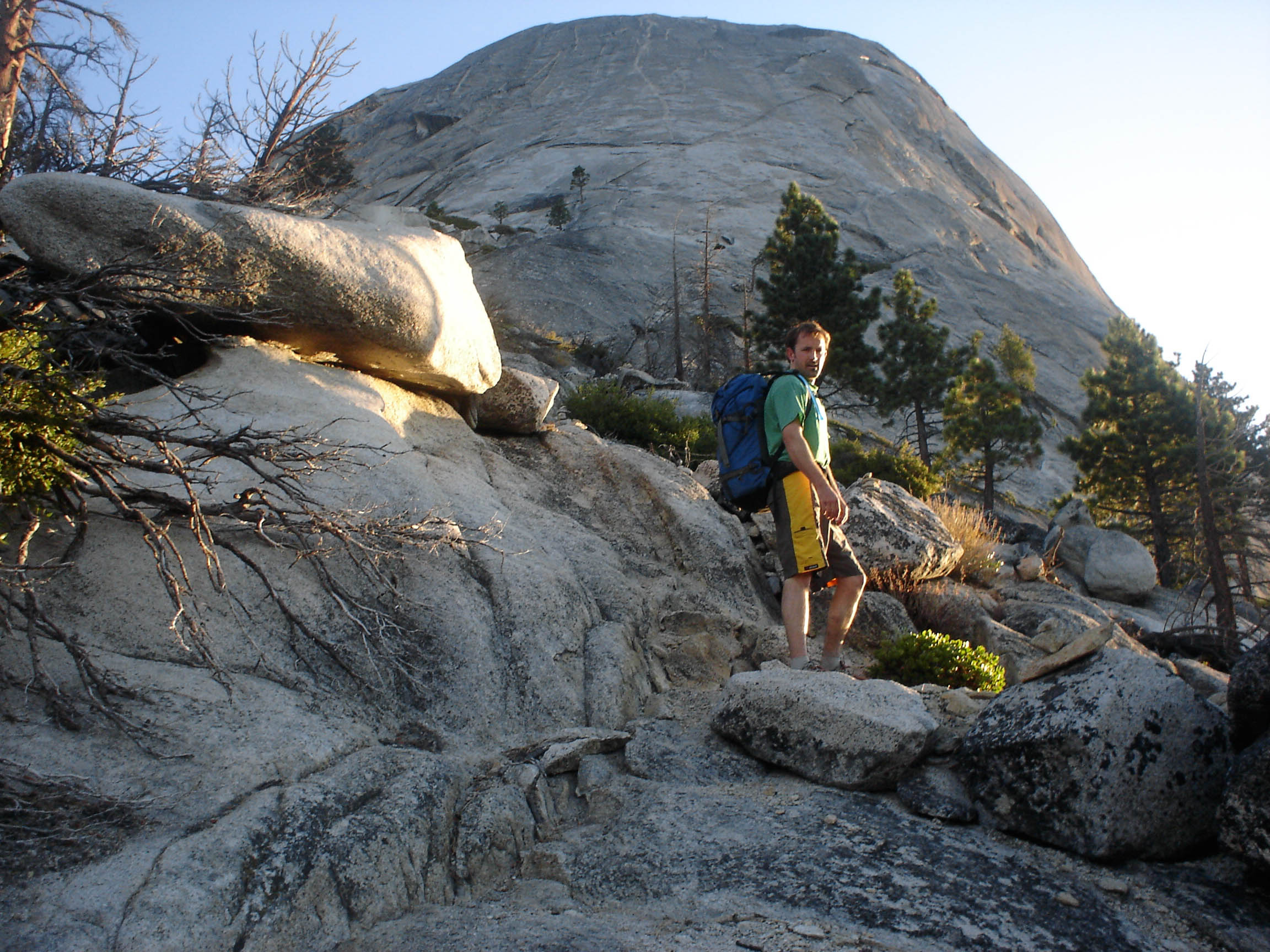
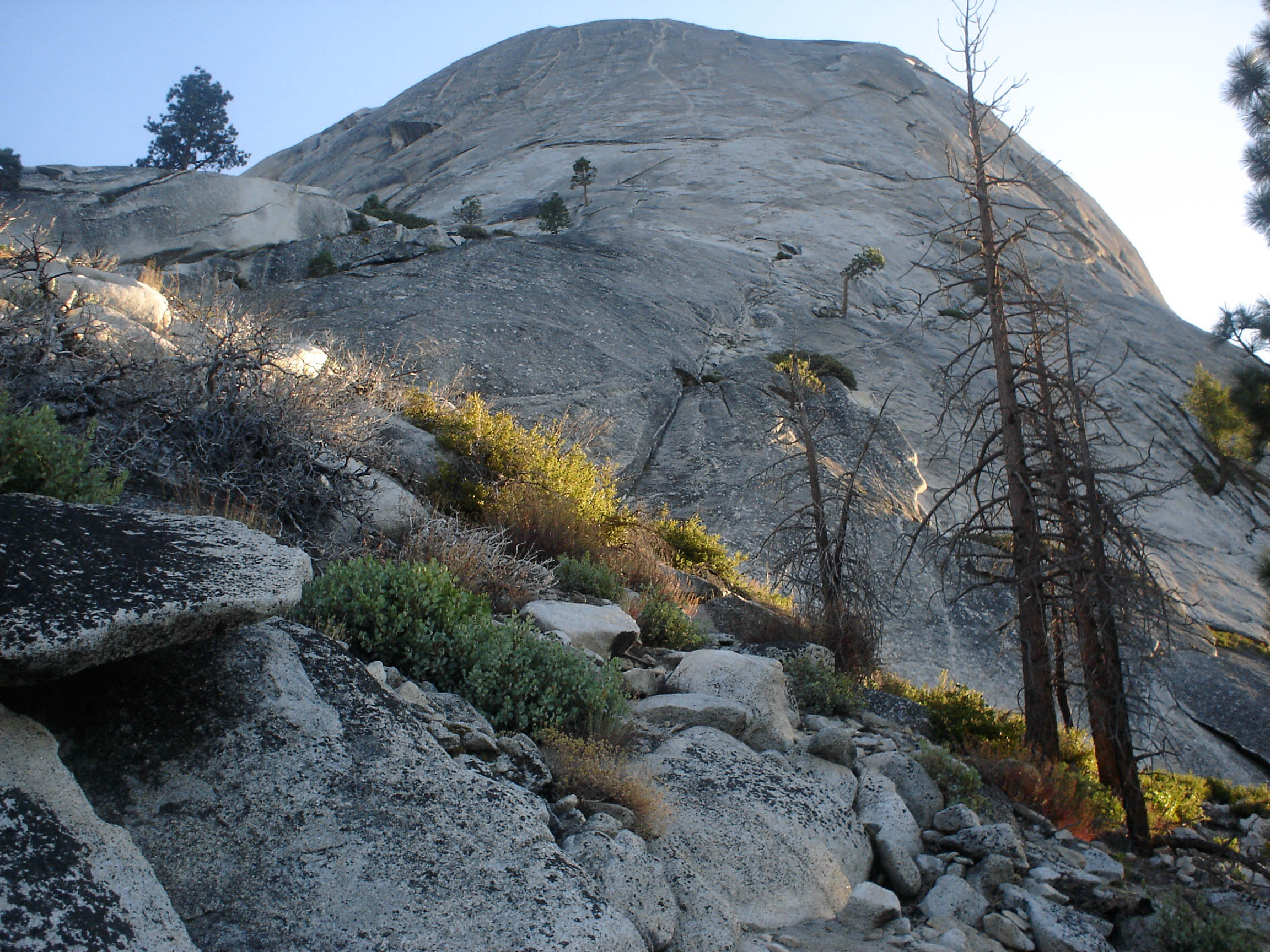
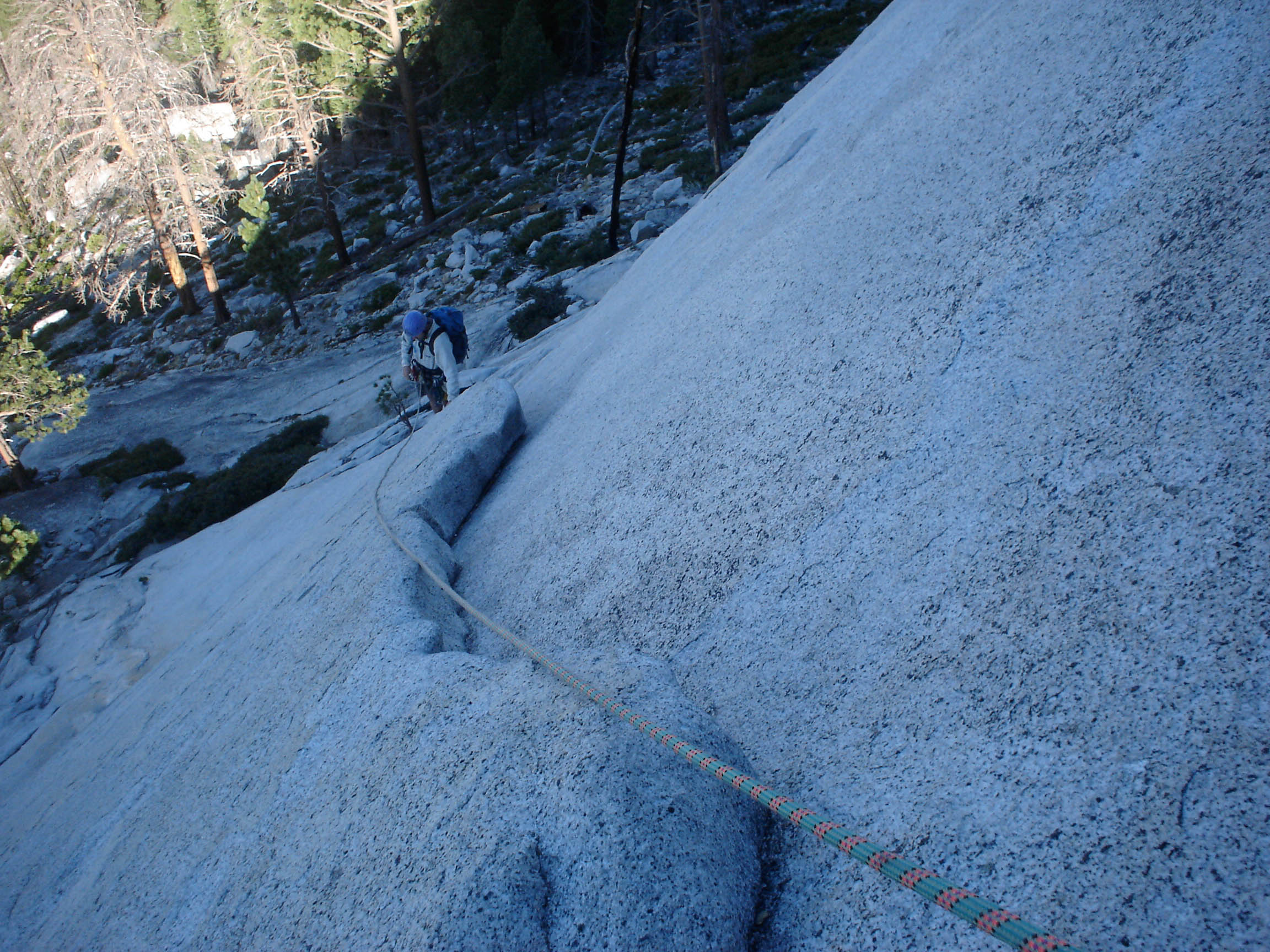
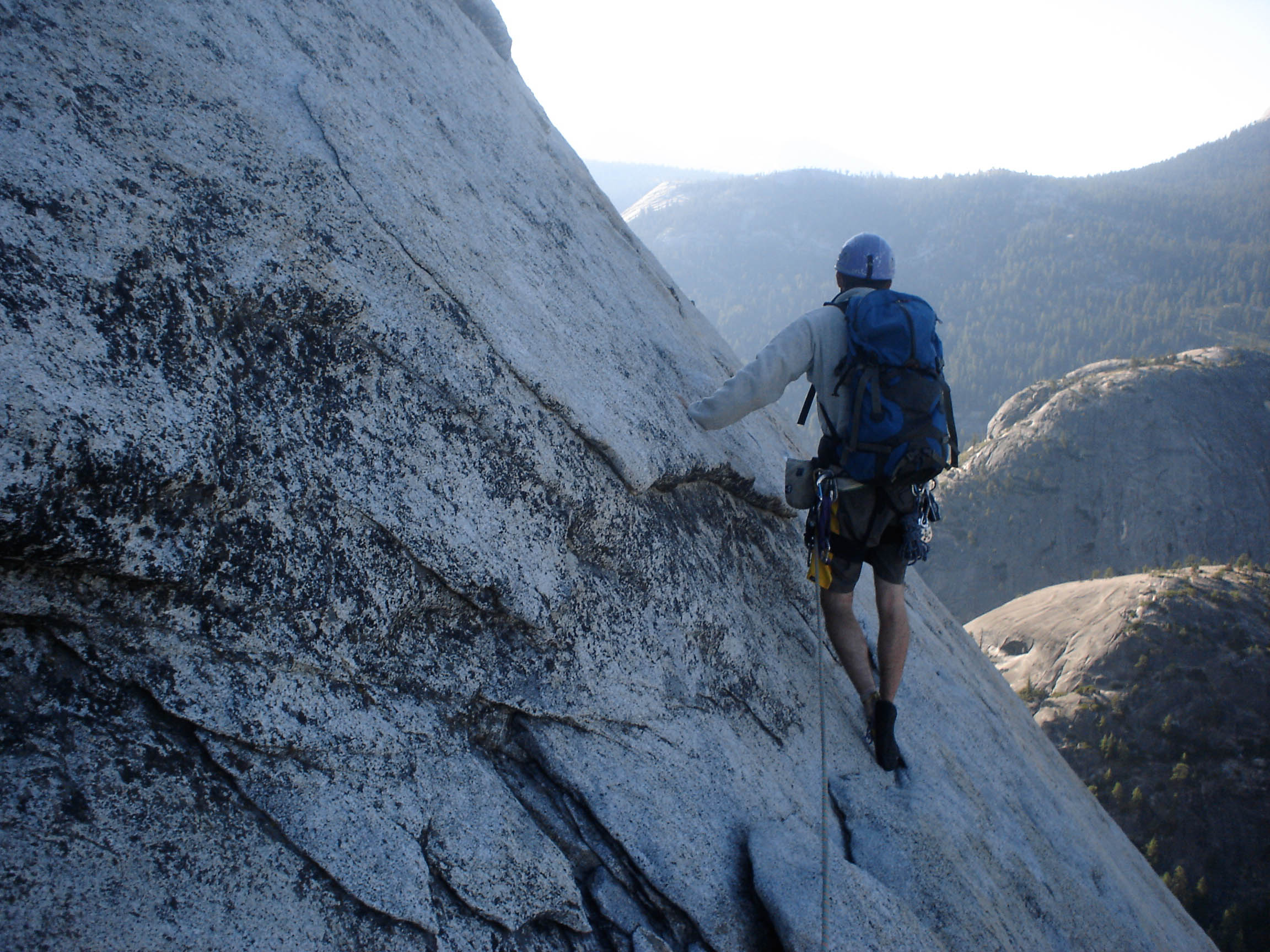
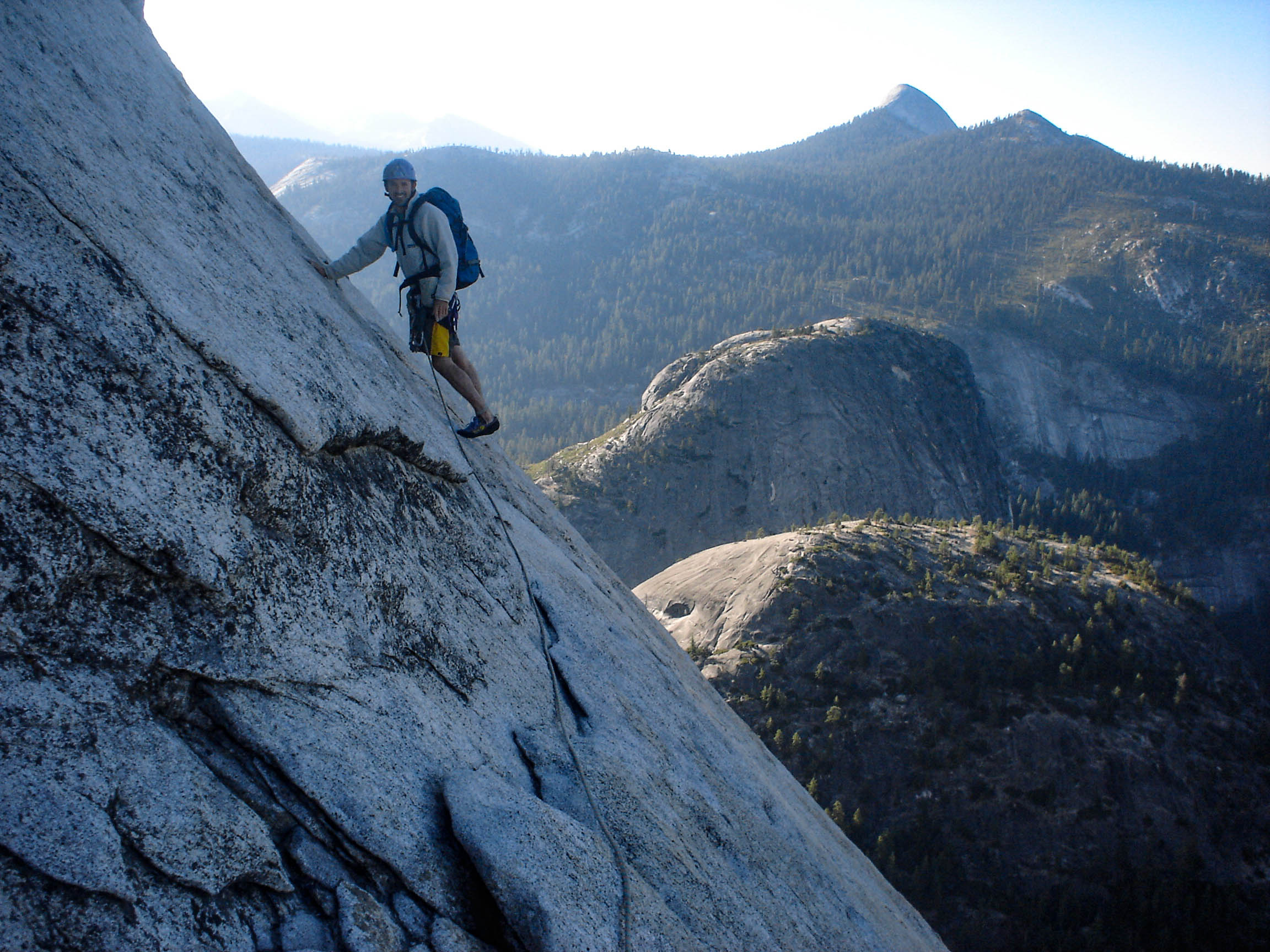
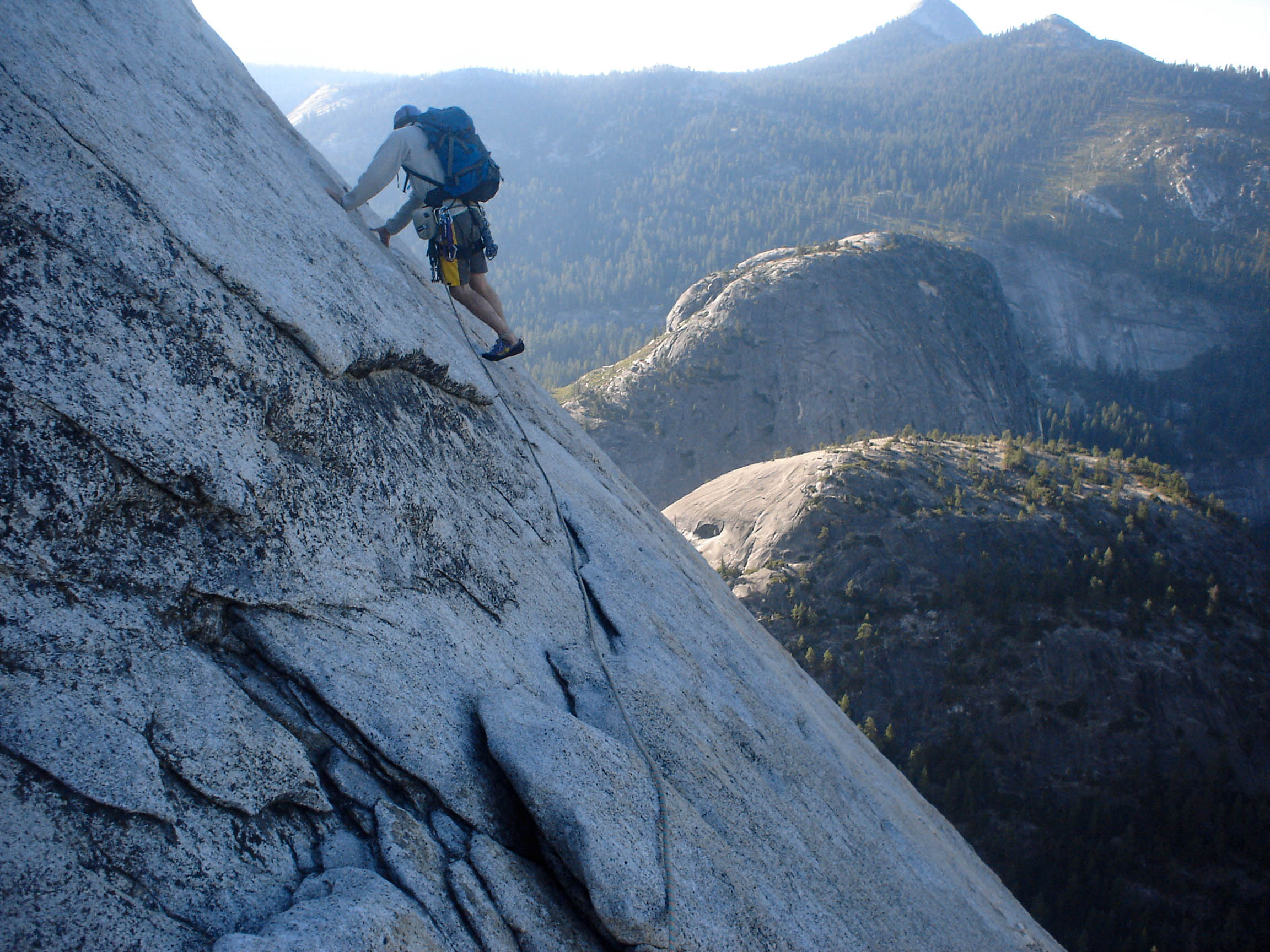
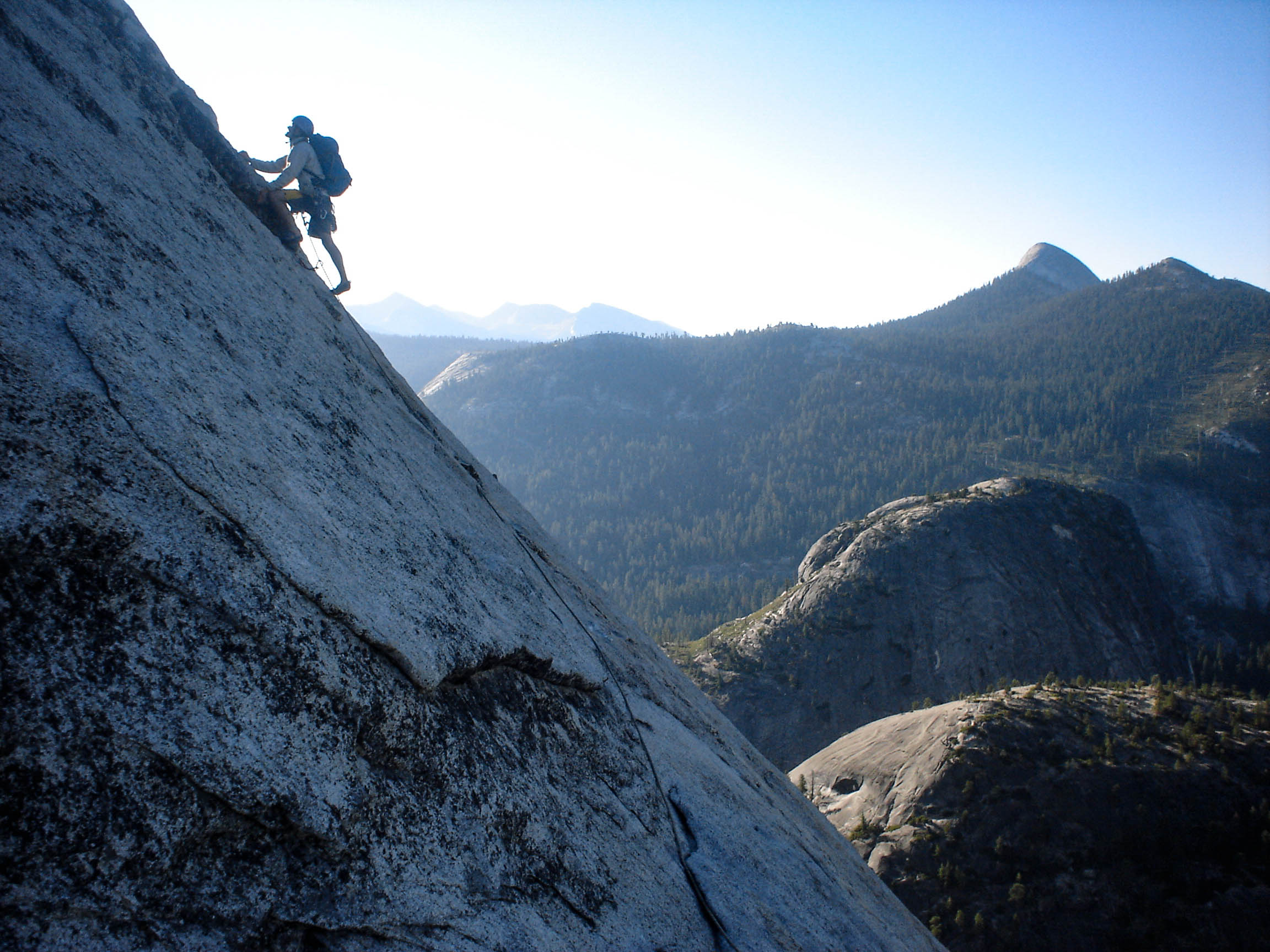
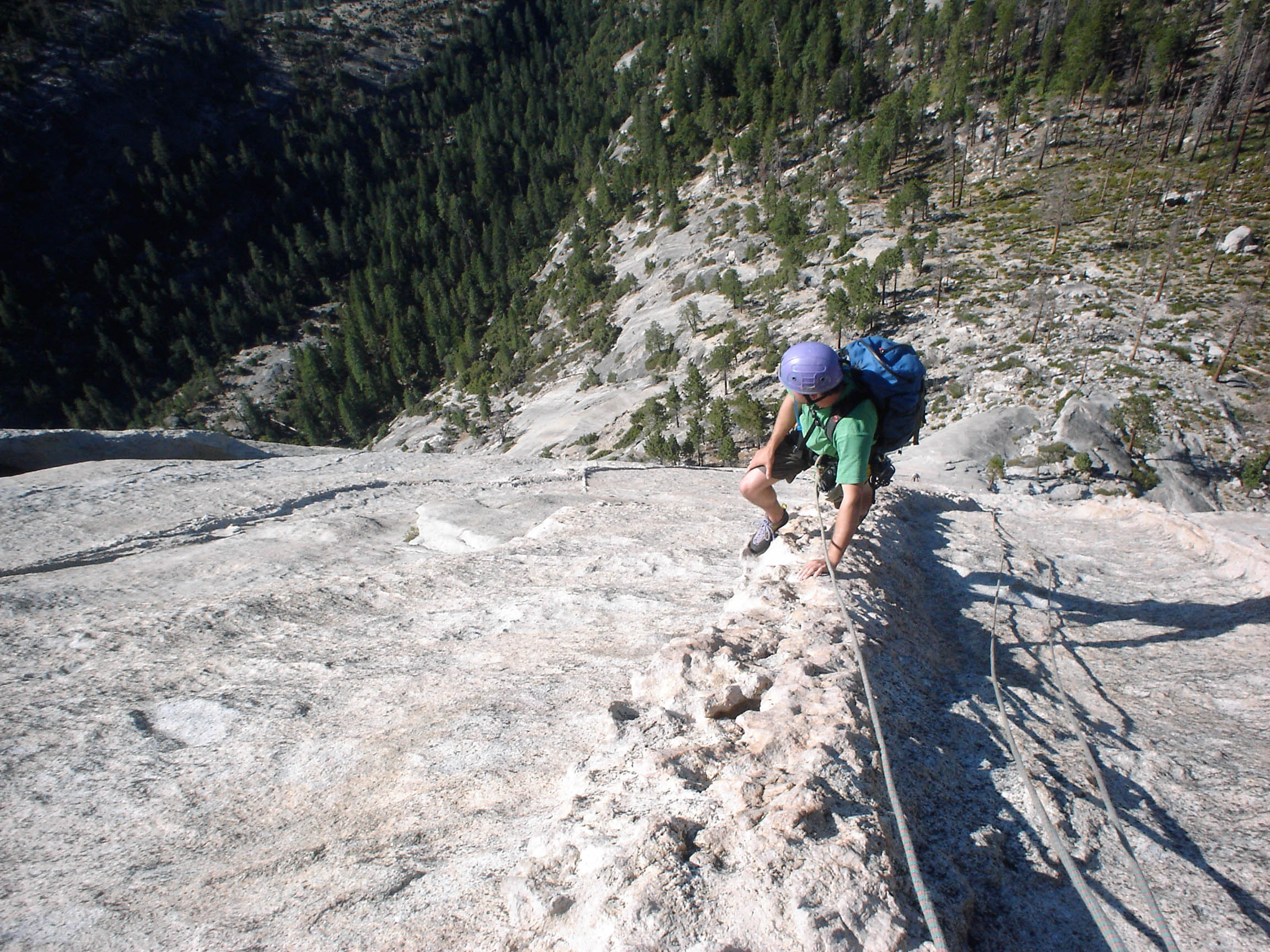
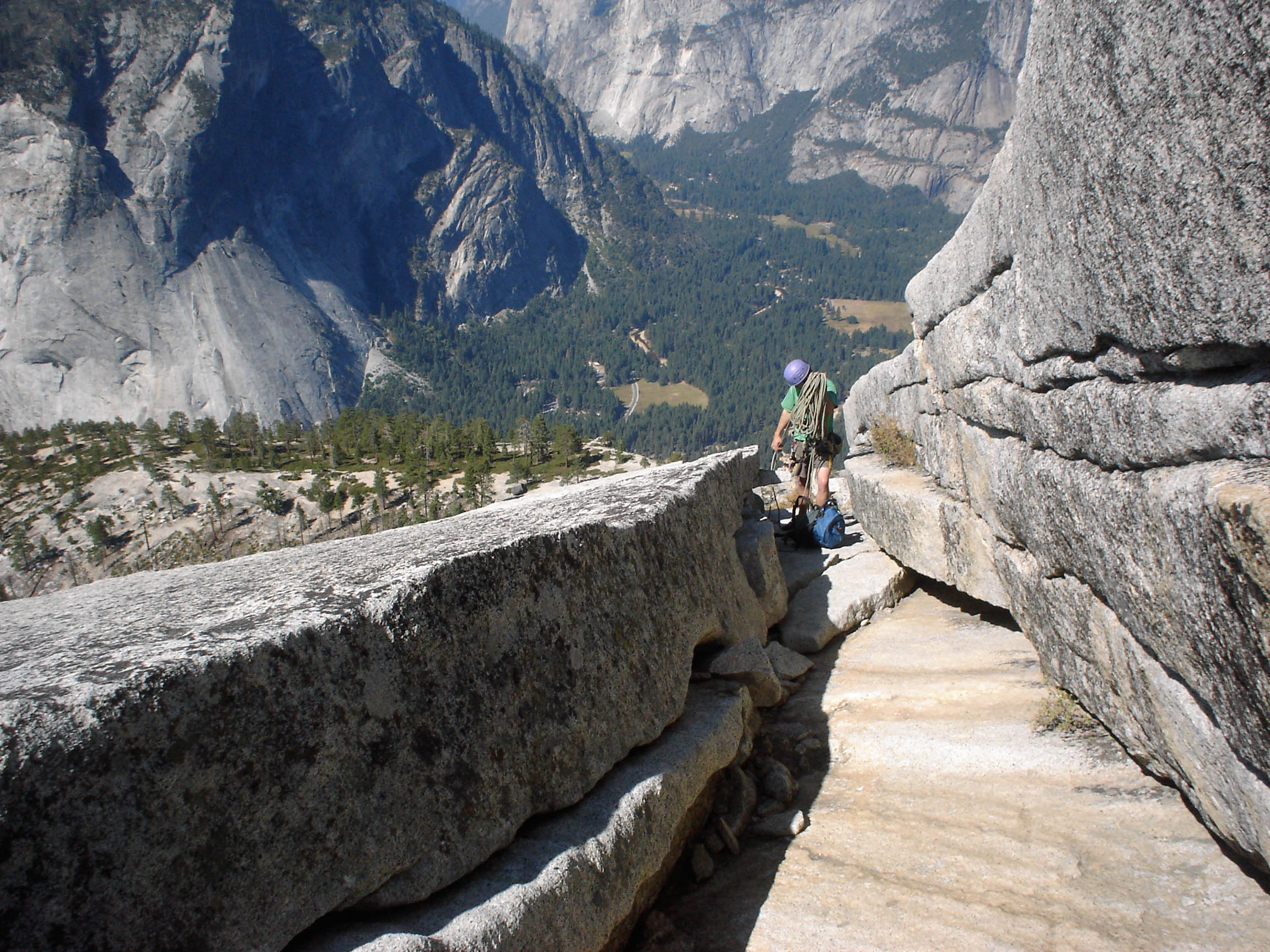
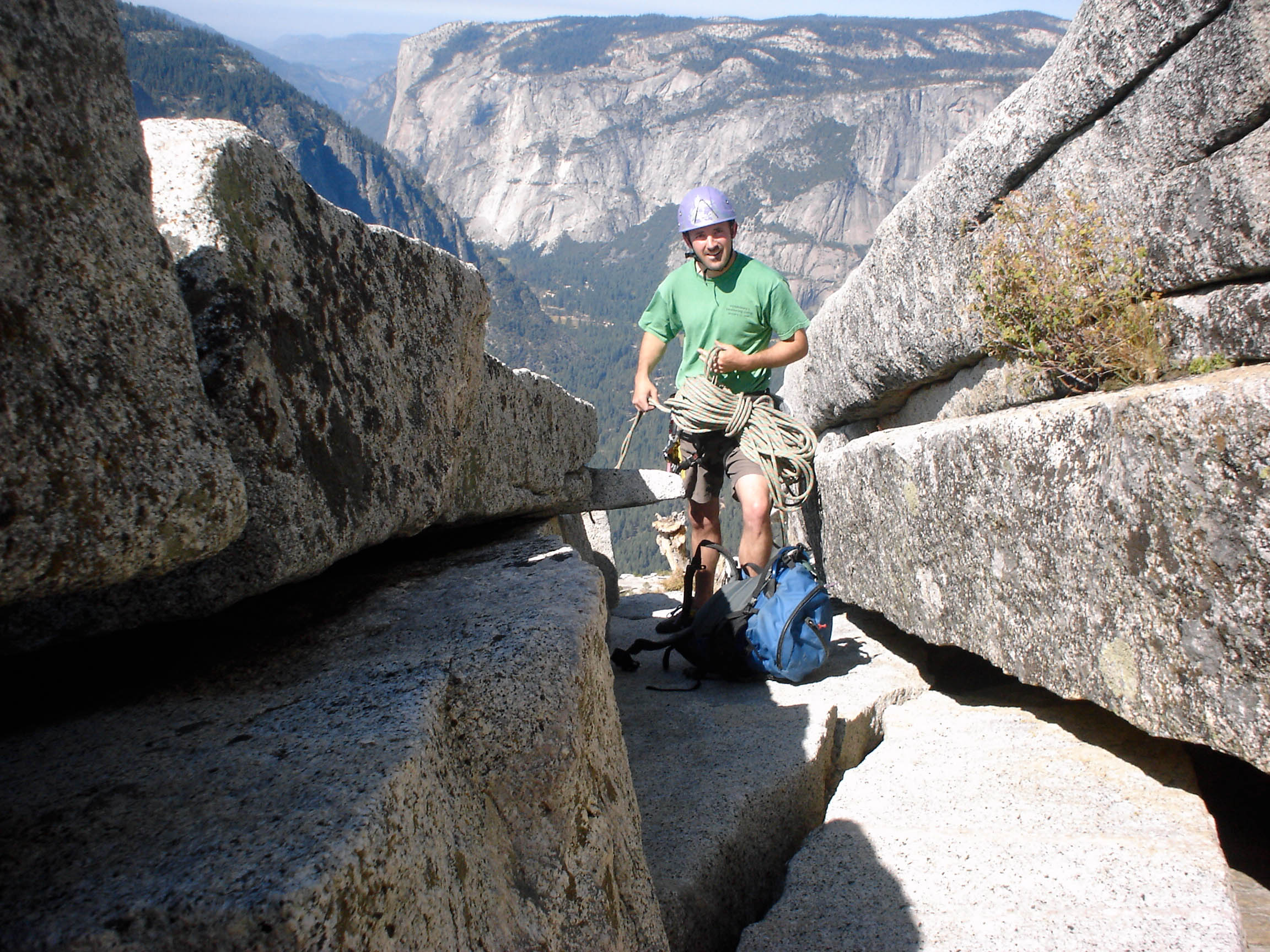
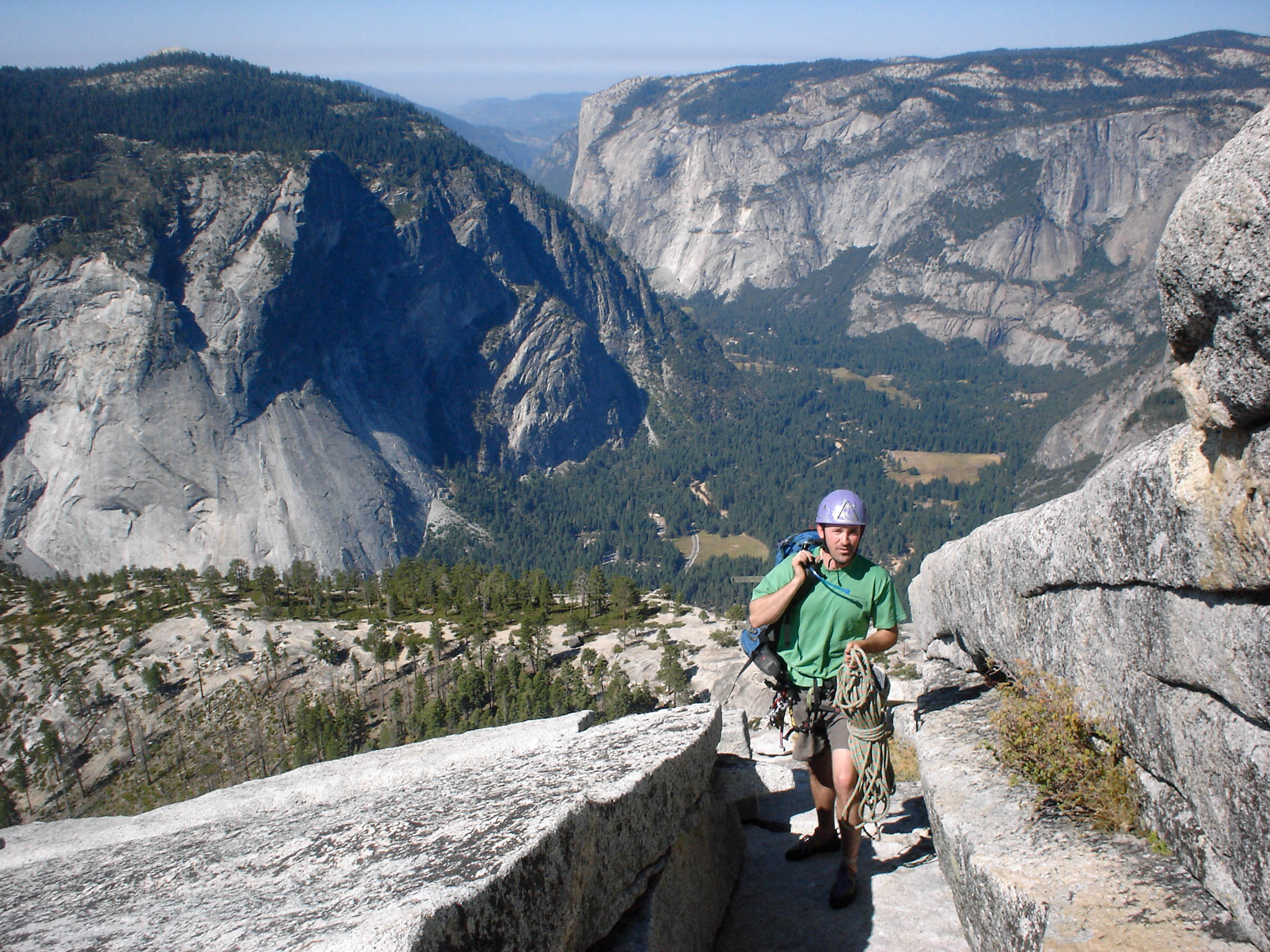
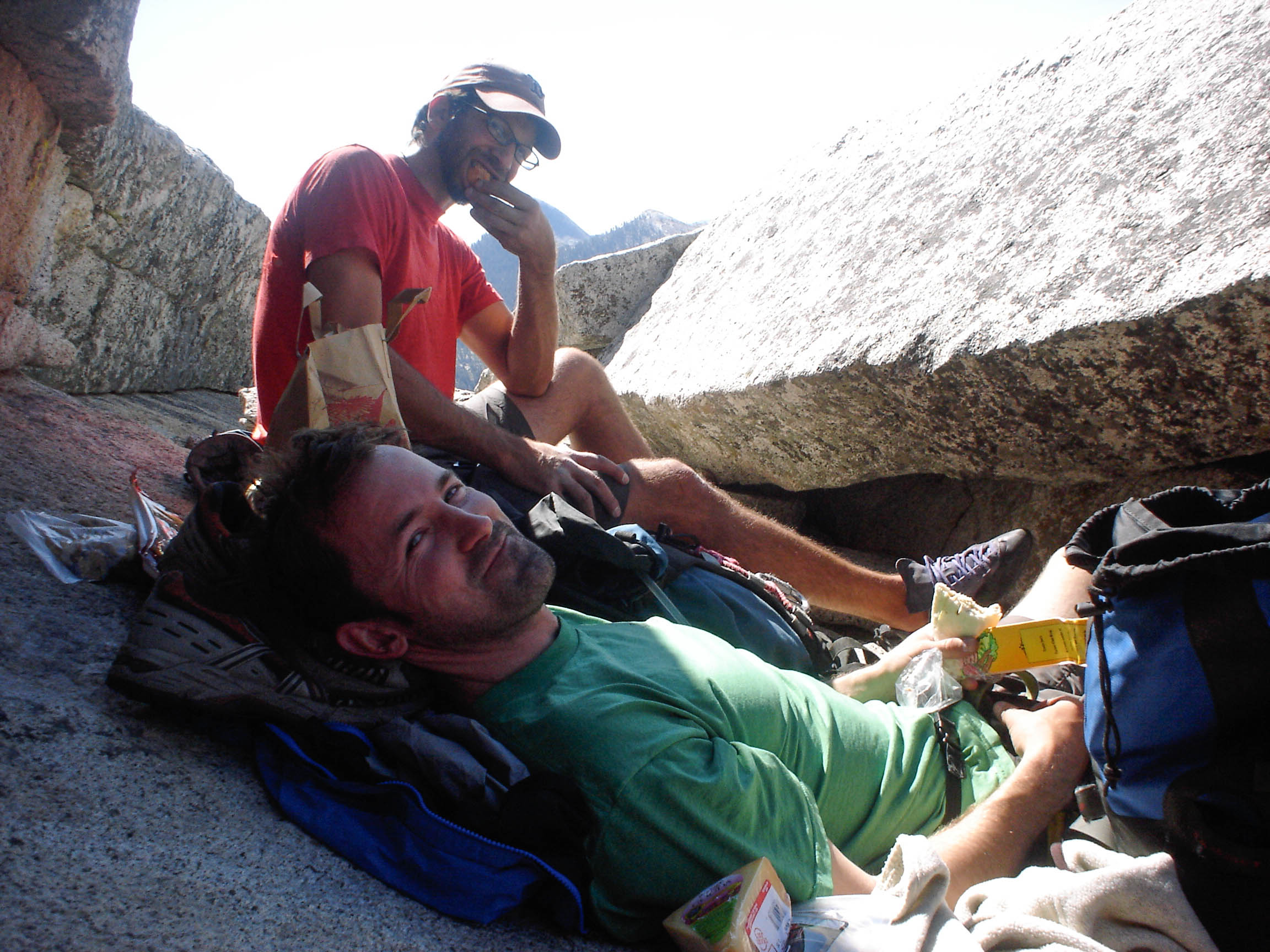
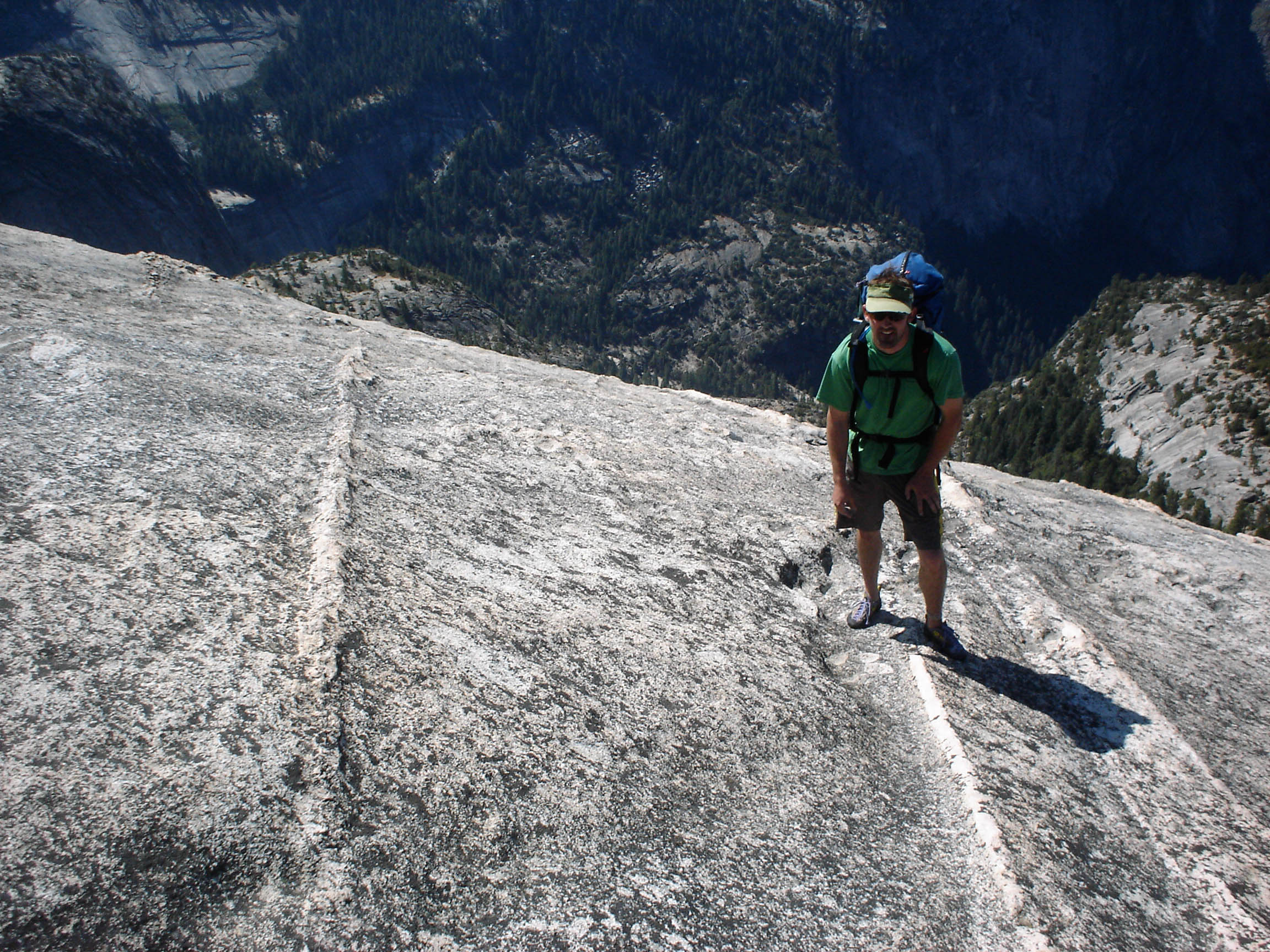
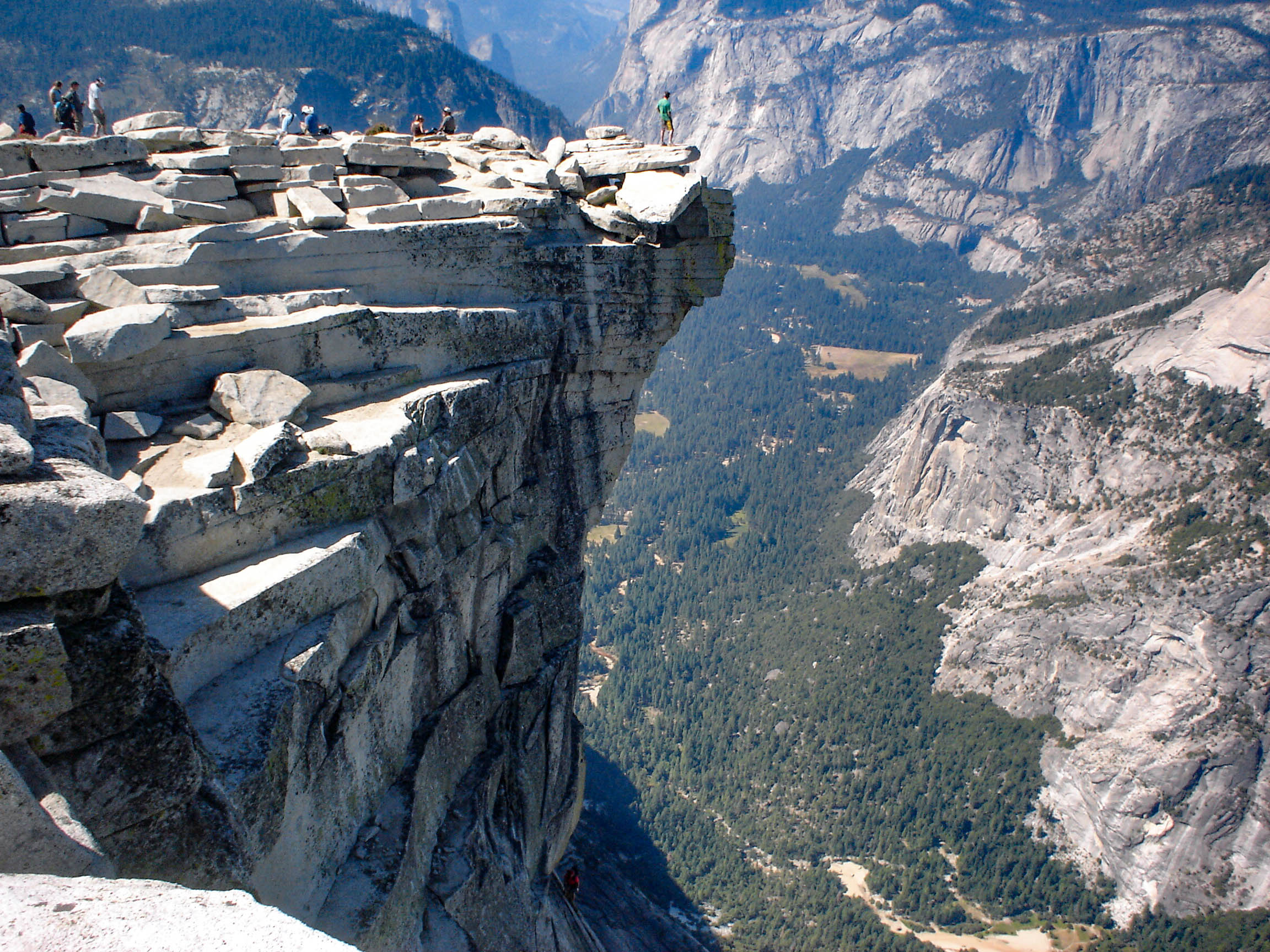
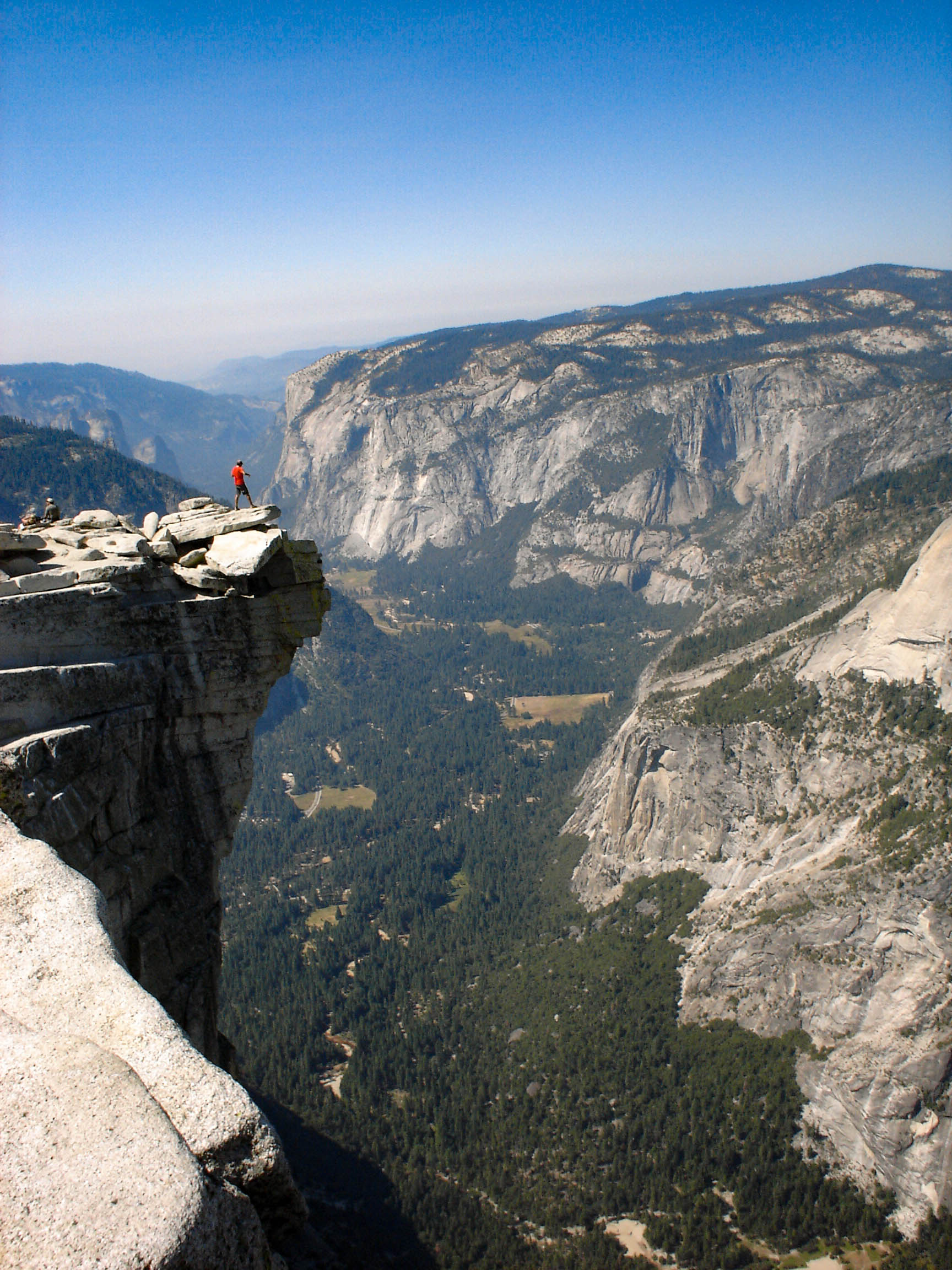
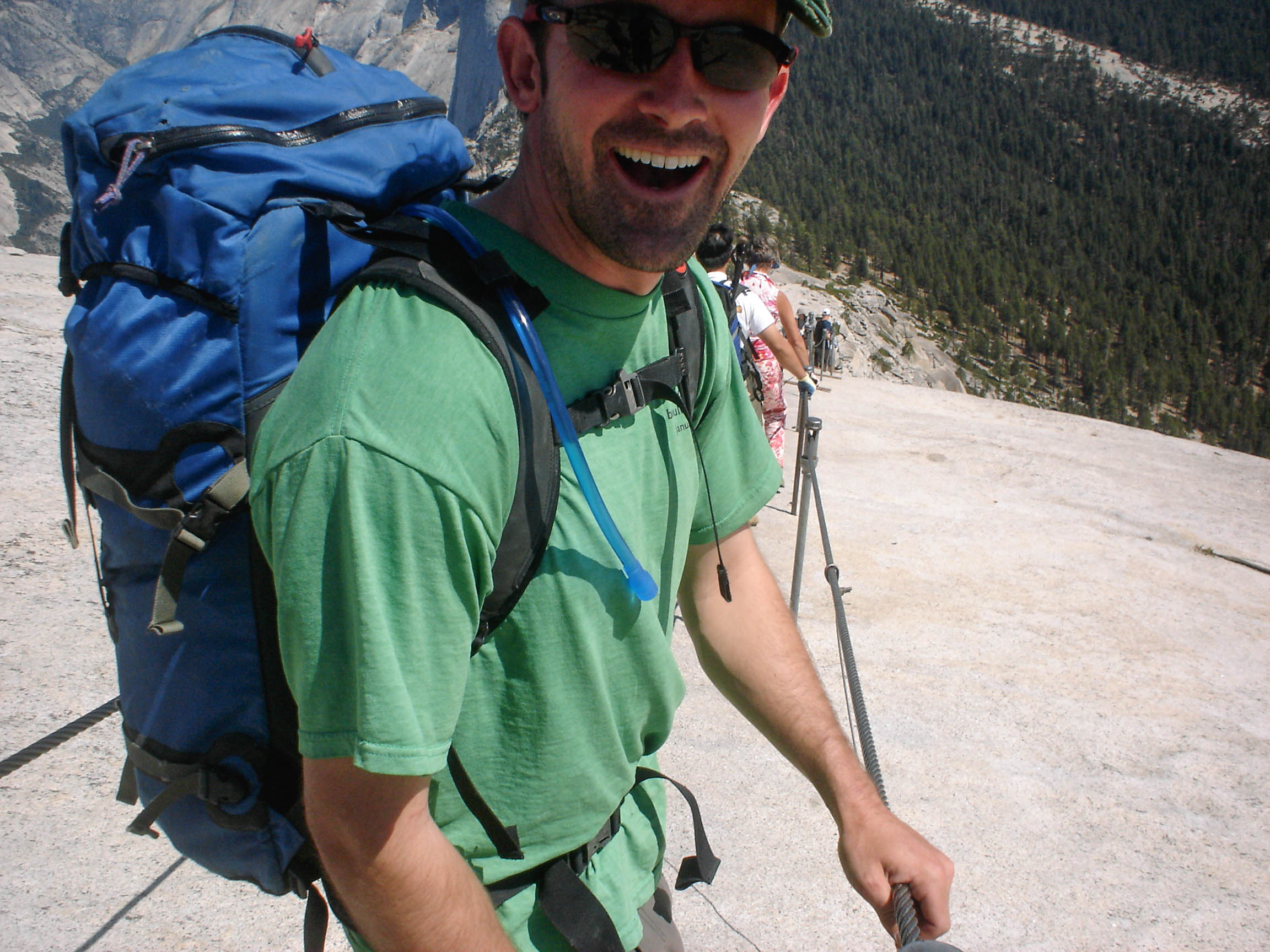
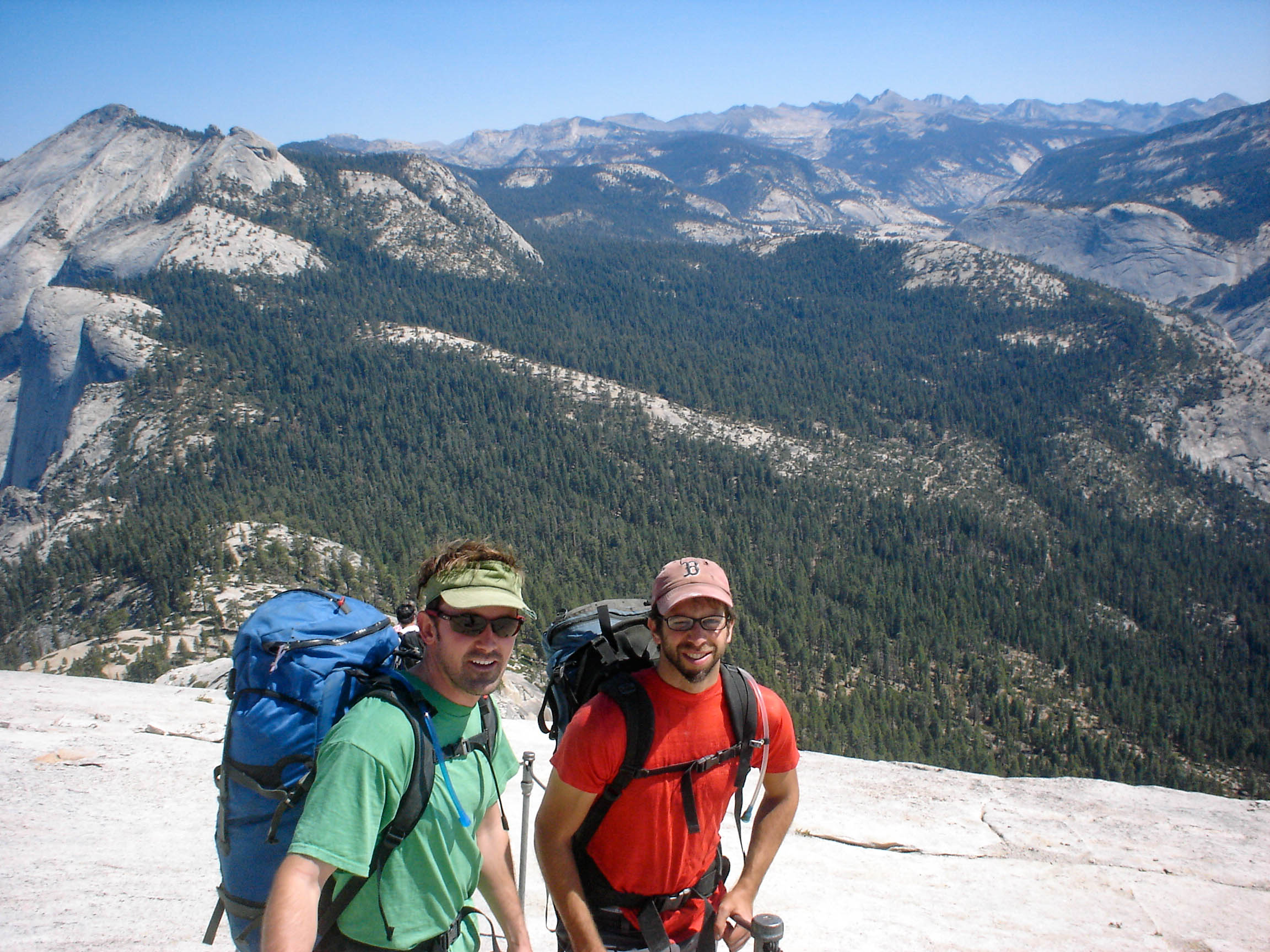
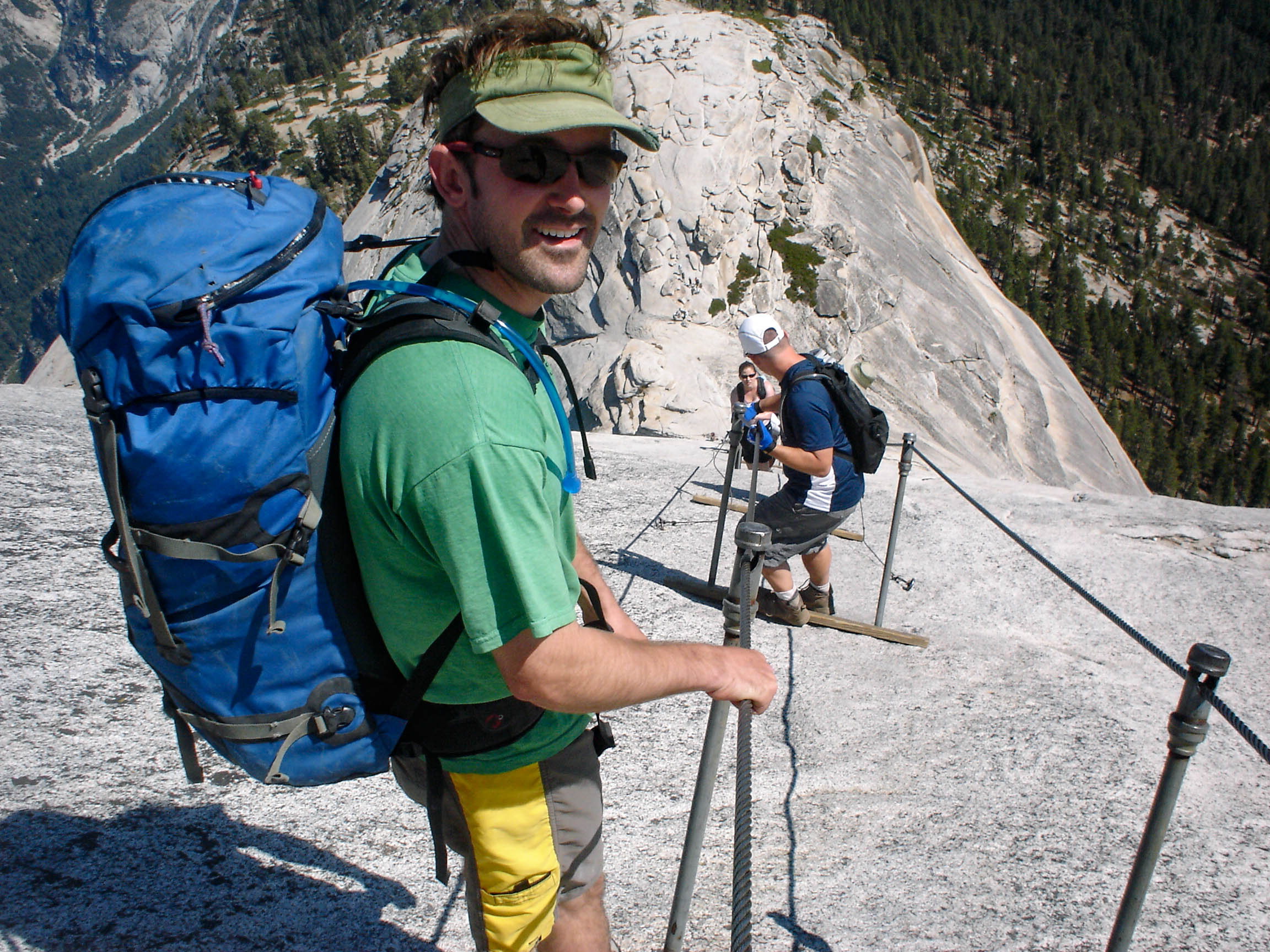
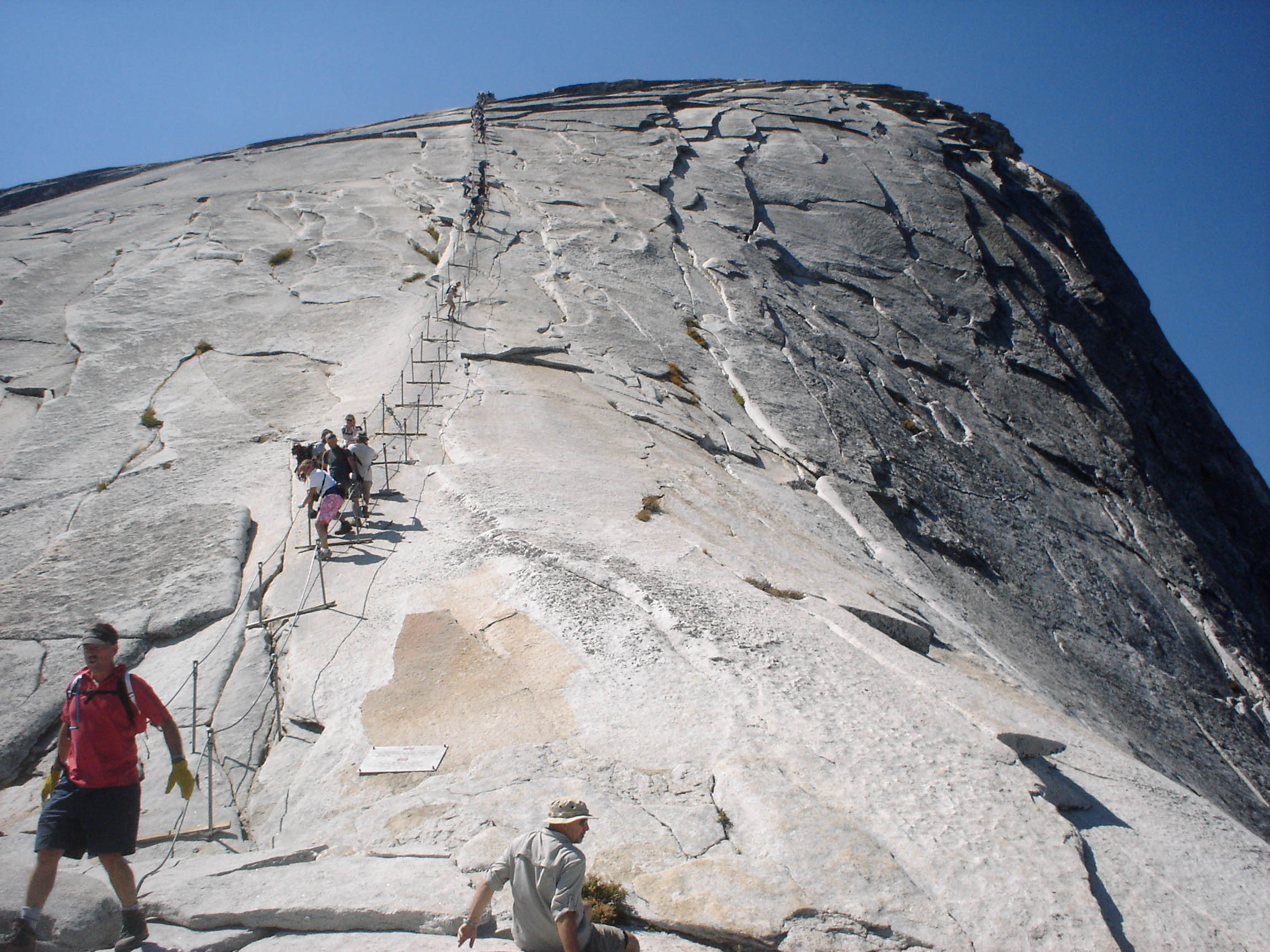
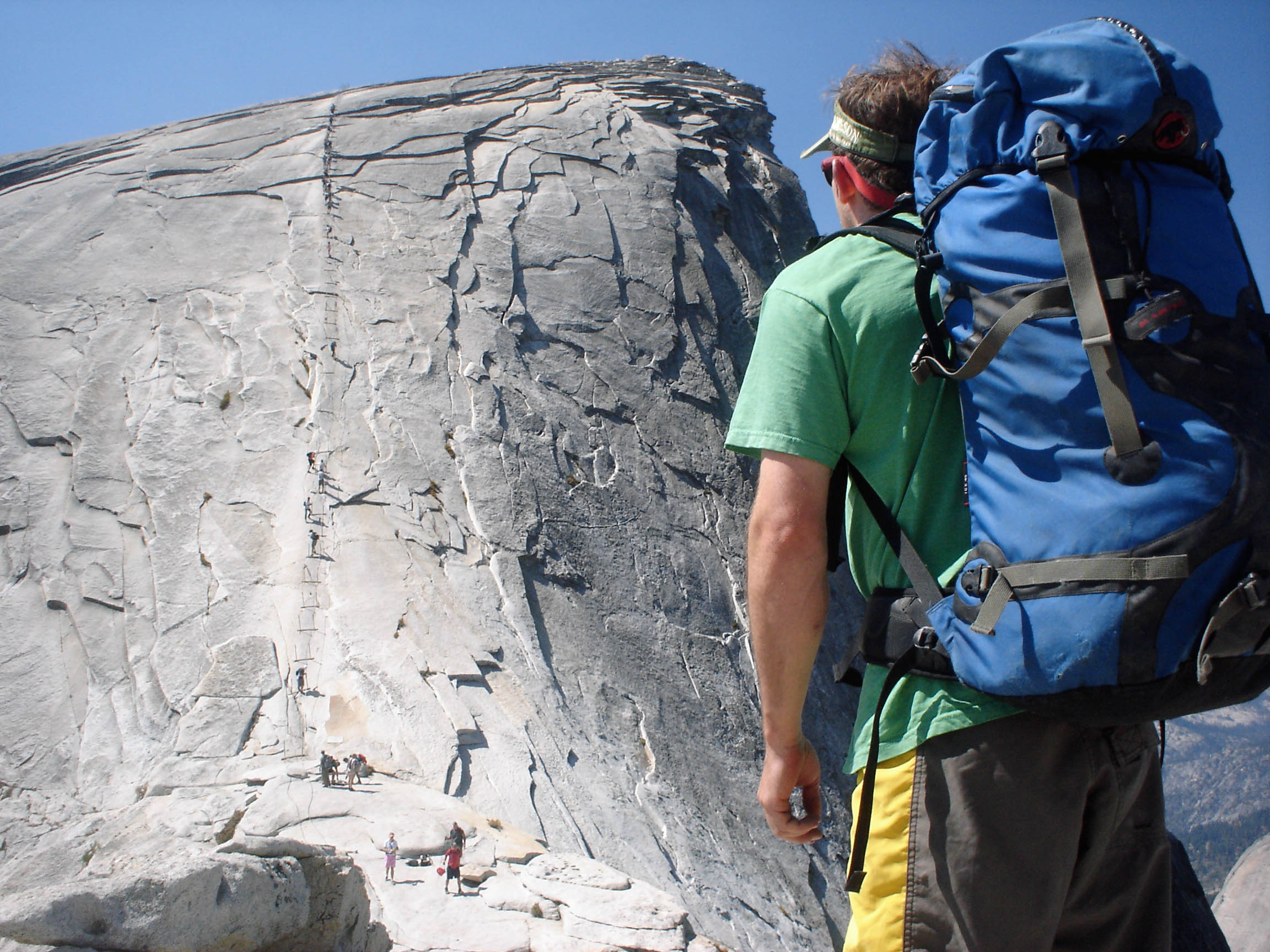
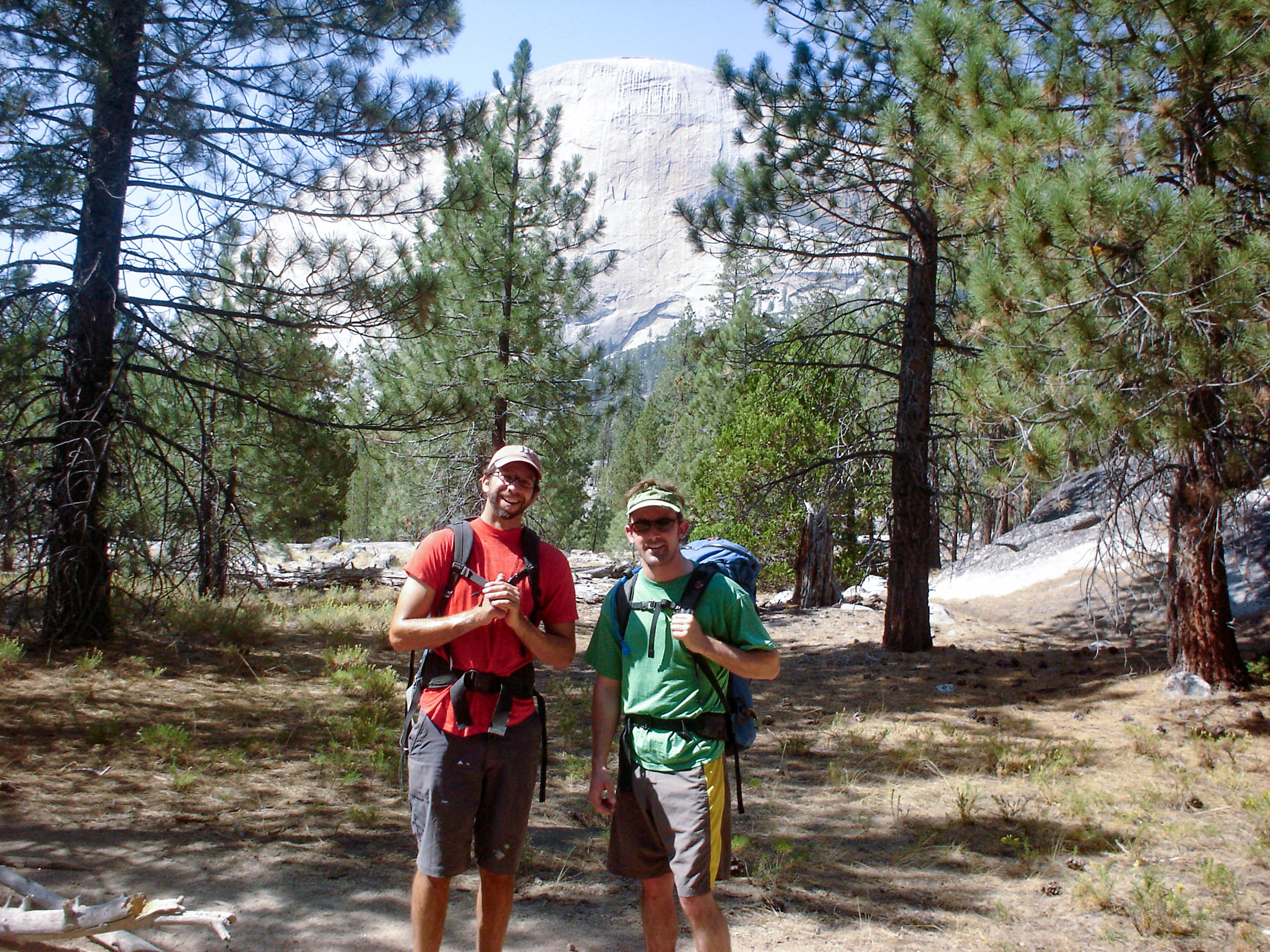
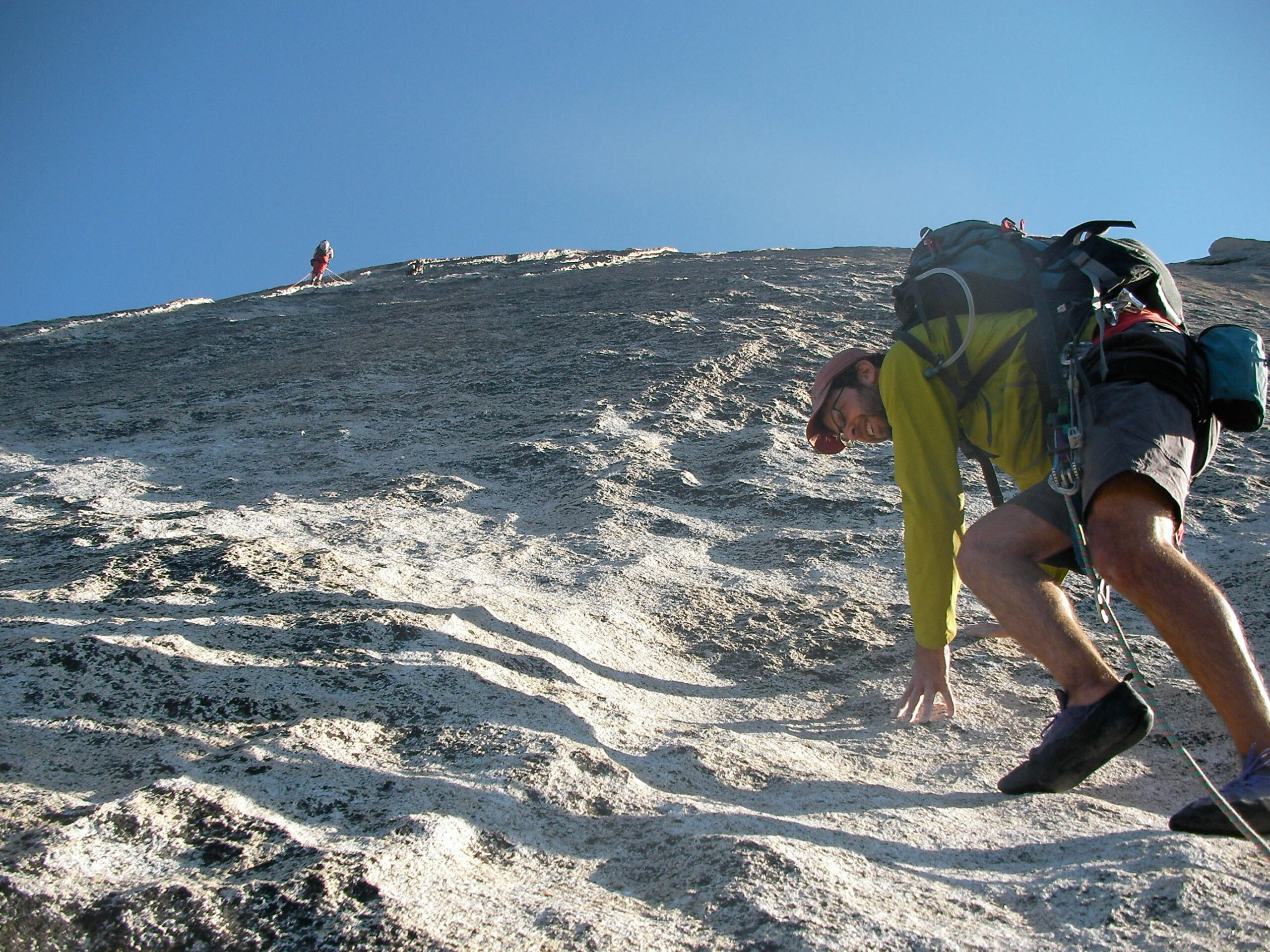
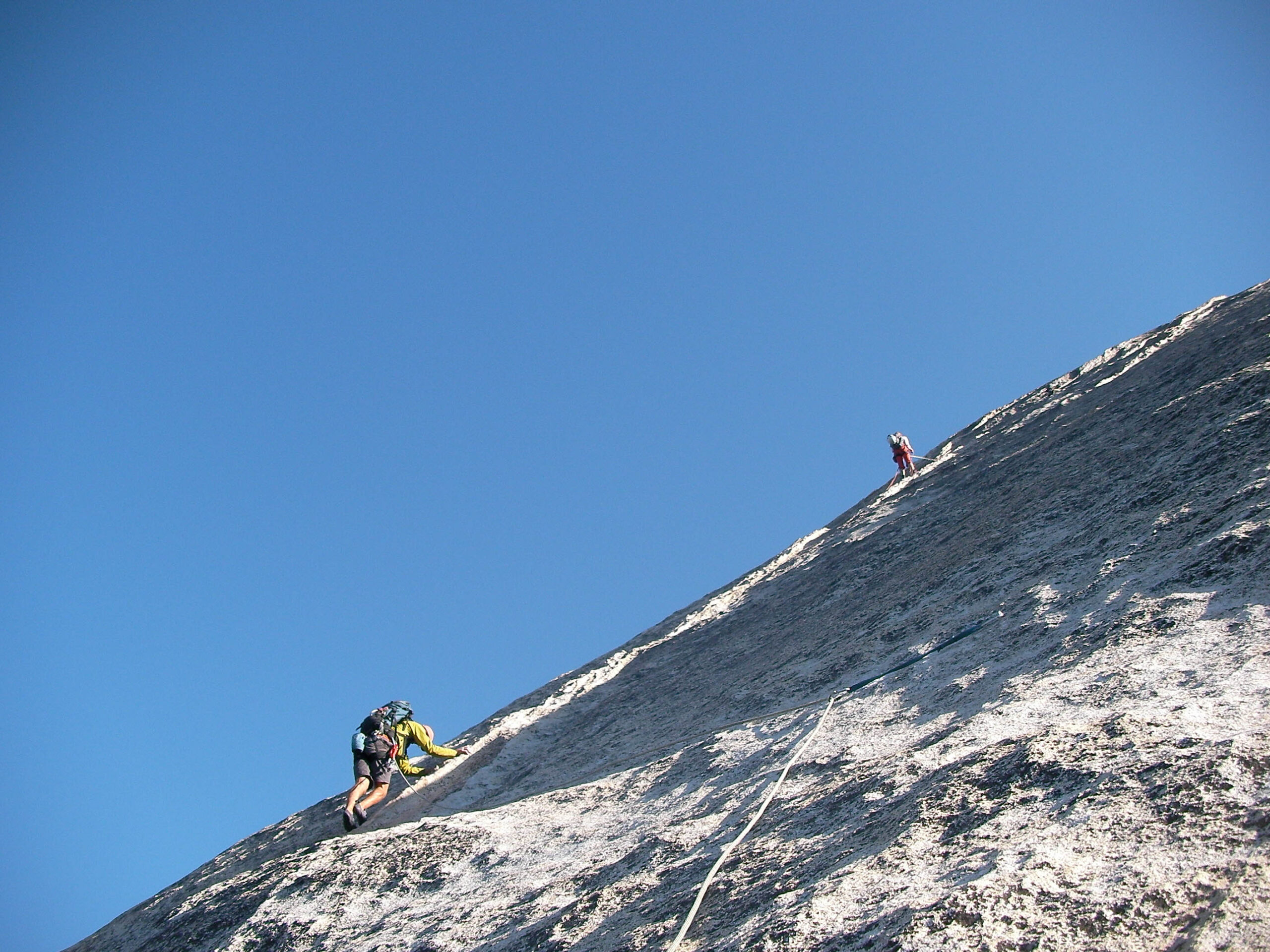
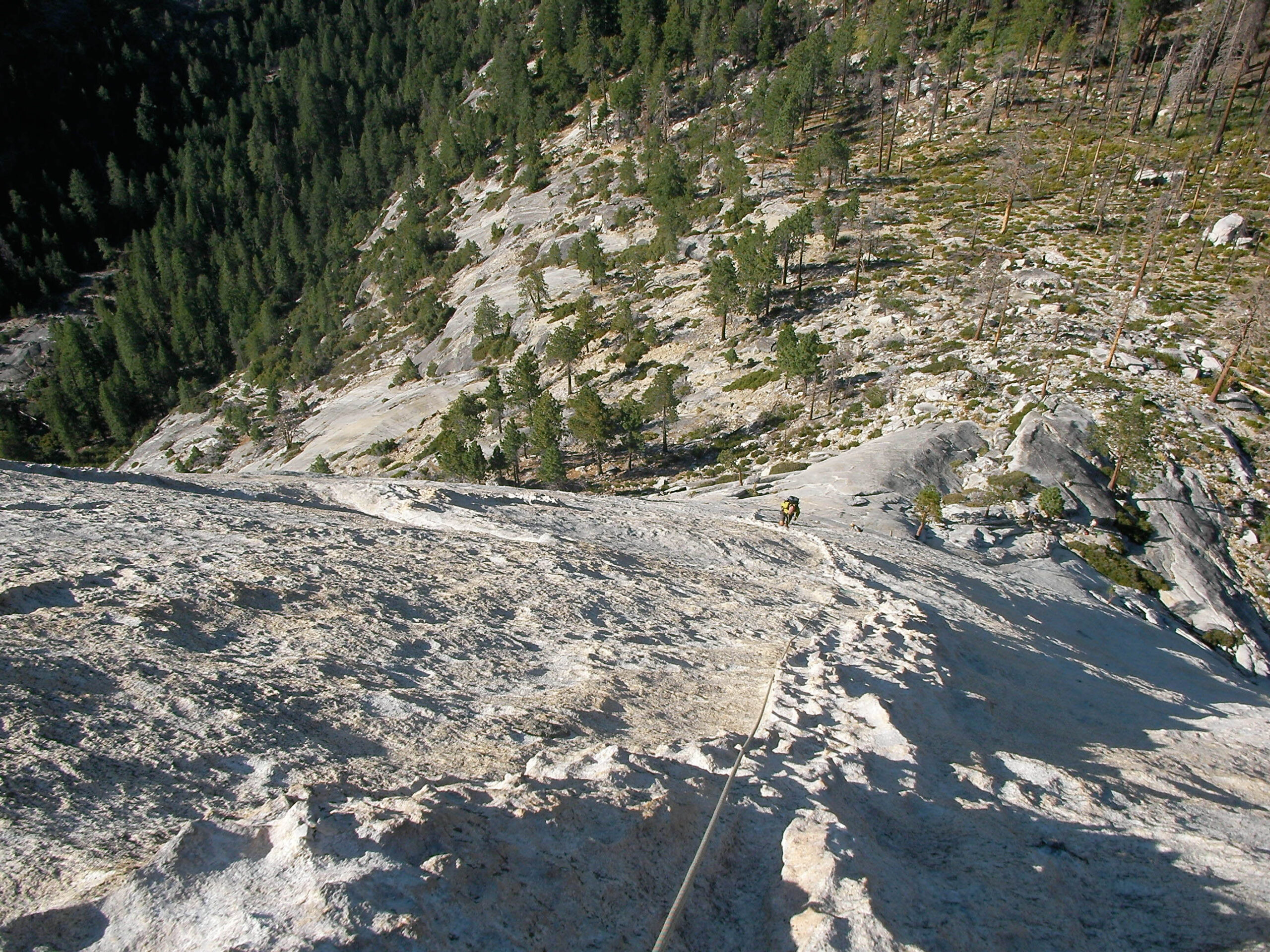
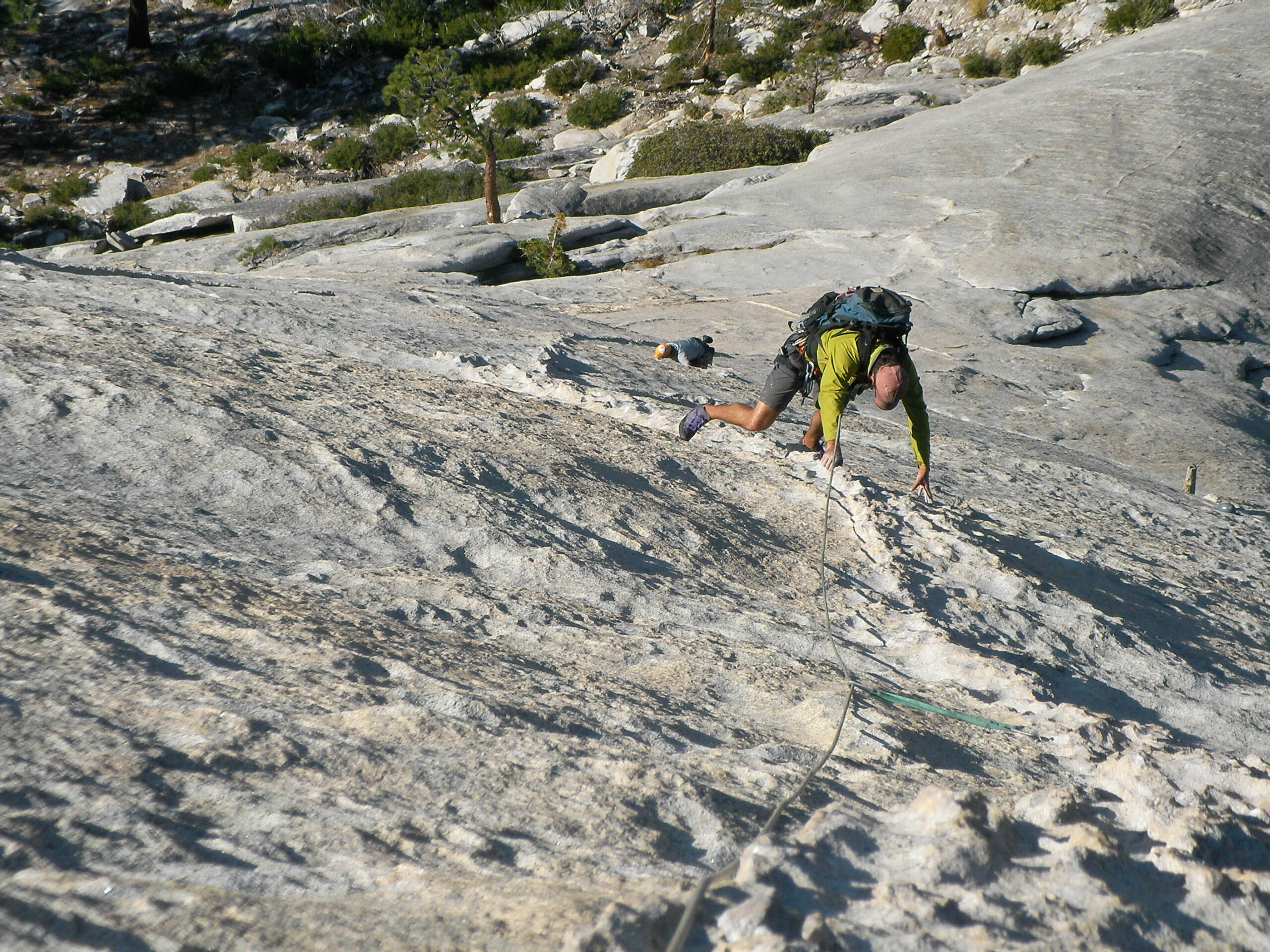
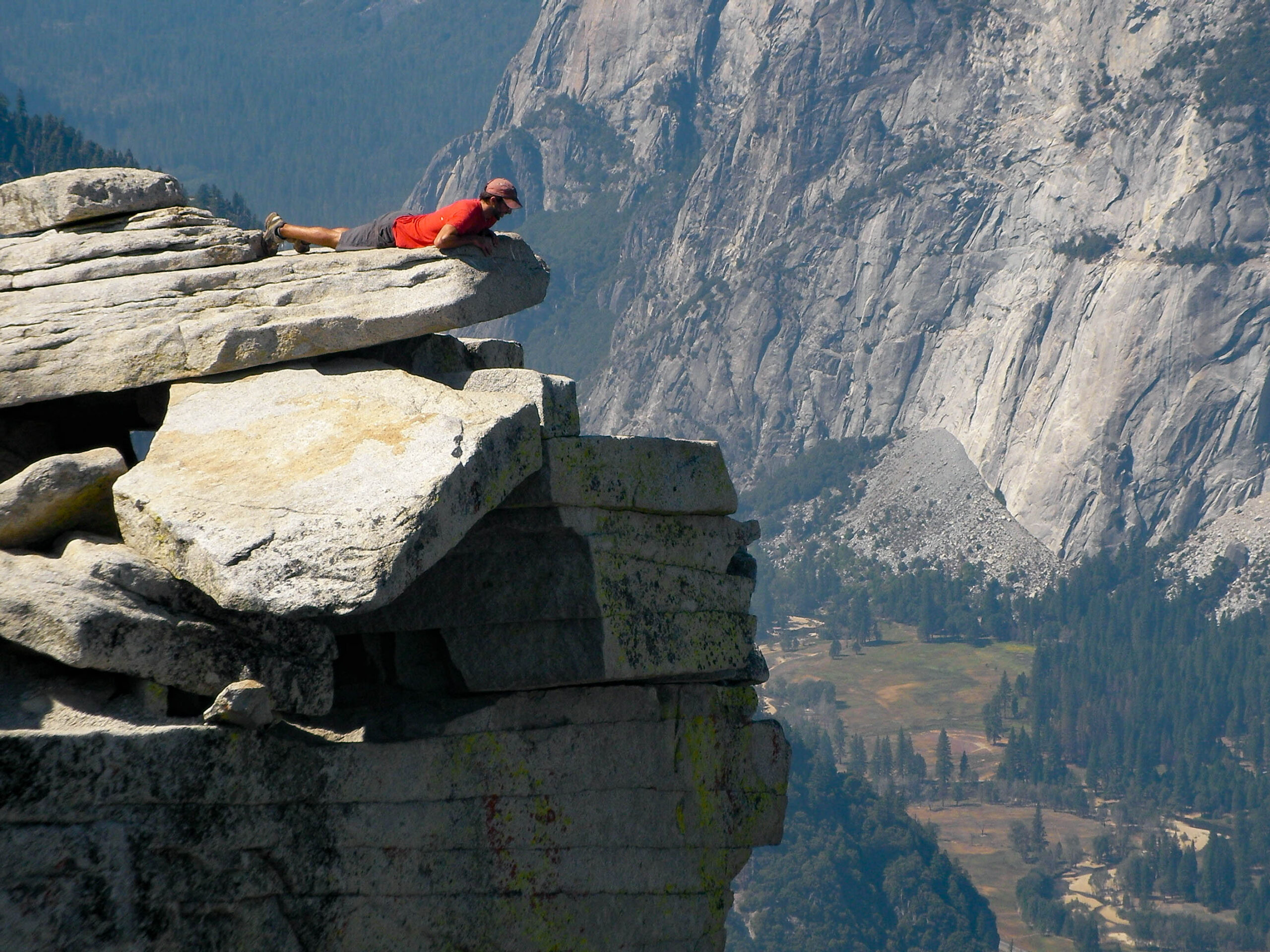
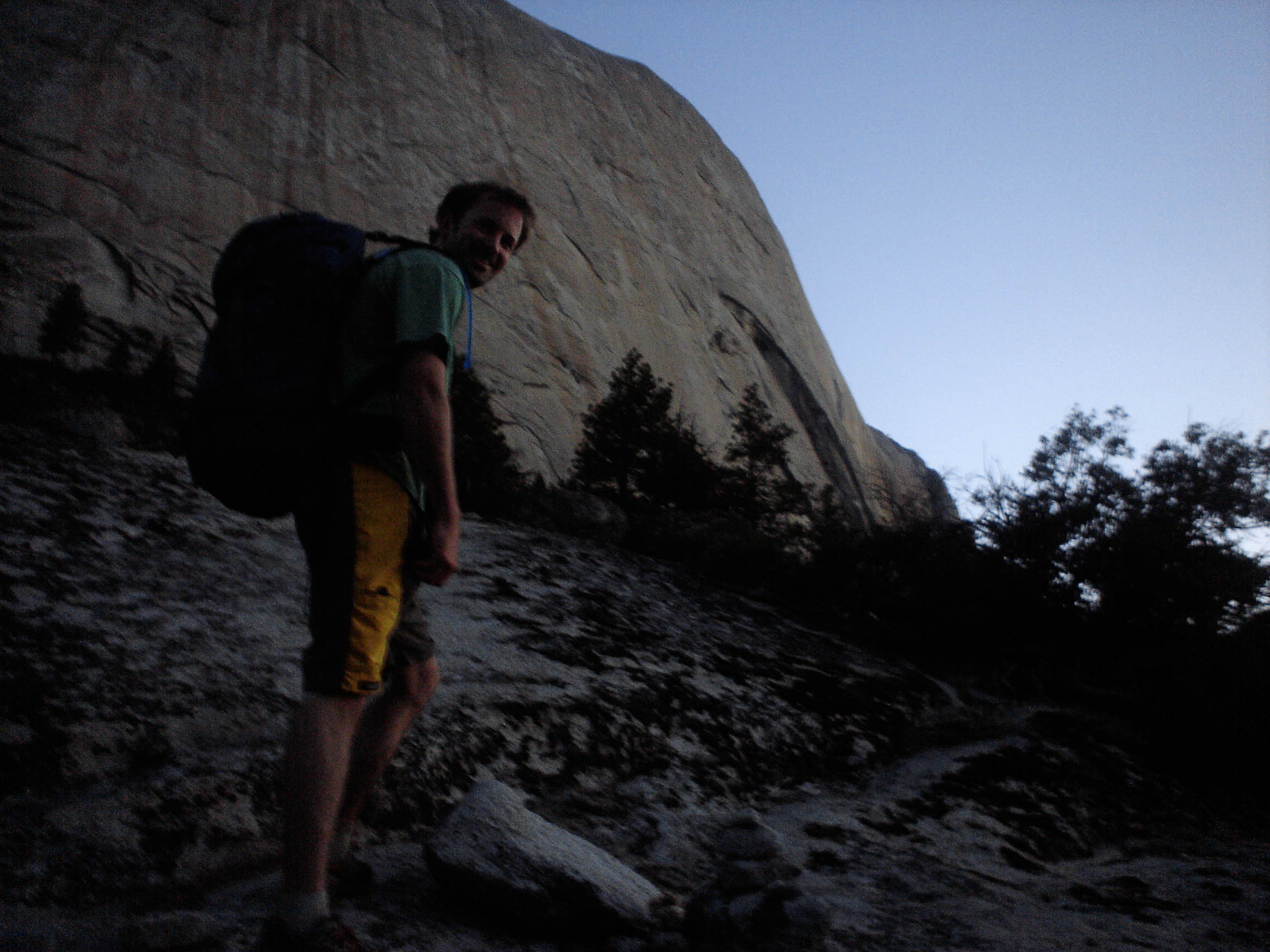
    Well in the blink of an eye two months went by–without a single day of sailing. The half moon bay trip was the last time, and although it left me eager for more time on the open ocean, the rest of life intervened. I’ve been keeping busy with other things: jonny and I climbed half dome via the snake dike route,

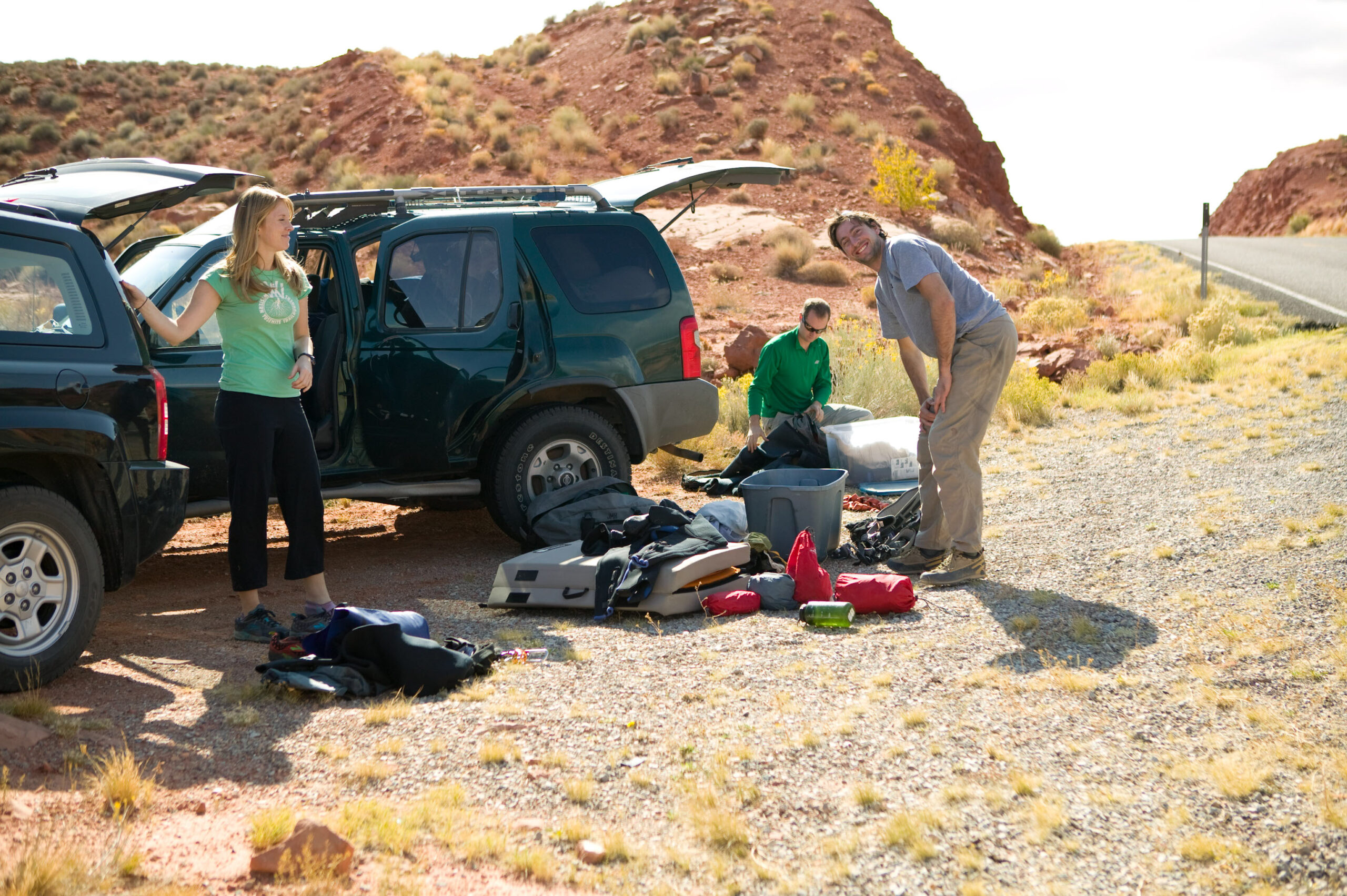
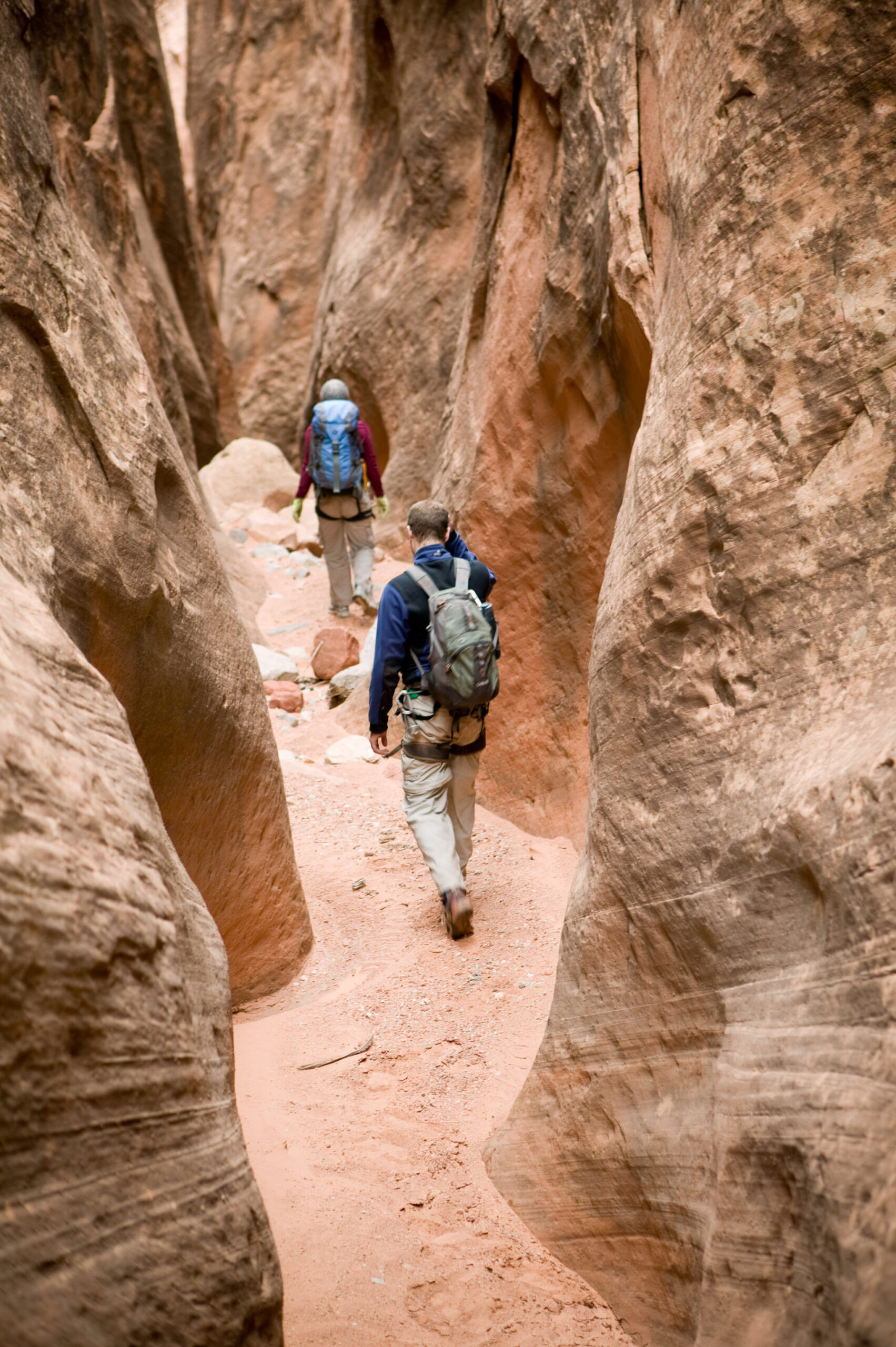
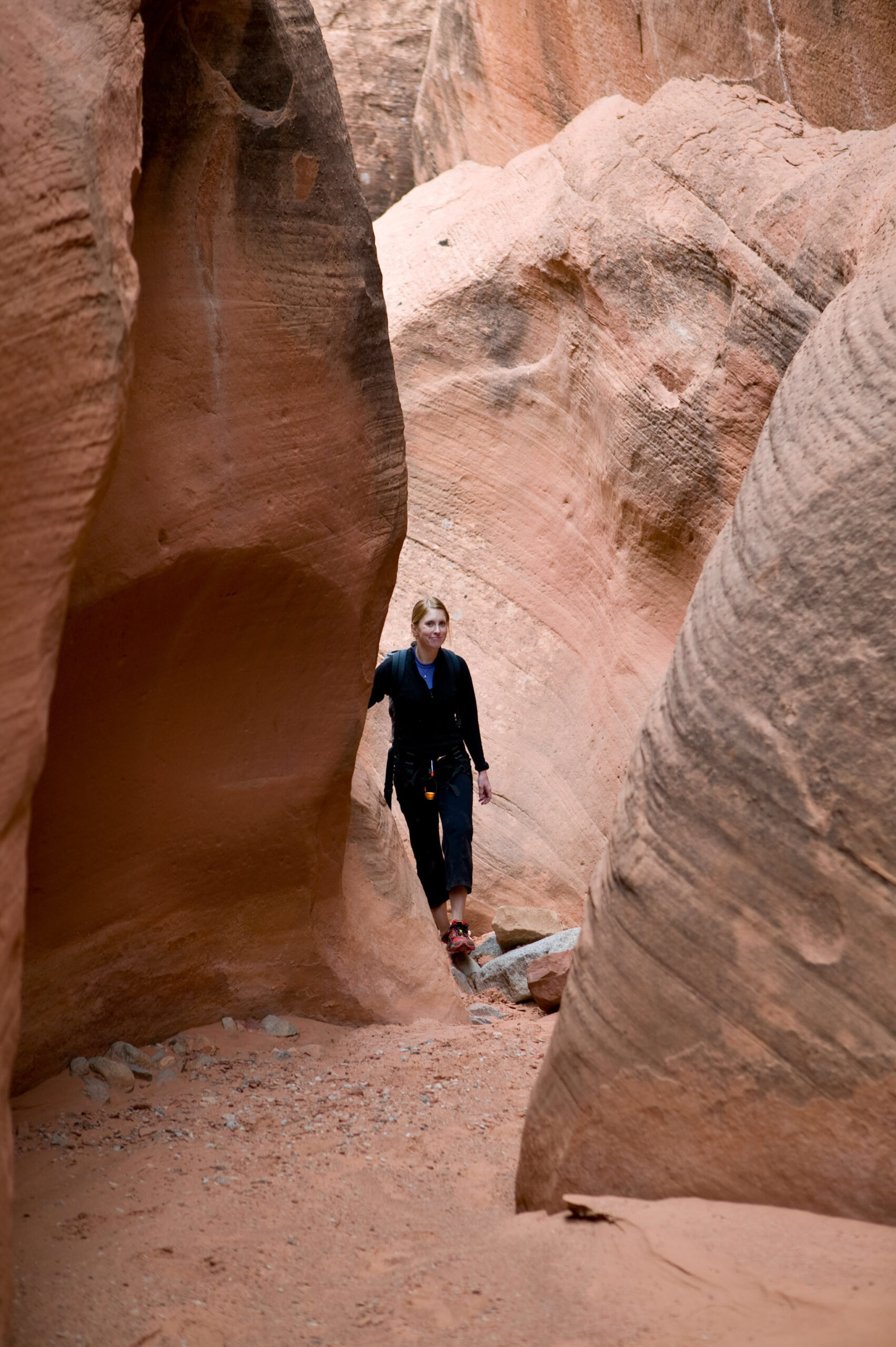
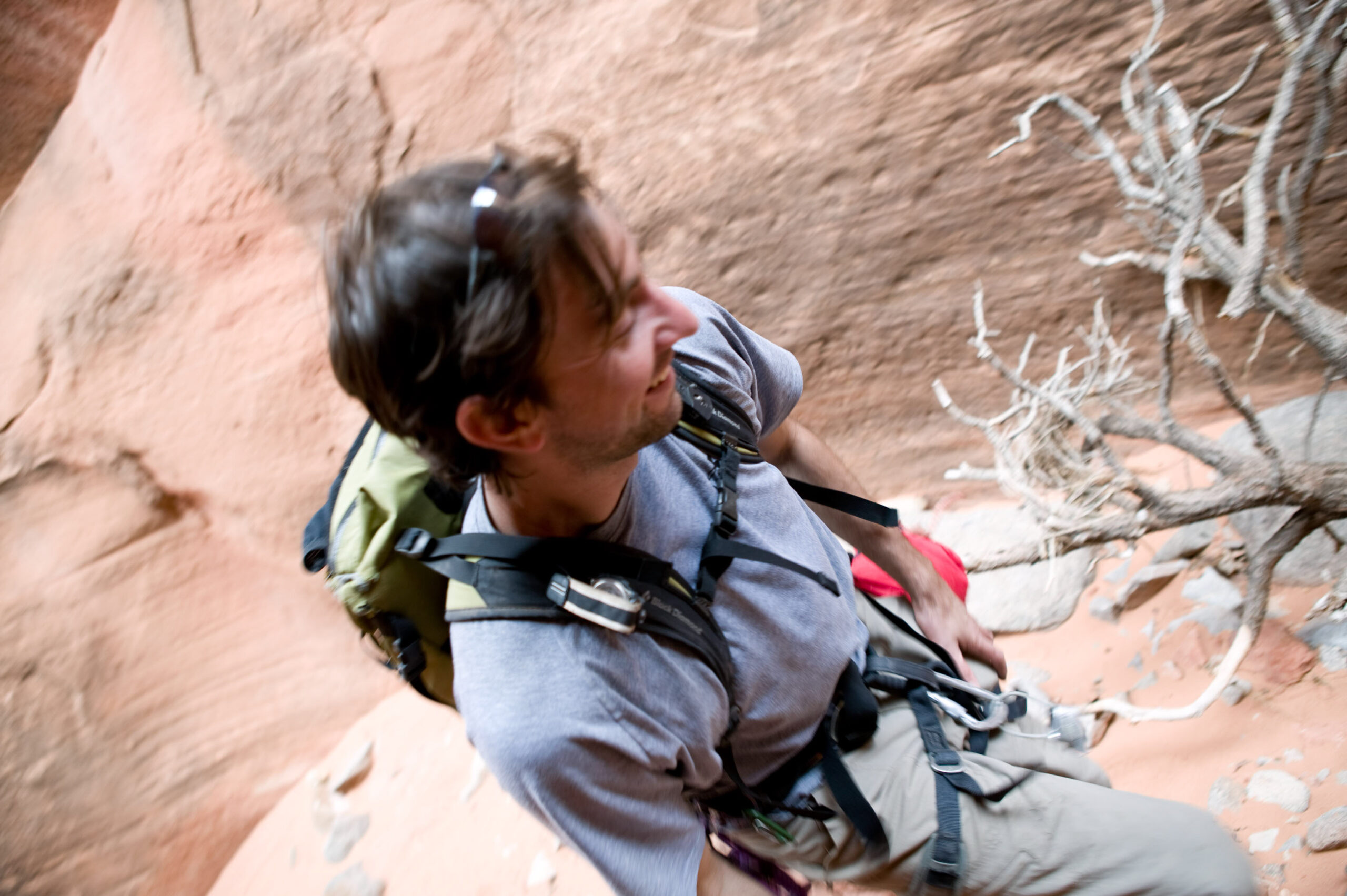
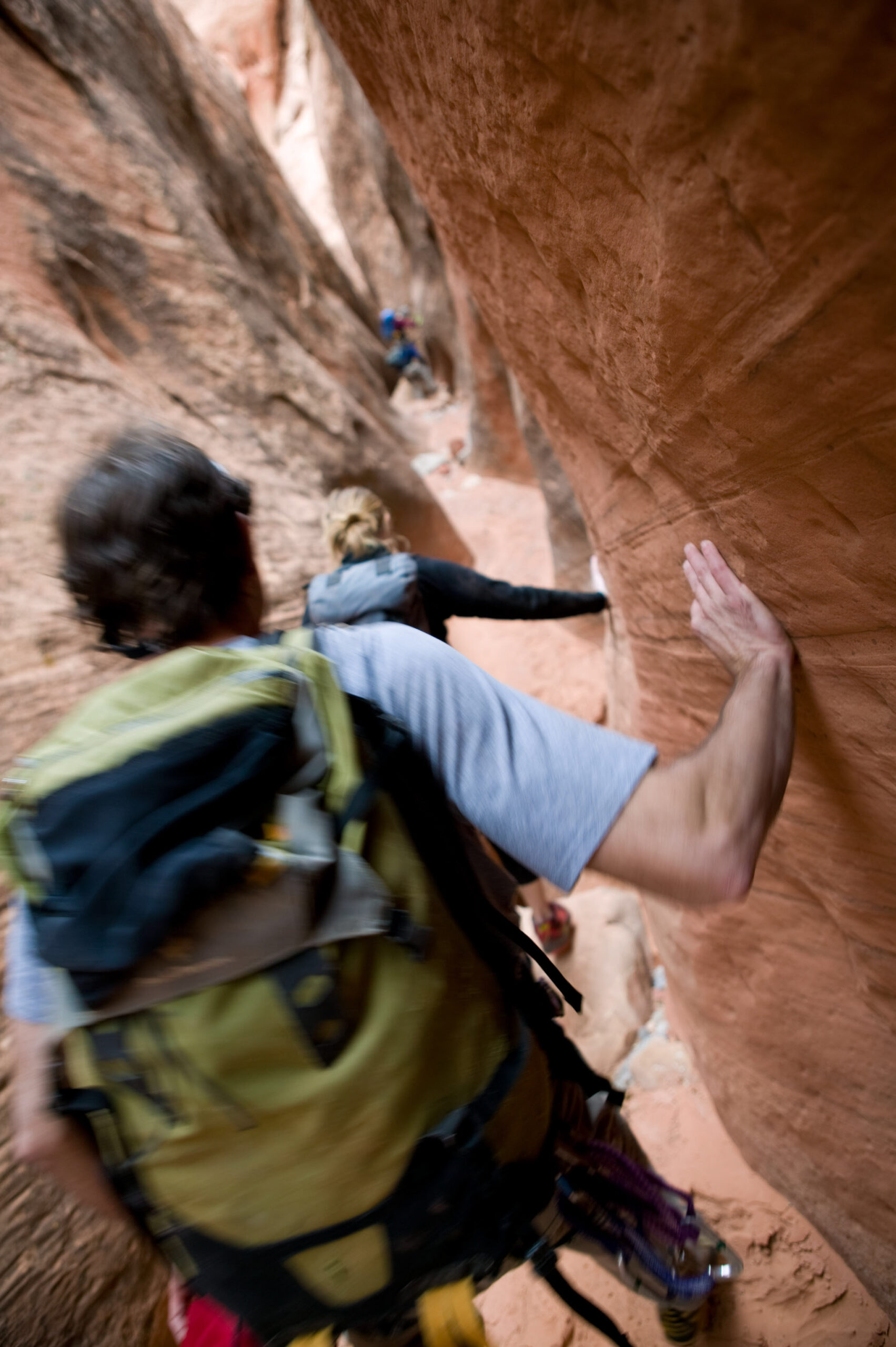
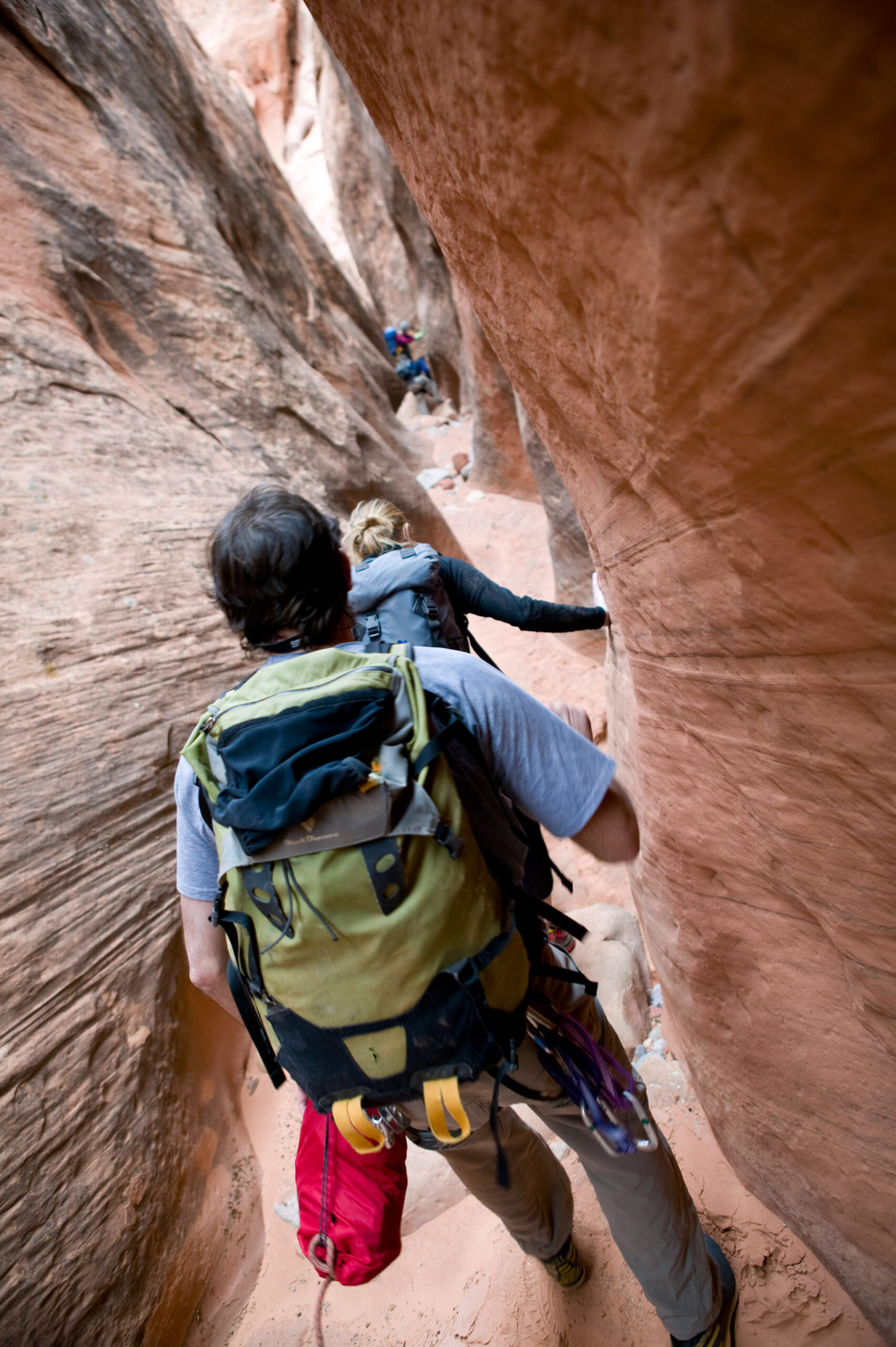
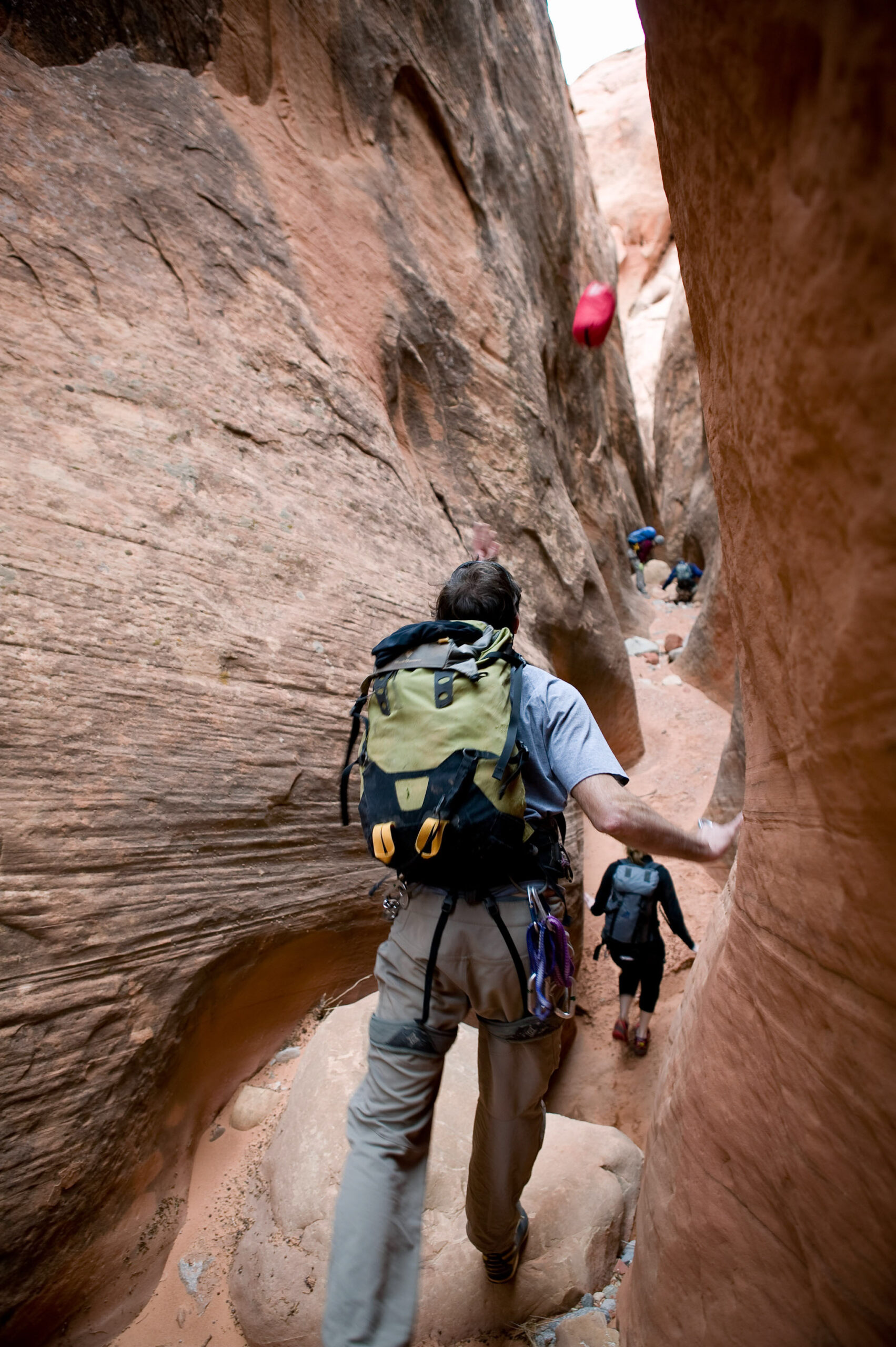
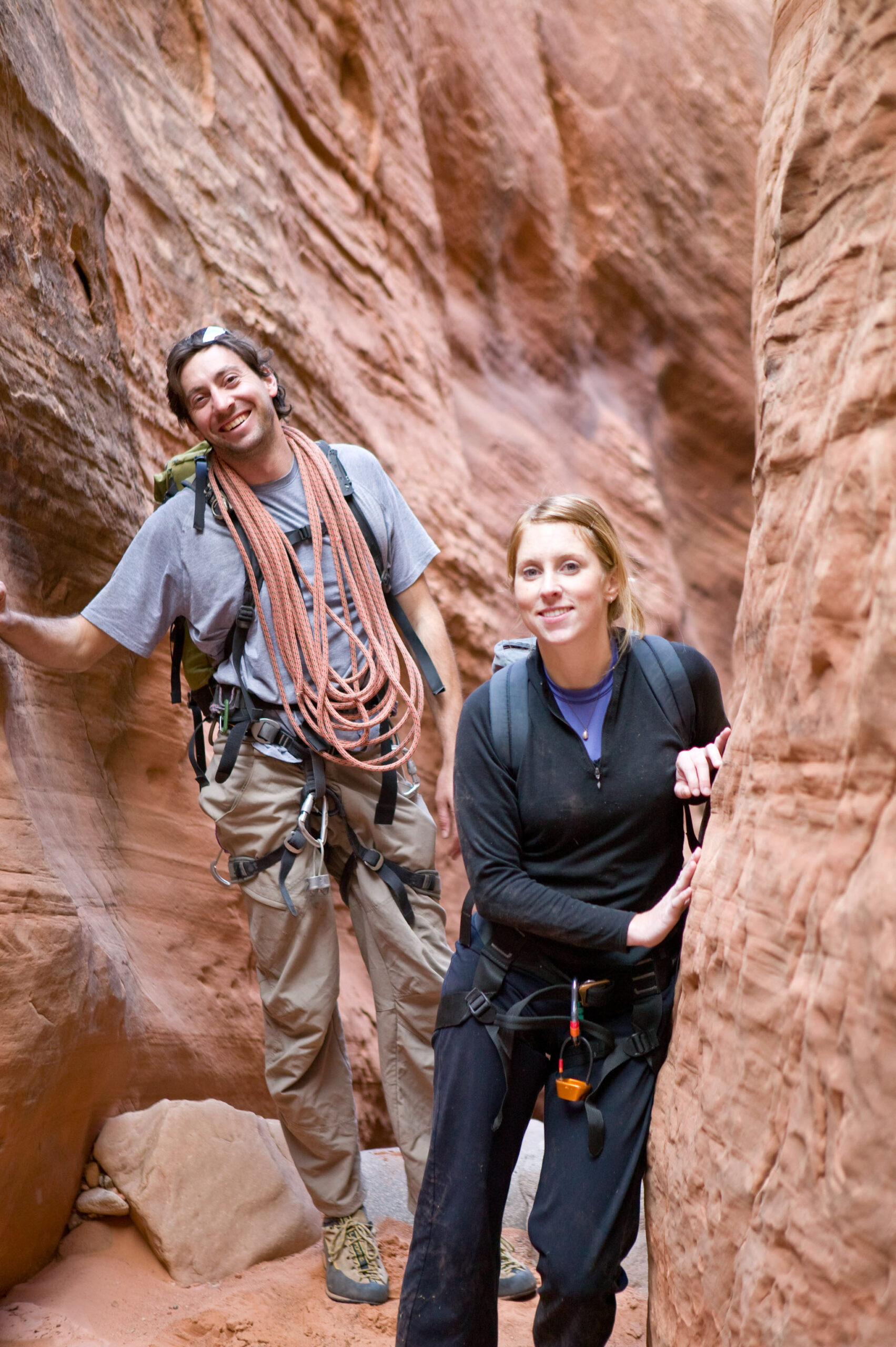
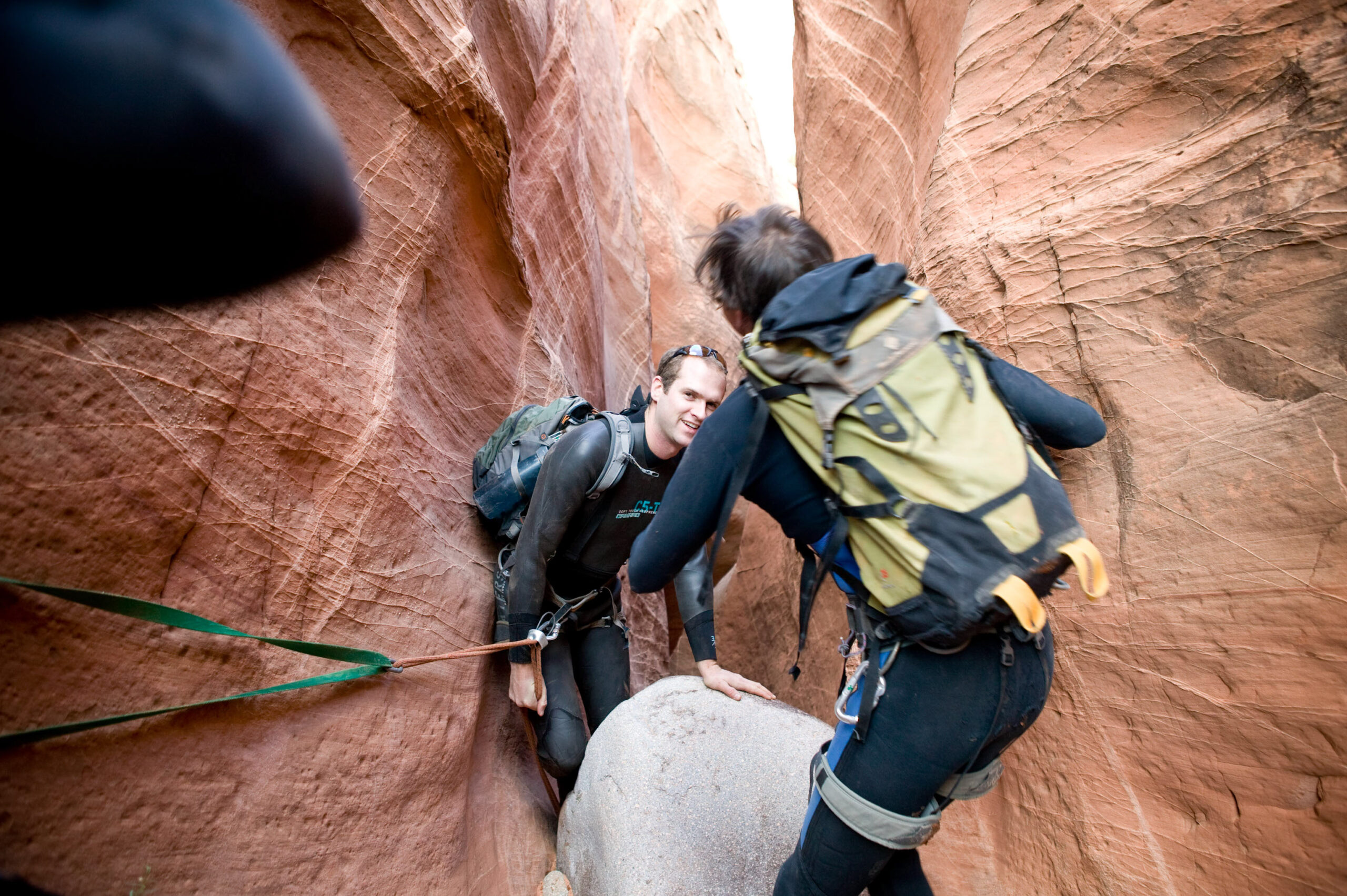
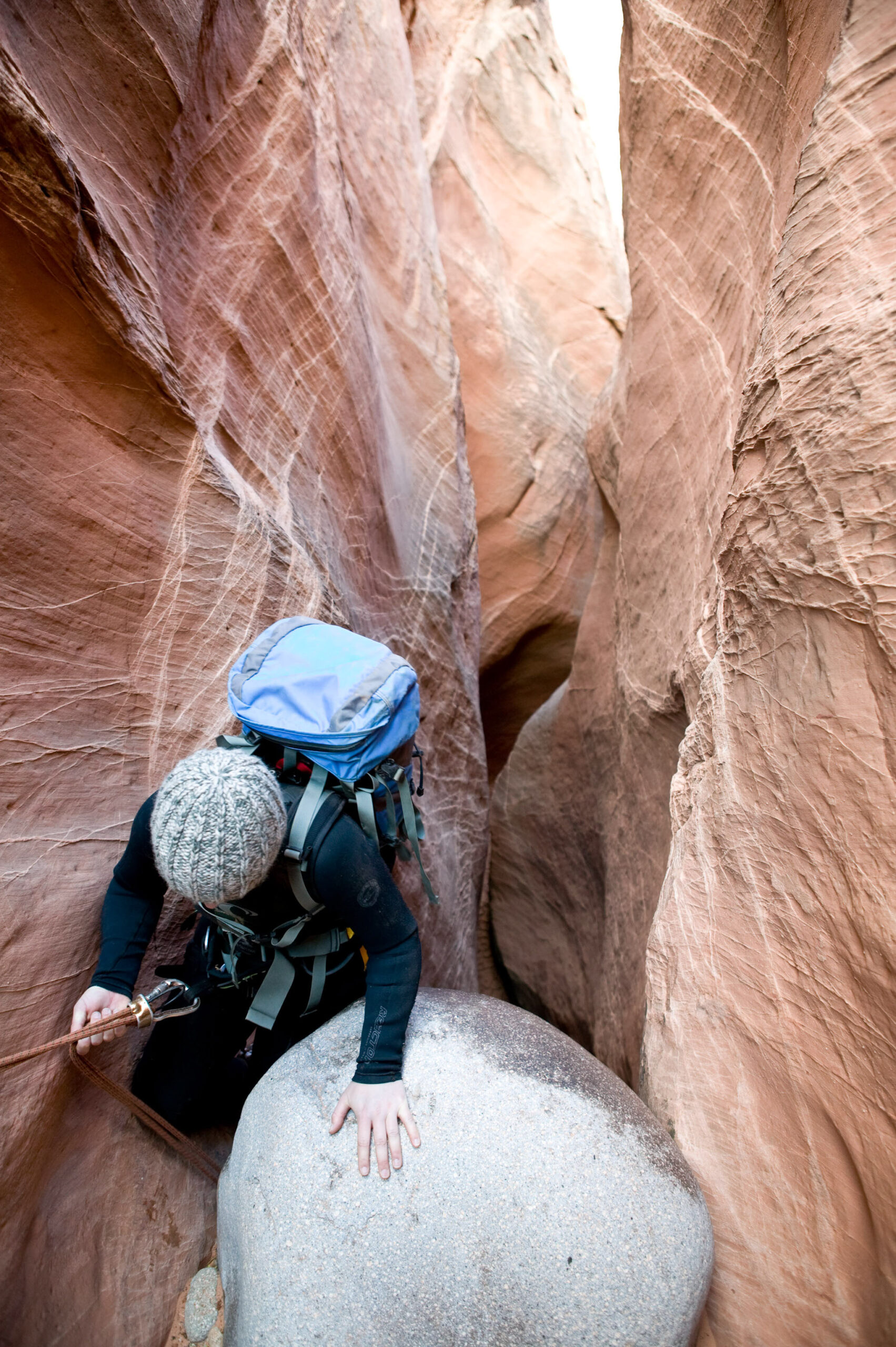
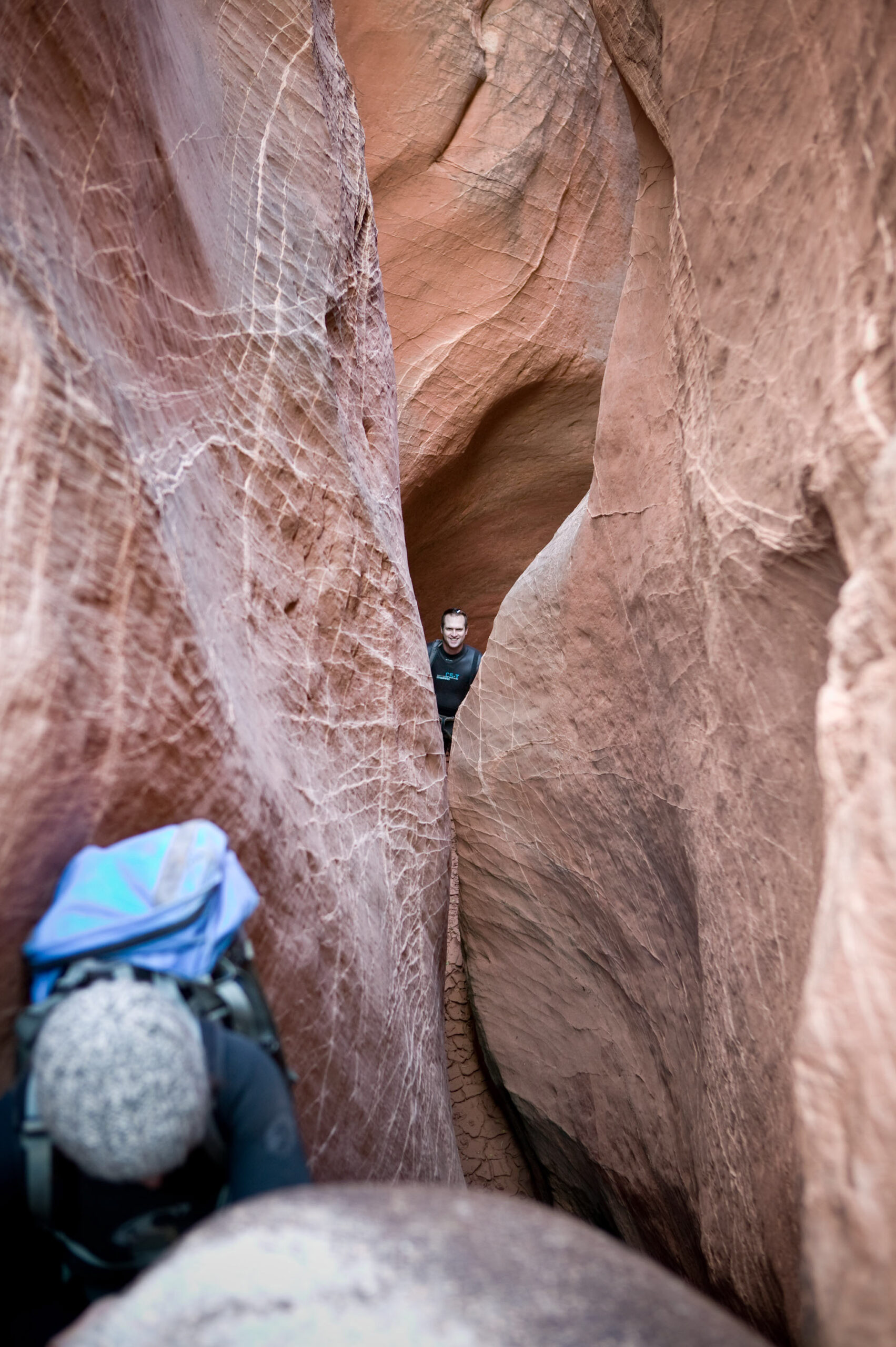
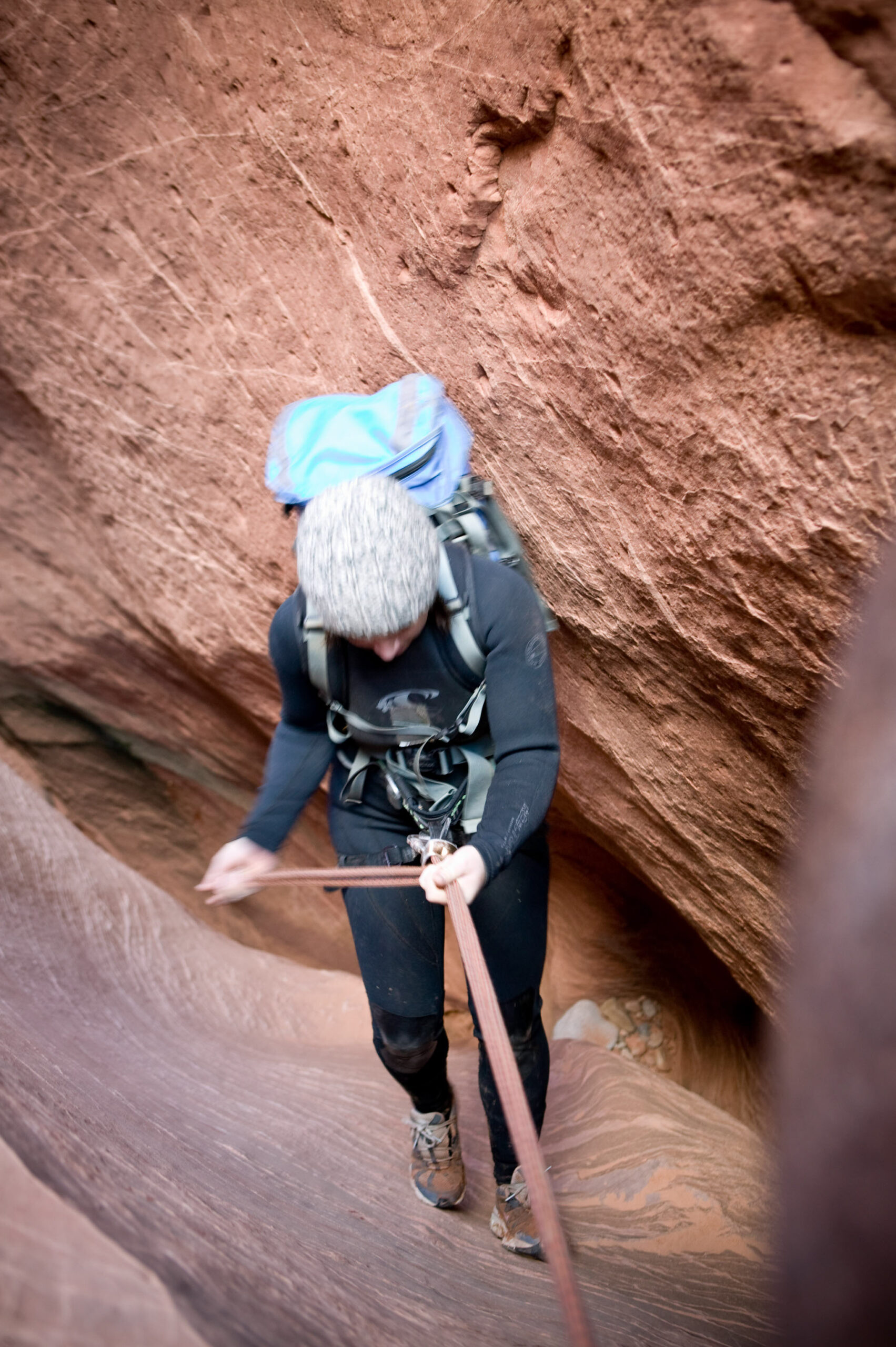
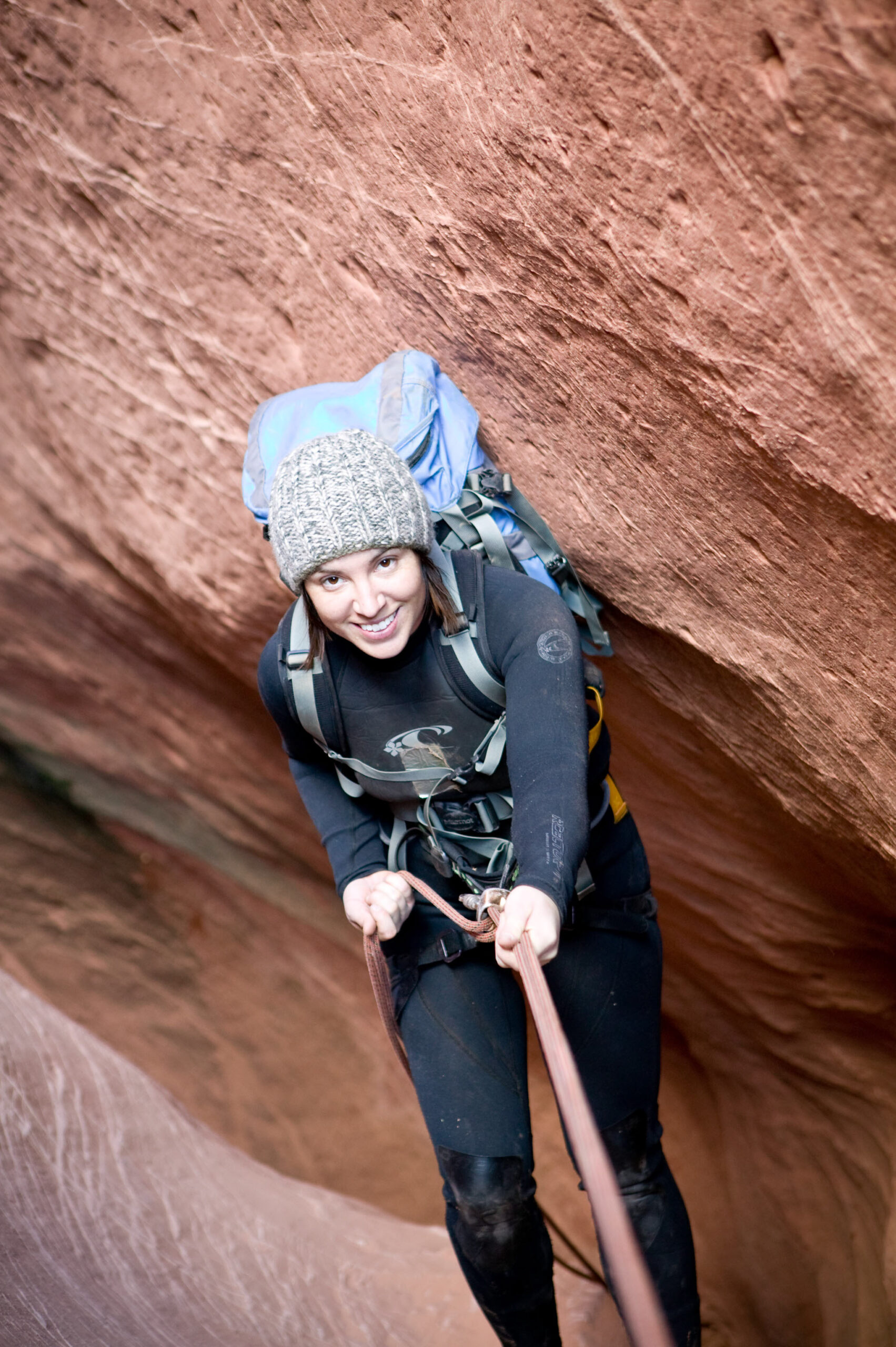
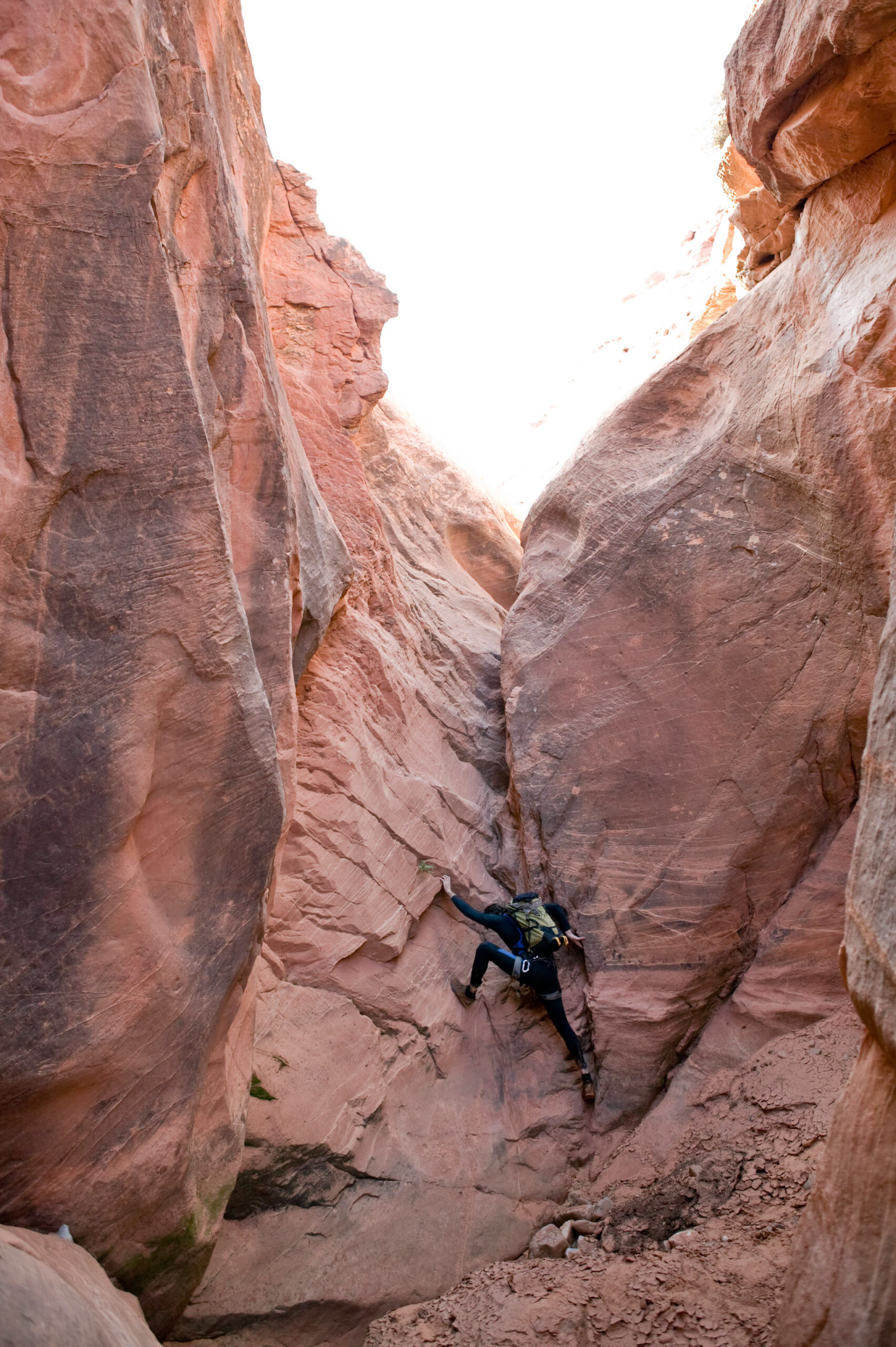
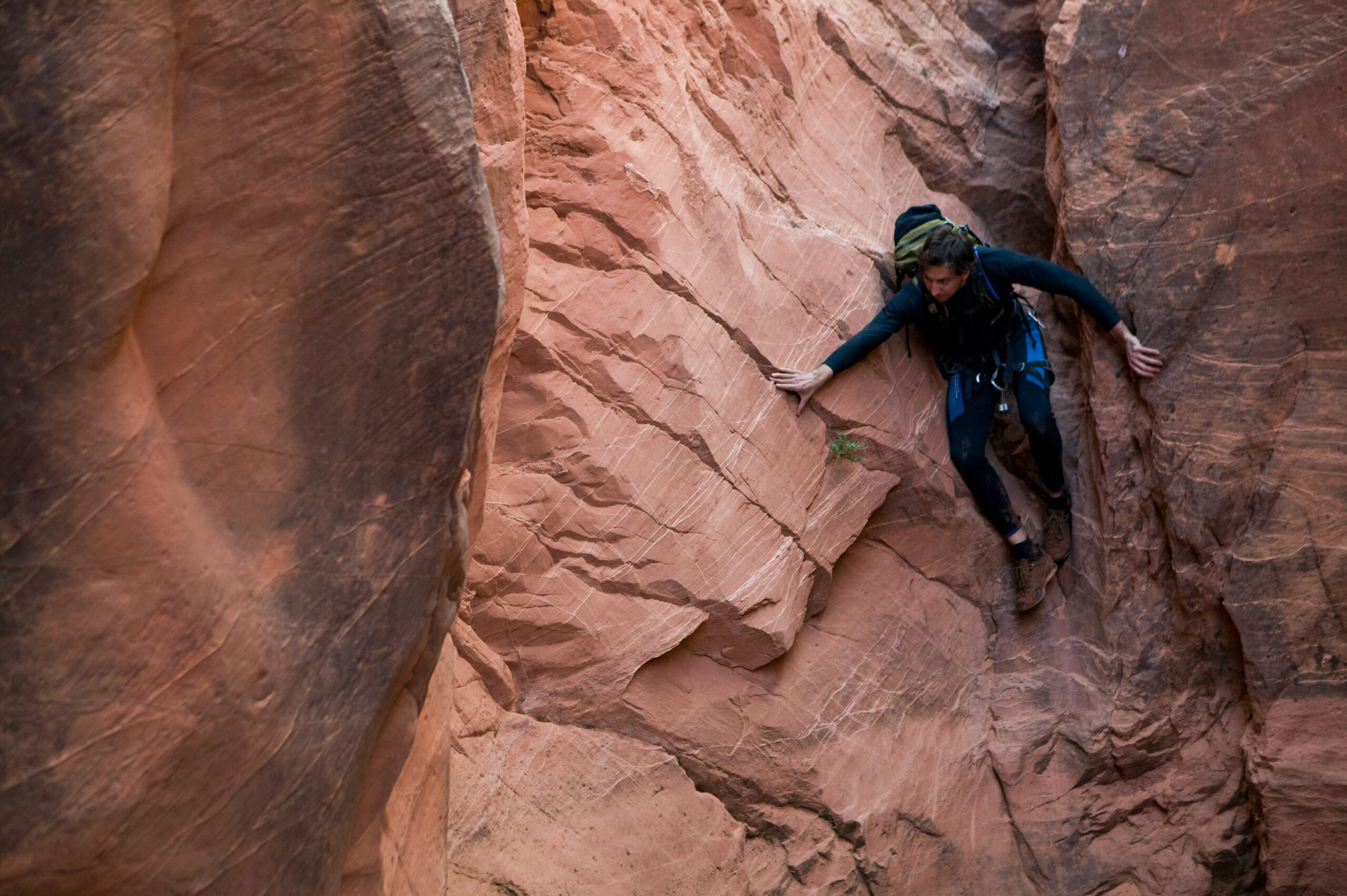
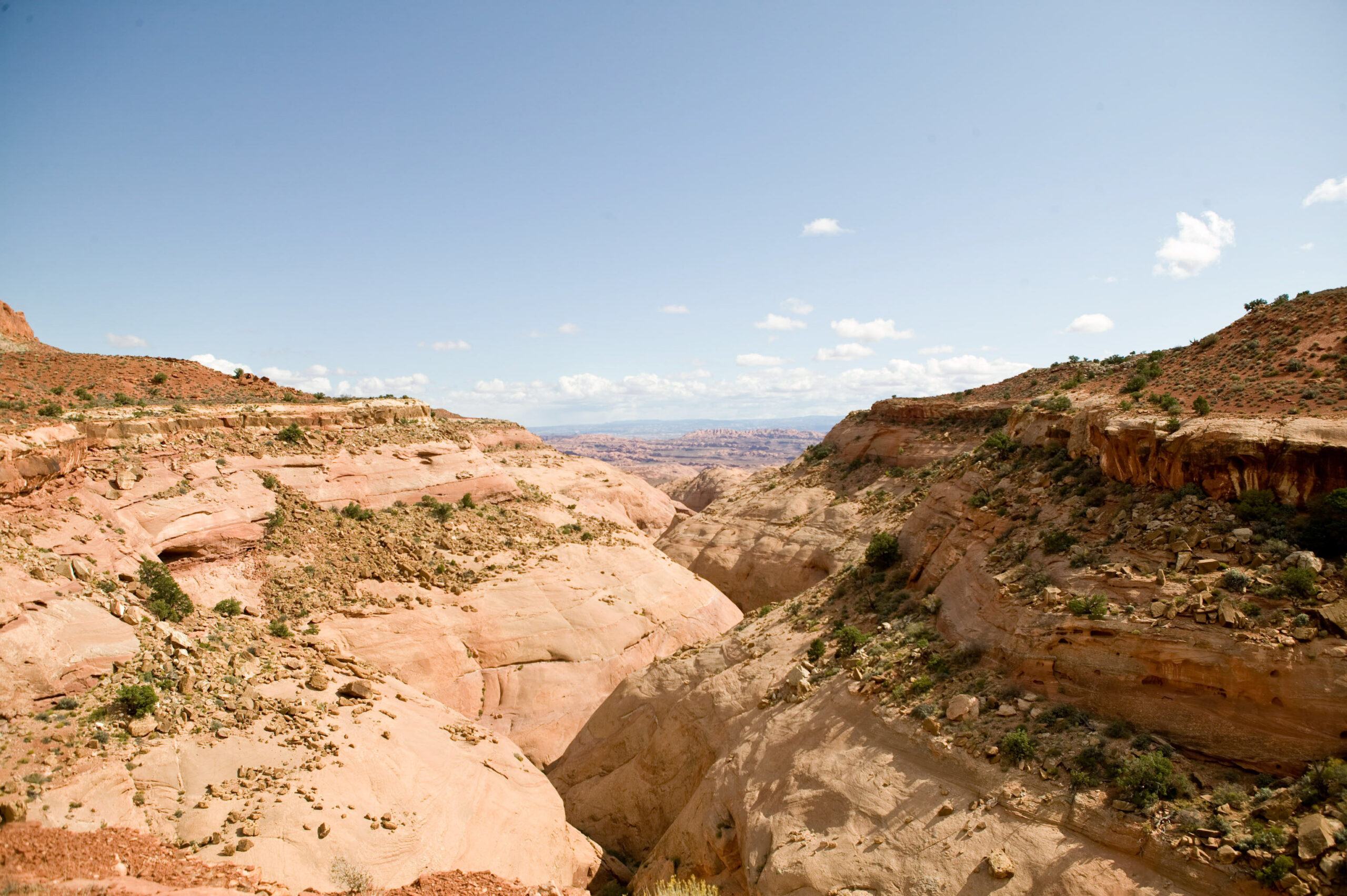
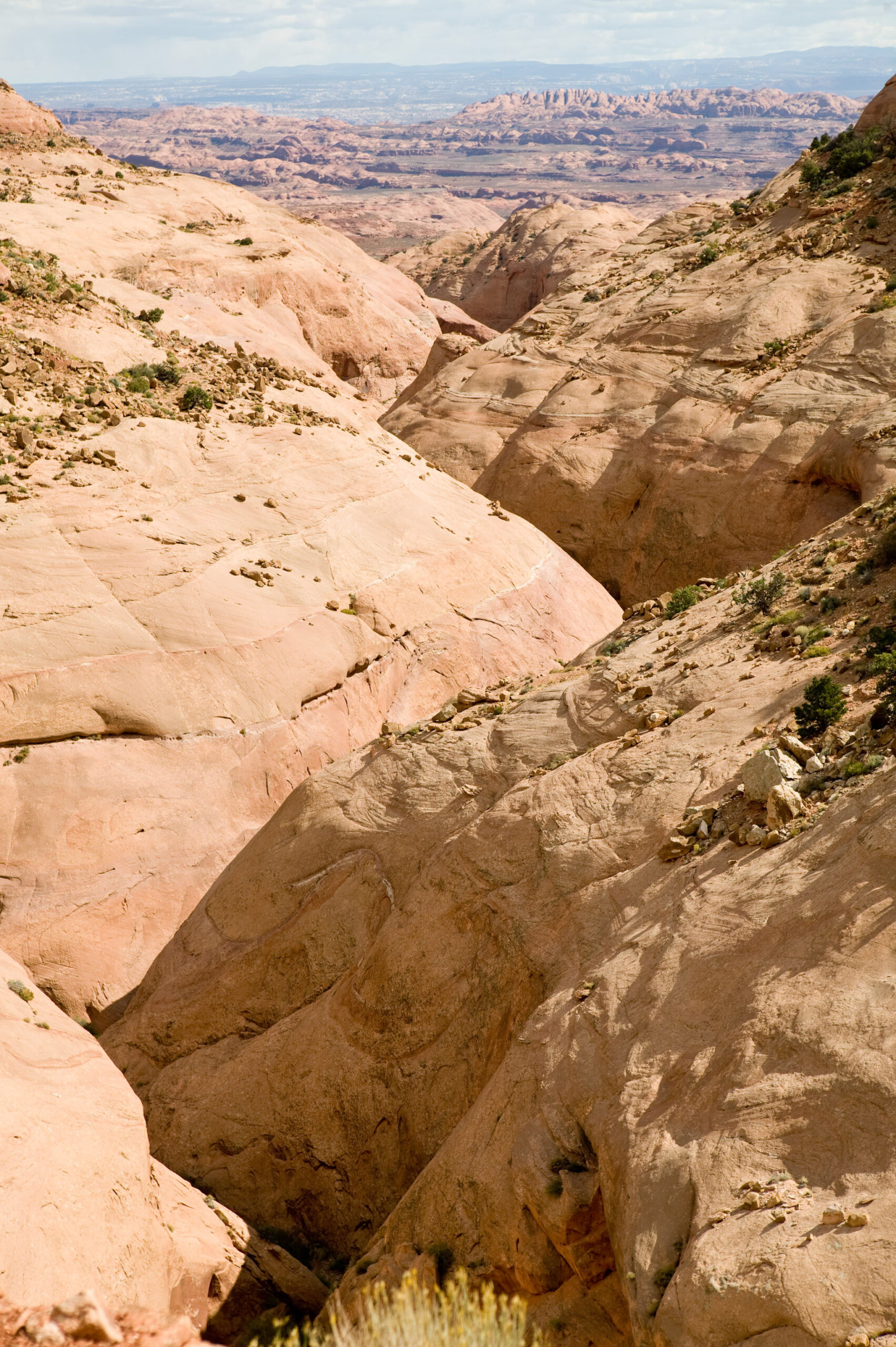
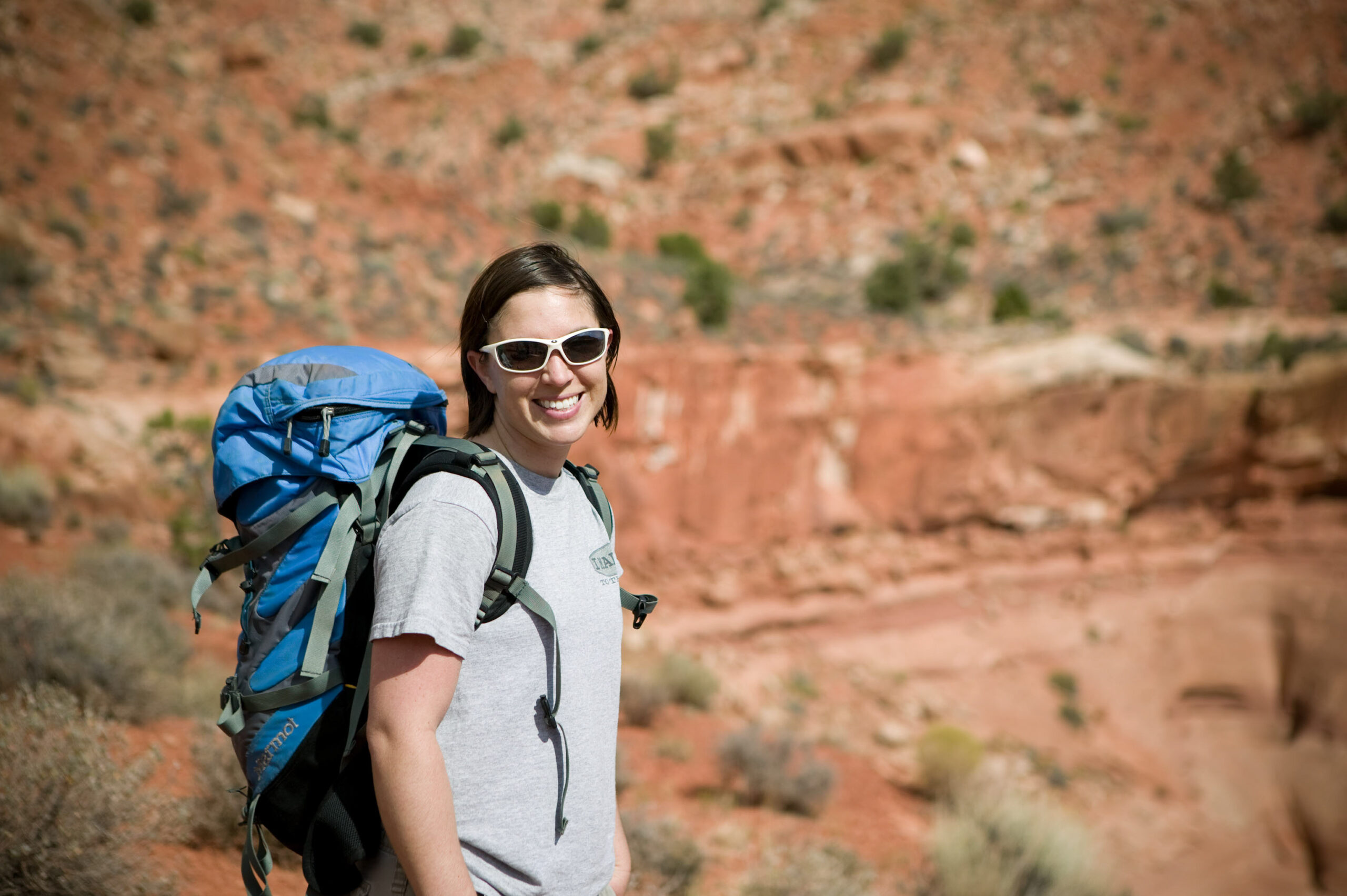
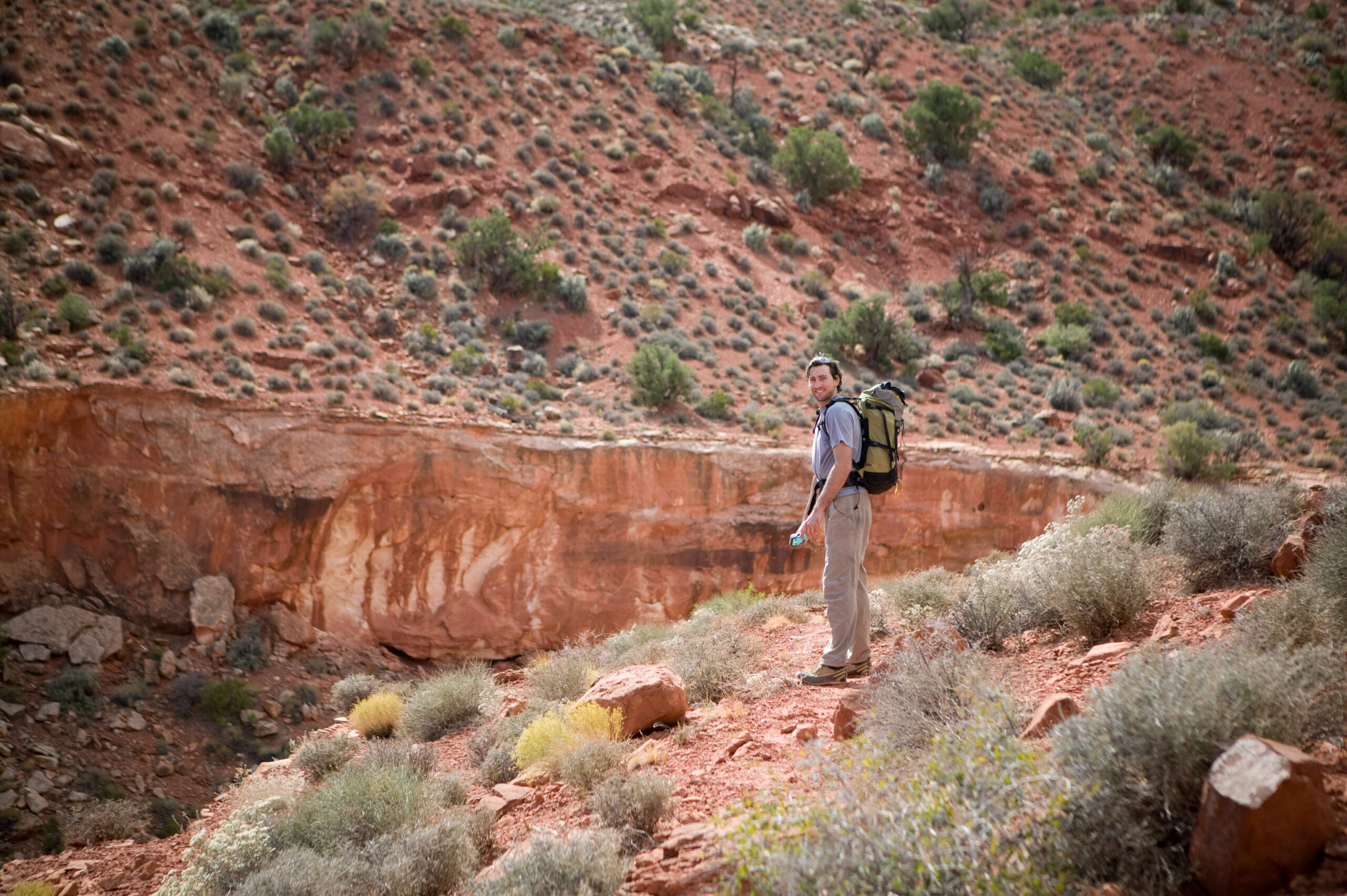
    karen and I drove to utah to join friends for a week of canyoneering

    and I picked a thousand pounds of grapes with phil to make some wine (fermenting at this moment).

    But not much boat related stuff to report. I did get to the boat for a few days sometime in September to install the new head and associated plumbing (99.9% completed anyway), but that was all.

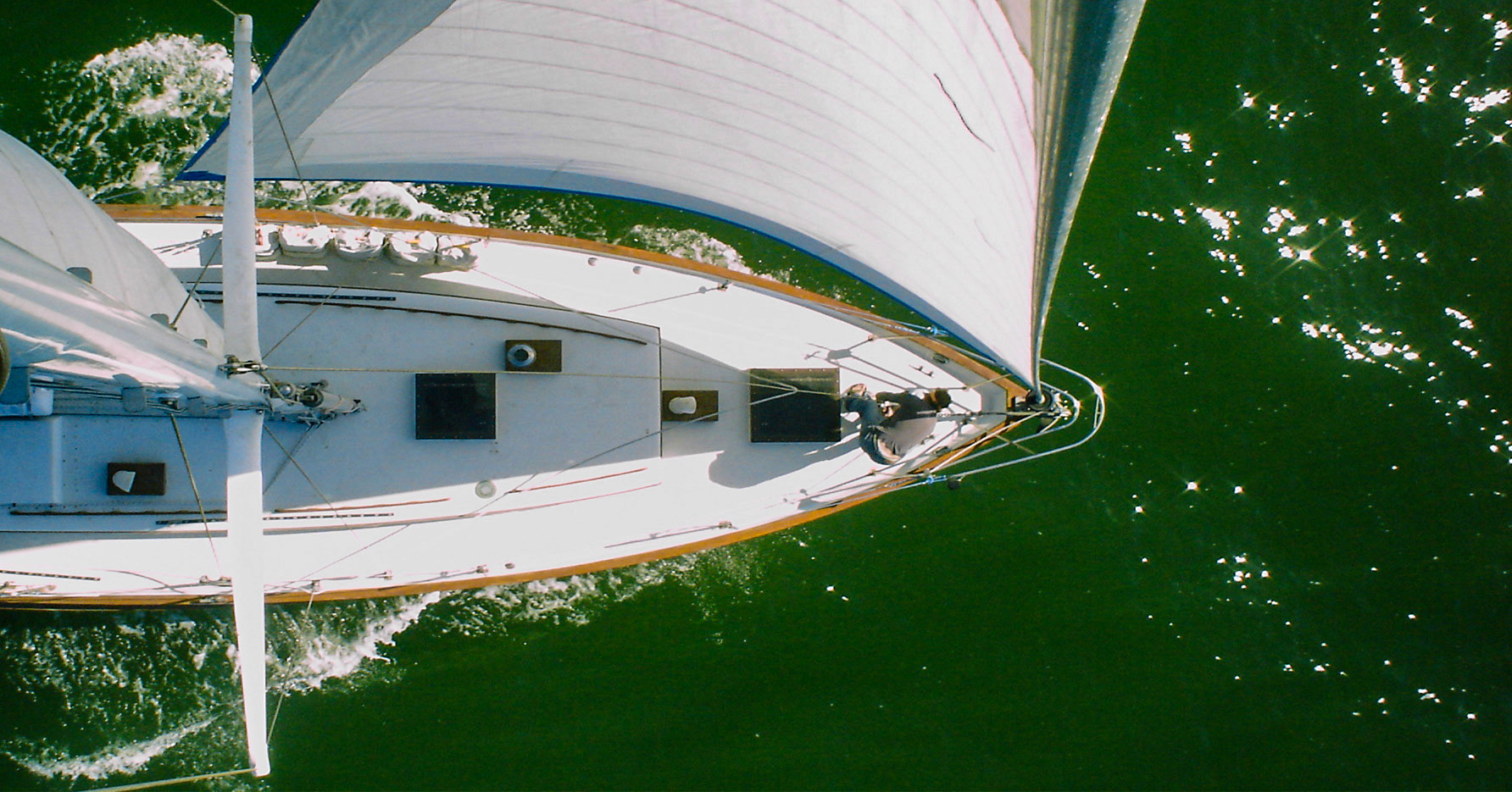
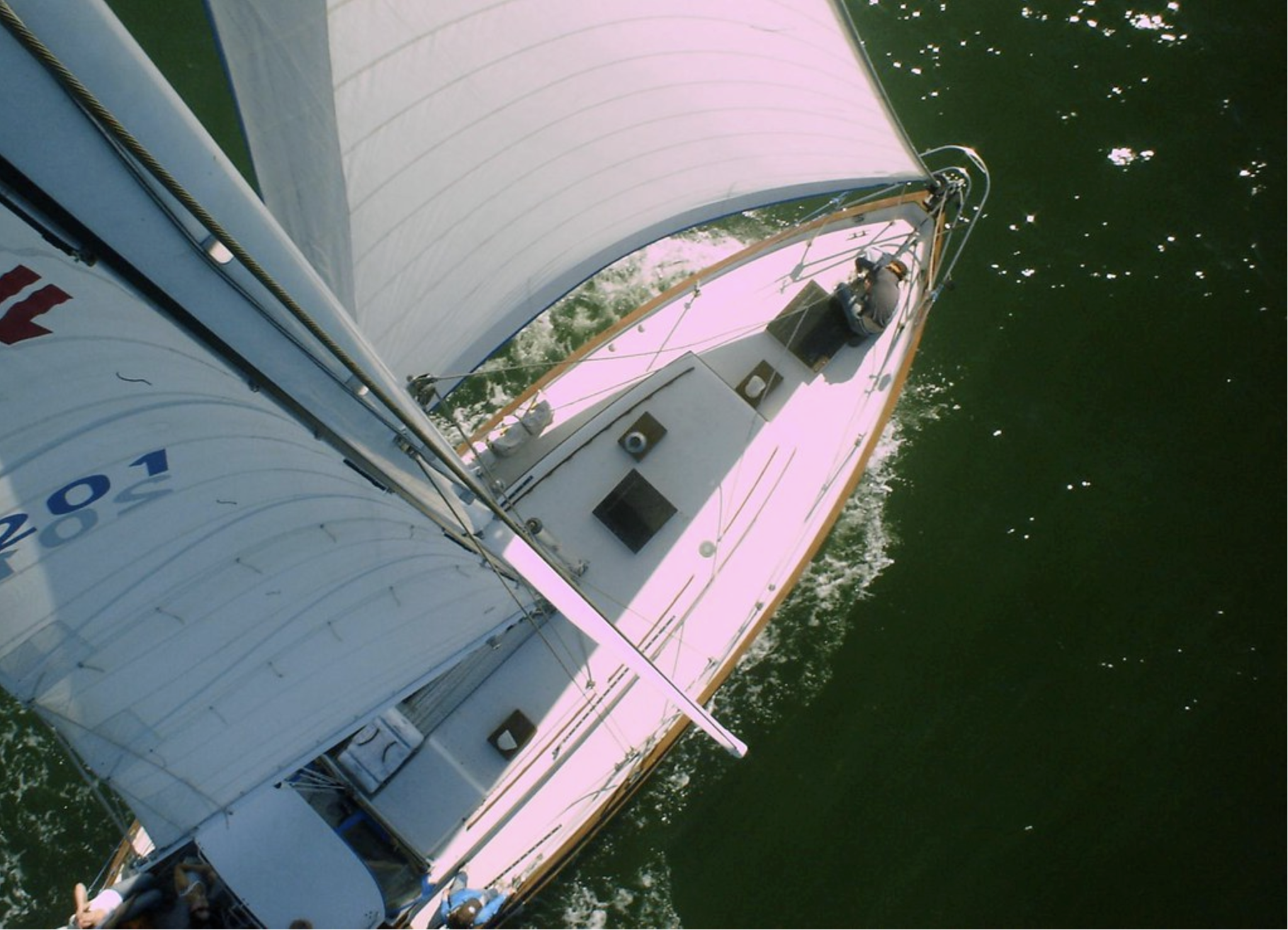
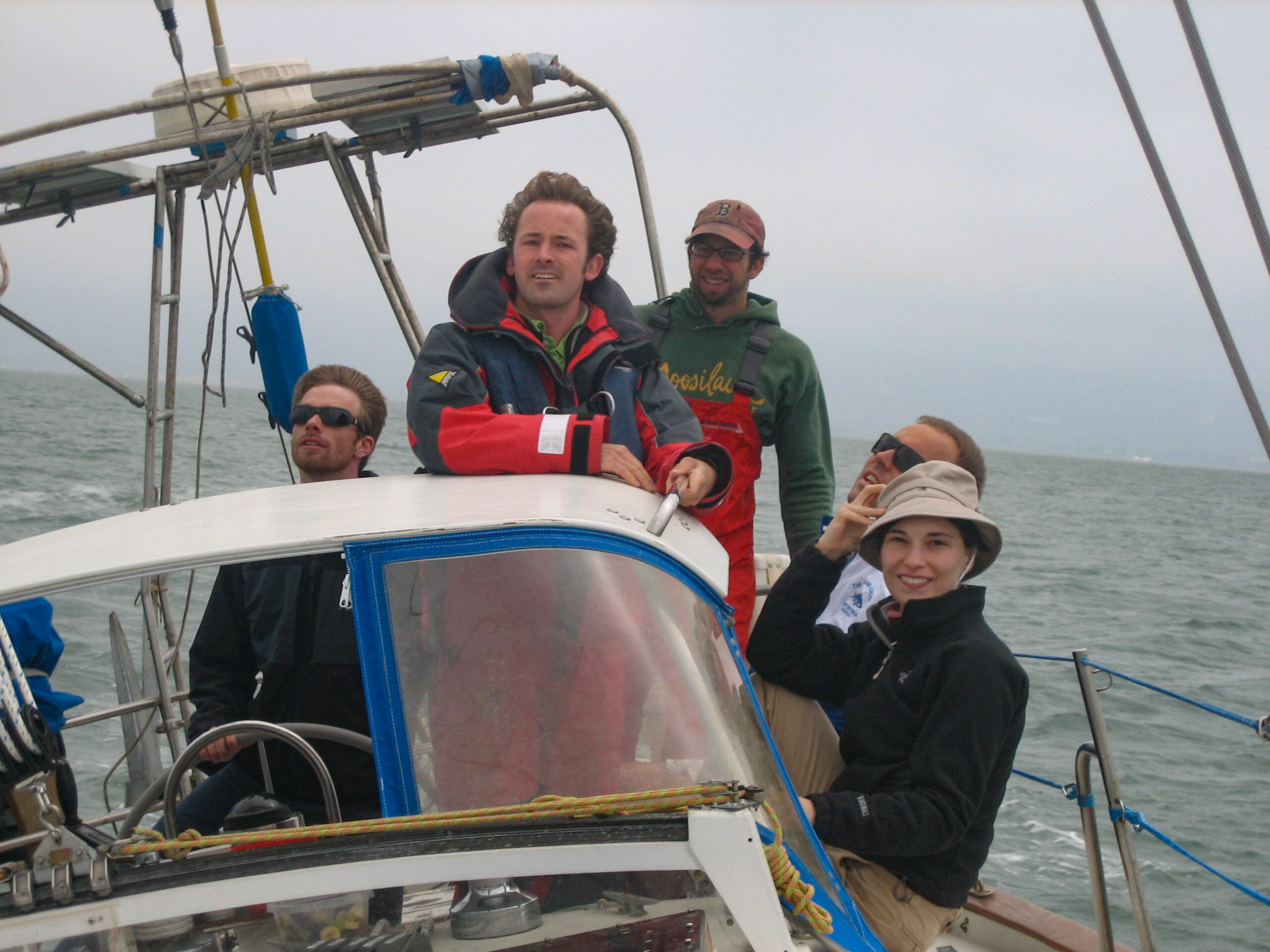
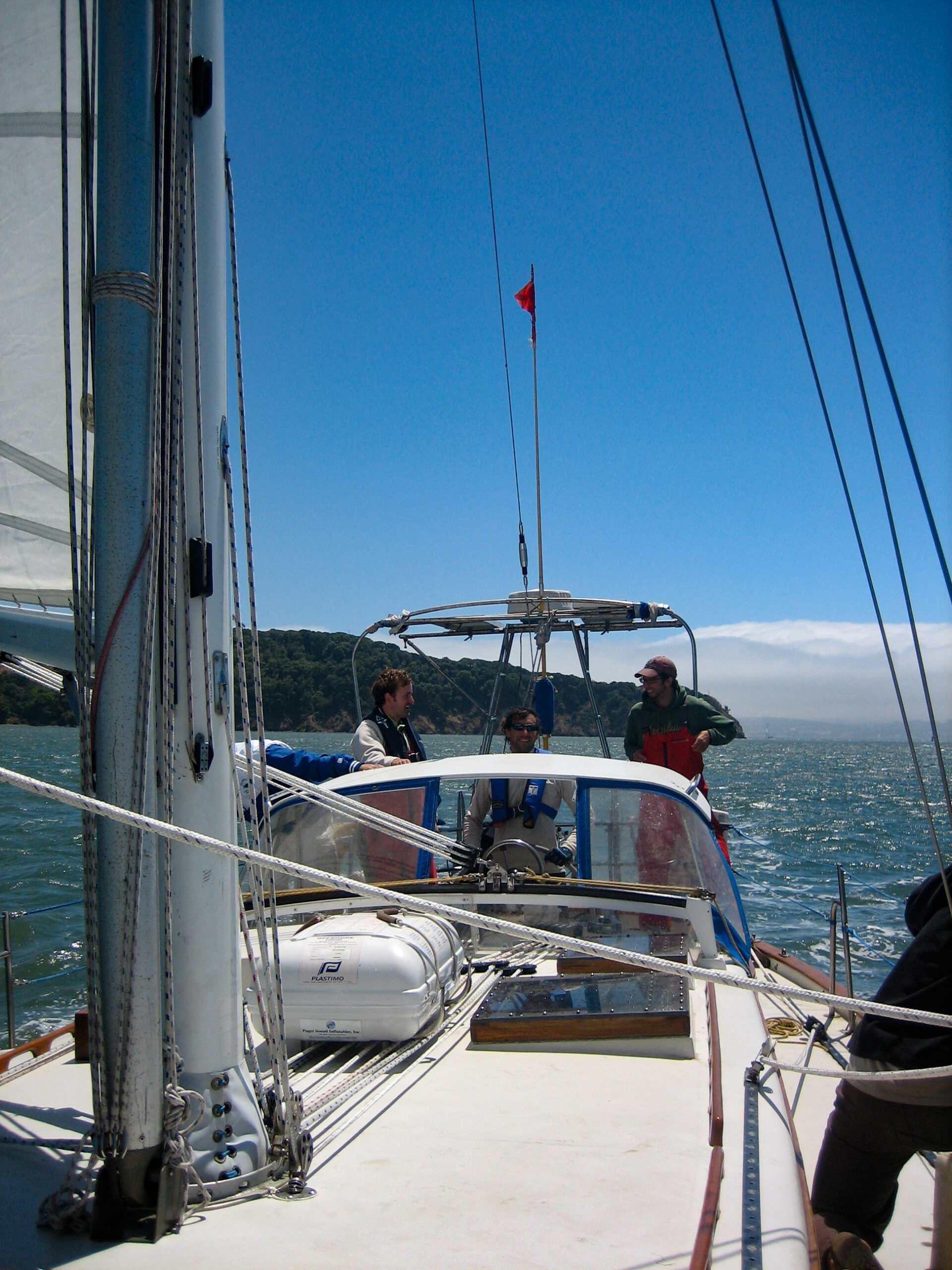
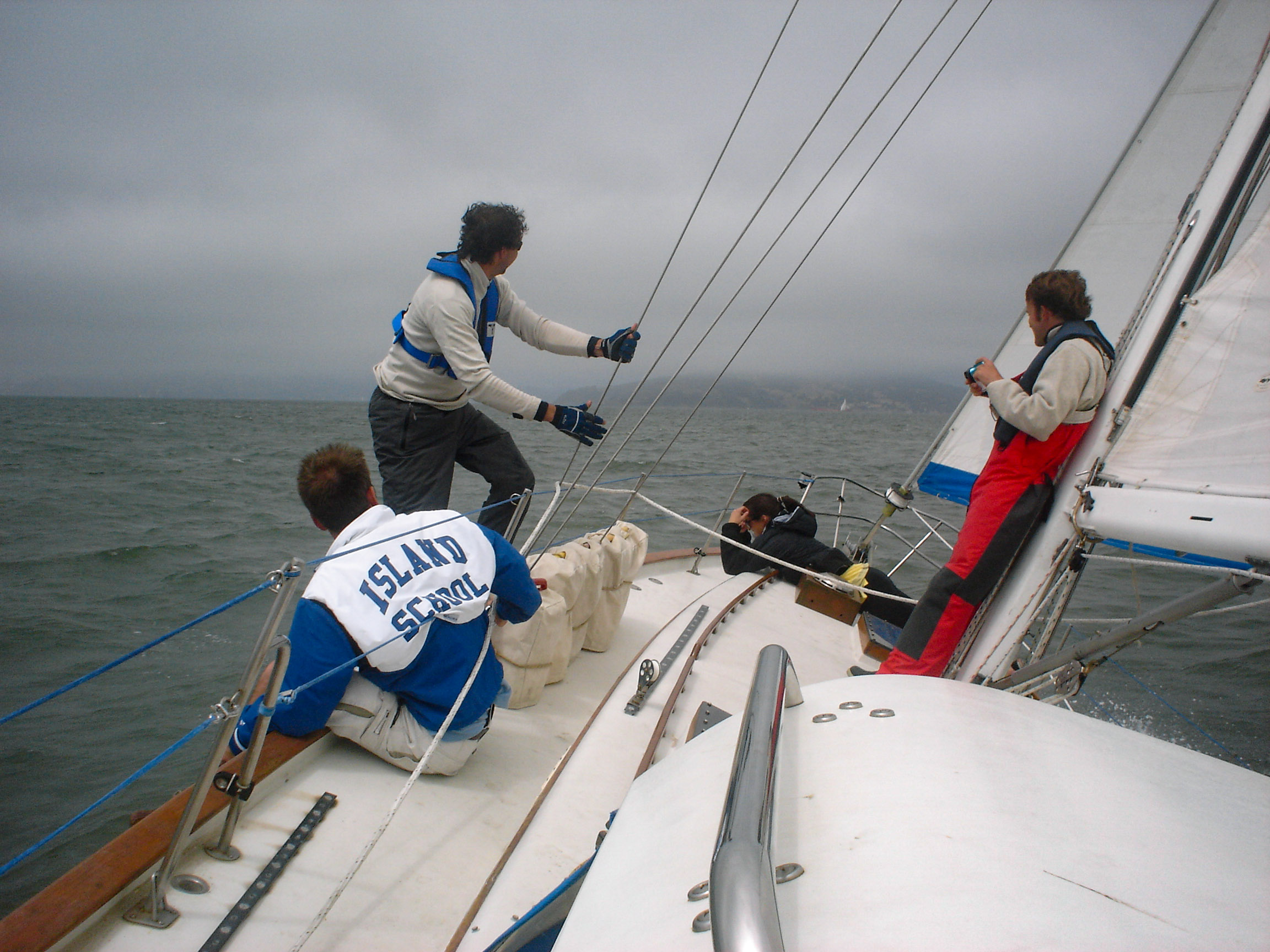
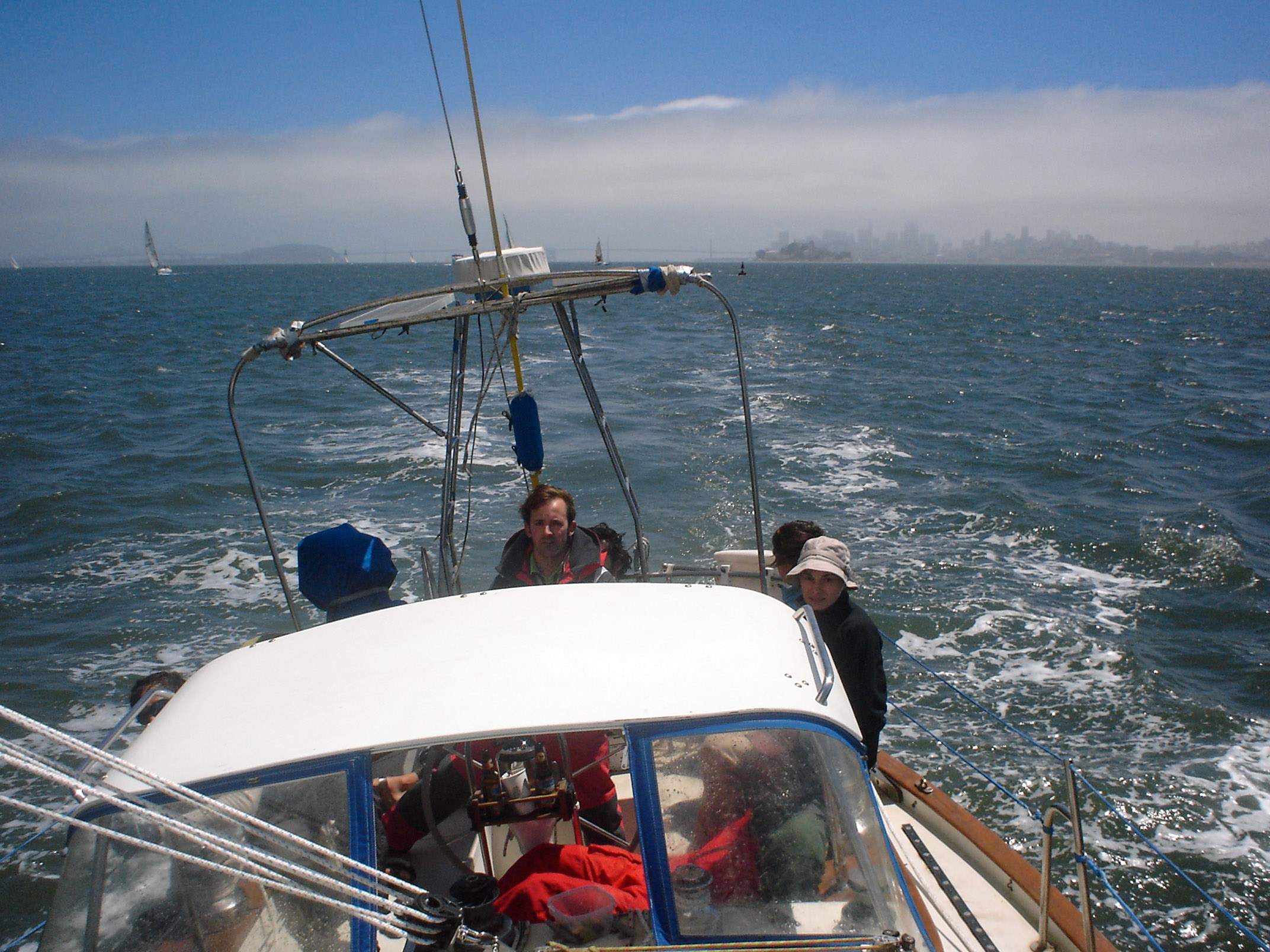
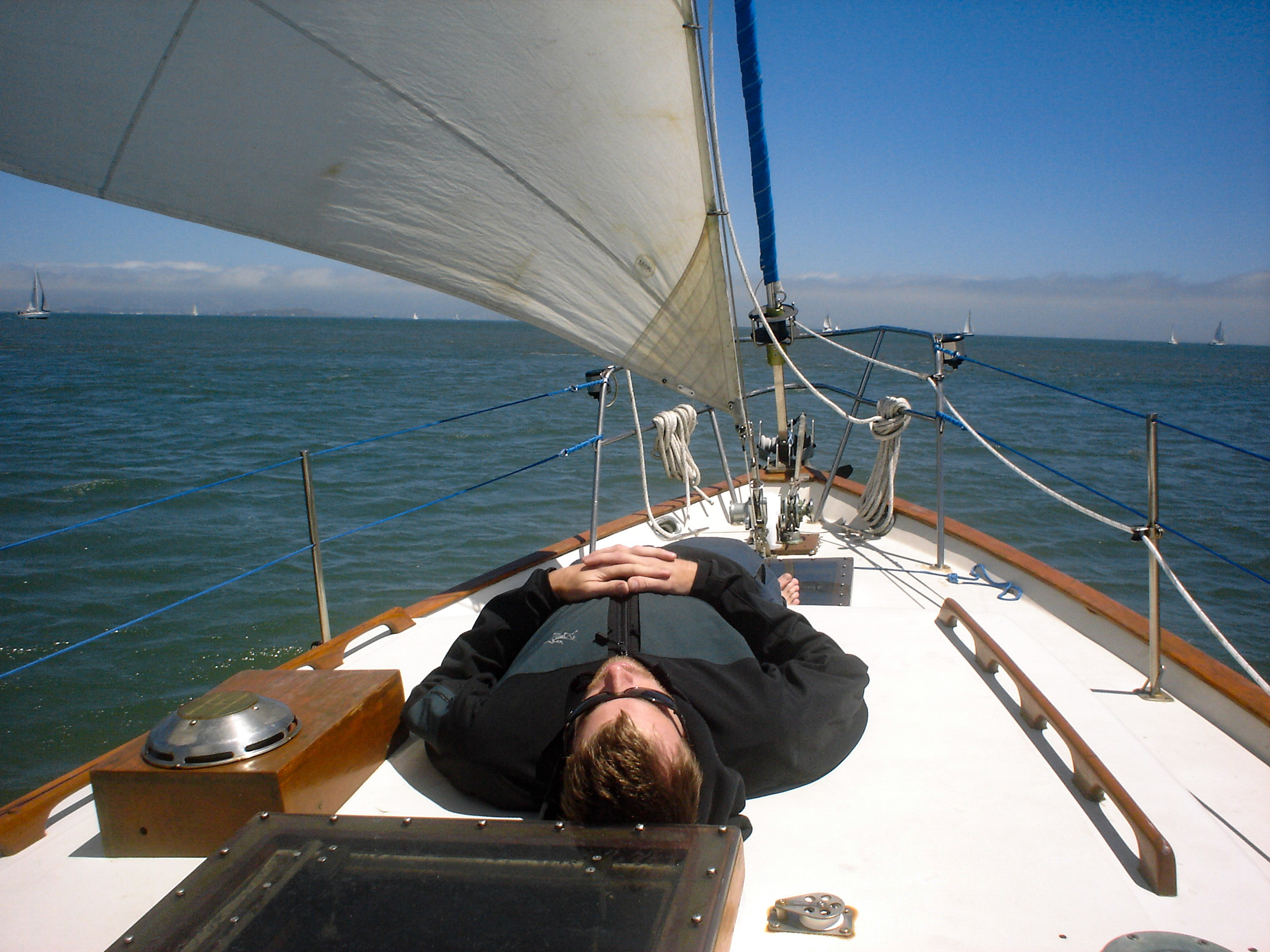
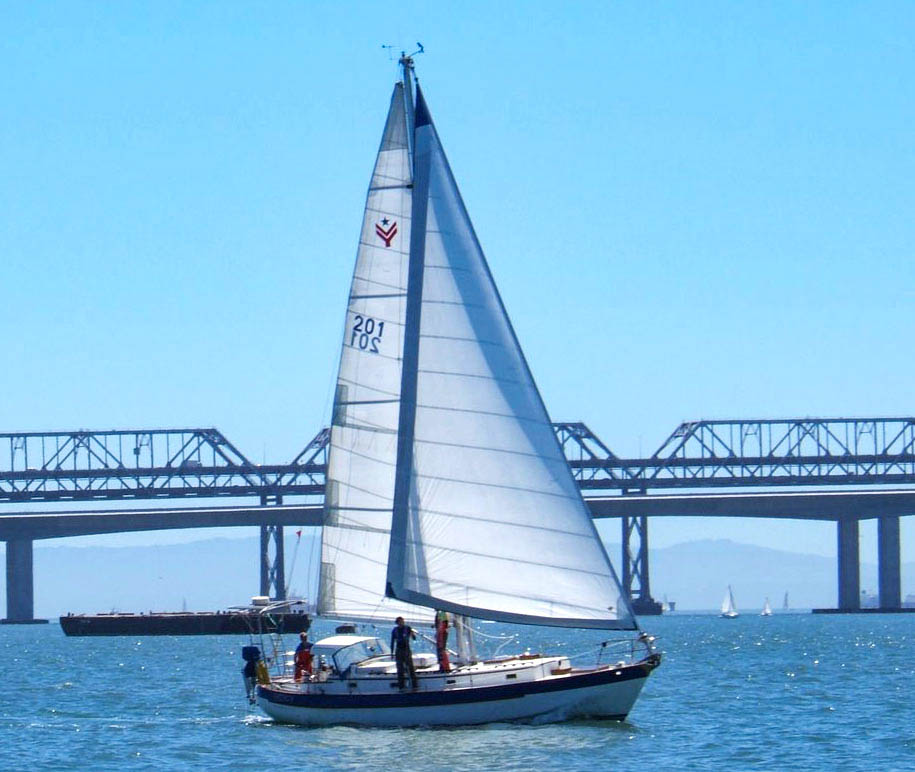
    Finally this past weekend we got out for another fun social sail–this time we just barely ducked under the bridge before heading back. It was a super warm day, complements of an exceptional indian summer, and it was really, really good to pass the time with some old–and new–friends. Jonny and I each took a turn climbing to the masthead while under full sail, on the newly installed mast steps, and it was spectacular to be at the very top of the boat with it heeled over nicely in 10 knots of wind. Thanks so much to gary, anna, rob, julie, and dana for joining us for the day.

  • Anyone seen my sea legs?

    It’s the nature of adventures for things not to go as planned, but that’s not much consolation when seasickness renders you as useless and immobile as a jellyfish and you’re out in the middle of the ocean and you’ve got miles to sail before reaching the comfort of terra firma. Only in hindsight, and only reluctantly — once you’ve got your wits about you again — can you call such an experience an adventure. Really, it’s much easier to call it what it was: a miserable, queasy, painful, wretched, torturous journey.

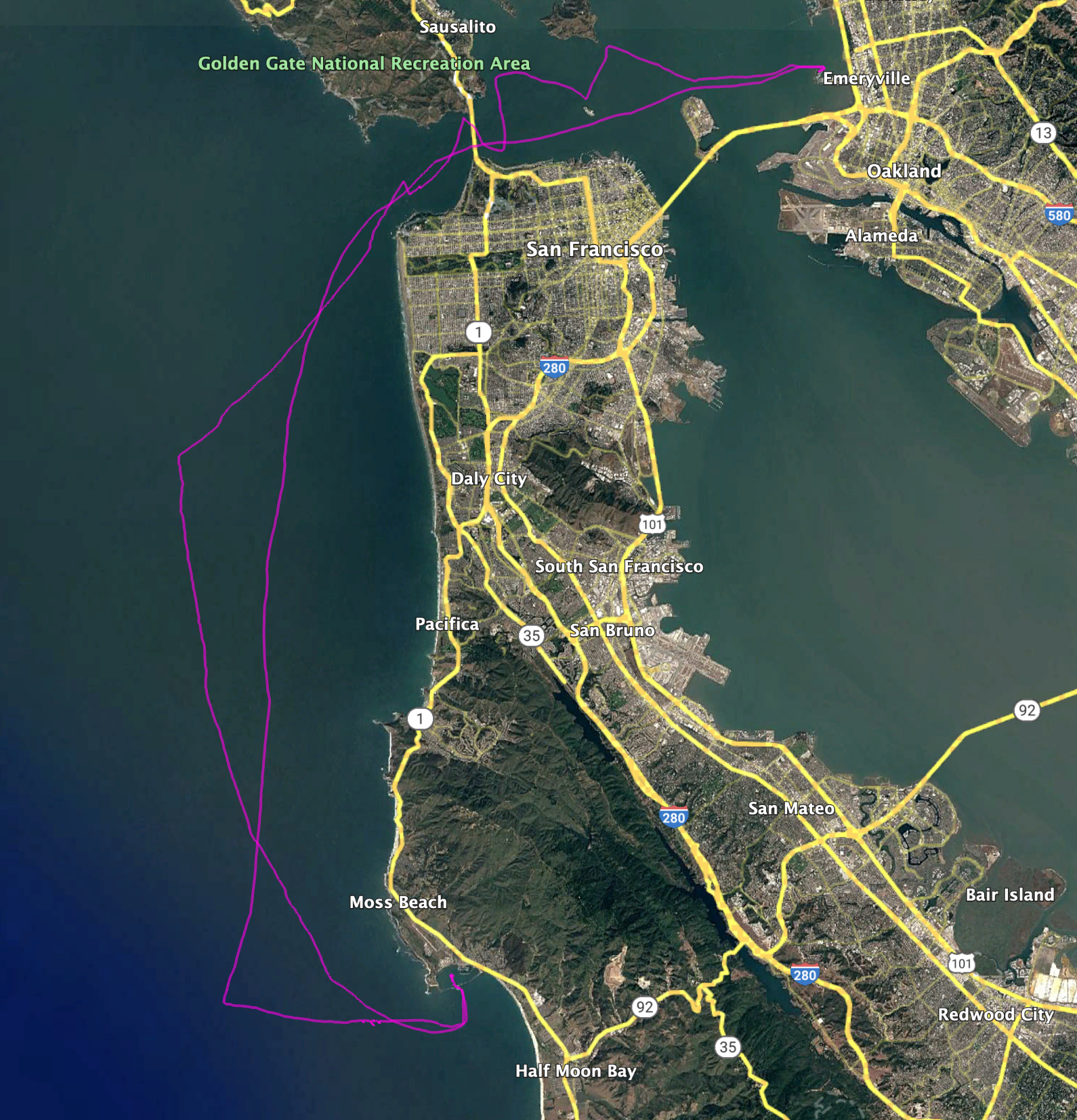
    Matt, Karen, and I had decided it was finally time to take Syzygy out in the ocean, so we decided to sail from San Francisco 20 miles south to Half Moon Bay. It’s worth noting, now, that the Coast Guard had issued a small-craft advisory for the weekend, and that the forecast, which included an official “gale warning,” predicted 30 knot winds and 18-foot seas on Sunday, and 25 knot winds and 9-foot seas on Monday.

    It being a holiday weekend, we figured it was as good a time as any to test her — and our — mettle. After all, Syzygy is a burly old sailboat, built for seas and winds far rougher than these. And since we’d rebuilt so much of her — rigging, plumbing, electrical system, etc. — we had unflagging faith in our vessel. Now, it turns out, I have far more faith in our vessel than I do in my stomach.

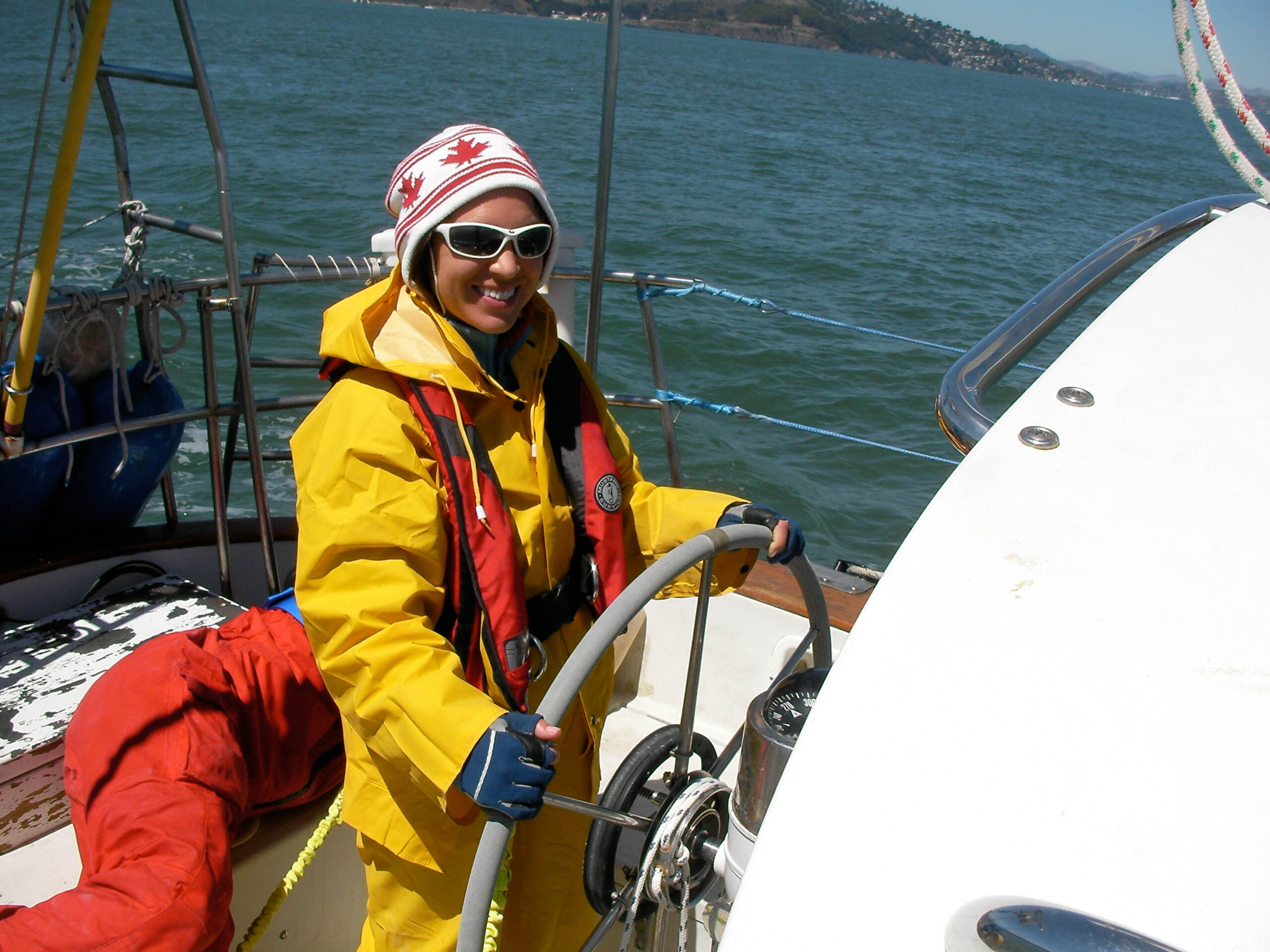
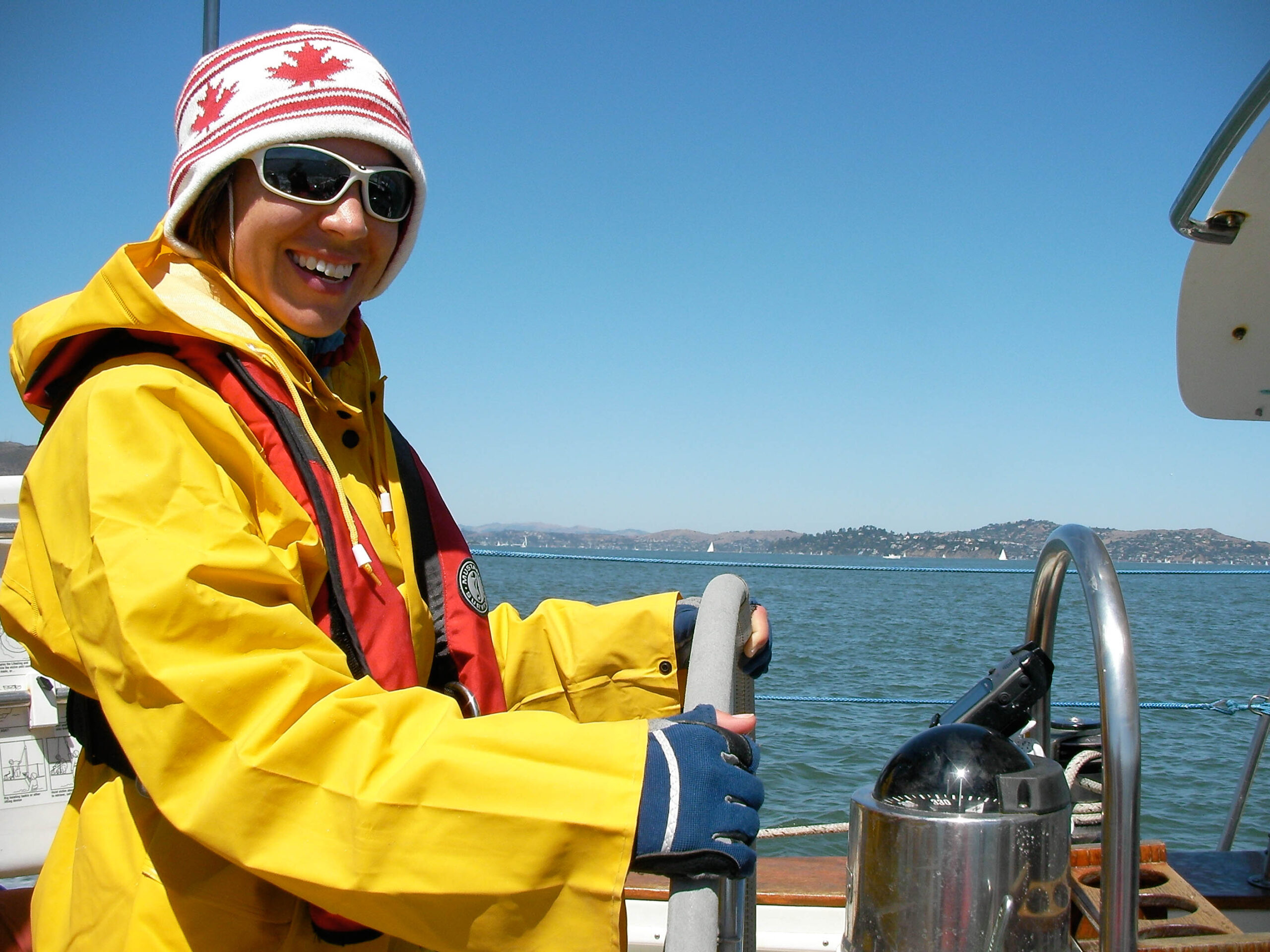
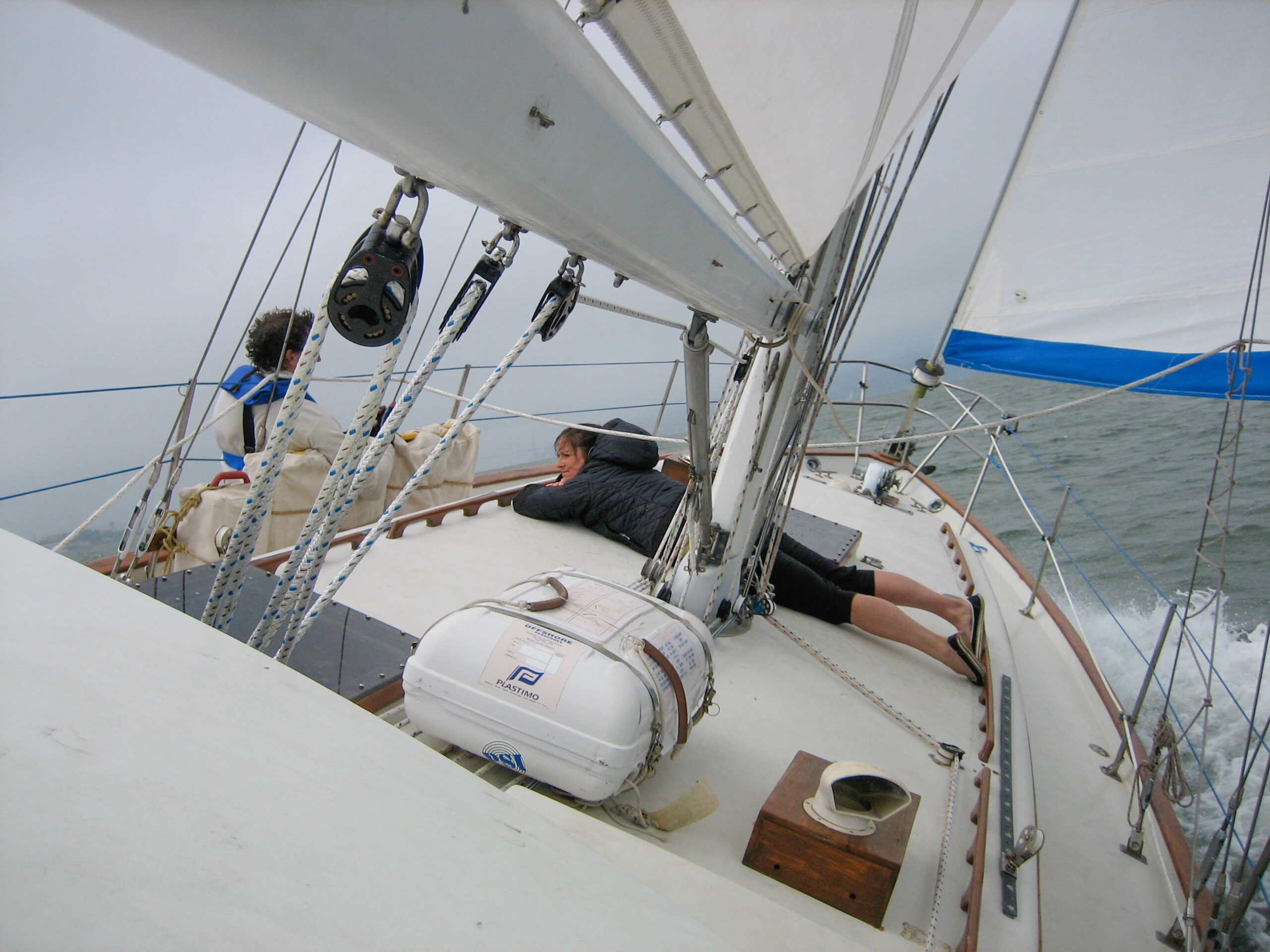
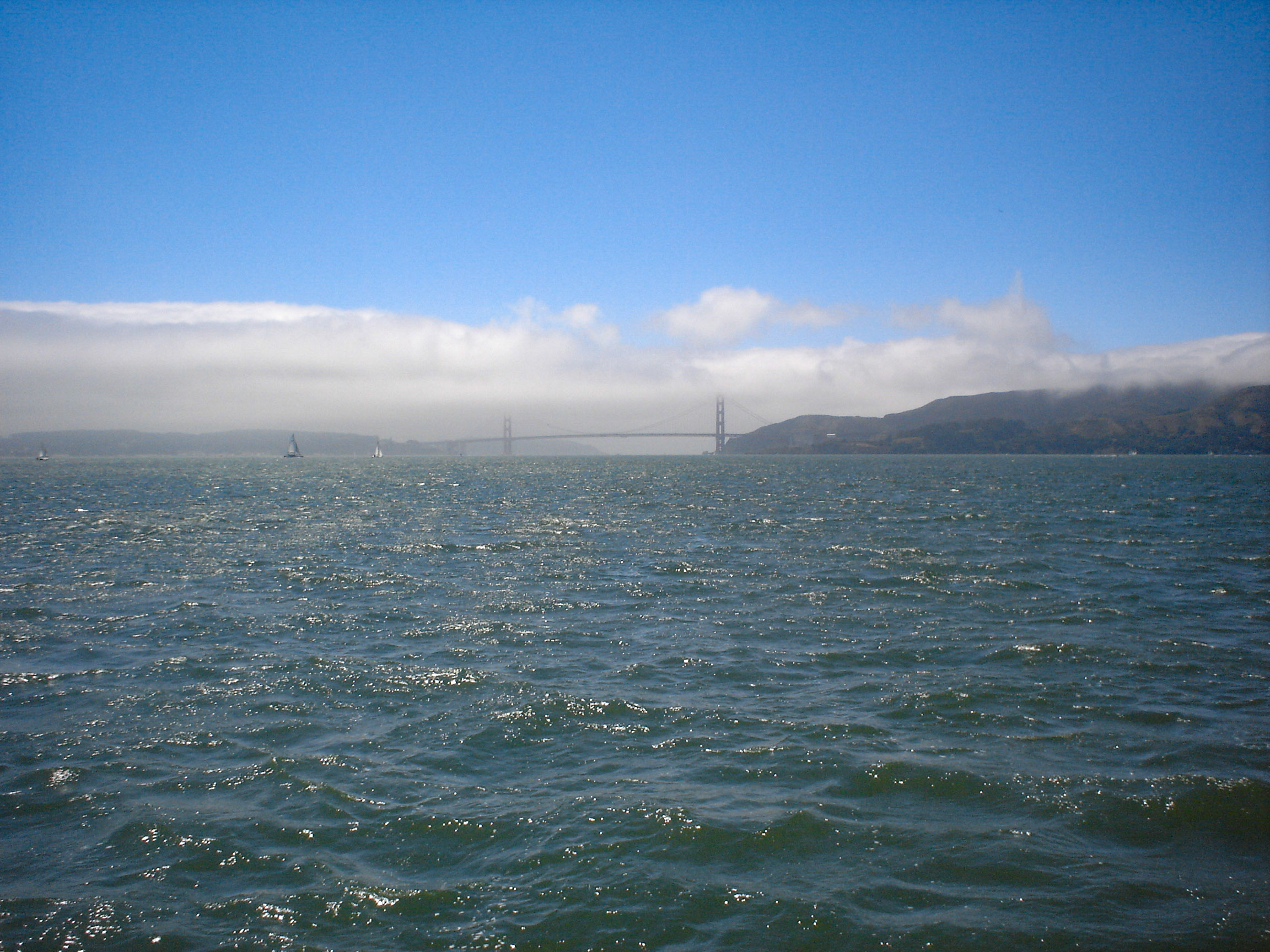
    So on Sunday morning, we untied from the dock, hoisted our sails, and headed west, under the Golden Gate Bridge and out of San Francisco Bay. Not long afterward, the wind shifted to the north, and the waves began rolling in from the northwest. Not long after that, we clipped ourselves to the boat with 6-foot tethers, lest we get thrown overboard. Not long after that, we reefed the mainsail, and not long after that, when a few waves broke over the deck, we reefed it again. Not long after that, I leaned over the side, and puked for the first time.

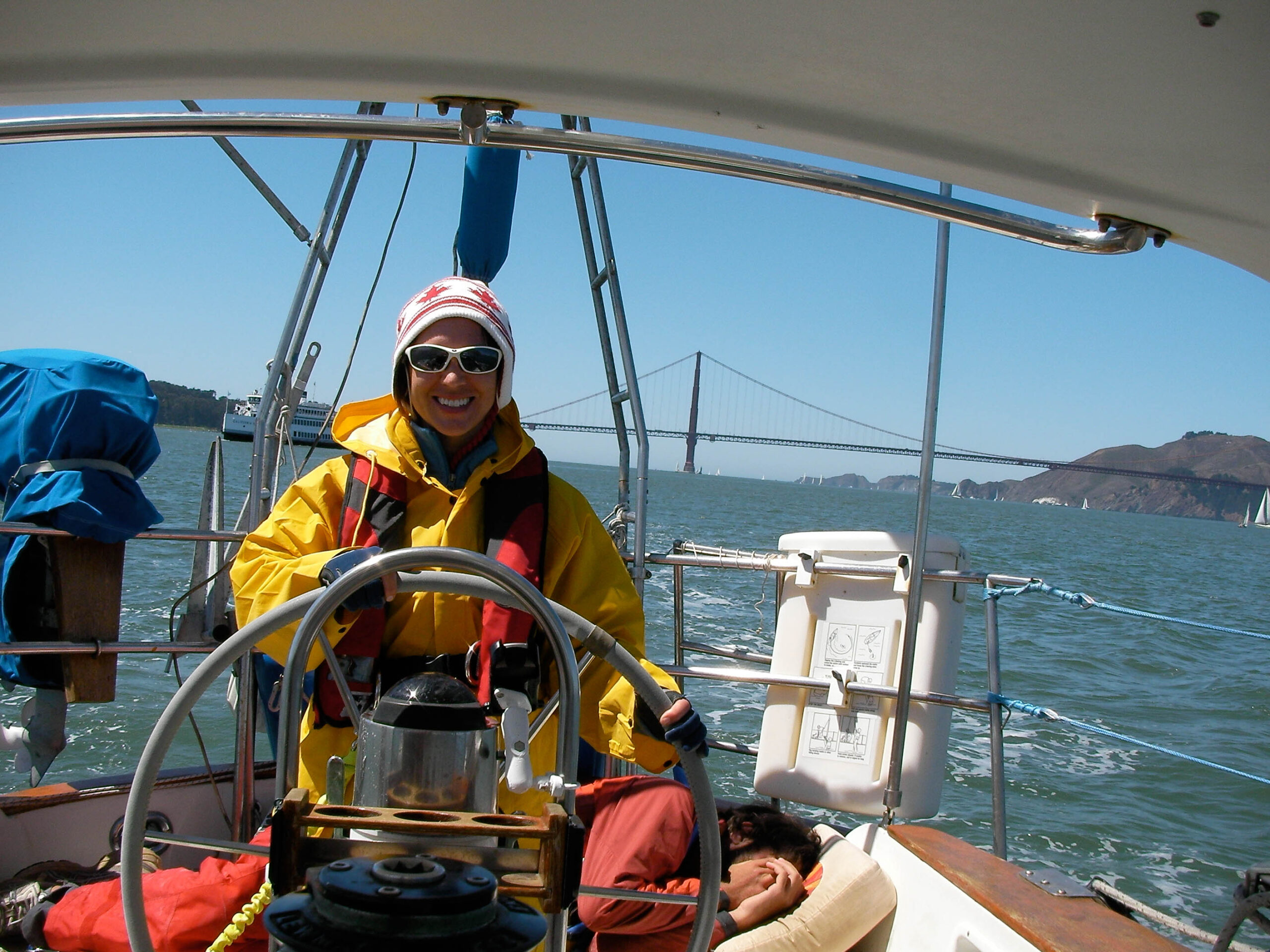
    For about 15 minutes, I was proud of my ability to rally: a little puking, and I was right back at the wheel, steering ‘er up and over the waves. Then Karen leaned over the side, and puked, and the queasiness hit me again, and back to the rails I went. This time, I wasn’t so keen on returning to the wheel. Actually, I wasn’t so keen on keeping my eyes open, or doing anything. I curled up in the stern, put my hat over my face, and lay there, not doing much besides moaning every once in a while. My brain couldn’t handle the motion, and not knowing what else to do, sent the alarm to my stomach, which only made things worse. Stupid brain. Only Matt, who apparently has a stomach of iron, was unphased, riding the bow up and over the waves like a rollercoaster.

    I puked 8 more times en route to Half Moon Bay, and can’t really describe what the passage looked like. I do remember, though, hearing the VHF radio crackle with calls of vessels in distress, and how calm and reassuring the voice of the Coast Guard sounded. When we finally motored in to the harbor at Half Moon Bay, and rowed our dinghy to shore, and walked over to a restaurant, Matt said, “I’m starving – my stomach is empty!” “Me too,” I said. “Literally.”

    With all of my effort I could only put down 4 spoonfuls of soup. That’s one of the problems with seasickness — it doesn’t go away immediately. Seeing the look on my face, our waitress asked if I wanted any bitters. Other people have since told me to try ginger gum, or ginger tea. That’s one of the other problems of seasickness — it doesn’t really have a cure.

    I slept like a baby that night, and surprisingly, felt like gangbusters the next morning. As luck would have it, though, that’s when we discovered we’d run out of water (I knew we should have checked the tanks before leaving), so it looked to be two dehydrating days stacked on top of each other. I recall thinking then, that some people call such treatments “cleansing,” or “fasting,” but it’s different when that’s your goal.

    On the way back, once we started bobbing around in the swells, I puked again — but I only puked 5 times on the return trip. I reminded myself that every sailor gets seasick — from the guys who race around the world to those badass Alaskan fishermen. Since then, I’ve been nursing liquids like it’s my job, and reassuring myself that I just haven’t got my sea legs… yet.

  • Syzygy in 24 knots

  • In the anchor locker

  • drilling into the unknown

    I spent the last two days drilling 36 holes in our mast, and I plan on drilling another 20. Not big holes; just quarter-inch holes. I’m installing mast steps, so that, from now on, getting up our mast won’t be a lengthy/cumbersome affair. You never know what you may need to fix up there.

    Matt and I had meant to install the mast steps when the mast was out of the boat and lying flat on the ground, but we got sidetracked. Actually, the mast steps were a side track, and the main track was: fix things that need to be fixed before putting Syzygy in the water.

    So now installing these 2-inch aluminum “steps” — which John Ryan custom made for us at his machine shop — requires ascending the mast 21 inches at a time. Twenty one inches seems a good height for a step — it’s about knee height for Matt, Jon, and I — and though we could certainly step higher in present conditions, it seems prudent to make the steps climbable in the rain, in the dark, while the boat is swaying madly.

    Today, I noticed that the higher I get, the better the view. Already I can see every boat in the marina, and the bay beyond the marina (covered in whitecaps), and Mt. Tam and fog rolling in through the Golden Gate. I also noticed that the higher I get, the more I can feel the sway of the boat, too – which makes drilling even more of a challenge — more on that shortly. And the higher I get, the longer it takes to scamper back down, to get the tools I need.

    Hence this afternoon’s approach: harness plus haul bag, climber-style. The haul bag was key, since I need to carry so many small parts — rivets, washers, steps, punch, guide, hammer, and tape measure. I’ve been carrying the drill over one shoulder (I tied a loop of line around it) and the riveter (which is about 2-feet long, and looks like a giant pair of scissors) over the other.

    Until I got to the spreaders, about half-way up the mast, I was just using a five-foot loop of rope around my waist and the mast as a quasi-anchor, as tree-climbers do. The more I leaned back, the more secure I was — assuming my rivet work was solid. Just above the spreaders, I’ll admit I was relieved to clip into the baby stay block. From there on up, though, It’s a straight shot, so it’ll back to tree-climber style, with a prussik on a spinnaker halyard as a backup.

    About halfway up the mast (five feet beneath the spreaders), I ran into a bit of trouble while drilling today. Now, drilling through a quarter-inch of aluminum while dangling there at a funny angle isn’t the fastest operation, and I regularly had to shake out my hands to get the blood flowing again after pushing on the drill for so long. But one hole seemed to be taking longer than the others. Lo and behold, there appeared to be another piece of metal inside our mast. (I’d been careful to avoid the conduit that carries the wiring up the mast.)

    Perplexed (i.e. unwilling to drill into the unknown), I scampered down, and called Fred, at Valiant Yachts (in Texas). He said that it’s common for factories to order masts made of two sections, with a 4-foot sleeve welded in the middle. Why two sections? Because mills can only produce aluminum extrusions so long, and shipping shorter segments is cheaper. So, on second look up there, I found the little spot where the two sections are welded together — it’s barely detectable. At first I was freaked out, but further research (aka Brion Toss) has revealed that this is not a weak part of the mast, apparently — at least not if it was welded properly. So I grabbed the drill and continued, and confirmed that a) I hadn’t drilled into something I hadn’t intended to, and b) the mast is indeed twice as thick there. Who’d have thunk it? Of course, now I need four longer rivets for two of the steps.

    I’d been sorta hellbent on making it to the top of the mast this evening, but in the end, the drill got the best of me: the battery died, and I’d forgotten to toss an extra in my haul bag. So it’s back to it tomorrow — here’s a snippet from when I had a free hand.

  • Sailing with friends . . .

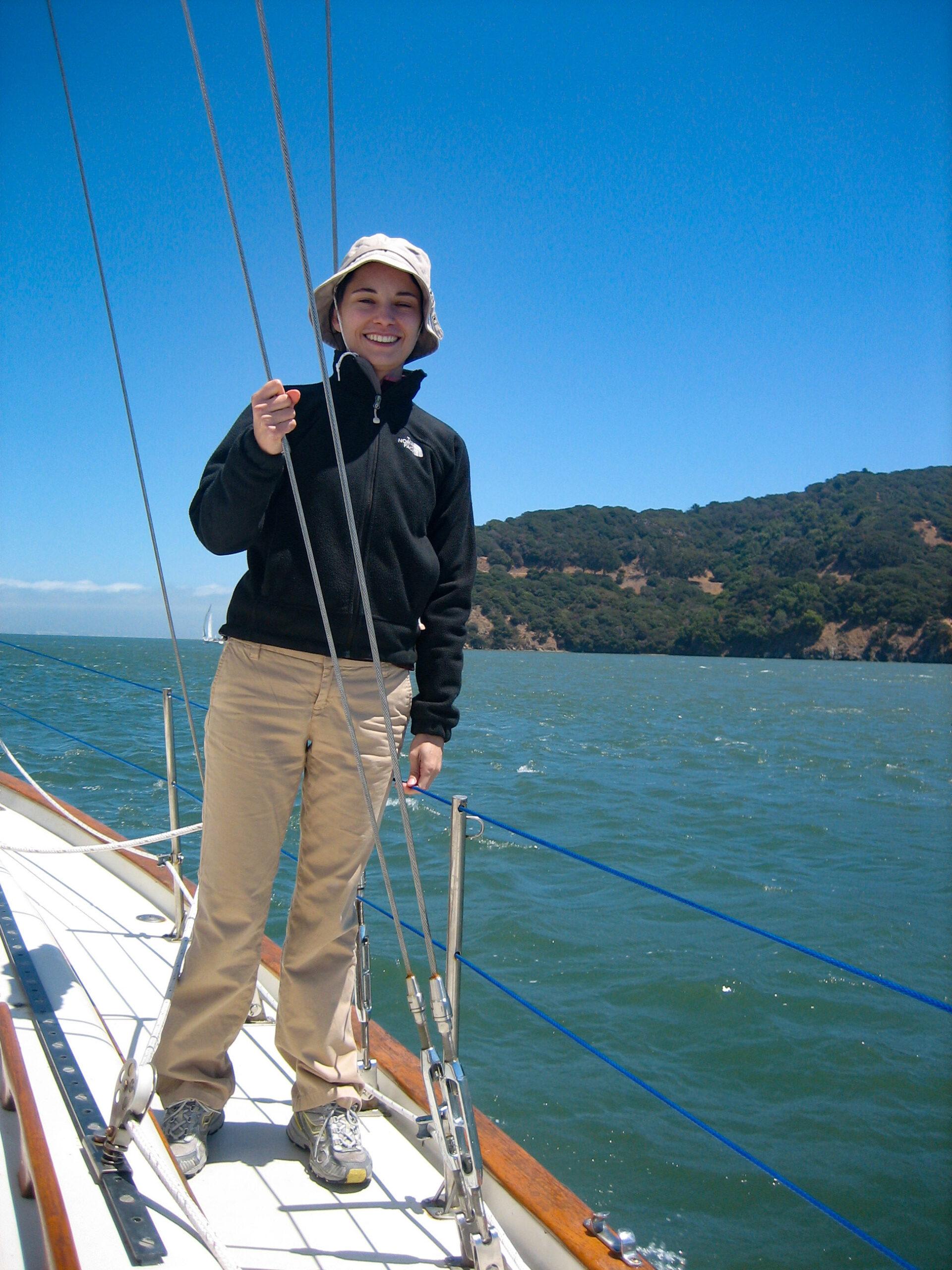
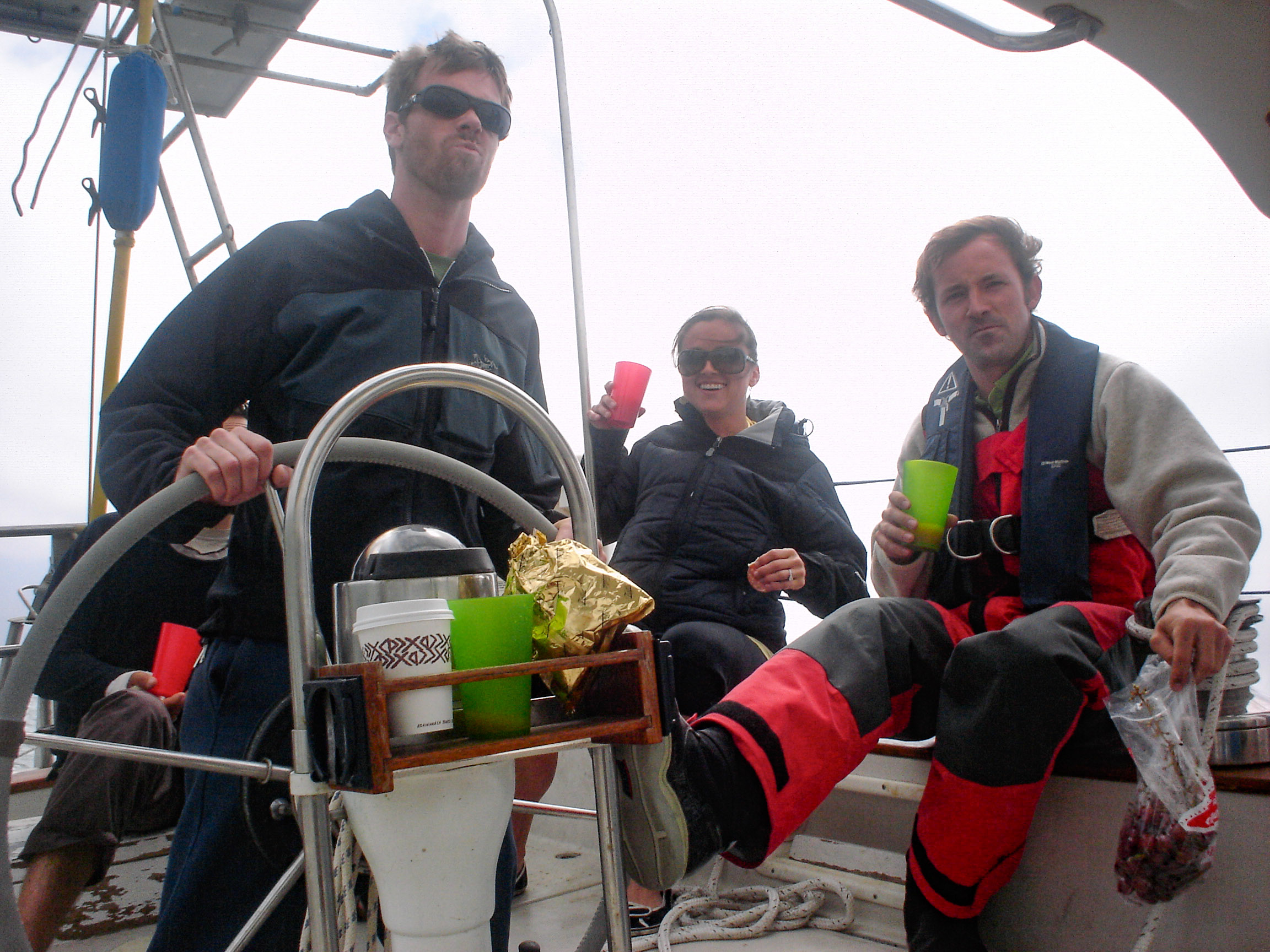
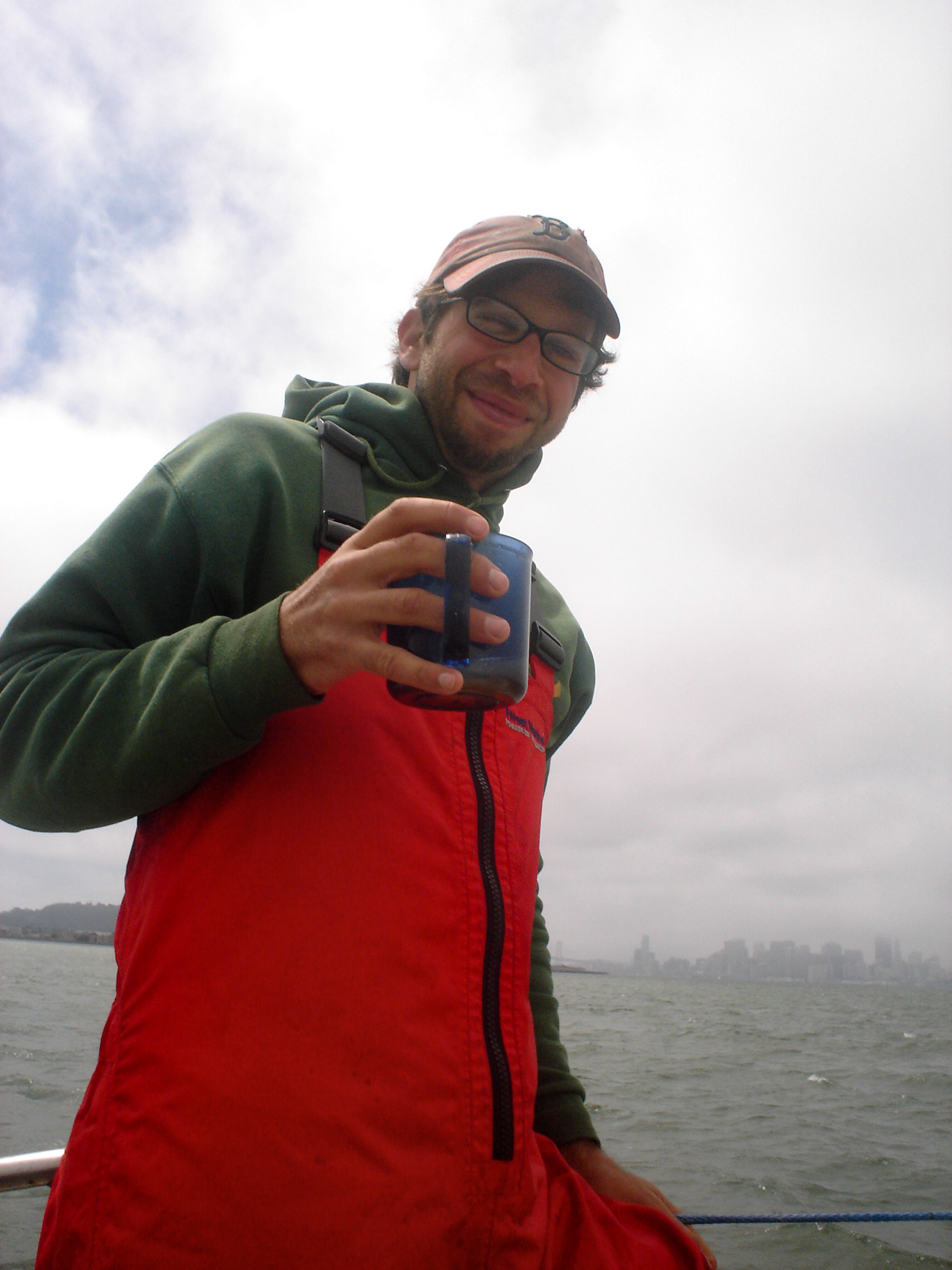
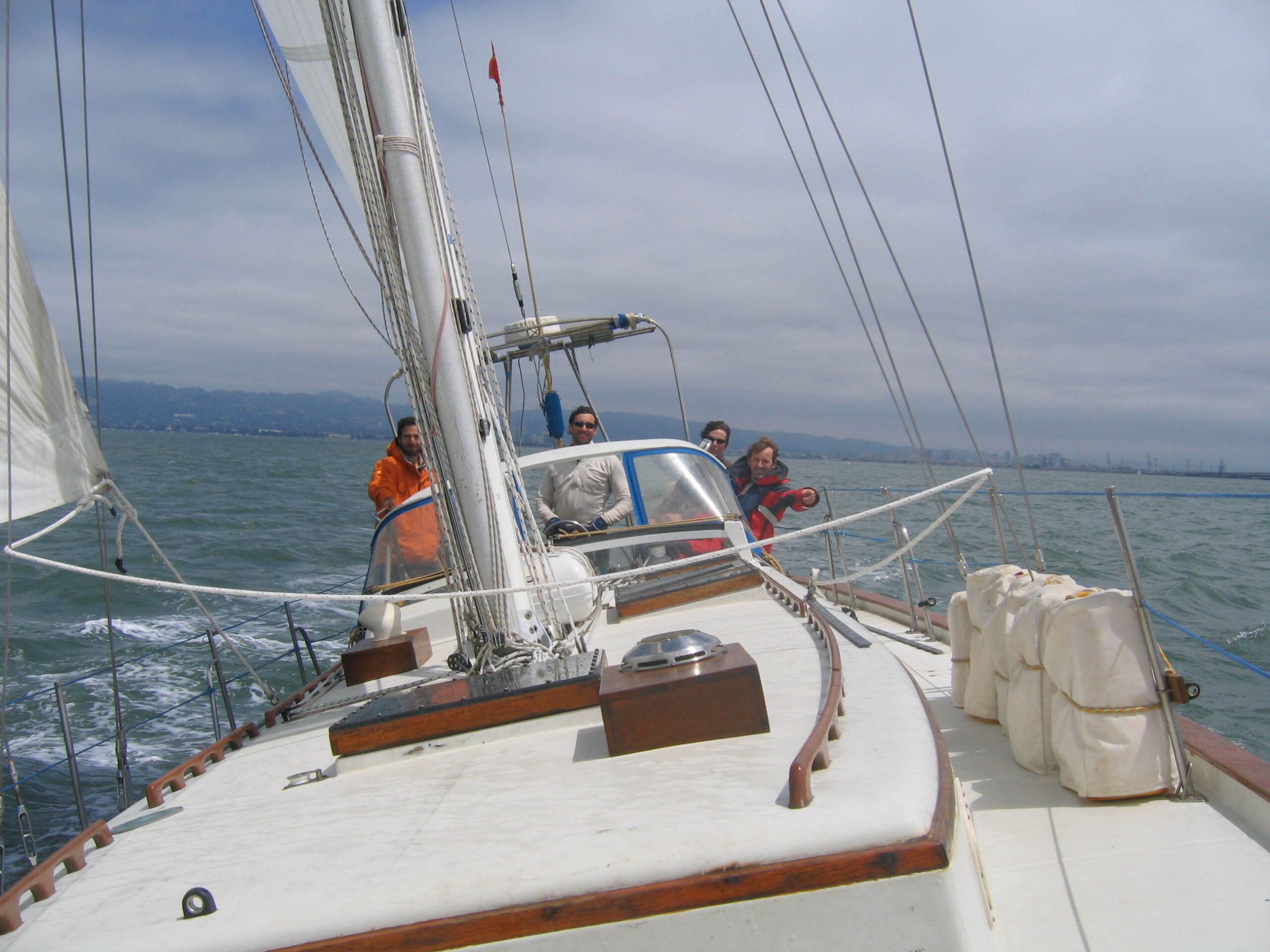
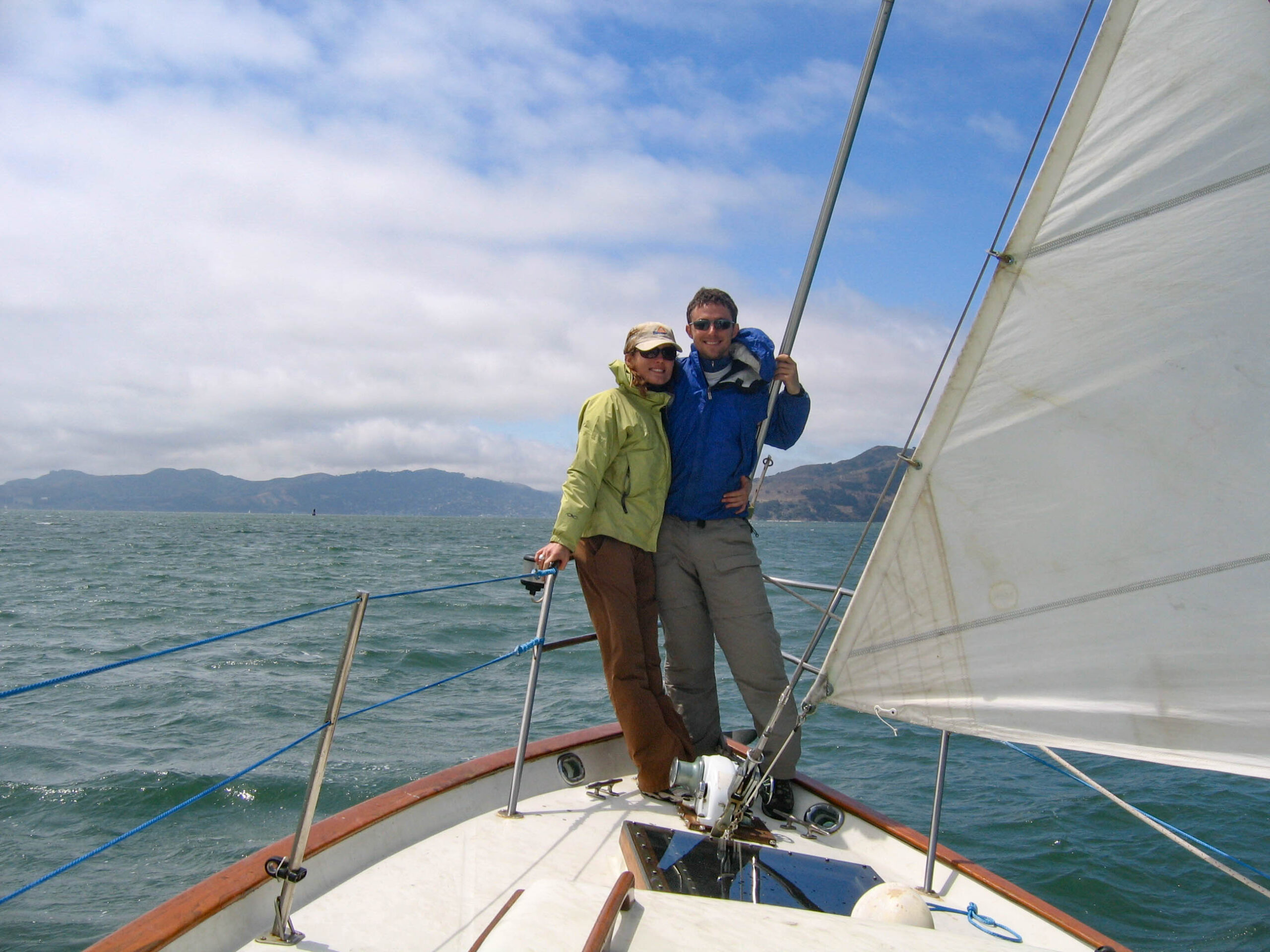
    . . . is so much more fun than working on the boat all month long. The footage below is brief and uneventful (battery died) but the sail itself was fantastic. We had great wind, and after an hour or so it cleared up and was sunny and beautiful.

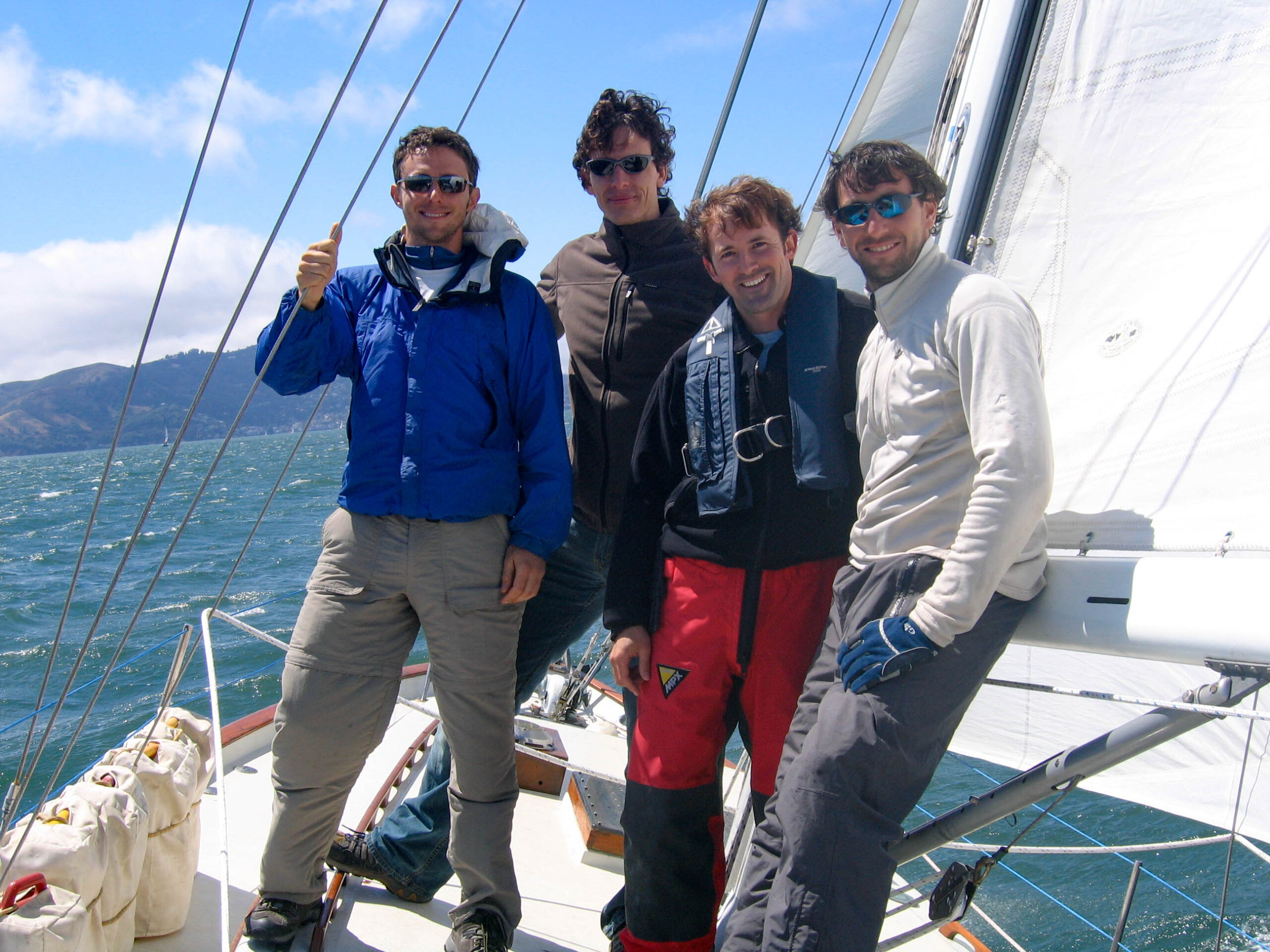
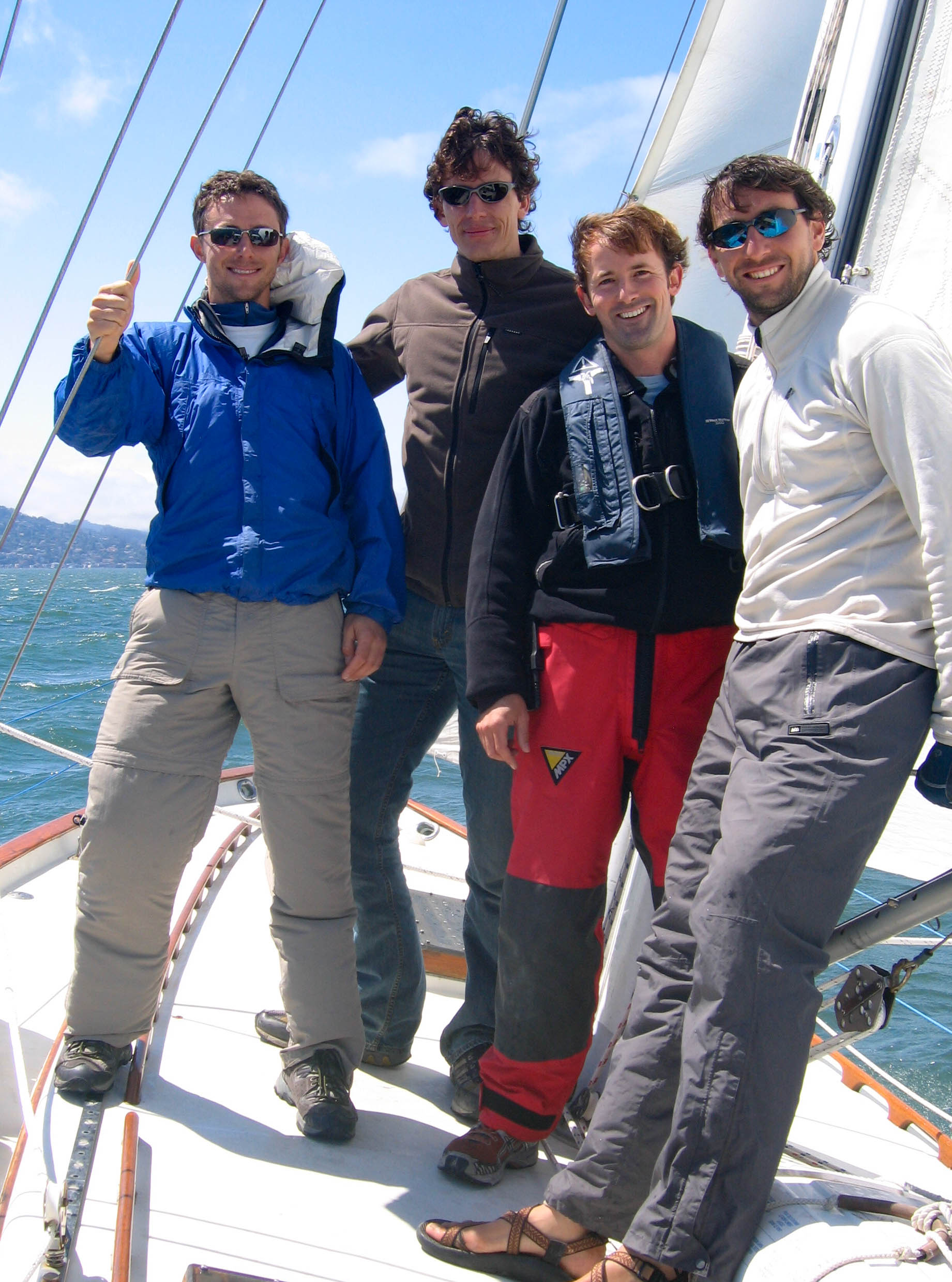
    Thanks to megan and lee for taking some photos, and thanks to all of our friends that came out (please come again!).

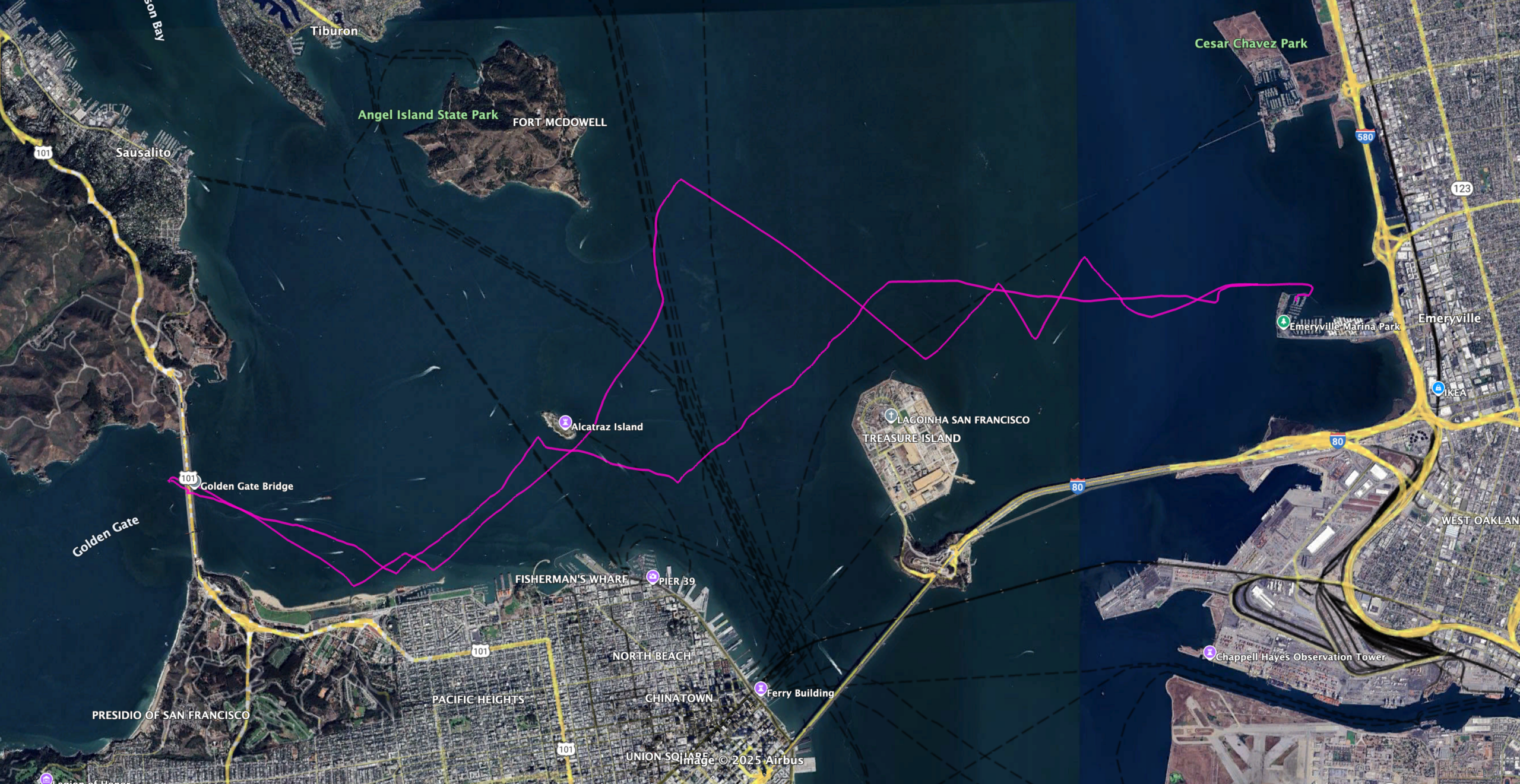
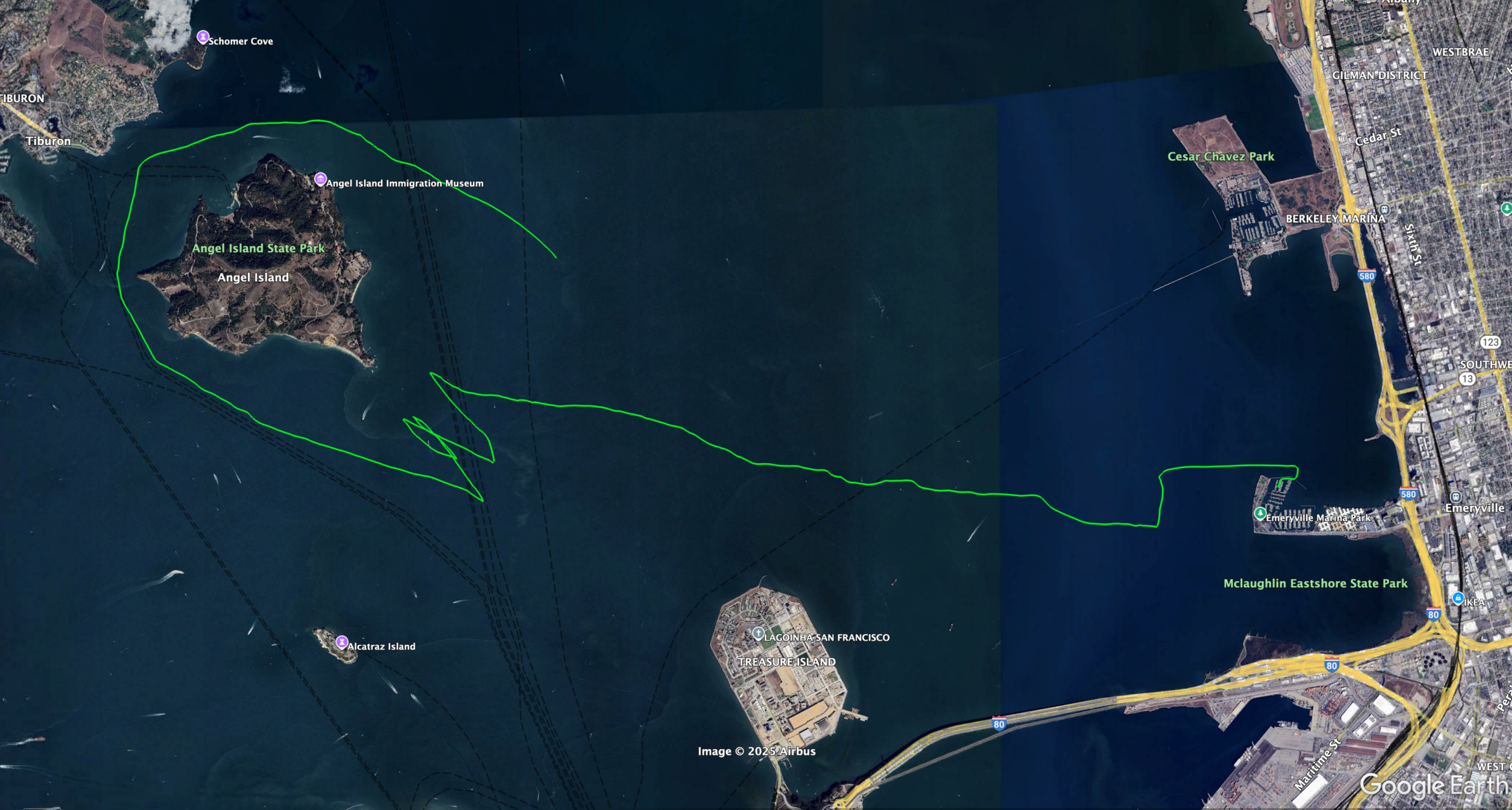
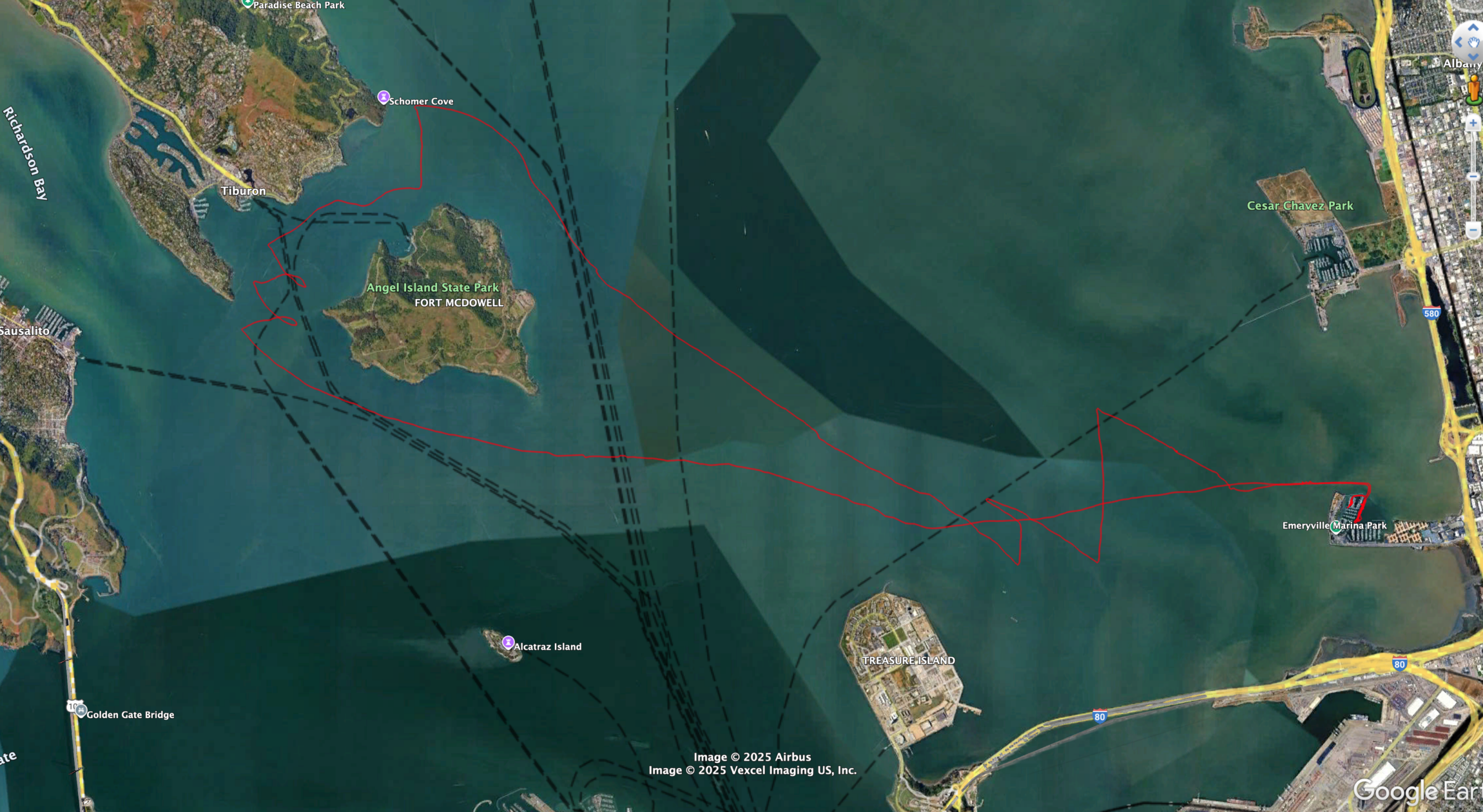
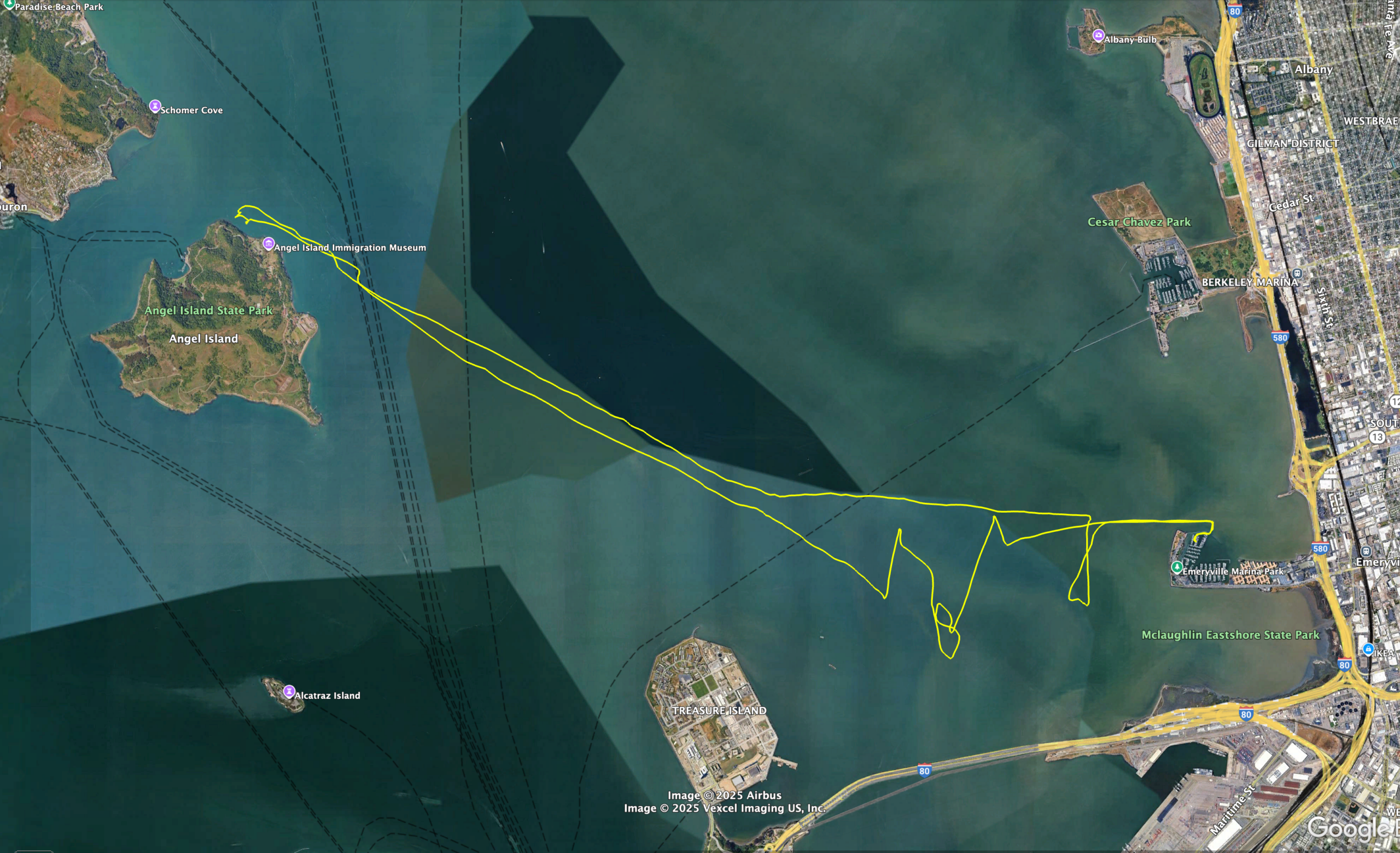
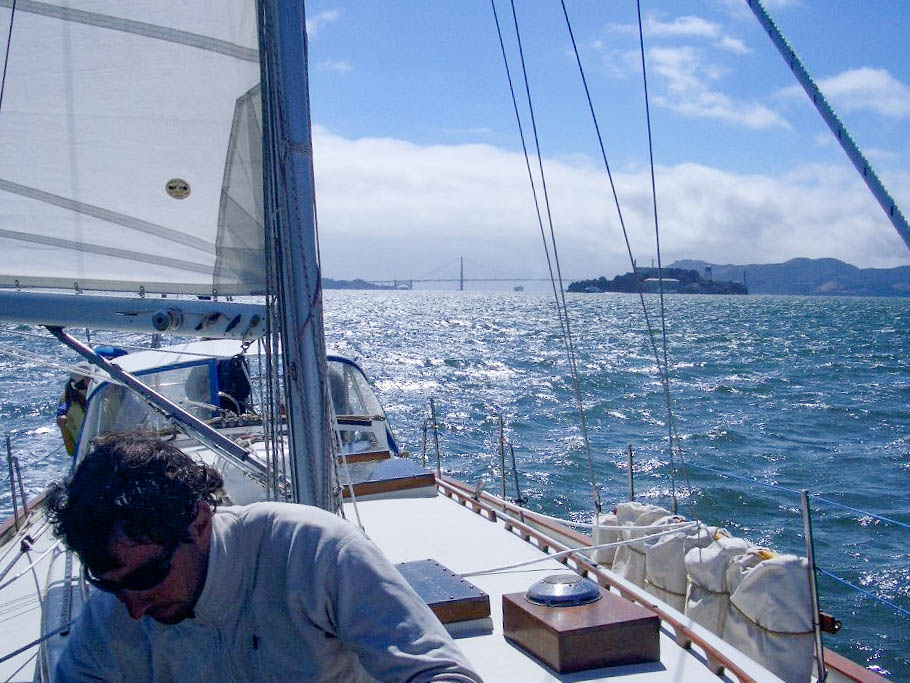
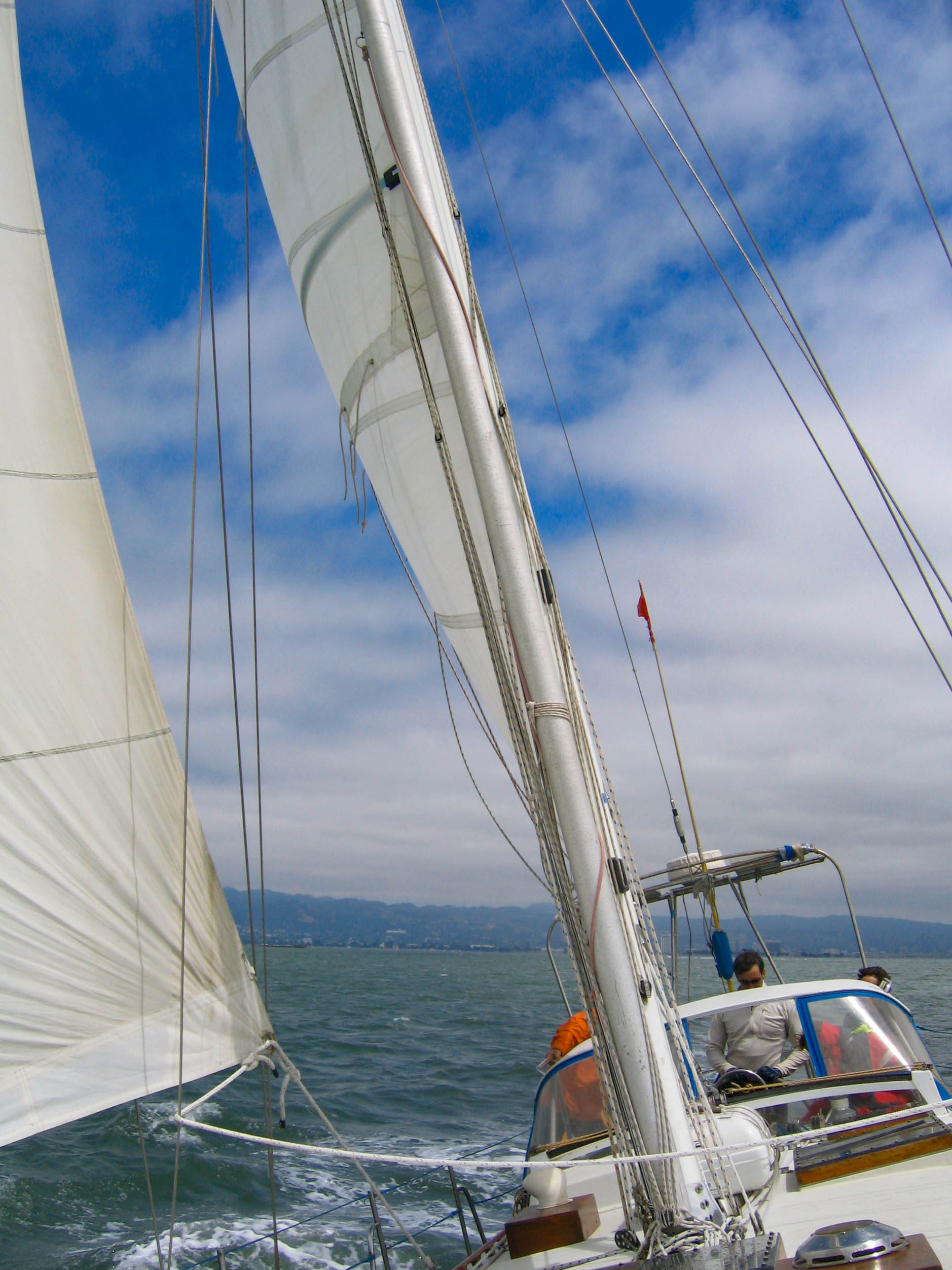
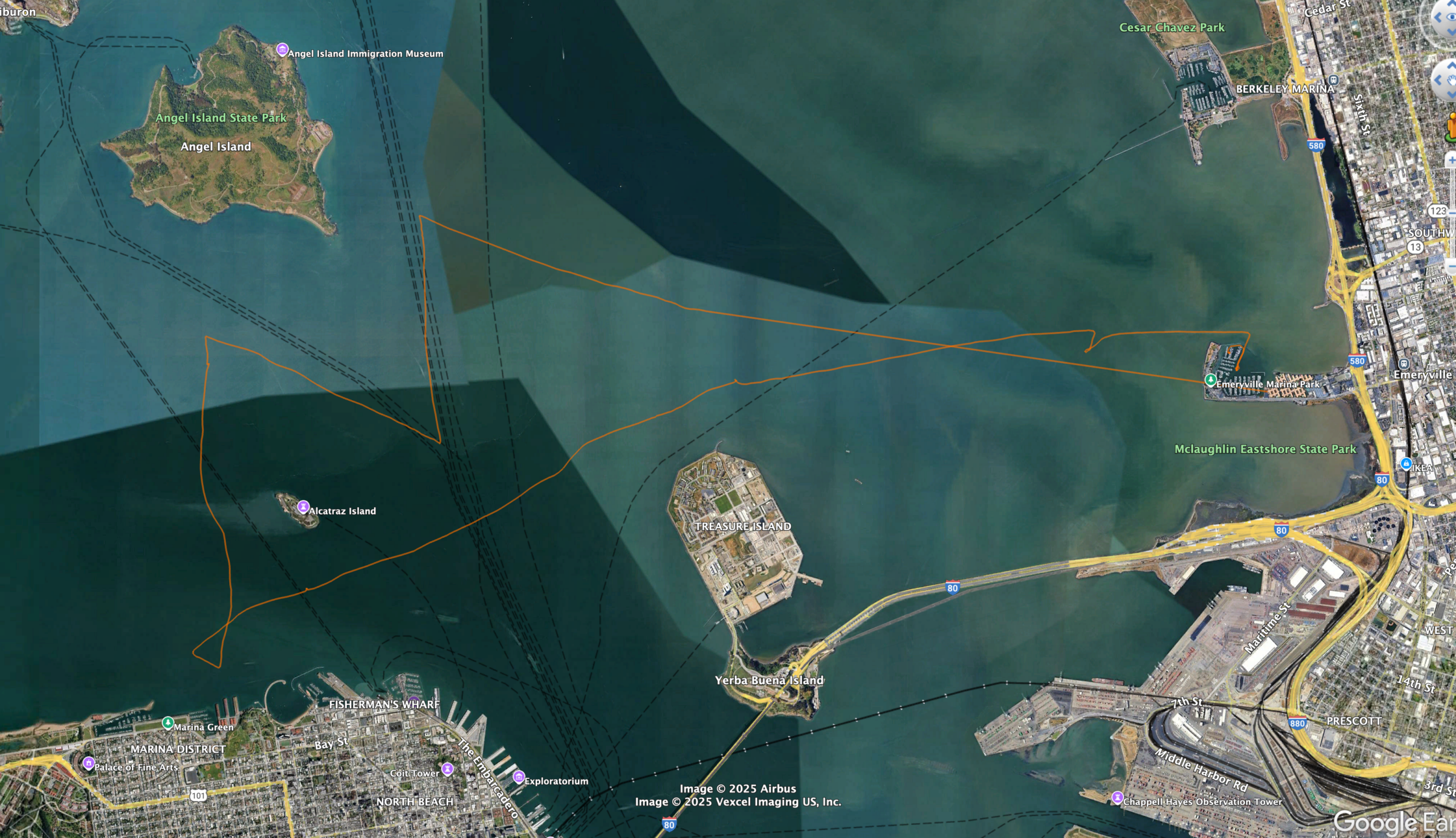
    And until the computer ran out of battery power, the gps recorded our track. Note the backtracking that happened between angel island and treasure island–that’s where we decided to furl the jib and put up the staysail. During that process we were sailing with just the main, and that’s how well our boat sails to windward in 20 knots under main alone.

  • Jon and I sailing on the bay

  • Anchor in the Bay

    Jon Jonny and I practiced anchoring over by Angel island.

  • Bay sail with friends

  • Summertime Flashback: “Jon, you’re scaring the guests”

    “Shut it off!!! Shut it off!!” I screeched, sounding much like an excited 16 year old girl. I was half excited and half  terror-stricken, because something dramatic had just gone wrong with the engine. This was 6 months ago, when I was hellbent on becoming Syzygy’s primo engine mechanic.

    The engine is a mystery to me.  I love working on it,  learning about it, figuring things out, but in the end, most things that would be good to know about an engine, like how tightly to crank down on a bleed screw, are a mystery to me.

    We had just changed the fuel filters.  Doing this introduces air into the fuel lines which is bad for the engine.  The next step is to get the air out of the fuel lines; bleeding the fuel lines.  You do this by working a hand pump that is inline.  Then you open up three screws, one at a time, each further along the fuel line and closer to the engine.  Keep moving the pump, and air is supposed to leak out from each screw.  When air stops leaking out, tighten the screw down.  No problem.

    The next time you turn on the engine, you’re supposed to look at those screws that you loosened to make sure you tightened them down enough and fuel is not leaking out.  ’cause that would be bad.

    And sure enough, this time, there was fuel leaking out.  Slowly, but there it was.  So I got out the socket wrench and tried to tighten it.  Hmmm,  it’s still dripping.  Tighter… tighter….

    oh shit!  my wrist lurched forward and my body with it.  Liquid arcs out of the engine like water coming out of a garden hose.  Except water is innocuous, and to my racing heart, brain, nervous system, lungs, and vocal cords, this liquid represented certain chaos and destruction.

    “Shut it off!!! Shut it off!!” I screeched.  I wonder what went through Matt’s mind at that moment, hearing the hysteria in my voice, and racing to the shut-off valve.  Might he have been worried about my well-being, thinking, “is he hurt?”  Maybe, “What just happened to the engine?”  My money is on, “What the fuck did he break now?”  The level of my fixer-upper skills having been well-established at this point.

    As the engine died, and fuel slowly stopped pouring out of the bleed valve I had just broken off, I realized the situation had not quite called for such a sounding from me of imminent danger.  In my terror, I had thought of what I had learned about oil, and if the engine runs without it for even a few moments, very bad things can happen.  Without fuel, however, the engine would have just stopped on it’s own.  I also could have easily stopped the fuel myself, another shut-off valve located in the engine room being easily reachable.  Also, the screw I broke off was on the low-pressure side of the fuel lines, not the high-pressure side.  This is somewhat important, because highly pressured diesel can penetrate your skin and cause bad things to happen.  Like the sun when it penetrates your skin and eventually causes bad things to happen.  Kind of.

    Sailing was out for the day, as we had no replacements.  So we kicked back with a few beers in the cockpit for a couple of hours with the guests that had come over hoping to sail.  After a couple of beers, they felt safe enough to remark that, umm, my tirade had caused a bit of a scare.  For all they knew, the boat was about to blow up.  We all laughed at my expense, a frequent enough occurrence throughout the summer that I wasn’t too hurt by it, and was able to laugh along as well.  it became the running joke of the night to observe some behavior of mine and then add, “Jon, you’re scaring the guests,”
  • Three sails: three broken items

    So the first three times we sailed Jon, Jonny, and I went out by ourselves. This turned out to be a smart idea, because three times in a row we went out and broke something.

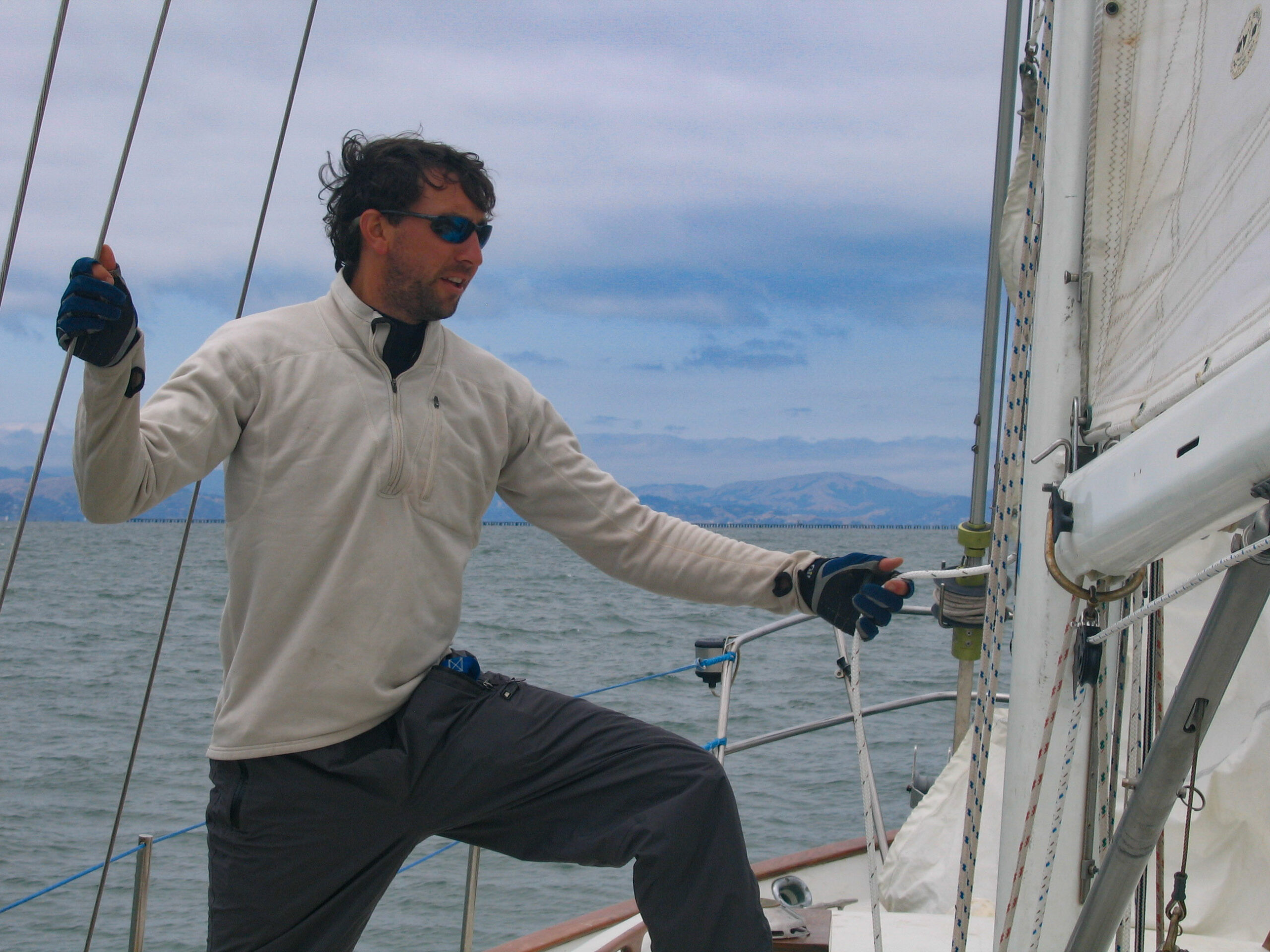
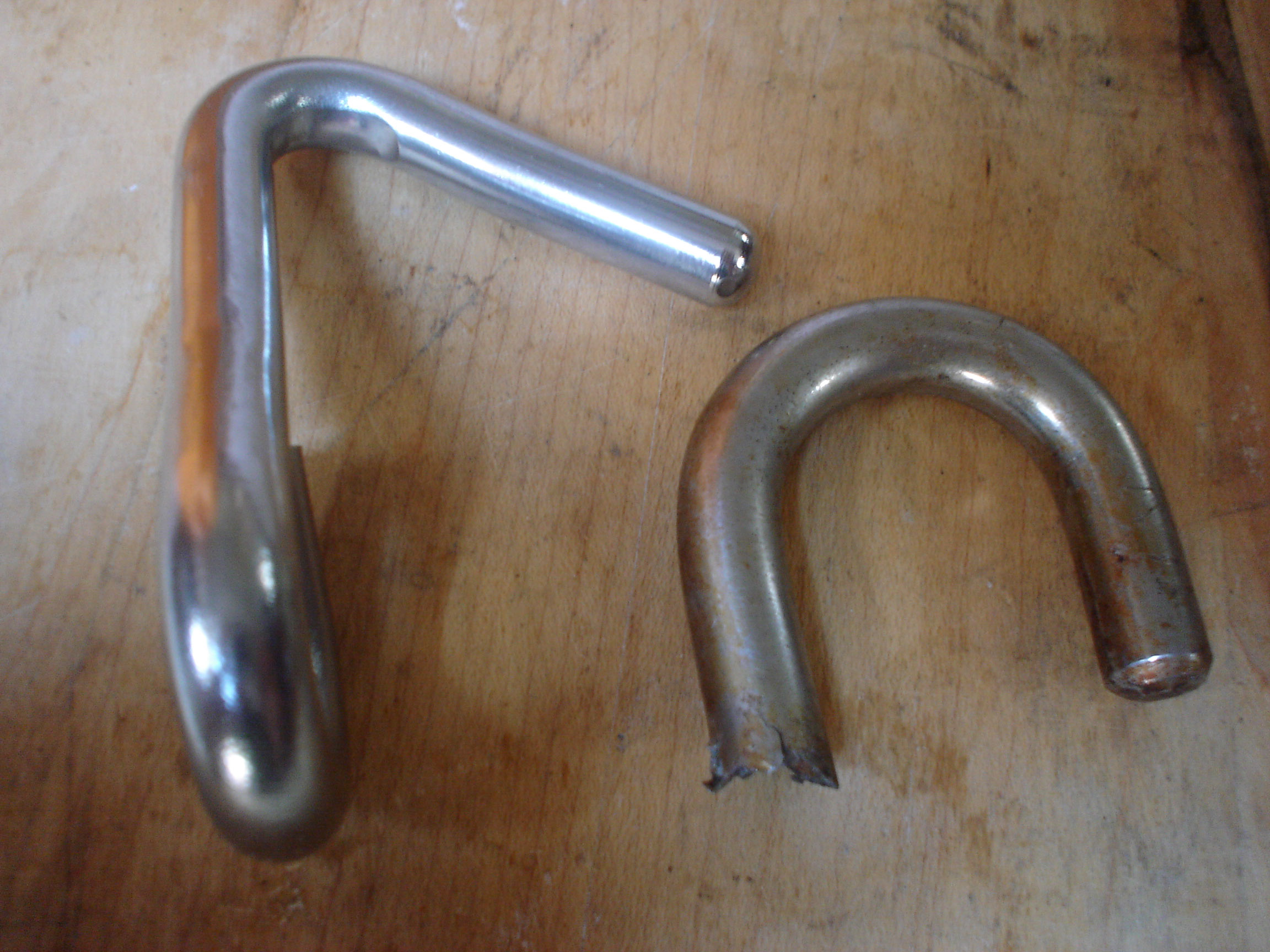
    On July 4th we broke our reefing hook–broke it right in half (the metal was corroded apparently). We were practicing reefing, we lowered the mainsail, Jon hooked the tack to the reefing hook, and when we started tightening the halyard back up half the hook just flew right off. Lesson learned: don’t trust even large, seemingly strong metal parts without good reason. So we replaced the reefing hooks; we even put one on each side so it’s easy to reef from either tack.

    The next time out we blew up a rope clutch. I was unwinding the main halyard from the winch and as soon as the force was transferred to the rope clutch it just shattered, the top popped right off and the axle snapped out. Pretty dramatically. So we replaced all of our rope clutches, and our deck fairleads, and serviced the winches.

    The third time the stitching on the luff of our jib came apart. This was to be expected I suppose, since the stitching that failed was the stuff that’s been sitting in the sun for a decade while the sail was wrapped around the furler. It cost $175 to have Pineapple Sails restitch it.

    Ready to take people out.

  • How to describe the first time I went sailing on my boat

    What was it like to go sailing for the first time on my boat? It was a feeling not easily expressible in normal sentences; rather, much more elusively affective. And sensory. But read this and maybe you’ll catch a breeze of what I felt that day.

    Liberating. Freeing. Bliss. Matt at the wheel, slightly nervous; he hasn’t steered our boat since barely getting into the dock a month ago.

    Motoring out of the marina. All of us, grinning like sloppy newlyweds.

    Jonny on the foredeck, watching for other boat traffic. I slap Matt across the back. Whoop! Holler! I’m giddy.

    The hard work was worth it. 19 hour work days. No climbing. No biking. Just working. Doesn’t seem like work now.

    Time to raise the main sail. I don’t know how to do that. I’m about to learn. Wow, using the winch isn’t easy. That’s a lot of friction. Add it to the list of things to fix.

    But I don’t want to think about that right now. Cause the main sail just caught some wind; the boat begins to heel. I’ve never felt my boat heel. Look at it, you can see the wind flowing around the sail. Pushing us forward.

    Cut the engine: sweet! no more engine noise. water. listen to the water. The chop of the bay, hitting the boat. Wind. Listen to the wind. Whistling in my ears. The main sail flutters. It’s musical, poetical.

    Time to roll out the jib? Really? No problem captain. Wow using the winch isn’t easy. That’s a lot of friction. Add it to the list of things to fix.

    Rail in the water. Hard to balance. What fun!

    Matt has a sweater and heavy jacket on. Apparently it’s cold. I don’t notice. I’m in a T-shirt. Too busy soaking it all in. God, it’s beautiful. Can’t take 30 seconds to go put on a sweatshirt. Don’t want to. I might miss something. Too busy soaking it all in.

    Reef? Too much wind; bring in the mainsail a bit. Yep let’s practice. ’cause I don’t know how to do that. I’m about to learn. At the mast, holding on. It’s kinda bumpy up here. Bay chop. and spray. Fun! Pull the main sail down, ring around the reef hook. I can do that. “Hold!” Can’t… quite… get… ring… around…hook… ok! “Made!” Have fun with that winch Jonny.
    Keep winching Jonny. Woah! “What was that?” Something broke and flew off!” Bye bye reef hook. Add it to the list of things to fix.

    Take the wheel? Really? Feel the boat move. The wind pushes the boat down, the rudder pushing us up. Spray crashing, hitting me in the face. I love it.
    Hey Matt, we’re getting close to the pier, what should we do? Tack probably. uh, ok. I don’t know how to do that. I’m about to learn.

    Time to head in; do we have to?

    Out for 4 hours today. Pretty soon 2 years. If you lose track of time, Is there much difference?

  • Not my best moments… Stoopid things I’ve done recently.

    Usually I think of myself as a somewhat intelligent individual. I did really well studying Chemical Engineering. I scored in the top 5% nationally on the GRE. I scored higher on a reading comprehension test than all the English teachers at my school. My parents tell me I’m smart. On the boat, however, I am constantly humbled at how many questions I have, how uninformed I am, and how many ridiculous things I’ve done recently. I love laughing at myself, and the boat has given me (and Matt and Jonny as well) plenty of occasion to do so. Some of those moments:

    One of the first pieces of work I tried to do on the boat, back in January: “I know you said cut the through-hull flat, but is this 45 degree angled cut ok?”

    From my first day of work here in Emeryville, “I couldn’t find any wooden chisels.”

    When I said to Matt: “Is it bad that there is smoke coming from the Dremel?”

    When I forgot to turn over a piece of wood I was epoxying, thus painting 7 coats of epoxy on one side of a piece of wood, instead of 2 coats on one side and 5 on the other side.

    “It’s not my fault I dropped the Pelican hook in the water.”

    To Jonny, “I don’t understand why the screws won’t go in.” He politely and amusedly noted there were already screws in there.

    Overfilling our water tanks to the extent that a veritable waterfall poured out of the vent hose directly on our new stereo. (see more about this from Matt’s perspective in previous posts)

    When I bought Matt a bright pink electric panel cover instead of the blue he asked for and said, “I don’t understand, you don’t like the color?” (ok that was a practical joke; I bought him blue also)

    Accidentally shorting our engine’s starter motor with a wrench, resulting in A) the engine turning over (while I was laying on top of it), and B) a good-sized burn on my arm as a temporary momento. Jonny and Matt both mentioned it might be a good idea to disconnect the batteries next time. Who knew?

  • IFAQ (infrequently asked questions) for the new boat owner

    Why is there water coming out of our cabinets???
    We overfilled the water tanks and water came out of the vent hose which is nicely positioned in the cabinets right above the brand new stereo we just installed. When I looked over and saw our new radio hidden behind a waterfall I was extremely confused.

    How many grommets does it take to secure a windlass cover?
    The boat originally had 5, but Jonny determined that the best answer was 12. We can be assured that our new windlass cover will not be lost overboard. Ever. (n.b. the cover for our entire mainsail only has 8 grommets.)

    How many hundreds of dollars of epoxy and hundreds of hours of time does it take to build and fiberglass wooden water tanks??
    Roughly $1200 and 300 hours. We are now thoroughly convinced without one shred of doubt that we should have never torn apart our steel water tanks and we should have hired a welder instead.

    Is it possible to start your engine with your arm and an errant wrench?
    Yes. Jon freaked out when he was laying on top of the engine, working on the fuel filter, when he unexpectedly received a painful burn and the engine started cranking underneath him. Thereby accidentally discovering how to short the starter solenoid.

    Why is water squeezing up from between our floorboards when we walk around?
    Jury hasn’t yet returned a verdict on this one. Most likely explanation is a defective foot pump. No matter what, I can tell you this: it will require at least three more trips to the chandlery, approximately $1000 in unforeseen expenses, two gallons of epoxy, 300 rubber gloves, two days of sanding, and a whole lot of work we didn’t anticipate.

  • Why is there a waterfall in our cabinet???(!!)

    I feel that this event merits a second, more detailed telling.

    Here’s how it went down from my viewpoint: I’m standing in the galley at about 10pm, all is quiet and still in the marina, and I’m lost deep in thought about why our engine refuses to start (which was a long, unproductive, confusing thought). Somewhere deep in my subconscious I noted a strange sucking, airy sort of sound, but my reverie was deep and this sound failed to warrant my attention . . . So I’m still deep in thought for another minute, when I notice something extraordinarily strange at the edge of my vision. A sheet of water about 2 ft wide has emerged from underneath one of our cabinets, at head height, and is pouring over the drawers onto the settee. On its way from cabinet to settee, it also happens to be passing over our newly installed stereo. And this is no drip. It’s a veritable waterfall. I mean volume. Like the rate at which one could empty a pitcher–quickly. This sight is so astoundingly implausible that my mind refuses to react to it with anything more than a grunting, guttural, medium-volumed “wha??”

    The situation is clearly dire–I mentioned that it was pouring over the front of our new stereo–but I was just . . . confused. All I could think of, over and over again (like 15 times in 2 seconds), was “where could it be coming from where could it be coming from where could it be coming from where is the water coming from water there what coming from where where what why why?” Or something roughly like that. Fortunately, Jon new exactly where the water was coming from and sprung immediately into action–Jonny said that his exit out the companionway and into the cockpit demonstrated record-making speed and efficiency of motion, as he sprung from the middle step to the dodger handhold and swung himself smoothly into a upright run for the dock. Jon knew where the water was coming from because Jon was the one that turned on the hose full-blast to fill our freshly finished watertanks. The amount of water that comes out of the faucet on our dock could quench a house fire, and Jon had it at 100%. So Jon knew exactly what enormous volume of water was being pumped into our cabinet–via, it turns out, the tank’s vent hose. Which is why Jon won first place boat move while I stood dumbly staring at the waterfall coming out of our cabinet.

    This is what happened: Jon was watching the level of water rise through the (closed) access hatches on top of the tank. The fact that they were closed was relevant. The vent outlet does not come out of the very highest point of the tank, but is about 1″ down the side. We thought that we were safe because the vent hose was routed to a point about 5 feet above the tank. This would be true if even one of the access hatches had been open–in that case the water would have found its own height in the vent hose while air was pushed out of the open access hatch. But since the hatches were closed, as soon as the level of water rose above the vent outlet, the extra 2 inches of air space above the water was irrelevant, as the air no longer had anywhere to escape to. So we forced that water out of the top of the vent house, from where it proceeding to pour under the doors of the cabinet, into the drawer beneath the cabinet, around our stereo, and onto the settee. We put an inch of water in the drawer before Jon turned the water off. Preliminary investigations suggest that the stereo may be just fine, saved from certain death by the water collection properties of the drawer.

    Lesson learned: waterproof everything. On a sailboat, even the safest, driest corners of the boat will see water.

  • Labor. Manual labor. Lots of manual labor.

    “Fuck this hose!”

    It was 1 AM, and I’d been working for 17 straight hours on our damn water tanks. The hose we’d bought was inflexible yet annoyingly curvy, and slightly larger than our old hose, making it extremely difficult to shove it onto the fittings. One fitting that was supposed to attach to the water inlet hose was so tight that I spent 20 minutes, splayed out on the floor, with my arms scrunched into a tight crevice between the water tank and a bulkhead, struggling, pushing, pulling, leverlng, to no avail. Swearing seemed to be called for.

    All I wanted was to get one step closer to finishing our new water tanks, a battle that by then was stretching into its third week. By now the project was so consuming that I was forgetting to eat meals. Even though we were now so close to the end, I still felt defeated and resigned to failure. “I can’t do it,” I said to Matt, and I’m not sure if I meant this particular hose fitting or the entire god-forsaken sailboat fixer-upper nightmare I’d gotten myself into.

    Matt had showed up at 8:00 that morning, chomping at the bit to do some work after too long away from the boat. July 4th was only a few days away, and we figured that if we wanted to take friends sailing around the Bay to watch the fireworks, we’d have to wrap up the watertank project at long last. While some might call this overly optimistic, I prefer to think of it as inspirationally motivating. Matt called it stressful. He was going to make a go at it though.

    I stared at the water inlet hose with disdain, then turned to Matt. He’d gotten the hose on the other tank attached somehow. How? He shrugged his shoulders. “Yeah, mine was a bitch also.” I had put this type of hose on many other fittings, but every other time I’d always had more room to twist the hose around the fitting, following the grooves of the hose, and greatly helping it along. How could I twist it now in such a small space? Ah! An epipheny! Detach the fitting from the tank, connect the hose on the fitting, then reconnect the fitting with the hose on it. It almost worked… except for the enormous kinks that ended up in the hose. So I tried again, kinking the hose in the opposite direction before starting. Success! By 3 AM I was screwing on the last hose-clamp, meaning the water tanks were completely fitted.

    Before calling it a night, Matt and I had a beer. We didn’t say much; we mostly just looked at the water tanks, which were shiny and waterproof and strong and at long last permanently bolted in place. We knew that after 19 hours, just as much or more work was still needed to be done to sail by the 4th. But beneath the exhaustion and frustration there was still a moment of satisfaction. The god-forsaken sailboat fixer-upper nightmare seemed, at least, an inspired god-forsaken sailboat fixer-upper nightmare.
  • Videos of boat work